Few animals have carried as much symbolic weight across human history as the bear. Long before castles, cathedrals, or marble statues appeared, people painted bears deep inside caves by torchlight. Ancient hunters respected them for their strength, feared them for their power, and sometimes worshipped them as spiritual relatives. Over thousands of years, bears moved from sacred ritual objects to royal emblems, from hunting trophies to beloved public sculptures. Artists across Europe, Asia, and North America repeatedly returned to the image of the bear because it represented something primal and unforgettable.
Unlike lions or eagles, bears were real neighbors to many early societies. People saw them in forests, mountains, and river valleys. They watched mother bears defend cubs with terrifying force and saw hibernation as a mysterious cycle tied to death and rebirth. In artistic traditions, bears often stood at the line between civilization and wilderness. They could symbolize courage, kingship, endurance, solitude, or chaos depending on the culture and historical period.
The image of the bear also evolved alongside changes in art itself. Prehistoric painters focused on survival and ritual meaning. Medieval artists turned bears into moral symbols and heraldic emblems. Romantic painters of the nineteenth century treated bears as icons of untamed nature during a period when industrial cities expanded rapidly across Europe and America. Modern sculptors simplified bear forms into sleek monuments that still dominate public spaces today.
Across centuries and continents, the bear never disappeared from artistic traditions. The animal remained powerful because it reflected both the fears and ambitions of human beings. Even now, bears continue to appear in museums, wildlife paintings, civic monuments, and popular culture because the image still carries emotional force that audiences instantly understand.
Bears in Ancient and Prehistoric Art Traditions
Cave Paintings and Early Human Reverence
Some of the oldest known bear images in human history appear in Ice Age cave art. Archaeologists discovered bear depictions inside the Chauvet Cave in southern France, which dates to roughly 30,000 BC. The cave contains drawings of lions, rhinoceroses, horses, mammoths, and several bears created with charcoal and red ochre. Unlike later decorative art, these paintings were placed far inside dark chambers that required firelight to enter. Their hidden placement strongly suggests ritual or ceremonial importance rather than casual decoration.
The Chauvet Cave also contains physical evidence of cave bear activity. One chamber includes a cave bear skull carefully placed atop a large stone block. Archaeologists cannot prove with certainty that the placement was ceremonial, but many researchers believe the arrangement indicates ritual handling by humans. Similar bear skull discoveries appeared at Paleolithic sites in Switzerland and parts of Eastern Europe during excavations conducted in the nineteenth and twentieth centuries. Earlier scholars sometimes exaggerated claims of organized “bear cults,” but modern archaeology still recognizes that bears held unusual importance for prehistoric communities.
The bear occupied a special place because it resembled humans in surprising ways. Bears could stand upright, use forelimbs with dexterity, and display strong maternal behavior. Ancient hunters likely saw these similarities firsthand. The yearly hibernation cycle also seemed mysterious to prehistoric societies. A creature that vanished into the earth during winter and reappeared in spring naturally became associated with death, renewal, and survival.
By around 15,000 BC, bear imagery appeared in portable carved objects as well as cave walls. Small bear figures made from bone, antler, and ivory have been uncovered across parts of France, Germany, and Russia. These objects suggest that bear symbolism extended beyond hunting scenes into daily spiritual life. The artistic traditions surrounding bears were already ancient before the first cities emerged in Mesopotamia.
Bears in Indigenous Spiritual Art
Among many Indigenous peoples of North America, the bear carried spiritual meaning connected to healing, wisdom, and protection. Bear clans existed among several tribal groups, including the Ojibwe, Haudenosaunee, Creek, and Pueblo peoples. Artistic traditions reflected these beliefs through carvings, painted hides, ceremonial masks, pottery, and woven designs. Bears often appeared not simply as animals, but as respected spiritual beings connected to family ancestry and sacred teachings.
In the Pacific Northwest, bear imagery became especially prominent in monumental carving traditions. Tlingit, Haida, and Tsimshian artists carved bears into towering cedar totem poles during the eighteenth and nineteenth centuries, though the tradition itself is older. These carvings frequently represented clan identity or ancestral stories passed through generations. Bear motifs also appeared on bentwood boxes, ceremonial rattles, feast dishes, and woven Chilkat blankets. The broad paws, sharp teeth, and curved snouts of the bear translated naturally into the bold visual language of Northwest Coast art.
Japanese Ainu communities also developed remarkable artistic traditions surrounding bears. The Ainu people of Hokkaido viewed the bear as a divine spirit temporarily visiting the human world in animal form. During the Iyomante ceremony, documented in written records by the seventeenth century though likely far older, a captured bear cub was ritually honored before being sacrificed and spiritually released. Ainu wood carvings, embroidered robes, and ceremonial objects frequently featured bear imagery connected to this belief system.
These Indigenous artistic traditions treated the bear with dignity and seriousness rather than simple fear. The bear represented physical strength balanced by intelligence and spiritual presence. In many communities, hunters performed rituals before or after killing bears because they believed respect for the animal maintained harmony between humans and nature. Art preserved those beliefs across generations.
Bears in Ancient Mythology and Decorative Arts
In ancient Greece, bear symbolism entered mythology through the story of Callisto. According to Greek myth, Callisto was transformed into a bear and later placed among the stars as the constellation Ursa Major. Versions of the story appeared in literary sources dating back to at least the fifth century BC. Greek artists illustrated scenes connected to Artemis, hunting, and wilderness where bears occasionally appeared on pottery and relief sculpture.
The Greeks also associated bears with the goddess Artemis herself. Young girls participating in certain religious rites at Brauron near Athens were sometimes called arktoi, meaning “little bears.” Archaeological discoveries at the sanctuary include bear imagery on votive objects dating from the sixth and fifth centuries BC. Scholars believe these rituals may have symbolized the transition from childhood into adulthood.
In northern Europe, bear symbolism became tied to warfare and royal power. Norse traditions described berserkers, fierce warriors associated with bear strength and battle fury. Medieval Icelandic sagas written during the thirteenth century preserved earlier oral traditions about these warriors. Decorative carvings from Viking-era Scandinavia occasionally included bears alongside dragons and serpents on ships, weapons, and stone monuments.
Bear imagery also appeared in early textiles, jewelry, and ceremonial objects throughout Eurasia. Bronze Age ornaments from regions of Siberia and Central Asia sometimes included stylized bear forms. Celtic metalworkers incorporated animal imagery into shields and decorative fittings before the Roman conquest of Britain in AD 43. Across ancient cultures, the bear became more than wildlife. It evolved into a symbol of endurance, mystery, and supernatural power.
Bears as Symbols of Power in European Art
Medieval Heraldry and Royal Identity
During the Middle Ages, bears became important symbols in European heraldry. Noble families, military orders, and cities used bear imagery to project strength and territorial authority. Heraldic traditions expanded rapidly after the Norman Conquest of England in 1066 and spread through France, the Holy Roman Empire, and Scandinavia. The bear’s massive physical presence made it an effective emblem for rulers seeking to communicate dominance and protection.
One of the most famous examples remains the heraldic bear of Bern, Switzerland. Historical records from the thirteenth century already connect the city with bear symbolism. Bears appeared on banners, seals, coins, and civic sculptures throughout the medieval period. According to local tradition, Duke Berchtold V of Zähringen founded the city in 1191 and named it after the first animal killed during a hunt, supposedly a bear. While historians debate the exact origin story, the symbol became deeply tied to Bern’s identity.
Medieval manuscripts also treated bears as moral symbols. Bestiaries, popular illustrated books describing animals both real and mythical, circulated widely across Europe from the twelfth through fourteenth centuries. Bears in these texts often represented uncontrolled appetite, brute force, or parental devotion depending on the story being told. Illuminated manuscripts showed bears nursing cubs, fighting hunters, or standing upright in human-like poses.
Christian symbolism occasionally portrayed bears negatively because they were associated with untamed wilderness and violence. Yet the animal also appeared in stories about saints taming wild creatures through faith. Saint Gall, Saint Corbinian, and Saint Romedius were all linked to legends involving bears. Medieval artists illustrated these stories in frescoes, stained glass, and carved church decoration. Even when the bear symbolized danger, it remained compelling because it embodied raw power few other European animals could match.
Renaissance and Baroque Interpretations
The Renaissance brought a renewed interest in studying animals directly from nature. Artists increasingly observed anatomy, movement, and behavior instead of relying entirely on inherited symbolic traditions. Bears became subjects for sketches, scientific observation, and courtly collections of exotic animals. Wealthy rulers maintained menageries where artists could study living creatures firsthand.
Leonardo da Vinci created one of the most celebrated bear studies from this period. His drawing Head of a Bear, created around 1480, used silverpoint on prepared paper. Though small in size, the work displays remarkable sensitivity and precision. Leonardo captured the softness of fur and the heavy structure of the animal’s head with extraordinary economy of line. The drawing survives today in a private collection and remains one of the finest animal studies of the Italian Renaissance.
By the sixteenth century, bear-baiting also became a popular public spectacle in England and parts of continental Europe. Artists sometimes depicted chained bears fighting dogs in crowded arenas. These scenes reflected the harsh entertainments of the era while also emphasizing the bear’s physical endurance. Although modern audiences may find such imagery disturbing, it formed part of the broader artistic fascination with power, violence, and dominance during the Renaissance and Baroque periods.
Northern European painters developed increasing interest in realistic landscapes and wildlife during the seventeenth century. Flemish artists such as Peter Paul Rubens included bears in dynamic hunting scenes commissioned by aristocratic patrons. Rubens painted dramatic confrontations between humans, horses, dogs, and wild animals filled with movement and emotional intensity. These works reflected elite fascination with hunting as both sport and political symbolism.
Romanticism and the Wild Animal
The nineteenth century transformed bear imagery once again. Industrialization spread rapidly through Europe and the United States after 1800, causing many artists and writers to romanticize wilderness landscapes that seemed increasingly threatened by urban growth. Bears became symbols of untamed nature at a time when railroads, factories, and expanding cities changed daily life forever.
American frontier painters frequently included bears in scenes of mountain exploration and wilderness hunting. Artists connected bears with rugged masculinity, frontier survival, and the dramatic landscapes of the American West. Painters such as Albert Bierstadt and Thomas Moran focused primarily on sweeping scenery, but wildlife imagery often reinforced the sense of natural grandeur surrounding their landscapes.
William Herbert Dunton painted Black Bears around 1927 during the height of his career in the American Southwest. The oil painting, now held by the Denver Art Museum, presents the animals with muscular realism and strong earth-toned coloration. Dunton belonged to the Taos Society of Artists and specialized in Western subjects including cowboys, wildlife, and frontier life. His bear paintings reflected continued fascination with wilderness even as modern roads and tourism expanded across formerly isolated regions.
European Romantic artists also treated bears as emotional symbols of nature’s uncontrollable force. In Russia, bear imagery became closely associated with national identity during the nineteenth century. Folk art, illustrated books, and political cartoons increasingly used the bear to represent the Russian state. At the same time, wildlife painters across Scandinavia depicted bears roaming dark forests and snowy mountains with dramatic realism.
The Romantic movement transformed the bear from a mainly symbolic creature into a psychological presence. Artists no longer painted bears merely to teach moral lessons or represent noble families. They used the animal to explore humanity’s uneasy relationship with wilderness itself. The bear became a living reminder that nature could never be fully conquered.
Bear Sculpture and Public Art Through the Modern Era
Animal Sculpture in the Late Nineteenth and Early Twentieth Centuries
Animal sculpture changed dramatically during the late nineteenth century as artists moved away from highly decorative Victorian styles toward simplified natural forms. Scientific study also influenced sculpture more heavily during this period. Expanding zoological parks and natural history museums allowed artists to observe living bears in greater detail than earlier generations could manage.
French sculptor François Pompon became one of the defining animal sculptors of the twentieth century. After years working as an assistant to Auguste Rodin, Pompon developed a cleaner and more simplified artistic style focused on smooth surfaces and essential shapes. His sculpture Polar Bear, first exhibited in 1922 at the Salon d’Automne in Paris, became an immediate sensation. Rather than emphasizing fur texture or violent movement, Pompon reduced the animal into elegant flowing contours that captured strength through simplicity.
The sculpture marked a turning point in modern animal art. Earlier sculptors often favored dramatic poses filled with motion and anatomical detail. Pompon instead created calm monumentality. The white bear appears powerful precisely because it seems self-contained and balanced. Versions of Polar Bear now exist in bronze, marble, porcelain, and plaster, with casts held in major museum collections including the Metropolitan Museum of Art.
Other sculptors followed similar approaches during the early twentieth century. Rembrandt Bugatti, known for expressive bronze animal sculptures before his death in 1916, studied animals extensively at the Antwerp Zoo and the Jardin des Plantes in Paris. His works captured emotional presence rather than strict realism. Bears, elephants, antelope, and big cats all became subjects for modern sculpture as artists searched for new ways to represent movement and vitality.
The rise of Art Deco during the 1920s and 1930s further encouraged stylized animal forms. Sculptors simplified anatomy into bold geometric shapes suited to modern architecture and interior design. Bears remained popular because their rounded bodies translated naturally into smooth sculptural silhouettes.
Monumental Bears in Public Spaces
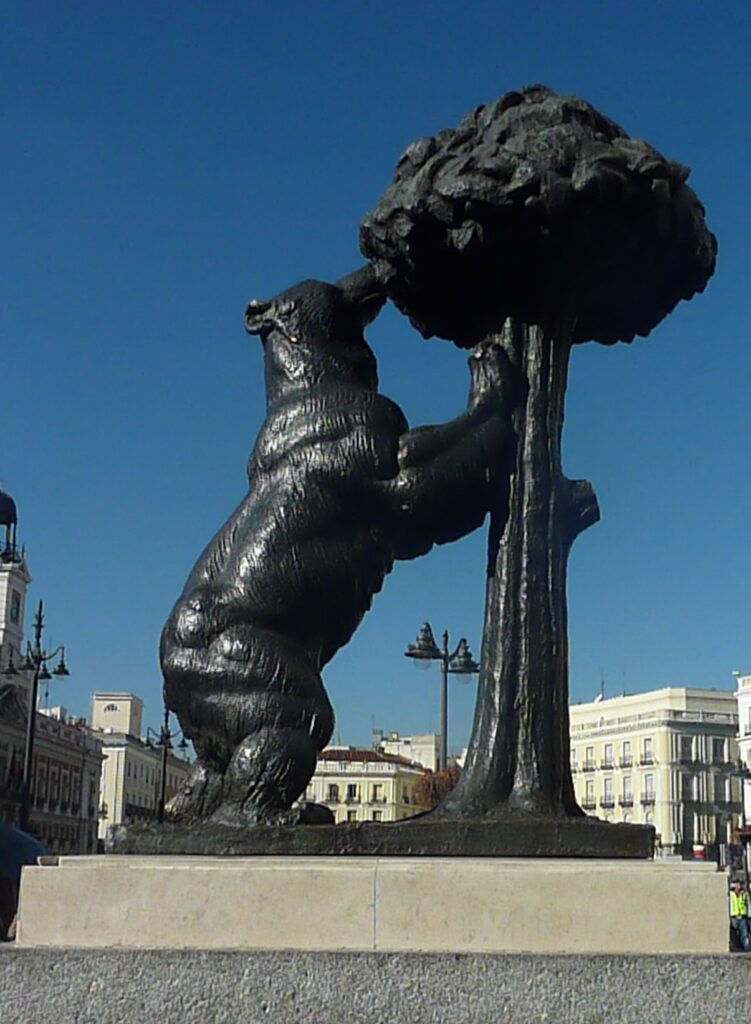
Public bear sculptures expanded dramatically during the late twentieth century. Cities, universities, parks, and civic institutions adopted bear monuments as landmarks connected to local identity. These sculptures often balanced humor with monumentality, making them accessible to broad audiences while still commanding attention.
One of the best-known examples is I See What You Mean by American sculptor Lawrence Argent. Installed in 2005 outside the Colorado Convention Center in Denver, the massive blue bear stands forty feet tall peering into the building through glass walls. Constructed from fiberglass and steel, the sculpture quickly became one of Denver’s most recognizable public artworks.
Argent designed the sculpture to appear curious rather than threatening. The bright blue color gives the enormous animal a playful quality despite its gigantic scale. Public reaction was overwhelmingly positive, and the sculpture became an important tourism symbol for the city. Its success demonstrated how modern bear imagery could blend civic branding, humor, and public accessibility.
Other cities embraced similar monumental wildlife sculptures during the late twentieth and early twenty-first centuries. In Berlin, sculpted bears became tied to urban identity through the famous Buddy Bear installations beginning in 2001. Decorated fiberglass bears appeared throughout the city as symbols of international friendship and local culture. The project expanded globally through traveling exhibitions.
Modern public bear sculptures often emphasize approachability instead of fear. Earlier centuries frequently portrayed bears as violent threats or hunting targets. Contemporary civic art tends to present them as symbols of regional pride, environmental beauty, or communal identity. Even so, the bear’s physical scale still communicates strength and permanence.
Indigenous and Contemporary Ceramic Bear Traditions
Indigenous artists across North America continued creating bear imagery throughout the twentieth century using ceramics, textiles, carving, and painting. Many of these traditions blended older spiritual symbolism with modern artistic innovation. Bears remained deeply connected to storytelling, family lineage, and regional identity.
Artist Louise Goodman created the ceramic sculpture Bear in 1990 using fired clay and piñon pitch. The work, now held by the Smithsonian American Art Museum, combines traditional Pueblo ceramic methods with modern sculptural presence. The rounded form gives the animal warmth and physical gravity without excessive detail. Goodman’s work reflects the continued vitality of Native ceramic traditions in the American Southwest during the late twentieth century.
Bear fetishes carved from stone also became widely recognized forms within Zuni artistic traditions. These small carvings, often made from turquoise, serpentine, or jet, represented spiritual guardianship and healing. Although collectors increasingly purchased them during the twentieth century art market boom, the carvings remained connected to longstanding ceremonial and cultural traditions.
Contemporary Indigenous artists frequently use bear imagery to preserve cultural memory while engaging modern audiences. Some works emphasize ancestral mythology, while others address land stewardship, family continuity, or regional heritage. The bear remains meaningful partly because it bridges past and present so effectively.
Modern ceramic and sculptural traditions also reveal how adaptable bear imagery has become. The same animal that appeared in Paleolithic caves now appears in galleries, museums, urban plazas, and contemporary Indigenous art exhibitions. Across radically different artistic movements, the bear continues to communicate emotional and symbolic power with remarkable consistency.
Why Bears Still Matter in Contemporary Art and Culture
Environmental Themes and Conservation
During the twentieth century, bears increasingly became symbols connected to wilderness conservation and environmental preservation. Wildlife photographers, painters, and sculptors often used bear imagery to represent landscapes perceived as threatened by industrial expansion and habitat loss. Polar bears in particular emerged as globally recognized symbols of the Arctic.
Wildlife artists such as Carl Rungius and Robert Bateman devoted significant portions of their careers to depicting North American bears with scientific accuracy and dramatic atmosphere. Rungius, born in Germany in 1869 before emigrating to North America, became famous for paintings of grizzly bears, elk, and mountain wildlife. His works combined careful anatomical observation with romantic wilderness scenery.
The popularity of bear imagery in conservation campaigns partly comes from the animal’s emotional appeal. Bears appear powerful but also strangely relatable. Their expressive faces, upright posture, and family behavior create strong emotional reactions among viewers. Artists and photographers often emphasize these qualities to encourage public appreciation for wilderness preservation.
Modern museums and nature centers also use bear sculptures and illustrations to educate audiences about ecosystems and wildlife history. In many cases, contemporary bear art balances beauty with scientific realism. Artists increasingly study animal behavior closely, using photography, field observation, and zoological research to improve accuracy.
Even when contemporary bear imagery carries environmental themes, the emotional core remains ancient. The bear still represents endurance, survival, and the untamed world beyond cities. Those meanings have survived for thousands of years because they continue speaking to something deeply rooted in human imagination.
Bears in Popular and Commercial Art
Bear imagery spread rapidly through commercial art during the twentieth century. Advertisers, toy manufacturers, sports teams, and entertainment companies discovered that bears could appear both powerful and approachable depending on artistic style. Cartoon bears became especially popular because the animal’s rounded features adapted naturally to simplified illustration.
The teddy bear transformed public perception of bears more than perhaps any other object. The toy emerged in the early 1900s following stories connected to President Theodore Roosevelt and a hunting trip in Mississippi in 1902. Toy manufacturers in both Germany and the United States quickly began producing stuffed bears for children. By the 1920s, teddy bears had become international cultural icons.
Artists and illustrators also embraced bears in posters, comic strips, advertisements, and film animation. Some portrayals emphasized humor and friendliness, while others preserved the animal’s wild reputation. The flexibility of bear imagery allowed it to function in children’s culture, sports branding, and fine art simultaneously.
Sports teams frequently adopted bears as mascots because the animal suggested strength, resilience, and territorial pride. The Chicago Bears, founded in 1920, helped cement the bear as a symbol of competitive toughness in American sports culture. University mascots and regional logos followed similar patterns throughout the twentieth century.
Commercial bear imagery sometimes softened the animal’s dangerous qualities, but traces of older symbolism remained visible. Even cartoon bears often carried associations with independence, appetite, curiosity, or stubbornness. The ancient symbolic power of the bear survived beneath modern entertainment culture.
The Psychological Power of the Bear Archetype
The bear continues appearing in art because it occupies a unique place in human psychology. Few animals seem both familiar and intimidating at the same time. Bears can appear gentle while caring for cubs and terrifying when defending territory. That tension gives artists enormous emotional range to explore.
Across many cultures, bears represented isolation and self-reliance because they spend much of their lives alone. Their winter hibernation also contributed to associations with withdrawal, endurance, and renewal. Ancient societies often treated the bear almost like a human rival rather than simple prey. That perception never fully disappeared.
Modern audiences still respond strongly to bear imagery because the animal feels ancient and elemental. Wolves may symbolize organized packs, while lions often represent royalty or empire. Bears suggest raw independence and physical survival. Artists continue using them to evoke emotional reactions tied to wilderness and instinct.
The visual form of the bear also contributes to its enduring artistic appeal. Massive shoulders, heavy paws, rounded ears, and thick fur create instantly recognizable silhouettes. Sculptors especially appreciate how easily bears translate into strong three-dimensional forms. Whether simplified into smooth modern shapes or painted with detailed realism, bears retain visual authority.
Thousands of years after the first cave painters traced bear outlines onto stone walls, the image still holds attention. Styles have changed. Materials have changed. Civilizations have risen and disappeared. Yet the bear remains one of the few artistic subjects capable of carrying prehistoric symbolism into the modern world without losing its emotional force.
Key Takeaways
- Bears appeared in some of the world’s oldest surviving cave paintings dating to roughly 30,000 BC.
- Indigenous cultures across North America, Europe, and Asia treated bears as spiritual and symbolic beings.
- Medieval Europe used bears in heraldry, religious stories, and royal symbolism.
- Modern artists transformed bears into public monuments, wildlife symbols, and commercial icons.
- The emotional power of bears in art comes from their connection to strength, wilderness, and survival.
FAQs
Why did prehistoric humans paint bears?
Prehistoric people likely viewed bears as spiritually significant animals connected to survival, hunting, and seasonal renewal.
What does a bear symbolize in European art?
Bears often symbolized strength, courage, kingship, wilderness, and untamed power.
Which famous sculptor created Polar Bear in 1922?
French sculptor François Pompon created Polar Bear, one of the defining animal sculptures of the twentieth century.
Why are bears important in Indigenous art?
Many Indigenous traditions associate bears with healing, protection, ancestry, and spiritual power.
Why do modern artists still use bears as subjects?
Bears remain visually powerful and emotionally recognizable symbols connected to nature and endurance.