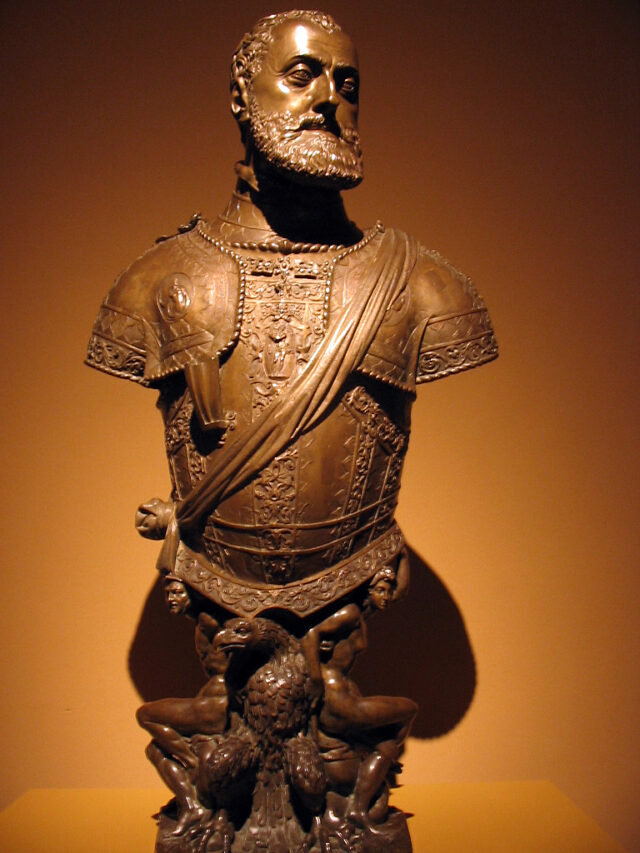
Bronze casting changed the history of art long before the rise of classical Greece or Renaissance Italy. It allowed artists to create stronger and more detailed sculptures than stone or wood could easily provide. Entire civilizations used bronze to express religion, military power, wealth, and technical sophistication. Some bronze objects created more than 3,000 years ago still survive today with remarkable detail.
The alloy itself usually combines copper with tin, though small amounts of lead or zinc were sometimes added for specific purposes. Bronze melts at a lower temperature than pure copper and flows more smoothly into molds, making it especially useful for sculpture. Ancient craftsmen quickly discovered that bronze could preserve tiny details such as curls of hair, fingernails, armor decorations, and folds of fabric. This ability to capture realism helped make bronze one of the most admired artistic materials in history.
Large bronze sculptures also carried enormous prestige because of their cost and difficulty. Mining ore, transporting metal, building furnaces, and creating molds required organization and wealth. Rulers, temples, emperors, and wealthy merchants often sponsored bronze projects because they demonstrated power and permanence. Many ancient bronzes were later melted down during wars or economic crises, making surviving examples especially valuable.
Even in the modern world, bronze remains associated with authority and durability. Public monuments, war memorials, and figurative sculptures continue to rely on techniques developed thousands of years ago. Although modern foundries now use cranes, electric kilns, and digital modeling tools, the essential principles of bronze casting remain surprisingly ancient. Molten metal still flows into carefully prepared molds much as it did in the workshops of Egypt, Greece, China, and Rome.
The Origins of Bronze Casting
Early Bronze Age Experiments
The Bronze Age began at different times in different regions, but many historians place its earliest development in the Near East around 3300 BC. Ancient metalworkers first experimented with copper before discovering that adding tin produced a harder and more durable alloy. This discovery transformed tools, weapons, and eventually art. Bronze blades kept sharper edges, and bronze sculptures could survive conditions that destroyed wood or clay.
Archaeological evidence from Mesopotamia shows sophisticated bronze work by the third millennium BC. Sumerian craftsmen created ritual objects, weapons, and decorative figures using sectional molds and primitive casting techniques. The famous bronze head sometimes identified as representing an Akkadian ruler, dating to approximately 2250–2200 BC, demonstrates remarkable technical skill. The sculpture was discovered at Nineveh in modern Iraq and reveals realistic facial modeling and detailed beard patterns.
Ancient Egypt also embraced bronze technology, though large-scale sculpture in stone remained dominant there for centuries. Small bronze figures of gods and sacred animals became increasingly common after about 2000 BC. Egyptian artisans developed considerable expertise in casting religious statues for temples and tombs. Bronze cat figures associated with the goddess Bastet became especially widespread during the Late Period of Egyptian history.
In China, bronze casting reached extraordinary sophistication during the Shang Dynasty, which lasted roughly from 1600 BC to 1046 BC. Chinese craftsmen created massive ritual vessels decorated with highly complex surface patterns. Unlike Mediterranean artists, who often emphasized naturalistic human anatomy, Shang bronzes focused heavily on symbolic decoration and ritual function. Some Chinese foundries produced objects weighing hundreds of pounds with astonishing precision.
Ancient Egypt, Greece, and China
Greek artists eventually transformed bronze sculpture into one of the highest forms of artistic expression in the ancient world. By the fifth century BC, Greek sculptors had mastered techniques that allowed highly realistic depictions of the human body. Bronze was especially valued because it permitted outstretched arms and dynamic poses that could easily break in marble. Many original Greek bronzes vanished over the centuries because the metal was melted down and reused.
One of the rare surviving ancient Greek bronzes is the Riace Warriors, discovered off the coast of Italy in 1972. These statues likely date to about 460–450 BC and demonstrate astonishing anatomical realism. Their copper lips, silver teeth, and glass eyes reveal the level of detail Greek sculptors could achieve. Scholars still debate their exact creators and original purpose.
The Roman Empire inherited and expanded Greek bronze traditions after conquering Greece during the second century BC. Roman patrons commissioned bronze portraits of emperors, generals, and wealthy citizens throughout the empire. Equestrian statues became especially important symbols of political authority. Many Roman bronzes disappeared during the Middle Ages when metal shortages encouraged recycling.
China followed a very different artistic path. Bronze ritual vessels such as ding cauldrons and wine containers carried religious and ceremonial importance. The famous Simuwu Ding, dating to the Shang Dynasty around the 13th century BC, weighs approximately 1,832 pounds and is among the heaviest ancient bronze objects ever discovered. Its size demonstrates the enormous technical abilities of Chinese foundries at a surprisingly early date.
The Lost-Wax Casting Method
The lost-wax process, also called cire perdue, became one of the most important innovations in sculpture history. The process likely developed independently in several ancient cultures. It allowed artists to produce far more detailed and complex forms than simple mold casting methods could achieve. Many ancient and modern bronze sculptures still rely on this basic technique.
The process begins with a wax model created over a clay or plaster core. Artists shape the wax carefully because every surface detail will later appear in bronze. Additional wax rods called sprues are attached to provide channels for molten metal and escaping gases. The entire structure is then covered in layers of clay or investment material.
When the mold is heated, the wax melts away, leaving a hollow cavity between the core and outer mold. Molten bronze is then poured into this space at temperatures often exceeding 2,000 degrees Fahrenheit. Once the metal cools, the outer mold is broken away to reveal the bronze sculpture. Craftsmen then remove excess metal and refine the surface through chasing and polishing.
Ancient foundries faced enormous risks during this process. A single mistake in temperature, mold thickness, or airflow could ruin months of work. Large bronze pours were dangerous events involving intense heat and toxic fumes. Even today, many foundries treat major pours with a mixture of scientific precision and traditional ritual because so many things can still go wrong.
Bronze Casting During the Renaissance and Beyond
Renaissance Rediscovery of Classical Bronze
Interest in bronze sculpture revived dramatically during the Italian Renaissance. Artists and scholars studied surviving Roman works and ancient literary descriptions with intense fascination. Wealthy patrons in Florence, Venice, and other city-states commissioned bronze sculptures as symbols of prestige and learning. Bronze became associated with both classical civilization and modern artistic ambition.
One of the most important Renaissance bronzes is Gattamelata by Donatello. The sculpture was created approximately between 1445 and 1453 and stands in Piazza del Santo in Padua, Italy. It depicts the military commander Erasmo da Narni riding horseback in calm authority. The work is made of bronze and measures roughly 340 centimeters high excluding its pedestal.
Donatello drew inspiration from surviving Roman equestrian monuments, especially the ancient statue of Marcus Aurelius in Rome. Gattamelata helped revive large-scale bronze casting in Europe after centuries of relative decline. Its technical achievement impressed artists throughout Italy. The statue also established the Renaissance tradition of using equestrian monuments to symbolize political and military power.
Another masterpiece of Renaissance bronze casting is Perseus with the Head of Medusa by Benvenuto Cellini. Created between 1545 and 1554 for Duke Cosimo I de’ Medici, the sculpture stands in the Loggia dei Lanzi in Florence. The bronze figure measures approximately 519 centimeters including its base. Cellini described the dramatic casting process in his autobiography, claiming that he nearly died while trying to save the pour after technical problems developed.
Foundries, Workshops, and Artistic Collaboration
Bronze sculpture was rarely the work of a single individual. Even the greatest sculptors depended on assistants, mold makers, furnace operators, and finishers. Renaissance foundries functioned as highly organized workshops where specialists handled different stages of production. Some artists excelled at modeling figures but relied heavily on experienced casters for technical execution.
Large bronze projects required enormous financial investment. Furnaces had to maintain extremely high temperatures, and bronze itself was expensive. Failed casts could bankrupt workshops or damage reputations. Many rulers and churches therefore commissioned only artists with proven technical abilities.
Benvenuto Cellini described the terrifying moment when molten bronze nearly failed to fill the mold for Perseus with the Head of Medusa. According to his account, he ordered furniture and household objects thrown into the furnace to increase the heat quickly enough to save the cast. While historians debate some details of his dramatic story, the account reflects the genuine risks involved in Renaissance bronze casting.
By the 18th and 19th centuries, industrial advances improved foundry technology considerably. Larger furnaces, better metallurgy, and improved transportation systems allowed even bigger monuments to be produced. Paris became an important center for artistic bronze casting during the 19th century. Foundries there produced both monumental public sculptures and smaller decorative bronzes for collectors.
Public Monuments and National Identity
Bronze became closely tied to public memory and civic identity during the modern era. Cities commissioned statues to honor military victories, political leaders, explorers, and cultural heroes. Bronze was favored because it could survive weather for centuries while maintaining visual authority. Monumental bronze sculpture became part of urban life throughout Europe and the Americas.
Equestrian statues remained especially popular because they symbolized command and stability. These monuments often required tremendous engineering skill because the weight of horse and rider had to be balanced carefully. Some sculptures supported the horse on only two legs, creating major structural challenges. Internal armatures and careful weight distribution became increasingly important.
During the 19th century, bronze monuments multiplied rapidly as nationalism expanded across Europe. Governments used public sculpture to promote historical memory and patriotic identity. Industrial foundries made it easier and cheaper to produce large bronze works than in earlier centuries. Entire city squares became outdoor galleries filled with bronze generals, politicians, and writers.
The United States also embraced monumental bronze sculpture after the Civil War. Public parks and cemeteries filled with bronze memorials commemorating military figures and historical events. Sculptors such as Augustus Saint-Gaudens became famous for combining realism with dramatic composition. His Robert Gould Shaw Memorial, unveiled in Boston in 1897, demonstrated how bronze could convey both movement and emotional gravity.
How Bronze Sculptures Are Made
Sculpting the Original Model
Most bronze sculptures begin as clay models. Artists shape the clay over metal armatures that support the weight of the material during construction. Large figures may require wooden frameworks and internal steel supports. Sculptors refine details repeatedly before the work is approved for casting.
After the clay model is completed, molds are made to capture its surface precisely. These molds are often created in sections to allow removal without damaging the sculpture. Plaster, silicone rubber, and fiberglass are commonly used in modern mold making. Ancient craftsmen used more primitive but surprisingly effective materials such as clay and animal hair mixtures.
Wax copies are then created from the molds. These hollow wax shells usually measure only a few millimeters thick. Artists can still modify details at this stage, adjusting textures or correcting imperfections. Every fingerprint, wrinkle, and tool mark may eventually appear in bronze.
Large monuments are almost always cast in separate sections. Heads, arms, torsos, and legs may each be poured individually before being welded together later. This sectional approach reduces the risk of catastrophic casting failure. It also allows foundries to transport and handle enormous sculptures more safely.
Mold Making and Bronze Pouring
Once the wax version is complete, technicians attach wax channels for metal flow and air release. The sculpture is then coated in heat-resistant investment material. Modern foundries may use ceramic shell techniques that create strong but lightweight molds. Ancient methods relied more heavily on clay-based mixtures.
The molds are heated gradually until the wax melts away. This stage gives the lost-wax process its name. The empty cavity left behind will later fill with molten bronze. Proper heating is critical because trapped moisture can cause dangerous steam explosions during pouring.
Bronze is usually heated to around 2,100 degrees Fahrenheit before pouring. Workers wear protective clothing because even small splashes of molten metal can cause severe injuries. Large pours often involve coordinated teams moving quickly but carefully around furnaces and molds. Timing is crucial because bronze cools rapidly once removed from the furnace.
After cooling, workers break away the outer mold to reveal the rough bronze surface underneath. This stage can feel almost archaeological because the sculpture slowly emerges from layers of hardened material. Defects such as air pockets or incomplete fills may still require repair. Some failed casts must unfortunately be melted down and attempted again.
Chasing, Patinas, and Final Assembly
Freshly cast bronze sculptures require extensive finishing work. Metalworkers called chasers refine surfaces by removing seams, correcting flaws, and sharpening details. Weld marks from sectional assembly must also be disguised carefully. Skilled chasing can dramatically improve the final appearance of a sculpture.
Patinas are chemical treatments applied to bronze surfaces to create specific colors and textures. Brown, black, green, and reddish tones are especially common. Artists and foundries often guard patina formulas closely because subtle variations can create very different visual effects. Outdoor bronzes naturally develop additional weathering over time.
The green surface often associated with old bronze results from oxidation. Copper compounds gradually react with moisture and air to create verdigris. The Statue of Liberty famously developed this green coloration over decades after its installation in New York Harbor in 1886. Many sculptors intentionally imitate this effect using chemical patinas.
After finishing, large sculptures are assembled and prepared for installation. Internal supports, anchoring systems, and foundations become critically important for public monuments. Engineers often collaborate closely with sculptors during this stage. A successful bronze monument therefore combines artistic vision with metallurgy, architecture, and structural engineering.
The Legacy of Bronze Casting in World Art
Famous Bronze Sculptors
Many of history’s greatest sculptors worked extensively in bronze. Donatello helped revive monumental bronze casting during the Renaissance. Benvenuto Cellini pushed technical complexity to new heights in the 16th century. Their achievements influenced generations of European sculptors.
During the 19th century, Auguste Rodin transformed modern sculpture through expressive modeling and dramatic surfaces. One of his most famous works is The Thinker. The sculpture was conceived around 1880 as part of The Gates of Hell project. Multiple bronze casts exist today, including an important version at the Musée Rodin in Paris measuring approximately 186 centimeters high.
Another major Rodin work is The Burghers of Calais, modeled between 1884 and 1895. The bronze sculpture group depicts six citizens of Calais surrendering themselves during the Hundred Years’ War. The original cast remains at the Musée Rodin in Paris and measures approximately 201 by 240 by 200 centimeters. Rodin emphasized emotional realism rather than heroic idealization.
American sculptor Frederic Remington became famous for energetic bronze depictions of the American West during the late 19th and early 20th centuries. Works such as Broncho Buster, first cast in 1895, captured dramatic motion and frontier imagery. Antoine-Louis Barye in France specialized in highly detailed bronze animal sculptures during the 1800s. Edgar Degas also explored bronze through smaller sculptural studies derived from dancers and horses.
Bronze in Museums and Public Spaces
Bronze sculptures survive in museums and outdoor settings throughout the world. Their durability makes them especially valuable for public monuments exposed to weather. Unlike marble, bronze can tolerate significant temperature variation and environmental stress. Proper maintenance nevertheless remains essential.
Museums often devote major conservation efforts to bronze collections. Humidity, pollution, and improper cleaning methods can gradually damage surfaces. Curators monitor corrosion carefully because certain chemical reactions may continue beneath visible patinas. Conservation specialists sometimes spend years stabilizing important ancient bronzes.
Bronze theft has also become a major concern in recent decades because scrap metal prices occasionally rise sharply. Some public monuments have been stolen and melted down illegally. Cemeteries and parks are particularly vulnerable targets. Cities increasingly use surveillance systems and secure mounting methods to protect historic sculptures.
Public bronze monuments continue to shape the appearance of cities around the world. Visitors photograph them constantly, often without considering the technical difficulty behind their creation. Bronze remains associated with permanence, authority, and craftsmanship. Even modern abstract sculptors frequently choose bronze because of its historical prestige and physical resilience.
Modern Foundries and Contemporary Bronze
Modern foundries combine ancient traditions with advanced technology. Many artists now begin projects using digital scans or computer modeling software before creating physical sculptures. Three-dimensional printing can even produce casting patterns directly. Despite these innovations, much of the actual casting process remains deeply traditional.
Contemporary foundries still rely heavily on skilled hand labor. Chasing, welding, and patina work require experience that machines cannot easily replace. Some foundries specialize in monumental public commissions, while others focus on smaller gallery works. Certain workshops maintain methods passed down across generations.
Bronze remains popular among contemporary sculptors because it preserves detail so effectively. The material also carries psychological weight because viewers associate it with historical importance. A bronze sculpture immediately feels more permanent than many modern synthetic materials. This sense of permanence continues to attract artists working in very different styles.
The future of bronze casting appears secure despite changing artistic trends. New technologies may improve efficiency and precision, but the fascination with molten metal transforming into sculpture remains ancient and deeply human. Bronze casting combines chemistry, engineering, fire, and artistic imagination in a way few other art forms can equal. That combination has allowed bronze sculpture to endure for more than 5,000 years.