Walk into an old church in Italy and the walls seem to glow from within. Blues, reds, and gold-toned earth colors still shine after hundreds of years. The paint does not merely sit on the wall like a modern coating. It becomes part of the wall itself, almost like color trapped in stone.
Understanding how fresco painting was made begins with the word fresco, which means “fresh” in Italian. Artists painted on freshly laid lime plaster while it was still damp. Pigments mixed with water soaked into the surface. As the plaster dried, the image hardened into the wall and became remarkably durable.
The Definition of Buon Fresco and Its Historical Importance
The most respected method was buon fresco, also called true fresco. In this technique, the artist worked directly on wet plaster. A second method, fresco secco, involved painting on dry plaster. Fresco secco was useful for small corrections, but it did not last as well.
This method appeared in ancient Crete around 1600 BC and later flourished in Roman homes before AD 79. Medieval Christians used fresco to teach Bible stories to worshippers who could not read. During the Renaissance, the technique reached a stunning peak. Great masters transformed plain walls into vast dramas of faith, history, and human emotion.
The Origins of Fresco Painting from Ancient Civilizations to the Renaissance
Some of the earliest known frescoes were painted in the palace at Knossos on the island of Crete. These lively scenes showed dolphins, acrobats, and court life. Their bright colors still feel energetic today. The paintings prove that ancient artists already understood the value of painting on wet plaster.
Roman artists carried the method to new heights in cities such as Pompeii and Herculaneum. When Mount Vesuvius erupted in AD 79, ash sealed many painted walls and preserved them. These works included landscapes, mythological scenes, and decorative architecture. They reveal how widespread and sophisticated fresco painting had become.
From Knossos and Pompeii to Giotto and Michelangelo
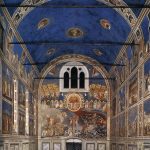
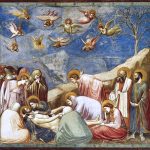
In the late Middle Ages, Giotto di Bondone, born around 1267 near Florence, changed the history of art. He painted figures with believable weight and emotion. His frescoes in the Arena Chapel in Padua, completed about 1305, gave sacred stories a deeply human quality. Giotto died in 1337, leaving a powerful legacy.
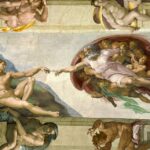
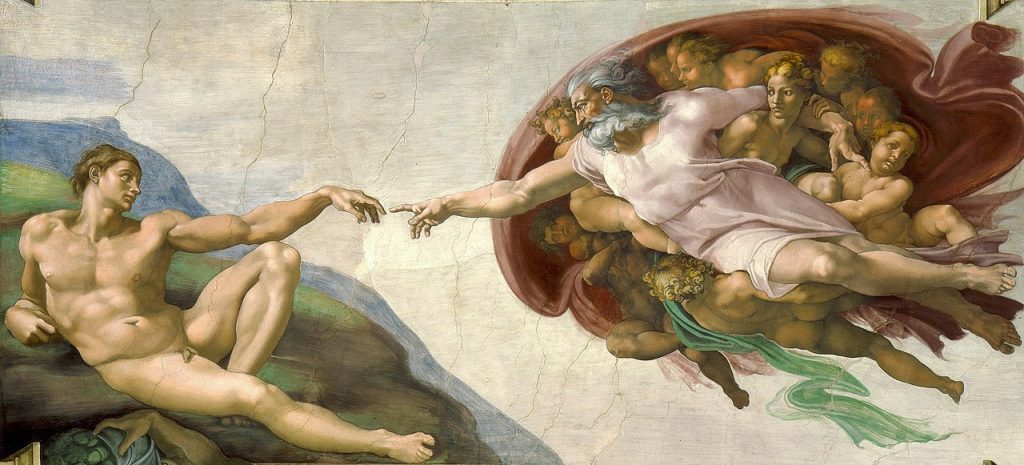
Masaccio, born in 1401 and dead by 1428, advanced perspective and realistic lighting. Michelangelo Buonarroti, born on March 6, 1475, in Caprese, brought fresco to extraordinary heights in the Sistine Chapel. He died in Rome on February 18, 1564. Together, these artists turned fresco into one of civilization’s greatest artistic achievements.
Preparing the Wall Surface for Fresco Painting
The success of a fresco depended on the wall beneath the image. Artists and plasterers began with stone or brick surfaces that were cleaned and roughened. This foundation had to be stable and free from moisture problems. A weak wall could crack and destroy years of labor.
The first plaster coat was called the arriccio. Made from slaked lime, sand, and water, it created a coarse surface that dried over several days or weeks. On this layer, artists sketched the design in reddish pigment. These underdrawings were known as sinopie.
Arriccio, Intonaco, and the Essential Layers of Plaster
The final smooth layer was called the intonaco. It was spread only over the portion that could be painted that day. The plaster felt cool and slightly creamy, with a damp sheen. Once it began to dry, the artist had only a few hours to complete the work.
As lime absorbed carbon dioxide from the air, it hardened into calcium carbonate. This natural process locked the pigment into the surface. Plasterers, laborers, and assistants worked closely with the master painter. Fresco painting was never a one-man miracle, even when one famous name received the credit.
Designing the Composition and Transferring the Drawing
Before a brush touched the wall, artists planned every figure and gesture. Small sketches tested poses, drapery, and architecture. These studies allowed the painter to refine ideas and solve compositional problems. Careful planning reduced costly mistakes.
The final design was enlarged into a full-size drawing called a cartoon. These large sheets were assembled from many pieces of paper. Charcoal lines mapped out every important contour. Assistants helped prepare and handle these delicate patterns.
Cartoons, Pouncing, and Incised Guidelines
One transfer method was called pouncing. Tiny holes were pricked along the lines, and powdered charcoal was dabbed through them. When the paper was removed, dotted outlines appeared on the plaster. The artist then reinforced the marks with quick, confident strokes.
Another method involved pressing the cartoon into the wet surface with a stylus. This left shallow grooves that guided the brush. Raphael, born in Urbino on April 6, 1483, used elaborate cartoons for his Vatican frescoes. He died in Rome on April 6, 1520, at only thirty-seven years old, but his planning methods influenced generations.
Painting on Wet Plaster: The Day-by-Day Process
Each day’s section of plaster was called a giornata, meaning “a day’s work.” Skilled artists estimated exactly how much they could complete before the surface dried. Too much plaster would harden before painting was finished. Too little plaster slowed progress and wasted time.
Pigments were made from minerals and earths such as ochre, umber, malachite, and carbon black. These powders were mixed only with water. No oil or egg was needed. The colors looked matte and soft when first applied, then brightened as the wall cured.
Pigments, Giornate, and the Race Against Drying Time
Painters usually worked from the top downward so drips would not damage completed areas. Faces and hands received the most attention. Apprentices often painted drapery, backgrounds, and architectural details. The master reserved the most expressive passages for himself.
Mistakes were expensive. If an eye sat too high or a hand looked awkward, the plaster had to be cut away and replaced. Michelangelo painted much of the Sistine Chapel ceiling between 1508 and 1512 while standing on high scaffolding. Surrounded by lime dust and the smell of wet plaster, he worked with fierce determination and extraordinary stamina.
Famous Fresco Masterpieces and the Artists Behind Them
The Arena Chapel in Padua remains one of the great turning points in Western art. Commissioned by Enrico Scrovegni around 1303, it was painted by Giotto by about 1305. The scenes move with tenderness and dramatic clarity. Even today, viewers feel the grief, joy, and hope in each painted story.
The Sistine Chapel ceiling in Vatican City is perhaps the most famous fresco cycle in the world. Pope Julius II, born in 1443 and elected pope in 1503, commissioned Michelangelo to undertake the project. The ceiling was unveiled in 1512. Its prophets, ancestors, and scenes from Genesis changed art forever.
The Sistine Chapel, Arena Chapel, and School of Athens
Raphael painted The School of Athens between 1509 and 1511 in the Vatican Palace. The fresco gathers ancient philosophers in a majestic architectural setting. Plato resembles Leonardo da Vinci, who was born on April 15, 1452, and died on May 2, 1519. The painting celebrates reason, order, and the pursuit of truth.
These masterpieces were collaborative efforts involving patrons, plasterers, and workshop assistants. Yet the vision of the master gave each project its unity. Responsible historical speculation suggests that many unnamed craftsmen took deep pride in these walls. Their labor still speaks through every brushstroke and every layer of lime.
Why Fresco Painting Still Matters Today
Fresco painting matters because it unites art and architecture in a permanent bond. A canvas can be moved, but a fresco belongs to its wall. It becomes part of the building’s soul. Removing it is like tearing memory from stone.
Many frescoes have survived earthquakes, wars, and centuries of candle smoke. Their greatest enemies are moisture, salt, and pollution. Conservators use microscopes and careful cleaning methods to stabilize fragile surfaces. Their work protects these treasures for future generations.
Preservation, Modern Murals, and Lasting Influence
Art schools still teach students the discipline of painting on wet plaster. The process leaves little room for hesitation. Every stroke requires confidence and preparation. This rigor continues to inspire muralists and traditional painters around the world.
Modern wall artists often use acrylic paints, but many admire the honesty of fresco. Color, chemistry, and craftsmanship combine in a way that feels almost miraculous. The next time you stand beneath a painted ceiling, look closely. You are seeing water, earth, and human imagination fused into enduring beauty.
Key Takeaways
- Fresco painting uses pigments mixed with water on wet lime plaster.
- Buon fresco is more durable than fresco secco because the color bonds with the wall.
- Artists prepared surfaces with arriccio, sinopia drawings, and a final intonaco layer.
- Each giornata represented one day’s carefully planned work.
- Masterpieces by Giotto, Raphael, and Michelangelo remain among the greatest achievements in art.
FAQs
- What does fresco mean? It is the Italian word for “fresh.”
- How long did artists have to paint? Usually only a few hours before the plaster dried.
- Why are frescoes so durable? The pigments become part of the hardened plaster.
- What is a cartoon in fresco painting? It is a full-size preparatory drawing.
- What is the most famous fresco? Many consider Michelangelo’s Sistine Chapel ceiling the best known.