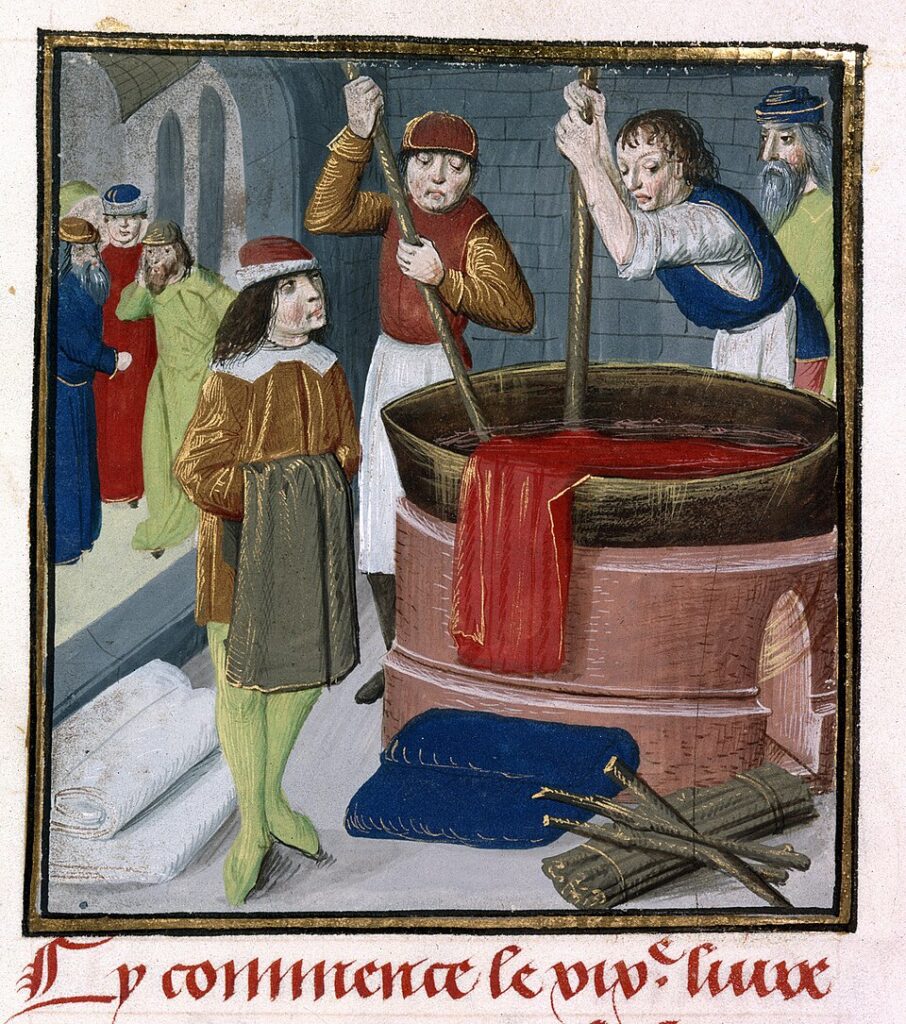
Natural dyes shaped the visual history of humanity long before the invention of modern chemistry. Ancient artists and craftspeople extracted vivid reds, deep blues, golden yellows, and rich purples from roots, flowers, bark, insects, and shellfish. These colors appeared in royal robes, sacred manuscripts, woven carpets, painted fabrics, and ceremonial banners across the ancient world. The use of natural dyes in art was never simply decorative, because color carried religious, political, and economic meaning in many societies.
The earliest evidence of dyed textiles dates back thousands of years before Christ in regions such as Egypt, Peru, India, and China. Archaeologists have uncovered fragments of dyed cloth in Egyptian tombs dating to around 3000 BC, while ancient Peruvian textiles from around 1500 BC still preserve traces of indigo and cochineal. Some historians believe prehistoric humans may have experimented with staining cloth and animal skins even earlier, though evidence from that era remains fragmentary. Responsible historical speculation suggests that early discoveries of dyeing likely happened accidentally when plant juices or crushed berries permanently stained fibers during food preparation or ritual activity.
Ancient Sources of Color
In Ancient Egypt, dyers worked beside scribes, goldsmiths, and textile makers in highly organized workshops. Egyptian artisans used madder root for red shades and saffron for yellow tones, while indigo became associated with wealth and prestige. Tomb paintings from the reign of Pharaoh Tutankhamun, born around 1341 BC and dead by 1323 BC, show richly colored fabrics whose tones originally appeared brighter than they do today. In China during the Zhou Dynasty, which lasted from approximately 1046 BC to 256 BC, dye workshops became tied to state administration and ceremonial clothing traditions.
Natural dyes also became symbols of social order and sacred authority. Tyrian purple, extracted from Mediterranean murex shellfish by Phoenician traders around 1500 BC, became associated with emperors and kings because producing even a small amount required thousands of shells. In India, indigo cultivation flourished for centuries and eventually influenced global trade patterns by the medieval period. Across the ancient world, the use of natural dyes in art demonstrated both technical skill and humanity’s deep fascination with the colors of nature.
Natural Dyes and the Rise of Global Trade Networks
As civilizations expanded, natural dyes became some of the most valuable trade goods in the world. Merchant caravans crossing the Silk Road carried indigo, saffron, and dyed fabrics between China, Persia, India, and Europe. Ships traveling through the Mediterranean transported expensive purple dyes and richly colored textiles to royal courts and wealthy patrons. By the Middle Ages, dye merchants occupied an important position within urban economies because vivid colors represented prestige and financial power.
The city of Venice became a major center of dye commerce during the 1200s and 1300s, while cities such as Florence and Bruges built strong textile industries tied to imported color materials. In medieval England, woad cultivation became economically important, and entire farming communities depended on the blue dye trade. Merchant families developed partnerships with guilds, shipping companies, and noble households to secure reliable supplies of color materials. Some of these arrangements generated immense wealth, especially during periods when brightly dyed fabrics symbolized aristocratic status.
Color as Currency and Power
The discovery of the Americas after Christopher Columbus arrived in 1492 dramatically changed the dye trade. Spanish merchants exported cochineal insects from Mexico during the 1500s, and the resulting crimson dye became one of the most valuable exports in the Spanish Empire. European painters, textile makers, and royal courts prized cochineal because its reds appeared richer and more brilliant than many European alternatives. The demand became so intense that guarded trade secrets surrounded the production process for decades.
Natural dye production also became connected to harsh labor systems during the colonial period. Indigo plantations expanded in parts of the Caribbean, South America, and the American South during the 1700s, often relying on exploited labor under brutal conditions. Conservative historians have argued that industrial demand for luxury goods sometimes encouraged economic systems that valued profit over human dignity. Even so, the artistic importance of natural dyes remained undeniable, because these materials shaped fashion, interior decoration, painting, and ceremonial art throughout Europe, Asia, Africa, and the Americas.
The Role of Natural Dyes in Fine Art and Decorative Arts
Natural dyes influenced nearly every major artistic tradition before the rise of industrial chemistry. Medieval European monasteries used dyes to color manuscript pages and decorative textiles surrounding church altars. Persian carpet makers developed sophisticated dye recipes that produced glowing reds, dark blues, and earthy golds capable of lasting for centuries. In Japan during the Edo period, which lasted from 1603 to 1868, indigo dyeing became deeply connected to traditional clothing and textile aesthetics.
Artists and craftspeople carefully selected natural dyes based on local availability, expense, and visual effect. Textile workshops in Renaissance Italy often collaborated with painters and designers to coordinate colors between tapestries, banners, clothing, and interior decoration. Wealthy patrons financed large workshops that included weavers, dyers, painters, and embroiderers working together on unified decorative programs. The use of natural dyes in art therefore reflected collaboration as much as individual creativity.
From Manuscripts to Tapestries
Indian block printing traditions developed highly refined dyeing systems using carved wooden blocks and natural pigments extracted from plants and minerals. In the Andes Mountains, textile artists created astonishing woven works using cochineal reds and plant-based yellows centuries before European contact. Ottoman textile workshops during the 1500s and 1600s produced fabrics glowing with rich tulip reds and deep indigo blues that became admired throughout Europe. These traditions demonstrated how natural dyes could help define the artistic identity of entire civilizations.
Natural dyes differed from painting pigments because dyes bonded directly with fibers rather than resting on surfaces. This distinction shaped the texture and appearance of artistic objects ranging from silk robes to woven tapestries. Some surviving medieval tapestries still contain traces of their original colors, although centuries of sunlight have softened their intensity. Responsible historical speculation suggests that many ancient interiors and ceremonial spaces originally appeared far more colorful than modern audiences usually imagine.
Scientific Discovery, Chemistry, and the Decline of Natural Dyes
The 1800s transformed the history of color through scientific discovery and industrial chemistry. Factories expanded rapidly across Europe and North America during the Industrial Revolution, creating massive demand for affordable and consistent dyes. Traditional dye production methods often required long preparation times, unpredictable ingredients, and specialized labor passed down through generations. Industrial chemists sought ways to produce brighter colors more cheaply and efficiently.
One of the most important figures in this transformation was William Henry Perkin, born on March 12, 1838, in London, England. Perkin studied chemistry under August Wilhelm von Hofmann at the Royal College of Chemistry in London and became fascinated by industrial applications for scientific research. In 1856, while attempting to synthesize quinine at the age of eighteen, Perkin accidentally discovered mauveine, the world’s first widely successful synthetic dye. He later married Jemima Harriet Lisset in 1859 and continued building a successful chemical business before dying on July 14, 1907.
The Synthetic Dye Revolution
Perkin’s discovery changed fashion, textiles, and decorative arts almost immediately. Synthetic dyes could be produced quickly, cheaply, and with far greater consistency than many natural dyes. By the late 1800s, factories across Germany, Britain, and France produced enormous quantities of artificial color for clothing, wallpaper, books, and printed materials. Chemical companies formed partnerships with textile mills and manufacturers, accelerating the decline of traditional dye workshops.
Some artists and craftspeople resisted the transition to synthetic materials. William Morris, born March 24, 1834, and dead October 3, 1896, strongly admired medieval craftsmanship and criticized aspects of industrial production during the Arts and Crafts Movement. Morris experimented with traditional dye techniques in his textile workshops because he believed handmade methods produced greater beauty and integrity. Although synthetic dyes eventually dominated the market, older traditions survived in rural communities, religious workshops, and specialized artistic circles.
Preservation Challenges and the Fragility of Natural Color
Natural dyes possess great beauty, but many are highly vulnerable to fading and environmental damage. Sunlight can weaken organic color compounds over time, while humidity and air pollution accelerate deterioration. Museums today carefully regulate lighting and temperature around historical textiles because even small environmental changes can slowly alter ancient colors. Conservators often display fragile dyed objects only for limited periods before returning them to dark storage rooms.
Some of the world’s most famous historical textiles have changed dramatically over the centuries. Medieval European tapestries that once glowed with rich crimson and blue tones now appear softer and more muted because of fading. Ancient Egyptian fabrics discovered in tombs often preserve color better because dry desert conditions slowed deterioration. In contrast, textiles buried in damp climates frequently lose much of their original vibrancy.
Why Ancient Colors Fade
Modern science has become essential in preserving and understanding historical dyes. Conservators use microscopes, spectroscopy, and chemical analysis to identify traces of ancient color compounds invisible to the naked eye. These methods allow researchers to determine whether a faded textile originally contained indigo, cochineal, saffron, or other natural dyes. Partnerships between chemists, museums, and art historians have expanded significantly since the 1970s as preservation science became more sophisticated.
Restoration creates difficult ethical questions for museums and historians. Some experts believe damaged works should remain untouched because alterations may distort historical authenticity. Others argue that carefully reconstructing original colors can help modern audiences better understand the intentions of historical artists and craftspeople. Responsible historical speculation occasionally assists researchers when surviving evidence remains incomplete, though respected scholars clearly separate documented facts from educated interpretation.
The Modern Revival of Natural Dyes in Contemporary Art
Natural dyes experienced a major revival during the late twentieth century and early twenty-first century. Many artists and designers became concerned about pollution associated with industrial textile manufacturing and chemical waste. Environmental awareness encouraged renewed interest in traditional craft techniques using renewable plant materials and small-scale production. Workshops teaching botanical dyeing expanded across Europe, North America, Japan, and Australia during the 1990s and 2000s.
Contemporary artists now experiment with avocado pits, onion skins, tea leaves, marigolds, walnut husks, and indigo vats to create subtle organic colors. Unlike synthetic dyes, natural dyes often produce slight variations and unpredictable textures that many artists find visually appealing. Social media platforms and online craft communities helped spread historical dye knowledge to younger generations interested in sustainability and handmade traditions. The use of natural dyes in art has therefore become connected to both environmental values and artistic individuality.
Sustainability and Handmade Traditions
Modern collaborations between farmers, textile artists, environmental activists, and historians have strengthened the revival movement. Some contemporary fashion designers now cultivate dye gardens containing indigo, madder, chamomile, and weld plants specifically for textile production. Craft schools and museums organize workshops where participants learn historical dye methods once nearly forgotten. These efforts preserve traditional knowledge while adapting it for modern artistic practice.
Natural dyes also appeal to artists seeking a deeper emotional connection with materials and landscapes. A cloth dyed with walnut husks or marigold petals carries visible traces of the natural world within its fibers. Many contemporary makers describe the dyeing process as slow, tactile, and meditative compared to industrial production methods. Even in an age dominated by synthetic chemistry, natural dyes continue to offer artists a sense of history, authenticity, and human craftsmanship.
The Enduring Human Desire to Capture Nature’s Colors
The history of natural dyes reveals how deeply color shaped civilization, trade, religion, and artistic identity across thousands of years. From Egyptian tombs and Persian carpets to Japanese textiles and Renaissance workshops, natural dyes connected artists directly to the materials of the earth. These colors influenced economies, inspired exploration, and transformed the appearance of sacred spaces, clothing, and decorative arts. The use of natural dyes in art therefore represents far more than technical craftsmanship alone.
Even after the rise of synthetic chemistry during the nineteenth century, natural dyes never disappeared completely. Artists, conservators, historians, and craftspeople continue returning to traditional dye methods because they offer visual richness and cultural continuity impossible to duplicate fully through industrial production. Ancient dye traditions also remind modern audiences that beauty once depended on patience, manual skill, and intimate knowledge of plants, insects, minerals, and fibers. Every surviving naturally dyed artwork carries faint traces of the landscapes and human hands that created it.
Key Takeaways
- Natural dyes were used by ancient civilizations thousands of years before synthetic chemistry emerged.
- Valuable dyes such as indigo, cochineal, and Tyrian purple became important global trade commodities.
- Natural dyes shaped major artistic traditions including tapestries, manuscripts, carpets, and ceremonial textiles.
- William Henry Perkin’s discovery of mauveine in 1856 accelerated the decline of traditional dye production.
- Contemporary artists revived interest in natural dyes through sustainability and handmade craft movements.
FAQs
- What are natural dyes made from?
- Why was Tyrian purple considered valuable?
- Who discovered the first synthetic dye?
- Why do many ancient dyed textiles appear faded today?
- Why are natural dyes becoming popular again among artists?