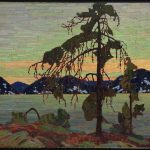
Montana, often called “Big Sky Country,” is more than a poetic reference to vast horizons and mountainous skylines—it’s also a canvas where centuries of human presence have left an indelible mark through art. The art history of Montana is not simply a footnote in American art; it’s a living chronicle of place, identity, resistance, and transformation. From the sacred pictographs of Indigenous tribes etched into stone long before the notion of “Montana” existed, to the bold strokes of cowboy romanticism and the quiet revolutions of 20th-century modernists, the visual culture of this state tells stories both deeply personal and profoundly historical.
Unlike the metropolitan art centers of the East and West Coasts, Montana’s artistic evolution has been rooted in its relationship to the land. This bond—often reverent, sometimes contested—runs through every era of the state’s visual production. Its early artists were storytellers: Indigenous peoples rendered spirit beings and historical records on hide and rock; European explorers sketched their awe and anxiety into field journals; frontier painters mythologized cowboys and buffalo hunts. And as the 20th century dawned, Montana began to incubate a quieter yet equally radical wave of artists influenced by abstraction, printmaking, and ceramics—disciplines that spoke to an emerging modernism far from New York or Paris.
Art in Montana is also a mirror of its complex cultural intersections. The land that inspired Charles M. Russell’s celebrated Western tableaux is the same territory that holds ancestral power for the Blackfeet, Salish, Crow, and other Native nations. While one tradition sought to preserve vanishing images of the “Old West,” the other has long worked to maintain and evolve vibrant, living practices—from intricate beadwork to political installation art—that continue to speak with urgency and grace.
Geography, too, plays a defining role. Montana’s wild rivers, jagged peaks, and sprawling plains are not just subjects—they are participants in the state’s artistic conversation. This dialogue between human and land has fostered a unique kind of environmental consciousness, especially in contemporary art movements rooted in ecological stewardship and critique of resource exploitation.
In many ways, Montana is a paradox: it is a place often seen as remote yet central to the mythology of American identity; a land marked by rugged individualism but also deeply communal traditions. These tensions—and the art they inspire—form the beating heart of Montana’s visual history.
This exploration will journey through ancient petroglyphs and the painted fantasies of Western expansion, pause with the quiet visionaries of midcentury studios, and arrive at the voices shaping today’s art landscape. Along the way, we will reconsider what it means to make art in Montana—and how that art, in turn, helps define America.
Indigenous Artistic Traditions Before Colonization
Long before Montana was mapped, named, or settled by non-Native peoples, it was already a place of profound artistic creation. For thousands of years, Indigenous nations have made art here—not as a peripheral activity, but as a fundamental expression of cultural identity, spiritual connection, and survival. In many ways, the true beginning of Montana’s art history is Indigenous: a continuum of visual storytelling that predates written records and continues to evolve in powerful ways today.
Among the oldest surviving artworks in Montana are rock paintings and petroglyphs, some dating back more than 5,000 years. Found across the state—from the Bear Gulch and Pictograph Cave sites near Billings to the sacred Badger-Two Medicine area—these images are not random markings, but carefully composed spiritual and historical records. Depictions of animals, hunting scenes, human figures, and supernatural beings reflect deep cosmologies. Often rendered in red ochre or carved into sandstone, they functioned as ceremonial offerings, teaching tools, or memory aids for oral traditions.
Such art was never “art for art’s sake.” Among tribes like the Apsáalooke (Crow), Niitsitapi (Blackfeet), Kootenai, and Salish, visual expression was deeply embedded in daily life and ceremonial practice. Materials—buffalo hides, porcupine quills, beads, bones—were imbued with spiritual significance. The act of creation often involved ritual protocols, connecting the maker to ancestors, the spirit world, or the natural elements.
One of the most remarkable traditions to emerge from the Plains tribes was ledger art, which gained momentum in the late 19th century but has roots in much earlier hide painting. Before the arrival of paper and pencils via trade and captivity, tribes recorded significant events—such as battles, visions, or migrations—on buffalo robes. These artworks were both personal and communal records, often worn in ceremony or displayed in lodges. After the U.S. military campaigns and the rise of reservation systems, artists adapted their practice to the materials at hand: lined ledger books, colored pencils, ink. The result was a hybrid form of narrative drawing that blended Indigenous iconography with Western tools, creating a distinct and poignant genre that endures today.
Beadwork, too, tells a complex story of continuity and adaptation. Prior to contact, quillwork was the primary form of surface decoration, requiring immense skill to soften and dye porcupine quills, then stitch them onto garments, bags, and regalia. With the arrival of glass beads through European trade, new colors and patterns emerged, but the spiritual meanings remained intact. Each design—whether geometric or floral, personal or clan-based—could encode prayers, kinship, or origin stories. Beadwork became a visual language that communicated cultural identity and resistance, especially during eras of forced assimilation.
Art was not confined to “objects” in the Western sense. The body itself was a canvas. Face painting, tattoos, and adornments were all forms of artistic expression tied to life stages, spiritual visions, or social roles. And beyond the individual, entire spaces were shaped artistically—tipis painted with family totems, sacred sites adorned with offerings, dance grounds carefully constructed for seasonal ceremonies.
While colonization sought to suppress Indigenous art—through boarding schools, land theft, and religious persecution—it never succeeded in extinguishing it. In fact, artistic traditions adapted and survived, sometimes underground, sometimes transformed, but always present. Today, Montana remains home to vibrant Indigenous art communities who continue these legacies with reverence and innovation. Artists such as Kevin Red Star (Crow) and Dwayne Wilcox (Oglala Lakota) draw on these deep traditions, merging historical techniques with contemporary forms to assert sovereignty, tell stories, and reimagine Indigenous futures.
To speak of “art history” in Montana without centering Indigenous traditions is not just an oversight—it is a fundamental distortion. These visual systems predate and outlast colonial frameworks. They are the first and continuing voice of the land.
Impact of European and American Expansion
The arrival of European and American explorers, missionaries, and settlers in the 18th and 19th centuries marked a seismic shift in the cultural and artistic life of Montana. As contact zones expanded across the Northern Plains and into the Rocky Mountain West, so too did a new visual narrative—one built not just on observation, but on projection. The art that emerged in this period served competing purposes: it documented a land both feared and romanticized by newcomers, and it became a tool of colonization, reinforcing imperial ambitions even as it borrowed from Indigenous sources.
The earliest images of Montana created by non-Native hands often came from expeditionary artists. These were not full-time painters or sculptors in the academic sense, but rather trained illustrators accompanying scientific or military surveys—such as those led by Lewis and Clark, and later, the Pacific Railroad Surveys. Artists like Karl Bodmer and George Catlin, though not based in Montana, produced influential works of Native peoples and landscapes that shaped how Eastern audiences imagined the West. Their lithographs circulated widely, bringing distant “wilderness” scenes into urban parlors and fueling the myth of untouched, sublime nature—despite the deep human histories embedded in these places.
These early works served dual roles. On one hand, they recorded what explorers encountered: buffalo herds, teepee camps, snowbound ranges. On the other, they stripped these realities of context, often romanticizing or flattening the complexity of Native life. Catlin, for example, described himself as saving the “vanishing Indian” through portraiture, even as federal policies accelerated that disappearance. The irony was profound: art that mourned Indigenous loss was sometimes produced in tandem with the very forces causing it.
Meanwhile, settler artists—some amateurs, some trained—began to stake their own aesthetic claims. As homesteaders moved into Montana following the Homestead Act of 1862 and the completion of key railroads, a new visual vocabulary took root. Watercolors and oil paintings of cabins, farms, and frontier towns began to appear, sometimes as personal keepsakes, other times for public exhibition. These works depicted daily life but also participated in a broader ideological project: the rendering of the West as a place of promise, possession, and permanence.
Photography became an especially potent medium during this era. Figures like L.A. Huffman, stationed at Fort Keogh in the 1870s, documented everything from military campaigns to buffalo slaughter. His work—gritty, immediate, and often haunting—provides one of the most extensive visual archives of eastern Montana in transition. Yet photography, too, was not neutral. It shaped public memory, casting Montana as both frontier theater and fertile ground for Manifest Destiny.
At the same time, Indigenous artists continued to create, though now under new constraints. Ledger art evolved as a means of adapting traditional storytelling to new conditions of confinement and displacement. Hide paintings gave way to ink sketches in boarding schools or prison camps. Even beadwork subtly shifted, incorporating designs that navigated dual identities—honoring tradition while engaging with the pressures of assimilation.
What emerged from this collision of visual cultures was a complex layering of perspectives. The Euro-American expansion of Montana did not simply overwrite Indigenous art, but rather created a contested field where art became a battleground of meanings. One canvas might depict a serene prairie homestead; another, a record of forced removal. Both were “Montana,” and both revealed truths—if read with care.
By the late 19th century, Montana had become not just a subject of art, but also a destination for artists. Painters and photographers came seeking authenticity, grandeur, and inspiration. But as they did so, they also reinforced selective visions of the West: heroic, empty, ripe for conquest. These visions would go on to dominate the visual culture of Montana for decades, but they would not go unchallenged.
The Rise of the Cowboy and Frontier Mythology in Art
If the American West is one of the most mythologized regions in global consciousness, then Montana is one of its most vivid dreamscapes. By the late 19th century, the cowboy—once a practical laborer in cattle drives and ranches—had been transformed into a symbol of rugged independence, masculine virtue, and heroic individualism. Art played a foundational role in this transformation, and Montana was both the stage and the subject. Through painting, sculpture, photography, and later film, the state became a crucible for a cultural fantasy: a place where the old ways of the frontier endured in defiance of modernity.
This romanticization found its most powerful early expression in the works of Charles Marion Russell, who would become the most influential artist in shaping Montana’s visual mythology (and the focus of the next section). But Russell was not alone. The closing of the frontier, officially declared in the 1890 U.S. Census, sparked a national nostalgia for what was perceived as a disappearing way of life. Montana, relatively unsettled and still teeming with the iconography of open range life—cowboys, Native Americans, buffalo, dramatic landscapes—offered a ready-made palette for artists eager to capture this vanishing world.
The cowboy, in particular, emerged as the hero of this mythology. Dressed in fringed leather, silhouetted against the sunset, he stood for a fiercely individualistic ethos. This image, repeated endlessly in paintings and illustrations, bore only a loose resemblance to historical reality. Real cowboys—many of whom were Indigenous, Black, or Mexican—faced grueling, underpaid labor, far removed from the romantic veneer applied by artists in the East and by urban collectors. But in Montana’s visual culture, the cowboy was elevated to near-mythic status.
Artistic depictions of frontier life also served ideological purposes. As Montana transitioned from territory to statehood (achieved in 1889), imagery of peaceful cattle drives, log cabins, and stoic cowboys helped craft a settler identity rooted in supposed harmony with the land. These works masked the violent dispossession of Native peoples and the environmental transformations wrought by ranching, mining, and railroads. Art, in this case, was not just representational—it was aspirational and revisionist.
Yet even within these constructed images, complexity sometimes slipped through. Russell, for example, while deeply complicit in myth-making, also included moments of cultural nuance and Indigenous dignity that exceeded many of his contemporaries. His paintings often dwelled on moments of transition—the last buffalo hunt, the dying warrior, the vanishing trail—which, though tinged with romantic fatalism, betrayed a deep ambivalence about modernity’s march.
Photography, too, contributed to the cowboy mythos. Studio portraits staged in towns like Great Falls or Miles City often featured men posed in dramatic regalia, often exaggerating their attire to meet Eastern expectations. These photos circulated nationally in magazines and catalogues, further embedding the icon of the cowboy into the American imagination. Meanwhile, real-life cowhands remained largely anonymous, their lived experiences sidelined in favor of symbolic function.
As the 20th century began, this visual mythology expanded into new mediums. Posters, calendar art, early Western films—all borrowed the iconography born in Montana’s open country. The landscapes themselves became shorthand for freedom, danger, and destiny. In the process, Montana’s art was exported beyond its borders, helping to construct an idea of the West that resonated from Kansas to Berlin.
But as with any mythology, cracks would eventually appear. Later generations of artists would begin to question the cowboy archetype, interrogate the erasure of Native voices, and challenge the idealized depictions of frontier life. Even so, the cowboy still casts a long shadow across Montana’s artistic identity—one that continues to be reinterpreted, reclaimed, and resisted.
Charles M. Russell and the Birth of Western Art
Few names are as inseparable from the mythology of the American West as Charles Marion Russell. Born in St. Louis in 1864, Russell arrived in Montana as a teenager in 1880, drawn by the same allure that would come to define his art: the dream of the frontier. But unlike many who simply passed through or profited from the West, Russell immersed himself in it—working as a cowboy, living among the Blackfeet, and eventually becoming the most celebrated artist of the American frontier. Through hundreds of paintings, watercolors, bronzes, and illustrated letters, he crafted a visual world that both documented and mythologized the last days of the “Old West.”
Russell’s art was deeply rooted in firsthand experience. He spent years on cattle drives and ranches, absorbing the rhythms and hardships of life on the range. This authenticity set him apart from Eastern artists who often depicted the West based on secondhand accounts or brief excursions. Russell lived the stories he painted—his brush moved with memory rather than imagination alone. His early sketches, done on scraps of paper or animal hides, were passed around cowboy camps before eventually catching the attention of collectors and publishers.
By the 1890s, Russell was a full-time artist living in Great Falls, Montana, where he built a log-cabin studio that became a local landmark. There, he developed a body of work that would come to define the visual language of Western art. Paintings such as The Jerkline (1900), When the Land Belonged to God (1914), and Bronc to Breakfast (1908) are not only rich in narrative detail—they’re layered with tension, humor, nostalgia, and reverence.
One of Russell’s most important contributions was his portrayal of Native Americans. Unlike many of his contemporaries, who depicted Indigenous people as generic, vanishing figures, Russell had lived among the Blackfeet Nation and maintained respectful relationships with tribal leaders. He often painted Native subjects with empathy and specificity, capturing moments of daily life, ceremonial importance, or cultural resilience. His Indian Camp scenes, for example, show warmth and dignity rather than exoticism. Still, his work was not free from the biases of his era—Russell’s vision of Indigenous life was often framed in the past tense, contributing to the broader “vanishing race” narrative that circulated at the time.
Stylistically, Russell’s work sits at the intersection of illustration, realism, and storytelling. He had little formal training—just a brief stint at the Saint Louis School of Fine Arts—but his natural sense of composition, color, and drama was extraordinary. He favored action-packed scenes: galloping horses, bison stampedes, barroom fights. His use of light and shadow could be cinematic, and his attention to period detail—clothing, weapons, saddles—was meticulously observed. He also possessed a wry sense of humor, often infusing his scenes with visual jokes or ironic titles.
In addition to his paintings, Russell was a prolific sculptor. His bronzes, such as Meat for Wild Men (1927) and Counting Coup (1905), were celebrated for their kinetic energy and lifelike detail. His work in three dimensions helped elevate Western art beyond illustration, positioning it within the realm of serious fine art.
Russell’s fame grew rapidly in the early 20th century. He exhibited widely, published illustrated books and postcards, and counted figures like Theodore Roosevelt among his admirers. Yet despite his national acclaim, Russell remained loyal to Montana, rarely leaving his home state for long. He saw himself as a custodian of a disappearing world, and his mission was not just artistic but archival—preserving what he called the “West that has passed.”
Critics and historians often debate Russell’s legacy. Some view him as a romanticizer who helped solidify a white, male-centered vision of the West. Others see him as an ethnographer-artist whose firsthand engagement with Montana’s frontier life lent his work enduring value. The truth likely lies between: Russell was both a chronicler and a myth-maker, documenting life as he saw it while also shaping a genre that would become central to American identity.
Today, Russell’s legacy is enshrined in institutions such as the C.M. Russell Museum in Great Falls and in countless private and public collections. His influence on subsequent generations of Western artists—from Frederic Remington to modern-day painters like Howard Terpning—is profound. More than a century after his heyday, Russell’s images continue to define how many people visualize Montana’s past—and to spark new conversations about whose stories remain untold.
The Great Northern Railway and Tourism Imagery
By the early 20th century, Montana’s visual identity was no longer just the domain of painters and photographers capturing the lives of cowboys and Native peoples. A new force entered the artistic landscape: the tourism industry, spearheaded by the expansion of the Great Northern Railway (GNR). This railroad, running from Saint Paul, Minnesota to Seattle, Washington, passed directly through northern Montana and played a decisive role in transforming the state’s image from remote wilderness to desirable destination. With it came a flood of promotional art—posters, brochures, murals, and advertising campaigns—that both capitalized on and helped construct Montana’s mythic appeal.
At the center of this promotional push was James J. Hill, the Canadian-American entrepreneur who built the GNR. Hill understood that tourism could be as lucrative as freight, especially if the West could be marketed as an exotic and scenic escape. Nowhere was this vision more fully realized than in Glacier National Park, which was established in 1910 and quickly became the crown jewel of the GNR’s tourism campaign.
To promote Glacier, Hill’s marketing team employed a highly curated aesthetic that drew on European traditions of romantic landscape painting, filtered through American nationalism. Posters featured towering snow-capped peaks, pristine lakes, and lone mountain goats gazing nobly into the distance. The aim was not just to attract visitors—it was to sell a fantasy of purity, majesty, and untamed nature. Montana, in this imagery, became the last refuge of the sublime.
Perhaps the most iconic examples of this visual campaign were the lithographic posters produced for GNR by artists such as Winold Reiss, Louis Hill (James Hill’s son), and a cohort of anonymous commercial illustrators. Reiss, a German-born modernist with a fascination for Indigenous culture, was particularly influential. He painted a celebrated series of Blackfeet portraits in the 1920s and 30s, many of which were reproduced in tourism materials, menus, and hotel decor.
These portraits were striking—dignified, colorful, rendered with an ethnographic attention to detail. But their use was complicated. While Reiss himself was respectful in his approach, the GNR’s promotional use of his work often reduced Native figures to decorative elements in a fantasy of “friendly Indians” who welcomed tourists. Brochures and murals showed Blackfeet guides greeting visitors at railway stops or posing in front of tipis near Glacier lodges—scenes carefully staged to make Indigenous people part of the exotic backdrop rather than active agents of their own culture.
In this way, the Great Northern Railway played a dual role in Montana’s art history. On one hand, it commissioned work from highly skilled artists, expanded the visual representation of Montana landscapes, and introduced millions of Americans to the state’s natural beauty. On the other, it commodified both the land and its original inhabitants, contributing to a sanitized and often misleading image of frontier harmony.
Architectural and interior design elements in GNR lodges and chalets also reflected this curated aesthetic. Structures like the Many Glacier Hotel or Lake McDonald Lodge were built in a “Swiss chalet” style, suggesting a romantic alpine experience. Interiors featured Native-inspired motifs—animal skins, beadwork patterns, carved poles—that evoked authenticity while subtly erasing the reality of land dispossession and cultural suppression taking place outside the hotel walls.
These contradictions were central to the era’s tourism art. Montana was marketed as both wild and welcoming, rugged and restful, ancient and accessible. The carefully constructed visuals reinforced settler colonial narratives by suggesting that the land’s Indigenous past was picturesque and passive, while the future—comfort, leisure, transportation—belonged to white modernity.
Nevertheless, the railway’s patronage did support artists who might otherwise have gone unnoticed. Reiss’s Blackfeet portraits are still considered some of the most important representations of Native Americans from the early 20th century. And for all its commercial intent, the visual legacy of the Great Northern Railway remains a powerful chapter in the state’s artistic story—an example of how infrastructure, capital, and art converged to shape collective memory.
Today, echoes of this era still linger in Glacier’s visitor centers, historic hotels, and travel brochures. The images continue to circulate, sometimes uncritically, sometimes reframed. But behind them lies a complex truth: that Montana’s beauty was both celebrated and sold, its people both portrayed and packaged.
Art Communities and Early 20th-Century Movements
While Montana’s early art history is often dominated by iconic figures and mythologized imagery, a quieter, more communal art scene began to emerge in the early 20th century—one shaped not by national fame or heroic subjects, but by collaboration, experimentation, and education. As towns grew, universities expanded, and railroads brought greater access, Montana saw the development of art societies, local exhibitions, and regional schools that helped foster an enduring and diverse creative culture. These early communities laid the foundation for the state’s transition from a land of isolated makers to a vibrant network of artists.
Much of this growth was centered around academic institutions, particularly what is now Montana State University (MSU) in Bozeman and the University of Montana in Missoula. These schools became critical hubs for artistic development, offering not only formal instruction but also platforms for exhibiting work and connecting with broader artistic movements. Faculty and visiting artists played a pivotal role in bridging the gap between regional traditions and national currents in art.
One key figure in this era was Edgar S. Paxson, who, though best known for his detailed historical paintings—especially Custer’s Last Stand (1899)—also contributed to the growing infrastructure of Montana art by mentoring young artists and helping establish local art clubs. His studio in Missoula functioned not just as a workplace but as a gathering place, where painters, writers, and craftspeople exchanged ideas and materials.
In tandem with academic and private efforts, art associations and clubs began forming in Montana’s growing cities. These included the Butte Art Association, the Helena Art Club, and smaller, often women-led groups that organized exhibitions, taught classes, and encouraged public appreciation of art. These organizations were deeply important in democratizing art across Montana, especially at a time when the state’s population was still largely rural and working-class. Local exhibitions—often held in libraries, schools, or department stores—helped make art a shared civic experience, not just an elite pursuit.
This was also a period of experimentation and transition. The influence of Arts and Crafts ideals began to permeate Montana through publications and correspondence with national guilds. Local artists took inspiration from these movements, focusing on handcraft, simplicity, and integration of art into daily life. Textiles, ceramics, woodwork, and other applied arts flourished in this climate, blurring the lines between fine art and functional design.
Women played a central role in this developing art scene. Artists such as Olive Fell, a painter and printmaker from Wyoming who spent time in Montana, and Mary Long Alderson, a suffragist and promoter of women’s arts in Bozeman, helped shape a feminist sensibility in regional creativity. Women not only made art but organized salons, taught children, and preserved Indigenous techniques like weaving and dyeing through cultural outreach and preservation efforts.
Another important thread in this period was the growing interaction between Native and non-Native art communities. While these interactions were often asymmetrical—framed by paternalistic views or anthropological interest—some artists and educators worked to create spaces of genuine exchange. In certain schools and fairs, Native artists were invited to display beadwork, hide painting, and regalia alongside Euro-American oil paintings or etchings. Though rarely equal, these early exhibitions foreshadowed the cross-cultural dialogues that would deepen in the decades to follow.
The early 20th century also saw Montana artists participating in national art movements, albeit from a distance. Trends such as Impressionism, Tonalism, and American Scene painting made their way west, often filtered through personal interpretation. Painters captured Montana’s landscapes in new ways—less heroic than Russell’s, more meditative and atmospheric. These works reflected a changing relationship to place: less about conquest, more about contemplation.
While New York and Chicago remained the gravitational centers of American art, Montana artists were beginning to define a regional aesthetic that was neither wholly nostalgic nor fully modernist. This was art born of place—of mountains and valleys, of harsh winters and brilliant skies, of cultural collision and community effort.
By the 1930s, with the advent of New Deal arts programs like the WPA, this growing infrastructure would receive its biggest boost yet. But even before federal investment, Montana’s art communities were laying down roots—quietly but steadily shaping the state’s cultural identity in ways just as lasting as the cowboy legends or railroad posters.
Montana Modernism and Post-War Art
By the end of World War II, American art was undergoing a profound transformation. Abstract Expressionism had burst onto the scene, the New York art world was overtaking Paris as the global epicenter of avant-garde thought, and artists across the country were questioning the very definitions of painting, sculpture, and aesthetics. In Montana, these changes were not simply imported—they were reinterpreted, localized, and, in some cases, resisted. What emerged in the mid-20th century was a distinctly Montana form of modernism: rooted in place, engaged with new ideas, and driven by a close-knit network of visionary artists and educators.
The beating heart of this movement was Montana State College (now MSU) in Bozeman, particularly through the influence of Robert DeWeese and Jessie Wilber. Arriving in the late 1940s, DeWeese—a painter and printmaker trained at Ohio State and heavily influenced by European modernism—helped revolutionize the art curriculum. Rather than adhering to traditional, representational art, he encouraged exploration in abstraction, mixed media, and printmaking. His wife, Jessie Wilber, an innovative printmaker herself, brought a precise, experimental sensibility to the studio, and the two together created an intellectual and creative nucleus that would transform the region’s art scene.
Their home in Cottonwood Canyon became a kind of salon—a retreat where students, colleagues, and visiting artists came together to discuss theory, critique work, and challenge boundaries. It was here that Montana modernism truly took shape: not as a defined style, but as a spirit of inquiry. Artists were encouraged to engage with their environment not only as subject matter, but as metaphor, material, and metaphorical force.
Wilber, in particular, brought the influence of Bauhaus design, Cubism, and Japanese woodblock printing to the fore. Her silkscreens and lithographs distilled Montana’s landscapes into geometric patterns and subtle tonal shifts. Rather than painting grand scenes of the West, she deconstructed them—reducing mountains to triangles, skies to soft gradients, creating a deeply personal visual language that balanced modernist form with Western light.
Meanwhile, DeWeese’s paintings evolved from semi-abstract landscapes to pure abstraction. His later works often referenced fences, fields, and the human-made structures within nature, echoing the modernist tension between organic and industrial forms. Yet unlike New York abstraction, which could feel detached or cerebral, Montana’s modernists grounded their work in physical experience. There was dirt in the studio, wind outside the window, and a sense of place that permeated every canvas.
Other important figures in this era included Frances Senska, a ceramicist and educator at MSU whose students would go on to reshape American craft. One of her most famous protégés was Rudy Autio, who fused classical forms with wild, expressive glazes and figurative drawing, and Peter Voulkos, who would later become a leading figure in the California clay revolution. Senska taught not just technique but philosophy—encouraging students to see art-making as a moral and intellectual pursuit. Her studio, like the DeWeeses’ home, became a seedbed for modern thought.
This mid-century moment was also marked by regional tension. Not all Montanans welcomed abstract art. Some critics and community leaders dismissed modernism as elitist or alien, disconnected from the state’s working-class ethos and traditional Western themes. But the modernists responded not with rejection, but by deepening their engagement with the landscape and history—proving that contemporary forms could coexist with regional identity.
Exhibitions in Bozeman, Missoula, and Billings began to showcase this new wave of Montana art, drawing attention from critics in the Pacific Northwest and even New York. By the 1960s, Montana was no longer seen merely as a site of frontier nostalgia—it was increasingly recognized as a place where serious, innovative art was being made. Nationally, this shift paralleled movements toward regional modernism across the American West and Midwest, where artists refused to mimic coastal trends but also refused to remain isolated.
Perhaps the most remarkable thing about Montana modernism is its longevity. The DeWeese-Wilber circle continued to inspire generations of artists well into the 1980s and beyond. Their influence can still be felt today in the state’s art schools, printmaking studios, and galleries that champion experimentation grounded in local experience.
In hindsight, this era proved that Montana did not have to choose between tradition and innovation. The modernists of the mid-20th century showed that the landscape could be both muse and mirror—that abstraction could contain as much place-based meaning as any cowboy on a horse. They offered a new kind of Western art: not the mythic past, but the contemplative present.
Native American Artistic Resurgence in the 20th Century
Throughout the 20th century, Native American artists in Montana sustained, transformed, and revitalized artistic traditions that had long endured—often underground or in the face of cultural suppression. While much of early 20th-century art in the state focused on Indigenous people as subjects, rarely were they recognized as creators of fine art in their own right. That began to change dramatically in the postwar decades. From renewed beadwork practices to bold new voices in painting, printmaking, and performance, Native artists in Montana entered a renaissance—a visual and political resurgence that continues to evolve today.
This movement cannot be separated from the long legacy of colonization, cultural loss, and resistance. During the boarding school era (late 19th through early 20th century), Native children were often punished for practicing traditional arts or speaking their languages. Government assimilation policies sought to destroy Indigenous culture, yet Native peoples across Montana—including the Crow (Apsáalooke), Blackfeet (Niitsitapi), Salish and Kootenai, and Northern Cheyenne—found ways to preserve and pass down their aesthetic knowledge. Quillwork, hide painting, and oral storytelling persisted through family teaching and ceremonial use, even when not publicly recognized as “art” by non-Native institutions.
By the mid-20th century, however, shifts were underway. As Native sovereignty movements gained momentum, so too did artistic expression as a form of political and cultural revival. One of the most prominent Montana artists to emerge in this period was Kevin Red Star, a Crow painter born in 1943 in Lodge Grass, Montana. Trained at the Institute of American Indian Arts (IAIA) in Santa Fe, Red Star brought together modernist abstraction with traditional imagery—feathered war bonnets, horse regalia, camp scenes—but rendered in striking, contemporary palettes. His work defied static ethnographic framing, instead asserting a living, evolving Crow identity on his own terms.
Red Star’s paintings helped break down barriers in galleries and museums that had long segregated Native art into “craft” or “ethnography” sections. He became one of the first Native artists from Montana to achieve national and international recognition, exhibiting in Europe, Asia, and major American institutions. Yet he never detached from his roots. His studio in Roberts, Montana became a space of creative continuity, where he mentored younger artists and remained deeply engaged in community and cultural affairs.
Alongside Red Star, other Native artists in Montana pushed the boundaries of medium and message. Dwayne Wilcox, a Lakota artist who often works in the ledger art tradition, adapted 19th-century styles of drawing into biting, humorous commentary on contemporary Native life. His work—often drawn on repurposed legal documents or financial ledgers—satirizes stereotypes, bureaucracy, and the clash of traditional and modern realities. Though Wilcox is Oglala Lakota, his work has been exhibited widely in Montana, and it speaks to shared experiences across tribal nations.
Montana also became home to a new wave of Native women artists whose work defied both gender norms and outsider expectations. Figures such as Jaune Quick-to-See Smith, though born in Montana’s Flathead Reservation, gained much of her reputation elsewhere. Still, her mixed-media works—often incorporating collage, satire, and political critique—resonate deeply with the region’s Indigenous histories. Quick-to-See Smith challenged both the art world’s racism and its tendency to exoticize Native creativity, insisting instead on a place for Native voices within the language of conceptual and contemporary art.
Institutionally, the growth of tribal colleges in Montana, including Salish Kootenai College, Aaniiih Nakoda College, and others, provided crucial infrastructure for Native artists. These schools not only preserved traditional arts—such as beadwork, hide tanning, and horsehair craft—but also nurtured new talent in digital media, photography, and installation. By reclaiming education as a tool of empowerment, Native artists were able to build their own paths of aesthetic and cultural transmission.
Montana museums, too, slowly began to shift. Once spaces that displayed Native artifacts behind glass, institutions such as the Missoula Art Museum, the Yellowstone Art Museum, and tribal museums on reservations increasingly partnered with Native artists and curators to reframe how Indigenous art was presented: not as relic, but as voice.
The resurgence of Native art in Montana is not just about revival—it’s about continuity and innovation. From powwow regalia that blends historic patterns with neon-acrylic highlights, to installations that comment on resource extraction and land rights, contemporary Indigenous art in Montana challenges old binaries between “traditional” and “modern.” It is both, and more.
Art in this context is never merely aesthetic—it is cultural memory, it is resistance, it is survival. And it is future-facing. As younger generations of artists take up the tools of printmaking, augmented reality, and performance art, the creative renaissance among Montana’s Native communities shows no sign of slowing. It is a reclamation of image, space, and self in a state that too often has tried to paint Indigenous people into the past.
Contemporary Art and Environmentalism
In Montana, the land is never just background—it is protagonist, subject, and in many cases, collaborator. As the 20th century gave way to the 21st, artists across the state began to engage more consciously with environmental themes, responding to ecological degradation, resource extraction, and shifting climate patterns not only as issues, but as artistic catalysts. The result is a vibrant and growing body of contemporary art that fuses environmental awareness with material innovation and conceptual depth.
The seeds of this movement were planted in the 1970s and 80s, as environmentalism became a national concern and artists in the American West began to question the mythologies of untamed wilderness. Montana, with its iconic mountains, rivers, and open plains, was already a symbol of natural beauty. But for those who lived and worked in the state, this beauty came with visible consequences: mine tailings near Butte, deforestation in the northwest, water battles on tribal lands. Artists began to respond not only with protest, but with practice—turning to art as a form of ecological witnessing.
One of the most significant institutions in this space is the Missoula Art Museum (MAM), which has made environmental issues central to its curatorial mission. Exhibitions like The Art of the Anthropocene or WaterWorks brought together painters, installation artists, and multimedia creators who grapple with the visual legacies of pollution, drought, and habitat loss. These exhibitions reflect a shift in values: art is no longer just reflecting the landscape—it is interrogating it.
Among contemporary artists, Courtney Blazon, based in Missoula, has developed a unique illustrative style that weaves ecological anxiety with myth, history, and surrealism. Her drawings often depict natural systems unraveling: animals mutate, borders bleed, history loops. The effect is at once whimsical and ominous—a kind of eco-surrealism rooted in Montana’s own environmental paradoxes.
Another major figure in Montana’s eco-art movement is John Buck, a sculptor and printmaker whose large-scale wood carvings and kinetic sculptures explore themes of human intervention, systemic imbalance, and environmental collapse. Buck, along with his wife and fellow artist Deborah Butterfield—known internationally for her driftwood and cast-metal horse sculptures—lives and works in Bozeman. Their studios, nestled in the foothills, model a kind of sustainable artistic practice that’s deeply engaged with place.
Meanwhile, land art and site-specific installations have taken hold in Montana’s more remote areas. Inspired by pioneers like Robert Smithson and Nancy Holt, regional artists have begun to view the landscape itself as both medium and message. From ephemeral stone arrangements that respond to seasonal shifts, to long-term ecological restoration projects that double as artistic interventions, Montana’s open spaces have become experimental grounds for artists looking to blur the line between object and environment.
Perhaps no place embodies this synthesis of art and ecology better than the Tippet Rise Art Center, located on a 12,000-acre working ranch near Fishtail. Founded in 2016, Tippet Rise hosts monumental sculptures by internationally renowned artists—such as Mark di Suvero, Patrick Dougherty, and Francis Kéré—alongside music performances, residencies, and educational programs. The works are installed in ways that interact with the surrounding environment: catching the light, echoing landforms, or gradually weathering into their surroundings. Here, art and landscape are not separate—they are symbiotic.
Climate change has also emerged as a central concern. Montana’s artists increasingly address the visible signs of a warming planet: receding glaciers in the north, unpredictable wildfire seasons, and water shortages on reservations. These crises have prompted a wave of art that is not only representational but activist. Artists like Corwin Clairmont (Salish-Kootenai) have produced installations and performances that challenge viewers to reconsider their relationship to land, energy, and Indigenous sovereignty. Clairmont’s work often explores the environmental legacy of colonization, particularly the impact of resource extraction on Native lands.
Education and public art also play a growing role in this landscape of eco-conscious creativity. Montana’s universities now support courses and residencies in environmental art, encouraging students to use interdisciplinary approaches—combining science, storytelling, and visual language. Murals in Missoula, sculptures in Bozeman, and performance projects in Helena speak to a broader movement: art is increasingly mobile, public, and participatory.
Importantly, this movement is not monolithic. It spans a range of tones and approaches—from elegy to activism, from data-driven visualization to spiritual reflection. But what unites these works is a shared recognition: that in Montana, the land is not static. It is changing, fragile, and central to the state’s future.
Contemporary environmental art in Montana invites viewers not just to observe, but to reckon—with what has been lost, what is at stake, and what is still possible. In doing so, it reaffirms the oldest truth of Montana’s artistic tradition: that creation is a form of care, and that the land, like any canvas, reflects what we bring to it.
Montana Museums, Galleries, and Art Institutions
Montana’s artistic richness is not only expressed through its individual creators but also sustained by a broad and evolving network of institutions that support, preserve, and promote visual culture. In a state as vast and sparsely populated as Montana, museums and galleries play an outsized role in community-building, education, and cultural identity. They are the bridges between the past and the present—between cowboy painters and contemporary installation artists, between tribal traditions and global discourse.
At the heart of this institutional ecosystem is the Montana Museum of Art and Culture (MMAC) in Missoula. Housed at the University of Montana, MMAC holds one of the oldest and most comprehensive art collections in the region, with over 11,000 objects ranging from ancient artifacts to modern American works. The museum has long served as a critical resource for students, scholars, and the public, offering rotating exhibitions that blend historical depth with contemporary relevance. Recent programming has increasingly highlighted Indigenous artists, environmental themes, and underrepresented voices in Montana’s art history, reflecting a broader shift toward inclusivity and dialogue.
Also in Missoula, the Missoula Art Museum (MAM) stands as a national model for a regionally focused, community-engaged institution. Founded in 1975, MAM has developed a reputation for innovative curation, particularly its commitment to contemporary Native American artists. Its Contemporary American Indian Art Collection (CAIAC) includes work by Jaune Quick-to-See Smith, Corwin Clairmont, and Wendy Red Star, among others. MAM’s exhibitions are often thematic—linking local environmental or political issues with global artistic practices. Its free admission policy, educational outreach, and artist residencies ensure that the museum is not just a gallery space, but a cultural engine.
Moving eastward, the Yellowstone Art Museum (YAM) in Billings offers a dynamic platform for modern and contemporary artists, both Montana-based and national. With its strong permanent collection and ambitious temporary shows, YAM bridges the gap between regional art and broader movements. Exhibitions have ranged from retrospectives of Charles M. Russell to showcases of conceptual photography, experimental sculpture, and digital media. YAM also hosts the annual Montana Triennial, a statewide survey of current artistic trends that underscores the diversity and vitality of Montana’s creative scene.
For many, no discussion of Montana’s art infrastructure would be complete without mention of the C.M. Russell Museum in Great Falls. Dedicated to preserving the legacy of Charles M. Russell, the museum houses over 2,000 works by the artist, including paintings, sculptures, and illustrated letters. While deeply rooted in Western Americana, the museum has made efforts to contextualize Russell within a broader cultural history—inviting critical reflection on his influence and the enduring myths of the West. It also hosts The Russell, one of the country’s premier Western art auctions, which draws collectors and curators from across the U.S.
In Bozeman, the Emerson Center for the Arts and Culture provides another vital hub. Housed in a historic school building, the Emerson combines gallery space, performance venues, studios, and classrooms. Its programming is eclectic and community-oriented, showcasing everything from children’s art to cutting-edge contemporary installations. The center serves as a cultural anchor in a rapidly growing city, fostering dialogue between tradition and innovation.
Tribal museums and cultural centers are equally essential to Montana’s artistic ecosystem. Institutions like the Museum of the Plains Indian in Browning and the People’s Center in Pablo (serving the Salish, Pend d’Oreille, and Kootenai tribes) safeguard and celebrate Indigenous art in all its forms—historic and contemporary, ceremonial and commercial. These spaces often serve as both repositories and incubators: preserving cultural heritage while supporting living artists through exhibitions, workshops, and mentorship.
Independent galleries and artist-run spaces also thrive across Montana’s towns and small cities. From the Paris Gibson Square Museum of Art in Great Falls to Trafalgar Studios in Butte, these venues foster experimentation and risk-taking. Pop-up shows, public murals, and interdisciplinary projects have become more common in recent years, as younger artists seek flexible platforms for sharing work. In towns like Helena and Livingston, galleries often double as community centers, hosting lectures, music events, and open studios.
Academic galleries, including those at Montana State University and Carroll College, further enrich the landscape. These spaces often serve as test grounds for new ideas and emerging talent. Student exhibitions sit alongside faculty research projects and traveling shows, creating a dialogue between learning and professional practice.
What ties these institutions together is a shared commitment to place. Montana’s museums and galleries don’t simply import trends from elsewhere—they engage directly with the land, the history, and the communities they serve. They recognize that art in Montana is not a luxury—it is a language of connection, reflection, and possibility.
Montana’s Place in the National Art Narrative
Montana has often existed on the margins of the national art conversation—not because it lacks artistic richness, but because prevailing narratives have long prioritized urban centers like New York, Chicago, and Los Angeles. Yet, as art historians, curators, and critics revisit the geography of American art, Montana increasingly stands out as a site of extraordinary complexity: a place where tradition and experimentation cohabitate, where land and identity converge, and where voices once overlooked are now reshaping the cultural discourse.
For decades, Montana’s contribution to the American art canon was tethered primarily to Western art—and particularly to Charles M. Russell, whose prolific output of cowboy scenes, Indigenous life, and frontier drama helped solidify the visual lexicon of the American West. For better or worse, Russell’s legacy defined how Montana was imagined by much of the country: as a romantic wilderness peopled by noble cowboys and stoic warriors. This imagery fit neatly into 20th-century myth-making about Manifest Destiny and American exceptionalism, and Russell’s work became a touchstone in both fine art and popular culture.
Yet the deeper story of Montana’s place in American art is far more nuanced. The state’s Indigenous artists—many of whom were excluded from major museums and critical recognition for much of the 20th century—are now claiming space on national and international stages. Figures like Jaune Quick-to-See Smith have been instrumental in this shift. Her politically charged, visually layered work challenges not just stereotypes, but the structures of the art world itself. In 2023, she became the first Native American artist to receive a solo retrospective at the Whitney Museum—a milestone that echoes far beyond her personal career. Her Montana roots, forged on the Flathead Reservation, remain integral to her artistic and activist vision.
Likewise, Montana’s modernist and contemporary movements, once seen as peripheral to the dominant narratives of Abstract Expressionism or Pop Art, are being reevaluated for their originality and depth. Artists like Jessie Wilber, Robert DeWeese, and Frances Senska helped build a distinctly Western strain of modernism—less concerned with cosmopolitan sophistication than with ecological awareness, local texture, and material experimentation. Their work complicates the assumption that modern art only happened in cities. In fact, it flourished on Montana ranches, in campus studios, and inside log cabin workshops.
This sense of regional distinctiveness is increasingly seen not as a limitation, but as a source of strength. Contemporary artists across Montana are tapping into local histories, ecological realities, and cross-cultural conversations to produce work that feels both grounded and globally relevant. Whether it’s Courtney Blazon’s surreal ecological narratives, Corwin Clairmont’s installations exploring land use and Indigenous sovereignty, or the large-scale land works at Tippet Rise, Montana-based artists are participating in urgent national conversations—on climate change, colonial legacies, and the boundaries of artistic form.
Moreover, Montana’s museums, galleries, and artist-run spaces have become part of this national story. Institutions like the Missoula Art Museum and Yellowstone Art Museum are not only exhibiting major contemporary work but actively shaping the discourse around rural modernity, Indigenous futurism, and environmental aesthetics. With initiatives that engage national networks—such as the Montana Triennial—these institutions are placing Montana’s artists squarely in the spotlight, challenging the idea that innovation only occurs on the coasts.
Montana’s story also resonates with broader shifts in the art world’s attention to regionalism, decentralization, and cultural equity. As institutions reassess whose voices have been heard—and whose have been marginalized—Montana’s layered history of colonization, resistance, creativity, and reinvention provides a powerful case study. It is a place where art has always been tied to land and identity, where modernism and tradition exist side by side, and where a new generation is redefining what it means to be an artist in the 21st century.
In the end, Montana’s place in the national art narrative is not defined by conformity to dominant styles or markets. It is defined by its distinctiveness—its deep-rooted commitment to place, its respect for ancestral knowledge, its resilience in the face of marginalization, and its capacity for reinvention. The state is not simply “catching up” with contemporary art—it has been shaping it all along, often in ways the rest of the country is only beginning to recognize.
Montana, it turns out, is not on the periphery. It is one of American art’s most fertile frontiers.