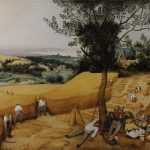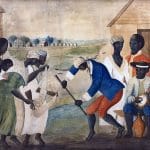
Handcrafted baskets appear so often in paintings of village life that it is easy to overlook their importance. Yet these woven containers were among the most essential tools in rural communities for centuries. They carried grain from fields, vegetables from gardens, eggs from henhouses, and goods to local markets. Artists recognized their significance and repeatedly included them in scenes of daily labor, harvests, and community gatherings. Through paint and canvas, baskets became visual symbols of work, self-reliance, family responsibility, and the rhythms of rural existence.
Unlike expensive manufactured goods, baskets were usually made from materials gathered close to home. Willow, reeds, rushes, straw, and other plant fibers could be transformed into sturdy containers by skilled craftsmen. Because nearly every household used them, baskets naturally found their way into artistic depictions of ordinary people. When painters sought to portray authentic village life, baskets often appeared alongside farming tools, livestock, and harvested crops.
The rise of realism during the nineteenth century increased artistic interest in rural subjects. Painters increasingly focused on ordinary workers rather than kings, generals, or mythological figures. Agricultural laborers, market vendors, shepherds, and harvest workers became worthy subjects in their own right. In these works, baskets frequently served as visual anchors that helped communicate the occupations and daily responsibilities of the people being depicted.
The presence of a basket in a painting can reveal much more than its practical purpose. It can suggest a successful harvest, indicate economic activity, symbolize provision for a family, or demonstrate the craftsmanship of a local community. Many artists used baskets not merely as props but as meaningful elements that enriched the narrative of a scene. Their careful inclusion preserved details of village life that might otherwise have disappeared from memory.
Why Baskets Became Important Symbols in Rural Art
Everyday Objects That Told Bigger Stories
Artists have long understood that ordinary objects can communicate powerful ideas. In village paintings, baskets often perform this role. A simple woven container instantly identifies a worker, vendor, farmer, or gatherer. Without elaborate explanation, viewers understand that labor is taking place and that goods are being collected, transported, or sold.
The effectiveness of baskets as visual symbols comes partly from their universal familiarity. Across Europe, Asia, Africa, and the Americas, rural communities depended upon woven containers for countless tasks. Because viewers recognized these objects immediately, artists could use them to establish setting and social context with remarkable efficiency.
Baskets also added texture and visual interest to a composition. The interwoven strands created intricate patterns that contrasted with fabrics, soil, stone, and vegetation. Painters often took great care to render these details accurately, demonstrating both technical skill and close observation of rural life.
Many nineteenth-century artists worked directly from nature or from extensive sketches made in villages and farming districts. Their attention to baskets reflected a broader commitment to depicting reality faithfully. Rather than idealizing rural life, many painters sought to show the actual tools and objects that shaped daily existence.
The Connection Between Basketry and Village Economies
Village economies depended heavily on transportation and storage long before modern infrastructure developed. Baskets filled this need effectively. Their appearance in paintings often signals economic activity occurring within the scene.
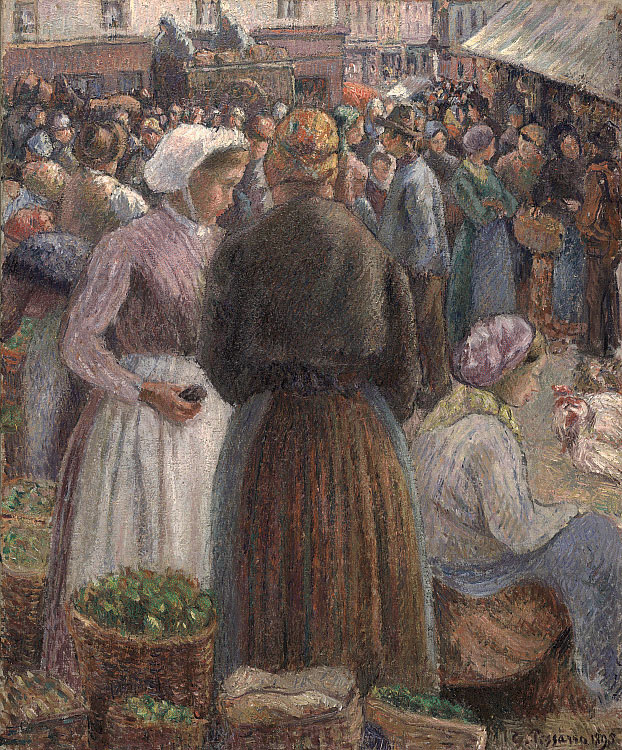
Market paintings frequently feature women carrying baskets filled with vegetables, poultry, fruit, flowers, or dairy products. These goods represented household income and local commerce. A basket overflowing with produce could indicate a successful growing season and a thriving community.
In agricultural scenes, baskets often appear during harvest time. Workers gathering grain, grapes, olives, potatoes, or fruit relied on containers capable of handling repeated use. Artists recognized that these objects were inseparable from the labor being portrayed. Removing the baskets would make the scenes less believable and less informative.
The economic significance of baskets extended beyond farming. Basket makers themselves often formed an important part of village economies. Their products were needed by farmers, merchants, fishermen, and households alike. Although painters rarely focused solely on basket makers, the widespread appearance of their creations testifies to the value of their craft.
Realism and the Rise of Rural Subjects
During the middle decades of the nineteenth century, many European artists turned their attention toward ordinary people and everyday labor. This movement toward realism encouraged painters to depict subjects that earlier generations often ignored.
One of the most influential figures in this development was Jean-François Millet. Born in 1814 and raised in rural Normandy, Millet possessed firsthand knowledge of agricultural life. His paintings gave dignity and visibility to farm workers whose labor sustained society yet often went unnoticed in academic art.
Realist painters sought authenticity rather than romantic fantasy. They carefully studied clothing, tools, gestures, and working conditions. Baskets naturally became recurring elements because they were genuinely present in agricultural communities. Their inclusion reinforced the credibility of the scenes being depicted.
The movement influenced artists throughout Europe. Rural labor became a major subject in France, the Netherlands, Belgium, Britain, and elsewhere. As painters increasingly focused on village life, baskets appeared with growing frequency as symbols of productive work and traditional craftsmanship.
Harvest Workers and Baskets in Nineteenth-Century Painting
Jean-François Millet and Rural Labor
Among all nineteenth-century paintings featuring baskets, few are more famous than The Gleaners by Jean-François Millet. Completed in 1857, the work is an oil painting on canvas measuring 83.5 by 111 centimeters. It is housed today in the Musée d’Orsay in Paris.
The painting depicts three peasant women gathering leftover stalks of grain after the main harvest has been completed. This practice, known as gleaning, had ancient roots and provided an important source of food for the rural poor. Millet portrayed the women bending toward the ground, focused entirely on their demanding task.
The contrast between the foreground figures and the abundant harvest in the distance is particularly striking. Wagons, haystacks, and workers fill the horizon beneath a bright sky. Yet the women continue gathering what remains. Their baskets become symbols of perseverance, thrift, and determination within a demanding rural economy.
Jules Breton’s Vision of Harvest Life
Another important treatment of harvest labor appears in The Gleaners by Jules Breton, completed in 1854. This oil-on-canvas painting measures 93 by 138 centimeters and is now in the National Gallery of Ireland.
Breton approached the subject differently from Millet. While both artists depicted gleaners, Breton presented his figures with a greater sense of monumentality and formality. The workers occupy the landscape with quiet dignity, and the baskets they carry help define their role within the agricultural cycle.
The baskets in Breton’s painting function as practical working tools, yet they also contribute to the visual rhythm of the composition. Their rounded forms balance the figures and reinforce the connection between laborers and harvest.
Like Millet, Breton understood that baskets conveyed important information about village life. They reminded viewers that agricultural work depended not only on land and labor but also on countless handmade tools. The woven containers represented craftsmanship supporting agriculture, creating a link between different forms of rural expertise.
Common basket types visible in nineteenth-century harvest paintings include:
- Grain-gathering baskets
- Vineyard harvest baskets
- Orchard picking baskets
- Field carrying baskets
- Market transport baskets
- Woven storage baskets
Their repeated appearance across numerous paintings demonstrates how deeply embedded they were in everyday rural existence.
Key Takeaways
- Handcrafted baskets appear frequently in village paintings because they were essential tools for farming, trade, household management, and food gathering.
- Nineteenth-century realist artists such as Jean-François Millet and Jules Breton used baskets to emphasize the realities of agricultural labor and rural survival.
- Market scenes by Camille Pissarro show baskets functioning as important symbols of local commerce, self-sufficiency, and community life.
- Baskets in art often reveal details about regional customs, traditional craftsmanship, and the economic activities of village communities.
- The continued presence of baskets in celebrated artworks helps preserve visual records of rural traditions that might otherwise have been forgotten.
Frequently Asked Questions
Why do baskets appear so often in village paintings?
Baskets were among the most common tools used in rural communities. Artists included them because they accurately reflected everyday agricultural, domestic, and commercial activities.
Which artist is most closely associated with basket imagery in rural labor scenes?
Jean-François Millet is one of the most important artists associated with rural labor. His 1857 painting The Gleaners prominently features baskets used by women gathering leftover grain after harvest.
Were baskets only used for farming?
No. Villagers used baskets for transporting market goods, collecting eggs, carrying laundry, storing food, gathering firewood, and participating in community celebrations.
Why were baskets important in village economies?
They provided a practical and inexpensive way to transport and store goods. Basket makers also contributed directly to local economies by supplying essential household and agricultural equipment.
What can historians learn from baskets shown in paintings?
Baskets help historians understand agricultural practices, local trade, traditional crafts, household routines, and the daily lives of rural populations.