Few settings capture the rhythm of ordinary life as vividly as the tavern. Long before cameras recorded daily routines, artists filled their canvases with bustling inns, crowded alehouses, and welcoming taverns where travelers rested, merchants negotiated, musicians entertained, and neighbors gathered to exchange news. These paintings preserve details that written records often overlook, from the shape of a stoneware drinking jug to the way light filtered through leaded-glass windows. They remind us that history unfolded not only in royal courts and great cathedrals, but also around wooden tables where people worked, celebrated, argued, and laughed together.
By the sixteenth and seventeenth centuries, taverns had become natural subjects for painters throughout the Low Countries. The rise of genre painting encouraged artists to look beyond kings and saints in search of stories drawn from everyday experience. Taverns offered an endless variety of personalities and situations, allowing painters to combine careful observation with humor, symbolism, and technical skill. Their popularity has endured because they reveal universal aspects of human nature that remain familiar centuries later.
Why Taverns Became Popular Subjects in Art
Centers of Everyday Life
Throughout medieval and early modern Europe, taverns served far more purposes than simply providing food and drink. They offered lodging for travelers, meeting places for merchants, gathering spaces for local residents, and convenient stops for messengers carrying news between towns. In many communities, business agreements were discussed over a shared meal before being finalized elsewhere. Long before newspapers became common, information often spread from one traveler to another inside these busy establishments.
Economic growth during the fifteenth, sixteenth, and seventeenth centuries increased the importance of roadside inns and town taverns. Expanding trade networks brought merchants, sailors, craftsmen, and laborers into regular contact with people from distant regions. This constant movement created lively social settings filled with conversation and activity. Painters found these environments ideal because they naturally brought together people of different occupations, ages, and backgrounds.
Artists also appreciated the visual richness of tavern interiors. Heavy timber beams, brick fireplaces, earthenware pottery, polished pewter tankards, woven baskets, and simple wooden furniture offered countless opportunities to demonstrate technical ability. Sunlight entering through small windows produced dramatic contrasts of light and shadow, giving painters another way to guide the viewer’s attention.
Unlike formal portraits or religious commissions, tavern scenes presented recognizable moments from daily life. Viewers often saw familiar customs, clothing, and occupations reflected in these works. That sense of familiarity helped make genre painting one of the most successful branches of seventeenth-century Dutch and Flemish art.
Entertainment and Moral Lessons
Although many tavern paintings appear cheerful, they frequently carried deeper meanings that contemporary audiences readily understood. Artists used ordinary objects and everyday behavior to encourage moderation, responsibility, and sound judgment. Rather than delivering heavy-handed sermons, they embedded these lessons within lively scenes full of humor and believable human interaction.
Music appears regularly in tavern paintings because it represented both celebration and the fleeting nature of pleasure. Playing cards, dice, overturned drinking vessels, and neglected household duties sometimes hinted that recreation could become excess when pursued without restraint. These symbols varied between artists and regions, but they added layers of meaning beyond the obvious narrative.
Many painters also drew inspiration from familiar proverbs. Viewers in the Dutch Republic often recognized visual references to sayings about honesty, industry, family life, or moderation. The paintings entertained while quietly encouraging reflection, making them suitable decorations for prosperous homes.
This balance between observation and moral storytelling became one of the defining characteristics of Dutch Golden Age genre painting. Rather than condemning ordinary pleasures, artists generally portrayed them as enjoyable parts of life that required wisdom and self-control.
Famous Artists Who Painted Tavern Scenes
Jan Steen and the Lively Inn
Jan Steen (1625 or 1626–1679) remains one of the best-known painters of everyday Dutch life. Born in Leiden into a family involved in the brewing trade, he possessed firsthand knowledge of the world he painted. Historical records indicate that he operated an inn for a period during the 1650s, an experience that undoubtedly enriched his understanding of tavern culture and its colorful personalities.
Steen’s paintings combine careful observation with playful storytelling. His compositions are filled with expressive faces, animated conversations, curious children, wandering animals, and small details that reward close inspection. Every figure contributes to the unfolding narrative, creating scenes that appear spontaneous despite their careful organization.
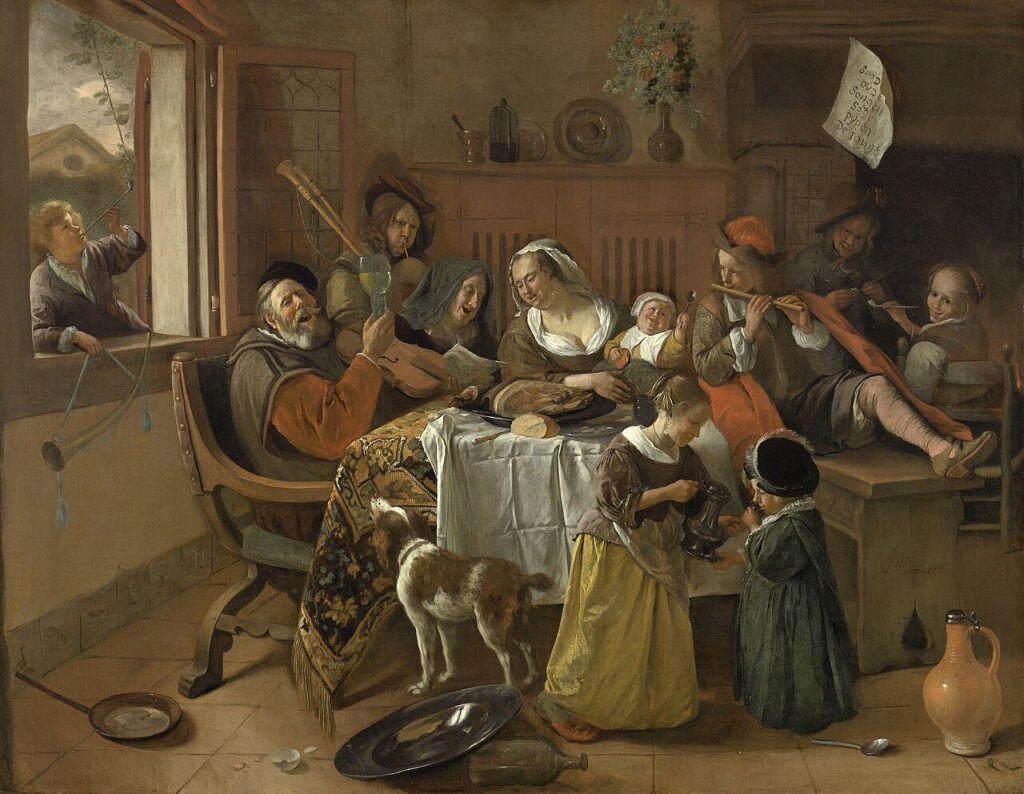
One of his finest tavern subjects is The Dissolute Household, painted about 1663–1664. The painting depicts a family neglecting responsibility in favor of indulgence, illustrating Steen’s gift for blending humor with moral instruction. Rather than portraying vice in a grim manner, he invites viewers to smile while recognizing the consequences of disorder.
Steen’s reputation became so closely linked with cheerful domestic confusion that the Dutch expression “a household of Jan Steen” entered the language to describe a lively, untidy home. His paintings continue to fascinate because they celebrate human character without sacrificing warmth or compassion.
Adriaen Brouwer and Everyday Emotion
Adriaen Brouwer (1605 or 1606–1638) approached tavern life from a different perspective. Working primarily in Antwerp during the 1620s and 1630s, he became renowned for his remarkable ability to capture human emotion. Fellow artists, including Peter Paul Rubens, admired his work and collected his paintings.
Rather than filling large rooms with numerous figures, Brouwer often concentrated on small groups engaged in drinking, smoking, card playing, or conversation. His expressive faces reveal laughter, irritation, surprise, fatigue, and amusement with extraordinary realism. These emotional studies became one of his greatest artistic achievements.
Among his best-known works is The Smokers, painted about 1636. The gathering appears informal and relaxed, yet each participant displays a distinct personality. Brouwer’s energetic brushwork and close observation transformed an ordinary tavern gathering into a vivid study of human behavior.
Although his career was brief, Brouwer exercised lasting influence on later Dutch and Flemish painters. His naturalistic approach encouraged artists to treat common people with dignity while exploring the emotional complexity of everyday life.
David Teniers the Younger
David Teniers the Younger (1610–1690) became one of the most successful Flemish painters of village life during the seventeenth century. After training in Antwerp, he earned widespread recognition for scenes depicting festivals, country fairs, farmyards, and taverns. His reputation eventually led to service in the household of Archduke Leopold Wilhelm.
Teniers generally presented tavern interiors with a calmer atmosphere than Brouwer. His figures converse, eat, play music, and relax in settings filled with warm light and carefully observed detail. Even lively celebrations retain a sense of balance that appealed to wealthy collectors throughout Europe.
One representative work is Peasants Drinking in a Tavern, painted in the mid-seventeenth century. Teniers paid meticulous attention to furniture, pottery, clothing, and architecture, making his paintings valuable historical documents as well as works of art. His ability to combine narrative charm with technical precision helped establish tavern painting as a respected artistic genre.
Collectors appreciated these scenes because they offered engaging glimpses into ordinary life while demonstrating exceptional craftsmanship. Teniers proved that humble subjects could possess lasting artistic value.
Common features of historical tavern paintings include:
- Everyday people rather than royalty or nobility.
- Musicians, storytellers, and card players.
- Carefully rendered drinking vessels and household objects.
- Humor balanced with subtle moral lessons.
- Rich details that document daily life.
Hidden Symbols Found in Tavern Paintings
Objects That Carried Meaning
Seventeenth-century viewers often understood symbolic references that modern audiences overlook. A discarded pipe might suggest the temporary nature of earthly pleasures, while playing cards could represent chance or wasted time. Empty tankards, broken jugs, and neglected belongings sometimes hinted that moderation had given way to excess.
Musical instruments carried multiple meanings. They celebrated companionship and recreation but also reminded viewers that entertainment is temporary. Their significance depended on the surrounding figures and the broader story unfolding within the composition.
Animals frequently appear beneath tables or near doorways. Dogs often symbolized loyalty, though they could also add humor through their natural curiosity. Children likewise served important narrative purposes, frequently reflecting the behavior of nearby adults and reinforcing the idea that younger generations learn through example.
Artists rarely relied on a single symbol to communicate their message. Instead, they combined expressions, gestures, objects, and composition to create stories that rewarded careful observation.
Humor with a Purpose
One reason tavern paintings remain popular is their remarkable storytelling. Every corner of the composition may contain another amusing detail—a musician entertaining delighted listeners, a child secretly sampling an unattended drink, or a customer distracted during a card game. These moments encourage viewers to spend time examining the painting rather than merely glancing at it.
Dutch artists especially enjoyed illustrating familiar proverbs through visual storytelling. Contemporary audiences recognized many of these references immediately, allowing painters to communicate ideas without written explanation.
Lighting also played an important role. Brightly illuminated figures often became the emotional focus of the scene, while darker corners concealed secondary narratives waiting to be discovered. This careful control of light demonstrates the sophistication behind compositions that initially appear effortless.
Today, historians value these paintings not only for their artistic quality but also because they preserve accurate information about interiors, clothing, cooking utensils, furniture, musical instruments, and social customs that might otherwise have been forgotten.
The Lasting Legacy of Tavern Art
From Genre Painting to Modern Storytelling
The success of tavern scenes helped establish everyday life as a worthy artistic subject. Later realist painters built upon this tradition by focusing on workers, families, and communities rather than exclusively portraying historical or religious events.
Museums continue to display these paintings because they combine outstanding craftsmanship with engaging narratives. Visitors often find themselves studying them closely, discovering new expressions and details with every viewing.
Scholars also rely on these works when researching the material culture of the seventeenth century. While artists exercised creative freedom, they frequently painted furnishings, clothing, tools, and household objects with remarkable accuracy.
The enduring popularity of tavern paintings demonstrates that ordinary experiences can reveal enduring truths about society. Shared meals, lively conversation, music, and friendship remain recognizable across the centuries.
Why These Works Still Fascinate Viewers
The finest tavern paintings capture timeless aspects of human nature. Joy, curiosity, generosity, foolishness, and good humor appear as naturally today as they did when these works were first created. Their appeal rests on careful observation rather than exaggeration.
Artists such as Jan Steen, Adriaen Brouwer, and David Teniers the Younger elevated everyday life into enduring works of art. Their paintings preserve moments that history books rarely describe while revealing the richness of ordinary experience.
They also remind viewers that great art does not always require heroic subjects. A crowded room, warm fire, lively tune, and animated conversation can tell stories every bit as compelling as those found in royal palaces or ancient battlefields.
For anyone interested in history, these paintings offer a remarkable opportunity to step into the daily lives of people who lived more than three hundred years ago and to recognize how much of the human experience has remained unchanged.
When studying a historical tavern painting, pay special attention to:
- Facial expressions and body language.
- The interaction between different groups of people.
- Everyday objects that may carry symbolic meaning.
- The artist’s use of light to emphasize the narrative.
- Small background details that reveal life beyond the main action.
Key Takeaways
- Tavern paintings flourished during the Dutch Golden Age as artists increasingly celebrated ordinary life.
- Jan Steen, Adriaen Brouwer, and David Teniers the Younger became leading masters of the genre.
- These works often combine humor with subtle moral lessons rather than straightforward criticism.
- Tavern scenes preserve valuable evidence about seventeenth-century clothing, furnishings, customs, and social life.
- Their enduring popularity comes from their rich storytelling, technical excellence, and timeless portrayal of human nature.
Frequently Asked Questions
- Why were taverns such popular artistic subjects? They brought together people from many backgrounds, providing artists with lively scenes full of recognizable human interaction.
- Were tavern paintings intended to teach lessons? Many included symbolic details encouraging moderation, responsibility, and good judgment while remaining entertaining.
- Did artists paint real taverns? Some scenes were based on direct observation, while others combined elements from multiple locations into carefully planned compositions.
- Why are these paintings useful to historians? They record clothing, furnishings, customs, and interiors with remarkable attention to detail.
- Which period produced the greatest number of tavern paintings? The seventeenth-century Dutch Golden Age and the contemporary Flemish tradition produced many of the finest examples.