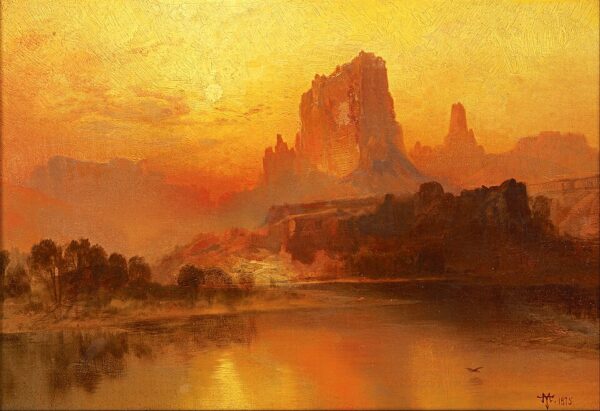
The golden hour is one of the most admired visual phenomena in art. For a short period after sunrise and before sunset, sunlight transforms the world with warm tones, long shadows, and a soft atmospheric glow. Mountains appear more dramatic, city streets become more inviting, and ordinary landscapes seem touched by something extraordinary. Across centuries and artistic disciplines, creators have sought to capture this fleeting light before it disappears.
What makes the golden hour remarkable is not simply its beauty. It changes how people perceive shape, color, texture, and space. A building that appears plain at noon can become striking at sunset. A field can shift from green to gold within minutes. These changes create opportunities for artists to explore mood, emotion, and visual storytelling in ways that are difficult to achieve under other lighting conditions.
The fascination with golden-hour light stretches far beyond painting. Photographers plan entire shoots around sunrise and sunset. Filmmakers often organize production schedules to capture what they call “magic hour.” Digital artists recreate its effects in video games, illustrations, and cinematic concept art. Even sculptors and architects consider how low-angle sunlight interacts with their creations.
From seventeenth-century landscape painters to twenty-first-century digital designers, artists have continually returned to the same source of inspiration: the brief moments when sunlight turns the world into a masterpiece of color and atmosphere.
What Is the Golden Hour in Art?
Defining the Golden Hour
The golden hour refers to the period shortly after sunrise and shortly before sunset when the sun sits low on the horizon. During these times, sunlight travels through a greater thickness of Earth’s atmosphere before reaching the observer. Shorter blue wavelengths scatter away more readily, allowing warmer yellow, orange, and red tones to dominate the visible light.
Although the phrase “golden hour” became popular in photography during the twentieth century, artists had been studying these effects for hundreds of years. Long before modern cameras existed, painters carefully observed dawn and dusk in order to understand how light transformed landscapes and architecture.
The exact duration of the golden hour varies according to season, latitude, and weather conditions. Near the equator it may be relatively brief, while farther north or south it can last longer during certain times of the year. Regardless of location, the light changes constantly, making it one of the most dynamic subjects in visual art.
This constantly shifting quality helps explain why artists remain fascinated by it. Every sunrise and sunset is unique. Even when viewed from the same location, no two golden hours are exactly alike.
Why Artists Are Drawn to Golden Light
Golden-hour light possesses qualities that naturally appeal to artists. It softens harsh contrasts while maintaining strong visual interest. Surfaces appear richer in color, and shadows stretch dramatically across the landscape.
The low angle of the sun enhances texture. Stone walls, tree bark, clouds, and architectural details become more pronounced because the light skims across their surfaces rather than striking them directly from above. This effect creates depth and dimensionality that artists often find irresistible.
Emotion also plays an important role. Human beings have long associated sunrise with beginnings and sunset with reflection. These associations appear throughout literature, religion, mythology, and visual culture. Artists frequently use golden-hour imagery to evoke hope, nostalgia, tranquility, or contemplation.
Unlike artificial lighting, golden-hour illumination often feels organic and timeless. It connects viewers to the natural world and reminds them of experiences they have witnessed firsthand.
The Science Behind the Glow
The distinctive appearance of the golden hour is rooted in atmospheric physics. As sunlight passes through the atmosphere at a low angle, shorter wavelengths scatter more extensively than longer wavelengths. This process allows warm colors to dominate the visible spectrum.
Particles in the atmosphere contribute to the effect. Dust, moisture, and other airborne materials diffuse sunlight and soften transitions between light and shadow. The result is an environment that appears luminous rather than harsh.
Artists may not always think about the scientific explanation, but they observe its visual consequences. Distant mountains become bluish and less distinct. Clouds acquire glowing edges. Water reflects warm tones that seem to shimmer across its surface.
These atmospheric effects help create the sense of depth and mood that make golden-hour scenes so memorable.
Golden Hour in Painting and Traditional Art
Early Landscape Traditions
The artistic fascination with sunrise and sunset predates modern art by centuries. During the Dutch Golden Age of the seventeenth century, landscape painters increasingly focused on natural light and atmospheric conditions.
One notable example is Aelbert Cuyp (1620–1691), whose paintings frequently depict riverside scenes illuminated by warm evening sunlight. Cuyp’s glowing skies and reflective waterways influenced generations of landscape artists who followed.
At roughly the same time, painters in Italy explored idealized landscapes filled with atmospheric effects. These works often combined real observations with imaginative compositions. Golden light became a powerful tool for creating harmony and grandeur.
By the eighteenth century, landscape painting had developed into a major artistic genre. Light was no longer merely a means of illumination. It had become a subject worthy of study in its own right.
Romanticism and the Drama of Light
The Romantic movement of the late eighteenth and early nineteenth centuries transformed the role of light in art. Romantic painters sought to evoke emotion, awe, and spiritual reflection through dramatic depictions of nature.
Among the most influential artists of this era was J. M. W. Turner (1775–1851). Throughout his career, Turner experimented with color and atmosphere in ways that anticipated later developments in modern art. His landscapes often dissolve solid forms into radiant fields of light.
A celebrated example is The Fighting Temeraire tugged to her last berth to be broken up, 1838 (1839). The painting depicts a historic British warship being towed along the River Thames beneath a glowing sunset sky. According to the National Gallery, the work is oil on canvas, measures 90.7 × 121.6 centimeters, and remains in the National Gallery, London.
The sunset in Turner’s painting serves both visual and symbolic purposes. The fading light mirrors the passing of an era, transforming a historical event into a meditation on change and memory.
Impressionism and the Study of Changing Light
During the nineteenth century, advances in paint manufacturing made outdoor painting more practical. Artists could carry portable supplies and work directly from nature. This development encouraged a new emphasis on observing light under real conditions.
The Impressionists embraced this opportunity. Rather than focusing primarily on detailed drawing, they sought to capture fleeting visual impressions created by changing weather and illumination.
Claude Monet (1840–1926) became the movement’s most famous practitioner. His painting Impression, Sunrise (1872) depicts the harbor of Le Havre at dawn. Verified by the Musée Marmottan Monet, the work is oil on canvas, measures 48 × 63 centimeters, and is housed in Paris.
When exhibited in April 1874, the painting helped inspire the name “Impressionism.” Monet’s commitment to recording transient effects of light would influence artists around the world for generations.
Light Beyond Painting
The study of golden-hour effects extended beyond painting. Printmakers experimented with atmospheric conditions in etchings and lithographs. Watercolor artists found that transparent pigments could effectively convey glowing skies and subtle color transitions.
Pastel artists also embraced sunrise and sunset themes because the medium allowed rapid responses to changing light. The softness of pastel often complemented the gentle atmosphere associated with dawn and dusk.
Even sculptors paid attention to golden-hour conditions. Public monuments and architectural sculptures were frequently designed with consideration for how sunlight would interact with surfaces throughout the day.
Long before photography emerged, artists across multiple mediums were already exploring the creative possibilities of low-angle sunlight.
Golden Hour in Photography
The Arrival of a New Medium
The invention of photography in the nineteenth century introduced a new way of capturing light. Following the public announcement of the daguerreotype process in 1839, photographers quickly recognized the visual advantages of sunrise and sunset conditions.
Early photographic technology often required long exposure times. Although this presented technical challenges, the softer illumination of dawn and dusk frequently produced more pleasing results than harsh midday sunlight.
As photographic equipment improved throughout the nineteenth and twentieth centuries, artists gained greater freedom to pursue atmospheric effects. Golden-hour photography gradually became one of the medium’s defining traditions.
The camera’s ability to record subtle shifts in light made it particularly well suited to documenting the beauty of sunrise and sunset.
Landscape Photography and Golden Light
Landscape photographers have long favored golden-hour conditions because of the way they enhance natural scenery. Mountains gain depth, water reflects warm colors, and distant horizons become layered with atmospheric haze.
Among the most influential landscape photographers was Ansel Adams (1902–1984). Although Adams is often associated with dramatic black-and-white imagery, his work demonstrates a profound understanding of how light shapes visual experience. He frequently photographed during early morning and late afternoon hours when shadows and textures were most expressive.
Later photographers expanded these traditions. Galen Rowell (1940–2002) became famous for pursuing exceptional natural light in remote locations around the world. His images helped popularize the idea that timing could be as important as subject matter.
The enduring popularity of landscape photography owes much to the visual possibilities offered by golden-hour conditions.
Portrait Photography and Human Subjects
Golden hour is equally important in portrait photography. The soft, directional light reduces harsh facial shadows and creates flattering skin tones. As a result, many professional photographers schedule outdoor portrait sessions around sunrise or sunset.
Unlike direct midday sunlight, golden-hour illumination wraps gently around facial features. This creates a natural appearance that often requires less artificial modification.
Wedding photographers, family portrait specialists, and fashion photographers routinely rely on these conditions. The warm light contributes to a sense of intimacy and emotional connection that clients frequently prefer.
Because the effect occurs naturally, it often feels authentic rather than staged. This quality helps explain its continued popularity in portrait work.
Architectural and Urban Photography
Cities can become dramatically different places during the golden hour. Glass buildings reflect warm skies, historic stone structures appear richer in color, and streets acquire long patterns of shadow and light.
Architectural photographers frequently use these conditions to emphasize form and texture. Details that might be overlooked at noon become visually compelling when illuminated from the side.
Urban photographers also value the atmosphere created during these hours. The combination of artificial lights beginning to appear and natural sunlight fading away can produce striking visual contrasts.
As a result, some of the most memorable city photographs are made during the brief periods surrounding sunrise and sunset.
Golden Hour in Film, Digital Art, and Contemporary Visual Culture
The Magic Hour in Cinema
Filmmakers often refer to the golden hour as the “magic hour.” The term reflects the unique visual qualities that emerge when natural light becomes warm, directional, and atmospheric.
Directors and cinematographers frequently schedule key scenes around these conditions. The resulting imagery can communicate romance, nostalgia, hope, or solitude without relying heavily on dialogue.
Filmmaker Terrence Malick became known for extensive use of natural golden-hour lighting in films such as Days of Heaven (1978). Cinematographers often praise these sequences for their extraordinary visual beauty.
The challenge lies in the limited amount of available time. Crews may have only a few minutes each day to capture the desired lighting, making preparation essential.
Digital Art and Illustration
The rise of digital technology has introduced new ways of exploring golden-hour aesthetics. Concept artists, illustrators, and visual designers frequently incorporate sunrise and sunset lighting into their work.
Digital painting software allows creators to simulate atmospheric effects that once required extensive traditional techniques. Artists can adjust color temperature, haze, reflections, and shadows with remarkable precision.
Golden-hour lighting has become especially common in fantasy and science-fiction art. Warm light often helps create a sense of wonder while guiding the viewer’s attention through complex scenes.
Although the tools differ from those used by Turner or Monet, the underlying artistic goals remain surprisingly similar.
Video Games and Virtual Worlds
Modern video games demonstrate how deeply golden-hour aesthetics have become embedded in visual culture. Many developers intentionally design virtual environments around sunrise and sunset conditions.
Open-world games frequently use warm lighting to create emotionally engaging landscapes. Players may spend hours exploring digital worlds illuminated by low-angle sunlight and atmospheric haze.
Advances in real-time rendering technology now allow virtual sunlight to behave in increasingly realistic ways. Reflections, shadows, and color shifts can change dynamically as the virtual day progresses.
This technological achievement reflects a centuries-old artistic fascination with the beauty of natural light.
Why Golden Hour Remains Timeless
The appeal of golden-hour imagery transcends medium, style, and historical period. Painters, photographers, filmmakers, architects, and digital artists all continue to explore its possibilities.
Part of its power comes from shared human experience. Nearly everyone has witnessed a sunrise or sunset that felt unforgettable. Artists transform those moments into lasting visual expressions.
Golden light also balances realism and emotion. It reveals the physical world while simultaneously suggesting meanings that extend beyond literal observation. Few visual phenomena achieve this combination so effectively.
As long as artists remain interested in light, atmosphere, and human perception, the golden hour will continue to inspire creative work across every corner of the art world.
Key Takeaways
- Golden hour refers to the warm, low-angle sunlight that appears shortly after sunrise and before sunset.
- Artists have explored golden-hour effects for centuries across painting, photography, printmaking, sculpture, film, and digital media.
- Verified masterpieces such as Claude Monet’s Impression, Sunrise (1872) and J. M. W. Turner’s The Fighting Temeraire (1839) helped establish the artistic importance of atmospheric light.
- Photography and cinematography transformed golden hour into one of the most sought-after lighting conditions in visual culture.
- The emotional and visual appeal of golden light continues to influence artists working in both traditional and modern mediums.
Frequently Asked Questions
- What is the golden hour in art?
- Why is golden-hour lighting popular with photographers?
- How did Impressionist artists use golden light?
- Why do filmmakers call it “magic hour”?
- Does golden-hour lighting influence digital art and video games?