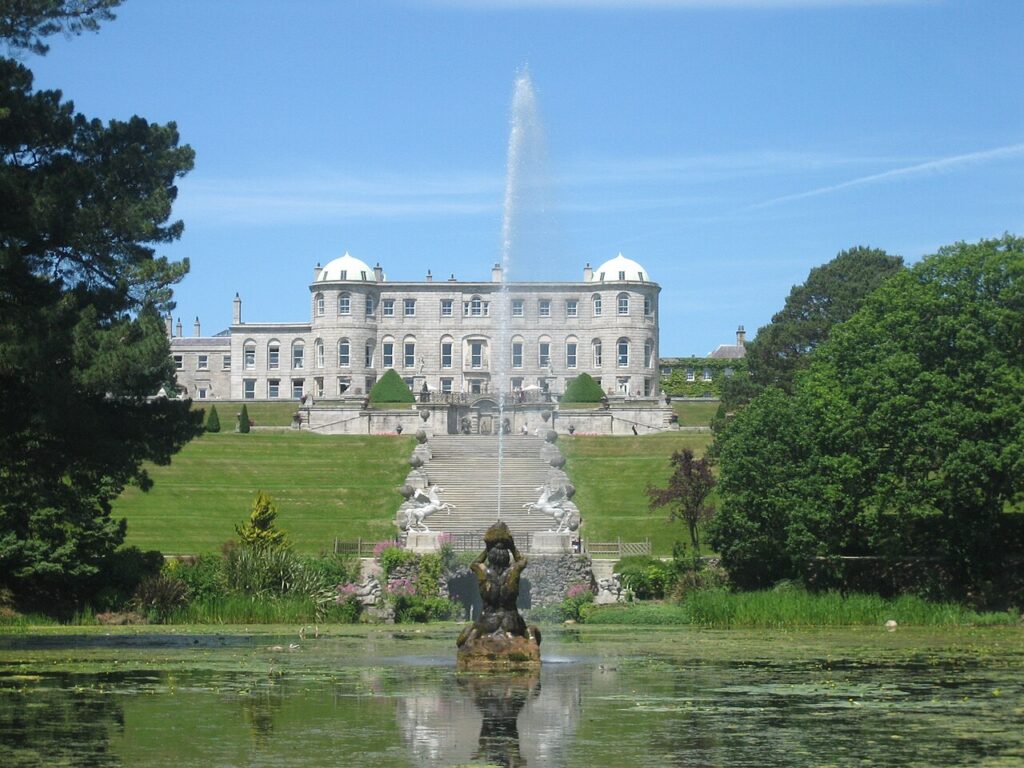
By Amanda Susan Munroe – (from en-Wikipedia, copyright of this picture is described in the description.), CC BY-SA 3.0, https://commons.wikimedia.org/w/index.php?curid=2941900
Few places in Ireland combine natural beauty, thoughtful landscape design, and centuries of history as successfully as Powerscourt Gardens. Set against the dramatic backdrop of the Wicklow Mountains, the gardens have attracted visitors for generations with their sweeping terraces, ornamental lakes, and carefully planned vistas. Located just outside the village of Enniskerry in County Wicklow, Powerscourt Gardens cover approximately 47 acres and form part of the historic Powerscourt Estate. Their design reflects both artistic ambition and a deep appreciation for the surrounding landscape, making them one of Ireland’s finest garden destinations.
Although the estate’s history stretches back to the Middle Ages, the gardens seen today are largely the result of extensive improvements carried out during the eighteenth and nineteenth centuries. Every section was planned to complement the natural scenery rather than overwhelm it. Visitors can stroll through formal Italian-style terraces, peaceful woodland paths, hidden gardens, and open lawns while enjoying uninterrupted views toward the Great Sugar Loaf mountain. The combination of architecture, horticulture, and scenery creates an experience that changes with every season.
The History Behind Powerscourt Gardens
From Medieval Castle to Grand Estate
The story of Powerscourt begins shortly after the Norman invasion of Ireland. Around AD 1209, a fortified castle was built on the site by the Anglo-Norman knight Meiler FitzHenry. The defensive structure overlooked the surrounding countryside and became the center of a growing estate. While the medieval castle no longer survives in its original form, its location established Powerscourt as an important property for centuries to come.
In AD 1603, during the reign of King James I, the estate passed to the Wingfield family. Over the following generations, the Wingfields transformed Powerscourt from a medieval stronghold into an elegant country estate. Their investment reflected the changing tastes of the Irish aristocracy, who increasingly favored comfortable residences surrounded by landscaped grounds instead of fortified castles.
A major transformation began in AD 1731 when Richard Castle, also known as Richard Cassels, was commissioned to redesign the house. Castle was one of the most respected architects working in Ireland during the eighteenth century. His Palladian design gave Powerscourt House the balanced proportions and classical appearance that still define the estate today. The new mansion provided an impressive centerpiece around which future gardens could develop.
The early grounds reflected the formal style popular among wealthy landowners of the period. Straight avenues, geometric planting, and carefully controlled views emphasized order and symmetry. Although later generations softened many of these formal elements, the desire to frame the surrounding mountains remained central to every stage of the estate’s development.
Daniel Robertson’s Vision
The gardens underwent their most significant transformation during the nineteenth century under the direction of Daniel Robertson. Work began in the 1840s after Mervyn Wingfield, the 7th Viscount Powerscourt, inherited the estate. Robertson was one of Ireland’s leading landscape designers and brought fresh ideas inspired by extensive travel throughout continental Europe.
Rather than copying a single historical style, Robertson combined influences from Italian Renaissance gardens, French formal layouts, and the English landscape tradition. His design embraced the dramatic scenery of County Wicklow, using terraces, staircases, and carefully positioned viewpoints to draw the eye toward distant mountains. The surrounding countryside became part of the composition instead of merely serving as a backdrop.
Construction continued for many years. Thousands of trees were planted, lakes were reshaped, and new ornamental features appeared across the estate. Large quantities of stone were moved by hand to build terraces, retaining walls, and decorative structures. The scale of the work demonstrated both remarkable engineering and considerable financial investment by the Wingfield family.
The resulting gardens balanced grandeur with intimacy. Visitors could enjoy broad panoramic views before discovering quieter corners filled with flowering shrubs, ornamental ponds, and secluded walks. This careful contrast remains one of the defining characteristics of Powerscourt Gardens today.
Exploring the Gardens’ Most Famous Features
The Italian Gardens and Grand Terraces
The Italian Gardens form the heart of Powerscourt and provide one of the estate’s most recognizable views. Broad terraces descend gracefully from the rear of the house, leading visitors toward expansive lawns and ornamental lakes. Their formal layout reflects the influence of Renaissance gardens, where architecture and landscape were designed to complement one another.
Stone balustrades, elegant staircases, and carefully clipped hedges create a sense of structure without appearing rigid. Throughout the growing season, colorful flower displays soften the geometric design. The changing palette ensures that no two visits are exactly alike, whether in spring, summer, or early autumn.
Perhaps the most memorable feature is the uninterrupted view toward the Great Sugar Loaf. Rising more than 1,600 feet above sea level, the mountain appears perfectly framed from several points along the terraces. Robertson deliberately designed these sightlines so that the surrounding landscape became an extension of the gardens themselves.
Water also plays an important role in the design. Reflecting pools, fountains, and ornamental basins introduce movement and sound while helping to connect different sections of the estate. On calm days, the reflections of the house and surrounding trees create striking photographic opportunities.
Hidden Corners Worth Discovering
While the formal terraces attract immediate attention, many visitors find the quieter areas equally rewarding. The Japanese Garden offers a peaceful contrast with winding paths, carefully selected plants, and decorative features inspired by traditional Japanese landscape principles. Mature trees provide welcome shade during warmer months and create a calm atmosphere throughout the year.
The Walled Garden demonstrates both practical and ornamental gardening traditions. Historically, walled gardens protected fruit, vegetables, and delicate flowers from strong winds while creating warmer growing conditions. Today the area contains attractive seasonal planting and provides insight into how large country estates once supplied their households with fresh produce.
Another distinctive feature is the Pet Cemetery, where generations of the Wingfield family’s dogs and ponies were buried. Small memorial stones preserve their names and serve as a reminder that country estates were not only grand residences but also family homes with personal histories.
Visitors should also seek out Triton Lake and the Pepperpot Tower. Triton Lake provides one of the estate’s finest reflections, while the Pepperpot Tower occupies elevated ground overlooking the gardens and surrounding countryside. Together they demonstrate how architecture, water, and landscape were carefully combined to create memorable views throughout the estate.
Top Highlights Not to Miss
- The Italian Gardens overlooking the Great Sugar Loaf.
- The sweeping terraces behind Powerscourt House.
- The peaceful Japanese Garden.
- The historic Walled Garden.
- Triton Lake and its reflections.
- The Pepperpot Tower viewpoint.
- The Pet Cemetery with its historic memorials.
Why Powerscourt Gardens Rank Among the World’s Finest
Landscape Design and Seasonal Beauty
Powerscourt Gardens are often praised for the way they blend formal design with the natural landscape of County Wicklow. Rather than competing with the surrounding mountains, the gardens were carefully planned to frame and enhance the scenery. The result is a landscape that feels both grand and harmonious. Every major terrace, avenue, and water feature contributes to a carefully composed view.
Spring is one of the most colorful seasons to visit. Thousands of bulbs emerge across the estate, followed by flowering magnolias, camellias, rhododendrons, and azaleas. Mature trees begin to leaf out, adding fresh shades of green that contrast beautifully with the stone terraces. The combination of blossoms and mountain views makes this one of the busiest times of year.
Summer brings full borders, lush lawns, and long daylight hours. The mature trees provide welcome shade along woodland walks, while ornamental lakes reflect the changing sky. Roses and herbaceous flowers reach their peak, creating vibrant displays throughout the formal gardens. The estate’s varied planting means that different areas come into bloom as the season progresses.
Autumn offers an entirely different experience. Maples, beeches, and other deciduous trees produce rich displays of gold, crimson, and bronze. Fallen leaves soften the landscape and give woodland paths a peaceful atmosphere. Even in winter, the gardens retain much of their appeal through evergreen planting, clipped hedges, architectural features, and long views toward the Wicklow Mountains.
Awards and International Recognition
Powerscourt has earned an international reputation through decades of careful conservation and horticultural excellence. Travel writers, garden historians, and landscape specialists regularly include it among Ireland’s finest historic gardens. Its reputation rests not only on beauty but also on the remarkable preservation of its original nineteenth-century design.
One of the estate’s greatest strengths is its balance between heritage and ongoing maintenance. Historic stonework, terraces, staircases, and ornamental features are carefully preserved while planting schemes continue to evolve with the seasons. This approach allows visitors to appreciate both the estate’s history and its living landscape.
The gardens also support a wide variety of trees, shrubs, flowering plants, birds, and other wildlife. Mature woodland provides important habitats while ornamental lakes attract waterfowl throughout the year. Careful management helps preserve biodiversity without diminishing the formal character of the estate.
Perhaps the greatest compliment paid to Powerscourt is that it never feels like an outdoor museum. Instead, it remains a living garden that continues to grow, change, and mature. Each season reveals different colors, textures, and perspectives, encouraging many visitors to return again and again.
Planning the Perfect Visit to Powerscourt Gardens
Best Times to Visit
Powerscourt Gardens can be enjoyed throughout the year, although every season offers a different experience. Spring is ideal for flowering trees, bulbs, and vibrant displays of rhododendrons and azaleas. Summer provides the fullest planting and the longest daylight hours, making it popular with photographers and families alike.
Autumn attracts visitors seeking brilliant foliage and quieter walking conditions. The changing leaves transform many sections of the estate into displays of warm color. Cooler temperatures also make longer walks especially comfortable.
Winter has its own distinctive charm. Without dense foliage, many of the estate’s architectural features become more prominent. Long views across the gardens toward the Great Sugar Loaf are often at their clearest, while frost occasionally highlights the geometry of the formal terraces.
Most visitors spend between two and four hours exploring the gardens at a comfortable pace. Those with an interest in photography, landscape design, or horticulture often choose to stay longer to appreciate the changing light and quieter corners of the estate.
Visitor Tips
Comfortable walking shoes are recommended because the gardens include slopes, terraces, gravel paths, and woodland walks. While many areas are easily accessible, some routes involve changes in elevation that require extra care. Allowing sufficient time helps visitors enjoy the estate without feeling rushed.
Early morning and late afternoon often provide the best light for photography. These quieter periods also make it easier to appreciate the peaceful atmosphere that has drawn visitors to Powerscourt for generations. Seasonal weather in County Wicklow can change quickly, so carrying a light waterproof jacket is sensible even during summer.
Many visitors combine the gardens with nearby attractions. The village of Enniskerry is known for its traditional streetscape, cafés, and shops, while Powerscourt Waterfall, located elsewhere on the estate, is the tallest waterfall in the Republic of Ireland at approximately 121 metres (398 feet). Together they make an enjoyable full-day excursion in County Wicklow.
Although the gardens are carefully maintained, they remain a historic landscape rather than a modern theme park. Taking time to pause at viewpoints, study the planting, and appreciate the surrounding mountains offers the most rewarding experience. The estate was designed to be explored at a relaxed pace, allowing every vista to unfold naturally.
Essential Visitor Tips Before You Go
- Wear comfortable footwear suitable for gravel paths and gentle slopes.
- Allow at least two to four hours to explore the gardens.
- Visit in spring for flowering displays or autumn for colorful foliage.
- Bring a camera to capture the mountain views and formal terraces.
- Check opening times before traveling, as seasonal hours may vary.
The enduring appeal of Powerscourt Gardens lies in their ability to combine history, landscape, architecture, and horticulture into a single destination. More than eight centuries have passed since a castle first stood on this site, yet the estate continues to evolve while respecting its remarkable past. Every generation has added something valuable, from the Palladian elegance of the house to Daniel Robertson’s imaginative nineteenth-century landscape.
Visitors leave with memories of sweeping terraces, peaceful woodland walks, sparkling lakes, and unforgettable mountain views. Whether your interests lie in gardening, photography, history, or simply enjoying beautiful scenery, Powerscourt offers an experience that rewards unhurried exploration. It remains one of Ireland’s greatest historic estates and a place where thoughtful design and natural beauty exist in lasting harmony.
Key Takeaways
- Powerscourt Gardens occupy approximately 47 acres on the historic Powerscourt Estate near Enniskerry, County Wicklow.
- The estate originated with a Norman castle built around AD 1209 and later became the home of the Wingfield family.
- Daniel Robertson’s nineteenth-century redesign created many of the gardens’ most celebrated features and viewpoints.
- The Italian Gardens, Japanese Garden, Walled Garden, Triton Lake, and Pepperpot Tower are among the estate’s highlights.
- Every season offers a different experience, making Powerscourt a rewarding destination throughout the year.
Frequently Asked Questions
- Where are Powerscourt Gardens? They are located near the village of Enniskerry in County Wicklow, about 20 kilometres (12 miles) south of Dublin.
- Who designed the modern gardens? Much of the present landscape was created during the nineteenth century by landscape designer Daniel Robertson for the 7th Viscount Powerscourt.
- How long should a visit last? Most visitors spend between two and four hours exploring the gardens.
- When is the best time to visit? Spring and autumn are especially popular because of the spectacular flowering displays and autumn foliage, although the gardens are attractive year-round.
- Can Powerscourt Waterfall be visited on the same day? Yes. The waterfall is part of the wider Powerscourt Estate and is commonly combined with a visit to the gardens.
Meta Description
Tags