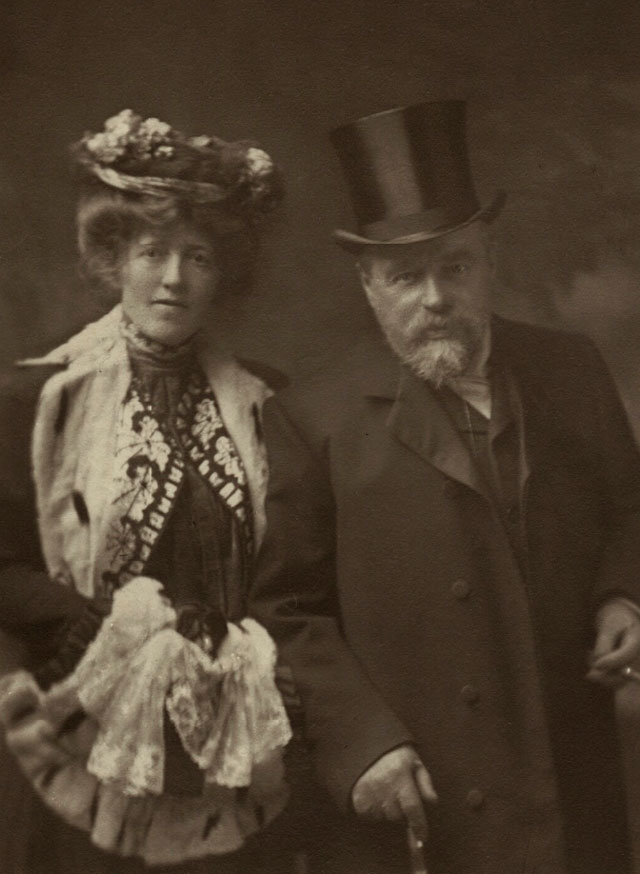
Few artistic marriages of the Victorian era combined romance, family life, and creative partnership as successfully as the union of Lawrence Alma-Tadema and Laura Theresa Epps. Their relationship began under unusual circumstances and developed into one of the most admired marriages in nineteenth-century British art. While Lawrence became famous for his richly detailed scenes of the ancient world, Laura established herself as a respected painter in her own right. Together they created a household that blended affection, culture, and artistic achievement.
Their story contains many of the elements of a classic romance. There was an age gap, family opposition, professional ambition, and a courtship that was far from straightforward. Yet the marriage that followed proved remarkably stable and happy. For nearly four decades they shared a life centered on art, family, travel, and friendship. Their partnership left a lasting mark on Victorian cultural life and continues to fascinate historians today.
How Lawrence Alma-Tadema Met Laura Theresa Epps
A Chance Introduction Through Artistic Circles
Lawrence Alma-Tadema was born on January 8, 1836, in Dronrijp, Friesland, in the Netherlands. By the late 1860s he had already established himself as a successful painter known for historical subjects. His personal life, however, was marked by tragedy. His first wife, Marie-Pauline Gressin-Dumoulin, whom he had married in 1863, died in 1869 after a long illness. The loss left him a widower at the age of thirty-three with two young daughters, Laurence and Anna.
Around this difficult period, Lawrence became acquainted with the family of Dr. George Napoleon Epps, a respected physician in London. The Epps household was interested in culture and the arts, and one of Dr. Epps’s daughters, Laura Theresa Epps, had already shown considerable artistic promise. Born on April 16, 1852, she was still a teenager when she first met Lawrence.
The introduction reportedly took place through artistic and social connections that linked the Epps family with prominent painters of the day. Victorian artistic circles were surprisingly interconnected. Exhibitions, studios, dinner parties, and family friendships often brought artists together. Lawrence’s reputation as a painter was already growing, and he quickly became a familiar figure among British artists.
What began as an ordinary introduction soon became something much more significant. Lawrence was immediately impressed by Laura’s intelligence, talent, and character. She possessed artistic ability, but she also brought warmth and energy to every conversation. For a man recovering from personal loss, her presence had a profound effect.
Love at First Sight and a Difficult Courtship
Lawrence’s admiration for Laura developed rapidly. The challenge was that Laura was much younger than he was. The age difference between them was approximately sixteen years, and her father was understandably cautious about the relationship. Lawrence was also a widower with family responsibilities.
Dr. Epps initially opposed the idea of marriage. From a father’s perspective, the concerns were reasonable. Laura was still very young and had a promising future ahead of her. Lawrence therefore had to demonstrate that his intentions were honorable and serious.
During the courtship, Lawrence gave Laura artistic instruction. Their shared interest in painting created a natural bond. Conversations about technique, literature, history, and culture deepened their connection. What may have begun as mentorship gradually evolved into genuine partnership.
Eventually Dr. Epps gave his approval. On July 19, 1871, Lawrence Alma-Tadema and Laura Theresa Epps were married. The marriage marked the beginning of one of the most successful artistic partnerships of the Victorian age.
Marriage, Family Life, and a Shared Artistic World
A Wedding That Changed Two Careers
The timing of the marriage was significant. Lawrence had recently relocated permanently to England after political instability on the European continent and the disruption caused by the Franco-Prussian War of 1870–1871. England offered new opportunities and a growing market for art.
Marriage brought stability to Lawrence’s personal life. It also provided Laura with an environment in which her own artistic ambitions could flourish. Rather than disappearing into her husband’s shadow, she continued developing her abilities and building a professional reputation.
The newly married couple established themselves within London’s artistic community. Their home became a center of creativity and conversation. Visitors included painters, writers, musicians, actors, and intellectuals. Victorian Britain placed great value on cultural gatherings, and the Alma-Tadema household became famous for its hospitality.
Lawrence’s career accelerated during the 1870s and 1880s. His paintings of ancient Rome, Greece, and Egypt attracted wealthy collectors and international attention. Laura’s career developed alongside his, allowing the couple to enjoy both personal happiness and professional accomplishment.
Laura as Wife, Stepmother, and Artist
One of Laura’s most important roles was becoming stepmother to Lawrence’s daughters. Contemporary accounts suggest that she developed a close relationship with both girls. Family life became a central part of the household.
The atmosphere within the home encouraged creativity. Painting was not merely a profession; it was part of daily life. Discussions about exhibitions, techniques, and artistic trends were common. Such an environment helped support both Lawrence’s and Laura’s careers.
Laura demonstrated remarkable balance in managing family responsibilities while maintaining her artistic ambitions. Victorian society often expected women to choose between domestic life and professional achievement. Laura managed to pursue both successfully.
Her paintings frequently explored literary, domestic, and historical themes. Critics praised her technical skill and sensitive treatment of her subjects. Over time she earned recognition that extended beyond her connection to her famous husband.
The Famous Alma-Tadema Home
The Alma-Tadema residences became famous in artistic circles. Lawrence possessed a keen interest in design and decoration, and he transformed his homes into remarkable works of art. Visitors frequently commented on the beauty of the interiors.
Classical influences appeared throughout the house. Marble, decorative panels, carefully chosen furnishings, and artistic objects reflected Lawrence’s fascination with antiquity. The environment resembled an extension of the worlds depicted in his paintings.
The household attracted a wide range of distinguished guests. Artists, actors, musicians, and writers enjoyed the couple’s hospitality. These gatherings helped strengthen the family’s position within London’s cultural elite.
Key members of the household included:
- Lawrence Alma-Tadema
- Laura Theresa Alma-Tadema
- Laurence Alma-Tadema
- Anna Alma-Tadema
- Frequent artistic and literary visitors
The home became more than a residence. It served as a creative center where ideas were exchanged and friendships were formed.
An Artistic Partnership Beyond Romance
How They Influenced Each Other’s Work
Lawrence and Laura painted very different subjects, yet their work shared certain qualities. Both valued careful craftsmanship, attention to detail, and strong narrative content. Their paintings reveal a commitment to technical excellence.
Lawrence became famous for archaeological accuracy and luminous depictions of the ancient world. His scenes often featured marble architecture, Mediterranean sunlight, and carefully researched historical details. He sought to bring distant civilizations vividly to life.
Laura generally preferred literary, domestic, and historical themes. Her paintings often displayed emotional warmth and a refined sense of storytelling. While her work was less monumental than Lawrence’s, it possessed its own distinctive charm.
Living and working together naturally encouraged mutual influence. They exchanged ideas, discussed artistic problems, and observed one another’s creative process. Their relationship demonstrated how two artists could support each other without losing individual identities.
Laura’s Career in Her Own Right
Modern scholarship increasingly recognizes Laura’s achievements as independent from her husband’s fame. During her lifetime she exhibited regularly and received favorable reviews. Critics admired her technical ability and thoughtful compositions.
She became a frequent exhibitor at important institutions, including the Royal Academy. Exhibition opportunities were highly competitive, making her success especially noteworthy. Her accomplishments reflected genuine talent rather than social advantage.
Laura often drew inspiration from literature and history. Her paintings displayed careful composition and emotional sensitivity. These qualities appealed to Victorian audiences who appreciated narrative art.
Today, historians view her as an important figure within the broader story of nineteenth-century British painting. Interest in her work has grown steadily, leading to renewed appreciation of her artistic legacy.
Shared Public Success During the Victorian Era
The couple occupied a prominent position within British cultural life. Lawrence received numerous honors during his career and became one of the most celebrated artists of his generation. His paintings commanded impressive prices and attracted international collectors.
Recognition reached a new level when he was knighted in 1899. The honor reflected both artistic achievement and public esteem. By that point he was widely regarded as one of Britain’s leading painters.
Laura likewise enjoyed respect among critics and fellow artists. While Victorian society often focused attention on male painters, she built a reputation based on the quality of her own work.
Their shared success created a rare example of a husband-and-wife artistic partnership in which both individuals achieved professional recognition. Rather than competing with one another, they strengthened each other’s careers through encouragement and support.
Legacy of a Victorian Love Story
Enduring Affection Through the Years
Many Victorian marriages were shaped by practical considerations, but the Alma-Tadema marriage appears to have been founded on genuine affection. Friends and visitors frequently remarked upon the warmth of the relationship.
The couple shared common interests that extended beyond painting. They enjoyed travel, social gatherings, literature, music, and intellectual conversation. These shared pursuits helped sustain their connection over the years.
Their partnership lasted through periods of professional success, changing artistic fashions, and personal challenges. Throughout these changes, the marriage remained remarkably stable.
The story is especially striking because it combined romance with mutual respect. Each partner valued the other’s talents and ambitions. This balance contributed significantly to the marriage’s longevity.
Laura’s Death and Lawrence’s Final Years
A profound loss occurred when Laura Theresa Alma-Tadema died on August 15, 1909. She had been Lawrence’s companion, collaborator, and closest friend for nearly four decades.
Her death marked the end of a long and successful partnership. Lawrence was deeply affected by the loss. The household that had once been filled with creative energy and social activity could never be quite the same again.
Although he continued to receive admiration for his artistic achievements, the final years of his life were overshadowed by Laura’s absence. The bond they had shared was central to his personal happiness.
Lawrence Alma-Tadema died on June 25, 1912. Their deaths, separated by less than three years, effectively closed one of the most remarkable artistic partnerships of the Victorian era.
Why Their Story Still Fascinates Today
The love story of Lawrence and Laura Alma-Tadema continues to attract attention because it combines several compelling themes. It is a story of romance, artistic achievement, family life, and mutual devotion.
Modern audiences are often drawn to examples of successful creative partnerships. The Alma-Tademas demonstrate that artistic ambition and personal commitment can coexist. Their marriage shows how encouragement and respect can strengthen both individuals.
Historians also appreciate the relationship because it offers insight into Victorian cultural life. Through their experiences, it becomes possible to understand the artistic world of nineteenth-century Britain in a more personal way.
Their legacy endures through both their paintings and their example. Together they built a life devoted to beauty, learning, and artistic excellence. More than a century after their deaths, their story remains one of the most memorable romances in art history.
Key Takeaways
- Lawrence Alma-Tadema met Laura Theresa Epps in artistic circles shortly after the death of his first wife.
- Despite family concerns and a significant age difference, the couple married on July 19, 1871.
- Laura became both a respected painter and a devoted stepmother to Lawrence’s daughters.
- Their household became one of the most celebrated cultural centers in Victorian London.
- Their nearly four-decade marriage remains a notable example of artistic partnership and personal devotion.
Frequently Asked Questions
- When did Lawrence Alma-Tadema and Laura Theresa Epps marry? They married on July 19, 1871.
- How old was Laura when she married Lawrence? She was nineteen years old.
- Did Laura Theresa Alma-Tadema have an artistic career of her own? Yes, she regularly exhibited and earned recognition as a painter.
- How long were they married? Their marriage lasted from 1871 until Laura’s death in 1909.
- When did Lawrence Alma-Tadema die? He died on June 25, 1912.