Imagine entering a ruined kingdom at sunset. Mountains turn purple on the horizon. Grass moves in the wind while a distant melody rises almost too quietly to notice. Beyond the valley stands a crumbling tower, and nobody tells you whether you should climb it. You go anyway. That simple decision reveals what makes video games different from every older artistic medium: you are not merely looking at the work. You are moving through it.
The argument over whether video games qualify as art has therefore become strangely outdated. Games have spent decades borrowing techniques from painting, architecture, literature, theater, film, animation, and music. Yet they have also developed an artistic language of their own. A filmmaker decides when a character enters a room. A novelist decides when a detective opens a letter. A game designer can create the room, hide the letter inside it, and allow you to walk past both. What you discover—and what you miss—becomes part of the experience.
Calling video games the only true art form left is intentionally provocative. Paintings, novels, sculpture, theater, cinema, architecture, and music obviously remain art. The stronger argument is that games may now be the most complete living artistic medium. They can absorb almost every established art form while adding something those forms cannot provide in quite the same way: participation.
That idea has long since escaped bedrooms and arcades. The Smithsonian American Art Museum opened The Art of Video Games on March 16, 2012. The exhibition examined roughly forty years of video-game history and presented eighty games selected with public participation. Five—Pac-Man, Super Mario Bros., The Secret of Monkey Island, Myst, and Flower—were playable. The Smithsonian treated games not merely as technological curiosities, but as a medium combining visual art, storytelling, music, cinematography, technology, and player interaction.
We Keep Asking the Wrong Question About Video Games
Art Is More Than Something Beautiful to Look At
The easiest mistake is to define art by appearance. Under that standard, a beautiful game becomes artistic because its landscapes resemble paintings. Yet beauty has never been enough to define art. Art can disturb, frighten, amuse, challenge, or frustrate. What matters is how form and technique are arranged to create an experience or communicate an idea.
Video games possess an enormous collection of artistic tools. Images provide composition, color, light, texture, and scale. Music establishes mood. Writing creates characters and history. Performers supply voices and movement. Architecture organizes space. Animation gives imaginary creatures life. Sound design can make an empty hallway threatening before anything actually appears.
Then programming binds everything together through rules. That addition matters because rules can carry meaning too. Scarcity can create anxiety. Difficult movement can communicate vulnerability. Exploration can create wonder. Repetition can create exhaustion. Failure can turn eventual success into something the player has personally earned.
Games can therefore combine:
- Visual art, animation, color, and composition
- Architecture, landscape, and environmental design
- Music, dialogue, performance, and sound
- Writing, characterization, and mythology
- Cinematography, lighting, and visual effects
- Exploration, failure, discovery, rules, and choice
A film can contain nearly everything on that list except the final category. That final category changes the relationship between creator and audience.
The Player Completes the Artistic Experience
Pressing buttons is not inherently artistic. Neither is turning the page of a novel. Interaction becomes significant when the player’s actions contribute to meaning. A film can show a character getting lost. A game can make you lost. A novel can describe scarcity. A game can give you three valuable objects and force you to abandon one.
Shadow of the Colossus, released for PlayStation 2 in North America on October 18, 2005, provides a striking example. Its journey revolves around locating and defeating sixteen enormous colossi. Their scale is not merely something to admire visually. The player must approach them, determine how they can be climbed, hold on, search for weaknesses, and survive. Size becomes something physically experienced through play.
Journey, released in North America on March 13, 2012, explored another possibility. Developer thatgamecompany designed its unusual multiplayer system around encounters with other travelers. Creative director Jenova Chen explained at release that the studio wanted players to form an emotional connection rather than experience the familiar atmosphere of conventional online multiplayer. Another traveler might accompany you, help you, disappear, or remain nearby. Because that companion can be another human player rather than a scripted character, neither participant completely controls what happens.
That relationship between designer and player is crucial. Designers establish the landscape, rules, music, boundaries, challenges, and possibilities. Players determine how they move within them. It resembles a carefully designed garden: the gardener creates the paths and views, but visitors still choose where to walk. Games extend that relationship into entire imaginary worlds.
Video Games Absorb Nearly Every Older Art Form
Painting, Architecture, Cinema, Music, and Literature Converge
Every new medium inherits something from older ones. Photography inherited concerns about light, portraiture, landscape, and composition from painting. Cinema borrowed from photography, theater, literature, architecture, costume, and music. Video games inherited from nearly all of them.
The speed of this development is remarkable. The Smithsonian’s 2012 exhibition traced the medium from the Magnavox Odyssey, released in 1972, through later generations of home gaming. In only forty years, games moved from extremely limited electronic forms to elaborate three-dimensional worlds containing orchestral music, dramatic performances, complex architecture, and enormous landscapes.
Technology alone did not create that artistic growth. More pixels do not automatically produce more meaning. What technology provided was a larger vocabulary. Designers gained increasingly sophisticated ways to control light, space, movement, sound, weather, character, and perspective.
Architecture illustrates the difference especially well. Real buildings must obey gravity, budgets, engineering requirements, and practical needs. Virtual architecture has different constraints. A staircase can exist primarily to create suspense. A tower can be impossibly tall because its scale establishes a goal. A ruined bridge can imply the remains of an older civilization without a narrator explaining anything.
The World Becomes the Canvas
The Legend of Zelda: Breath of the Wild, released on March 3, 2017, demonstrates how landscape itself can become part of play. Mountains, forests, ruins, bodies of water, weather, roads, and changes in elevation influence exploration. The distant horizon constantly offers possibilities.
A landscape painting can encourage your eye to travel toward a mountain. A game can make you actually go there. That distinction between looking and going may be one of the simplest ways to explain the artistic power of games. Reaching the mountain might take half an hour. Darkness could fall. Weather could change. An unexpected discovery could persuade you to abandon the original destination entirely.
Music changes under these conditions as well. A film composer generally knows how long a particular scene will last. A game composer cannot always know whether a player will spend thirty seconds or thirty minutes in a location. Music may therefore change intensity, loop, fade into environmental sounds, or disappear into silence according to what is happening.
Writing also escapes the straight line. Information can be hidden in conversations, objects, architecture, documents, ruins, costumes, or landscapes. Players reconstruct events from evidence. Instead of being told that a battle occurred somewhere, they may encounter damaged walls, abandoned equipment, and a ruined gate. The environment becomes narrative.
Games Can Make You Experience What Other Art Shows
Interactivity Changes Emotion Into Experience
This is where games move furthest from their artistic ancestors. Traditional art can produce tremendous emotion, but the audience usually cannot alter its internal events. Romeo makes the same decisions every time Shakespeare’s play is performed according to the text. The ending of a novel does not change because you hesitate before turning the page.
Games can make hesitation itself meaningful. A player can stand outside a dangerous room knowing that entering it may cost resources or progress. Nothing happens until a decision is made. The pause belongs to the player rather than a character being observed.
Difficulty can work in the same way. In an effective game, struggle does more than delay progress. It can establish the power of an enemy or the hostility of an environment. Victory feels different when the person experiencing the story had to acquire the skill necessary to achieve it.
Failure becomes an artistic tool too. Cinema can depict failure brilliantly, but the viewer did not fail. Games can create that uncomfortable distinction. You mistimed the jump. You made the wrong tactical decision. You overlooked the clue. When success finally comes, the emotional release partly belongs to you.
Failure, Choice, and Discovery Become Artistic Tools
Player choice does not require hundreds of branching endings. Smaller freedoms can matter just as much. Players can decide where to explore, how quickly to move, what equipment to use, which challenge to attempt first, and what details deserve attention. Even tightly directed games can provide personal variations in timing and discovery.
That makes pacing unusually flexible. A film director largely controls when an audience reaches a dramatic image. A game designer can lead players toward a view but cannot always control when they arrive. Good design must account for curiosity, distraction, caution, and stubbornness.
Games therefore possess several expressive tools that are either unique to them or unusually powerful within them:
- Player agency and meaningful choice
- Exploration and voluntary discovery
- Mechanical difficulty and mastery
- Failure, repetition, and recovery
- Variable pacing and emergent events
None guarantees artistic depth. A difficult game is not automatically profound, and an enormous open world is not automatically meaningful. Mechanics become artistically powerful when they reinforce the atmosphere, themes, characters, or emotional purpose of the work.
Why Games May Be the Last Truly Living Art Form
Games Still Have an Unfinished Artistic Language
Video games remain comparatively young, and that youth gives them an unusual energy. Developers continue experimenting with nonlinear narratives, simulations, multiplayer relationships, procedural systems, interfaces, environmental storytelling, and different balances between player freedom and authorial control.
Commercialism does not invalidate that creativity. Games are products as well as artistic works, just as films, books, recordings, architecture, and countless historical artworks have existed within economic systems. A price tag does not settle an aesthetic argument.
What makes games exciting is that many of their fundamental artistic questions remain unsettled. How much control should a player possess? Can difficulty communicate an idea? Can a rule function like a metaphor? Can an empty landscape tell a story without dialogue? How much information should remain hidden unless someone actively searches for it?
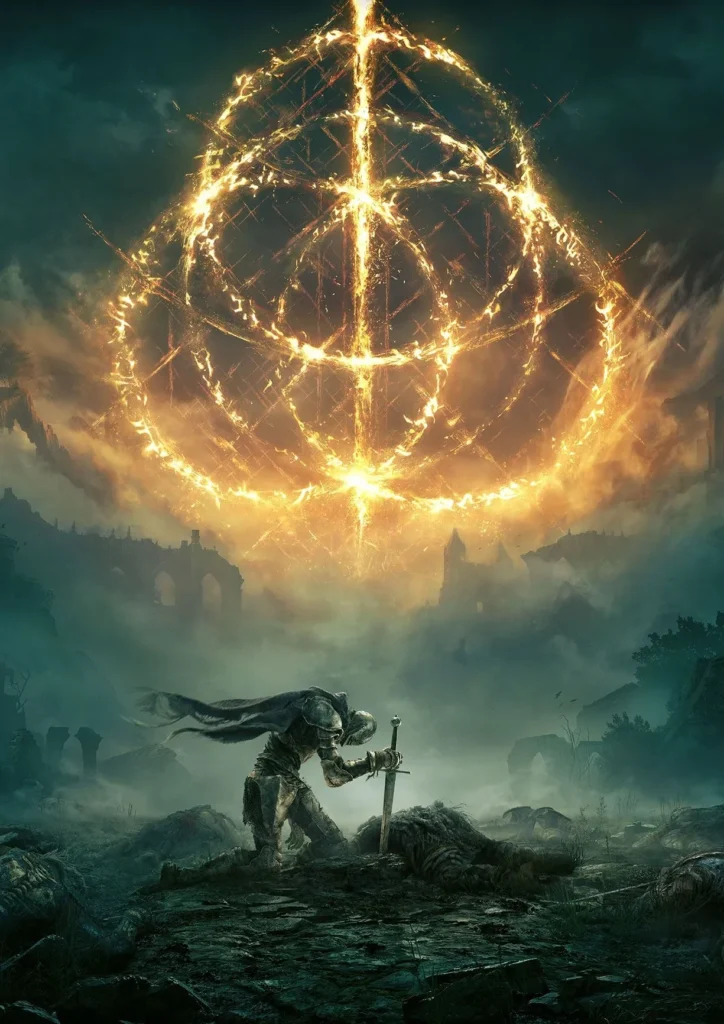
These questions keep the medium moving. Red Dead Redemption 2, released on October 26, 2018, demonstrated the continuing appetite for vast, highly detailed interactive environments. Elden Ring, released on February 25, 2022, offered another enormous world structured around exploration, danger, discovery, and demanding encounters. Their importance here is not that either provides a final definition of art. It is that major games continue testing how much experience can be communicated through space and action.
The Masterpiece Is Not Finished Until Someone Plays It
A painting requires a viewer, music a listener, and literature a reader. Yet the internal structure of those works does not normally change because the audience makes a decision. Games place that decision much closer to the center.
The designer creates possibilities. The player activates them. One player finds the hidden path; another never sees it. One rushes through a landscape; another stops to watch the weather change. One struggles against an obstacle twenty times and remembers the eventual victory for years. Their experiences differ while remaining parts of the same designed work.
That is the strongest case for video games as the last true art form—not because older arts have somehow died, but because games can gather so many of them together and add an expressive tool uniquely suited to the medium. Paint becomes pixels. Architecture becomes navigable. Music becomes responsive. Narrative becomes explorable. The audience becomes participant.
The future masterpiece may therefore be something we cannot fully experience from a respectful distance. We may have to enter it. We may have to get lost inside it, misunderstand it, fail at it, discover its secrets, and learn its rules.
And when the credits finally appear, part of what we remember will belong to the artists who created the world.
Part of it will belong to us.