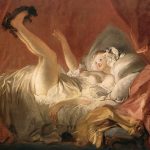
The paintings of Jean-Honoré Fragonard are filled with flirtation, courtship, and romance. Lovers exchange glances in hidden gardens. Young couples meet beneath flowering trees. Elegant figures pursue affection in scenes bursting with color and movement. Yet behind the celebrated painter stood a real love story that proved more enduring than many of the romances depicted on his canvases. His marriage to Marie-Anne Gérard Fragonard lasted through artistic triumphs, family joys, political upheaval, and personal loss.
Unlike many famous artists whose private lives were marked by scandal or instability, Fragonard appears to have enjoyed a long and affectionate marriage. Contemporary accounts and later scholarship consistently portray him as a devoted husband and father. His wife was not merely a companion but an artist in her own right, a talented miniature painter whose contributions have only received wider recognition in modern times.
Their partnership unfolded during one of the most dramatic periods in French history. They married during the final decades of the Bourbon monarchy, witnessed the collapse of the old order during the French Revolution, and lived through years of uncertainty that transformed French society. Through it all, they remained a family.
The story of Jean-Honoré and Marie-Anne Fragonard reveals a side of eighteenth-century artistic life that is often overlooked. It is not simply a story about a famous painter and his wife. It is a story about shared origins, mutual support, artistic collaboration, and a marriage that endured for nearly four decades.
How Jean-Honoré Fragonard Met Marie-Anne Gérard
Shared Roots in Provence
Jean-Honoré Fragonard was born in Grasse on April 5, 1732. Nestled in the hills of Provence, Grasse was already famous for its perfume industry and commercial activity. Although he would later become associated with Parisian artistic circles, his roots remained firmly planted in southern France. The warm climate, vivid landscapes, and close-knit social networks of Provence helped shape the environment from which he emerged.
Marie-Anne Gérard was born in Grasse on December 22, 1745. She came from a large family and grew up in the same regional culture that had shaped Fragonard. Their shared background provided common ground long before marriage entered the picture. In an era when many marriages were arranged for financial or social reasons, shared origins could create lasting bonds.
The two families moved within overlapping social circles connected to Grasse. While the exact circumstances of their first meeting have not survived in historical records, their common hometown makes it highly likely that family connections or regional networks played a role. Such relationships were especially important in eighteenth-century France, where personal introductions often opened doors in both professional and social life.
When Fragonard established himself in Paris, he never completely severed his ties to Provence. His eventual marriage to a woman from the same hometown suggests that those roots remained important to him. The connection gave the couple a shared identity that would endure even after they settled in the capital.
Marriage in Paris in 1769
By the time Fragonard married Marie-Anne Gérard on June 17, 1769, he was already a respected artist. He had studied under François Boucher and benefited from the artistic opportunities available through the French Royal Academy. During the 1760s his reputation steadily grew, attracting wealthy patrons and important commissions.
The timing of the marriage coincided with a particularly successful phase of his career. Just two years earlier, around 1767–1768, he had painted The Swing, now one of the defining masterpieces of the Rococo style. The painting’s playful elegance helped cement his reputation among elite patrons. At the moment he entered married life, his future seemed exceptionally bright.
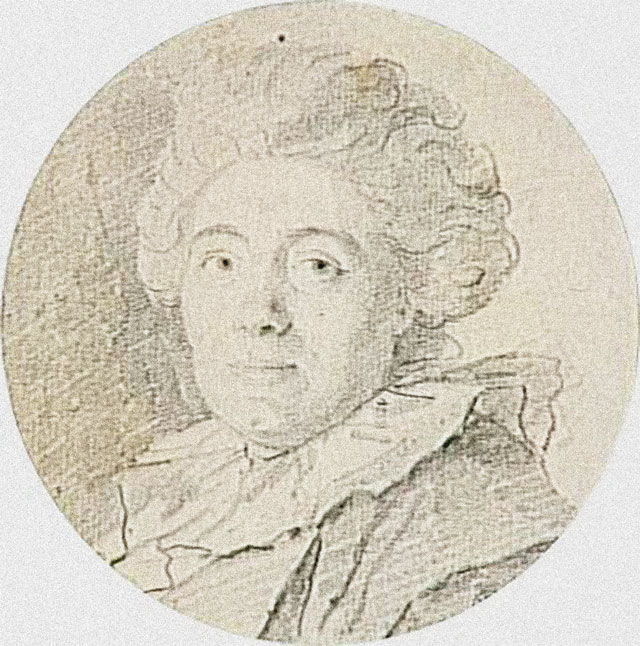
Marie-Anne brought more than companionship to the marriage. She was an accomplished miniature painter. Miniature portraiture required technical precision, patience, and a keen eye for character. Although history often focused on her husband’s achievements, surviving works demonstrate that she possessed genuine artistic ability.
Their marriage united two artists. This shared creative background likely gave them an understanding of each other’s ambitions, challenges, and daily routines. Artistic households often functioned differently from ordinary homes. Studio work, commissions, patrons, and exhibitions became part of everyday life.
A Promising Beginning
The early years of the marriage appear to have been happy and productive. Historical accounts consistently describe the union as affectionate and stable. Unlike many famous artists whose biographies are filled with domestic conflict, Fragonard’s story offers little evidence of marital discord.
Their daughter Rosalie was born in 1769, the same year as the marriage. She became a beloved member of the household. Many scholars believe that some of Fragonard’s intimate drawings of children and young women may have been inspired by family life, though specific identifications often remain uncertain.
The family expanded further in the following years. Their son Alexandre-Évariste Fragonard was born on October 26, 1780. He would later become an accomplished painter and sculptor in his own right, carrying the artistic tradition into a new generation.
These years combined professional achievement with domestic happiness. Fragonard’s paintings celebrated romance and pleasure, but his private life increasingly revolved around the responsibilities of husband and father. The contrast between public success and private contentment helped shape the next chapter of his life.
A Creative Partnership Behind the Rococo Master
Marie-Anne as an Artist in Her Own Right
For many years Marie-Anne Gérard Fragonard remained largely hidden behind her husband’s reputation. Like numerous female artists of the eighteenth century, she worked in a world where recognition often flowed more readily to men. As a result, some of her artistic achievements were overlooked or misattributed.
Modern scholarship has gradually corrected this imbalance. Several miniatures once attributed to Jean-Honoré Fragonard have been reassigned to Marie-Anne after careful study. These works display a lively touch and sensitivity that reveal a capable and confident artist. The reassessments have significantly improved understanding of her career.
One notable example is Portrait of a Boy, generally dated around 1775 and now recognized as her work. The miniature demonstrates energy, spontaneity, and technical skill. Such works reveal that Marie-Anne was far more than an assistant or amateur practitioner.
Her artistic identity deserves recognition independent of her marriage. Yet the marriage itself likely helped sustain her creative development. Living in a household devoted to art provided opportunities for discussion, experimentation, and collaboration that enriched both partners.
Life Inside the Fragonard Household
The Fragonard home was not simply a residence. It was a center of artistic activity. Paintings, sketches, commissions, and visitors filled daily life. Conversations about technique, patrons, and artistic trends likely occurred around the family table.
Artists in eighteenth-century France frequently relied upon family networks. Spouses assisted with studio management, correspondence, and practical matters. Such cooperation allowed creative work to continue efficiently. Marie-Anne’s artistic training made her especially valuable within this environment.
The household also had to balance professional obligations with family responsibilities. Raising children while maintaining artistic careers required organization and mutual support. Historical evidence suggests that the Fragonards managed these demands successfully.
Their domestic life offered stability during a period when artistic careers could be unpredictable. Commissions rose and fell. Tastes changed. Patrons disappeared. A strong family foundation provided security amid professional uncertainty.
The Arrival of Marguerite Gérard
An important development occurred when Marie-Anne’s younger sister, Marguerite Gérard, joined the household. Born in 1761, Marguerite entered the Fragonard family circle while still young. She received artistic training and eventually became one of the most successful female painters of her generation.
Marguerite’s presence transformed the household into an even more dynamic artistic environment. Ideas, techniques, and creative influences circulated among family members. The home functioned almost as a family workshop where artistic talent flourished across generations.
Modern writers have sometimes speculated about a romantic relationship between Jean-Honoré Fragonard and Marguerite Gérard. However, reliable scholarship has found no convincing evidence supporting such claims. The notion appears to rest largely on later conjecture rather than documented fact. Serious historians generally reject it.
Instead, the available evidence points toward a productive artistic relationship within a close family network. Marie-Anne remained at the center of that network. Her role as wife, sister, mother, and artist helped hold the household together during decades of creative activity.
Ways Marie-Anne Contributed to the Fragonard Household and Artistic Circle
- Worked as a professional miniature painter.
- Participated in the family’s artistic environment.
- Supported studio and household operations.
- Helped maintain a stable home during major political changes.
- Encouraged a creative atmosphere that benefited multiple artists.
- Served as a link between Jean-Honoré Fragonard and the Gérard artistic family.
Love, Family, and Changing Times
Fragonard as Husband and Father
Many accounts of Fragonard emphasize his devotion to family life. This image contrasts sharply with assumptions sometimes made about Rococo artists. Although his paintings often depicted playful flirtation and romantic intrigue, the available evidence suggests that his personal life was remarkably grounded.
His attachment to his children appears especially strong. Rosalie’s death in 1788 was a devastating blow to the family. She was only nineteen years old. The loss occurred during a period when Fragonard was already facing changing artistic tastes and growing uncertainty.
Family concerns increasingly occupied his attention as he aged. Supporting a household required steady income, and artistic success could never be taken for granted. Like many artists, he experienced periods of prosperity followed by financial difficulty.
Yet the family remained intact. Contemporary observers and later scholars repeatedly described him as a caring husband and father. Such consistency across sources suggests that the reputation was well deserved.
The French Revolution’s Impact
The French Revolution erupted in 1789 and transformed every aspect of French society. For artists associated with aristocratic patrons, the consequences could be severe. The elegant Rococo style that had brought Fragonard fame suddenly appeared tied to a vanished world.
Many traditional patrons fled, lost influence, or faced persecution. Commissions declined. Artistic tastes shifted toward the more austere ideals associated with Neoclassicism. Younger painters gained prominence while older Rococo masters struggled to adapt.
Fragonard’s career suffered during these years. His artistic reputation faded dramatically. The painter who had once enjoyed considerable success found himself increasingly marginalized. Financial pressures mounted as opportunities diminished.
Marie-Anne experienced these challenges alongside her husband. The stability of their marriage became especially important during this difficult period. Together they navigated circumstances that might easily have shattered a less resilient family.
Endurance Through Adversity
The final decades of their marriage tested both husband and wife. Economic uncertainty, changing fashions, political upheaval, and personal loss created enormous strain. Yet their partnership endured.
One reason may have been the practical foundation upon which the marriage rested. Shared origins, common artistic interests, and family responsibilities created bonds that went deeper than social status or financial success. These connections proved valuable when fortunes changed.
Another factor was mutual respect. Marie-Anne understood the demands of artistic life because she lived them herself. Her experience as a painter likely gave her insight into the disappointments and frustrations that accompanied Fragonard’s declining reputation.
When Jean-Honoré Fragonard died in Paris on August 22, 1806, the marriage had lasted thirty-seven years. Marie-Anne survived him by nearly seventeen years, dying in Paris on March 10, 1823. Their partnership had weathered one of the most turbulent eras in French history.
The Legacy of Jean-Honoré and Marie-Anne Fragonard
Why Their Relationship Matters Today
Modern discussions of art often focus on individual genius. Yet artistic achievement frequently depends upon networks of support, collaboration, and family stability. The Fragonards provide an excellent example.
Jean-Honoré’s career did not develop in isolation. His wife shared his artistic interests and contributed to the creative environment in which he worked. Their household fostered talent across multiple generations and family members.
The marriage also challenges stereotypes about eighteenth-century artistic life. Instead of scandal and instability, the historical record reveals continuity, loyalty, and domestic commitment. These qualities deserve attention because they shaped the lives behind the paintings.
Understanding the relationship enriches understanding of the artist himself. The celebrated painter emerges not merely as a master of Rococo imagery but as a husband and father deeply connected to family life.
Marie-Anne’s Rediscovered Reputation
For generations, Marie-Anne remained overshadowed by more famous names. Recent scholarship has begun restoring her place in art history. Reattributions and new research have highlighted her accomplishments as a miniature painter.
This reassessment reflects a broader effort to examine artistic production more carefully. Rather than assuming that works produced within an artist’s household automatically belonged to the most famous figure, scholars increasingly study evidence of collaboration and individual contribution.
Marie-Anne’s surviving works demonstrate skill and originality. They reveal an artist capable of creating expressive portraits with confidence and sensitivity. Recognition of these achievements has expanded understanding of the Fragonard family as a whole.
Her growing reputation represents more than a correction of attribution. It provides a fuller picture of artistic life in eighteenth-century France and highlights the important role women played within that world.
Love Reflected in Fragonard’s World
One must be careful not to confuse art with autobiography. There is no evidence that Fragonard’s paintings directly depict his marriage. Nevertheless, themes of affection, companionship, and emotional connection appear throughout his work.
A notable example is The Progress of Love, painted in 1771–1772 for Madame du Barry. The series consists of large oil paintings celebrating various stages of courtship and romantic attachment. Today the ensemble is housed in The Frick Collection in New York. The paintings remain among Fragonard’s greatest achievements.
The Progress of Love: The Meeting
Artist: Jean-Honoré Fragonard
Date: 1771–1772
Medium: Oil on canvas
Dimensions: 317.5 × 243.8 cm (125 × 96 inches)
Current Location: The Frick Collection, New York
The enduring significance of Jean-Honoré and Marie-Anne Fragonard lies not in grand drama but in steadfast companionship. Their marriage survived success, disappointment, revolution, and loss. Behind one of France’s greatest painters stood a woman whose own artistic talents and unwavering support helped sustain a remarkable family. Their story remains one of the most compelling partnerships in the history of eighteenth-century art.
Key Takeaways
- Jean-Honoré Fragonard married fellow artist Marie-Anne Gérard on June 17, 1769.
- Both husband and wife came from the Provençal town of Grasse.
- Marie-Anne was an accomplished miniature painter whose work has received increasing scholarly recognition.
- The couple remained together through the upheavals of the French Revolution and the decline of Rococo patronage.
- Their marriage lasted thirty-seven years, ending only with Fragonard’s death in 1806.
FAQs
- When did Jean-Honoré Fragonard marry Marie-Anne Gérard?
They married on June 17, 1769. - Was Marie-Anne Fragonard an artist?
Yes. She was a professional painter known especially for portrait miniatures. - Did Jean-Honoré Fragonard have children?
Yes. His children included Rosalie Fragonard and Alexandre-Évariste Fragonard. - Was Marguerite Gérard romantically involved with Fragonard?
No verified historical evidence supports that claim. - Where is Fragonard’s The Progress of Love today?
The celebrated series is housed in The Frick Collection in New York.