A carved walking stick is much more than a piece of wood shaped to help someone keep their balance. For centuries, skilled craftsmen have transformed ordinary branches and hardwood staffs into remarkable works of art. Some display intricate carvings of animals, while others feature scenes from local folklore, religious imagery, or personal milestones. Whether carried by shepherds crossing mountain paths, travelers exploring distant regions, or collectors displaying prized examples in their homes, carved walking sticks occupy a unique place between practical tool and artistic creation.
The history of walking sticks stretches back thousands of years. Long before modern hiking equipment existed, people relied on staffs for support, protection, and navigation. Over time, many cultures began decorating these objects with meaningful designs. The result was an art form that reflected local traditions, woodworking skills, and individual creativity. A finely carved walking stick could reveal a person’s status, profession, homeland, or life experiences.
Today, carved walking sticks remain popular among collectors, outdoor enthusiasts, and admirers of traditional craftsmanship. Some artisans continue centuries-old carving techniques, while others experiment with contemporary styles and subjects. Despite changes in fashion and technology, the appeal of a beautifully carved walking stick has endured.
The History of Carved Walking Sticks
From Practical Tool to Artistic Expression
Walking staffs have been used since ancient times. Archaeological evidence shows that staffs and sticks served practical purposes in many early societies. Shepherds relied on them to guide livestock, travelers used them on rough terrain, and hunters carried them during long journeys. Their usefulness ensured that they became common possessions across Europe, Asia, Africa, and the Americas.
Ancient Egyptian art includes depictions of staffs carried by rulers and officials. Many surviving relief carvings from the Old Kingdom period, which began around 2686 BC, show individuals holding ceremonial staffs. These objects often symbolized authority as much as they provided physical support. Similar traditions appeared elsewhere in the ancient world, where staffs became markers of leadership and social rank.
By the Middle Ages, walking sticks had acquired both practical and symbolic value throughout Europe. Pilgrims traveling to important religious destinations often carried staffs as part of their journey. The famous pilgrimage routes to Santiago de Compostela in Spain attracted thousands of travelers beginning in the early medieval period. Their staffs frequently became treasured reminders of the journey.
As woodworking skills improved, decorative carving became increasingly common. Craftsmen recognized that a walking stick offered an ideal surface for artistic expression. Handles could be shaped into animals, faces, or symbolic figures, while shafts provided space for patterns and relief carvings. What began as a simple tool gradually evolved into a respected folk art tradition.
Regional Traditions and Cultural Influences
Different regions developed distinctive styles of carved walking sticks. In the Alpine regions of Switzerland, Austria, and southern Germany, woodcarvers often decorated staffs with mountain animals such as ibexes, deer, and chamois. These carvings reflected the natural environment and the importance of hunting and herding in mountain communities.
In Britain, shepherds’ crooks became closely associated with rural life. Craftsmen frequently used local woods and added decorative horn handles. Some crooks featured carved geometric designs, while others displayed detailed animal heads. The tradition became especially strong in northern England and Scotland, where shepherding played a central role in local economies.
Ireland developed its own famous walking stick tradition through the shillelagh. Traditionally crafted from blackthorn wood, the shillelagh combined utility with cultural identity. While many examples remained plain, decorative versions often featured carved handles and personalized details.
Across central and eastern Europe, folk artists used walking sticks to showcase regional carving styles. Floral patterns, religious symbols, and local legends appeared frequently. These designs helped preserve cultural traditions and passed artistic techniques from one generation to the next.
Craftsmanship Behind a Walking Stick
Choosing the Right Wood
The quality of a carved walking stick begins with the selection of wood. Experienced craftsmen understand that different species possess unique characteristics affecting durability, appearance, and carving potential. The choice of wood often determines how detailed a design can become and how well the finished piece withstands years of use.
Hardwoods are generally preferred for carved walking sticks. Oak has long been valued for its strength and durability. Ash provides an excellent balance of flexibility and resilience, making it particularly suitable for functional walking sticks. Walnut offers attractive grain patterns and rich coloration, while maple provides a smooth surface ideal for detailed carving.
Many traditional craftsmen prefer naturally shaped branches. Rather than cutting straight lumber, they search forests and hedgerows for branches with interesting curves and forms. A naturally twisted piece of wood can inspire the entire design of a walking stick, allowing the artist to work with nature rather than against it.
Wood selection also varies according to local availability. Mountain communities often used native species found nearby. This practical approach contributed to regional differences in appearance and style, helping create distinctive local traditions that remain recognizable today.
Traditional Carving Techniques
The carving process requires patience, planning, and technical skill. Most traditional walking stick makers begin by removing bark and allowing the wood to dry properly. This seasoning process reduces the risk of cracking and helps stabilize the material before carving begins.
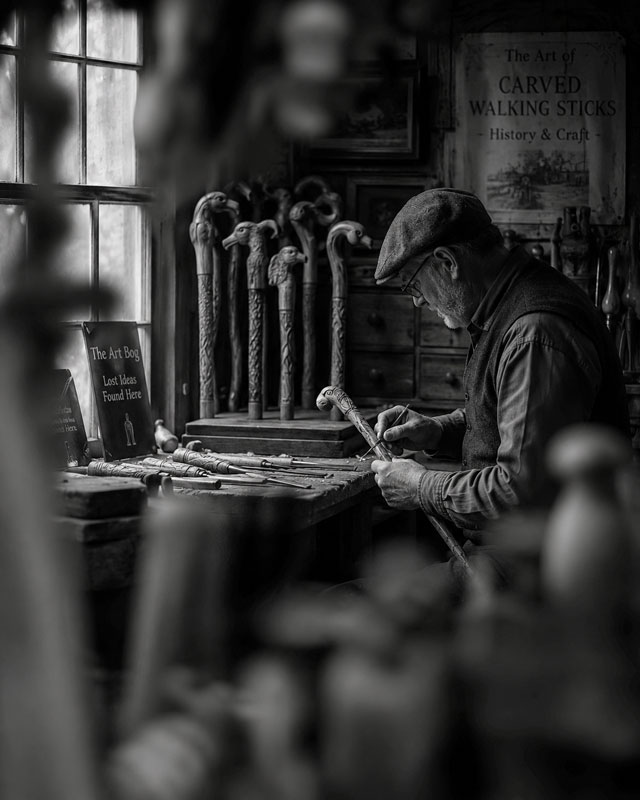
Hand tools remain essential even in modern workshops. Knives, chisels, gouges, and mallets allow artisans to shape wood with remarkable precision. Many carvers prefer hand tools because they provide greater control and preserve the traditional character of the work.
Relief carving is one of the most common decorative techniques. In this approach, designs emerge from the surface while remaining attached to the background wood. Animals, floral motifs, and scenes from daily life are frequently executed using relief carving methods.
Three-dimensional carving presents an even greater challenge. Here, artists sculpt complete forms projecting from the stick. Animal heads, human faces, and mythical creatures often appear as handle designs. These sculptural elements require advanced skill and careful planning to maintain both beauty and structural strength.
Common Decorative Motifs
Carved walking sticks display an extraordinary range of decorative subjects. Animals are among the most popular motifs. Deer, bears, wolves, dogs, and birds appear frequently in both traditional and contemporary examples. Such carvings often reflect local wildlife and hunting traditions.
Nature-inspired designs also play a major role. Leaves, vines, flowers, and tree branches create flowing patterns that complement the organic character of wood. These motifs allow artists to emphasize the natural beauty of the material itself.
Geometric designs have long been used in folk art traditions. Repeating patterns can transform a simple walking stick into a visually striking object. These decorations often require considerable precision despite their apparent simplicity.
Popular woods used for carved walking sticks include:
- Oak for strength and durability
- Ash for flexibility and resilience
- Walnut for rich color and grain
- Maple for detailed carving work
- Blackthorn for traditional shillelaghs
- Hazel for lightweight staffs
- Chestnut for rustic appearance
Symbolism and Artistic Meaning in Walking Stick Carvings
Personal Identity and Storytelling
Many carved walking sticks tell personal stories. Travelers have long collected walking sticks as souvenirs of journeys and adventures. Some owners added carvings to commemorate important destinations, memorable events, or personal achievements.
In the nineteenth century, it became fashionable for tourists to collect decorated walking sticks while traveling through Europe. Alpine resorts, mountain villages, and historic towns often sold carved staffs featuring local landmarks and regional symbols. These objects served as lasting reminders of specific places and experiences.
Family traditions also influenced walking stick decoration. In some communities, sticks were passed from one generation to another. Successive owners occasionally added carvings or inscriptions, transforming a simple object into a record of family history.
Personalized carvings remain popular today. Names, dates, occupations, and meaningful symbols allow owners to create unique pieces reflecting their individual identities. The result is an object that combines practical function with personal expression.
Symbols, Animals, and Folklore
Animal imagery carries special significance in many carving traditions. Deer often symbolize grace and connection to the natural world. Eagles may represent vision, freedom, or strength. Dogs frequently appear as symbols of loyalty and companionship.
Folklore has also influenced carved walking stick designs. Rural craftsmen sometimes drew inspiration from local legends and traditional stories. Dragons, forest spirits, and mythical creatures appear in examples from various European regions. These carvings reflect centuries of storytelling and cultural memory.
Religious symbols have been used on walking sticks for many generations. Pilgrims often decorated staffs with crosses or other sacred imagery associated with their faith. Such carvings transformed practical objects into personal expressions of belief.
It is important to recognize that symbolic meanings vary across cultures and periods. A design carrying one meaning in a particular region may have a different significance elsewhere. The richness of walking stick art comes partly from this diversity of interpretation and tradition.
Collecting and Appreciating Walking Sticks Today
What Collectors Look For
Collectors evaluate carved walking sticks according to several important criteria. Craftsmanship remains one of the most significant factors. Clean carving, balanced design, and technical skill generally increase a stick’s desirability and value.
Condition also plays a major role. Cracks, repairs, insect damage, and excessive wear can affect collectibility. However, some collectors appreciate signs of age and use, especially when they contribute to a stick’s historical character.
Authenticity is particularly important. Genuine antique walking sticks often display construction methods, materials, and wear patterns consistent with their period. Provenance, when available, can further enhance interest and value.
Rarity influences collector demand as well. Unusual carving styles, distinctive regional traditions, and exceptionally skilled workmanship often attract serious collectors seeking unique examples.
Contemporary Makers and Folk Art Traditions
Despite modern manufacturing techniques, carved walking sticks continue to be made by hand around the world. Many contemporary artisans study traditional methods while introducing their own creative ideas. This combination of preservation and innovation helps keep the craft alive.
Woodcarving festivals and folk art exhibitions frequently feature walking stick makers. These events provide opportunities for artists to demonstrate techniques and share knowledge with the public. They also help younger generations discover traditional woodworking skills.
The internet has expanded the audience for carved walking sticks. Collectors can now view and purchase examples from many countries, increasing appreciation for regional styles that were once known only locally.
Contemporary artists often explore new themes while maintaining traditional standards of craftsmanship. Wildlife subjects remain popular, but modern carvers also create highly imaginative works inspired by fantasy, history, and personal experiences.
Caring for a Carved Walking Stick
Proper care helps preserve both beauty and functionality. Wood responds to changes in temperature and humidity, making appropriate storage important. Excessive moisture can encourage warping, while overly dry conditions may lead to cracking.
Regular cleaning removes dirt and dust that can accumulate in carved details. A soft brush often works best for reaching recessed areas without damaging delicate surfaces.
Protective finishes should be maintained when appropriate. Traditional waxes and oils can enhance appearance while providing some protection against moisture and wear. Care should be taken to use products suitable for the specific type of finish already present.
Collectors often consider these factors when assessing value:
- Quality of carving
- Condition and preservation
- Age and historical significance
- Provenance and documentation
- Rarity of style or origin
Conclusion
The art of carved walking sticks demonstrates how everyday objects can become extraordinary expressions of creativity. What began as a practical aid for travel and work evolved into a rich artistic tradition spanning centuries and cultures. From ancient symbols of authority to modern works of folk art, carved walking sticks reveal the enduring human desire to combine usefulness with beauty.
Their appeal lies partly in their versatility. A walking stick can be a tool, a souvenir, a family heirloom, a collector’s item, or a work of sculpture. Each carved detail reflects the skill of the maker and often tells a story about the owner, the community, or the cultural traditions from which it emerged.
Today, carved walking sticks continue to connect people with craftsmanship, history, and the natural world. Whether admired in a collection, carried on a woodland trail, or passed down through generations, they remain enduring examples of functional art at its finest.
Key Takeaways
- Carved walking sticks evolved from practical tools into respected forms of folk art.
- Different regions developed distinctive carving styles based on local traditions and materials.
- Hardwoods such as oak, ash, walnut, and maple are commonly used by craftsmen.
- Decorative motifs often include animals, natural forms, folklore, and personal symbols.
- Collectors value craftsmanship, condition, rarity, provenance, and authenticity.
FAQs
Are carved walking sticks still made by hand today?
Yes. Many artisans continue to create hand-carved walking sticks using traditional woodworking techniques.
What wood is best for a carved walking stick?
Oak, ash, walnut, maple, and blackthorn are among the most popular choices because of their strength and carving qualities.
Why were walking sticks carved?
Carving added artistic, symbolic, and personal value to objects that were already useful for travel and support.
Are antique walking sticks collectible?
Yes. Many antique examples are highly collectible, especially those with strong craftsmanship, provenance, and good condition.
Do carved designs have symbolic meanings?
Some do. Meanings vary according to culture, region, and historical context, so symbolism should be interpreted carefully.