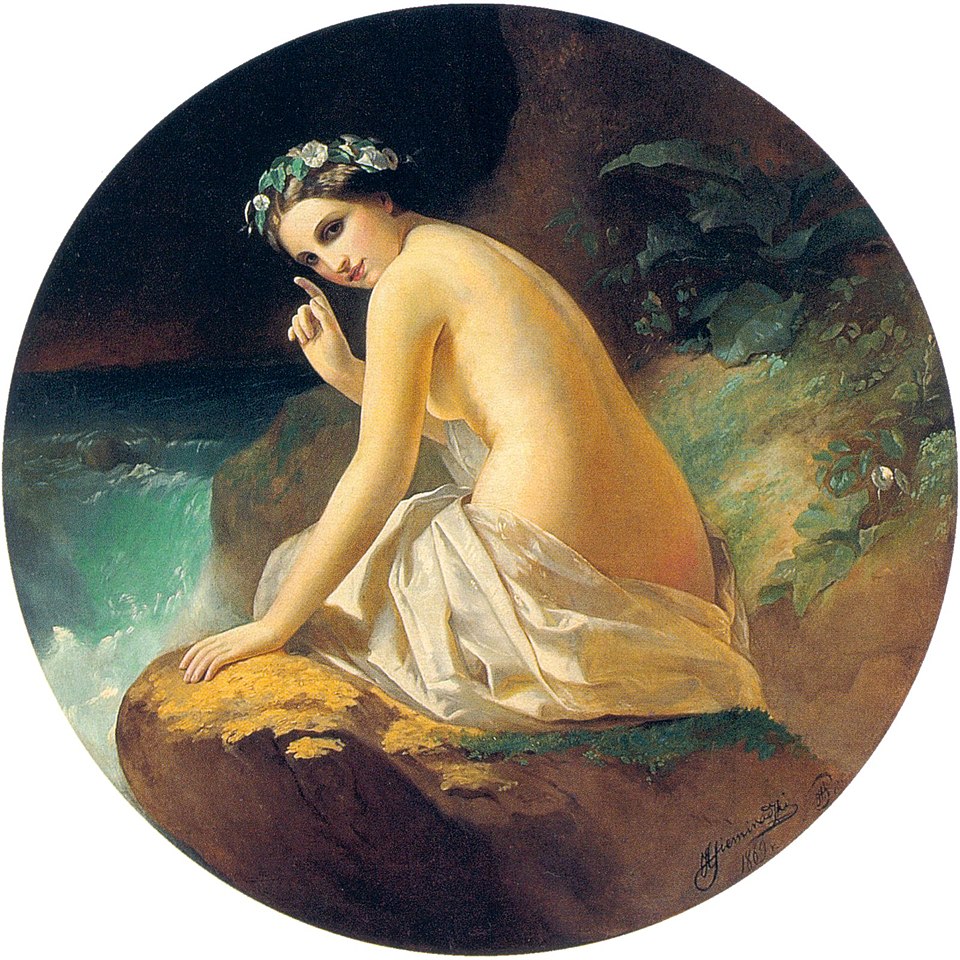
Henryk Hektor Siemiradzki was born on October 24, 1843, in Novo-Belgorod, a town in the Kharkov Governorate of the Russian Empire, now located in modern-day Ukraine. His father, Hipolit Siemiradzki, was a Polish nobleman and an officer in the Russian Imperial Army, eventually rising to the rank of general in 1871. His mother, Michalina Prószyńska, came from a family with deep cultural ties and connections to the Polish poet Adam Mickiewicz. Growing up in this environment, Henryk was steeped in literature, patriotism, and Christian moral values.
Though born under Russian rule, Siemiradzki’s heritage was distinctly Polish, and this cultural identity remained central throughout his life. As a child, he was educated in the Kharkiv Gymnasium, where his talents in art began to emerge. He studied privately with Dmytro Bezperchy, a respected painter and former pupil of Karl Briullov, one of the great Romantic artists of Russia. These early influences played a vital role in shaping his future path as a painter of grand historical and biblical scenes.
His early exposure to classical texts, religious traditions, and the visual arts created a foundation rich in narrative and symbolism. While he also showed promise in science and mathematics, his love for drawing and storytelling took precedence. The complexities of being a Polish Catholic in the Russian Empire may have added layers of empathy and historical awareness to his work, seen in his later depictions of martyrs, saints, and ancient civilizations.
By the time he finished secondary education, Siemiradzki was preparing to follow in his father’s professional footsteps. However, his creative instincts won out, and he decided to pursue art seriously. His resolve led him to one of the most esteemed artistic institutions in the empire: the Imperial Academy of Arts in St. Petersburg. That decision would chart the course of his career and link him to Europe’s finest classical traditions.
Academic Training and Artistic Foundations
In 1864, after earning a degree in natural sciences from Kharkiv University, Siemiradzki made the bold decision to abandon science in favor of art. That same year, he enrolled at the Imperial Academy of Arts in St. Petersburg, where he quickly distinguished himself. At the Academy, he studied under Bogdan Willewalde and Karl Wenig, both prominent academic painters, and absorbed a rigorous training in composition, anatomy, and historical painting. His dedication and technical precision earned him multiple awards, including a gold medal in 1870.
The gold medal came with a travel scholarship, allowing Siemiradzki to broaden his artistic horizons through study abroad. He first visited Munich, a major center for academic painting, and then traveled through France and Greece, absorbing European traditions at their source. In 1873, he settled in Rome, a decision that would have lasting significance for his career. There, surrounded by ruins, cathedrals, and museums, he immersed himself in the classical heritage that would dominate his thematic focus.
From Kharkiv to Munich and Beyond
Rome gave Siemiradzki the perfect environment to develop his narrative style, blending rigorous technique with humanistic themes. His love for ancient history, particularly Roman antiquity, merged with Christian iconography in a way that appealed to the conservative tastes of the time. From his Roman studio, he created works that captured the attention of collectors, critics, and emperors alike. He also continued to travel, regularly visiting Paris, Vienna, and Warsaw for exhibitions and professional engagements.
Throughout this period, Siemiradzki remained closely tied to Polish intellectual and cultural circles. Despite his cosmopolitan surroundings, he maintained correspondence with fellow Polish artists and participated in efforts to preserve and celebrate Polish heritage under foreign occupation. His artistic training, grounded in both Russian and Western European academies, gave him a uniquely broad perspective. Yet, his heart and identity remained firmly Polish.
By combining academic tradition with a flair for theatrical storytelling, Siemiradzki laid a foundation that would carry him through a successful, international career. His education was not merely technical; it instilled a worldview that valued order, clarity, and moral depth. As his fame grew, these foundational experiences continued to shape his artistic integrity and direction.
Artistic Style and Thematic Focus
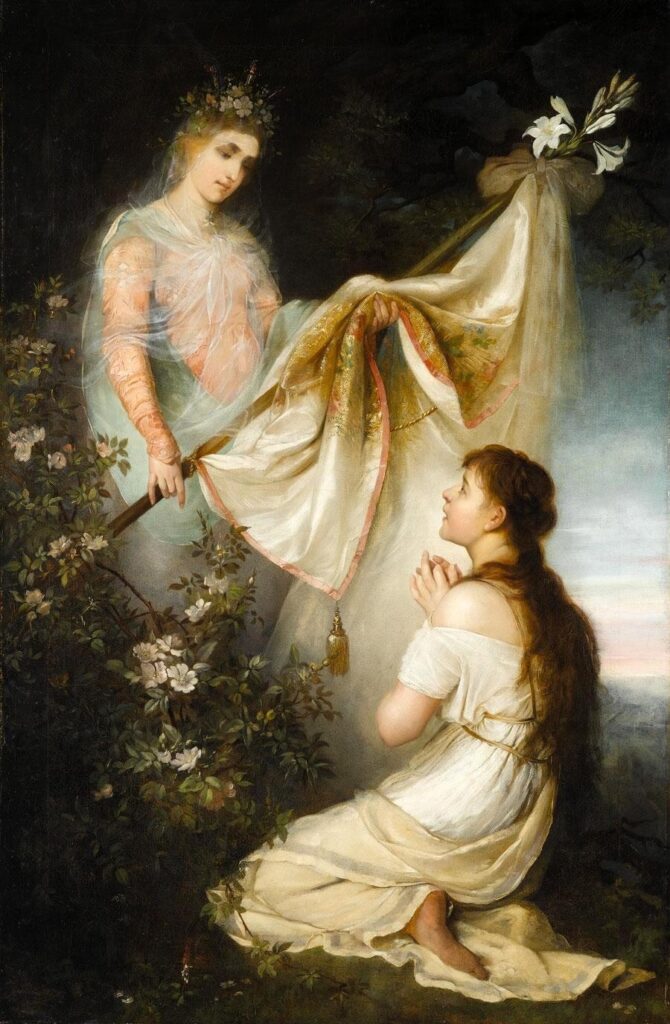
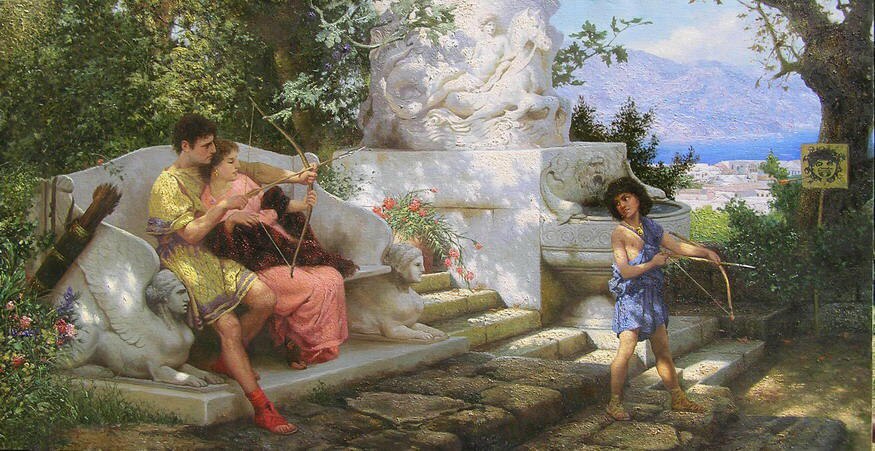
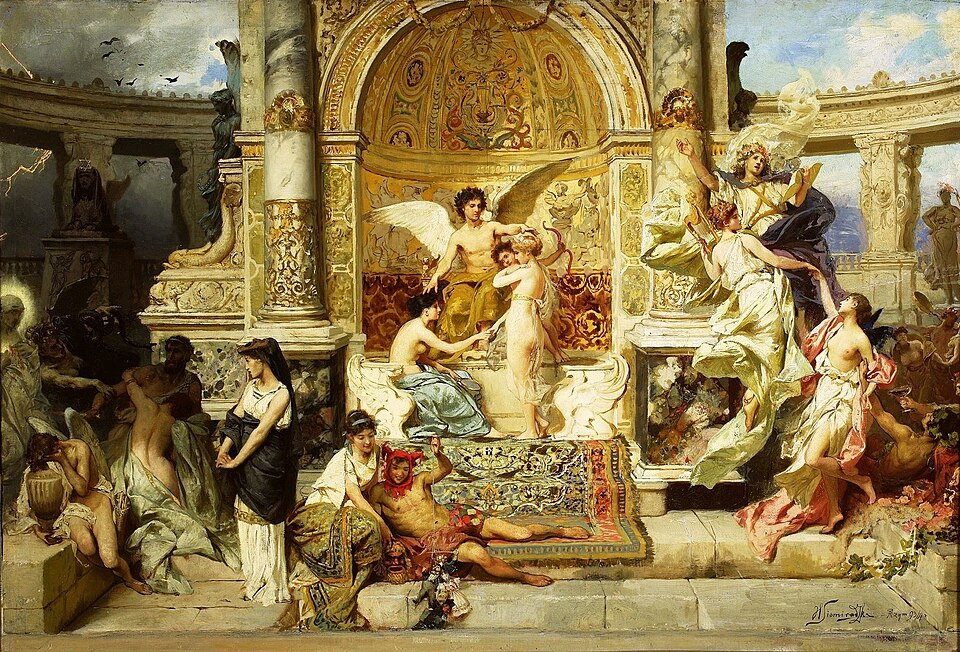
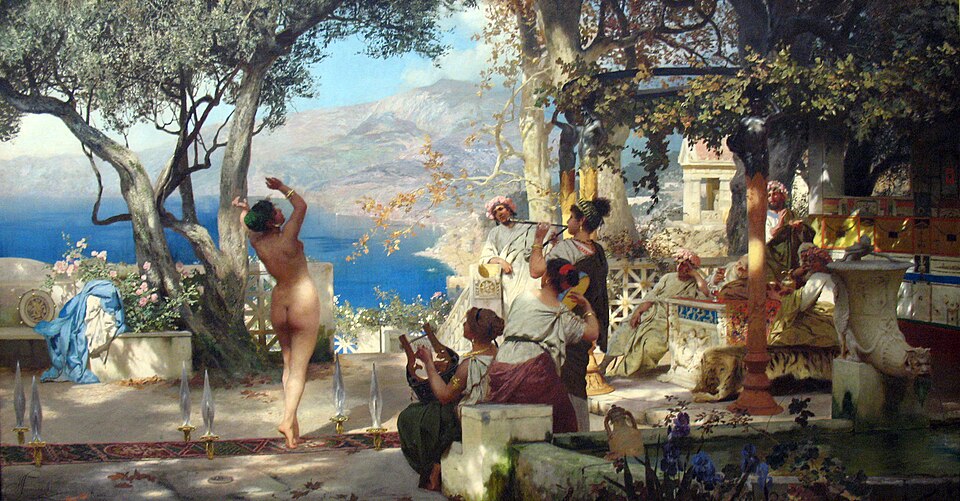
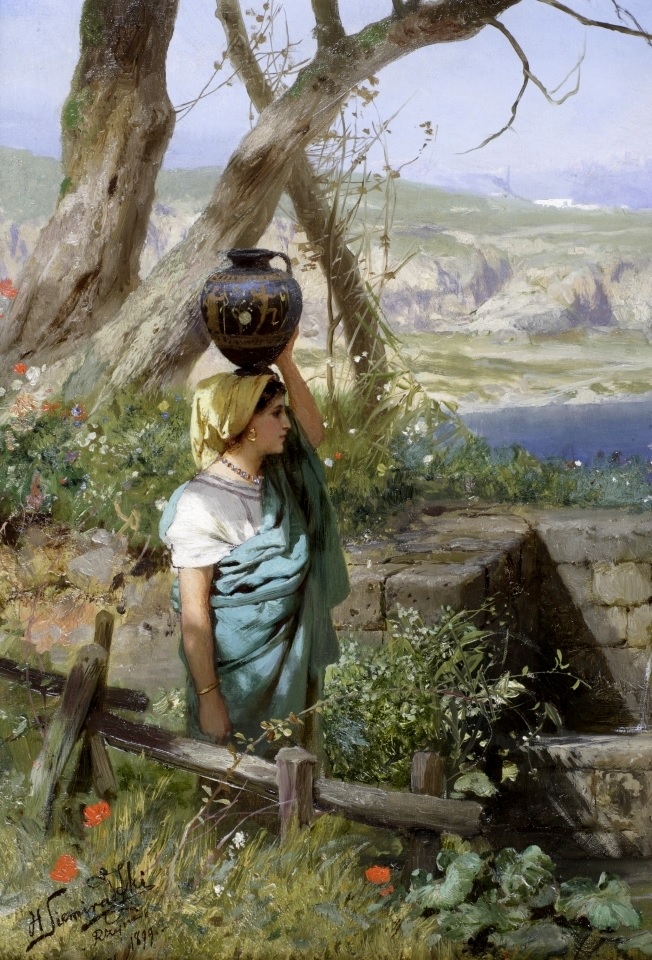
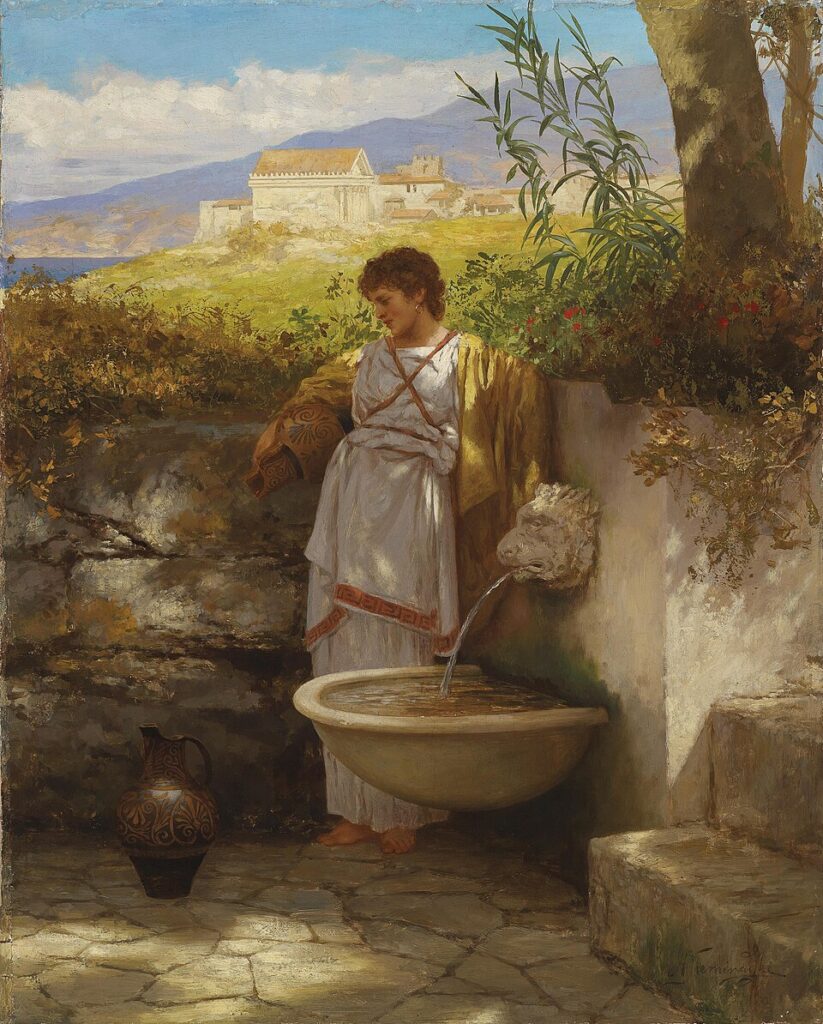
Henryk Siemiradzki’s work epitomized the grandeur and precision of 19th-century European academic art. His paintings typically portrayed scenes from Greco-Roman antiquity, early Christian history, and biblical narratives. He was known for lush, meticulously constructed compositions that featured graceful figures, elaborate architecture, and evocative use of light. Siemiradzki did not aim for realism in the modern sense; rather, he sought to elevate and idealize, portraying timeless virtues and universal stories.
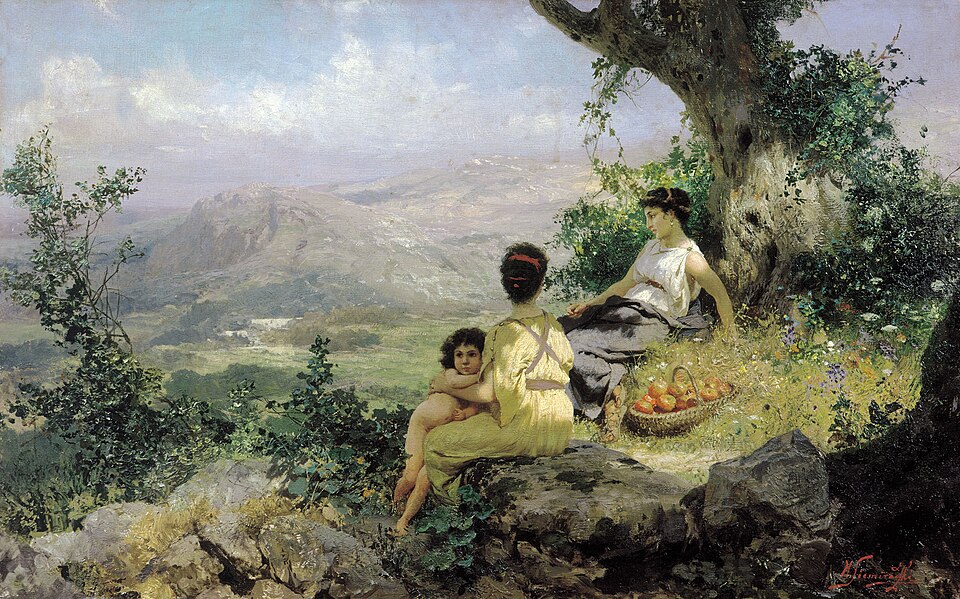
He employed a strong classical aesthetic, often evoking the spirit of antiquity not only in subject but in mood and scale. His paintings could stretch across enormous canvases, with dozens of figures engaged in carefully orchestrated actions. Every element — from costume folds to marble columns — was researched and rendered with painstaking accuracy. These details were not mere decoration; they contributed to the storytelling that defined his art.
Between Neoclassicism and Sentimentalism
Siemiradzki’s artistic voice blended the structure of neoclassicism with the emotion of romantic and sentimental traditions. Unlike cold historical reconstructions, his paintings often invited the viewer into moral contemplation. In depicting early Christians, martyrs, or pagan festivals, he captured the drama and dignity of spiritual conflict and cultural transition. His sensitivity to emotion made his work popular with audiences across Europe.
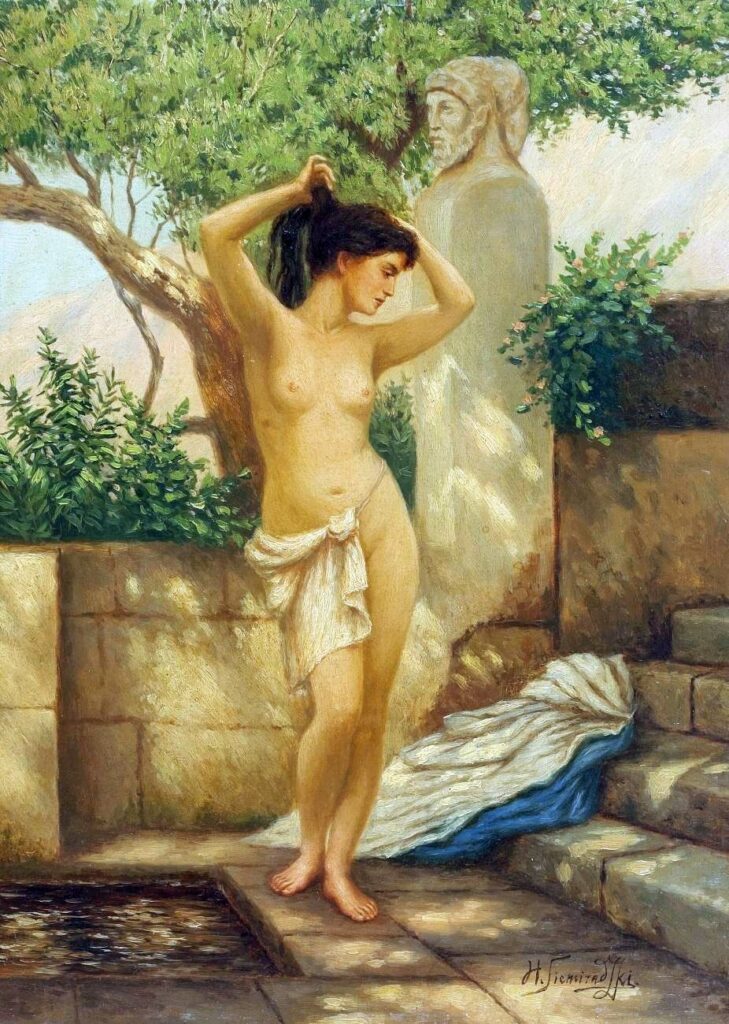
Though rooted in historical accuracy, his works possessed a theatrical quality, akin to the stagecraft of epic drama. Siemiradzki also had experience designing theater curtains and sets, and this background likely influenced his sense of visual storytelling. He often used warm, natural light to bathe his figures in a golden glow, lending them both realism and reverence. This poetic lighting became one of his stylistic signatures.
Through this balance of idealism and emotion, Siemiradzki carved out a unique place in the European art world. While many artists of his time turned toward realism or impressionism, he remained faithful to academic values. His ability to harmonize historical context with human feeling made his work not only beautiful but deeply resonant. His style, though now somewhat out of vogue, continues to be admired for its craftsmanship and clarity.
Masterpieces and Major Works
One of Siemiradzki’s most acclaimed paintings is “Nero’s Torches,” completed in 1876 and exhibited in Rome. The massive canvas, portraying the persecution of early Christians under Emperor Nero, drew widespread attention for its emotional gravity and technical brilliance. Shortly after its unveiling, the painting was purchased by Tsar Alexander II and gifted to the Academy of Arts in St. Petersburg. Today, it is held in the National Museum in Kraków, where it remains one of the institution’s most significant holdings.
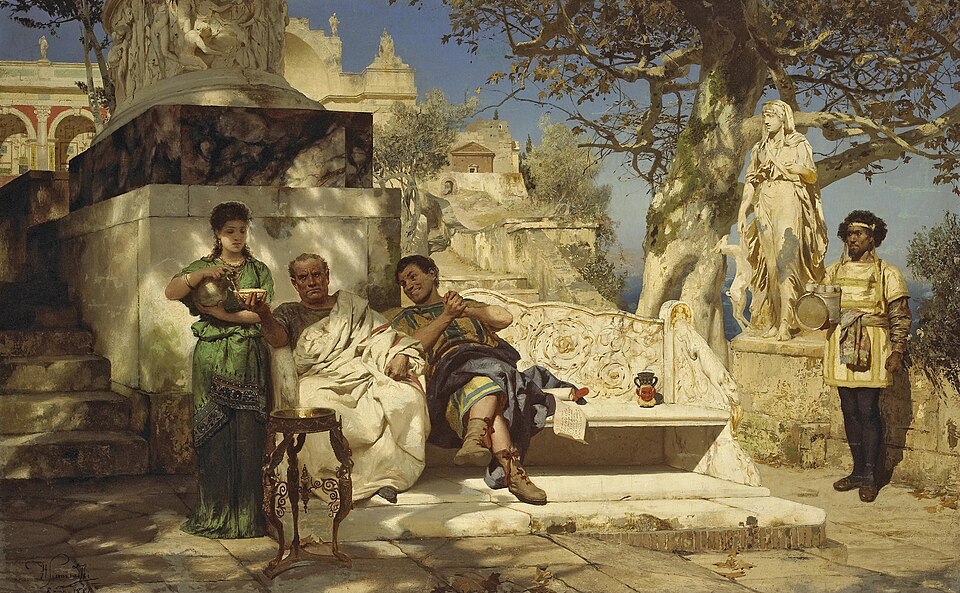
Other major works by Siemiradzki include “Christian Dirce,” “Phryne at the Poseidonia,” and “Vase or Woman?” Each explores moments of cultural tension, moral conflict, or aesthetic beauty with the artist’s trademark elegance. In “Christian Dirce,” for example, the martyrdom of a young woman in a Roman arena is portrayed with both horror and nobility. The viewer is forced to confront the cruelty of the ancient world while admiring the strength of its victims.
From Nero’s Torches to Christian Martyrs
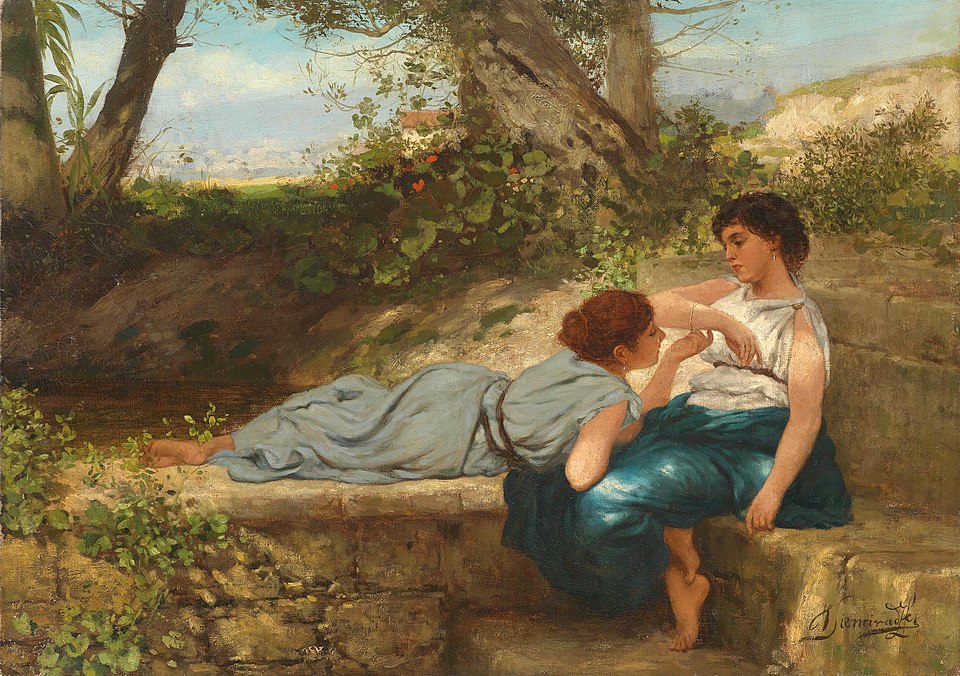
The appeal of these works lay in their capacity to evoke deep emotional reactions while remaining rooted in historical and artistic traditions. Siemiradzki’s attention to archaeological detail — in costume, architecture, and setting — lent authenticity to scenes that might otherwise have seemed melodramatic. His color palettes often used warm tones to contrast light and shadow, enhancing the sense of volume and space.
In addition to canvases, Siemiradzki completed monumental decorative projects, including theater curtains for the Juliusz Słowacki Theatre in Kraków and the Lviv Opera House. These projects allowed him to combine art with architecture, turning public spaces into visual spectacles of national pride. His contribution to these cultural landmarks extended his legacy beyond private galleries and into the civic heart of Polish life.
Siemiradzki’s major works represent the peak of academic painting’s ability to combine scholarship, technique, and narrative. They are not merely pictures, but theatrical experiences in oil and canvas. In an age increasingly obsessed with modernity, his work offered a noble and timeless alternative. It continues to inspire those who value traditional skill and historical consciousness.
Patronage, Exhibitions, and Honors
Siemiradzki was not only admired by the public but enjoyed widespread institutional recognition throughout Europe. His paintings were exhibited at the Paris Salon, the Vienna World’s Fair, and other major art expositions. These prestigious exhibitions brought his work to the attention of collectors, museum curators, and royalty. The artist’s visibility on the international stage grew rapidly after the success of “Nero’s Torches.”
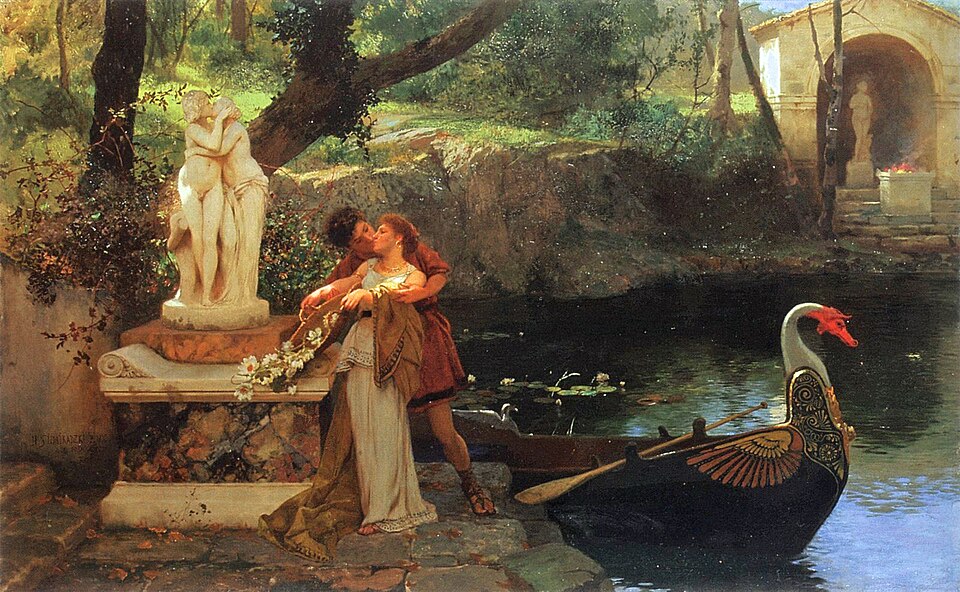
His honors included medals and titles from France, Austria, Russia, and Poland. In 1878, he received the Legion of Honor from the French government, and that same year won a gold medal at the Paris Exposition Universelle. These accolades placed him among the top ranks of 19th-century European artists. He also became an honorary member of several art academies, including those in Rome, Paris, and St. Petersburg.
A Favorite of Tsars and Academies
The patronage of Russian Tsars, particularly Alexander II, helped secure Siemiradzki’s financial stability and prominence in the imperial art world. His connections to the Polish aristocracy further broadened his support base, allowing him to work independently in Rome while maintaining influence in Eastern Europe. Wealthy Polish and Russian families often commissioned or collected his works, drawn to their moral clarity and historical depth.
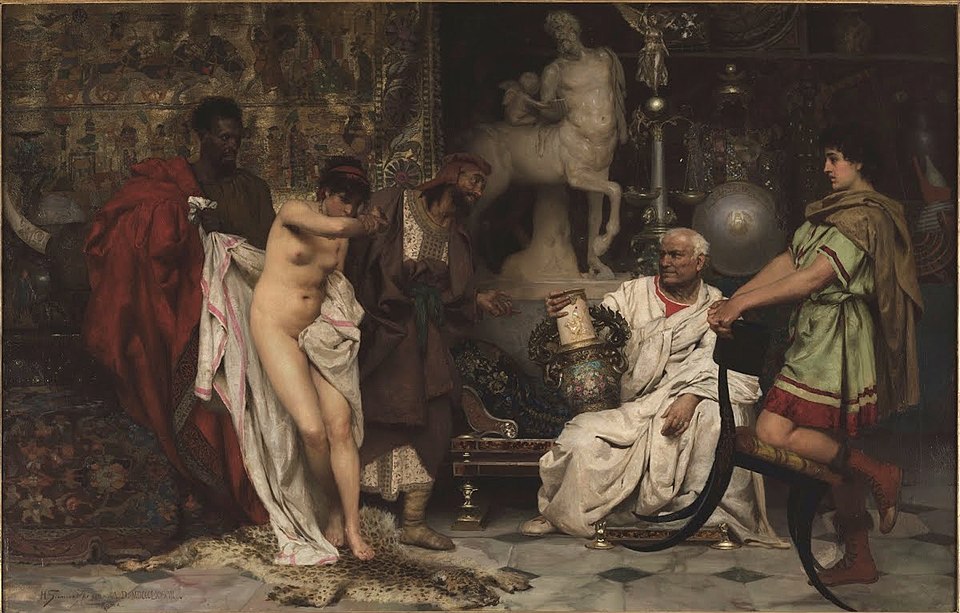
Such elite backing enabled him to take on large-scale projects that required months, sometimes years, of labor. His patrons were not just admirers of beauty — they supported a vision of art that upheld dignity, heroism, and tradition. This support allowed Siemiradzki to remain faithful to academic principles at a time when other artists were abandoning them for more experimental styles.
Through these honors and exhibitions, Siemiradzki established himself not only as a painter but as a cultural ambassador. He promoted a vision of art that was elevated, meaningful, and accessible, even when presented on a grand scale. His presence in international salons was a symbol of the enduring power of classical academic art.
Personal Life and Relationships
In 1873, the same year he settled in Rome, Siemiradzki married Maria Pruszynska, a member of his extended family. Their union reflected traditional Polish values and provided a stable family life for the artist amid his international success. The couple had four children, and their home in Rome served both as a residence and a vibrant artistic studio. Family life gave him continuity and grounding, even as his reputation grew abroad.
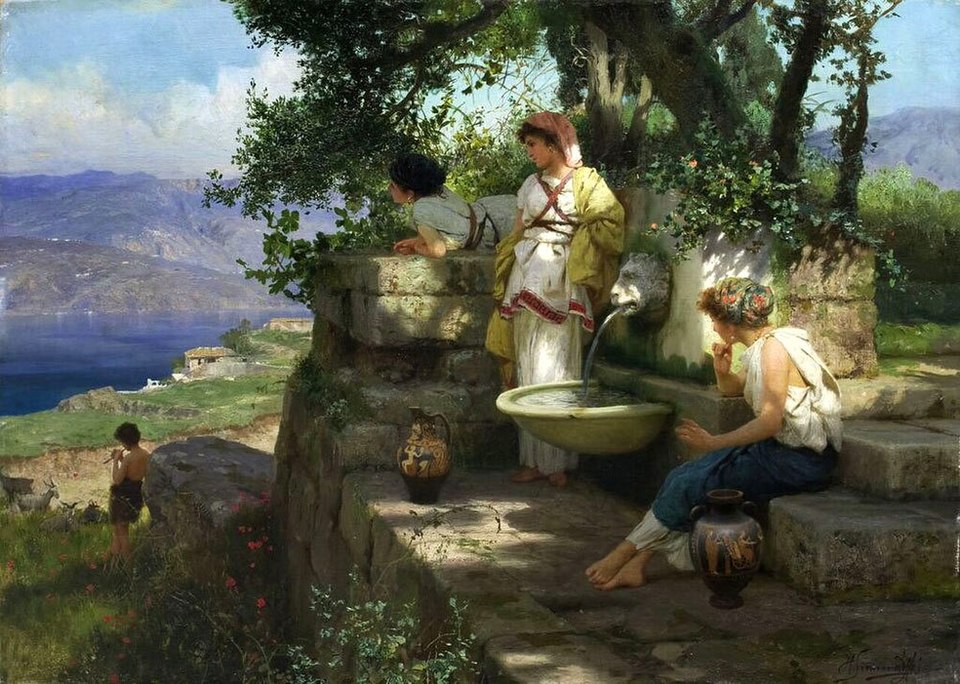
Siemiradzki’s social circle included leading Polish artists and intellectuals, such as Henryk Sienkiewicz and Jan Matejko. His friendships bridged disciplines, linking literature, music, and visual art in a shared commitment to national culture. Though he lived much of his life in Italy, he made frequent visits to Poland and maintained an estate near Kraków. This dual identity — Polish at heart, Roman in practice — defined his personal and professional life.
A Cosmopolitan Yet Rooted Artist
He remained deeply connected to Polish institutions, often donating works to national museums and participating in cultural initiatives. His art was not only for sale but also for public service, reinforcing values of patriotism, beauty, and continuity. His contributions to Polish culture were recognized in his lifetime and celebrated after his death.
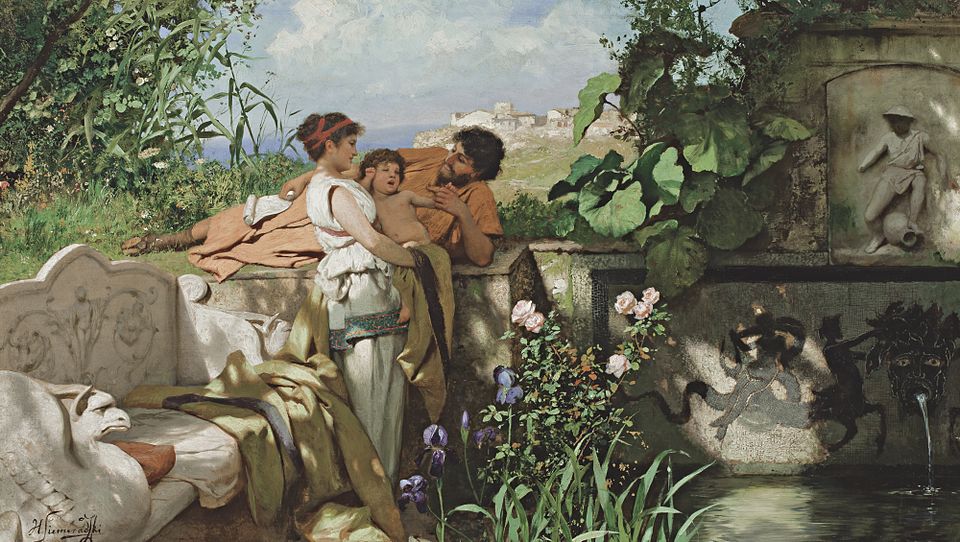
Siemiradzki’s marriage and family were relatively private affairs, and few letters or personal writings survive today. However, the stability of his household and the loyalty of his companions suggest a life rich in companionship and purpose. His Roman studio, frequently visited by other artists and dignitaries, was a center of creative energy and national pride.
Through his family and friendships, Siemiradzki stayed anchored in the cultural traditions he sought to preserve. He was a man of his era — disciplined, loyal, and committed to high standards in both life and art. His relationships reflected the values that guided his brush.
Legacy and Influence
Henryk Siemiradzki died on August 23, 1902, at his estate in Strzałków near Częstochowa, Poland. Originally buried in Warsaw, his remains were transferred to the national pantheon at Skałka in Kraków, a final honor reserved for Poland’s most esteemed figures. His death marked the close of an era — one in which academic painting still held sway over the hearts and minds of Europe. But his influence did not end with his passing.
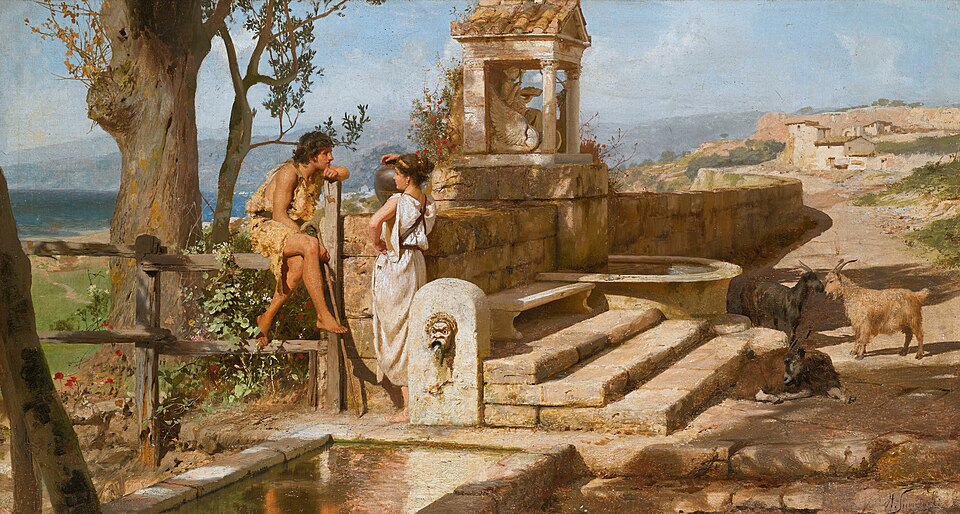
His works live on in the great museums of Eastern Europe, including the National Museum in Kraków and the Tretyakov Gallery in Moscow. Through these collections, his vision continues to influence students, scholars, and lovers of classical painting. His legacy is particularly significant in Poland, where he is remembered not only as an artist but as a cultural patriot.
Bridging Polish Patriotism and Pan-European Classicism
Siemiradzki’s art built a bridge between ancient civilizations and modern national identity. He showed that patriotism and classicism were not in opposition but could reinforce each other. His paintings elevated Polish pride through the universal language of beauty, faith, and heroism. In this way, he served as both a guardian of tradition and a participant in Europe’s grand artistic conversation.
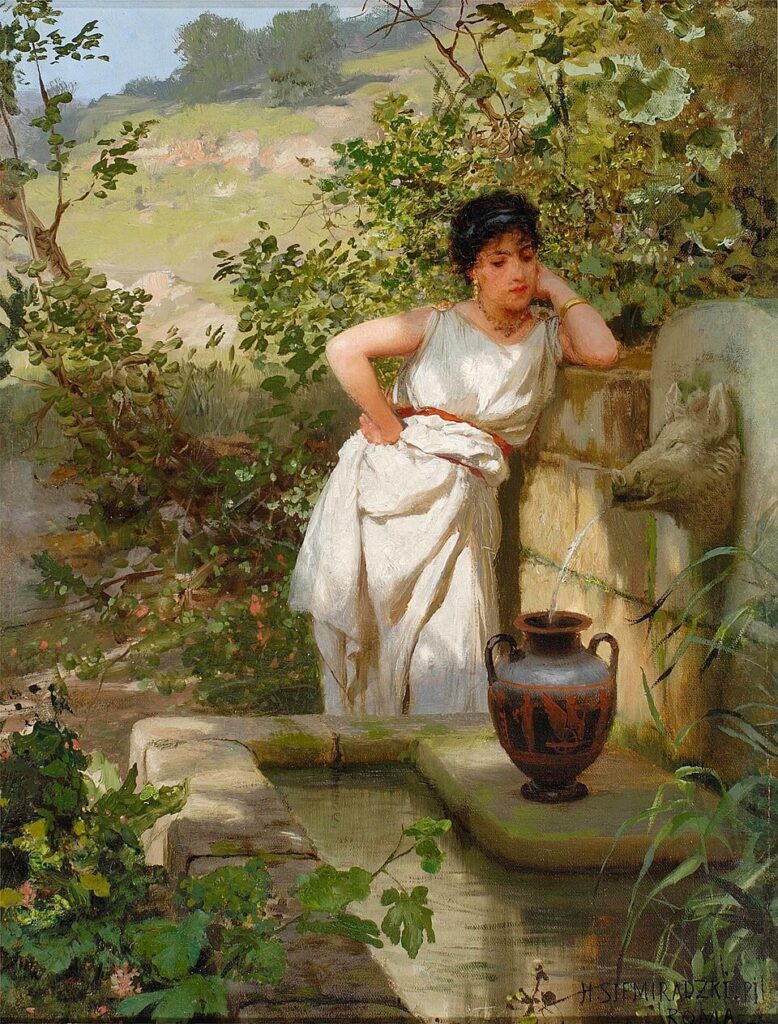
While tastes have shifted over the decades, Siemiradzki’s commitment to narrative, structure, and moral depth remains inspirational. His influence persists in academic institutions and private collections, where his work is studied and admired for its integrity and skill. His legacy reminds us that timeless themes, when treated with care and mastery, never go out of style.
Key Takeaways
- Henryk Siemiradzki was born in 1843 and became one of the most respected academic painters of 19th-century Europe.
- He trained in St. Petersburg and Rome, combining technical mastery with a love for classical and biblical themes.
- His best-known work, “Nero’s Torches,” was acquired by Tsar Alexander II and brought him international fame.
- Siemiradzki received major awards and was a favorite of European academies and patrons.
- He died in 1902, and his works remain central to Polish cultural heritage and academic art history.
Frequently Asked Questions
- When was Henryk Siemiradzki born and where?
He was born on October 24, 1843, in Novo-Belgorod in the Russian Empire. - What style of painting is Siemiradzki known for?
He is known for European academic art with classical and biblical themes. - What is his most famous painting?
“Nero’s Torches” (1876) is his most famous and widely acclaimed painting. - Did he have a family?
Yes, he married Maria Pruszynska in 1873 and had four children. - Where can his works be seen today?
His works are held in museums like the National Museum in Kraków and the Tretyakov Gallery.