Art history has plenty of triangles: compositional triangles, perspective triangles—and the much messier kind involving three people.
Some produced paintings. Others destroyed friendships, marriages, or reputations. And a few famous “love triangles” turn out to be more complicated once you separate documented history from irresistible gossip.
Here are nine stories where love, rivalry, and art became difficult to separate.
1. Frida Kahlo, Diego Rivera, and Cristina Kahlo — The Betrayal Was Inside the Family
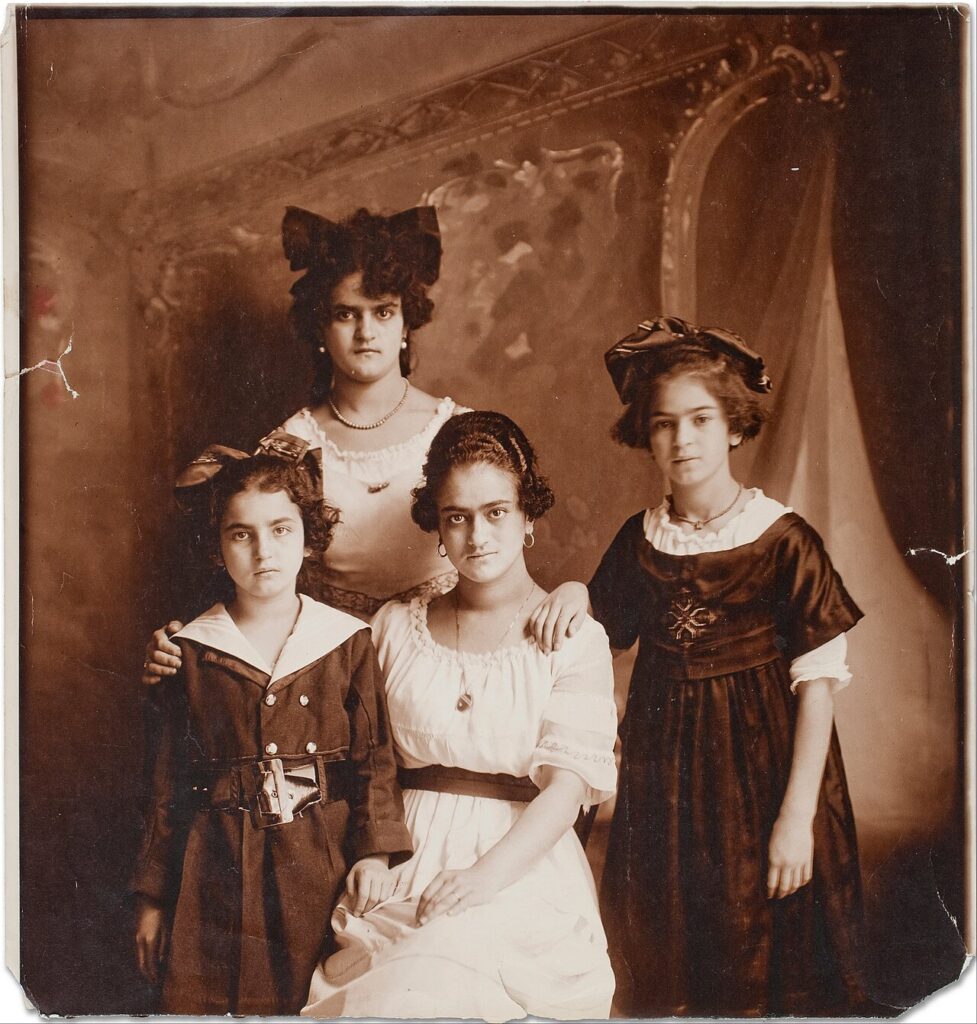
Frida Kahlo and Diego Rivera already had an unconventional and turbulent marriage, with affairs on both sides. But Rivera’s affair with Frida’s younger sister, Cristina, was different.
The discovery devastated Kahlo and contributed to a separation from Rivera. Yet Frida and Cristina eventually repaired their relationship, while Frida and Diego divorced in 1939—and remarried in 1940.
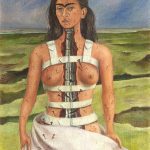
The useful part isn’t the scandal. It’s that Kahlo refused to keep her emotional life outside her art. Pain, sexuality, marriage, identity, and the body became material she could examine rather than merely endure.
When personal experience enters your work, transform it through composition, symbolism, exaggeration, or humor rather than simply illustrating what happened.
2. Camille Claudel, Rodin, and Rose Beuret — The Triangle Lasted for Years
Auguste Rodin had been living with Rose Beuret for years when the young sculptor Camille Claudel entered his studio and became his student, collaborator, model, and lover.
Rodin’s relationship with Claudel was intense, but he never permanently left Rose. Decades later, in 1917, Rodin finally married Beuret; she died shortly afterward, and Rodin died later that year.
Claudel’s tragedy is often allowed to swallow her artistic identity. Her relationship with Rodin mattered, but so did her extraordinary ability as a sculptor. Works such as The Waltz and The Age of Maturity deserve to be seen as art, not merely evidence in a romantic biography.
When biography threatens to dominate someone’s work—including your own—look at what the work accomplishes that the personal story cannot explain.
3. Picasso, Marie-Thérèse Walter, and Dora Maar — The Rivalry Became Part of the Myth
Picasso met Marie-Thérèse Walter when she was 17 and he was 45 and married to Olga Khokhlova. Years later, Dora Maar entered his life while his relationship with Marie-Thérèse continued.
The two women became associated with strikingly different visual identities in Picasso’s work: Marie-Thérèse frequently appears in curving, sensual forms, while Maar became connected to sharper, more anguished imagery, most famously the Weeping Woman paintings.
Stories about the women confronting one another over Picasso have become part of Picasso mythology, and some details are difficult to verify. What is certain is that Picasso’s overlapping relationships profoundly affected how later audiences interpreted his portraits of both women.
If you repeatedly portray people close to you, notice whether you’re painting the person in front of you or turning them into a visual role you’ve already assigned them.
4. Alfred Stieglitz, Georgia O’Keeffe, and Dorothy Norman — Letters Complicated Everything
Georgia O’Keeffe and photographer Alfred Stieglitz had one of modern art’s great creative partnerships. Stieglitz exhibited O’Keeffe’s work, photographed her extensively, and eventually married her in 1924.
But the marriage became strained, and Stieglitz developed an intense relationship with the much younger Dorothy Norman, a writer, photographer, and arts patron. Their surviving correspondence documents its emotional importance.
O’Keeffe increasingly spent time in New Mexico, where the landscape helped her construct a life and artistic identity independent of Stieglitz’s New York circle. Distance became productive.
When a relationship begins consuming the mental space required for your work, changing your physical environment can sometimes accomplish what another argument cannot.
5. Man Ray, Lee Miller, and Roland Penrose — The Muse Walked Away
Lee Miller began as Man Ray’s model and assistant in Paris, but describing her simply as his muse badly understates the relationship. She became an accomplished photographer herself, and the two worked closely during a period of Surrealist experimentation.
Their romantic relationship ended, and Miller later married British Surrealist Roland Penrose. She went on to produce remarkable fashion and wartime photography, including work documenting the liberation of concentration camps and the aftermath of war in Europe.
Her story exposes a recurring problem in art history: women who worked beside famous men were often remembered as inspirations before they were remembered as creators.
When someone introduces an artist primarily through the famous person they loved, use that as a signal to investigate what they made independently.
6. Max Ernst, Leonora Carrington, and Peggy Guggenheim — Love Followed the Art World
Leonora Carrington and Max Ernst began a relationship in the late 1930s, despite Ernst being married. They lived together in France until war and Ernst’s internment tore their life apart.
Carrington eventually left Europe. Ernst later married the wealthy collector and patron Peggy Guggenheim in 1941, though that marriage was brief. He subsequently married artist Dorothea Tanning.
The temptation is to reduce this network to glamorous Surrealist romance. But Carrington and Tanning both developed major careers of their own, increasingly resistant to being treated as supporting characters in Ernst’s biography.
When studying a creative circle, redraw the story with the supposedly secondary person at the center; you may discover that the familiar hierarchy was created by history rather than talent.
7. Salvador Dalí, Gala, and Paul Éluard — The Wife Left With the Surrealist
Gala was married to Surrealist poet Paul Éluard when she met the young Salvador Dalí in 1929.
She left Éluard for Dalí and eventually married him. But the relationships within the Surrealist circle were far less conventional than a simple husband-versus-lover story suggests, and Gala and Éluard remained connected after their separation.
Gala became central to Dalí’s personal mythology, business affairs, and artistic persona. He repeatedly represented her in his work, transforming an actual relationship into part of the public architecture of “Dalí.”
If your personal life becomes part of your creative identity, decide deliberately what remains private before the public version starts replacing the real one.
8. Lucian Freud, Kitty Garman, and Lady Caroline Blackwood — One Marriage Was Barely Over Before Another Began
Lucian Freud married Kitty Garman, daughter of sculptor Jacob Epstein and Kathleen Garman, in 1948. Kitty became the subject of several important early portraits, including Girl with a White Dog.
The marriage deteriorated, and Freud became involved with the aristocratic writer Lady Caroline Blackwood, whom he married in 1953. That marriage also proved short-lived.
Freud’s relationships were famously complicated, but his portraits resist easy romantic storytelling. The people closest to him are not necessarily idealized. He scrutinizes them—sometimes almost uncomfortably.
When portraying someone you love, remove one flattering assumption and look again; intimacy can give you permission to notice what a stranger would miss.
9. John Everett Millais, John Ruskin, and Effie Gray — The Artist Painted His Friend’s Wife
This may be Victorian art’s most famous triangle.
Effie Gray married the influential critic John Ruskin in 1848, but their marriage was never consummated. Years later, while Millais was painting Ruskin’s portrait in Scotland, Millais and Effie fell in love.
Effie successfully sought an annulment from Ruskin in 1854 and married Millais the following year. They remained married until Millais’s death in 1896 and had eight children.
The strangest visual artifact of the story is Millais’s celebrated portrait of Ruskin standing beside a Scottish stream. Knowing what happened afterward makes the painting almost impossible to see innocently: the artist carefully observing the man whose wife he would soon marry.
When an artwork’s backstory changes the way you see it, look twice—once with the biography in mind and once while deliberately ignoring it—to discover what the picture itself is actually doing.
Art’s great love triangles are entertaining because they remind us that famous artists weren’t walking art-history chapters. They were people making questionable decisions while simultaneously making extraordinary things.
But there is a more useful reason to study these relationships. Love can become subject matter, collaboration, distraction, mythology, or competition—and the artist’s real challenge is figuring out which one it has become before somebody else’s life takes over the work.