The history of the Salon d’Automne is one of rebellion, experimentation, and artistic courage. At the beginning of the twentieth century, Paris stood at the center of the art world, attracting painters, sculptors, writers, and collectors from across Europe. Crowded cafés buzzed with arguments about beauty, tradition, and the future of culture. In this restless atmosphere, a new exhibition emerged that would challenge old artistic standards and help launch some of the most revolutionary movements in modern history.
Founded in 1903, the Salon d’Automne rejected the rigid conservatism that had dominated earlier French Salons. Many artists believed official exhibitions favored safe academic paintings while ignoring innovation and originality. The new Salon promised something different. It welcomed bold experimentation, decorative arts, and younger artists searching for freedom beyond traditional rules. Visitors entering the exhibition often encountered shocking colors, fragmented forms, and strange dreamlike imagery unlike anything seen before.
The Salon d’Automne quickly became associated with artistic controversy. Critics mocked many of the paintings displayed there, accusing modern artists of destroying civilized standards and abandoning technical skill. Yet public outrage only increased attention toward the exhibition. The Salon became a stage where modern art movements could confront established authority directly. Every exhibition season seemed to produce fresh arguments about the meaning and purpose of art itself.
More importantly, the Salon d’Automne helped redefine artistic legitimacy during the twentieth century. Instead of relying on state approval or rigid academy standards, artists increasingly gained recognition through independent exhibitions and private support. Fauvism, Cubism, and later Surrealism all benefited from the visibility provided by the Salon. The exhibition transformed Paris into the capital of avant-garde culture before World War I and shaped artistic debates for generations afterward.
The Founding of the Salon d’Automne
The Salon d’Automne was founded in 1903 during a period of rapid cultural change in France. Paris had become a city filled with electric lights, expanding boulevards, fashionable theaters, and crowded train stations. Artists increasingly felt disconnected from the conservative standards imposed by older exhibitions such as the official Paris Salon. Many younger painters believed modern life required a new artistic language capable of expressing speed, emotion, and individuality. The atmosphere in the French capital encouraged experimentation and intellectual risk-taking.
Frantz Jourdain, born in 1847 and deceased in 1935, became one of the most important founders of the Salon d’Automne. Jourdain worked as both an architect and art critic, and he strongly supported modern design and artistic independence. Alongside him stood Georges Desvallières, born in 1861 and deceased in 1950, who helped organize and promote the exhibition during its early years. The founders believed art should remain open to innovation rather than controlled by narrow academic traditions. They also supported decorative arts, architecture, and design alongside painting and sculpture.
Artists Create a New Kind of Exhibition
The Salon d’Automne distinguished itself partly through timing. Unlike traditional spring exhibitions, it opened during autumn, giving artists another opportunity to present their work publicly. Organizers hoped this schedule would create a more relaxed and experimental atmosphere. Exhibitions were designed to encourage conversation between artists, critics, collectors, and ordinary visitors. Crowded galleries filled with tobacco smoke and heated debate soon became defining features of the Salon experience.
The founders also promoted collaboration between different artistic disciplines. Painters displayed works beside furniture designs, ceramics, stained glass, and architectural models. This reflected a broader belief that beauty should influence everyday life rather than remain confined to elite institutions. Responsible historical speculation suggests that organizers viewed industrial mass production with caution and hoped handcrafted artistic design could preserve cultural quality in a rapidly modernizing society. From the beginning, the Salon d’Automne stood for creative freedom and resistance against rigid institutional control.
Fauvism Explodes onto the Paris Art Scene
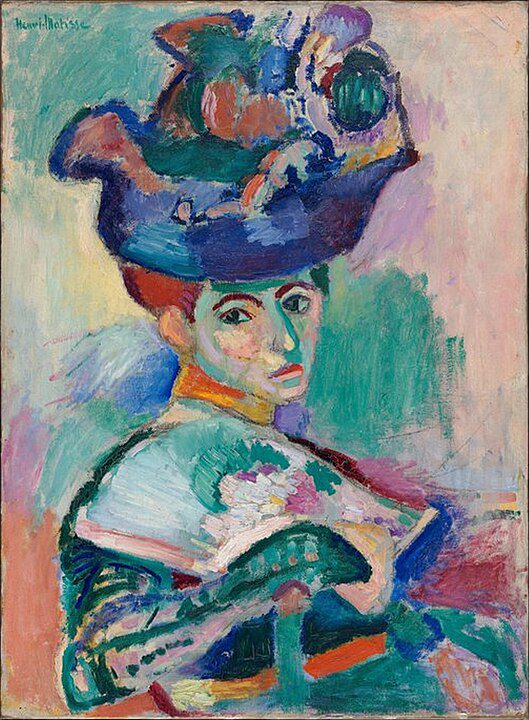
The Salon d’Automne became internationally famous in 1905 when a group of painters introduced a shocking new style later called Fauvism. Visitors entering the exhibition encountered paintings filled with blazing reds, deep blues, and violent greens unlike traditional European art. Faces appeared orange, shadows looked purple, and landscapes glowed with unnatural intensity. Critics reacted with disbelief and anger as they wandered through galleries crowded with curious spectators. Some viewers laughed openly while others condemned the paintings as childish and reckless.
The critic Louis Vauxcelles famously described the artists as “wild beasts,” or “Fauves,” after seeing their work displayed beside a classical sculpture. The insult quickly became the movement’s name. Fauvist painters rejected the idea that color should imitate nature realistically. Instead, they used color emotionally and symbolically to create energy, movement, and mood. Their works often appeared spontaneous and unfinished compared to polished academic paintings. Yet behind the apparent chaos stood careful artistic choices and deep understanding of composition.
The Scandal of the “Wild Beasts”
Henri Matisse, born in 1869 and deceased in 1954, emerged as the leading figure of Fauvism. Matisse believed color could communicate emotional truth more powerfully than realistic detail. Alongside him worked André Derain, born in 1880 and deceased in 1954, and Maurice de Vlaminck, born in 1876 and deceased in 1958. The three artists formed close friendships and frequently discussed painting techniques while traveling through the French countryside. Their shared experiments helped shape the visual identity of Fauvism.
Public outrage surrounding Fauvism increased the Salon d’Automne’s reputation dramatically. Newspaper critics condemned the paintings while younger artists admired their boldness and independence. Some conservative observers feared modern art reflected broader cultural instability within European society before World War I. Responsible historical speculation suggests that rapid industrial growth and urban expansion contributed to public discomfort with artistic experimentation. The Fauves transformed color into a weapon against convention and permanently altered the direction of modern painting.
The Salon d’Automne and the Rise of Cubism
After the shock of Fauvism, the Salon d’Automne soon became associated with another revolutionary movement called Cubism. This new style challenged traditional perspective by breaking objects into geometric forms and presenting multiple viewpoints simultaneously. Audiences struggled to understand paintings that appeared fragmented and abstract. Critics accused Cubist artists of destroying recognizable reality altogether. Yet supporters argued the movement reflected a deeper understanding of how people actually experience space and movement.
Paul Cézanne, born in 1839 and deceased in 1906, strongly influenced the development of Cubism. A major retrospective of Cézanne’s work after his death revealed his innovative approach to form and structure. Younger painters admired the way he simplified landscapes and objects into basic geometric shapes. His influence spread rapidly through artistic circles in Paris. Many historians consider Cézanne the bridge between nineteenth-century painting and modern abstraction.
Picasso, Braque, and a New Visual Language
Pablo Picasso, born in 1881 and deceased in 1973, formed one of the most important artistic partnerships in modern history with Georges Braque, born in 1882 and deceased in 1963. The two painters worked closely together between 1908 and 1914, constantly exchanging ideas and influencing each other’s techniques. Their paintings fragmented objects into overlapping planes and challenged traditional assumptions about perspective. Visitors to the Salon d’Automne often reacted with confusion or hostility when confronting Cubist works. Many viewers believed the paintings looked unfinished or intellectually absurd.
Despite criticism, the Salon helped legitimize Cubism by providing visibility and public debate. Younger artists traveled to Paris hoping to witness these radical developments firsthand. The exhibition became a battleground where defenders of tradition confronted advocates of abstraction and experimentation. Responsible historical speculation suggests that scientific discoveries and technological advances during the early twentieth century encouraged artists to rethink visual perception itself. Cubism eventually transformed architecture, design, sculpture, and even literature, making the Salon d’Automne one of the central engines of modern culture.
War, National Identity, and Cultural Change
World War I began in 1914 and profoundly affected the Salon d’Automne along with the rest of European society. Millions of young men marched to battlefields across France, Belgium, and Eastern Europe while Paris endured anxiety and uncertainty. Artists faced military service, economic hardship, and emotional exhaustion. The optimism and excitement of prewar modernism suddenly seemed distant. Exhibition halls that once celebrated experimentation became quieter and more somber during the war years.
Georges Desvallières devoted much of his wartime art to patriotic and religious themes. Like many French citizens, he believed national unity and sacrifice were necessary for survival during the conflict. Modern art itself became entangled in debates about national identity and cultural loyalty. Some critics attacked foreign artistic influences, especially German styles, during the war years. The atmosphere surrounding artistic experimentation became more cautious and politically sensitive.
The Salon During World War I and Beyond
The Salon d’Automne nevertheless continued promoting modern art throughout the conflict. Organizers believed cultural life should survive even during national crisis. Exhibitions offered moments of reflection and continuity amid widespread suffering and destruction. Artists struggled to balance innovation with public expectations shaped by grief and patriotism. The war permanently altered European attitudes toward beauty, violence, and civilization itself.
After the war ended in 1918, many artists turned toward greater structure and order in their work. The emotional chaos of the conflict encouraged some painters to seek stability through classical balance and clear composition. Others continued exploring abstraction and modern experimentation despite criticism from conservative observers. Responsible historical speculation suggests that audiences desired familiarity and reassurance after years of trauma and uncertainty. The Salon d’Automne adapted to these changing tastes while remaining committed to artistic freedom.
The Salon d’Automne Between the Wars
During the 1920s and 1930s, the Salon d’Automne expanded its influence beyond painting and sculpture. Paris became a global cultural crossroads filled with writers, musicians, architects, and designers from many nations. Jazz music drifted through fashionable clubs while modern fashion houses transformed urban style. The Salon reflected this wider creative energy by embracing decorative arts and international participation. Its exhibitions attracted visitors eager to witness the newest developments in modern culture.
Surrealism emerged as one of the most influential movements associated with the interwar years. André Breton, born in 1896 and deceased in 1966, helped define Surrealism through manifestos that encouraged artists to explore dreams, memory, and the unconscious mind. Painters created strange scenes where ordinary reality blended with fantasy and symbolism. These works fascinated audiences searching for meaning after the devastation of World War I. Surrealism pushed artistic experimentation into deeply psychological territory.
Surrealism, Art Deco, and Expanding Influence
Salvador Dalí, born in 1904 and deceased in 1989, became one of Surrealism’s most recognizable figures. Dalí’s dramatic personality and bizarre imagery attracted enormous public attention during the 1930s. Alongside Surrealism, the Art Deco movement also flourished during this period. Elegant geometric designs appeared in architecture, furniture, jewelry, and fashion throughout Paris. The Salon d’Automne encouraged collaboration between fine artists and decorative designers, reflecting the belief that beauty should shape everyday life.
International participation increased steadily as artists from Europe, the Americas, and Asia exhibited at the Salon. Paris maintained its reputation as the world capital of modern art during much of the interwar period. Wealthy collectors and museums visited exhibitions searching for innovative talent. Responsible historical speculation suggests that the glamour of Parisian cultural life helped modern art gain broader acceptance among middle-class audiences. By the late 1930s, the Salon d’Automne had become both a symbol of artistic freedom and a major force within global culture.
The Lasting Legacy of the Salon d’Automne
The Salon d’Automne survived political upheaval, economic crises, and two world wars while continuing its annual exhibitions in Paris. Few artistic institutions maintained such long-lasting influence during the turbulent twentieth century. The Salon provided opportunities for generations of painters, sculptors, and designers seeking alternatives to rigid academic systems. Its commitment to experimentation helped normalize artistic innovation within mainstream culture. Many ideas once considered shocking eventually became accepted parts of modern visual language.
The exhibition also influenced later international art fairs and biennials. Large modern exhibitions around the world adopted similar approaches that encouraged debate, experimentation, and cross-cultural exchange. Private galleries increasingly replaced government-controlled institutions as the primary spaces where artists gained recognition. The Salon d’Automne helped establish the idea that artistic legitimacy could emerge outside official authority. This shift transformed the economics and structure of the art world permanently.
How the Exhibition Shaped Modern Art
Modern audiences often take artistic freedom for granted, but the Salon d’Automne played a major role in creating that freedom. By supporting controversial movements such as Fauvism and Cubism, the exhibition encouraged artists to challenge convention openly. Younger generations learned that rejection and criticism could become signs of originality rather than failure. The Salon demonstrated that public outrage sometimes marked the beginning of cultural transformation instead of artistic collapse. Its exhibitions changed how modern society understood creativity itself.
The legacy of the Salon d’Automne still appears in museums, galleries, and contemporary art festivals across the world. Debates about tradition, innovation, and artistic standards continue much like they did in Paris during the early twentieth century. Responsible historical speculation suggests that modern art might have developed far more slowly without the visibility and controversy created by the Salon. The exhibition remains one of the clearest examples of how institutions can encourage creative revolution rather than suppress it. Its history stands as a lasting testament to artistic courage and independent thought.
Why the Salon d’Automne Still Matters
The history of the Salon d’Automne reveals how artistic rebellion can reshape entire cultures. Founded in 1903 as an alternative to conservative exhibitions, the Salon quickly became one of the driving forces behind modern art. Fauvism, Cubism, Surrealism, and other revolutionary movements all benefited from its willingness to embrace experimentation and controversy. Paris itself became the center of global artistic innovation partly because of the Salon’s influence.
The exhibition succeeded because it welcomed artists willing to challenge accepted standards. Crowded galleries introduced audiences to shocking colors, fractured perspectives, and dreamlike imagery that transformed visual culture forever. Critics often reacted with outrage, but public debate only strengthened the Salon’s reputation as a center of avant-garde creativity. Young artists traveled to Paris hoping to participate in this atmosphere of experimentation and intellectual freedom. The Salon turned controversy into cultural energy.
The Enduring Spirit of Artistic Freedom
The legacy of the Salon d’Automne extends far beyond France or the early twentieth century. Modern galleries, biennials, and independent exhibitions continue following paths first opened by the Salon’s founders and exhibitors. Artistic freedom today owes much to those painters and organizers who resisted rigid institutional control more than a century ago. The tension between innovation and tradition remains central to cultural debates in every generation. Creative progress often begins with individuals willing to challenge established expectations.
Many works once ridiculed at the Salon d’Automne now hang in major museums admired by millions of visitors every year. Responsible historical speculation suggests that even hostile critics privately sensed they were witnessing the birth of something historically important. The exhibition proved that bold experimentation could survive ridicule and eventually reshape public taste. Its story reminds modern audiences that cultural greatness rarely emerges from comfort or conformity alone. The Salon d’Automne changed modern art because it dared to welcome the unfamiliar.
Key Takeaways
- The Salon d’Automne was founded in 1903 as an alternative to conservative French art exhibitions.
- The 1905 exhibition introduced Fauvism and shocked audiences with bold color and expressive brushwork.
- Cubism gained visibility through the Salon thanks to artists such as Pablo Picasso and Georges Braque.
- World War I and interwar cultural changes influenced the Salon’s direction and artistic priorities.
- The Salon d’Automne helped establish modern artistic freedom and influenced exhibitions around the world.
FAQs
- What was the Salon d’Automne?
- Why was the 1905 Salon d’Automne controversial?
- How did the Salon support Cubism?
- Who founded the Salon d’Automne in 1903?
- Why is the Salon d’Automne important in art history?