Edvard Munch created some of the most disturbing and emotionally powerful paintings in the history of art. His works seem filled with fear, loneliness, grief, jealousy, and psychological collapse. Rather than painting ideal beauty, he painted the darker corners of human existence with raw honesty. More than a century after his death in 1944, his haunting images still unsettle viewers across the world.
Edvard Munch was born on December 12, 1863, in Løten, Norway, during a period of rapid social change in Europe. His father, Christian Munch, worked as a military doctor and raised the family in a deeply religious household marked by anxiety and strict discipline. Munch’s mother, Laura Catherine Bjølstad, died from tuberculosis in 1868 when the artist was only five years old. The family later moved to Kristiania, now Oslo, where illness and emotional instability continued to shape his childhood.
The young Munch grew up surrounded by sickness and death, experiences that later became central themes in his paintings. His beloved sister Sophie died from tuberculosis in 1877 at only fifteen years old, an event that devastated him emotionally. Another sister, Laura, suffered from severe mental illness and was institutionalized for much of her life. Munch later wrote that illness, madness, and death stood beside his cradle throughout his childhood.
Childhood Loss, Illness, and Psychological Instability
Munch briefly studied engineering in 1879 before abandoning it to pursue art full time in 1880. He enrolled at the Royal School of Art and Design in Kristiania and studied under the naturalist painter Christian Krohg. During the 1880s he became associated with bohemian artistic circles that challenged traditional morality and social expectations. These experiences encouraged him to move away from realism and toward emotionally charged symbolism.
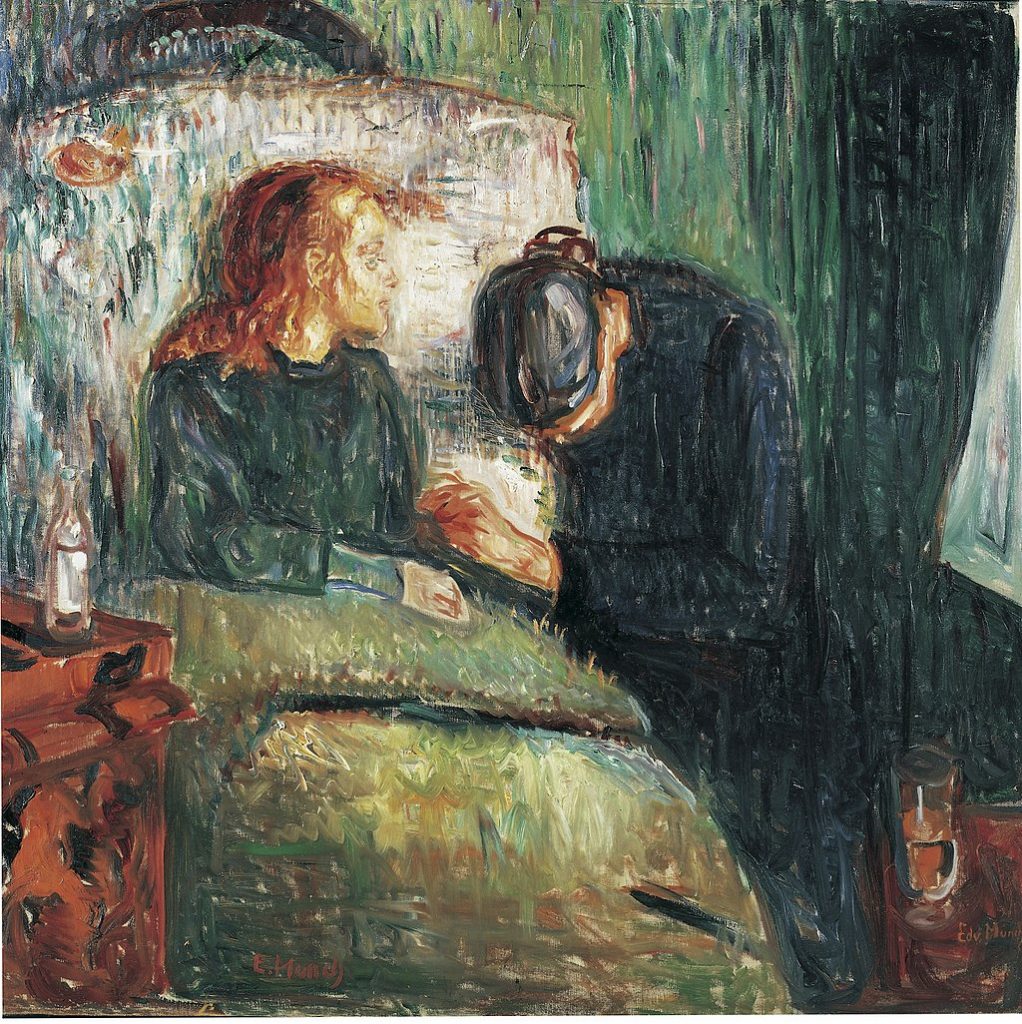
By the late 1880s Munch had already begun developing the unsettling style that would define his career. His early painting The Sick Child, first exhibited in 1886, shocked critics with its rough brushwork and emotional intensity. Many viewers considered the painting unfinished or ugly, yet it captured grief in a deeply personal way. Responsible historical speculation suggests that Munch may have painted the work repeatedly as a way of reliving and processing the trauma of Sophie’s death.
Death, Fear, and Isolation as Central Themes
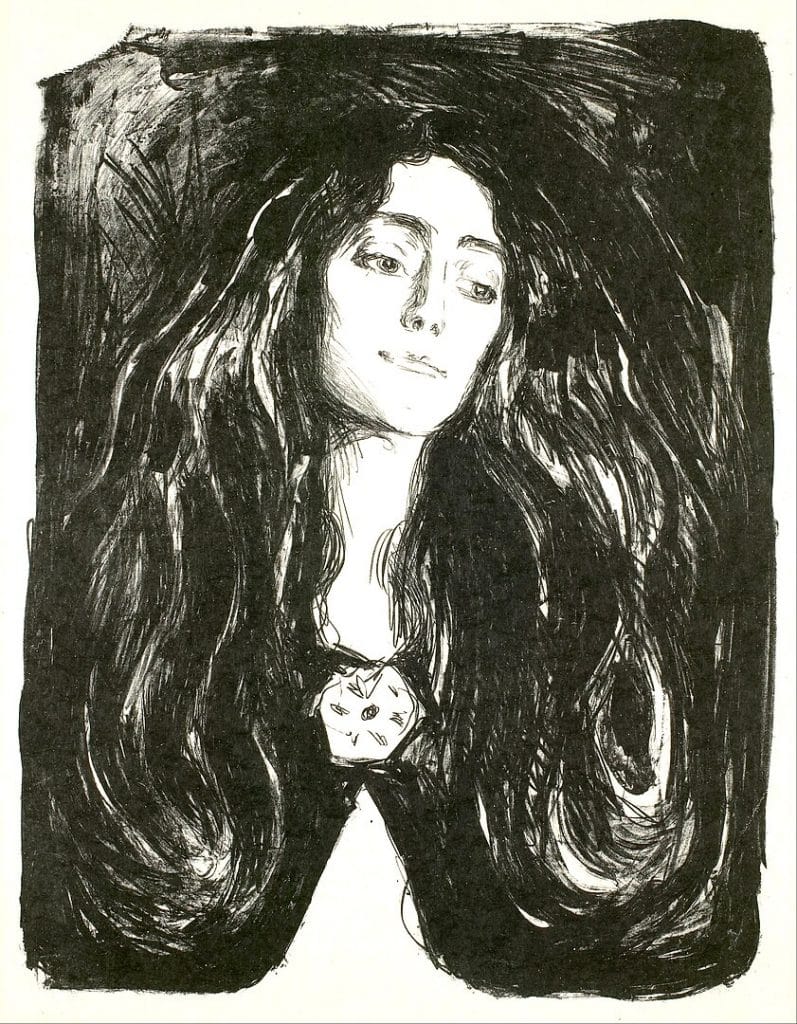
Throughout the 1890s Edvard Munch became increasingly fascinated with themes of death, fear, loneliness, and emotional despair. His paintings rarely presented calm domestic scenes or heroic subjects in the traditional academic style. Instead, he focused on psychological tension and emotional instability. Pale faces, shadowy figures, and strangely empty landscapes became recurring features of his work.
Munch often used unnatural colors and distorted forms to communicate emotional states rather than physical reality. Blood-red skies, dark shorelines, and ghostlike human figures gave many of his paintings a dreamlike atmosphere. These visual choices reflected the influence of Symbolism, which emphasized mood and hidden meaning over realism. His work also helped lay the foundation for Expressionism in the early twentieth century.
Why Munch’s Paintings Feel Emotionally Unsettling
Many viewers describe Munch’s paintings as haunted because they seem filled with invisible emotional pressure. His figures often appear isolated even when standing close to others, creating a sense of emotional separation. In paintings such as Anxiety and Evening on Karl Johan Street, crowds move like restless spirits through distorted urban spaces. The faces appear drained of warmth, while the surrounding environments feel heavy and oppressive.
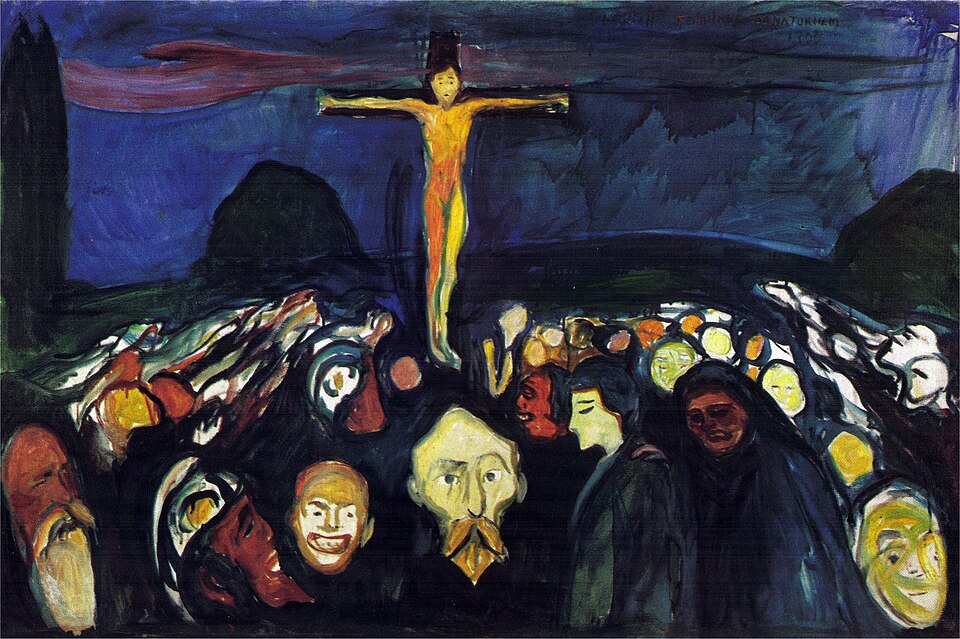
The social changes of late nineteenth-century Europe also influenced the mood of Munch’s art. Industrialization, crowded cities, and weakening religious certainty created widespread feelings of uncertainty and alienation. Munch transformed these broader cultural anxieties into intensely personal images that still feel modern today. His paintings do not merely show sadness or fear, but instead immerse the viewer inside those emotions through color, line, and atmosphere.
The Scream and the Birth of Modern Anxiety
The Scream became Edvard Munch’s most famous work and one of the most recognizable paintings ever created. The first version was completed in 1893, though Munch later produced additional painted and pastel variations. The image shows a distorted figure standing on a bridge beneath a swirling orange-red sky. Two distant figures appear in the background, but they offer no comfort or connection to the central character.
Munch described the inspiration for the painting in a diary entry written during the 1890s. He recalled walking with friends near Oslo at sunset when he suddenly felt overwhelmed by anxiety and sensed “an infinite scream passing through nature.” That emotional experience became the foundation for the painting’s terrifying atmosphere. The twisted sky and skeletal figure seem less like physical reality and more like the visual form of panic itself.
The Painting That Became a Universal Symbol of Fear
Art historians have long debated whether the screaming figure is actually screaming or hearing a scream from the surrounding world. This uncertainty adds to the painting’s psychological tension and mystery. The figure’s face resembles both a skull and a living person frozen in terror. The curving lines of the landscape seem to vibrate with emotional instability, making the entire scene feel alive with dread.
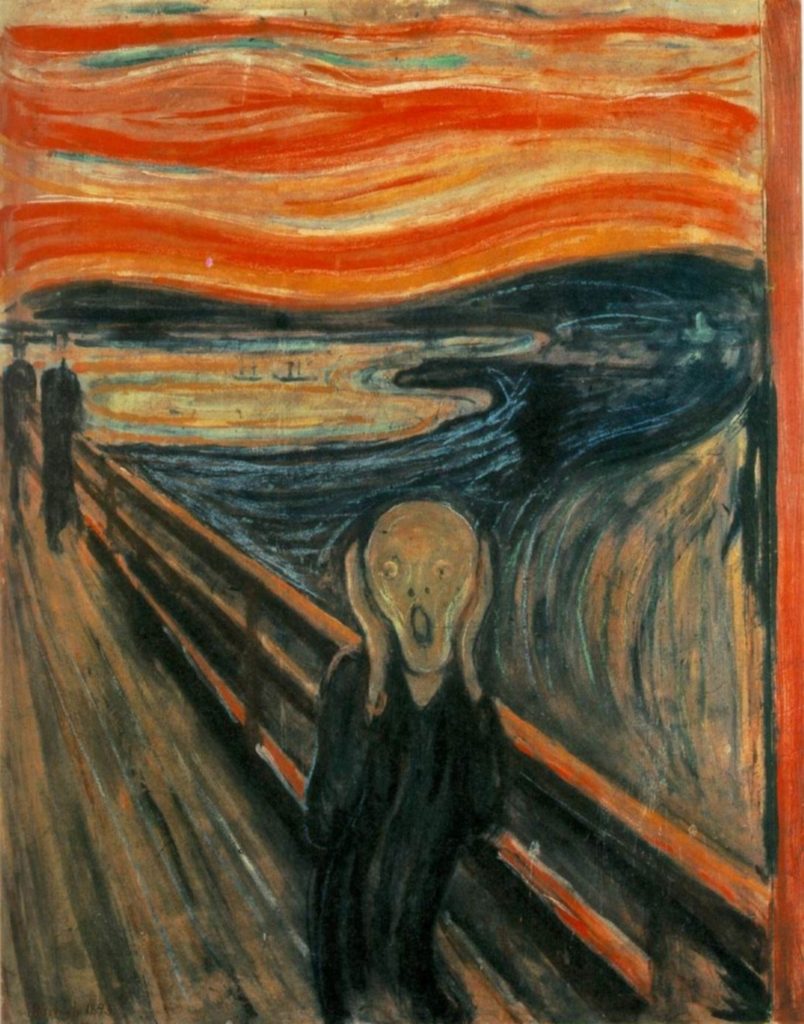
The Scream gained additional notoriety after high-profile thefts in 1994 and 2004 attracted international media attention. Over time the painting became a symbol of modern anxiety, mental distress, and existential fear. Its imagery has appeared in films, advertisements, posters, and popular culture across the globe. Even people unfamiliar with art history often recognize the painting immediately because its emotional message remains universally understandable.
Love, Jealousy, and Emotional Violence in Munch’s Work
Edvard Munch’s romantic relationships were often turbulent and emotionally destructive. He feared emotional dependency while simultaneously craving intimacy and affection. This contradiction appeared repeatedly in his paintings of men and women locked in complicated emotional relationships. Love in Munch’s art rarely appears peaceful or stable, but instead feels dangerous, consuming, or tragic.
One of the most significant relationships in his life involved Tulla Larsen, a wealthy Norwegian woman whom he met around 1898. Larsen wanted marriage and emotional commitment, while Munch feared losing his independence and artistic freedom. Their relationship became increasingly unstable and ended violently in 1902 during a confrontation involving a revolver. A gunshot injured one of Munch’s fingers, leaving both physical and emotional scars.
Relationships That Fueled His Darkest Paintings
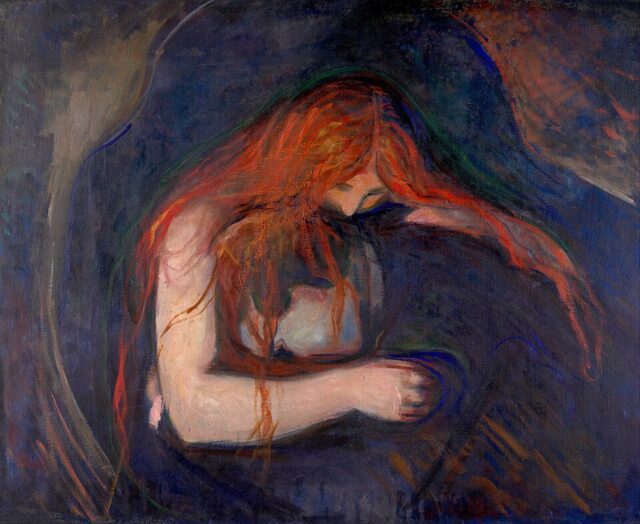
Many of Munch’s paintings from this period explored attraction mixed with fear, jealousy, and emotional manipulation. In Vampire, a red-haired woman bends over a man whose face disappears against her body, creating an image that appears both sensual and predatory. Madonna presents a mysterious female figure who seems both nurturing and unsettling at the same time. Ashes depicts the emotional devastation left behind after the collapse of a romantic relationship.
These works reflected broader cultural fears circulating in Europe during the fin-de-siècle era of the late nineteenth century. Discussions about sexuality, morality, and changing gender roles often appeared in literature and art of the period. Responsible historical speculation suggests that Munch’s personal anxieties about intimacy amplified these social fears within his paintings. Rather than portraying idealized romance, he transformed heartbreak and emotional conflict into universal psychological drama.
The Frieze of Life and Munch’s Psychological Vision
During the 1890s Edvard Munch developed an ambitious artistic concept known as The Frieze of Life. This was not a single painting but a thematic cycle exploring human emotions and experiences across different stages of life. Love, jealousy, anxiety, illness, loneliness, and death all appeared throughout the series. Munch intended the works to function almost like chapters in a visual poem about human existence.
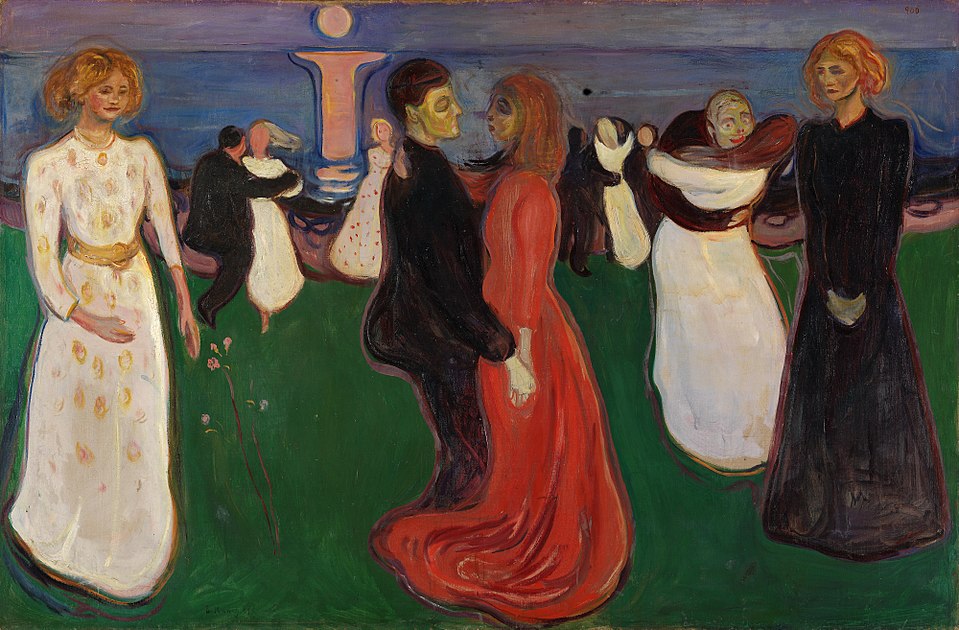
The Frieze of Life included many of Munch’s best-known paintings, including The Scream, Madonna, Anxiety, and The Dance of Life. He exhibited portions of the cycle in Berlin and other European cities during the 1890s and early 1900s. The paintings often shared recurring visual motifs such as moonlit shorelines, isolated figures, and flowing symbolic forms. Together they created an emotional narrative rather than a traditional historical story.
Creating a Visual Cycle About Human Existence
Munch experimented heavily with painting techniques while developing the cycle. He used rough brushwork, scratched paint surfaces, simplified anatomy, and unnatural colors to heighten emotional intensity. These methods gave his works a raw and unfinished appearance that differed sharply from polished academic painting. Many younger artists later viewed this emotional directness as revolutionary.
The Frieze of Life had a major influence on German Expressionism during the early twentieth century. Artists such as Ernst Ludwig Kirchner and Emil Nolde admired Munch’s willingness to distort reality for emotional effect. His paintings demonstrated that art could explore psychological truth rather than merely recording physical appearances. Through this series, Munch attempted to create a complete emotional map of the human condition.
Mental Breakdown, Recovery, and Later Career
By the early 1900s Edvard Munch’s mental health had deteriorated significantly. Heavy drinking, paranoia, insomnia, and emotional instability increasingly disrupted his personal and professional life. Friends and supporters became concerned about his erratic behavior and growing isolation. In 1908 he suffered a serious nervous breakdown and entered a clinic in Copenhagen for treatment.
Munch remained under medical care for several months while receiving therapy, rest, and controlled treatment for alcoholism. The experience stabilized his condition and likely saved his career. After leaving the clinic in 1909, he returned to Norway and adopted a quieter lifestyle focused on work and recovery. Although emotional tension remained visible in his art, his later paintings often contained brighter colors and calmer outdoor settings.
How Psychological Crisis Changed His Art
During the 1910s and 1920s Munch gained increasing international recognition as one of Europe’s major modern painters. Museums and collectors purchased his works, while younger artists viewed him as an important pioneer of psychological art. Despite his growing fame, he remained somewhat isolated and continued living largely alone. He spent much of his later life at his estate outside Oslo, where he painted landscapes, portraits, and self-portraits.
In the 1930s some of Munch’s works were condemned by the National Socialist government in Germany as examples of degenerate modern art. Despite this criticism, his reputation continued to grow internationally. Edvard Munch died on January 23, 1944, during the German occupation of Norway in World War II. He left thousands of paintings, prints, drawings, and personal papers to the city of Oslo, ensuring the preservation of his artistic legacy.
Why Edvard Munch’s Haunted Paintings Still Disturb Viewers Today
Edvard Munch’s paintings continue to disturb viewers because they confront emotions many people struggle to express openly. Fear, loneliness, jealousy, despair, and emotional instability remain central parts of modern life. Unlike artists who idealized human existence, Munch exposed psychological vulnerability with unusual honesty. His paintings often feel less like decorative objects and more like emotional experiences.
Modern audiences frequently connect Munch’s work with contemporary discussions about mental health and anxiety. The emotional intensity of The Scream remains especially relevant in an age marked by stress, isolation, and social uncertainty. Younger viewers often recognize feelings within his paintings that seem surprisingly modern despite being created more than a century ago. This emotional immediacy helps explain why his work still attracts large audiences worldwide.
The Lasting Psychological Power of His Art
Munch also influenced countless later artists, filmmakers, and designers who explored psychological darkness in visual form. Elements of his work can be seen in horror cinema, expressionist film lighting, and emotionally charged portraiture throughout the twentieth century. His distorted faces and unnatural colors created visual languages that continue to appear in modern culture. Even contemporary graphic design occasionally borrows from the uneasy emotional atmosphere found in his paintings.
The haunting quality of Munch’s art comes partly from its imperfections and emotional rawness. The rough brushstrokes and distorted forms feel deeply human because they appear shaped by genuine emotional struggle. Responsible historical speculation suggests that viewers may respond so strongly because Munch painted fears that people often try to suppress in ordinary life. His paintings endure because they transform private suffering into universal emotional symbols that still resonate in the modern world.
Key Takeaways
- Edvard Munch was born in 1863 and experienced childhood trauma that deeply shaped his art.
- Themes of death, fear, illness, anxiety, and loneliness dominate many of his paintings.
- The Scream became one of the most famous visual symbols of modern psychological distress.
- His troubled relationships influenced emotionally intense works such as Vampire and Ashes.
- Munch helped inspire Expressionism and changed the direction of modern psychological art.
FAQs
- What is Edvard Munch’s most famous painting?
The Scream is Edvard Munch’s most famous painting. First created in 1893, it became one of the most recognizable images in the history of modern art. - When was The Scream first created?
The first version of The Scream was completed in 1893. Munch later created additional painted, pastel, and printed versions during the following years. - Why are Munch’s paintings considered haunting?
Munch’s paintings are considered haunting because they explore fear, loneliness, illness, jealousy, anxiety, and death with intense emotional honesty. His distorted figures and unnatural colors create unsettling psychological atmospheres. - Did Edvard Munch struggle with mental illness?
Yes, Edvard Munch struggled with anxiety, paranoia, depression, and alcoholism for much of his life. He suffered a nervous breakdown in 1908 and later received treatment in Copenhagen. - How did Munch influence modern art?
Munch strongly influenced Expressionism and modern psychological art by using distortion, color, and symbolism to express emotional states instead of realistic appearances.