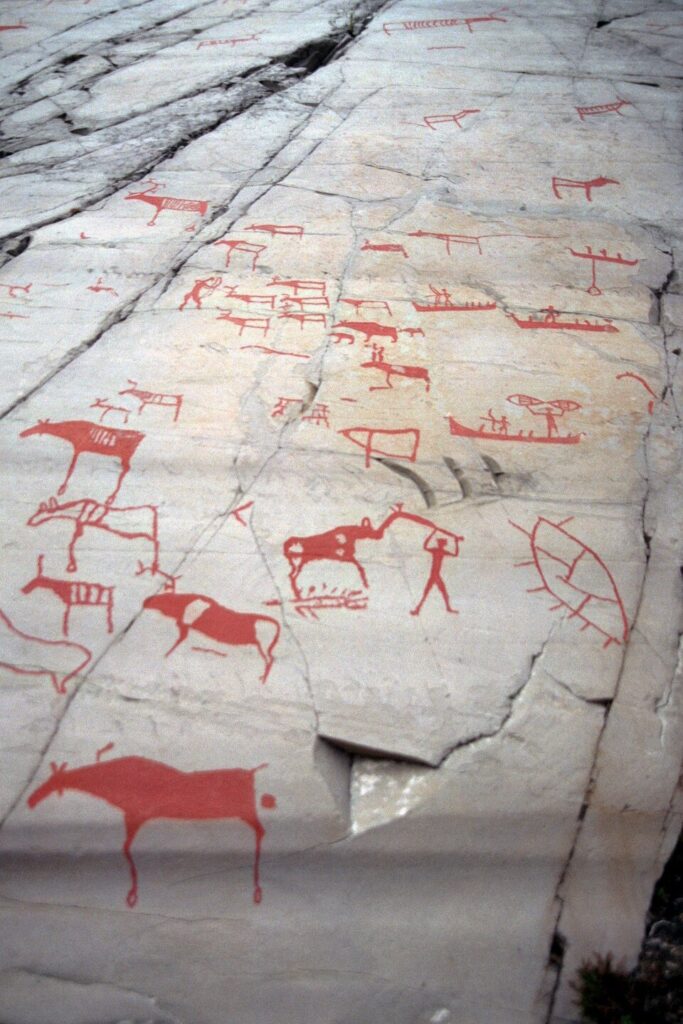
Hidden along the wind-swept coastlines of Northern Norway, where the midnight sun glows through summer and snow cloaks the land for months on end, lies one of the world’s most remarkable prehistoric treasures: the Alta rock carvings. Known for their astonishing scale and artistic richness, the Alta petroglyphs offer a vivid glimpse into the lives, beliefs, and movements of early Arctic peoples. With over 6,000 figures etched into coastal rocks between 4200 BC and 500 AD, this site is not only a cultural landmark in Scandinavia, but a globally recognized World Heritage Site. These carvings speak without words, capturing scenes of daily life, survival, and perhaps even spiritual practice from a time long before written history.
Situated in Finnmark County, well above the Arctic Circle, the carvings are a testament to the creativity and resilience of people who lived in one of the world’s most extreme environments. These prehistoric artists braved freezing temperatures, darkness, and isolation, yet left behind an enduring visual record that continues to stir imaginations today. The petroglyphs stretch across several locations near the Alta fjord, the most significant being Jiepmaluokta, where many panels are still clearly visible. Their survival through millennia of harsh weather is nothing short of astonishing, offering scientists and historians a rare opportunity to study early Arctic life firsthand.
The site’s importance was internationally recognized in 1985 when it was designated as a UNESCO World Heritage Site. This status helped secure long-term conservation and boosted academic interest from around the world. Since then, the Alta rock art has become a central point in Arctic archaeology, drawing comparisons with other prehistoric art sites such as Lascaux in France or the petroglyphs of Valcamonica in Italy. But unlike those sites, Alta stands alone in the far North—its creators lived and thrived at the edge of the habitable world.
The rock carvings are more than ancient drawings—they are messages carved in stone, etched with care and skill. They reveal the interconnectedness of people with animals, water, and the changing seasons. Some depict large boats, others show hunts in full action, and still others feature mysterious humanoid figures that have sparked endless scholarly debate. The Alta petroglyphs are not just remnants of art; they are fragments of human history preserved in stone.
Why These Petroglyphs Matter on a Global Scale
Alta’s petroglyphs have earned a place on the global archaeological stage because they offer the largest known collection of prehistoric rock art in Northern Europe. Their exceptional state of preservation, especially considering their location so far north, makes them even more unique. These carvings document over 4,000 years of human presence in a region where survival alone would have required immense skill and adaptability. For archaeologists and historians, the Alta site provides not only artistic insight but also environmental and cultural data essential for understanding Arctic prehistory.
Scholars believe that these carvings were created by a coastal hunter-gatherer society that depended on seasonal migrations of animals and fish. Through analysis of the rock art, researchers can infer how these people interacted with their environment, what species they hunted, and how their social groups may have functioned. This kind of insight is nearly impossible to extract from decayed tools or ruined shelters. The carvings bring these ancient communities to life in a way few other artifacts can.
Today, the Alta Museum plays a key role in both preserving and interpreting the petroglyphs for the public. It offers guided paths to many of the sites, with educational materials that help explain the carvings’ significance. From a global perspective, Alta contributes to a broader narrative about early human expression and adaptation in the face of extreme climates. Its importance stretches far beyond Norway’s borders, connecting it to the shared human story across continents and millennia.
For all these reasons and more, Alta’s rock art stands not just as a regional treasure, but as a critical chapter in the story of human civilization. It deserves its recognition and the careful stewardship now devoted to its preservation. Understanding what these carvings represent is key to understanding who we are and where we come from.
Discovery and Early Research
From Local Curiosity to International Recognition
The Alta rock art remained unknown to the outside world until a significant discovery in 1973. It was made by a local schoolteacher named Leif R. Nilsen, who stumbled upon several strange markings while walking along the fjord shoreline. What appeared to be scratches or discolorations on the rocks turned out to be the first confirmed petroglyphs in the region. This accidental find soon caught the attention of local authorities, and within a year, it had sparked a full-scale archaeological investigation.
Initial research was coordinated by Tromsø Museum, which began systematic documentation of the site in the mid-1970s. The museum, in cooperation with the Norwegian Directorate for Cultural Heritage, led a series of field studies, mapping and photographing the carvings. The discovery came at a time of growing interest in prehistoric Arctic culture, and it quickly gained traction among both national and international scholars. Notable among the early researchers was Knut Helskog, an archaeologist born in 1948, who became one of the leading experts on Alta’s rock art during his tenure at Tromsø Museum and the University of Tromsø.
Dating the petroglyphs posed a major challenge for early researchers, as direct carbon dating of stone is not possible. Instead, they used shoreline displacement analysis, relying on knowledge of how post-glacial rebound had changed sea levels in the region. By correlating the height of the carvings above current sea level with known changes in shoreline levels, archaeologists were able to estimate the age of different panels. This method confirmed that the oldest carvings were likely made around 4200 BC, while the youngest dated to around 500 AD.
Public interest in the discovery surged by the early 1980s, thanks in part to national media coverage and academic publications. The UNESCO designation in 1985 brought worldwide recognition, establishing Alta as a key research site for prehistoric studies. It also catalyzed efforts to develop the area for cultural tourism, leading to the establishment of the Alta Museum in 1991. This museum now serves as both a research center and a gateway for visitors eager to experience Norway’s ancient Arctic heritage.
Carving Techniques and Materials
How Prehistoric Artists Created Their Messages in Stone
Creating the Alta petroglyphs was no simple feat. The artists who carved them had only stone tools—often small, pointed rocks used like chisels—to etch designs into the hard coastal bedrock. The primary method was pecking: striking the rock surface repeatedly to create small depressions that together formed recognizable shapes. This technique was labor-intensive and required both patience and precision to produce the figures still visible today.
The surfaces chosen for carving were typically greywacke or slate, both of which are common in the area and hold carvings well once weathered. Artists selected flat, slightly sloped surfaces that would catch light effectively at certain angles. Today, these carvings are often best seen in low-angle sunlight, which highlights their shallow depressions. Interestingly, while the carvings now appear white due to weathering, they were not originally colored, though red ochre is sometimes applied today for educational purposes to help visitors see the figures clearly.
Because of the limited tools available, large scenes—such as boat processions or herding groups—could take weeks or even months to complete. The depth and clarity of many carvings suggest they were maintained or retraced over time, possibly as part of communal or ritual activity. Some figures show signs of overlapping, suggesting either intentional layering of stories or that space was reused by later generations. Such complexity indicates that rock carving was not a casual pastime but a deeply embedded cultural practice.
Scholars also point to differences in style and technique across various panels as evidence of artistic evolution. Early carvings tend to be more naturalistic, with detailed animal forms, while later ones shift toward abstraction. These variations, along with differences in scale and composition, provide clues about changing aesthetic preferences and possibly even shifts in spiritual beliefs over time. The Alta petroglyphs, then, are not just static images but a visual chronicle of artistic and cultural development.
Themes and Motifs in the Alta Petroglyphs
The thematic range of the Alta rock carvings is as broad as it is captivating. One of the most recurring motifs is the depiction of animals, particularly those vital to the sustenance of Arctic hunter-gatherers. Reindeer, moose, bears, and various bird species appear frequently, often in scenes of hunting or herding. These figures suggest a deep familiarity with and dependence on local fauna, as well as a desire to represent and perhaps honor these creatures.
Human figures are also prominent, often shown in dynamic poses—walking, skiing, hunting, or paddling boats. Some scenes depict groups of up to thirty individuals in a single boat, suggesting not only the use of large watercraft but also the importance of maritime activities in their culture. In fact, one of the most iconic images from Alta is a long boat with dozens of rowers, possibly symbolizing communal voyages, fishing expeditions, or even ritual journeys. These images help paint a picture of a society that moved frequently and relied heavily on coastal and riverine resources.
Animals, Hunting, and the Lives of Arctic Peoples
Another striking theme is the presence of unusual humanoid figures, often interpreted as shamans or spiritual leaders. These figures sometimes have exaggerated limbs, animal-like features, or are placed in isolation from group scenes. While some scholars believe these could represent mythological beings, others suggest they may depict altered states of consciousness or ritualistic behavior. However, due to the lack of written records, such interpretations remain speculative and are subject to ongoing academic debate.
Interestingly, the stylistic differences between panels suggest that different generations added their own layers to the site. This adds a narrative depth to the petroglyphs, allowing researchers to trace changes in lifestyle, clothing, weaponry, and perhaps belief systems. For example, the increasing abstraction in later carvings may reflect a cultural shift, or a transition from representational art to more symbolic expression. Regardless of their precise meaning, the motifs carved into Alta’s stones form a complex tapestry of life in the prehistoric Arctic.
Cultural and Historical Context
Between 4200 BC and 500 AD, the Alta region experienced significant environmental and social changes. The carvings span this entire period, providing a chronological map of how human life evolved in Arctic Norway. During the earliest phases, the climate was warmer than today, which allowed for a richer biodiversity and more stable living conditions. This warm period helped sustain the mobile hunter-gatherer communities that left their marks on the rocks.
These people lived in semi-permanent camps, moving seasonally to follow herds of animals and access fishing grounds. Their tools included stone axes, harpoons, fish hooks, and skis—some of which are depicted in the petroglyphs themselves. The scenes also show clear evidence of domesticated dogs, suggesting that they played a role in hunting or transportation. Family structures appear communal, with group activities such as boat voyages and large-scale hunts depicted prominently.
Life in Arctic Norway 6,000 Years Ago
The question of whether these people were ancestors of the modern Sami people is a contentious one. Some researchers suggest a cultural continuity based on overlapping territory and certain motifs found in Sami art and oral tradition. However, others argue that the time gap is too great and that direct ancestry cannot be proven without more archaeological and genetic evidence. Regardless, the petroglyphs hold cultural significance for many Sami people today, who view them as part of their heritage.
There is also evidence that religious or spiritual practices played a role in the carving of these images. The recurring figures of animals, hunters, and strange humanoid forms may reflect animistic beliefs or ritual activity. Scholars have hypothesized that some carvings were placed in locations associated with seasonal events or lunar cycles. Although we may never know the precise meanings behind every figure, they serve as powerful visual records of a society that engaged deeply with both its physical and metaphysical world.
Preservation and Public Access
Preserving the Alta petroglyphs is an ongoing challenge, particularly given their exposure to Arctic weather conditions. Snow, ice, wind, and temperature fluctuations threaten the integrity of the carvings, which are etched into relatively soft stone. Freeze-thaw cycles are especially damaging, as water seeps into microscopic cracks and expands when frozen, slowly deteriorating the rock surface. Recognizing the importance of this site, Norway has taken strong measures to safeguard it for future generations.
One of the most significant steps toward preservation was the establishment of the Alta Museum in 1991, located adjacent to the main rock art site at Jiepmaluokta. This institution not only houses exhibits and research materials but also serves as a center for education and public outreach. The museum carefully maintains walking paths around the site, allowing visitors to view the carvings without stepping directly on them. Access is typically limited to the summer months, as heavy snowfall during winter renders the petroglyphs inaccessible and at risk from snow compaction.
How Norway Protects Its Arctic Masterpieces
Norwegian cultural heritage laws play a major role in protecting the Alta rock carvings. The Cultural Heritage Act ensures that any interference with or damage to the site is strictly prohibited. The site is monitored regularly for signs of erosion, vandalism, or other threats, and there are long-term plans for digital documentation. Several high-resolution 3D scanning projects have already been completed, allowing both scholars and the public to study the petroglyphs remotely. These efforts also serve as a preservation tool, creating a permanent record in case of natural deterioration.
Additionally, replicas and interpretive aids are used for educational purposes. Schools and museums throughout Norway feature casts and digital reconstructions of some of the most famous panels, allowing students to learn about the site without physically visiting it. These replicas are painted with red ochre to highlight the carvings, offering a more vivid experience than the often-faint originals. Through a combination of legislation, education, and careful tourism management, Norway has become a global model for how to preserve vulnerable prehistoric sites in remote environments.
Interpretations and Controversies
Despite decades of research, the true meaning behind the Alta petroglyphs remains a subject of debate. Some archaeologists argue that the carvings served as a kind of historical record, documenting migrations, hunting successes, and social events. Others interpret them as expressions of religious or spiritual beliefs, possibly linked to animism or early forms of shamanism. Because there is no written language to accompany the art, every theory is built on inference, comparison, and context. The absence of explanatory symbols or pictograms makes interpretation both fascinating and frustrating.
One common hypothesis is that certain figures represent shamans in altered states, possibly engaged in rituals involving transformation or communication with animal spirits. These theories stem from depictions of anthropomorphic beings with exaggerated limbs, hybrid human-animal traits, or isolated placement. However, while visually compelling, these interpretations are speculative and must be approached with caution. Some scholars suggest that we may be projecting modern spiritual ideas onto prehistoric people whose beliefs we can’t truly access.
What Do the Carvings Really Mean?
Another area of discussion involves the potential links between the Alta rock art and Sami culture, the Indigenous people of Northern Scandinavia. While there are thematic overlaps—such as reindeer motifs and symbols that resemble drums or shamanistic figures—the time gap between the carvings and recorded Sami culture is wide. Most scholars agree that while Sami communities may have cultural or spiritual connections to the site today, the artists themselves likely belonged to an earlier, now-vanished population. Nonetheless, modern Sami activists have expressed interest in Alta’s preservation and see the site as part of a broader narrative of Arctic heritage.
Controversies also emerge in how the site is presented to the public. Some researchers argue that tourism risks oversimplifying or misrepresenting the carvings’ meanings. Others push for more interpretive freedom, suggesting that the ambiguity of the site invites diverse viewpoints. What’s clear is that Alta’s petroglyphs are not simply relics—they’re active symbols of identity, history, and debate in modern Norway. The conversation around them continues to evolve as new technologies and perspectives come into play.
Key Takeaways
- The Alta rock art site in Northern Norway contains over 6,000 carvings dating from 4200 BC to AD 500.
- Discovered in 1973 by Leif R. Nilsen, the site gained UNESCO World Heritage status in 1985.
- The petroglyphs depict animals, boats, hunters, and possible spiritual figures, carved using stone tools.
- Researchers like Knut Helskog have led significant studies to date and interpret the carvings.
- Preservation efforts include site restrictions, museum education, and 3D digital documentation.
FAQs
- When were the Alta petroglyphs discovered?
In 1973, by a local schoolteacher named Leif R. Nilsen. - How old are the carvings?
They date from around 4200 BC to roughly AD 500. - Are the carvings linked to the Sami people?
Possibly, but this connection remains debated among scholars. - Can the public visit the site?
Yes, during summer months; winter access is restricted due to snow. - Why are the carvings important?
They provide a rare and vivid glimpse into prehistoric Arctic life and beliefs.