The image of a swan drifting across a quiet lake feels almost timeless, as if it belongs to every age at once. Yet during the Romantic era, roughly from the late 1700s to the mid-1800s AD, this elegant bird took on a deeper meaning in painting. Artists did not simply depict swans for their beauty. They used them to express ideas about grace, emotion, and the fragile balance between stillness and change. In many works, the swan becomes a silent guide, leading the viewer into a more reflective state of mind.
Romantic painters were drawn to subjects that stirred feeling rather than reason alone. They looked to nature as a living force, filled with mystery and meaning. Lakes, rivers, and soft evening light became ideal settings for emotional storytelling. Within these scenes, the swan appeared as a natural extension of the environment. Its smooth motion and bright plumage stood out without disrupting the calm, creating a quiet focal point that carried symbolic weight.
This symbolic use of swans did not come from nowhere. Artists inherited a long tradition that stretched back to ancient Greece and beyond. In those earlier stories, swans were linked to gods, transformation, and even death. By the time Romantic painters adopted the image, it already carried layers of meaning. What they added was a new sensitivity—a focus on mood, atmosphere, and personal reflection.
To understand why swans became such powerful symbols in Romantic-era painting, it is necessary to explore the movement itself, the history behind the symbol, and the techniques artists used to bring these birds to life. When viewed in this broader context, the swan emerges as more than a graceful creature. It becomes a key to understanding how Romantic artists saw the world.
The Romantic Era and Its Fascination with Nature
The Romantic movement began to take shape in Europe around the 1780s AD and reached its height between 1800 and 1850 AD. It developed partly as a reaction against the Enlightenment, which had emphasized logic, science, and order. Romantic artists did not reject these ideas entirely, but they believed something essential was missing. They turned instead toward emotion, imagination, and the power of nature to inspire awe.
Nature was not treated as a simple backdrop. It became the main subject, filled with meaning and emotional force. Painters sought out dramatic landscapes—towering mountains, stormy seas, and quiet lakes—to express feelings that could not easily be put into words. Even calm scenes carried weight. A still body of water, for example, could suggest peace, memory, or even a sense of longing.
Animals played an important role in this visual language. Rather than being depicted as scientific specimens, they were integrated into the emotional structure of the painting. A deer might represent gentleness, while a bird in flight could suggest freedom. Swans, in particular, stood out because of their natural elegance and their association with water. They were often placed in scenes that emphasized stillness and reflection.
The presence of a swan in a Romantic landscape was rarely accidental. Artists used its form to guide the viewer’s eye and reinforce the mood of the scene. Its curved neck echoed the gentle lines of the water, while its white feathers contrasted with darker surroundings. In this way, the swan became both a visual and symbolic anchor within the composition.
Nature as Emotional and Spiritual Language
Romantic painters believed that nature could express truths about the human spirit. They often arranged landscapes in ways that mirrored emotional states. A calm lake might suggest inner peace, while mist or fading light could hint at uncertainty or transition. These choices were deliberate, shaped by the artist’s desire to communicate something beyond the visible world.
Swans fit easily into this approach because of their natural stillness. Unlike birds that dart or hover, swans move slowly and deliberately. This quality made them ideal for scenes focused on quiet reflection. Their presence often signals a moment of pause, as if time itself has slowed down.
Light also played a key role. Artists frequently painted swans in soft, diffused light, such as early morning or late evening. This choice enhanced their symbolic meaning. The glow of the light on white feathers created a sense of purity and calm, reinforcing the emotional tone of the painting.
In many cases, the swan acts almost like a mirror within the scene. Its reflection in the water doubles its presence, creating a visual rhythm that draws the viewer inward. This pairing of form and reflection becomes a subtle metaphor for introspection, a central theme in Romantic art.
The Swan as a Timeless Symbol of Grace and Purity
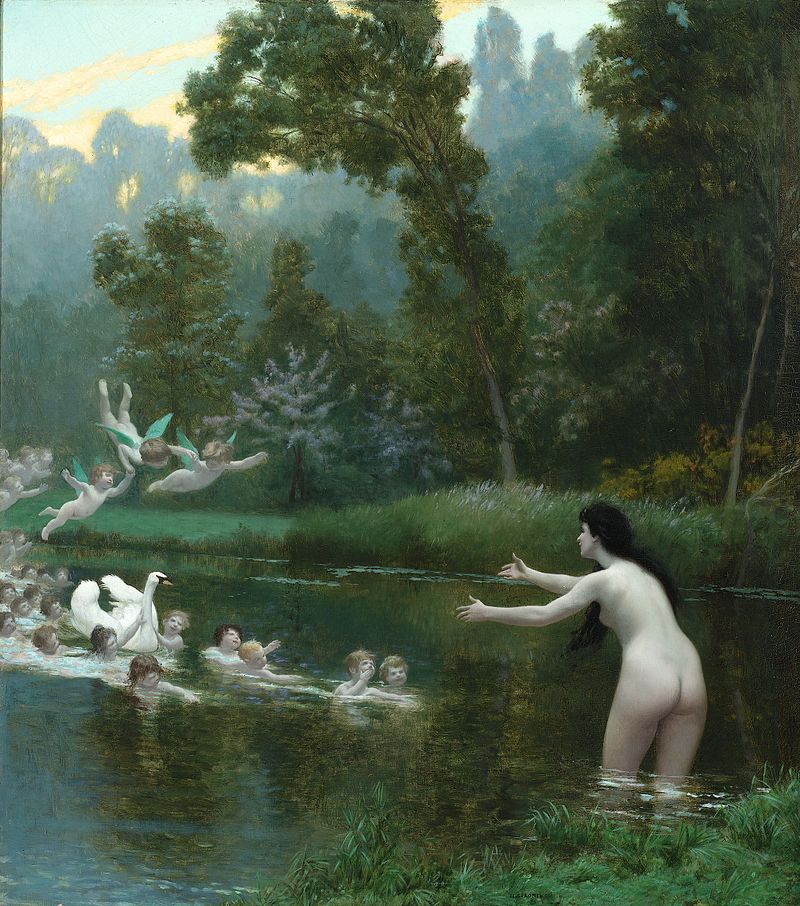
Long before the Romantic era, swans held a special place in human culture. In ancient Greek mythology, the god Zeus was said to have taken the form of a swan in the story of Leda, a tale that artists revisited for centuries. This connection to divine transformation gave the swan an aura of mystery and power. It was not just a beautiful creature, but one capable of crossing boundaries between worlds.
In Northern European traditions, swans were often linked to magic and transformation as well. Stories told of swan maidens who could shed their feathers to become human. These tales emphasized themes of change, identity, and hidden beauty. By the time Romantic artists encountered these ideas, they were already deeply rooted in cultural memory.
During the Romantic period, these older meanings were refined and focused. The swan came to represent grace above all else, but also purity and emotional depth. Its calm movement suggested control and dignity, while its bright color stood for clarity and innocence. At the same time, its connection to water linked it to reflection and the passage of time.
Writers and poets of the era reinforced these associations. Swans appeared in literature as symbols of beauty touched by melancholy. This dual nature—grace combined with a hint of sadness—made them especially appealing to Romantic artists, who often explored the tension between beauty and loss.
Mythological and Literary Influences
The influence of mythology remained strong throughout the Romantic period. Artists continued to draw on ancient stories, not to recreate them exactly, but to reinterpret their meaning. The swan, already tied to transformation and divine presence, became a flexible symbol that could adapt to new contexts.
Literature also played a major role. Alfred, Lord Tennyson’s poem The Lady of Shalott, first published in 1832 AD and revised in 1842 AD, describes a mysterious woman drifting down a river toward her fate. Swans appear in the scene, adding to its quiet, haunting atmosphere. This imagery later inspired painters who sought to capture the same mood.
In Romantic art, the swan often carries layered meaning:
- Grace and beauty
- Purity and innocence
- Transformation and myth
- Tranquility and reflection
These associations allowed artists to use a single figure to suggest multiple ideas at once. A swan might appear calm and beautiful on the surface, while hinting at deeper emotional currents beneath.
The blending of myth, literature, and visual art created a rich symbolic language. Within this language, the swan became one of the most refined and expressive elements available to Romantic painters.
Notable Romantic-Era Paintings Featuring Swans
Swans were not always the central focus of Romantic paintings, but their presence was often carefully considered. Artists placed them within landscapes to enhance mood and meaning rather than to dominate the scene. This subtle use made their symbolism more effective, allowing viewers to discover it gradually.
One of the most well-known examples is The Lady of Shalott by John William Waterhouse, painted in 1888 AD. The work is oil on canvas, measuring 153 by 200 centimeters, and is housed in Tate Britain in London. Although created slightly after the core Romantic period, it reflects strong Romantic influence. In the painting, swans glide near the boat carrying the central figure, reinforcing the themes of beauty, isolation, and approaching fate.
Another important work is Leda and the Swan by Peter Paul Rubens, completed around 1600 AD. This oil on panel painting, now in the Gemäldegalerie Alte Meister in Dresden, predates Romanticism but remained influential. Its depiction of mythological transformation helped shape later interpretations of the swan as a symbol of divine presence and change.
Swans also appear in various 19th-century landscape paintings, particularly in British and French art. While not always documented as primary subjects, they are included in scenes of lakes and rivers to enhance the sense of calm and elegance. Their placement is rarely random, often aligning with the composition’s balance and flow.
These works demonstrate how swans functioned within Romantic and Romantic-influenced art. They were not simply decorative elements. They contributed to the emotional and symbolic structure of the painting, guiding the viewer’s interpretation.
Key Works and Artists
John William Waterhouse, born in 1849 AD and active into the early 20th century, drew heavily on Romantic themes despite being associated with the later Pre-Raphaelite movement. His attention to detail and love of literary subjects made him particularly suited to scenes involving symbolic animals. In The Lady of Shalott, the swans help frame the composition and deepen its emotional impact.
Earlier influences such as Peter Paul Rubens, born in 1577 AD, played a role in shaping the visual tradition that Romantic artists inherited. His dynamic compositions and mythological subjects kept classical symbolism alive, ensuring that figures like the swan remained culturally relevant.
Romantic painters themselves, including J. M. W. Turner, focused more on atmosphere and light than on individual animals. However, their treatment of water and reflection created ideal settings for swans to appear. Even when not prominently featured, the environment they painted helped define the symbolic role of such creatures.
The connection between artists across generations highlights an important point. The swan’s meaning was not fixed. It evolved over time, shaped by changing artistic goals and cultural influences. By the Romantic period, it had become a symbol that could carry both ancient and modern significance.
Artistic Techniques Used to Convey Grace Through Swans
Romantic artists relied on a range of techniques to capture the grace associated with swans. One of the most important was the use of light. Soft, diffused lighting allowed the white feathers of the swan to glow gently against darker backgrounds. This contrast drew attention without overpowering the scene, creating a sense of quiet emphasis.
Brushwork also played a key role. Painters often used smooth, flowing strokes to depict the swan’s body, avoiding harsh lines. This approach mirrored the bird’s natural movement and reinforced its elegance. The result was an image that felt both precise and fluid, balancing detail with softness.
Composition was carefully planned to support the symbolic role of the swan. Artists frequently placed the bird in areas of visual balance, such as near the center or along a gentle curve within the scene. This positioning helped guide the viewer’s eye and maintain harmony within the painting.
Water itself became an essential tool. The reflective surface doubled the swan’s form, creating symmetry and depth. This reflection was not always perfectly realistic. Instead, it was adjusted to enhance the overall mood, adding to the sense of calm and introspection.
Light, Movement, and Composition
Light in Romantic painting often carries emotional meaning. When it falls softly on a swan, it suggests purity and serenity. Artists took advantage of this effect by placing swans in moments of transition, such as dawn or dusk, when light is at its most delicate.
Movement was handled with restraint. Rather than showing dramatic action, painters depicted swans in slow motion or near stillness. This choice emphasized control and grace, qualities central to their symbolic role. Even when the water ripples, the swan remains composed.
Composition tied these elements together. The curved neck of the swan often echoes shapes in the surrounding landscape, such as the arc of a shoreline or the bend of a tree branch. This repetition creates visual harmony, making the swan feel like a natural part of the scene rather than an added detail.
Artists used several key techniques to enhance this effect:
- Light reflection on water
- Strong contrast between white feathers and darker tones
- Flowing, curved lines in composition
- Integration of the swan into the landscape
These methods allowed Romantic painters to convey grace in a way that feels both immediate and enduring. The swan becomes more than an image. It becomes an experience, inviting the viewer to pause and reflect.
Key Takeaways
- Swans became important symbols in Romantic-era painting due to their natural grace and historical meaning.
- Romantic artists used nature, including animals, to express emotional and spiritual ideas.
- The swan carried layered symbolism, including purity, transformation, and reflection.
- Paintings like The Lady of Shalott (1888 AD) show how swans enhance mood and narrative.
- Artistic techniques such as soft light, reflection, and balanced composition reinforced the swan’s symbolic role.
FAQs
- Why were swans popular in Romantic art?
Because they combined natural beauty with deep symbolic meaning rooted in myth and literature. - Did swans usually appear as main subjects?
No, they were often secondary elements that enhanced the overall mood of a painting. - What do swans symbolize in art?
They commonly represent grace, purity, transformation, and calm reflection. - Are swans linked to mythology?
Yes, especially in Greek myths like Leda and the Swan, where they are tied to divine transformation. - How did artists make swans look graceful?
Through soft lighting, smooth brushwork, and careful placement within balanced compositions.