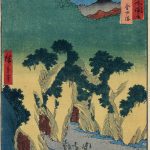
The founding of Nagoya as a political and cultural hub in the early 17th century was not just a matter of urban planning—it was a deliberate act of aesthetic statecraft. When Tokugawa Ieyasu ordered the construction of Nagoya Castle in 1610, following the devastation of the earlier Kiyosu Castle town, he was doing more than securing a military foothold in central Japan. He was laying the groundwork for an entire regional culture—one where art, ritual, and architecture would broadcast authority with the precision of gold leaf on folding screens.
The Tokugawa Legacy and the Rise of Owari Culture
Nagoya’s emergence as a major cultural center began with its designation as the seat of the Owari branch of the Tokugawa family—one of the three gosanke houses eligible to provide a shogunal successor. This status guaranteed not only political relevance but also sustained wealth and prestige, which translated directly into patronage. The early 17th century in Japan was a time of consolidation, and Nagoya was a case study in how power could be visualized.
The Owari lords cultivated a courtly atmosphere within the castle and its surrounding domain. They attracted artists, architects, calligraphers, and craftsmen to create works that could rival those in Edo and Kyoto. This was not imitation but assertion: the Owari branch needed its own visual idiom, rooted in Tokugawa grandeur but distinct in voice. While Edo projected bureaucratic control and Kyoto radiated imperial grace, Nagoya exuded martial confidence and material richness.
One of the most iconic visual programs of this early period was the decoration of Nagoya Castle itself, particularly the paintings by artists of the Kano school. These works—elaborate screen panels and fusuma sliding doors—transformed interiors into theatrical spaces of myth, nature, and dynastic allegory. Tigers, pine trees, phoenixes, and plum blossoms marched across golden fields, asserting both taste and supremacy.
Samurai Patronage and the Flourishing of Decorative Arts
The Owari daimyōs not only imported talent from Kyoto and Edo but also helped generate a local artistic economy. A network of retainers, officials, and merchants formed a vibrant class of secondary patrons, eager to signal their sophistication through the acquisition of painted scrolls, ceramics, and calligraphy. The result was a layering of artistic production that moved from elite to artisan, from courtly commissions to private tastes.
Among the arts most deeply nurtured was lacquerware, especially makie, the technique of sprinkling gold or silver powder into wet lacquer. Workshops in and around Nagoya became known for their controlled elegance—less flamboyant than Edo styles, more technically intricate than those of Osaka. Similarly, metalwork flourished, particularly in sword fittings and inlays, which combined martial symbolism with decorative invention.
In textiles, the development of tie-dyeing techniques like Arimatsu shibori, just southeast of the city, points to how even villages within the Owari domain were drawn into the larger aesthetic fabric. These textiles, originally created for festival garments and travel wear, eventually became prized for their complex patterns and visual rhythm.
Perhaps most telling is how seamlessly artistic production in Nagoya fused the practical and the poetic. A finely inlaid tsuba (sword guard) might be worn in battle but also admired at a poetry gathering; a folding screen could function as both room divider and ideological declaration. Art here was neither isolated nor ornamental—it was enmeshed in social life, inseparable from rank, duty, and seasonal ritual.
Nagoya Castle as a Center of Artistic Symbolism
Nagoya Castle was more than a fortress—it was a living archive of power encoded in image and material. The most enduring symbol of this ambition was the pair of golden shachihoko—mythical tiger-headed carp—installed on the roof. These creatures, shimmering above the city, came to embody the identity of Nagoya itself: protective, mythical, extravagant. They were meant to awe and to ward off fire, but also to remind the viewer, quite literally, who stood above.
Inside the castle’s honmaru (main keep), painters from the Kano school executed an extraordinary program of decoration. The Kano were the dominant painting academy of the Edo period, with direct links to the shogunate, and their appointment to Nagoya’s new seat reflected both prestige and ideological alignment. Under the direction of Kano Tanyū, their work filled the private and public spaces of the castle with panoramic gold-leaf landscapes, powerful animal motifs, and narratives drawn from classical Chinese and Japanese sources.
These images served more than aesthetic functions—they regulated behavior. Pine trees evoked steadfastness; cranes suggested longevity; lions and tigers implied vigilance. The castle itself thus became a moral theater, using image as architecture and architecture as image.
What’s striking is how these works managed to maintain an authoritative restraint. Unlike later periods, where eccentricity or abstraction took hold, the early Owari aesthetic was one of controlled opulence. It valued balance over surprise, gravitas over experimentation. This restraint—perhaps born of military tradition—would echo in Nagoya’s art for generations, creating a distinctive tone even as the forms evolved.
The roots of Nagoya’s artistic life were planted not in isolation but in dialogue—with Edo, Kyoto, and the other castle towns of Tokugawa Japan. What made it unique was how that dialogue took shape: through the deliberate use of architecture, the careful cultivation of schools, and a profound intertwining of power and beauty. In Nagoya, art was not a reflection of history—it was its instrument.
Kano and Beyond: Painting in the Early Edo Period
In the 17th century, as Nagoya solidified its status as the Owari stronghold of the Tokugawa clan, painting became one of the most potent tools for expressing social order, intellectual refinement, and regional prestige. The dominant aesthetic force during this period was the Kano school, but what unfolded in Nagoya was not merely a local echo of Edo or Kyoto styles. Rather, it was a controlled divergence—a visual idiom that took root within the framework of Tokugawa orthodoxy but gradually grew its own branches.
The Influence of the Kano School in Nagoya’s Elite Circles
The Kano school functioned less like an art movement and more like an arm of the state. Its painters were trained in a strict workshop system, often passed down through family lines, and their works reflected a finely calibrated synthesis of Chinese literati painting, Japanese courtly traditions, and decorative grandeur. For the Tokugawa rulers, the Kano style provided the right combination of cultural legitimacy and visual control: symbolic, formal, and immediately legible.
In Nagoya, the influence of the Kano school was first institutional, then aspirational. The Owari lords, beginning with Tokugawa Yoshinao, invited prominent Kano painters to decorate the new Nagoya Castle. Tanyū, the most famous of the Edo-based Kano lineage, directed the monumental interiors of the honmaru go-ten—its main palace complex. His workshop’s painted screens and panels featured themes such as pine-cloaked mountains, birds amid seasonal flowers, and fierce tigers stalking across gilded landscapes.
These images were not simply visual adornments. They encoded political ideals: stability, continuity, cosmological harmony. The tiger paired with bamboo was a classic motif symbolizing balance between ferocity and flexibility—a metaphor for rulership. And by commissioning such paintings in the heart of the castle, the Owari lords were placing themselves in that lineage of enlightened authority.
Yet even within the Kano formula, regional distinctions began to emerge. Several painters working in Nagoya adapted the school’s style to suit local preferences. Their compositions often favored more open space and a sparer palette—elements perhaps informed by the more restrained material culture of the Owari court, where lacquer, textiles, and metalwork tended to emphasize precision over flourish.
Screen Painting and the Visual Language of Power
Folding screens (byōbu) played a crucial role in the period’s visual culture. Their utility as movable partitions gave them a special status in interiors, where they could transform space while displaying scenes drawn from classical literature, seasonal cycles, or historical parables. In Nagoya, screen painting served not only an aesthetic function but a rhetorical one.
One remarkable example—though no longer extant but documented in Edo-period inventories—included a six-panel screen depicting episodes from The Tale of the Heike, featuring samurai figures rendered with a narrative force that departed from the more subdued courtly versions seen in Kyoto. The brushwork combined Kano formalism with a distinctly muscular handling of line and space. In this, one sees a regional adaptation of a national language—a willingness to amplify certain elements to match the martial and pragmatic spirit of the Owari court.
Another feature of Nagoya screens was the integration of poetry. Calligraphic verses were often inserted into painted landscapes or floral arrangements, linking visual forms with literary authority. Some of these inscriptions were written by scholars or monks connected to the domain, others by the patrons themselves. This gave the screens a dialogic quality: not only were they beautiful, but they spoke to, and sometimes for, the people who owned them.
The placement of such screens within the castle, in temples, or in upper-class homes was calculated. In diplomatic meetings, they served as statements of taste and allegiance; in ritual settings, they created symbolic enclosures; in domestic spaces, they shaped the mood and hierarchy of the room. A single screen could thus carry layers of function—narrative, symbolic, political.
Local Variations and the Seeds of Artistic Divergence
While the Kano style dominated official commissions, alternative currents began to stir in the city’s less-regulated artistic communities. Nanpin school painting, introduced from Nagasaki through Chinese émigrés and Japanese students, brought with it a more detailed, naturalistic approach to bird-and-flower motifs. These works, often privately commissioned, began to appear in the homes of wealthy merchants and physicians in the region. Their crisp outlines and finely modeled forms stood in contrast to the broad washes and emblematic stylization of Kano paintings.
This growing taste for variety signaled a gradual decentralization of artistic authority. Artists like Yamamoto Baiitsu (1783–1856), though born slightly later, would later synthesize Chinese literati aesthetics with Japanese formats, producing ink paintings that were both scholarly and sensuous. Though Baiitsu traveled to Kyoto and maintained ties to the intellectual networks there, he remained rooted in Nagoya, helping to establish it as a viable center for painters who wished to step outside the Kano lineage without severing all ties to tradition.
Similarly, artists working in the Nanga (Southern Painting) style, inspired by Chinese literati ideals, found in Nagoya a receptive audience. These painters valued personal expression, poetic allusion, and the evocative use of brush and ink. While their aesthetic language emerged as a kind of resistance to the formality of the Kano school, it didn’t reject that tradition outright—it reinterpreted it. In Nagoya, this re-interpretation often retained a sense of order and clarity not always found in the more eccentric Kyoto versions of the genre.
What’s notable is that this pluralism developed within the relative conservatism of Tokugawa Nagoya. It was not a rebellion so much as a widening of the field. Artists didn’t break with the past—they adjusted its proportions.
Nagoya in the early Edo period was not merely a satellite to Kyoto and Edo; it was a testing ground for how authority and aesthetics could co-exist. Painting, while shaped by dominant schools like Kano, evolved through local pressures, patron preferences, and individual vision. It was within this carefully calibrated system that Nagoya’s visual identity began to form—not by rupture, but by refinement.
The Ceramics of Seto and Tokoname: Earth, Fire, and Form
Long before Nagoya rose as a political center under the Tokugawa, the hills to its east and south were alive with the smoke of kilns. The ceramic traditions of Seto and Tokoname—two of Japan’s so-called “Six Ancient Kilns”—predate the founding of the city itself, yet they would become vital to its artistic identity. These were not simply workshops churning out utilitarian vessels; they were crucibles of innovation, where centuries of technique met the evolving demands of tea masters, merchants, and the slow-blooming logic of form.
Kilns that Shaped a Region: A Tale of Two Pottery Towns
Seto, located northeast of Nagoya, has been synonymous with ceramics in Japan for so long that “setomono” became a generic term for pottery itself. It was here, during the Kamakura period (1185–1333), that potters first successfully replicated the ash-glazed styles of Chinese Song ware. But by the Edo period, Seto’s identity had shifted: it became a powerhouse of refined stoneware and porcelain, supplying a wide range of goods from inkstones and storage jars to delicately painted tea utensils.
Tokoname, by contrast, lies southwest of Nagoya on the Chita Peninsula and developed along different lines. Its iron-rich clay, fired in towering climbing kilns, produced hard, red stoneware that was durable and distinctive. Tokoname ware lacked the glossy finesse of Seto, but its austere elegance and functional power made it a favorite for water jars and mortars, as well as large-scale storage vessels used in trade and agriculture. Where Seto offered grace, Tokoname offered gravity.
By the mid-Edo period, both towns had established expansive networks of production, distribution, and apprenticeship. Their proximity to Nagoya made them natural suppliers to the growing urban market, and the city’s merchant and samurai classes embraced ceramic goods both as domestic necessities and objects of taste. Tea bowls from Seto and Tokoname entered Nagoya homes not just as tools but as signs of cultural literacy.
The relationship between Nagoya and these pottery towns was symbiotic. The city provided the capital, connoisseurship, and social occasion for ceramic culture to flourish; the kilns, in turn, grounded Nagoya’s visual culture in the physical reality of earth, fire, and labor.
Tea Culture and the Aesthetic of Restraint
Few forces shaped Edo-period aesthetics more profoundly than the practice of chanoyu, or the tea ceremony. Rooted in Zen ideals and refined through the tastes of warlords, tea culture demanded a particular kind of beauty—one that prized imperfection, texture, and modesty. This aesthetic, often glossed with the term wabi-sabi, found ideal expression in the ceramics of Seto and Tokoname.
In Seto, potters produced shino, oribe, and ki-seto wares—each with its own glaze chemistry and visual vocabulary. Shino ware, with its thick white glaze and spontaneous iron brushwork, suggested a landscape rendered in fog and fire. Oribe, named after the tea master Furuta Oribe, embraced asymmetry, deformation, and vivid green glaze—a radical break from Chinese models and an embrace of a uniquely Japanese sensibility.
Though Furuta Oribe was based in Kyoto, his legacy touched Nagoya through the tastes of Owari patrons and their close ties to the tea world. Samurai in Nagoya cultivated their own tea lineages, sometimes commissioning specific forms and glazes from Seto potters. These objects were used not only in formal gatherings but in informal chakai, where the appreciation of a single bowl might last an hour.
Tokoname’s contribution to tea culture was more elemental. Its massive storage jars, often bearing natural ash glazes and rugged surfaces, were prized for storing tea leaves and water. Later, in the 19th century, Tokoname would rise to prominence for its small, unglazed red clay teapots (kyūsu), still revered today for their purity of form and functionality. But even in the earlier period, its clay spoke of depth and containment—a counterbalance to the pictorial exuberance of Seto.
Three ceramic traits that emerged from the tea tradition in this region include:
- Intentionally irregular forms, designed to reflect natural imperfection.
- Muted, earthy glazes, encouraging tactile appreciation over visual flash.
- A sense of temporal layering, where the vessel revealed itself more through use than display.
In a culture that elevated subtlety to a moral value, these ceramics were more than beautiful—they were ethical objects.
Export Ware and the Global Reach of Local Craft
While the domestic market for ceramics remained strong throughout the Edo period, the arrival of Western demand in the 19th century—especially after Japan’s forced opening in the 1850s—reshaped the ceramic economies of both Seto and Tokoname. Pottery that had once served the quiet rituals of Japanese domestic life was now being produced, adapted, and sometimes distorted for foreign tastes.
Seto became a major center of export porcelain, its workshops producing large volumes of blue-and-white and enamel-painted ware for markets in Europe and the Americas. The designs often included pseudo-Chinese motifs, floral patterns, and even scenes tailored to Western exoticism. These works were mass-produced but retained a high level of technical refinement, showing how the region could pivot without abandoning its core competencies.
Tokoname, too, entered the export trade, especially with its large storage jars and architectural tiles. In the Meiji period, it would also become a leader in producing ceramic pipes, bricks, and industrial ware—a less glamorous but no less significant chapter in its long relationship with clay.
One surprise of this export period was how it revitalized local forms. Some potters, flush with foreign capital, reinvested in traditional kiln technologies or experimented with old glaze recipes. Others became cultural emissaries, winning prizes at world’s fairs and building international reputations.
Yet the pivot to export was not without loss. Some traditional forms were sidelined, and inauthentic hybrid styles proliferated. As Nagoya modernized, it faced the same question that haunted many port cities and production centers in the Meiji era: how to innovate without eroding the soul of the craft?
The story of Nagoya’s ceramics is not simply one of objects—it is one of terrain, temperature, and time. The city grew in tandem with its potteries, drawing from their heat and anchoring its visual culture in their earthy logic. Seto and Tokoname taught Nagoya a lesson that would echo through its later art history: that even the most refined aesthetic begins with raw matter, shaped by hand, fired by risk.
Woodblock Culture Outside Edo: Nagoya’s Print Traditions
If Edo was the beating heart of the ukiyo-e world, Nagoya was one of its lungs—a vital, if less celebrated, organ that kept the culture breathing beyond the capital. In the 18th and 19th centuries, as woodblock printing evolved from a niche craft into a dominant visual medium, Nagoya developed its own vibrant print scene. It was a world of publishers, actors, artists, and merchants—provincial in geography but by no means provincial in ambition. The city’s print culture reflected its hybrid identity: part castle town, part merchant hub, part cultural satellite. It stood at an angle to Edo, often echoing its themes, sometimes parodying them, and occasionally outpacing them in invention.
Regional Publishers and the Spread of Popular Imagery
Nagoya’s entry into the woodblock market began with the rise of local publishers in the late 18th century. While Edo’s major firms commanded the most prestigious commissions and dictated dominant trends, Nagoya’s publishers catered to a more regional audience—one less concerned with elite fashion than with recognizable faces, local humor, and accessible storytelling.
Among the most successful publishers was Eirakuya Tōshirō, who specialized in illustrated books (ehon) and prints that blended narrative, humor, and design. His output included adaptations of famous tales, instructional texts, and parodies that reimagined canonical stories in contemporary settings. Eirakuya’s editions often featured a distinctive balance between image and text, and his careful attention to printing quality helped elevate Nagoya’s reputation in what was otherwise a fiercely hierarchical industry.
The kibyōshi—illustrated comic novels with satirical elements—found fertile ground in Nagoya. These books, often anonymous or pseudonymous, skewered everyday life, mocked pompous officials, or gently parodied classical literature. Their humor was sharp but local, grounded in the rhythms of a town that took itself seriously without ever taking itself too seriously. It was through such publications that woodblock imagery in Nagoya established an independent voice: literate, visual, playful.
While much of the city’s early print production lacked the high color saturation and polish of Edo’s nishiki-e, the technical gap narrowed in the 19th century. Artists and block cutters in Nagoya refined their skills in tandem with rising demand. Local workshops learned to handle complex multi-block printing with remarkable subtlety. The city was no longer merely a consumer of print culture—it had become a producer with its own stylistic accent.
Kabuki, Courtesans, and the Merchant Class Imagination
Just as Edo’s printmakers found endless material in the floating world of theater and pleasure quarters, so too did Nagoya’s artists turn to the spectacle of Kabuki and the demi-monde. But here again, there was a tonal shift. Whereas Edo’s prints often featured idealized beauties and mythic actors, Nagoya’s impressions were more intimate, sometimes irreverent, and often focused on performers and personalities known to local audiences.
The city’s theater district, centered around venues like the Misonoza Theater, nurtured a strong regional Kabuki tradition. Star actors touring from Osaka or Edo would perform alongside local favorites, and their portraits—yakusha-e—became bestsellers at city stalls. These actor prints weren’t simply souvenirs; they were part of a media ecosystem in which celebrity, image, and performance fed each other.
One particularly interesting figure in this scene was Ryūsai Shigeharu, a Nagoya-born artist who trained in Osaka and brought a Kansai flavor to his yakusha-e. His works often depicted actors in dramatic close-up, emphasizing emotion and gesture over idealized form. They were visceral, not decorative.
In the world of bijin-ga—prints of beautiful women—Nagoya also diverged from Edo norms. Rather than the elegant, unattainable courtesans of Edo’s Yoshiwara, Nagoya’s prints sometimes portrayed women engaged in daily life: reading, walking, playing music. While still stylized, these figures suggested a different relationship between viewer and subject—less fantasy, more familiarity.
Merchant-class patrons were key to this dynamic. They valued art that reflected their world, their amusements, their aspirations. In a city where the boundaries between elite and commoner were both rigid and negotiable, prints became a medium of cultural self-portraiture. They showed what people wanted to see—and sometimes what they wanted to be seen as.
Among the more memorable trends in Nagoya print culture were:
- Prints that satirized classical themes, inserting samurai or monks into comic mishaps.
- Locally famous actors in exaggerated expressions, recognizable to regular theater-goers.
- Images of festival scenes, including regional rituals and parades that never appeared in Edo editions.
In this way, Nagoya’s ukiyo-e did not just imitate the capital—it described a world adjacent to it, shaped by different rhythms and local pride.
Nagoya’s Distinctive Style and Artists on the Periphery
By the late Edo period, Nagoya had developed a distinctive school of print artists who operated both within and outside mainstream trends. Their names are less likely to appear in global museum retrospectives, but their works reveal an ecosystem of talent shaped by regional dynamics.
Tamura Sadanobu I, for example, worked in a style that blended Kyoto elegance with Edo theatricality, producing actor prints and genre scenes that displayed technical command without losing warmth. Utagawa Yoshitoyo, born in Nagoya, trained in the Osaka branch of the Utagawa school, showing how artistic identities could straddle geographic lines while still retaining regional flavor.
Even more idiosyncratic were the anonymous craftsmen who created board games, educational charts, and satirical maps in woodblock format—objects that rarely make it into formal art histories but were part of daily life. These items, often printed on cheap paper and sold in stalls, reflect a cultural democratization of image-making. They represent the point at which art, commerce, and literacy intersected.
What unified these efforts was not style but attitude. Nagoya’s printmakers often worked with a sly self-awareness, knowing that they were outside the artistic capitals but refusing to act like it. Their prints are filled with inside jokes, regional references, and a kind of visual accent that rewards close reading. Theirs was a confident periphery, not a provincial backwater.
Nagoya’s woodblock culture offers a lesson in how art develops outside the spotlight. It shows how local tastes, economic structures, and community traditions can generate an aesthetic that is both reflective and subversive. These prints may not have carried the prestige of Edo’s ukiyo-e, but they carried something else: the voice of a city talking to itself, in images it made by hand.
Sacred Art and Temple Patronage in the Chubu Region
Long before Nagoya became a formal city, the region it now anchors was a crossroads of pilgrimage, faith, and ritual. The Chubu area, with its mountain passes and river valleys, supported a rich network of Buddhist temples and Shinto shrines—each one a node in a wider cosmology of devotion. As Nagoya rose in political importance during the Edo period, it absorbed and amplified this sacred infrastructure, drawing spiritual patronage into its cultural bloodstream. The resulting art was not simply religious decoration—it was theology made material, a visual language of transcendence shaped by craft, doctrine, and the long memory of place.
Sculpture, Mandalas, and the Art of Devotion
Buddhist art in the Nagoya region has roots that stretch back to the Heian and Kamakura periods, when itinerant sculptors and monks carried religious imagery from Kyoto into provincial temples. By the time Nagoya emerged as a Tokugawa seat, many of these temples had already developed distinct iconographic traditions, blending Pure Land, Zen, and Shingon elements in fluid ways.
The sculpture of this region tends toward the monumental and serene. Tōgan-ji Temple, originally founded in the 16th century by the Owari lords and later relocated to central Nagoya, houses a striking seated statue of the Buddha that reflects Ming Chinese influences—smooth contours, elongated proportions, and a slight forward lean that suggests both stillness and engagement. While it lacks the flamboyant detail of Kamakura-period masterpieces, it radiates clarity and balance, values prized by the Zen-leaning clergy who maintained the temple.
Elsewhere in the region, older temples such as Arako Kannon—with its ancient pagoda—preserve rarer forms, including esoteric mandalas rendered in pigment and ink. These cosmic diagrams served not as artworks in the modern sense, but as visual gateways: tools for meditation, objects of ritual concentration, and diagrams of the unseen.
Many of these mandalas and temple paintings were executed by anonymous hands, often monks trained in both doctrinal study and brush technique. The act of making was itself devotional. In this tradition, art was not self-expression—it was submission to form, to lineage, and to sacred geometry.
Three characteristics distinguish sacred art in the Nagoya-Chubu region:
- A stylistic conservatism, especially in sculptural proportion and compositional layout.
- Use of local materials, including regional pigments and clay, adapted to canonical forms.
- Integration with architecture, where murals and carvings were embedded in temple structures rather than displayed independently.
This close alignment of art and liturgy meant that much of the region’s most significant religious imagery was immovable—literally built into temple life.
Pilgrimage, Iconography, and the Preservation of Ritual Forms
Nagoya was also a gateway to major pilgrimage routes, including those leading to the Ise Grand Shrine and Kōyasan, and this made it both a transit hub and a devotional waypoint. Pilgrimage brought with it not only people, but images. Pilgrim prints, votive talismans, and small religious sculptures circulated widely, creating a secondary economy of sacred art. These objects were often produced in series—woodblock-printed images of Buddhas, protective charms bearing the names of deities, and portable shrines small enough to fit in a traveler’s pouch.
The iconography of this mobile art was codified but not static. Artists adapted standard motifs to local tastes. In Nagoya, images of Kannon, the bodhisattva of compassion, often appear with softer features and less flamboyant ornamentation than their Kyoto counterparts. These depictions were intended for ordinary people—farmers, merchants, mothers—not just monks or elites. The democratization of sacred imagery here was both practical and aesthetic. It allowed the divine to be reachable, both visually and spiritually.
During the Edo period, the Owari lords contributed to this culture of pilgrimage by sponsoring major temple repairs and commissioning artworks that reinforced their legitimacy. One example is the Kenchū-ji Temple, the family temple of the Owari Tokugawa house. Its painted ceilings and interior carvings—many executed by regional artisans—combined Confucian symbolism with Buddhist themes, subtly linking filial piety to cosmological order.
Equally important were the danka parishioner systems, which tied families to specific temples through generations. These systems helped preserve artistic traditions over centuries. Families would sponsor new carvings, repaint statues, or fund the re-gilding of icons as acts of merit. This cycle of maintenance and renewal ensured that sacred art in Nagoya was not fossilized, but living—revisited and reborn with each generation.
The Endurance of Medieval Visual Culture into Modernity
What is perhaps most distinctive about sacred art in the Nagoya region is how long it held to medieval models. Even as Edo and Kyoto moved toward more decorative, narrative-driven religious painting in the 18th and 19th centuries, many Chubu temples retained their earlier aesthetic vocabularies. The reasons were partly economic—rural temples often lacked funds for stylistic updates—but also theological. In Pure Land and Shingon contexts, fidelity to form was itself a form of piety.
This conservatism, however, was not stagnation. Within the bounds of traditional iconography, regional artists found room for invention. Facial expressions grew more individualized; cloud patterns in scrolls were rendered with greater drama; temple murals began incorporating subtle landscape elements drawn from the local environment. The result was a style that looked backward without being frozen—a visual grammar flexible enough to accommodate the changing needs of belief.
By the Meiji period, when government reforms led to the Shinbutsu Bunri (separation of Buddhism and Shinto), many temples in and around Nagoya faced financial and institutional pressures. Some were closed, others repurposed. But many of their artworks survived, in part because they remained embedded—physically, ritually, emotionally—in the structures of daily life. Sacred art in this region was not a museum category. It was a presence.
In Nagoya, the sacred did not exist in opposition to the secular. It infused the texture of the city and its countryside, shaping not only what people saw, but how they saw. The temples and their artworks were not simply markers of piety—they were instruments of continuity, calibrated to remind a changing world that some forms were worth repeating, some images worth preserving.
Meiji Transformations: Tradition, Technology, and Disruption
When the Meiji Restoration of 1868 dissolved the Tokugawa shogunate and ushered in a new era of imperial centralization and modernization, the impact on Japan’s art world was immediate and disorienting. For Nagoya, a city whose cultural institutions had grown in lockstep with the Owari branch of the Tokugawa family, the shift was more than political. It was ontological. The structures that had underpinned artistic life—samurai patronage, temple systems, domain governance—either vanished or were fundamentally redefined. What emerged in their place was a new cultural economy, shaped by industry, education, and export markets. Nagoya’s artistic identity, once grounded in ritual, courtliness, and regional pride, had to find new footing amid the convulsions of modernity.
Western Influence and the Reorientation of Art Education
One of the most immediate changes in the Meiji period was the importation of Western art education. In 1876, the state-sponsored Technical Fine Arts School (Kōbu Bijutsu Gakkō) opened in Tokyo under the direction of Italian artist Antonio Fontanesi, marking a national pivot toward oil painting, linear perspective, and academic realism. Though the school was far from Nagoya, its influence reached the region quickly. Local artists began to study Western anatomy, composition, and materials, either through direct study in Tokyo or via newly published manuals and art journals.
In Nagoya, this shift sparked both excitement and confusion. The city’s traditional schools—particularly those rooted in nihonga and nanga painting—were confronted with the prospect of stylistic obsolescence. Some artists adapted quickly, integrating Western techniques into Japanese formats. Others resisted, doubling down on classical brushwork and native themes. The resulting tension gave Nagoya’s Meiji-era art a peculiar dual character: forward-looking but self-conscious, experimental yet nostalgic.
To address this, local officials and intellectuals pushed for formal institutions that could train a new generation of artists. By the 1890s, the groundwork was being laid for what would become the Nagoya City School of Arts and Crafts, which opened in 1907. Unlike its Tokyo counterpart, this school was more rooted in applied arts—ceramics, metalwork, and design—reflecting the industrializing spirit of the region. It trained artisans as much as artists, with an eye toward both aesthetic achievement and commercial viability.
This education model would shape Nagoya’s art world well into the 20th century. It produced creators who were technically adept, visually literate, and economically aware. Art was no longer only for the elite or the pious—it was becoming a profession, tied to manufacturing, media, and mass consumption.
Design, Industry, and the Shaping of the Modern Object
Nowhere was this transformation more dramatic than in the applied arts. The same region that had produced Seto and Tokoname ware for centuries now found itself at the forefront of industrial ceramics, manufacturing both decorative and utilitarian goods for domestic and foreign markets. Factories equipped with gas and electric kilns replaced traditional wood-fired climbing kilns. Molds and glazes were standardized. Production scales increased dramatically.
What could have been a cultural loss became, in Nagoya, a technical opportunity. Seto, in particular, emerged as a key player in the national porcelain export boom of the 1880s and 1890s, supplying goods for the World’s Fairs and the burgeoning Western appetite for “Oriental” design. These wares—often marked with romanticized or pseudo-Chinese motifs—were sometimes dismissed by purists as inauthentic. But their success funded the survival of local craft traditions, many of which might otherwise have withered in the post-feudal economy.
This was also the period when Nagoya became a city of machines. As rail lines connected it to Osaka and Tokyo, the city developed a robust manufacturing sector, especially in textiles, metallurgy, and later automobiles. With industrialization came a demand for visual design: advertisements, signage, packaging, and branding. The visual language of the city began to shift from calligraphy and scrolls to lithographs, posters, and printed ephemera.
Artists trained in traditional modes now found work as designers. This was not seen as a fall from grace but a new mode of relevance. The idea of the artist-craftsman—one who could navigate both the poetic and the practical—became central to Nagoya’s cultural identity. Unlike in some intellectual circles in Tokyo, where fine art was elevated above commercial production, Nagoya fostered a more integrated view: design and craft were not peripheral—they were the main stage.
Three emblematic developments of this era include:
- The emergence of “Seto ware” porcelain as a major export commodity, adapting centuries of ceramic knowledge to modern industry.
- The use of traditional dyeing techniques like Arimatsu shibori in mass-produced textiles, preserving pattern vocabularies within new production models.
- The rise of lithographic printing houses in Nagoya, which combined hand-drawn design with mechanized reproduction, setting the stage for modern graphic arts.
These shifts didn’t dilute Nagoya’s cultural distinctiveness—they redistributed it.
Cultural Loss and the Emergence of Historical Consciousness
But with industrial success came dislocation. The Meiji state’s policy of Shinbutsu Bunri—the separation of Shinto and Buddhism—had already stripped many temples of their lands, assets, and artworks in the early 1870s. Numerous statues were destroyed, scrolls sold to collectors, and altars dismantled. While some major temples in the Nagoya area survived intact, many smaller ones did not. Local communities often lacked the resources—or the political clout—to protect their religious art from seizure or sale.
At the same time, the decline of the samurai class meant the disappearance of a key patron base. Armors, weapons, screens, and calligraphy that had once symbolized family legacy were now liabilities. Heirlooms were sold to feed families, dismantled for parts, or exported to foreign buyers. A material culture that had developed over centuries was suddenly fluid, mobile, and vulnerable.
Ironically, this crisis generated a new kind of cultural awareness. Artists, scholars, and collectors in Nagoya began to treat older artworks not simply as heirlooms but as heritage—objects to be preserved, catalogued, and displayed. Private collections formed. Antiquarian societies emerged. In 1935, the founding of the Tokugawa Art Museum in Nagoya, based on the Owari Tokugawa family’s collection, formalized this shift. The museum did more than preserve a legacy—it reframed it for the modern viewer, turning feudal aesthetics into public culture.
This transition—from ritual object to museum piece—was one of the most profound changes in Meiji-era art. It created a double consciousness in Nagoya’s art world: the forward drive of industrial design, and the backward gaze of historical preservation. Both were necessary. And both, in different ways, were acts of invention.
The Meiji period broke Nagoya’s old artistic systems. But it also gave the city a new kind of agency. By absorbing foreign models, professionalizing craft, and redefining heritage, Nagoya reconstituted its identity not as a relic of Tokugawa culture but as a living, evolving center of visual production. The shock of modernization did not erase the city’s past—it sharpened its edges.
The Nagoya School and the Craft of Regional Modernism
By the early 20th century, Nagoya was no longer a subordinate voice in Japan’s cultural conversation. It had become a center of industrial strength, educational ambition, and artistic independence—defined less by its past as a Tokugawa stronghold than by its ability to shape a modern identity from local tradition. Nowhere was this synthesis more visible than in the emergence of what might be called the “Nagoya School”—not a formal group, but a loose constellation of artists, educators, and institutions who gave regional modernism both shape and substance. Their work was grounded in skill, alert to global trends, and resistant to the hierarchies that still governed the Tokyo-Kyoto axis.
Art Education as a Cultural Force
The foundation of the Nagoya City School of Arts and Crafts in 1907 marked a pivotal moment. Modeled on both Western academies and Japanese technical schools, it offered a broad curriculum: ceramics, lacquer, metalwork, design, painting. The goal was not to produce fine artists alone but to train individuals who could move between art and industry, tradition and commerce. The institution later evolved into what is now Nagoya University of the Arts, and its pedagogical legacy can still be felt.
At the heart of this educational ethos was a respect for material and method. Unlike the more conceptually driven art education taking shape in Tokyo, Nagoya’s schools emphasized making—not just as craft, but as intellectual labor. Students were expected to master both technical skill and historical awareness. They learned how to glaze porcelain, carve lacquer, etch copper, and stretch silk for hanging scrolls. These were not nostalgic exercises. They were efforts to secure a future for regional knowledge systems within modern frameworks.
Crucially, the schools also brought in artists from outside Nagoya—painters trained in Kyoto’s nihonga circles, designers influenced by the German Bauhaus, and sculptors shaped by French academic realism. These external voices didn’t dilute Nagoya’s sensibility; they extended it. Cross-pollination became a hallmark of the city’s artistic education.
Art education in Nagoya also aligned itself closely with civic and regional development. Students and faculty collaborated on public monuments, designed packaging for local industries, and contributed to the visual identity of the city through posters, signs, and decorative works. Art was not isolated in salons—it was folded into the metabolism of daily life.
Figuration, Abstraction, and the Local Avant-Garde
Within this infrastructure, Nagoya artists began to develop distinctive voices in both traditional and modernist modes. One current pursued refinement of classical Japanese painting styles. These artists, working in the nihonga tradition, experimented with mineral pigments, silk substrates, and seasonal motifs, but often pushed beyond Kyoto’s more conservative models. Their work retained the vertical formats and quiet tonalities of the past, yet introduced bolder compositions and idiosyncratic subjects.
A parallel current moved toward abstraction, often informed by European modernism. While Tokyo artists were frequently preoccupied with ideological manifestos and political engagement, many of Nagoya’s modernists took a more formal route—interested in rhythm, balance, structure. Painters like Matsubara Shū, born just outside Nagoya in the 1920s, explored geometric abstraction that reflected both international trends and the influence of Japanese calligraphy. His canvases were intellectual exercises in line and space, yet deeply rooted in the gestural tradition of ink painting.
One striking aspect of Nagoya’s avant-garde was its lack of dogma. Artists moved between styles without needing to declare allegiance to movements. They worked in ink, oil, enamel, collage—often combining techniques and media in ways that defied academic labels. Exhibitions organized by artist-run groups, such as Nika-kai or Nagoya Bijutsu Kyōkai, featured works ranging from expressive figurative painting to disciplined minimalism, with few signs of aesthetic hierarchy.
Three qualities marked the Nagoya modernist style of this period:
- A respect for handwork, even in conceptual or abstract pieces.
- A willingness to move between Eastern and Western forms, without anxiety about purity.
- A civic-minded ethos, in which the artist remained a participant in public life.
In short, Nagoya’s artists were modernists, but on their own terms—neither provincial followers nor cosmopolitan radicals.
Key Figures Who Shaped a Regional Voice
The emergence of regional modernism in Nagoya owes much to a handful of key figures—some well known, others unjustly overlooked. Among the most influential was Yokoyama Taikan, though not a native son. His nihonga innovations in Tokyo had a profound impact on Nagoya’s painting circles, where his atmospheric brushwork and tonal gradations found eager disciples.
Closer to home, Matsuda Gonroku, a lacquer artist and teacher, helped elevate decorative arts to the level of intellectual pursuit. His work fused ancient techniques with modern minimalism, and his influence extended through generations of students. Likewise, Yamada Yōji, a painter known for luminous still lifes and stylized landscapes, developed a teaching method that stressed both precision and intuition—qualities now seen as trademarks of Nagoya’s pictorial language.
Notably, female artists such as Hattori Toshiko and Kojima Yuki participated fully in this scene—not in segregated roles, but as contributors whose work stood on its own merit. Hattori’s botanical studies and Kojima’s abstract ink compositions appeared in juried exhibitions and group shows throughout the 1930s and ’40s, a period when many institutions elsewhere remained exclusionary. That they are not better known today says more about the national art historical narrative than the quality of their work.
The cumulative effect of these figures was to give Nagoya an artistic voice that was confident, competent, and quietly ambitious. It didn’t demand attention—it earned it through steady cultivation.
Regional modernism in Nagoya never needed to declare itself as such. It grew from the soil of the city’s crafts, the discipline of its schools, and the character of its artists—people who believed that tradition and innovation were not opposing forces but parallel ones. They saw in the past not a boundary, but a resource. In doing so, they helped make Nagoya not just a site of production, but a place of vision.
Postwar Recovery and Artistic Reconstruction
In the spring of 1945, the skies over Nagoya darkened not with clouds but with firebombs. As a major industrial hub—home to aircraft factories, machine tool plants, and critical transport infrastructure—Nagoya became a prime target for American air raids in the final year of the Pacific War. More than 25% of the city was destroyed, including many historic neighborhoods, cultural sites, and artist studios. When the war ended, Nagoya’s landscape was one of smoking ruins and scattered fragments. Yet within a decade, it had once again become one of Japan’s most dynamic cities—not only economically, but artistically. The visual culture that emerged from the ashes was not merely about rebuilding what had been lost. It was about creating new meanings from the debris.
The Cultural Landscape After 1945
The war did more than raze buildings; it decimated networks of patronage, teaching, and artistic continuity. Galleries, workshops, and museums were gutted. Art materials became scarce. Many older artists died, disappeared, or withdrew from public life. For a time, painting seemed frivolous, sculpture absurd, and exhibitions a luxury no one could afford. But even in this cultural vacuum, small pockets of creative energy began to stir.
Artists who had survived the war—some as soldiers, others as factory workers—returned to a city they no longer recognized. For many, the impulse to create came not from triumph but from trauma. Their early postwar works often expressed fragmentation, exhaustion, and spiritual displacement. The surfaces were rough, the forms unstable, the colors muted or violently clashing. This was not aesthetic experimentation for its own sake—it was a search for form in a world where all forms had collapsed.
One of the earliest spaces to support this recovery was the Nagoya City Art Museum, which reopened its doors in the late 1940s with a series of small group shows. Though its holdings had been damaged, it quickly reestablished itself as a platform for emerging voices. At the same time, a number of artist-run collectives sprang up, driven less by ideology than by the need to share resources. These collectives pooled canvases, held joint exhibitions in rented rooms, and debated art over shared bowls of rice.
From this ad hoc culture emerged a surprising amount of discipline. Artists began to organize salons, reestablish links with older teachers, and reach out to Tokyo and Kyoto for dialogue. Nagoya did not isolate itself in its recovery—it reinserted itself into the national and international art world, but on terms forged in survival.
New Media, Materials, and Meanings in a Broken City
One of the defining features of postwar art in Nagoya was its embrace of new materials. Traditional pigments, high-quality paper, and silk substrates were often unavailable or prohibitively expensive. In their place came industrial paint, reclaimed wood, scrap metal, and found objects—materials that carried the weight of ruin but also the possibility of reuse.
For some artists, this shift was philosophical. The very act of working with what was available became a form of resistance against despair. Painting with house paint on newspaper wasn’t just practical—it was a declaration that art could happen anywhere, with anything. Sculptors turned to concrete, rusted steel, and plastic. Ceramists pushed their kilns beyond standard glazes, letting ash and oxidation produce unpredictable surfaces. The unpredictability was the point.
The “reconstruction aesthetic”, as it came to be known by some critics, was not uniform. It contained both abstraction and figuration, both intimacy and monumentality. Some artists, such as Haruki Takahashi, returned to traditional ink painting but stripped it of narrative and ornament, reducing brushwork to its most elemental gestures. Others, like Okada Hiroshi, moved toward thickly painted, nearly monochrome canvases that seemed more like topographical surveys than pictures.
A few recurring strategies emerged across these disparate practices:
- The use of raw or unfinished surfaces, signaling both material honesty and emotional exposure.
- Repetition of fractured or deformed forms, often interpreted as reflections of trauma or psychic instability.
- Integration of text, collage, or non-art materials, drawing from Dada, Surrealism, and emerging international movements.
These experiments weren’t meant to imitate global trends—they arose from necessity, and only later found echoes in the larger currents of 20th-century modernism.
Personal Vision and Civic Identity in Artistic Practice
What makes Nagoya’s postwar recovery distinct is how quickly its artists reconnected private vision with civic responsibility. Art was not only a form of individual healing—it was a way to imagine what the city could be. Murals appeared in schools and hospitals. Sculptures were placed in public parks, not to beautify ruins but to stake a claim on permanence. Artists were invited to contribute to urban design projects, drawing plans for plazas, subway signage, and even public housing interiors.
One pivotal figure in this era was Yasuda Ichiro, a painter and teacher who insisted that postwar art must engage with community, not retreat from it. His workshops—open to amateurs, children, and professionals alike—blurred the line between studio and classroom, between gallery and neighborhood. Under his influence, a generation of Nagoya artists saw their role not as creators of masterpieces, but as cultural citizens.
Another important space was the Nagoya Art Salon, an independent venue founded in the early 1950s that operated without state or commercial sponsorship. It hosted interdisciplinary exhibitions that included not only painting and sculpture but also calligraphy, design, and even early electronic media. The Salon became a testing ground for what postwar art could look like if freed from the burdens of style and market.
This was also a period in which female artists—often absent from the prewar public scene—gained visibility. Not through tokenism, but through participation. Artists like Kobayashi Atsuko and Nakata Mieko exhibited side-by-side with their male peers in juried shows, collective salons, and municipal exhibitions. Their work did not dwell on identity; it dwelled on surface, form, landscape, tension. It was judged—and remembered—on those terms.
The story of Nagoya’s postwar art is not a simple one of rebirth. It is a story of persistence, of adaptation, and of quiet refusal to vanish. The artists of this era did not rebuild what had been destroyed. They built something else—something provisional, modest, and often provisional by design. Their work spoke not of triumph but of presence: of being in the world, despite it all.
Experimental Currents in the Tokai Region
By the 1960s, Nagoya and the broader Tokai region were no longer merely rebuilding—they were erupting with artistic experimentation. What had begun in the postwar years as an effort to reestablish basic artistic practice evolved into a culture of deliberate disruption, playful iconoclasm, and conceptual risk. While Tokyo was consolidating its role as Japan’s dominant art capital, Nagoya’s artists were asking different questions—less concerned with visibility, more interested in limits. What can art be if we strip away tradition? What does it mean to make, to perform, or to present something outside of institutional validation? These were not rhetorical exercises. They were lived experiments, often undertaken with little funding, no gallery infrastructure, and minimal critical support. In this context, Nagoya’s avant-garde was born not from ideology but from necessity—and it would leave a lasting imprint on Japanese contemporary art.
Art Groups, Collectives, and Anti-Institutional Energy
One of the defining features of this period was the proliferation of independent artist collectives, each pursuing its own path through performance, abstraction, conceptualism, or hybrid forms. Unlike the hierarchical salons of the prewar years or the state-sponsored exhibitions that still dominated in Tokyo, these groups often operated outside formal systems. Their ethos was one of self-organization, shared labor, and refusal of institutional norms.
Among the most influential was the VOU Group, originally centered in Kyoto but with strong participation from Nagoya artists. Founded in 1948 by the poet and artist Kitasono Katue, VOU blurred the line between visual art, typography, and experimental poetry. Several Nagoya-based members—such as Kiyoshi Awazu and Katsumi Komagata—developed bold typographic layouts and visual-poetic hybrids that challenged the boundaries of legibility and language. Their work was ephemeral by design, printed in zines, mailers, and limited-edition books that circulated among a small but deeply engaged audience.
Another collective, the Seisakusha Kondankai (Producers’ Roundtable), operated more like a laboratory than a traditional group. Members experimented with materials, performance, and site-specific interventions. One notorious event involved placing bundles of burnt rice straw in an empty urban lot and inviting passersby to interact with the installation. Was it sculpture? Protest? Ritual? The work refused to answer, and that refusal became part of its force.
While these groups rarely sought national attention, their activities were documented in independent journals and private archives, creating a shadow history of Japanese art that ran parallel to the official narratives centered in Tokyo and Osaka. In Nagoya, especially, this autonomy from the capital was not just a condition—it was a position.
The core traits of these groups often included:
- Anti-commercialism, with a preference for ephemeral or non-saleable work.
- Material experimentation, embracing industrial detritus, everyday objects, or organic decay.
- Spatial play, using alleys, train stations, rooftops, and riverbanks as sites of presentation.
This wasn’t underground art. It was ground art—rooted, raw, and willing to disappear.
Performance, Conceptualism, and the Limits of Form
One of the most provocative developments in Nagoya’s 1960s and ’70s art scene was the emergence of performance-based and conceptual works that challenged not only what art looked like, but what it did. These works often involved the artist’s body, the manipulation of space, or the passage of time—experiences that could not be fully captured in photographs or reviews, but spread by word-of-mouth and direct witness.
Among the most innovative practitioners was Yutaka Matsuzawa, who was born in the nearby city of Shimosuwa but exhibited frequently in Nagoya during this era. Though not strictly a Nagoya artist, Matsuzawa’s blend of Buddhist cosmology and conceptual minimalism resonated deeply with the city’s experimental circles. His “Psi” series, consisting of invisible installations, written instructions, and mental imagery, defied commodification entirely. In Nagoya, his work sparked a wave of interest in so-called “invisible art”—projects that proposed action or imagination in place of physical objecthood.
Local artists responded with their own interventions. Chikako Yamashiro, whose early work involved ritualized performances using clay, rope, and mirrors, created events that blurred spiritual rite and genderless embodiment. Though better known today through video documentation, her live performances—often held in abandoned buildings or former wartime sites—had a power that transcended medium. Her presence in the Nagoya scene marked a turning point: no longer was performance a sideshow to painting or sculpture—it was the main act.
Nagoya artists also took an unusually self-reflective stance toward documentation. Knowing that many of their works would be short-lived, they developed precise photographic records, poetic manifestos, and hand-printed catalogs. These materials now serve as some of the best surviving evidence of a movement that deliberately evaded the market and institutional record-keeping.
In this context, the limits of form were not seen as constraints but as invitations. What could be done without paint? Without canvas? Without permanence? These were real questions, asked not to shock, but to clarify. And in asking them, Nagoya’s artists opened new territories for Japanese art as a whole.
Radical Approaches and Local Debates
The radicalism of the Tokai experimental scene did not go unchallenged. Within Nagoya, a debate unfolded—sometimes quietly, sometimes bitterly—between proponents of traditional media and the new conceptualists. Ceramists, nihonga painters, and graphic designers questioned whether performance and abstraction had become too insular, too cut off from public relevance. Some accused the avant-garde of empty provocation; others saw it as the only honest response to a world saturated with images and slogans.
Rather than fracture the art community, these tensions fueled a uniquely Nagoya dynamic: coexistence without conformity. Galleries like Aichi Prefectural Art Gallery, founded in 1966, began to host exhibitions that placed yōga, nihonga, sculpture, performance, and installation side by side—without hierarchy. Municipal competitions were judged by mixed juries. Art schools expanded their curricula to include not only painting and sculpture, but video, performance studies, and experimental sound.
This period also saw the rise of interdisciplinary collaboration, particularly with architects and engineers. Nagoya’s identity as an industrial city meant that artists often had access to factories, workshops, and material resources unavailable in more artistically rarefied places. These cross-sector relationships led to kinetic sculpture, interactive environments, and architectural interventions that would later be taken up by Tokyo-based art centers, but which had already been prototyped in Nagoya a decade earlier.
Most important, perhaps, was that Nagoya’s experimental art scene never hardened into orthodoxy. It retained an openness—sometimes messy, sometimes brilliant—that kept it from becoming doctrine. Artists argued, disagreed, formed and disbanded groups, and returned to solitude. They made things that mattered for a moment, then let them vanish. And in doing so, they kept the act of art alive—not as product, but as process.
Nagoya’s experimental scene in the mid-20th century did not seek to define a style. It asked harder questions: What counts as art? Who decides? And what happens if no one is watching? In those questions lay a freedom—uncomfortable, unsponsored, and profoundly generative. From rice straw on an empty lot to invisible sculptures in forgotten rooms, the Tokai avant-garde made impermanence its practice and restlessness its legacy.
Concrete Ambitions: Architecture and Urban Imagination
In Nagoya, the visual language of authority has long been architectural. From the fortified geometry of Nagoya Castle to the spare industrialism of Meiji-era brickworks, the city has expressed itself not just through paintings and pottery, but through the buildings that order its space. But after World War II, as Japan embarked on a frenzied campaign of urban reconstruction, Nagoya’s architecture took a new turn—one that combined technical daring with utopian ambition. This was a city that had been leveled, and now it was to be reimagined in glass, steel, and concrete. The postwar decades became an arena for rethinking what a Japanese city could be, and Nagoya’s architects were among the boldest players in that contest.
Modernism, Memory, and the Civic Monument
The first challenge after the war was practical: how to house, transport, and employ a devastated population. But beyond the immediate need for infrastructure, architects and planners saw an opportunity for something larger—a chance to cast off the aesthetic weight of the past and create a city that looked forward. In Nagoya, this translated into a modernist sensibility rooted in clarity, mass, and function.
One of the earliest examples of this shift was the reconstruction of Nagoya City Hall. Though initially designed in a prewar Imperial Crown style, its additions and annexes reflected a push toward more modernist elements: rectilinear forms, reinforced concrete, and simplified ornamentation. While the building retained some symbolic flourishes—roof tiles and stylized motifs—it marked a transition from architecture as heritage to architecture as infrastructure.
The spirit of postwar modernism found full expression in the Nagoya Civic Assembly Hall (built 1930, but expanded and repurposed after the war), which became a key site for performances, exhibitions, and public gatherings. Its functional elegance and efficient spatial layout became a template for future civic buildings in the region.
Equally significant were the new schools, libraries, and government offices constructed throughout the 1950s and ’60s. Designed by architects educated in both Japanese and Western traditions, these structures embraced modular design, curtain walls, and exposed materials—not as budgetary compromises but as aesthetic statements. Concrete, in particular, became the favored medium. Not just for its structural properties, but for its symbolic ones: it suggested endurance, neutrality, and modernity.
Nagoya’s embrace of modernism was not slavish, however. Architects sought ways to embed memory into these new forms. Some buildings incorporated salvaged materials from bombed sites. Others were oriented toward historical landmarks—subtly acknowledging the past without replicating it. This was architecture that remembered, but refused nostalgia.
Kenzō Tange and the Vision of the Future
No figure shaped Japan’s postwar architectural vision more than Kenzō Tange, and while his most famous projects were in Tokyo and Hiroshima, his influence was felt strongly in Nagoya. His disciples, ideas, and collaborators left a deep imprint on the city’s design culture.
Tange’s emphasis on modular megastructures, urban metabolism, and integrated city planning resonated with Nagoya’s aspirations as a hub of manufacturing and innovation. Though Tange himself did not produce a major built work in Nagoya, several architects in his orbit contributed to the city’s evolving landscape. One such project was the Nagoya City Art Museum, designed by Kisho Kurokawa, a founding member of the Metabolist movement and a former Tange student.
Completed in 1987, the museum exemplifies Metabolist thinking in its use of prefabricated units, flexible exhibition space, and integrated urban placement. Its black granite and white stucco façades, softened by inner courtyards and sculpture gardens, echo the modular dreams of the 1960s but are tempered by a sensitivity to scale and light. The museum doesn’t dominate its site—it cooperates with it. This was a hallmark of Nagoya’s architectural approach in the late 20th century: confidence without bombast.
Kurokawa also contributed to the Nagoya International Center, a hub for cultural exchange, exhibitions, and language education. The building’s layered structure and multi-use design reflect both Metabolist principles and the city’s growing status as a global industrial player. In these projects, architecture was no longer just shelter or monument—it became a medium for diplomacy, pedagogy, and public interface.
Importantly, many of these buildings were collaborative efforts. Engineers, industrial designers, and artists were part of the planning process, ensuring that form and function were not treated separately. The result was an architecture of systems: integrated, adaptable, and forward-looking.
Public Space as Cultural Infrastructure
While much of Nagoya’s postwar development focused on buildings, equal attention was given to the spaces between them. Planners recognized that public space—plazas, walkways, subway corridors, parks—was as much a medium for cultural life as galleries or theaters. In fact, some of the most influential artistic interventions in the city took place not in museums, but in the folds of its public infrastructure.
One key site was Hisaya Ōdori Park, a long, narrow greenway that cuts through central Nagoya and functions as both a traffic divider and a cultural corridor. Lined with public sculptures, fountains, and seasonal plantings, it became a platform for open-air exhibitions, performances, and installations. Artists worked with landscape designers to create interactive zones where the city’s relentless grid gave way to moments of softness and surprise.
The development of the Nagoya Subway System, begun in 1957, also became a canvas for integrated design. Stations featured murals, mosaics, and signage created by local artists and designers, turning transit spaces into galleries of everyday visual culture. In this way, the city made a quiet but radical claim: that art was not something to be visited—it was something to be moved through.
By the late 20th century, this logic extended into architectural competitions and municipal design policies. Public buildings were increasingly required to incorporate art, both permanent and temporary. Sculptors worked with engineers; painters collaborated with lighting designers. The result was a civic aesthetic that prioritized coherence over spectacle, continuity over iconography.
A few recurring strategies in this approach included:
- Blending architecture with landscape, using plantings, water features, and paths to soften hard edges.
- Engaging local artists in civic projects, rather than outsourcing design to national firms.
- Orienting buildings toward movement, ensuring that structures facilitated rather than disrupted the city’s flow.
This was not a utopia—but it was a kind of civic choreography. And in Nagoya, it took root.
Nagoya’s architectural history in the postwar decades reveals a city thinking with its hands—designing not monuments to itself, but frameworks for life. From concrete towers to sculpted courtyards, from subways to sculpture parks, the built environment became a reflection of the city’s evolving self-understanding: pragmatic, ambitious, and quietly imaginative.
Museums, Patrons, and the Shape of Art Institutions
Nagoya’s cultural vitality has never relied on scale alone. Though often overshadowed by Tokyo’s vast institutions and Kyoto’s historic sanctuaries, Nagoya developed a network of museums and patrons that gave it a distinct curatorial voice—one rooted in preservation, regional identity, and a practical commitment to public access. These were not institutions for spectacle or grandstanding. They were spaces for study, civic engagement, and the long work of building a cultural memory. Through a mixture of private legacy, municipal planning, and persistent regional pride, Nagoya came to house some of the most thoughtfully constructed art institutions in Japan.
The Tokugawa Art Museum and Legacy Collecting
At the center of Nagoya’s institutional landscape stands the Tokugawa Art Museum, one of Japan’s most important repositories of feudal-era culture. Opened to the public in 1935, it is built around the personal holdings of the Owari branch of the Tokugawa family—descendants of Tokugawa Ieyasu and longtime rulers of the Nagoya domain. Unlike many museum collections cobbled together from donations and purchases, the Tokugawa Museum presents an unbroken thread of aristocratic inheritance, meticulously preserved across centuries.
The collection is anchored by a vast trove of daimyo regalia, calligraphy, swords, Noh costumes, and Chinese bronzes, as well as rare scrolls and illustrated manuscripts. Among its most famous holdings is a complete set of 12th-century Genji Monogatari Emaki (Tale of Genji picture scrolls), one of the oldest surviving visual interpretations of the classic novel. These works are exhibited sparingly to prevent damage, but even brief public showings attract scholars and visitors from across the country.
Yet the Tokugawa Art Museum is not merely a vault for prestige objects. Its layout—low-slung buildings set around landscaped gardens—and its interpretive philosophy emphasize intimacy, focus, and the deep connection between object and context. Rather than flood visitors with information, the museum encourages close looking, quiet reflection, and an awareness of how materials encode status, technique, and history.
The museum also engages in research and conservation, often in partnership with universities and international scholars. Its conservators specialize in paper, lacquer, and textiles, and many of their methods are derived from the same feudal traditions the collection preserves. In this way, the Tokugawa Art Museum is more than a display space—it is a working memory device for a lost world, kept alive through craft and scholarship.
Private Collections and the Public Eye
While the Tokugawa Museum represents institutionalized aristocratic taste, Nagoya also benefited from a number of private collectors who helped shape the city’s broader cultural ecology. These were often industrialists, educators, or craftspeople with a deep commitment to preserving regional forms and supporting contemporary art.
One such figure was Tetsujiro Shimizu, a ceramics collector whose donations helped expand the holdings of several local museums, including the Aichi Prefectural Ceramic Museum. His collection, focused on Seto and Tokoname ware, spanned everything from early medieval jars to avant-garde studio ceramics. His belief was simple: if future generations could see the evolution of clay in this region, they would better understand both its history and its potential.
Another was Yasuhiko Kawai, a printing magnate who supported graphic arts exhibitions and helped fund the acquisition of early woodblock prints for local archives. His patronage extended not only to artworks but to the infrastructure of the art world: presses, publications, catalogs, and translations. He understood that the life of an artwork extended beyond its surface—it depended on the conversations and documents that surrounded it.
These private efforts often fed into Nagoya’s public institutions. Donated collections formed the backbone of the Nagoya City Art Museum, Aichi Arts Center, and smaller university galleries. And unlike Tokyo’s more hierarchical art scene, Nagoya’s collectors and curators often worked horizontally—with mutual respect and minimal self-aggrandizement.
This collaborative spirit produced a set of institutions that feel embedded in their place: responsive to local artists, connected to local history, and open to experimentation without abandoning structure. It’s a model that privileges sustainability over trend, depth over novelty.
Curation, Narrative, and the Display of History
By the late 20th century, Nagoya’s curatorial culture had developed a distinctive approach to exhibition-making. Rather than rely on blockbuster shows imported from abroad or thematic exhibitions driven by fashionable theory, local curators tended to favor chronological depth, material specificity, and regional context. This approach reflected not provincialism, but a belief that global engagement must begin with local grounding.
For example, an exhibition on Meiji-era design might be organized around dyeing workshops in Arimatsu, or print shops in Sakae Ward, rather than broad national themes. A show on Japanese calligraphy might focus on the transmission of styles through a single lineage of teachers in Aichi Prefecture. The idea was not to narrow the field but to deepen it—reminding viewers that art history is not written in capitals alone.
That said, Nagoya’s institutions have not ignored the international. The Nagoya City Art Museum, for instance, has hosted major retrospectives on artists such as Marc Chagall, Frida Kahlo, and Joan Miró, while also championing contemporary Japanese artists with roots in the Tokai region. Its permanent collection includes works by Tamiji Kitagawa, a painter and educator whose global sensibility—shaped by time in Mexico and the U.S.—resonates with the museum’s dual commitment to cosmopolitanism and locality.
The city has also supported site-specific public art, particularly in transit areas, parks, and universities. These initiatives often involve artists in the planning process, ensuring that public art is not simply decoration, but conversation—between material and setting, artist and viewer.
Nagoya’s curators tend to avoid spectacle. Their exhibitions don’t shout. They build. They lead visitors through ideas slowly, with attention to context and care for detail. This approach may lack flash, but it fosters a deeper kind of engagement—one rooted in the pleasure of understanding.
Nagoya’s art institutions were not created to impress. They were built to endure, to educate, and to offer the city a mirror in which to see itself—not idealized, but in motion. Through aristocratic legacy, private passion, and civic vision, Nagoya created a curatorial culture that values precision over performance. In an age of cultural churn, that steadiness is a form of strength.
The Living City: Contemporary Artists of Nagoya
Nagoya today is not a city trying to catch up with the avant-garde, nor one content to rest on its cultural past. It occupies a more complex position—quietly producing work that reflects the pressures and particularities of its industrial base, its layered history, and its ambivalent relationship with the broader Japanese art world. The city’s contemporary artists are neither regionalists nor cosmopolitans in the usual sense. They tend to be pragmatic, materially curious, and structurally inventive—more interested in process and endurance than in visibility. In a media landscape saturated with spectacle, Nagoya’s current art scene has become, in its own way, a refuge for seriousness.
Hybrid Practice and the Collapse of Genre Boundaries
One of the defining features of Nagoya’s contemporary art is the ease with which its artists move between disciplines. The city’s postwar embrace of applied arts, design, and industrial production laid the groundwork for a generation of artists who see no hierarchy between painting, sculpture, textiles, sound, or software. Many began their careers in technical programs, studying ceramics or commercial design, before turning toward more experimental practices.
Take Takahiro Iwasaki, whose delicate, near-invisible sculptures of electrical towers and construction cranes made from thread, lint, or human hair are both feats of engineering and meditations on impermanence. Though he now exhibits internationally, Iwasaki’s formative years in Nagoya’s maker-centered environments shaped his exacting relationship to scale and structure. His work often references the built environment—factories, scaffolding, transmission lines—as both ruin and possibility.
Other artists, like Yuri Oda, operate in the realm of video installation and digital collage, layering manipulated footage with archival material and hand-drawn elements. Her work frequently explores the intersections of ecological memory and urban transition—especially the quieter, infrastructural corners of Nagoya that disappear from maps but linger in collective memory.
These artists share an interest in modularity and repetition—visual rhythms that echo the language of circuits, supply chains, and serial production. But they infuse that logic with emotion and ambiguity. Their works are not declarations; they are propositions. They ask how things hold together—and what happens when they don’t.
Three qualities define much of this hybrid contemporary practice:
- A refusal to romanticize fragility, instead treating decay or entropy as compositional tools.
- A comfort with silence and understatement, allowing viewers space to interpret without instruction.
- A deep attentiveness to material, often elevating the overlooked or mundane through precision.
These are not works built for attention economies. They are built for attention.
Ecology, Urbanism, and Regional Themes
Nagoya’s geographic and industrial profile—sitting between mountains and coast, housing factories alongside farms—makes it a potent site for ecological and spatial inquiry. Contemporary artists in the region have increasingly drawn on this setting, not as background but as active subject.
Masami Ono, a land artist and sculptor, has created works using soil, water, and detritus from decommissioned industrial sites along the Kiso River. His large-scale outdoor installations, often left to erode naturally, explore the blurred line between healing and contamination. In his hands, remediation becomes both aesthetic process and ecological metaphor.
Another voice is Chiaki Fujii, whose photographic series documents the microtopographies of Nagoya’s edges—riverbanks, forgotten alleys, roadside shrines. Her images, shot with large-format cameras and printed on handmade washi paper, resist the slickness of contemporary art photography. They feel like documents rescued from a future archive—evidence of a landscape in transition, rendered with humility and care.
The city’s art schools and independent studios have also played a role in shaping ecological awareness. Student projects often focus on urban farming, river health, or material reuse, and artist residencies frequently place participants in nontraditional settings: food distribution hubs, recycling centers, or historical districts under redevelopment.
Nagoya’s contemporary art doesn’t approach ecology as politics—it approaches it as intimacy. Its artists look not for systems to critique, but for relationships to repair. They are less interested in declaring an “Anthropocene” than in observing how cement cracks, how weeds return, how silence registers.
Continuity, Craft, and the Future of Local Expression
Despite the shifts in medium and method, many contemporary artists in Nagoya remain rooted in the craft consciousness that has long defined the region. Ceramics, lacquer, and textile traditions are not seen as “heritage arts” to be preserved—they are living vocabularies, capable of absorbing new syntax.
Artists like Reiko Kinoshita, for example, continue to work in shibori (tie-dye), but use digital modeling to plan complex fold-and-bind patterns that produce unpredictable surface topologies. Her cloths are not garments—they are maps, sculptures, diagrams. She collaborates with architects, sound designers, and even agricultural engineers, exploring how ancient methods might register contemporary data.
Similarly, Tomoyuki Koyama, a lacquer artist trained in traditional urushi techniques, has developed a body of work that incorporates cast plastics and carbon fiber. His vessels are precise to the point of abstraction—reflective black forms that seem to hover between archaic utility and sci-fi artifact. They are unmistakably regional in method, but entirely contemporary in affect.
What links these artists is not style, but a shared belief: that the past is not a resource to be mined, but a structure to be inhabited. They engage their lineage not to reproduce it, but to test it—to see what it can hold, what it can become.
Nagoya’s art schools have embraced this philosophy. Recent curricula at Nagoya University of the Arts and Aichi Prefectural University of Fine Arts and Music have placed equal emphasis on digital tools and hand skills, on concept and material. The goal is not to produce art stars, but artists who can build a life of thinking and making—whether in a gallery, a factory, or a quiet studio in Gifu.
The contemporary art of Nagoya does not announce itself. It emerges in storefront galleries, student exhibitions, public commissions, and artist-run collectives. It values continuity over fashion, detail over drama, labor over flash. In a world saturated with mediated images and empty gestures, Nagoya’s living artists offer something else: care, patience, and the stubborn belief that attention—to materials, to place, to history—is still the beginning of meaning.