Few marriages in art history are as important—and as mysterious—as that of Pieter Bruegel the Elder and Mayken Coecke. Bruegel ranks among the greatest painters of the Northern Renaissance, yet surprisingly little is known about the woman he married in 1563. No surviving letters reveal their thoughts. No diary records their daily lives. No authenticated portrait of Mayken by her husband has survived. Even so, the fragments that remain tell a remarkable story.
Their marriage united two influential artistic families in the Habsburg Netherlands. It linked Bruegel to the family of Pieter Coecke van Aelst, one of the leading artists and designers of his generation. It also connected him to Mayken Verhulst, an accomplished artist in her own right who would later help preserve the Bruegel legacy. Most importantly, the marriage produced two sons who became major painters: Pieter Brueghel the Younger and Jan Brueghel the Elder.
Unlike famous royal romances, the relationship between Bruegel and Mayken Coecke survives mostly in official records and scattered historical references. Historians must piece together their lives from marriage records, early biographies, and the achievements of the family they left behind. While many details remain hidden, what is known reveals a partnership that helped shape one of the most successful artistic dynasties in European history.
How Pieter Bruegel Became Part of the Coecke Family
Training Under Pieter Coecke van Aelst
Pieter Bruegel was born around 1525–1530, though the exact year and place remain uncertain. By the early 1550s he was active in Antwerp, one of Europe’s most prosperous commercial and artistic centers. Antwerp attracted merchants, printers, scholars, and painters from across the continent. It was here that Bruegel developed the skills that would eventually make him famous.
According to early sources, Bruegel trained under Pieter Coecke van Aelst, a respected painter, architect, designer, and translator. Coecke had an international reputation and worked on projects ranging from altarpieces to tapestry designs. He also published architectural treatises and helped introduce Italian artistic ideas to northern Europe. Training within such a workshop provided valuable experience and important connections.
Pieter Coecke van Aelst died in December 1550. By that time, however, Bruegel had already entered the artistic world associated with the Coecke household. The connection would prove significant. Workshops in the sixteenth century were not merely places of employment. They often functioned as extended families where apprentices, assistants, relatives, and patrons formed lasting relationships.
The artistic environment surrounding the Coecke family remained influential even after the master’s death. Bruegel continued to build his career, joining the Antwerp Guild of Saint Luke in 1551. During the following decade he established himself as one of the most original artists in northern Europe, known for his landscapes, peasant scenes, and sharp observations of human behavior.
Mayken Coecke’s Family Background
Mayken Coecke was born into an artistic household. Her father, Pieter Coecke van Aelst, had achieved considerable success before his death. Her mother, Mayken Verhulst, came from an equally impressive background and was known for her artistic abilities. Later generations remembered Verhulst as a talented miniaturist and painter.
Growing up in such an environment exposed Mayken to the world of artists, patrons, and workshops from an early age. Art was not an abstract subject in her household. It was a profession, a family business, and a daily reality. The Coecke home likely contained drawings, designs, and discussions about artistic commissions.
Mayken’s mother became especially important after Pieter Coecke’s death. As a widow, Mayken Verhulst managed family affairs and maintained connections within artistic circles. Her influence extended far beyond her immediate household and would later affect the lives of her grandchildren.
Although little personal information survives about Mayken Coecke herself, her family background suggests she possessed a deep familiarity with the artistic world. This shared cultural environment likely provided common ground between her and Bruegel.
What Historians Know About Their Courtship
The greatest mystery surrounding the couple concerns the beginning of their relationship. Historians know they married in Brussels in 1563. Beyond that fact, documentation becomes scarce. No surviving correspondence reveals how they met, how long they knew one another, or whether a formal courtship occurred.
This lack of evidence is not unusual for the period. Many sixteenth-century marriages, even among prosperous families, left few personal records. Letters were often lost. Diaries were uncommon. Everyday conversations disappeared with time. Historians frequently reconstruct relationships through legal documents rather than intimate testimony.
What can be said with confidence is that Bruegel already possessed strong ties to the Coecke family before the marriage. His artistic training and professional connections placed him within the same social world. Marriage between individuals connected through workshops and artistic networks was common during the Renaissance.
The absence of romantic evidence does not mean affection was absent. It simply means the historical record remains silent. Responsible scholarship requires acknowledging that uncertainty rather than filling the gaps with speculation.
The Story Behind the Marriage
Karel van Mander’s Famous Account
One of the most frequently repeated stories about Bruegel’s marriage comes from Karel van Mander’s Schilder-boeck, published in 1604. Van Mander wrote several decades after Bruegel’s death and compiled biographies of numerous Netherlandish artists.
According to Van Mander, Bruegel had previously been attached to a servant girl in Antwerp. The story claims he considered marriage but became dissatisfied with her behavior. Van Mander further reported that Mayken Verhulst encouraged Bruegel to move to Brussels and marry her daughter instead.
The account provides a rare glimpse into what might have been Bruegel’s personal life. If true, it suggests family guidance played a role in directing the future artist toward a more stable marriage. It also highlights the influence of Mayken Verhulst within the family’s affairs.
Yet caution is necessary. Van Mander wrote long after the events occurred and offered no surviving contemporary documents to support the tale. Historians therefore treat the story as an early tradition rather than established fact.
Separating Fact from Legend
Several facts can be verified. Bruegel married Mayken Coecke in 1563. He moved to Brussels. He became part of the Coecke family. Those points are supported by historical records.
Other details remain uncertain. No independent evidence confirms the alleged servant girl. No surviving documents verify conversations between Bruegel and Mayken Verhulst. The dramatic elements of the story may have been shaped by later storytelling traditions.
Historians often face this challenge when studying Renaissance figures. Early biographies frequently mixed reliable information with anecdotes intended to entertain readers. Such stories may preserve genuine memories, but they cannot always be proven.
Rather than dismissing Van Mander entirely, scholars use his account carefully. It provides insight into how Bruegel’s life was remembered a generation later, even if every detail cannot be verified.
Marriage and Opportunity in Sixteenth-Century Flanders
Marriage during the sixteenth century involved both personal and practical considerations. Families often viewed marriage as a means of strengthening social, economic, and professional connections. Artistic households were no exception.
For Bruegel, marriage into the Coecke family reinforced ties that already existed through his training and professional network. Brussels, where the couple settled, offered opportunities connected to government institutions, wealthy patrons, and courtly culture.
At the same time, reducing the marriage to a business arrangement would oversimplify the situation. Human relationships are rarely so straightforward. Affection, trust, companionship, and family interests often existed together.
What remains clear is that the marriage provided a stable foundation during the most productive years of Bruegel’s career.
Facts historians can verify:
- Bruegel married Mayken Coecke in 1563.
- The marriage took place in Brussels.
- Mayken was the daughter of Pieter Coecke van Aelst.
- Bruegel had earlier connections to the Coecke family.
Questions that remain unanswered:
- How long the couple knew each other before marriage.
- Whether they experienced a formal courtship.
- The exact role of Mayken Verhulst in arranging the marriage.
- The accuracy of Van Mander’s anecdote.
Family Life and the Birth of a Dynasty
Establishing a Household in Brussels
Following the marriage, Bruegel settled in Brussels. These years marked the peak of his artistic achievement. Many of his most celebrated paintings date from this period.
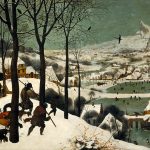
In 1565 he completed the famous seasonal landscapes that include The Hunters in the Snow (1565). The painting, executed in oil on wood panel, remains in the Kunsthistorisches Museum in Vienna. Its snowy landscape demonstrates Bruegel’s extraordinary ability to observe nature and human activity.
Other masterpieces followed. The Census at Bethlehem (1566), now in the Royal Museums of Fine Arts of Belgium in Brussels, transformed a biblical story into a vivid Flemish village scene. Around 1567, Bruegel painted The Peasant Wedding, one of the most famous depictions of rural life in European art.
These achievements occurred during the years of his marriage. While Mayken herself remains largely invisible in the historical record, she was part of the household in which these works were created.
The Children Who Continued the Legacy
The couple’s greatest legacy may have been their children. Their son Pieter Brueghel the Younger was born in 1564. Their son Jan Brueghel the Elder was born in 1568. Both would become distinguished painters.
Pieter Brueghel the Younger became known for producing versions of his father’s compositions. Through his efforts, many of Bruegel’s images survived and reached later generations. His workshop played a major role in preserving the elder Bruegel’s artistic reputation.
Jan Brueghel the Elder followed a different path. Renowned for landscapes, flower paintings, and collaborations with other masters, he achieved international success. His refined style earned admiration across Europe.
Together, the brothers transformed their father’s legacy into a lasting artistic dynasty. Their accomplishments ensured that the Bruegel name remained prominent long after Pieter Bruegel the Elder’s death.
The Role of Mayken Verhulst
The early deaths of many Renaissance parents often placed children in the care of relatives. Bruegel died in 1569 when his sons were still very young. As a result, Mayken Verhulst assumed an important role in their upbringing.
Historical sources credit her with helping guide and educate her grandsons. Whether through direct artistic instruction or broader encouragement, her influence appears to have been significant. Later writers specifically connected her to the artistic development of the next generation.
This contribution is sometimes overlooked because attention naturally focuses on the famous male painters. Yet without Mayken Verhulst’s efforts, the Bruegel artistic tradition might have developed very differently.
Her role highlights the importance of family continuity in Renaissance artistic culture.
Trust, Legacy, and the Mystery of Their Relationship
Bruegel’s Final Years
The late 1560s were turbulent years in the Low Countries. Religious tensions and political uncertainty affected daily life throughout the region. Bruegel’s paintings from this period often reveal an awareness of human conflict, folly, and endurance.
Despite these challenges, his artistic output remained remarkable. He continued producing ambitious compositions filled with detail, symbolism, and observation. His reputation among patrons remained strong.
In 1569, Bruegel died in Brussels. He was buried at the Church of Our Lady of the Chapel. His death came while his children were still young, cutting short a brilliant career that had lasted only a few decades.
For Mayken Coecke, the loss must have been profound. Yet once again, the historical record remains largely silent regarding personal emotions.
The Drawings Entrusted to Mayken
Another story preserved by Van Mander concerns Bruegel’s final wishes. According to the biographer, Bruegel instructed his wife to destroy certain drawings before his death. The reason allegedly involved concerns that the images might create difficulties for others.
The account cannot be independently verified. No surviving document from Bruegel confirms the instruction. Nevertheless, the story has intrigued historians for centuries because it hints at the sensitive political and religious climate of the period.
Whether the event occurred exactly as described remains uncertain. What can be said is that Van Mander considered the story important enough to preserve in his biography.
Even if the details cannot be proven, the tradition reflects a perception that Bruegel trusted his wife with matters connected to his artistic legacy.
Was It a Love Story?
The marriage of Pieter Bruegel and Mayken Coecke will probably always retain an element of mystery. No cache of personal letters has emerged. No memoir reveals intimate details of their relationship. The evidence simply does not exist.
Yet a lack of documentation should not obscure the significance of their partnership. Their marriage united influential artistic families, provided a stable household during Bruegel’s greatest years, and produced descendants who transformed European art.
What historians know with confidence includes the date of the marriage, the family connections involved, and the achievements of the children who followed. What remains uncertain includes the emotional details that modern readers often seek.
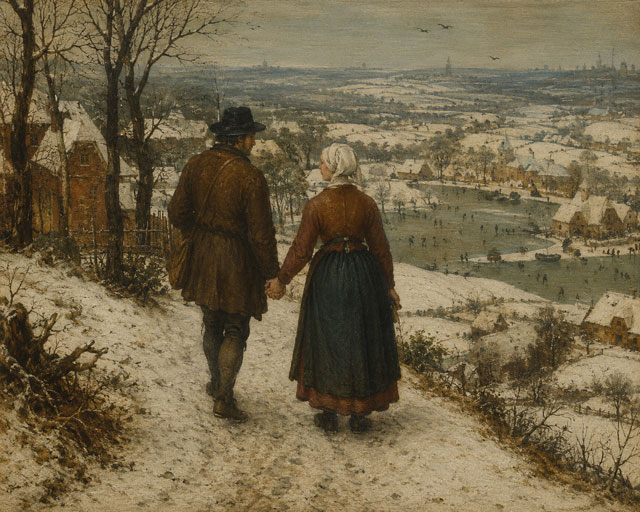
Perhaps that uncertainty is part of what makes the story compelling. Many lives from the Renaissance survive only in fragments. In the case of Pieter Bruegel the Elder and Mayken Coecke, those fragments reveal not a fairy-tale romance but something equally enduring: a family legacy that shaped the history of art for generations.