La Llorona remains one of the most haunting legends ever to emerge from Mexican folklore and the American Southwest. For centuries, storytellers described a ghostly woman dressed in flowing white who wanders beside rivers while mourning her lost children. Her cries echo through dark canals, moonlit bridges, and silent desert waterways with a sound said to freeze listeners in place. Even people who do not believe in ghosts often remember hearing the story as children and feeling genuine fear afterward.
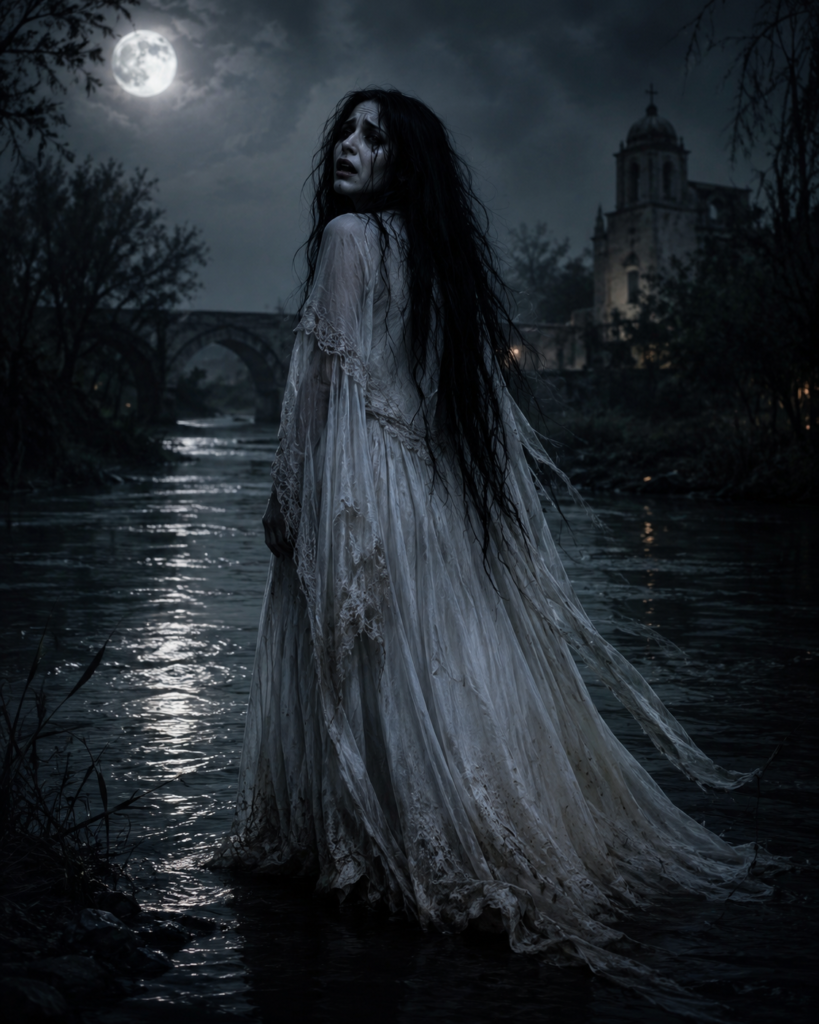
The emotional power of La Llorona comes partly from the vivid imagery attached to the legend. Wind moves through reeds while pale moonlight reflects across black water beneath cottonwood trees and old stone bridges. A tall woman appears in the distance with long dark hair hanging over her face while sorrowful cries drift through the night air. Artists, filmmakers, and writers have repeatedly returned to these visual elements because they combine beauty, tragedy, and terror in a single unforgettable image.
Why the Legend Still Terrifies People
The legend spread widely throughout Mexico during the colonial era of the 1500s and eventually moved northward into Texas, New Mexico, Arizona, and California. Oral storytelling traditions helped preserve the tale long before radio, television, or cinema existed. Families passed the story between generations beside fireplaces, kitchen tables, and outdoor gatherings during cool desert evenings. The tale survived because it felt emotionally real even when listeners doubted the supernatural details.
La Llorona also became a major source of artistic inspiration because the story naturally lends itself to dramatic visual scenes. Dark rivers, abandoned roads, candlelight, churches, graveyards, and storm clouds all became connected to the legend over time. Painters often depicted her as a tragic spirit rather than a simple monster because sorrow dominates the story more than violence. That emotional depth separates La Llorona from many ordinary ghost tales and helps explain why artists continue revisiting the legend today.
The Origins of La Llorona in Mexican Folklore
The exact origins of La Llorona remain uncertain because the story evolved across centuries through oral tradition. Some historians believe the legend may contain traces of older indigenous beliefs that existed before the Spanish conquest of Mexico in 1521. Bernardino de Sahagún, born in 1499 and deceased in 1590, recorded stories involving mysterious crying women connected to omens and spiritual warnings. These early accounts later became associated with the evolving La Llorona tradition.
Certain scholars connect the legend to the Aztec figure Cihuacóatl, a spirit associated with motherhood, sorrow, and wandering through the night. This connection remains partly speculative because folklore naturally changes across long stretches of time. Still, both figures share similarities involving grief, motherhood, and ghostly cries echoing through darkness. The blending of indigenous traditions with Spanish Catholic influences likely shaped the version recognized today throughout Mexico and the Southwest.
Early Colonial and Indigenous Influences
Spanish colonial culture transformed many local stories during the sixteenth and seventeenth centuries. Catholic teachings about sin, repentance, and eternal punishment strongly influenced folklore throughout colonial Mexico. Ghost stories became common ways of teaching morality while also entertaining listeners during long evenings in isolated settlements. La Llorona eventually emerged as one of the most emotionally powerful legends created during that cultural blending.
Artists later drew heavily from these older religious and folkloric themes when illustrating the story. Many traditional depictions place La Llorona near churches, graveyards, candlelit shrines, or rivers flowing beneath storm-filled skies. The contrast between sacred imagery and emotional despair gives the legend much of its visual richness. Even modern interpretations frequently preserve these colonial and spiritual influences because they create a strong atmosphere of sorrow and mystery.
The Most Common Version of the Story
The best-known version of the legend tells of a beautiful young woman who falls in love with a wealthy man and eventually has children with him. In many versions, the relationship collapses because the man abandons her for another woman or becomes ashamed of his lower-class family. Consumed by grief, rage, and humiliation, she takes her children to a river during the night. In a terrible moment that defines the legend, she drowns them before realizing the horror of what she has done.
Afterward, the woman becomes overwhelmed by guilt and despair. Some versions claim she throws herself into the river immediately after the deaths, while others say she dies wandering the countryside in madness. Her spirit then becomes trapped between life and death while endlessly searching for her children. The legend transformed this moment of grief into one of the most recognizable ghost stories in North America.
The Woman Who Lost Her Children
Artists and filmmakers frequently focus on the emotional climax of the story because it contains such powerful visual symbolism. A lonely river beneath silver moonlight creates a tragic stage for themes involving loss, betrayal, and irreversible choices. The white dress worn by La Llorona became especially important in visual interpretations because it symbolizes mourning, innocence, death, and ghostly purity all at once. Long dark hair obscuring her face also became a defining feature in paintings and films.
The famous cry of “¡Ay, mis hijos!” gives the legend much of its emotional force. Witnesses in folklore stories often hear the cries before seeing the spirit herself standing near the water. Painters sometimes depict her kneeling beside rivers with outstretched arms while mist rises around her beneath dark skies. These dramatic scenes helped establish La Llorona as both a terrifying supernatural figure and a tragic symbol of endless grief.
La Llorona as a Warning for Children
The legend served an important practical role in many communities throughout Mexico and the Southwest. Rivers, canals, drainage ditches, and flood zones posed real dangers long before modern barriers and warning systems existed. Parents used the story to keep children away from water after sunset when accidents became more likely. Fear became a tool for protection, and La Llorona became the warning carried through generations.
Children growing up during the late nineteenth and early twentieth centuries often heard these stories from parents and grandparents during nighttime gatherings. Dim lantern light, creaking wooden houses, and distant wind added atmosphere to the storytelling experience. Even skeptical listeners sometimes avoided rivers afterward because the images remained so vivid in their minds. The emotional and visual details of the legend made it especially memorable for young audiences.
Fear, Parenting, and Social Control
Artists frequently portrayed this aspect of the legend by showing children standing near dark rivers while a ghostly female figure watches from the background. Murals, illustrations, and folk paintings often emphasize the contrast between innocence and danger. The emotional tension created by these scenes helped preserve the story within communities for generations. Visual storytelling reinforced the cautionary purpose of the legend more effectively than simple verbal warnings alone.
The legend also survived because it appealed to universal fears connected to darkness, isolation, and sorrowful cries in the night. Similar cautionary spirits exist in folklore around the world, but La Llorona possesses a uniquely tragic emotional quality. Her grief makes her frightening while also inspiring pity and fascination from audiences. This balance between horror and sadness helped the story remain artistically powerful long after many other folk tales faded away.
La Llorona in the American Southwest
The legend moved northward with Mexican communities over several centuries and became deeply rooted in the American Southwest after 1848. Families in Texas, New Mexico, Arizona, and California continued sharing the story through oral traditions and local folklore gatherings. Rural roads, desert rivers, irrigation canals, and abandoned bridges became common settings for regional versions of the tale. These landscapes gave the legend a distinctly Southwestern atmosphere filled with dust, moonlight, and silence.
Stories about sightings spread widely during the twentieth century through schools, neighborhoods, and local ghost lore. Children often dared one another to visit canals or rivers at night while repeating stories about hearing cries in the darkness. Some communities developed highly localized versions tied to specific bridges or waterways. These regional variations added realism and helped the legend feel connected to actual places rather than distant mythology.
Texas, New Mexico, Arizona, and California Traditions
The landscapes of the Southwest strongly influenced artistic depictions of La Llorona. Painters frequently showed her moving through dry riverbeds, desert storms, or lonely rural roads lined with telephone poles and cottonwood trees. New Mexico artists sometimes incorporated adobe villages, mission churches, and acequias into their interpretations of the story. California and Arizona versions often emphasized empty desert space and glowing twilight skies.
Murals and folk art throughout the Southwest also helped preserve the legend visually during the twentieth century. Chicano artists especially embraced La Llorona as a symbol connected to cultural identity, grief, motherhood, and memory. Some reinterpretations portrayed her less as a monster and more as a tragic victim trapped by emotional suffering. These artistic approaches gave the legend new emotional depth while preserving its haunting atmosphere.
La Llorona in Popular Culture and Media
La Llorona entered popular culture long before modern horror films became common. Mexican cinema adaptations appeared during the 1930s and helped introduce the legend to wider audiences throughout Latin America. Writers, illustrators, and folklorists also published collections of regional ghost stories during the twentieth century. These books preserved many local versions of the tale that otherwise might have disappeared over time.
Modern horror films greatly expanded the legend’s international recognition during the late twentieth and early twenty-first centuries. Directors used dark rivers, abandoned churches, fog, candlelight, and ghostly whispers to create visually striking interpretations of the story. Some films emphasized violent supernatural horror while others focused more heavily on tragedy and emotional suffering. The strongest adaptations usually balanced fear with genuine sadness and atmosphere.
Films, Television, Literature, and Art
Visual artists repeatedly return to La Llorona because the legend offers such dramatic imagery. A lone woman standing beside black water beneath storm clouds immediately creates emotional tension and mystery. Painters often use muted blues, grays, silver moonlight, and pale whites to emphasize grief and isolation. The combination of feminine beauty and emotional anguish gives the legend unusual artistic power.
Literature and television adaptations also helped expand the legend into mainstream American culture. Some modern writers reinterpret La Llorona through themes involving immigration, family trauma, or generational memory while preserving the original emotional core. Illustrators and photographers continue experimenting with the iconic white dress, flowing hair, and shadowy riverside settings associated with the tale. These recurring visual motifs keep the legend recognizable even when artists radically reinterpret the story itself.
Why La Llorona Endures Today
The legend of La Llorona continues surviving because it combines visual beauty with deep emotional pain. Many ghost stories fade over time because they rely entirely on fear, but La Llorona also contains grief, guilt, betrayal, and sorrow. Audiences recognize these emotions immediately even when the supernatural elements feel exaggerated. That emotional realism gives the story lasting power across generations and cultures.
Modern audiences continue encountering La Llorona through films, artwork, social media, folklore festivals, and family storytelling traditions. Paranormal tourism and ghost tours throughout the Southwest sometimes include rivers or bridges associated with the legend. Younger generations often discover the story online before hearing older relatives retell local versions later in life. The legend therefore continues evolving while still preserving its central emotional themes.
Grief, Memory, and Cultural Identity
Artists remain fascinated with La Llorona because she represents both terror and tragedy at the same time. Her image standing beside dark water beneath moonlight creates one of the most visually memorable scenes in all folklore. Responsible historical speculation suggests the legend survived partly because communities recognized emotional truth beneath the supernatural imagery. Human grief, regret, and longing remain timeless experiences regardless of historical era or culture.
The final image associated with La Llorona continues haunting audiences because it feels cinematic, poetic, and emotionally raw all at once. Wind moves across the water while distant sobbing echoes beneath ancient trees and empty skies. A pale figure slowly disappears into darkness while searching endlessly for something that can never be recovered. More than five hundred years after the Spanish conquest of Mexico began in 1519, the weeping woman still wanders through the artistic imagination of the Southwest.
Key Takeaways
- La Llorona combines folklore, emotional tragedy, and visually powerful imagery.
- The legend likely evolved from both indigenous traditions and Spanish colonial influences.
- Artists frequently depict La Llorona near rivers, canals, bridges, and moonlit landscapes.
- The story became deeply connected to Mexican and Southwest cultural identity.
- Films, paintings, murals, and literature continue reinventing the legend today.
FAQs
- What does the name La Llorona mean?
- Why is La Llorona always associated with water?
- Did the legend begin before the Spanish conquest of Mexico?
- Why do artists find La Llorona visually inspiring?
- Which regions of the American Southwest most strongly preserve the legend?