The earliest art of Budapest lies half-buried beneath layers of war, rebuilding, and shifting regimes, but its bones are remarkably intact. Before the city of Budapest even existed as a unified entity, the twin settlements of Buda and Pest grew in the shadow of kings, bishops, and invaders, forming an artistic identity shaped as much by fracture as by flourish. In the medieval period, the art of the region was largely defined by religious patronage, international influence, and the slow assertion of a local visual language that would later blossom into full national expression.
Royal patronage and sacred art
The defining figure of early Hungarian statehood—and by extension, its artistic foundations—was King Stephen I, canonized as Saint Stephen, who ruled from 1000 AD and established Christianity as the state religion. Under his reign and those of his successors, churches became the central platforms for visual creativity. These early sacred structures, primarily Romanesque in style, were decorated with frescoes, altarpieces, reliquaries, and mosaics—few of which have survived in situ due to later wars and architectural transformations, but whose traces remain in fragments, records, and the surviving floor plans of ecclesiastical sites.
The medieval artist in Hungary was often anonymous and itinerant, moving along networks that extended into Bavaria, Northern Italy, and even the Byzantine sphere. Hungary, perched on the crossroads of East and West, absorbed motifs from both sides: Romanesque capitals alongside Eastern iconographic traditions. The country’s early churches, particularly in the region surrounding Esztergom and Székesfehérvár, reveal a taste for monumental religious storytelling—biblical cycles rendered in vivid color, sometimes incorporating localized saints or mythic figures tied to Hungarian history.
By the 13th century, after the devastating Mongol invasion of 1241–42, Hungary entered a period of reconstruction that saw the building of stronger fortifications and more ambitious ecclesiastical complexes. The royal family and aristocracy commissioned elaborate chapels and cloisters, many of which featured painted ceilings, carved tombs, and decorative tilework. While Pest remained largely a trading town, Buda—home to the royal court—emerged as a center of higher artistic aspiration.
Gothic echoes in Buda Castle and churches
The clearest medieval artistic statement in Budapest proper comes with the Gothic age, particularly after King Béla IV rebuilt Buda in the 13th century. The establishment of Buda Castle around 1247 and the subsequent development of Matthias Church (then known as the Church of Our Lady) marked a shift toward more monumental and visually expressive architecture. The Gothic style—pointed arches, ribbed vaults, flying buttresses—offered not only structural innovation but a new form of visual drama.
Under the reign of Sigismund of Luxembourg (r. 1387–1437), the court in Buda rivaled others in Europe in terms of cultural ambition. Sigismund’s court attracted artists and craftsmen from Bohemia, Italy, and the German-speaking lands, creating an international style that blended flamboyant Gothic ornamentation with the stately verticality of High Gothic. Stained glass, miniature painting, and gilded altarpieces flourished during this period, often with coats of arms or royal insignia prominently displayed. These objects were not simply decorative but deeply political, asserting the legitimacy and cosmopolitanism of the Hungarian crown.
Perhaps the most culturally extravagant monarch of the medieval period was Matthias Corvinus (r. 1458–1490), whose Renaissance court introduced humanist aesthetics and classical motifs even as Gothic forms remained dominant in architecture. While the famous Bibliotheca Corviniana—a vast collection of illuminated manuscripts—was largely looted or destroyed after the Ottoman conquest, its reputation was such that even Cosimo de’ Medici admired it. The few surviving Corvina codices, now dispersed among European libraries, reveal a sophisticated blend of Gothic illustration and Italianate elegance, underscoring the wide reach of Budapest’s cultural network.
Traces of artisans and foreign craftsmen
Throughout medieval Budapest, evidence of artistic life emerges not only in great halls and chapels but in modest, often overlooked details. Tombstones, merchant seals, metalwork, and devotional objects provide a more grounded portrait of the city’s artistic fabric. Guilds played a crucial role, particularly from the 14th century onward, regulating craftsmanship and passing on technical skills through apprenticeships. While guild records are often dry in tone, they mark the steady rise of a local artisan class—goldsmiths, stonemasons, woodcarvers—whose work underpinned the visual life of the city.
Three particularly vivid remnants from this period deserve brief mention:
- A carved limestone Madonna from the Church of Mary Magdalene, likely made by a Bohemian sculptor around 1400, showing a delicate, expressive realism in the child’s curled fingers and the Virgin’s downcast gaze.
- Fragments of medieval murals discovered during 20th-century renovations in the basement of houses near the Castle District, suggesting that private homes—at least among the elite—were occasionally adorned with religious scenes or heraldic emblems.
- An engraved brass processional cross, believed to have been made in Buda in the late 15th century, incorporating both Gothic tracery and early Renaissance foliate motifs, hinting at stylistic hybridization.
In some sense, the greatest medieval art of Budapest was always in motion—either destroyed by conquest, preserved in fragments, or carried off as diplomatic gifts and war trophies. But the cumulative weight of these remains, along with surviving architectural frameworks, offers a strong sense of an early city conscious of image, memory, and sacred space.
Despite the scarcity of complete artworks from the medieval period, Budapest’s early artistic life was not primitive or peripheral. It was provisional, adaptive, and frequently interrupted—but it was also richly embedded in broader European currents. The medieval roots of Budapest’s art history are neither glorious ruins nor mere preludes. They are living foundations, still shaping how the city sees itself today.
Under Crescent and Cross: Ottoman Occupation and Visual Culture
In 1541, the city of Buda fell to the Ottoman Empire, inaugurating nearly 150 years of foreign rule that transformed the political and religious landscape of central Hungary. Unlike the sweeping iconoclasm often associated with Islamic conquest, the Ottoman administration in Buda was selective in its erasures and adaptive in its appropriations. This period did not produce an abundant visual legacy in the conventional Western sense, yet the absence of traditional Christian art was itself a defining characteristic of the era. Ottoman Budapest became a space of cultural tension, layered silences, and foreign elegance—more architectural than painterly, more spiritual than pictorial, yet unmistakably artistic in its own right.
The paradox of absence: Islamic rule and Christian heritage
The Ottomans, while not zealously iconoclastic in every instance, nonetheless oversaw the conversion or repurposing of numerous Christian sites. Churches were transformed into mosques, their interior images often whitewashed, frescoes obliterated or covered, and crucifixes removed. The Church of Mary Magdalene, for instance, was turned into a mosque, stripped of its Christian liturgical imagery. In some cases, original structures were preserved externally while their interiors were adapted to suit Islamic practice. This visual suppression created a paradoxical aesthetic: one where architecture remained present but religious imagery became spectral.
Christian art did not cease to exist during the occupation, but it was pushed to the margins—literally and figuratively. In royal Hungary (the western and northern parts not under Ottoman rule), Catholic and Protestant artistic production continued with vigor. Within Ottoman-controlled Buda, however, religious painting, sculpture, and monumental decoration were subdued. This absence is meaningful. It represents a different kind of visuality: one in which political authority was asserted less through images than through space, ritual, and control over public visibility.
Yet this erasure was never absolute. Small chapels, clandestine worship spaces, and traveling artisans preserved fragments of older traditions. Christian pilgrims and clerics recorded with dismay the state of their former churches, and their accounts—though filtered through grief and propaganda—preserve an indirect testimony to the changed visual culture of the city. Absence becomes a historical document in itself, inscribed not in surviving objects but in missing ones.
Bathhouses, tiles, and the aesthetics of conquest
Where Ottoman Budapest did create a positive visual legacy was in its urban infrastructure, especially through the construction of baths, fountains, and civic buildings. The Ottomans, inheriting a Roman and Byzantine love of bathing, built at least a dozen hammams in Buda and its environs. Several still stand today, including the Rudas Baths, Király Baths, and Veli Bej Baths—among the oldest functional Turkish bathhouses in the world. These structures offer a rare window into the aesthetic vocabulary of Ottoman Budapest: domes pierced by circular skylights, elegant brickwork, and restrained but sophisticated tile ornamentation.
The aesthetic of the Turkish bath was not one of excess, but of serene proportion and elemental sensuality—heat, water, light. Inside the Rudas Baths, for example, one finds a central octagonal pool beneath a low dome, the interior lit only by diffuse shafts of light through colored glass. The geometry and ambient sound of dripping water create an immersive spatial experience that borders on the spiritual. It is art without representation, beauty drawn from proportion and function.
Ottoman inscriptions and tile panels, though rare in Hungary compared to their abundance in the imperial cities of Istanbul or Edirne, did appear in some mosques and civic spaces. Calligraphic friezes—often verses from the Qur’an in Arabic script—provided visual focus in the absence of figurative art. These decorative programs, while modest, left a cultural imprint, especially in shaping the stylistic sensibility of later architects and restorers.
Three enduring Ottoman contributions to Budapest’s material culture:
- The tomb (türbe) of Gül Baba, a dervish poet and mystic who died during the 1541 campaign, remains a pilgrimage site. The octagonal mausoleum, surrounded by gardens, embodies a Sufi quietude that sharply contrasts with the martial brutality of conquest.
- The water infrastructure—including aqueducts and fountains—demonstrates engineering sophistication paired with understated elegance, built to serve both hygienic and spiritual needs.
- The mosque of Pasha Qasim, largely demolished in the 17th century, was known for its delicate minaret and central dome, echoing the forms of Balkan Ottoman religious architecture.
The Ottoman conquest may have stripped Buda of much of its medieval Christian art, but it introduced an alternative aesthetic rooted in discipline, clarity, and sacred geometry. These gestures—domes instead of murals, baths instead of chapels—constitute their own form of visual authority.
Survivals and silences in art from 1541 to 1686
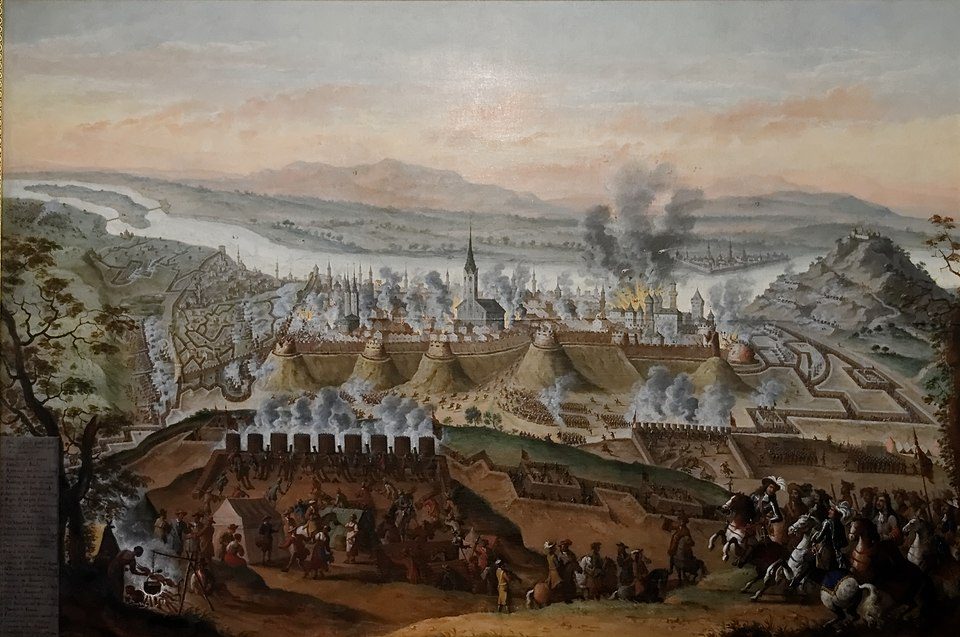
The Ottoman period in Hungary concluded with the Habsburg reconquest of Buda in 1686, an event marked by fierce fighting and the destruction of many Turkish structures. As the city transitioned back into Christian control, a new wave of Catholic Baroque art would rise from the ashes—but not without a trace of what came before. Despite widespread demolition, fragments of the Ottoman presence remained embedded in the city’s fabric, sometimes literally: minaret foundations repurposed into church bell towers, mosque stones folded into new buildings.
Hungarian memory of the Ottoman occupation has long been ambivalent. Nineteenth-century nationalist historians portrayed it as a time of cultural darkness and foreign domination. Yet modern restoration efforts, particularly since the 1990s, have attempted to acknowledge the aesthetic and architectural contributions of the period. The baths are now heritage sites, and the Gül Baba tomb has been restored in cooperation with Turkey. This uneasy reconciliation with the Ottoman past continues to shape debates over public space and historical interpretation.
The artistic legacy of Ottoman Budapest is not one of abundance, but of residue. It exists in silence and structure, in what was removed and what endured. This makes it especially compelling—less a visual feast than a visual haunting, whose traces continue to surface in the city’s stones, foundations, and fluid sense of historical identity.
The Baroque Boom: Habsburg Restoration and Catholic Splendor
In the aftermath of the Ottoman withdrawal and the bloody siege of 1686, Buda stood gutted—its churches desecrated, its civic buildings collapsed, and its population dispersed or dead. What followed was not simply a rebuilding, but an orchestrated visual reassertion of Catholic and imperial identity. Under Habsburg rule, Budapest became a key outpost in the cultural map of the Counter-Reformation, and the Baroque style served as its rhetorical arm. Swelling curves, gilded altars, and theatrical facades did more than beautify the city—they proclaimed allegiance, authority, and divine favor in a landscape still haunted by memory and rubble.
Jesuit influence and the revival of religious art
The Jesuits arrived in Hungary with clear purpose and precise aesthetic sensibilities. For them, architecture and visual culture were tools of pedagogy and persuasion. In Buda and Pest, they founded schools, churches, and colleges, establishing themselves as cultural as well as spiritual arbiters. The first major Jesuit building in post-Ottoman Buda was the Church of St. Anne, a masterful fusion of grandeur and clarity, designed to evoke spiritual awe while instructing the faithful in doctrinal orthodoxy.
The broader revival of religious art in the late 17th and early 18th centuries was driven by this combination of institutional ambition and material reconstruction. Artists, many of them imported from Austria, Bavaria, and Italy, brought with them the techniques and sensibilities of the High Baroque. Altarpieces, ceiling frescoes, reliquary shrines, and processional sculpture reanimated sacred spaces with a sense of movement, light, and celestial authority. In contrast to the visual austerity of the Ottoman era, Baroque art shouted—sometimes literally, in the form of trumpet-bearing angels carved in full tilt from high niches.
Painters like Johann Cymbal and Franz Anton Maulbertsch were commissioned to create vast fresco cycles in churches and monasteries across the city. Their work, steeped in illusionism and emotional immediacy, aimed to collapse the distance between heaven and earth. Dramatic chiaroscuro, exaggerated foreshortening, and theatrical composition turned domes and vaults into swirling heavens. Maulbertsch’s frescoes in the Inner City Parish Church in Pest remain among the finest Baroque works in Hungary, a dense theological spectacle painted across stuccoed vaults.
Buda’s rebirth through architecture and iconography
Urban transformation under the Habsburgs was not only a matter of religious assertion but also of imperial representation. Buda Castle, heavily damaged during the siege, was gradually rebuilt into a stately complex that fused military function with Baroque ceremony. The project unfolded in stages, driven by imperial architects like Johann Hillebrandt and commissioned directly by the court in Vienna. The reconstructed palace was more than a royal residence—it was an emblem of the city’s reintegration into the Holy Roman Empire.
Public squares were redesigned with symmetry and spectacle in mind. Fountains and Marian columns—the tall, twisting monuments dedicated to the Virgin Mary, often erected in gratitude for deliverance from plague—sprang up across Buda and Pest. These structures fused theological devotion with political message: God had saved the city, but so had the emperor, His secular arm. The architecture of this period was as much about verticality as visibility. Towers and steeples reclaimed the skyline once punctuated by minarets, replacing them with crosses and bells.
Sculpture too played a civic role. Stone saints stared down from niches above doorways; allegorical figures of Justice, Wisdom, and Strength adorned palaces and public buildings. In a city still populated by Croats, Serbs, Germans, Jews, and Hungarians, this symbolic vocabulary offered a shared—if imposed—framework of imperial virtue and divine right. It created a stage for belonging within a Habsburg worldview, one where art was both moral instruction and spatial choreography.
Three hallmark features of Budapest’s Baroque architectural renewal:
- The Matthias Church, restored and reimagined over successive decades, retained its Gothic bones but acquired a new Baroque pulpit, high altar, and sacristy embellishments that reframed the old structure as triumphantly Catholic.
- The Batthyány Square area, once the Ottoman administrative center, became a hub of noble residences and religious institutions, showcasing ornate staircases, stuccoed ceilings, and wrought-iron balconies in the Viennese manner.
- Pest’s burgeoning riverfront began to reflect a different kind of Baroque—less fortresslike, more mercantile—with long facades, merchant houses, and elegant civic buildings that nodded to imperial wealth.
Nobility, nationalism, and myth-making in public sculpture
While the Habsburgs imposed an imperial aesthetic, the Hungarian nobility also sought to assert a parallel identity—one that blended loyalty to the crown with local mythmaking. Public sculpture became a key battleground for this emerging dual consciousness. Statues of Hungarian kings and saints—Stephen, Ladislaus, Imre—were commissioned to populate the newly Catholic landscape. These figures were not merely religious icons; they were national symbols, rendered in heroic poses and often placed in prominent civic spaces to assert continuity with a medieval past now reimagined as glorious.
The visual mythology of Hungary as the eastern bulwark of Christendom found renewed expression in this era. Reliefs depicting the Battle of Mohács or the Siege of Buda cast Hungarian warriors as martyrs of Europe, their sacrifice redeemed by Baroque triumph. These works often featured anachronistic costumes, exaggerated musculature, and dramatic gestures—a theater of memory, stylized and sanctified.
In parallel, aristocratic patronage shaped domestic interiors and chapel programs. The Esterházy and Pálffy families, among others, commissioned palatial townhouses with intricate stucco ceilings, painted domes, and personal iconographies mixing heraldry with Catholic symbolism. These private displays were not mere vanity—they were political declarations, aligning family legacy with imperial destiny.
The Baroque period in Budapest was not only about Catholic renewal or architectural repair. It was about defining whose city it had become, and on what terms. Art became the mechanism by which history was rewritten, territory re-sanctified, and identity choreographed into a coherent spectacle. The wounds of conquest were buried beneath gold leaf and volutes, but their outline remained visible—shaping both the art and the city that emerged from the rubble.
Classicism, Empire, and Enlightenment: 18th to Early 19th Century
In the century that followed the Baroque revival, Budapest entered a subtler, more rational artistic phase—one marked less by grandeur than by order, symmetry, and intellectual aspiration. Classicism arrived in Hungary not as a reaction against the Baroque but as its natural evolution, shaped by Enlightenment ideals and the increasing bureaucratization of empire. Under the watchful eyes of Vienna and a growing native intelligentsia, art in Buda and Pest became a vehicle for progress, discipline, and national self-definition. While much of Europe was swept into revolutionary fervor, Budapest built academies, museums, and boulevards—laying the groundwork for its eventual cultural independence.
The Academy, antiquity, and the rise of the intellectual artist
The Enlightenment in Hungary was a cultural movement before it was a political one. Its champions were not revolutionaries but reformers: clerics, noblemen, and scholars seeking to modernize society through education and civic institutions. Within this atmosphere, art took on a new function—no longer purely devotional or decorative, it was increasingly seen as a medium of instruction, moral elevation, and historical inquiry.
The founding of art academies played a decisive role. Though Hungary lacked a fully independent academy in this period, the influence of the Vienna Academy of Fine Arts was pervasive. Hungarian artists studied there in increasing numbers, returning with rigorous training in anatomy, perspective, and classical composition. The Viennese curriculum, rooted in the ideals of Winckelmann and Neoclassical aesthetics, taught that beauty was a matter of proportion, clarity, and moral purpose. These ideals began to dominate public commissions in Budapest, where the artist was now expected to be not just a craftsman, but a thinker and educator.
Portraiture flourished in this environment, particularly among the urban elite and enlightened nobility. These were not lavish Baroque likenesses but composed, psychologically restrained images that emphasized reason and decorum. Artists like József Ádám Mányoki and István Ferenczy produced portraits of philosophers, poets, and politicians—men depicted not as martyrs or warriors, but as rational agents in a well-ordered world. Their sober palettes and balanced compositions reflected a new moral order, one in which human dignity and civic virtue replaced divine revelation as the central themes of art.
Urban transformation and monumental symmetry
Architecture was the clearest expression of Enlightenment classicism in Budapest. Pest, in particular, became the canvas for an urban experiment in rational planning and public virtue. The old medieval street grid gave way to boulevards, squares, and palatial facades designed with mathematical precision. Neoclassical buildings rose along the banks of the Danube and in the expanding districts beyond the old city walls, their columned porticoes and triangular pediments asserting order and stability in a city still recovering from centuries of conflict.
The construction of the Royal Palace on Castle Hill, redesigned under the guidance of architects like Karl Pollack and later Mihály Pollack (no relation), gave visual form to the Enlightenment dream of enlightened monarchy. Its broad, symmetrical wings and restrained decorative program stood in contrast to the exuberance of earlier Baroque forms. Even the choice of materials—smooth limestone, unadorned cornices—reflected a shift in aesthetic values, from divine spectacle to civic decorum.
At the same time, Pest saw a rapid expansion of public institutions built in the Neoclassical style. The University of Pest, the National Museum, and various administrative buildings adopted a common architectural vocabulary: Roman columns, symmetrical facades, and minimalist interiors intended to reflect the ideals of rational governance and scientific inquiry.
Three representative Neoclassical landmarks from this period:
- The Hungarian National Museum (1837–47), designed by Mihály Pollack, features a grand staircase, ionic colonnade, and a restrained sculptural program that elevates history to civic myth.
- The Ludovica Military Academy, blending martial function with classical form, underscores the integration of state, education, and discipline.
- The Szépítő Társaság villa projects in Pest’s outskirts—private homes built in Neoclassical idiom by the city’s bourgeois elite—mark the spread of Enlightenment aesthetics into domestic life.
Neoclassicism as a cultural strategy of empire
The use of Neoclassicism in Budapest was never purely aesthetic. It was a tool of imperial integration, aligning Hungary’s capital visually and ideologically with the great cities of the Habsburg realm. By adopting a Roman-derived architectural vocabulary, Budapest placed itself within a lineage of law, order, and civilized authority—a visual rhetoric that suited both imperial ambition and emerging national pride.
But this integration was never seamless. Hungarian artists and intellectuals began to chafe at the cultural dominance of Vienna, even as they studied in its academies and followed its styles. They sought to infuse classical forms with local content—mythic heroes from Hungarian legend, historical scenes drawn from national battles, and allegories of Magyar virtue. The challenge was to remain within the accepted visual language of empire while subtly asserting a separate cultural identity.
This tension surfaced most clearly in public monuments and history painting. Artists like Miklós Barabás, who would later become a key figure in the 19th-century national revival, began their careers painting within Neoclassical constraints but gradually pushed the boundaries. Their works, while formally loyal to academic standards, began to emphasize Hungarian subjects, landscapes, and historical episodes—planting the seeds for a more distinct visual nationalism.
In many ways, Budapest’s Neoclassical phase was a negotiation: between empire and emerging nationhood, between imported style and local substance. It lacked the emotional charge of the Baroque or the flamboyance of the later Secession, but it laid down the aesthetic infrastructure for both—a framework of civic dignity, intellectual clarity, and artistic professionalism that would soon be tested by revolution and redefinition.
Romantic Revolutions: Nationalism and the Search for a Hungarian Style
By the mid-19th century, the sober elegance of Neoclassicism could no longer contain the political passions or artistic ambitions rising in Hungary. Budapest—still not yet officially unified but increasingly operating as a cultural metropolis—became a crucible of Romantic nationalism. Artists and intellectuals, galvanized by political unrest and historical nostalgia, sought a visual language that could express Hungarian identity without relying on foreign idioms. It was not enough to build in the style of Rome or paint in the style of Vienna. The age demanded something rawer, more emotive, more Hungarian.
Mihály Munkácsy and the moral drama of painting
Few artists capture the spirit of Romantic Hungary more completely than Mihály Munkácsy (1844–1900). Born into modest circumstances and trained partly in Munich and Paris, Munkácsy brought an international technique to national subject matter, creating works that fused social critique with historical gravitas. His breakthrough painting, The Condemned (Az elítélt) (1869), stunned audiences with its somber palette and psychological intensity—a stark portrayal of a man awaiting execution, surrounded by silent judges and watchful guards. Here was Romanticism stripped of ornament: a theatrical, chiaroscuro-infused moral confrontation.
Munkácsy’s later historical works took on increasingly monumental themes, particularly from the Christian and Hungarian past. His Christ Trilogy—especially Christ Before Pilate (1881)—married biblical grandeur with almost operatic intensity, while his massive canvas The Honfoglalás (Conquest of the Carpathian Basin, 1893), created for the Hungarian Parliament, tried to forge a national mythos through sheer visual scale. These paintings were not only about narrative; they were national sermons in oil.
Munkácsy also exemplified a new type of Hungarian artist: internationally exhibited, technically virtuosic, but deeply invested in Hungary’s cultural mission. His success abroad (especially in Paris) was both a source of pride and a point of tension for Hungarian critics, some of whom questioned whether cosmopolitan acclaim diluted national authenticity. Yet his impact was undeniable. He made painting central to Hungary’s emerging modern identity and redefined what a Hungarian subject could look like on canvas.
Lajos Kossuth and symbolic imagery of resistance
While Munkácsy painted drama, others sought direct allegory. The 1848–49 Revolution, which aimed to establish Hungarian independence from the Habsburg Empire, left deep marks on the visual culture of the time—even after its military failure. Lajos Kossuth, the movement’s charismatic leader, became an icon in both literal and figurative senses. His portrait, reproduced in engravings, lithographs, and oil paintings, was elevated to the status of a national relic.
Artists like Soma Orlai Petrich and Bálint Kiss depicted scenes from the revolution with a clear didactic purpose. Whether showing Kossuth addressing Parliament, soldiers taking the oath, or battlefield heroism, their works aimed to preserve memory and foster civic pride. The style was often stiff, the compositions theatrical—but the emotion was genuine, and the audience receptive.
Even in the repression that followed the failed revolution, visual culture became a subtle form of resistance. Folk motifs—especially embroidery, ornamental furniture, and rural costume design—began to be collected, reproduced, and aestheticized in urban salons as markers of national authenticity. In this way, a decorative vocabulary rooted in peasant traditions entered the visual mainstream, not as mere ethnographic curiosity but as a coded assertion of Hungarian continuity and independence.
Three prominent visual strategies that emerged in this Romantic-nationalist climate:
- Historical painting as national allegory: Artists used scenes from medieval Hungary, especially the reigns of Saint Stephen and Matthias Corvinus, to reflect contemporary political ideals.
- Iconography of sacrifice and martyrdom: Images of fallen revolutionaries and idealized soldier-saints conveyed collective suffering and moral righteousness.
- Elevation of folk motifs: Stylized renditions of Hungarian embroidery patterns, traditional dress, and pastoral scenes became national symbols, especially in decorative arts and illustration.
The Hungarian Millennial Exhibition and visual nationalism
Nowhere was the fusion of nationalism and art more forcefully staged than in the Millennial Exhibition of 1896. Held in Budapest’s City Park (Városliget) to commemorate the thousandth anniversary of the Magyar conquest of the Carpathian Basin, the exhibition was a sprawling celebration of Hungarian culture, progress, and continuity. It was also a calculated spectacle of national legitimation, produced in the context of the Austro-Hungarian Compromise of 1867 and the ongoing balancing act between Hungarian autonomy and imperial structure.
The exhibition grounds were a visual symphony of architectural revivalism and symbolic display. The most enduring creation was the Millennium Monument on Heroes’ Square—a semicircular colonnade populated by statues of great Hungarian rulers, warriors, and cultural figures, anchored by a towering column crowned with Archangel Gabriel holding the Hungarian crown. The sculpture ensemble, though completed only in the early 20th century, drew heavily from Romantic ideals: heroism, sacrifice, divine destiny.
In parallel, temporary pavilions at the exhibition recreated medieval castles, village houses, and scenes from nomadic Magyar life, staged for both education and entertainment. Painters, sculptors, architects, and curators worked together to produce a historical panorama that was at once nostalgic and forward-looking—a complex blend of myth and modernity.
Critics of the time noted the tension between historical pageantry and contemporary artistic innovation. Some worried that the nation was too reliant on past glories, while others argued that such grand historical gestures were necessary to solidify a distinct visual identity in a politically fragile empire. For all its contradictions, the Millennial Exhibition crystallized the Romantic-nationalist project: to create a shared visual memory that could support an imagined political future.
By the dawn of the 20th century, Budapest had become a capital in both style and ambition. Its painters, architects, and patrons had moved beyond emulation and into assertion. Romanticism in Hungary was not only about emotion and beauty—it was about belonging, memory, and the conviction that national destiny could be painted, built, and imagined into being.
The Secession Sparks: Art Nouveau and the Budapest Turn
By the late 19th century, the Romantic historicism that had shaped Budapest’s visual culture for decades began to feel heavy, exhausted, and inward-looking. Artists and architects sought liberation from revivalist forms and nationalist clichés, turning instead to nature, abstraction, and sensual line. In Vienna, the Secession had declared its aesthetic independence in 1897. In Budapest, a parallel but distinct movement soon emerged—less defiant than its Austrian counterpart, but no less ambitious in its goal to reshape the language of beauty. The city entered the Art Nouveau age with unexpected energy, producing a wave of buildings, objects, and images that married folk motifs with modern ornamentation, and national identity with international flair.
Ödön Lechner and the Hungarian architectural imagination
The defining figure of Hungarian Art Nouveau was architect Ödön Lechner (1845–1914), sometimes called “the Hungarian Gaudí.” Trained in the Germanic tradition but restless with its constraints, Lechner envisioned a new architectural style that would be both forward-looking and rooted in Hungary’s past. He rejected the eclecticism of historicism—where Gothic, Renaissance, and Baroque styles were applied like costumes—and instead pursued a vocabulary based on organic forms, national motifs, and structural innovation.
Lechner’s seminal buildings still define Budapest’s architectural profile. The Museum of Applied Arts (1896), with its green Zsolnay ceramic roof, undulating façade, and intricate floral ornamentation, stands as a manifesto of his vision. Rather than imitate foreign models, Lechner drew on motifs from Hungarian folk art, Persian and Indian design, and the sinuous curves of natural growth. He saw architecture not just as structure, but as a cultural narrative encoded in form and surface.
Another key work, the Royal Postal Savings Bank (1901), showcases his mature style: asymmetric, color-saturated, and deeply textural, with peacock motifs, swirling ironwork, and glazed tiles that shimmer like beetle wings. Critics at the time were divided—some found the work eccentric, even excessive—but his influence was irreversible. He had proven that Hungarian architecture could be modern without being derivative.
Lechner’s legacy was institutional as well as aesthetic. He inspired a generation of architects and designers—such as Marcell Komor and Dezső Jakab—who continued to develop the Magyar Szecesszió (Hungarian Secession) into a coherent visual language. While their work retained Art Nouveau’s international curves and lightness, it was always filtered through local patterns, colors, and materials.
Zsolnay ceramics, floral façades, and the idea of beauty
Central to the Secessionist project was the collaboration between architects and decorative artists. Chief among them was the Zsolnay factory in Pécs, which became synonymous with Hungarian Art Nouveau. Founded in the 1850s but transformed under the artistic direction of Vilmos Zsolnay, the firm developed new glazing techniques—especially the iridescent eosin glaze—that allowed ceramics to gleam like metal or stone. These tiles, vases, and architectural elements became key components in Budapest’s new buildings.
Zsolnay’s ceramics weren’t just decorative; they were part of a larger aesthetic program. Architects integrated them into facades, cornices, and roofs, transforming buildings into textured, polychrome compositions. The ceramic roof tiles of the Museum of Applied Arts, the Matthias Church’s restored surface, and even smaller tenement houses along the Grand Boulevard attest to this shared vision of a city made beautiful by craft.
This philosophy extended to interior design as well. Stained glass, custom furniture, embroidered textiles, and ornamental ironwork all participated in the total artwork ideal (Gesamtkunstwerk), in which every element of a building—from doorknob to ceiling vault—contributed to its overall harmony. Hungarian designers did not see this as mere ornament. For them, beauty was a form of truth: a way to express cultural memory, emotional resonance, and spiritual health.
Three essential characteristics of Hungarian Secessionist design:
- Fusion of folk and cosmopolitan: While drawing on international Art Nouveau currents, Hungarian artists integrated motifs from peasant embroidery, wooden carvings, and oral traditions.
- Love of asymmetry and motion: Buildings flowed rather than stood; walls undulated; staircases spiraled; facades blossomed.
- Material experimentation: Glazed ceramics, wrought iron, etched glass, and stylized wood defined both exteriors and interiors, transforming craftsmanship into modern visual language.
Graphic design, typography, and modern ornamentation
Art Nouveau in Budapest was not confined to buildings. It infiltrated print culture, advertising, fashion, and exhibition design. Poster artists like Sándor Bortnyik and Lajos Kozma created sinuous, stylized advertisements that turned text and image into a unified composition. Typefaces grew more decorative, borders more organic, and even political publications flirted with floral arabesques.
Magazines such as Művészet (“Art”), founded in 1902, became platforms for visual experimentation and cultural commentary. Its covers, illustrations, and layouts exemplified a new graphic sophistication: flat colors, symbolic shapes, and elegant scripts borrowed from Japanese prints and Celtic manuscripts, but made to serve local content.
The visual experiments of this period reflected a deeper social transformation. Budapest was growing rapidly—demographically, economically, architecturally—and its citizens were learning to see themselves in new ways. The Secessionist aesthetic offered a vision of urban life that was optimistic, sensuous, and modern. It suggested that art was not a luxury but a daily necessity, and that beauty could be a form of citizenship.
At the same time, there were critics. Some saw Art Nouveau as frivolous, overly feminine, or apolitical. As Hungary entered the turbulent decades of war and ideological conflict, the decorative optimism of the Secession would come to seem like a gilded interlude. But in retrospect, it was far more than that. It was a turning point in Budapest’s self-image—a moment when the city embraced its role not just as a provincial capital, but as a cultural engine with its own distinct signature.
The Hungarian Secession did not merely copy the Art Nouveau styles of Paris or Vienna. It reimagined them through a national lens, producing works that were both beautiful and serious, rooted and experimental. In doing so, it gave Budapest one of the most coherent and original visual identities in early 20th-century Europe—a city that still blooms, in tile and line, with the promise of that era.
Between Empire and Utopia: Avant-Garde Currents, 1900–1919
In the early decades of the 20th century, Budapest’s art world experienced a volatile blend of aesthetic innovation and political radicalism. The decorative harmony of the Secession gave way to sharper, more experimental forms. As the Austro-Hungarian Empire staggered toward collapse, young Hungarian artists looked to Paris, Berlin, and Moscow for new models—seeking to dismantle the academic hierarchies that had governed art production for over a century. Their experiments were often unruly, frequently utopian, and sometimes brutally suppressed. Yet in a short span of years, Hungary produced one of the most ambitious avant-garde scenes in Europe—marked by bold abstraction, leftist ideology, and a deep faith in art’s power to remake the world.
The Eight (A Nyolcak) and the Hungarian Fauves
The first organized challenge to academic norms came from a group of painters known as The Eight (A Nyolcak), formed in 1909. Comprised of artists such as Károly Kernstok, Róbert Berény, Dezső Czigány, and Bertalan Pór, the group was influenced by Post-Impressionism, Fauvism, and Cézanne’s structural experiments. Their debut exhibition in Budapest shocked conservative audiences: instead of careful figuration and nationalist themes, they offered explosive color, broken form, and psychological ambiguity.
Kernstok’s Riders at the Waterside (1910) exemplified their approach—broad planes of bright, unnatural color, simplified figures, and a dreamlike atmosphere that owed more to Gauguin than to any Hungarian precedent. These were not landscapes in the national romantic mold, but meditations on perception and rhythm. For the Eight, painting was no longer about historical narrative; it was about sensation, form, and the internal logic of composition.
Their aesthetic rebellion was also philosophical. The group associated with progressive writers and musicians, particularly the composer Béla Bartók and poet Endre Ady, who were forging their own radical visions of Hungarian culture. In Nyugat (“The West”), the leading literary journal of the time, visual and verbal modernism advanced in tandem. These artists believed they were part of a total renewal—not just of art, but of the Hungarian mind.
The Eight’s exhibitions between 1909 and 1912 introduced a visual vocabulary that would resonate long after the group disbanded:
- Non-naturalistic color as emotional code: reds, purples, and ochres used not for realism but for mood and rhythm.
- Flattened space and emphasis on contour: echoes of Matisse and Derain, but with darker psychological undertones.
- Subject matter drawn from private life: bathers, portraits, domestic scenes rendered with unsettling intensity.
Constructivism, activism, and the short-lived Soviet Republic of Artists
World War I ruptured Budapest’s already fragile artistic ecosystem. The trauma of war, followed by the economic and political disintegration of the empire, led to a brief but extraordinary experiment: the Hungarian Soviet Republic of 1919, led by Béla Kun and supported by a cohort of Marxist intellectuals and artists. Though it lasted only 133 days, the Republic placed the arts at the heart of its revolutionary project—turning galleries into political platforms and artists into cultural engineers.
Among the most significant figures of this moment was Lajos Kassák, a self-taught writer, editor, and visual artist who had already founded the influential journal MA (Today) in 1916. Under the Republic, Kassák and his collaborators—Béla Uitz, Sándor Bortnyik, and others—promoted an art of geometric abstraction and political clarity. Inspired by Russian Constructivism and Suprematism, they saw painting, design, and architecture not as expressions of individual genius, but as tools for building a new collective order.
In manifestos, exhibitions, and printed ephemera, the avant-garde attacked bourgeois art as decadent and escapist. They proposed instead a stripped-down visual language based on:
- Geometric form and industrial aesthetics: circles, lines, grids meant to reflect a rational, machine-age society.
- Collage and photomontage: used to convey political critique, often combining slogans with fragmented imagery.
- Functional design over decorative beauty: posters, pamphlets, and utilitarian objects became legitimate artworks.
Yet the Republic’s collapse in August 1919 brought brutal reprisals. Artists affiliated with the revolution were jailed, exiled, or silenced. Kassák fled to Vienna, where he reestablished MA in exile, continuing to promote constructivist and internationalist ideals from afar. Others went underground or turned to less overtly political forms. The flowering of Hungarian avant-garde idealism was, for the moment, violently curtailed.
Béla Uitz, Lajos Kassák, and the art of revolution
Among the many artists radicalized by the war and its aftermath, Béla Uitz (1887–1972) stands out for his synthesis of spiritual intensity and political commitment. Originally trained in the academic tradition, Uitz transformed under the influence of Kassák and the revolutionary ferment of 1919. His paintings from this period oscillate between Expressionist fervor and Constructivist control, often featuring stark, abstracted figures rendered in angular geometry.
Uitz believed deeply in the transformative power of images. He contributed regularly to MA and helped organize the Workers’ Art School, where design, painting, and theory were taught as instruments of proletarian education. Unlike many of his contemporaries, Uitz remained committed to a fusion of the sacred and the revolutionary, often invoking biblical archetypes in explicitly Marxist contexts. In works like Worker Christ, he reimagined religious iconography as a symbol of social redemption.
Kassák, meanwhile, extended his influence through text and image alike. His poem-cycle The Picture Book of the Poor used collage techniques and bold visual typography to convey social injustice. His abstract compositions—stripped of personal emotion and focused on structural harmony—anticipated the Bauhaus and later Constructivist trends in Western Europe. He was not merely a Hungarian figure but a node in the wider network of interwar avant-gardes.
The avant-garde moment of 1900–1919 left Budapest with no grand monuments, no public murals, and few lasting institutions. Its art was often ephemeral—manifestos, journals, experimental prints—and much of it was suppressed or lost. Yet its intellectual legacy endured. It created a generation of artists who believed that form could shape society, and that the future could be drawn in lines and color. Their failure was immediate, but their vision outlived the regime that briefly supported them.
Shadows and Splendor: Interwar Experiments and Reaction
The interwar period in Budapest was marked by a cultural duality as stark as its political one. On the one hand, the city remained a cosmopolitan center of intellectual and artistic exchange, with painters, architects, writers, and designers still pursuing modernist ambitions. On the other hand, the fall of the short-lived Hungarian Soviet Republic in 1919 ushered in a conservative backlash under Admiral Miklós Horthy’s regime, whose cultural policies emphasized national tradition, Christian values, and political loyalty. Artists navigated this contradictory terrain with caution, invention, and sometimes quiet defiance—producing a visual culture of both experimentation and retreat.
Aesthetic modernism under political conservatism
Despite the repressive political atmosphere of the early Horthy years, Hungarian modernism did not vanish. Instead, it adapted. With direct political content now dangerous, many artists turned inward—exploring abstraction, formal innovation, and psychological intensity. The avant-garde’s radical utopianism gave way to a more introspective, often ambiguous modernism.
One major figure from this transitional period was Vilmos Aba-Novák, whose early work shows influences of Expressionism and Futurism, but whose mature style moved toward a muscular, monumental figuration. Commissioned for both church frescoes and secular murals, Aba-Novák’s work straddled the line between modernist dynamism and nationalist iconography. His frescoes in Szeged and Budapest combined bold color, compressed perspective, and folk motifs with scenes of Hungarian history and Catholic faith—a hybrid that satisfied official tastes while retaining visual daring.
Elsewhere, the artists of the Képzőművészek Új Társasága (KUT), or the “New Society of Artists,” formed in 1924, created a semi-sanctioned space for progressive aesthetics. While not overtly political, the group promoted modern design, architectural innovation, and new approaches to form and color. Their exhibitions included painters like Lajos Tihanyi, József Egry, and Gyula Derkovits—each of whom pursued a personal, modern vision within the constraints of censorship and cultural nationalism.
A quiet but powerful trend emerged: a modernism of mood, rather than ideology. Artists distilled emotional or spiritual states into color, light, and form—sidestepping the overtly political without retreating into nostalgia. Budapest’s interwar galleries became spaces where the boundaries of official taste could be tested, even as the state hardened its cultural stance.
Art schools, salons, and the geometry of doubt
Formal education and exhibition institutions also evolved in this period. The Hungarian Academy of Fine Arts, while still conservative in its pedagogy, saw students increasingly drawn to European modernist models. Private schools and ateliers—often founded by émigrés or avant-garde veterans—offered alternative instruction in abstraction, design, and experimental technique.
Meanwhile, Budapest’s café culture and intellectual salons remained crucial sites of exchange. Journals such as Nyugat and Magyar Szemle continued to publish essays on aesthetics, reviews of exhibitions, and profiles of artists—keeping the city connected to wider European debates. Yet there was a growing sense of isolation, particularly after Hungary’s borders were dramatically redrawn by the Treaty of Trianon (1920), which deprived the nation of two-thirds of its territory. The trauma of this loss infused art with a melancholic nationalism: works that grappled with identity, memory, and historical fracture.
Geometric abstraction, which had briefly flourished under the constructivists, returned in a different key—less utopian, more lyrical. Artists like Rudolf Bauer and László Moholy-Nagy, though soon to emigrate, left a visual legacy in Budapest of clean lines, layered forms, and dynamic compositions. Their departure to Berlin and later to the Bauhaus represented a brain drain of modernist talent, yet also a globalizing of Hungarian art. Even as political reaction took hold at home, Hungarian artists were shaping the international vocabulary of modernism abroad.
Three visual currents that defined interwar Hungarian experimentation:
- Neo-Baroque monumentalism: A return to large-scale fresco and mural work, reimagined with modernist technique but national content.
- Emotional abstraction: A turn toward color-field painting and atmospheric landscapes as expressions of internal states, often in dialogue with Symbolism.
- Design modernism in exile: The work of Moholy-Nagy and others outside Hungary continued to push Constructivist principles into photography, typography, and industrial design.
Jewish artists in a polarized society
One of the most dynamic forces in interwar Budapest’s art scene was the city’s Jewish intellectual and artistic community. From the late 19th century onward, Jewish patrons, critics, and artists had played a central role in Hungary’s cultural modernization. In the 1920s and ’30s, this role continued—despite rising antisemitism and the increasingly exclusionary policies of the state.
Artists such as László Mednyánszky, Lipót Herman, Imre Ámos, and Ernő Bank produced work that was stylistically diverse but often united by a profound sense of human vulnerability. Ámos, in particular—sometimes called the “Hungarian Chagall”—blended folklore, Jewish mysticism, and Expressionist technique to depict dreamlike, often tragic worlds. His paintings from the late 1930s, filled with figures in flight or contemplation, prefigured the horrors to come.
Jewish involvement in graphic arts, poster design, and illustration also flourished. Figures like Hugó Scheiber brought Expressionist intensity to portraiture and urban scenes, while others worked in more commercial domains, contributing to the city’s vibrant visual press. But by the end of the 1930s, the political environment had changed drastically. Anti-Jewish laws, cultural purges, and a tightening alliance with Germany meant that many of these artists would soon be banned, exiled, or killed.
The interwar years in Budapest were thus years of brilliance under threat—a precarious balancing act between innovation and repression, cosmopolitanism and ethnonationalism. Even as official rhetoric hardened and war loomed, the city’s artists continued to experiment, to risk ambiguity, and to hold open the space for visual modernity.
War, Ruin, and Control: Art Under National Socialist and Soviet Regimes
Between 1938 and 1956, Budapest’s art world was shattered and reconstituted by two totalitarian regimes whose ideologies clashed but whose cultural policies shared a common aim: control. During the National Socialist-aligned wartime government, and later under the Soviet-backed People’s Republic, art became a strategic tool—regulated, propagandized, and often coerced. Yet even within these constraints, artists found ways to resist, adapt, and survive. The period was one of catastrophic loss and brutal censorship, but also of subterranean persistence and moral reckoning.
Destruction of institutions and human capital
The late 1930s saw the systematic dismantling of Budapest’s pluralistic cultural fabric. Hungary’s alliance with National Socialist Germany brought the introduction of anti-Jewish laws that expelled Jewish artists, professors, and students from academies, publications, and museums. By 1944, when the Arrow Cross Party took power, many of Budapest’s most accomplished painters, sculptors, and designers were in hiding, in exile, or dead. Those who remained often faced impossible choices: compliance, silence, or persecution.
Art institutions themselves were ravaged. Galleries closed, Jewish-owned collections were confiscated or destroyed, and public monuments were toppled or co-opted. The city’s wartime destruction culminated in the Siege of Budapest (1944–45), one of the most brutal urban battles in Europe. Churches, museums, libraries, and studios were bombed or looted. The Hungarian National Museum, Museum of Fine Arts, and many private collections suffered severe damage. Artistic production nearly ceased.
Yet even amid ruin, some artists continued to work. Pieces from this period—many produced in secret or smuggled abroad—testify to a deep interiority and coded expression. Imre Ámos, who perished in a concentration camp, left behind haunting images of dislocation and dreamlike violence. His widow, Margit Anna, would later emerge as a powerful voice of postwar trauma, painting mask-like figures and allegorical scenes charged with sorrow and rage.
In the war’s wake, Budapest’s art world resembled its streets: partially obliterated, stripped of diversity, and awaiting an uncertain future.
Socialist realism and enforced optimism
When the Soviets entered Budapest in 1945, they brought with them not only liberation from the National Socialist regime but also a new orthodoxy: socialist realism. Under the Rákosi government (1949–1956), cultural production was reorganized according to Marxist-Leninist principles. The Association of Hungarian Fine and Applied Artists was reconstituted as a state-controlled entity, and a central arts council determined which works could be exhibited, sold, or taught.
Socialist realism demanded clarity, heroism, and ideological alignment. Abstract art was dismissed as “formalist deviation.” Expressionism was labeled decadent. The artist was no longer an explorer of inner worlds but a “builder of socialism,” tasked with glorifying labor, collective life, and the party. Murals, public sculptures, and paintings depicted factory workers with shining faces, peasants harvesting in golden fields, and smiling soldiers protecting the peace.
Some artists adapted with skill. Gyula Derkovits, who had already been moving toward socially engaged themes in the 1930s, was posthumously embraced as a model proletarian painter. His stark, blocky compositions lent themselves to the new idiom—though his actual politics were more complex than the official version allowed. Others, like Endre Domanovszky and Jenő Barcsay, worked within the formal constraints of socialist realism while subtly maintaining painterly discipline and compositional finesse.
But the pressure to conform was overwhelming. Art schools were purged, curricula rewritten, and exhibitions tightly scripted. Dissenting voices were silenced, or else pushed into state-sanctioned marginality. Even technical innovation was policed: bright color, strong line, and monumental scale were encouraged only if tethered to ideological content. The result was a visual culture heavy with forced optimism and flattening clichés.
Three central themes of socialist realist art in Hungary:
- The heroic worker: Laborers shown as strong, noble, often idealized beyond recognition.
- Historical revisionism: Reinterpretation of Hungarian history to emphasize peasant struggle, class conflict, and revolutionary lineage.
- Collective life: Factories, youth brigades, and agricultural communes presented as utopias-in-progress, sanitized of tension or complexity.
Subversion, resistance, and coded expression
Despite the dominance of socialist realism, a quiet countercurrent persisted. In private studios and closed circles, artists continued to explore abstraction, surrealism, and psychological figuration. Their works were rarely exhibited—except under false titles or within the narrow confines of officially tolerated ambiguity—but they circulated through personal networks, samizdat publications, and discreet mentorship.
One such figure was Lili Ország, who painted dark, metaphysical interiors and symbol-laden landscapes. Her series Ruins (Romok) and Doors (Ajtók), begun in the 1950s, evoked confinement, silence, and the search for spiritual transcendence. Though not overtly political, her work spoke to the existential conditions of life under state surveillance. Likewise, Margit Anna developed a vocabulary of masks, puppets, and women’s faces that revealed inner torment beneath outward conformity.
Sculptors, too, found ways to resist. Ferenc Medgyessy, who had been trained in Paris, embedded archaic, non-naturalistic forms into his works—drawing on folk tradition and archaic stylization as a way to evade ideological directives. His stone figures, often rural or mythical in theme, were accepted as “national” even as they slipped beyond socialist realism’s narrow frame.
Even some artists who appeared to comply did so with subtle irony. Posters, book covers, and stage designs occasionally smuggled in visual puns, historical allusions, or color schemes that whispered doubt beneath the surface. These works required a viewer trained in inference—a population increasingly adept at deciphering visual code.
By the time of the 1956 Hungarian Uprising, a new generation of artists was coming of age—one shaped by war, indoctrination, and quiet defiance. The rebellion was brutally crushed, and its aftermath saw another wave of censorship and emigration. But the seeds of artistic resistance had already taken root, nourished by memory, silence, and the slow rediscovery of independent vision.
The Quiet Modern: Hungarian Art in the Kádár Era
After the failed uprising of 1956, Hungary entered a long phase of political stabilization under János Kádár’s leadership. Branded “Goulash Communism,” this period of relative liberalization offered modest economic reforms and improved living conditions in exchange for strict limits on political expression. In the visual arts, this translated into a paradox: a loosening of the most rigid socialist realist mandates, paired with an unspoken but ever-present surveillance. Artists were no longer forced to depict heroic workers and factory scenes—but neither were they free to overtly critique the regime. Instead, a quieter, more nuanced modernism took hold in Budapest: introspective, coded, formally adventurous, and deeply alert to the ambiguities of its time.
The “Three T’s” and the gray zones of censorship
Cultural policy in the Kádár years operated under the now-infamous system of the “Three T’s”: tiltott (forbidden), tűrt (tolerated), and támogatott (supported). Artworks could fall into any of these categories depending on their content, tone, and the whims of the cultural bureaucracy. This taxonomy created an atmosphere of constant negotiation: artists had to decide how far to push, what to reveal, and when to retreat. Censorship was no longer brutally enforced through purges or arrests, but through more insidious means—withdrawn grants, cancelled exhibitions, poor placement in state-sponsored galleries.
Despite these constraints, a vibrant semi-official art world emerged. Institutions such as the Műcsarnok (Kunsthalle) and the Hungarian National Gallery continued to mount exhibitions, often showcasing work that would have been unthinkable a decade earlier. Abstract painting returned to public view, albeit framed as apolitical formalism. Artists who had once been confined to private circles or underground shows began to appear—cautiously—on institutional walls.
This created a visual culture marked by ambiguity and indirection. Painters like Ilona Keserü Ilona, Judit Reigl, and Tamás Hencze pursued abstraction not as a retreat but as an alternative to both state realism and Western commercialism. Their canvases, often dominated by color fields, textural experimentation, and calligraphic marks, were neither declarations nor denials. They inhabited a middle space where form carried affect, and gesture implied thought without making overt claims.
In sculpture and printmaking, similar strategies emerged. Artists used myth, allegory, and natural motifs as stand-ins for social and political reflection. The message, if there was one, was wrapped in layers—accessible to the informed, invisible to the censor.
Iparterv generation and underground exhibitions
One of the most important developments of the Kádár era was the rise of the Iparterv generation—a loose group of artists who first exhibited together in 1968 and 1969 in the Iparterv (Industrial Design Planning Office) building in Budapest. These exhibitions, though semi-official and modest in scale, marked a turning point in Hungarian contemporary art. They introduced conceptualism, minimalism, and performance into a scene still dominated by painting and sculpture.
Among the central figures were György Jovánovics, János Major, Júlia Vajda, and László Lakner. Their work often engaged with repetition, seriality, linguistic play, and archival forms. Lakner’s altered books and photo-text collages, for example, questioned how meaning was constructed and erased, using state publications and bureaucratic imagery as raw material. Jovánovics’s minimalist sculptures, made of plaster and reduced to near-invisibility, played with absence and architectural memory.
What set the Iparterv artists apart was their understanding of art as a process of inquiry rather than assertion. In the absence of overt political critique, their work became a form of epistemological dissent—challenging how knowledge, history, and visibility functioned in a system built on control. They worked within the cracks of official discourse, making art that could not be easily classified by the regime’s moral categories.
Simultaneously, a parallel underground scene developed. Exhibitions were held in apartments, studios, and churches. These were not merely clandestine events but acts of communal resistance—spaces where trust, discourse, and experimentation could flourish. The Balatonboglár Chapel exhibitions (1970–1973), curated by artist István Nádler and others, became legendary for showcasing conceptual and performance art far outside the reach of state institutions.
Three strategies that defined avant-garde practice during the Kádár years:
- Displacement of content: Using abstract form, myth, or coded language to suggest political and philosophical ideas without stating them directly.
- Appropriation of state materials: Bureaucratic documents, schoolbooks, or propaganda images recontextualized to reveal their absurdity or hollowness.
- Spatial evasion: Holding exhibitions in nontraditional venues, from industrial buildings to private homes, to escape the curatorial scrutiny of the cultural establishment.
Public monuments and the aesthetics of compromise
While the avant-garde operated in semi-privacy, the visible surface of Budapest continued to change through state commissions. Public monuments, murals, and institutional architecture reflected the aesthetics of what might be called socialist pragmatism: a blend of mid-century modernism, soft propaganda, and monumental design. These were not the triumphalist socialist realist works of the 1950s, but more ambiguous constructions—monuments to “peace,” “progress,” or historical milestones, often executed in a restrained, internationalist idiom.
The Liberty Statue on Gellért Hill, originally erected in 1947 in memory of Soviet liberation, became a focal point of aesthetic compromise. Its clean lines, dramatic silhouette, and Art Deco overtones allowed it to survive the post-Communist wave of monument removal. Other works—like the now-removed statues in Memento Park—illustrate how public art functioned during the Kádár years: grand, muted, ideologically generic, yet designed to instill a sense of continuity and stability.
At the same time, state buildings incorporated design elements that reflected global architectural trends. The National Theatre projects, the Budavár Palace renovations, and various ministry buildings blended Brutalism, modernist classicism, and functionalist planning. These were not architectural masterpieces, but they defined the material culture of a city attempting to appear modern while suppressing too much individualism.
The Kádár period was not one of artistic revolution, but of careful recalibration. Artists learned to inhabit the system without fully surrendering to it. Their work reveals a distinctive tone: quiet, formally rigorous, ethically alert. It is an art of shadows, echoes, and double meanings—less about resistance as spectacle than resistance as endurance. In the spaces between repression and indulgence, a generation of Hungarian artists preserved modernism’s core question: not what art should say, but how it might mean.
Post-Communist Shock and Expression: 1990s to Early 2000s
The collapse of Hungary’s Communist regime in 1989 was a moment of rupture—but also disorientation. For artists in Budapest, the fall of state censorship and the sudden arrival of market capitalism created a volatile mix of freedom, confusion, and opportunity. Institutions were dismantled, funding evaporated, and artistic careers built under the old regime were thrown into question. Yet amid the uncertainty, a raw and vital energy took hold. The 1990s and early 2000s saw Hungarian artists engage with memory, identity, space, and spectacle in new ways—shaped by both the trauma of recent history and the thrill of global visibility.
Market forces, museums, and memory wars
In the early post-Communist years, the cultural infrastructure that had once defined artistic life in Budapest underwent a dramatic transformation. State sponsorship receded almost overnight, replaced by a tentative, underfunded, and unevenly structured private sector. Galleries, auction houses, and cultural nonprofits sprang up, some supported by Western foundations, others emerging from the entrepreneurial fringes of the new capitalist class. The result was both a democratization of access and a destabilization of standards.
Museums scrambled to redefine their roles. The Ludwig Museum of Contemporary Art, opened in 1996, became a flagship institution for contemporary Hungarian and international art. With its rotating exhibitions, growing permanent collection, and connections to the broader Ludwig network in Vienna and Cologne, it signaled Budapest’s intent to join the global contemporary circuit. At the same time, the Hungarian National Gallery and Museum of Fine Arts re-evaluated their collections—navigating the tension between reasserting national heritage and integrating avant-garde histories once suppressed.
But institutional shifts were only part of the story. The deeper cultural struggle was over memory—particularly how to narrate the 20th century. Competing versions of the past surfaced in exhibitions, public debates, and monument proposals. Artists and curators began to confront Hungary’s wartime collaboration, the trauma of the 1956 uprising, and the silences of socialist realism not as political liabilities, but as materials for artistic inquiry.
Key exhibitions, such as Re-Oriented: Contemporary Art from Central Europe, and thematic shows on “art under socialism,” invited new readings of once-censored works. Meanwhile, younger artists began to revisit the aesthetics of the 1960s and ’70s—not to rehabilitate them, but to mine their textures and contradictions for contemporary relevance.
Budapest’s gallery scene and the hunger for new narratives
The commercial art scene in Budapest grew rapidly in the 1990s, though it remained modest by Western European standards. Independent galleries like Knoll Gallery, acb Gallery, and Kisterem emerged as key spaces for both established and emerging artists. These venues championed conceptualism, performance, installation, and media art, often blending local concerns with global idioms.
The new art scene was shaped less by stylistic cohesion than by a shared impulse to explore the post-socialist condition. Artists engaged with themes of:
- Historical rupture: The loss of continuity after 1989, and the excavation of buried personal and political histories.
- Spatial uncertainty: The transformation of urban and rural landscapes in the wake of privatization and development.
- Cultural translation: The collision between inherited cultural codes and the pressures of Westernization.
One major figure of this period was Gyula Várnai, whose multimedia installations explored the interface between utopian imagination and failed ideology. His work often incorporated vintage materials—propaganda posters, industrial remnants, socialist relics—reassembled into new constellations of meaning. Similarly, artists like Krisztián Kristóf and Kinga Knapek used photography, film, and digital media to document the banal, poetic, and dystopian aspects of everyday life in a society caught between nostalgia and acceleration.
International exchange intensified. Hungarian artists were increasingly represented at biennials, art fairs, and residencies abroad. For some, this meant new opportunities; for others, a sense of dislocation. The search for a distinctly Hungarian visual identity was complicated by the desire to be legible to global curators and collectors. A new kind of tension emerged: how to remain specific without becoming provincial, and how to speak globally without losing context.
From ruin bars to installation art: changing spaces
One of the most striking cultural developments in Budapest during this period was the transformation of the city’s physical fabric—particularly in its semi-abandoned buildings and decaying inner districts. These spaces, often neglected under Communism and left in limbo by unclear ownership laws, became breeding grounds for artistic experimentation.
The ruin bar phenomenon, centered in the Jewish Quarter of Pest, epitomized this trend. Venues like Szimpla Kert and Fogasház repurposed derelict apartment blocks and courtyards into nightlife and cultural spaces. Though best known for their eclectic decor and underground music, these sites also hosted exhibitions, performances, and experimental installations. Their aesthetic—scavenged, playful, anarchic—resonated with a generation disillusioned by both ideology and capital.
At the same time, more formal artists began to explore space as medium. András Böröcz used drawing, performance, and sculpture to engage with ephemerality and decay, while Little Warsaw, a collaborative duo formed by András Gálik and Bálint Havas, created installations that interrogated history through site-specific interventions. Their work often involved manipulating existing monuments, museum displays, or archival artifacts to expose the layers of narrative embedded in them.
Public art also shifted. Rather than monumentalizing the past, artists turned to temporary, process-based, or participatory works. The emphasis was on activating memory, rather than sealing it. A new generation of curators—many trained abroad—pushed for inclusion of video art, sound art, and interdisciplinary practices, signaling a move away from medium-based classifications toward thematic and conceptual frameworks.
The city’s cultural map was redrawn:
- Former industrial spaces became art studios, performance venues, and exhibition halls.
- Private apartments hosted one-night shows and salon-style discussions, echoing the underground tactics of the Kádár era.
- Institutions cautiously opened to more radical work, but always within the bounds of political non-provocation.
This was a period of simultaneous fragmentation and flowering. No single style or movement dominated, but the mood was unmistakable: urgent, searching, unsentimental. Artists were no longer making work under the eye of a censor—but the ghost of that vigilance lingered, reshaped now as an internal question: What does it mean to be free?
In the disoriented freedom of the post-Communist decades, Budapest’s artists did not merely record change—they inhabited it, dissected it, and in doing so, began to redefine the possibilities of Hungarian contemporary art.
Rebuilding Identity: National Museums, Memory, and Controversy
As the dust of the 1990s settled, Hungary entered the 21st century grappling with a new, more assertive phase of national identity politics. Budapest’s art institutions, public spaces, and architectural planning became battlegrounds for competing visions of history, culture, and belonging. With the consolidation of political power under Viktor Orbán and his Fidesz party in the 2010s, state cultural policy became increasingly centralized, directive, and ideological. Art was once again mobilized—less as propaganda than as a means of heritage engineering. The result was a volatile and revealing phase of museum development, monumental symbolism, and artistic pushback.
The House of Terror and curated trauma
No single institution better captures the cultural politics of post-2000 Hungary than the House of Terror Museum, opened in 2002 on Andrássy Avenue. Housed in the former headquarters of the fascist Arrow Cross Party and later the Communist secret police, the museum presents itself as a memorial and educational space dedicated to Hungary’s “two totalitarian occupations.” Visually striking and meticulously curated, it guides visitors through darkened corridors, ambient soundscapes, and installations that emphasize victimhood, heroism, and the moral equivalence of Nazism and Communism.
Critics have praised the museum’s design and affective power—its use of multimedia, its immersive spatial logic, its clear historical framing. But others have sharply criticized its omissions: the absence of Hungarian complicity in the Holocaust, the selective emphasis on Christian and nationalist suffering, and the museum’s alignment with a particular brand of right-wing identity politics. For artists, the House of Terror posed a deeper question: Can state-sponsored memorial art foster genuine reckoning, or does it inevitably shape memory into ideology?
The museum’s visual strategies—chiaroscuro lighting, symbolic objects, controlled narrative progression—set a template for other exhibitions and memorials. Trauma became a theme not only to be examined but also to be performed. This theatricalization of history provoked strong responses from contemporary artists, some of whom created counter-memorials, site-specific installations, or subversive reinterpretations of national symbols.
Liget Project, cultural politics, and contested space
Perhaps the most contentious urban development in recent Hungarian cultural history has been the Liget Budapest Project, a vast state-led plan to redevelop City Park (Városliget) into a museum and cultural district. Launched in the mid-2010s, the project included the construction of new buildings for the Museum of Ethnography, House of Hungarian Music, and New National Gallery, along with the renovation of existing institutions.
Supporters hailed the project as a long-overdue investment in public culture and an opportunity to modernize Hungary’s museum infrastructure. The House of Hungarian Music, designed by Japanese architect Sou Fujimoto, has been especially well received—praised for its organic form, technological innovation, and integration with the park environment.
But the Liget Project has also sparked fierce opposition. Environmentalists decried the destruction of green space; heritage advocates objected to the scale and style of new buildings; and artists and curators criticized the project’s lack of transparency and its political subtext. For many, the development symbolized a deeper shift: the instrumentalization of culture as a means of national branding.
This struggle over cultural space echoes earlier battles in Budapest’s history, but with new stakes. The state’s cultural agenda increasingly favors art and architecture that promotes continuity, unity, and national greatness—leaving less room for ambiguity, dissent, or critical memory. Even as museums become more technologically sophisticated, their content is often narrowly framed, shaped to confirm rather than complicate national identity.
Three elements that reveal the tensions of this era:
- Monumentalization of consensus: Emphasis on shared suffering and historical victimhood, rather than pluralism or contradiction.
- Privileging of heritage over innovation: Preference for art that affirms identity, rather than challenges it.
- Centralization of cultural authority: Control over appointments, funding, and institutional narratives increasingly routed through the Prime Minister’s Office and affiliated foundations.
Monumental debates and historical imagination
Nowhere is the clash between artistic freedom and political narrative more visible than in the realm of public monuments. Since 2010, Budapest has seen a wave of new commemorative sculptures—some modest, others massive—each carrying a freight of meaning. Among the most controversial is the Memorial to the Victims of the German Occupation, erected in 2014 in Szabadság tér. The statue depicts the Archangel Gabriel (symbolizing Hungary) being attacked by a German eagle, with an inscription claiming that Hungary was “occupied” on March 19, 1944.
The statue was met with immediate outrage from historians, Holocaust survivors, and many artists, who argued that it whitewashed Hungarian collaboration and cast the nation solely as a victim. In response, a counter-memorial spontaneously emerged: a growing, unofficial installation of photos, candles, and documents placed at the site by protesters. This living archive—unsanctioned, ephemeral, and evolving—has become one of the most powerful and quietly radical art spaces in Budapest.
Similar tensions have played out around other proposed or erected statues: of Miklós Horthy, Trianon-era symbols, and religious figures elevated as national icons. In each case, artists, critics, and citizens debate not only the aesthetic merit of these works, but the version of history they embody. Sculpture in Budapest, long a medium of pageantry and permanence, has become a site of civic contest.
Meanwhile, contemporary artists have responded with interventions—sometimes subtle, sometimes defiant. Some mimic official forms to create parodies or expose contradictions; others use performance, projection, or temporary installations to reframe the city’s monumental language. In doing so, they insist that history is not fixed in stone but remains a field of inquiry and imagination.
The struggle over memory, visibility, and public space is not new to Budapest. But in the 21st century, these issues have gained new urgency. As Hungary’s government doubles down on identity-driven cultural policy, artists face a difficult landscape—one in which the stakes of expression are again rising, and the boundaries between art, propaganda, and resistance grow ever more fraught.
The Living City: Contemporary Artists and Global Budapest
Contemporary art in Budapest is shaped by paradox. It is restless and cosmopolitan, yet haunted by the city’s layered past. It flourishes in a landscape where state patronage and institutional support often follow ideological lines, yet artists continue to create work that is subversive, ironic, and defiantly plural. In the 21st century, Budapest’s visual culture has expanded into new media, performance, activism, and digital experimentation—engaging not only with Hungarian themes, but with the shifting concerns of a globalized world. As the city confronts rapid gentrification, political polarization, and cultural ambition, its artists operate in the space between local identity and global discourse.
New media, migration, and urban experimentation
The last two decades have seen a surge in interdisciplinary practice across Budapest’s art scene. Video, performance, sound, and interactive installations have moved from the margins to the center of contemporary production. Artists trained at institutions like the Hungarian University of Fine Arts and Moholy-Nagy University of Art and Design (MOME) now work with digital tools, environmental data, augmented reality, and virtual archives—often combining these technologies with deep historical reflection.
One notable example is the work of Zsolt Asztalos, whose installations explore memory, absence, and the material residue of ideology. His series Fired But Not Exploded, which documents defunct bombs from past wars, blends photography, sculpture, and sound to meditate on latent violence and historical amnesia. The objects are mute, yet fraught—emblems of conflicts that still shape urban space and personal memory.
Themes of migration and displacement also figure prominently in recent work. As Hungary’s political climate has become more closed toward refugees and minorities, artists have taken up these subjects with urgency. Boglárka Nagy and Szabolcs KissPál have created multimedia projects that confront national myths and border politics, using documentary methods, fictional storytelling, and participatory formats to challenge dominant narratives.
The city itself becomes canvas, stage, and archive. Urban art collectives like Új Budapest Galéria and OFF-Biennale Budapest use the streets, abandoned buildings, and disused infrastructure as platforms for critical engagement. These projects—often self-organized and independent of state support—reclaim the city’s transitional spaces, drawing attention to what is forgotten, contested, or deliberately obscured.
Three modes of urban experimentation in contemporary Budapest:
- Architectural archaeology: Artists engaging with post-socialist buildings, Brutalist relics, and the ruins of modernization as sources of aesthetic and political inquiry.
- Mobile exhibitions: Art events staged on trams, boats, or temporary structures, disrupting the habitual flow of urban life.
- Digital interventions: Projections, augmented-reality apps, and online archives that superimpose alternate histories onto public space.
Biennials, collectives, and the global gaze
Since the mid-2010s, Budapest’s contemporary art world has become increasingly international in scope, even as domestic politics have grown more insular. One of the most significant developments has been the rise of the OFF-Biennale Budapest, founded in 2014 as a grassroots alternative to state-sponsored exhibitions. Operating without government funding and often without permanent venues, OFF-Biennale has built a platform for critical art that connects Budapest to international conversations while foregrounding local specificities.
The biennale’s themes—ranging from ecological crisis to democratic erosion—reflect the anxieties and possibilities of the present. Its participants include both Hungarian and international artists, many of whom collaborate across disciplines. OFF-Biennale is more than an event; it is a model for independent cultural infrastructure in a context where formal institutions are often constrained by politics.
Artist-run spaces and collectives have also proliferated. Groups like Telep, Hollow, and Labor create informal networks of production and exchange, offering residencies, talks, and interdisciplinary workshops. These spaces support experimentation without the pressure of commercial viability or ideological conformity. They also foster dialogue between generations—connecting artists shaped by the late socialist period with those born into the digital age.
At the same time, Budapest’s artists are increasingly visible on the international stage. Hungarian artists have exhibited at the Venice Biennale, Documenta, and Manifesta, while others have established themselves in Berlin, London, and New York. For some, this mobility represents escape or exile; for others, it is a means of gathering resources and perspective to bring back home. Either way, the flow between Budapest and the world has intensified, complicating notions of national identity and cultural periphery.
Keeping the past visible in a changing city
What distinguishes contemporary art in Budapest is not only its formal diversity or political charge, but its persistent engagement with history. Unlike some global art scenes that prize novelty, Budapest’s artists repeatedly return to the past—not as nostalgia, but as interrogation. They sift through archives, repurpose symbols, and map the absences left by war, censorship, and erasure.
This is especially evident in site-specific projects. Works like Kata Tranker’s reconstructions of vanished Jewish sites, or Csaba Nemes’s investigations into the privatization of public housing, draw direct lines between memory and material reality. Artists use the language of the present to speak to ghosts, making visible the sedimented traumas and transformations that mark the city’s walls, squares, and silences.
Yet this memory work is not solemn. It is often ironic, performative, and ambivalent. Budapest’s contemporary artists refuse easy heroism or moral clarity. Instead, they offer multiplicity: of timelines, perspectives, and meanings. They create spaces where the viewer is not instructed but implicated—asked not only to look, but to reckon.
In a city where the past is never far from the surface, and where the future feels perpetually uncertain, art becomes both compass and critique. It anchors the ephemeral, disturbs the static, and insists—sometimes quietly, sometimes loudly—that visibility is a political act.
Today, Budapest’s art scene remains fractured, dynamic, and deeply alive. It speaks in many tongues, across many mediums, to an audience that is as diverse as the city itself. Whether in galleries, ruin bars, museum halls, or apartment stairwells, its artists continue to imagine what the city might yet become—even as they refuse to forget what it has been.