Carl Wuttke was born on 3 January 1849 in Trebnitz, Silesia (then part of Prussia). He entered the world in a modest environment, far from the great artistic centers of his time. Though little is documented about his family background or early childhood, his later life reveals a deep restlessness and yearning for distant landscapes — perhaps seeded in those early years in Silesia. Wuttke’s early surroundings may have instilled in him a longing for wider horizons, which later defined his artistic journey.
In 1871, at age 22, he began formal training at what is now the Berlin University of the Arts. Over the course of two years (1871–1873) he studied there, absorbing classical techniques and academic foundations in drawing and painting. After completing his studies in Berlin, Wuttke moved to Munich in 1873 to study under Angelo Quaglio II, a painter known for architecture and theatrical scenery. This Munich period exposed him to new approaches to perspective and architectural motifs, which later informed his diverse travels.
When his studies with Quaglio concluded, Wuttke did not stop. He relocated to Düsseldorf to continue his education under Eugen Dücker at the Kunstakademie Düsseldorf, from approximately 1877 until 1880. Under Dücker’s guidance, Wuttke refined his landscape painting techniques, learned careful composition, and deepened his command of light and atmosphere in nature scenes. By 1880, he had completed rigorous academic training in three different cities, equipping him with strong classical skills — a foundation upon which he would build his globetrotting artistic career.
Thus by age 31, Carl Wuttke emerged from formal training as a well-grounded painter with classical technique, a growing aptitude for landscapes and architecture — and, perhaps most importantly, a desire to see the world. His early education provided not just technique, but a worldview: one that combined discipline with wanderlust.
First Travels — Italy & Early Influences
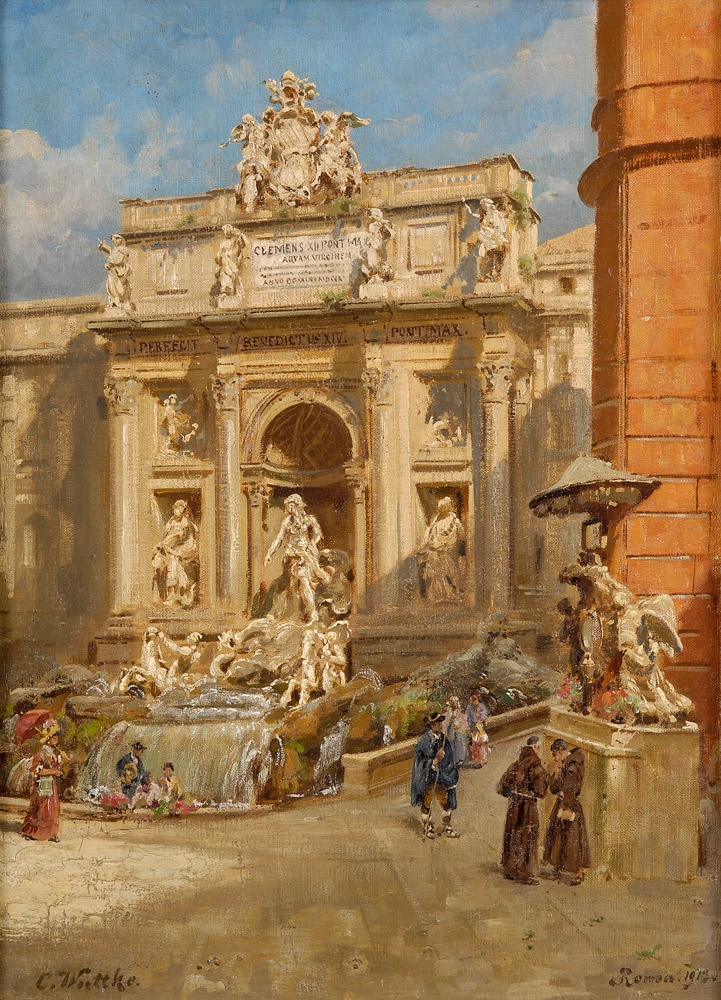
In 1874, shortly after his studies in Munich, Wuttke undertook a bold journey: he walked to Italy on foot. This was no casual trip — it was a profound statement of intent, a commitment to experience European culture and landscapes firsthand. He remained in Italy from 1874 until 1876, immersing himself in the light, architecture, and countryside of the Italian peninsula. These two formative years were pivotal: the sketches and studies he made during this time laid the groundwork for many of his future Italian landscapes.
Journey to Italy and formative sojourn
During his stay in Italy (1874–1876), Wuttke explored classical ruins, sunlit hills, and Renaissance-era towns. He walked from village to village, sketchbook in hand, capturing the play of Mediterranean light on stone, the arches of ancient buildings, and the gentle curves of the countryside. This immersive, on-site experience gave him an intimate familiarity with landscape, architecture, and atmosphere. Italy’s terrain, light, and heritage opened his eyes to possibilities beyond the German countryside — and ignited a lifelong passion for travel and painting abroad.
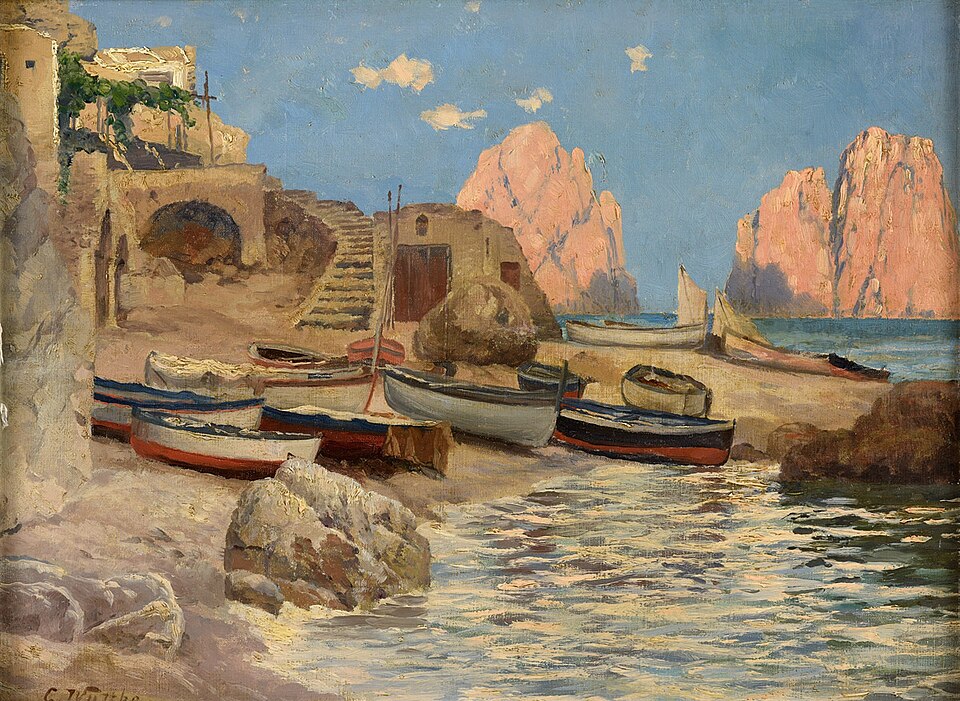
Back in Germany, though he continued his studies under Dücker, the memory of Italy stayed with him. The influence of the Italian environment — its warm sunsets, rich textures, and cultural history — infused his landscapes with warmth and a sense of place. Later, he returned many times to Italy, including the islands of Sardinia and Sicily, where several of his most memorable works were sketched. By repeatedly returning to Italy, Wuttke maintained a creative connection with the country that first broadened his artistic vision.
His early Italian experience remains a touchstone in his oeuvre: a blend of classical landscape technique with an eye for natural light and architectural elegance. The soft Mediterranean palette, careful attention to detail, and sense of cultural depth marked his early works and foreshadowed the cosmopolitan painter‑traveler he would become.
Artistic Career & Establishment in Germany
After completing his Düsseldorf studies around 1880, Wuttke gradually formed his professional career. By 1885, he settled permanently in Munich, a thriving artistic center at that time. This move allowed him to maintain a base of operations even as he prepared for further travels. Munich served as both home and starting point for expeditions abroad, giving him stability while he explored the wider world.
In Munich, Wuttke developed his identity as a painter — but not just any painter. He became known as one of the late 19th century’s notable “painter-travelers,” artists who combined classical training with wide-ranging journeys. This specialization distinguished him from many contemporaries who stayed within familiar territories: Wuttke ventured outward, bringing back scenes few German painters had attempted. His studio in Munich became a center for works inspired by foreign lands, merging discipline and wanderlust in every canvas.
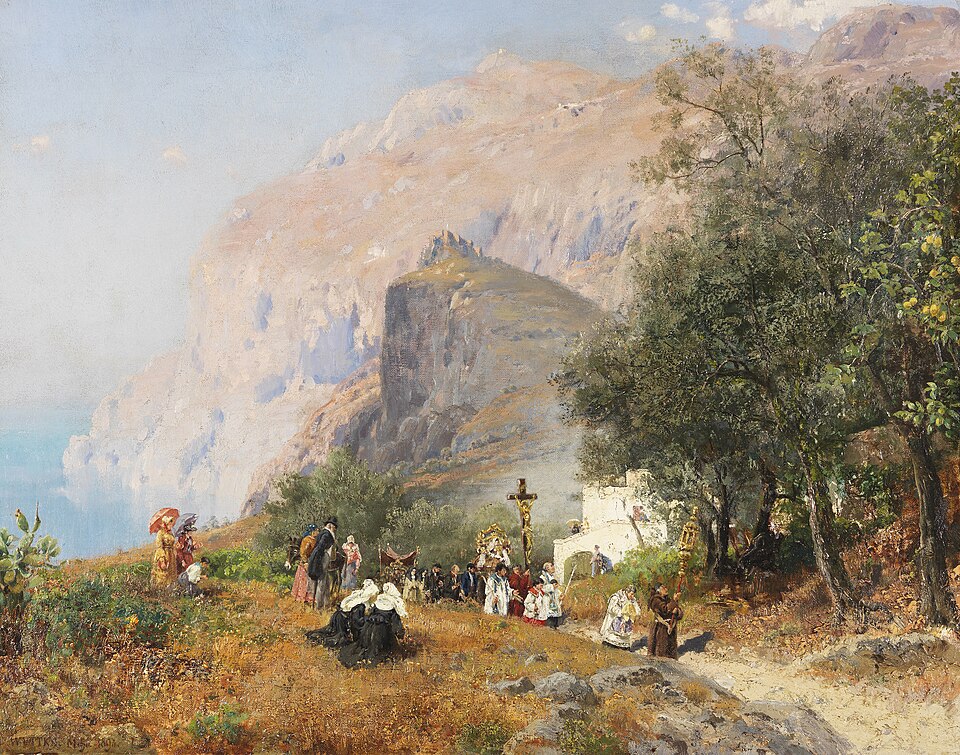
His subject matter settled into familiar themes: landscapes and architectural scenes, often enlivened by small genre details — scenes of everyday life, people in motion, quiet domestic or street moments. These details gave his paintings a human touch, grounding grand vistas in lived experience. Over time, his style matured: from romantic, carefully composed renderings to more spontaneous, vivid impressions. His mature works displayed brighter colors, more dynamic compositions, and a loosened brushstroke — though he never abandoned careful study of light and form.
Throughout his career in Germany, Wuttke managed to merge traditional academic techniques with fresh perspectives. He upheld classical composition, yet adapted it to a modern appetite for exoticism and travel. His work spoke to a growing cosmopolitan audience — people fascinated by distant lands, different cultures, and vivid landscapes. In doing so, he carved a niche for himself among European painters of his era.
Extensive Travels — Europe, Africa, America
After establishing himself in Munich, Wuttke continued traveling widely during the 1880s and 1890s. He returned multiple times to Italy, including the islands of Sardinia and Sicily, where many of his finest works were sketched. His travels also took him to Andalusia in southern Spain around 1880, and to Norway in 1894. Each destination added new scenery, new light — new artistic possibilities. Those European expeditions expanded his repertoire and prepared him for more distant journeys.
But Wuttke did not confine himself to Europe. He ventured into North Africa — visiting Algeria, Egypt, and the Sudan — exposing himself to desert landscapes, ancient architecture, and cultural environments foreign to most European painters of the time. These travels broadened not only his visual vocabulary, but his sense of cultural diversity and historical depth. In 1893, he even visited the United States, diversifying his experiences and expanding his audience.
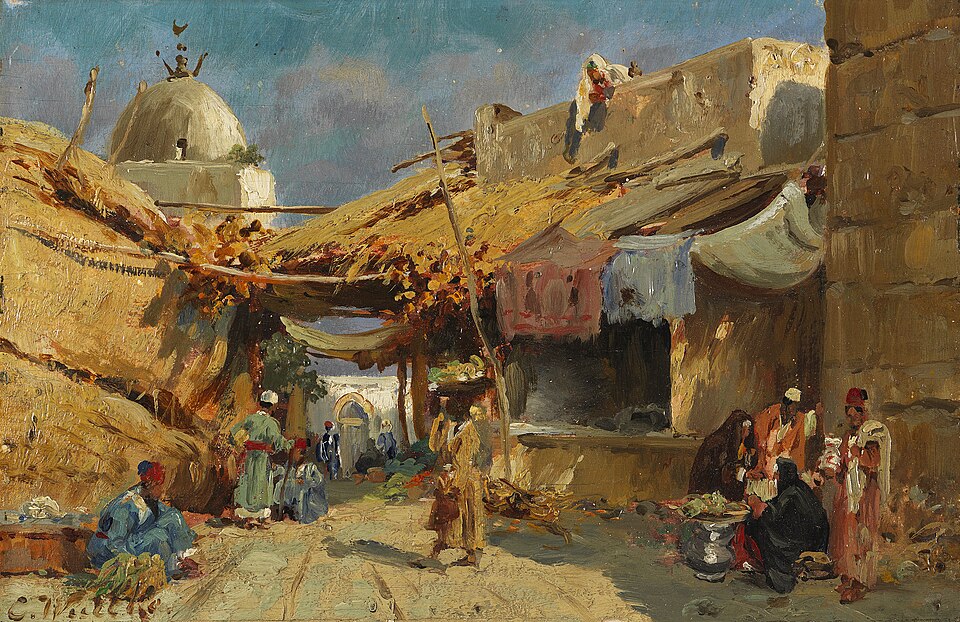
These travels enriched Wuttke’s palette of architectural motifs and landscape settings. He painted Mediterranean coasts, African deserts, North American vistas — each with sensitivity to light, color, and atmosphere. His wanderings deepened his understanding of perspective, geography, and cultural architecture. This wide exposure allowed him to produce works that appealed to patrons seeking glimpses of distant lands.
Often, Wuttke’s European and non‑European travels overlapped in his art — a Sicilian coastline might sit beside a desert mosque or a Norse fjord. This eclectic collection of scenes demonstrated not only his technical skill, but his adventurous spirit. His canvases became windows into foreign worlds for European viewers, offering a sense of travel and wonder without leaving their salons.
The World Tour & Eastern Expeditions
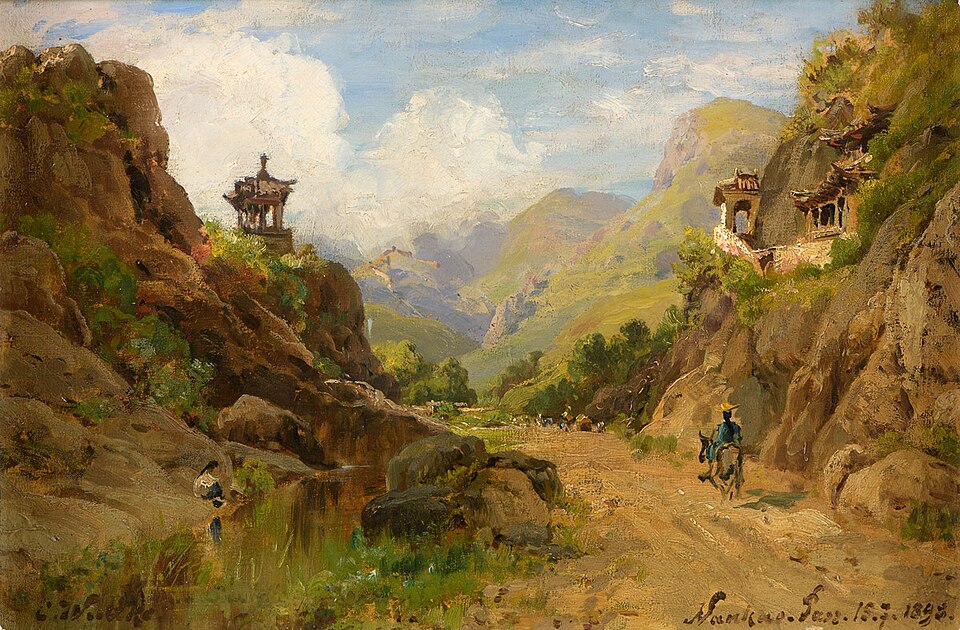
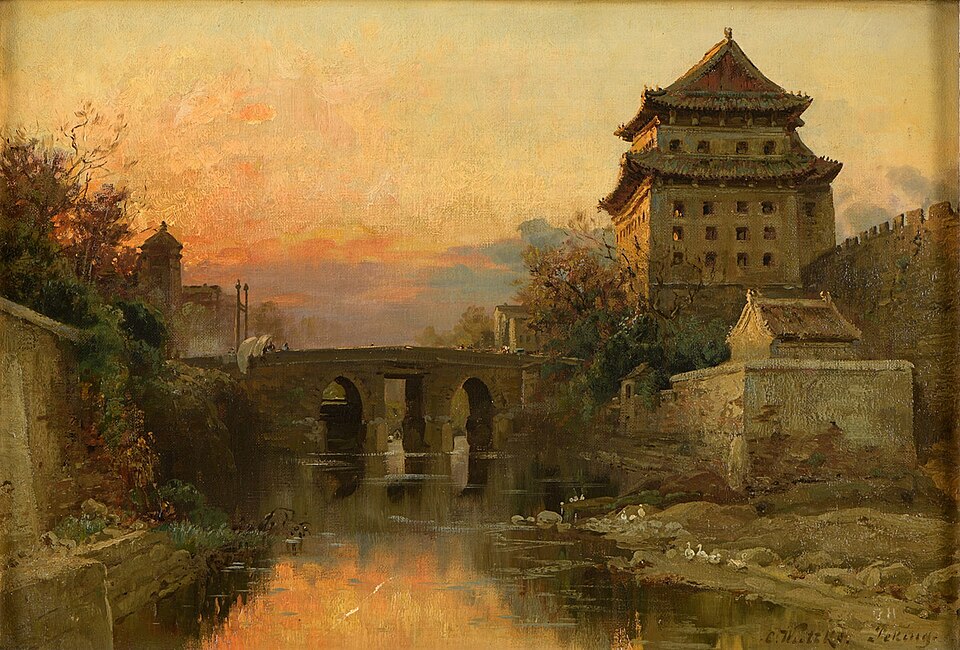
Between 1897 and 1899, Carl Wuttke undertook what may be called his grand world tour. This journey took him beyond Europe and Africa, across oceans, to Asia — including China and Japan. During 1898, he visited those Far Eastern countries, immersing himself in landscapes, architecture, and culture utterly different from his European experience. The result was a fascinating expansion of subject matter and visual language.
Global journey 1897–1899 — Far East, Asia
One documented painting from that period is “Park in Tokyo during the Cherry Blossoms,” dated 26 May 1898. The painting captures delicate blossoms, traditional architecture, and a soft, luminous sky — evidence of Wuttke’s careful observation and willingness to adapt to new environments. This work reveals both his technical skill and his capacity to absorb foreign aesthetics, bridging German Romanticism with Japanese sensibility. The painting stands as a vivid testament to his world‑traveler identity.
The sketches and studies from his world tour served as raw material for later paintings — some executed back in Munich, others commissioned by important patrons. His Far Eastern journey broadened not only his subject matter, but his relevance and appeal. For many European collectors and aristocrats, such exotic works were highly desirable: glimpses of far-off lands rendered with academic precision and painterly sensitivity.
Among Wuttke’s commissions after this tour were works for Kaiser Wilhelm II of Germany — paintings based on his Eastern travels, hung in the “Silbersaal” (Silver Hall) of the Berlin City Palace (Berliner Stadtschloss). These commissions confirmed Wuttke’s stature: he was not merely a wanderer who painted — he was a recognized artist whose global visions were valued at the highest levels. Additionally, he is reported to have served clients such as Prince Heinrich of Prussia, which further shows his appeal among European nobility.
This world tour and its aftermath marked a turning point: Wuttke transformed from a regional landscape painter into an international artist, bridging East and West, classical training and exotic modernity. His canvases provided windows into far-off lands, making distant cultures and geographies accessible to European audiences of the early 20th century.
Artistic Style, Themes, and Evolution
Carl Wuttke’s art is characterized by a fusion of landscapes or cityscapes with small genre scenes — quiet glimpses of everyday life amid grand scenery. Often, a street scene, a group of travelers, or a few figures appear in the background or foreground of vast vistas. These details bring a human touch to wide panoramas, making his works feel lived-in and accessible rather than distant or purely decorative.
His subjects range widely. He painted European countrysides, Italian hill towns, Mediterranean coastlines, Mediterranean islands, as well as Middle‑Eastern bazaars, North African deserts, and East‑Asian gardens and urban views. This diversity reflects his travels: he did not confine himself to one region or style. Rather, every new location provided fresh material. The variety of settings gave his oeuvre a cosmopolitan breadth.
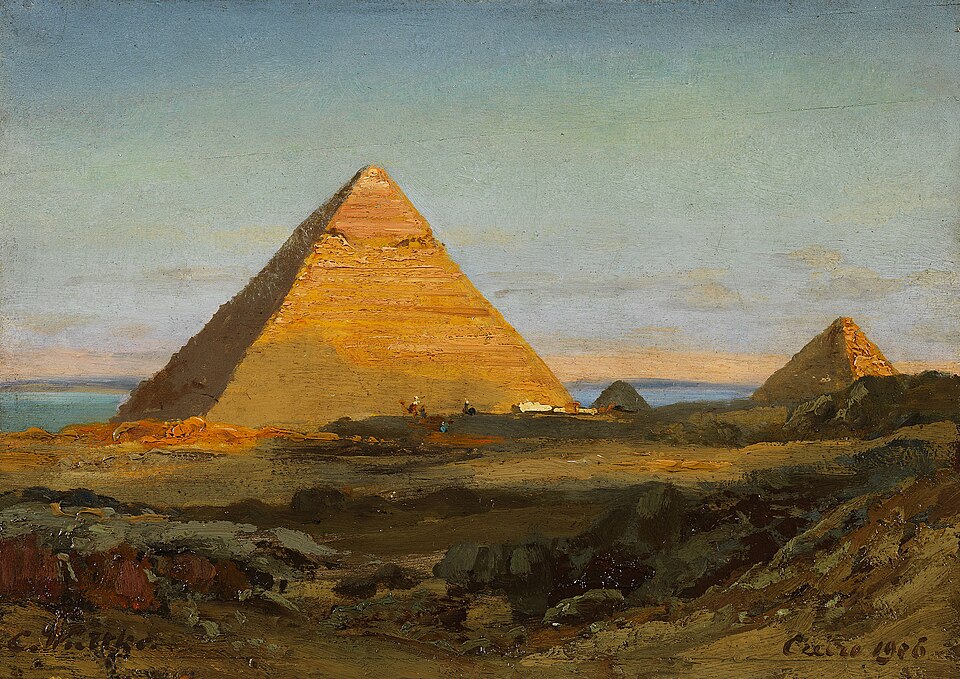
Over the years, Wuttke’s style evolved. His early works often emphasized fine gradations of light, careful composition, and a romantic sensibility typical of classical landscape painting. Those pieces reflect an academic discipline, attention to form, shading, and detail. As his career progressed — especially after his extensive travels — his color palette brightened. His brushwork became more spontaneous, and his compositions more dynamic, hinting at a pre‑Impressionist sensibility. Yet even with this evolution, Wuttke never aligned himself formally with any avant‑garde or “Secessionist” movement.
Despite the stylistic shifts, core qualities remained constant: a deep respect for light and atmosphere, a disciplined composition rooted in his academic training, and a keen observational eye for architecture and landscape. Wuttke combined these with wanderlust and curiosity, producing works that were at once grounded and expansive. His art thus occupies a unique place: classical in technique, global in scope, and personal in vision.
Later Life, Legacy & Writings
Carl Wuttke spent his later years based in Munich, where he had settled decades earlier. From 1885 onward, Munich remained his home, even as he continued to travel and paint. By the time of his death on 4 July 1927, Wuttke had built a body of work large in scope and international in flavor. His passing marked the end of a long career that spanned continents and almost eight decades of art and travel.
In 1914, Wuttke published his travel memoir, titled Reise-Erinnerungen von Studienfahrten rings um die Erde (“Travel Memories of Study Trips Around the World”). This 103‑page book chronicles his journeys and study trips across continents — a written counterpart to his painted wanderings. The memoir offers insight into his motivations, experiences, and the contexts behind many of his paintings. Through it, modern readers gain a glimpse of the world as Wuttke saw it, from dusty desert towns to blossoming Japanese gardens.
Wuttke’s legacy lies not only in his canvases, but in his status as one of the late 19th / early 20th century’s major “painter-travelers.” His global journeys, disciplined training, and artistic output combined to produce a cosmopolitan vision rarely seen among his peers. His works—spanning Europe, Africa, the Middle East, Asia, and America—offer a window into a bygone era of travel and discovery. They remain appreciated by collectors and art lovers who value both technical skill and exotic subject matter.
Though few of his pieces reside in major public museums, many survive in private collections and at auction, attesting to his continued appeal. His travel memoir and his paintings together stand as a testament to the power of curiosity and disciplined art. For those interested in 19th‑century art, landscape painting, or cultural exchange through art, Carl Wuttke remains a fascinating figure.
Key Takeaways
- Carl Wuttke was born 3 January 1849 in Trebnitz, Silesia, and died 4 July 1927 in Munich.
- He studied at Berlin University of the Arts (1871–1873), then under Angelo Quaglio II in Munich, followed by Eugen Dücker at Kunstakademie Düsseldorf (until 1880).
- His first major journey was on foot to Italy (1874–1876), a trip that deeply shaped his artistic sensibility.
- Between 1897 and 1899, he undertook a world tour — including China and Japan — leading to major commissions, including works for Kaiser Wilhelm II.
- His style evolved from disciplined romantic landscapes to brighter, more spontaneous scenes combining landscapes, architecture, and genre detail.
Frequently Asked Questions (FAQs)
- When and where was Carl Wuttke born and when did he die?
He was born on 3 January 1849 in Trebnitz, Silesia (then Prussia) and died on 4 July 1927 in Munich, Germany. - What education and training did Wuttke receive?
He studied at Berlin University of the Arts from 1871 to 1873, then under Angelo Quaglio II in Munich starting in 1873, and later under Eugen Dücker at the Kunstakademie Düsseldorf until about 1880. - What regions did Wuttke travel to and paint?
He traveled and painted throughout Italy (including Sardinia and Sicily), Andalusia, Norway, North Africa (Algeria, Egypt, Sudan), the United States, and during a global tour (1897–1899) to China and Japan. - Did Wuttke publish any writings?
Yes. In 1914 he published “Reise-Erinnerungen von Studienfahrten rings um die Erde,” a travel memoir recounting his journeys and artistic experiences. - How did Wuttke’s artistic style change over time?
His early works featured classical composition and subtle gradations of light, while his later paintings evolved toward brighter color palettes, a more spontaneous brushstroke, and dynamic, genre-rich scenes — without aligning to any avant-garde movement.