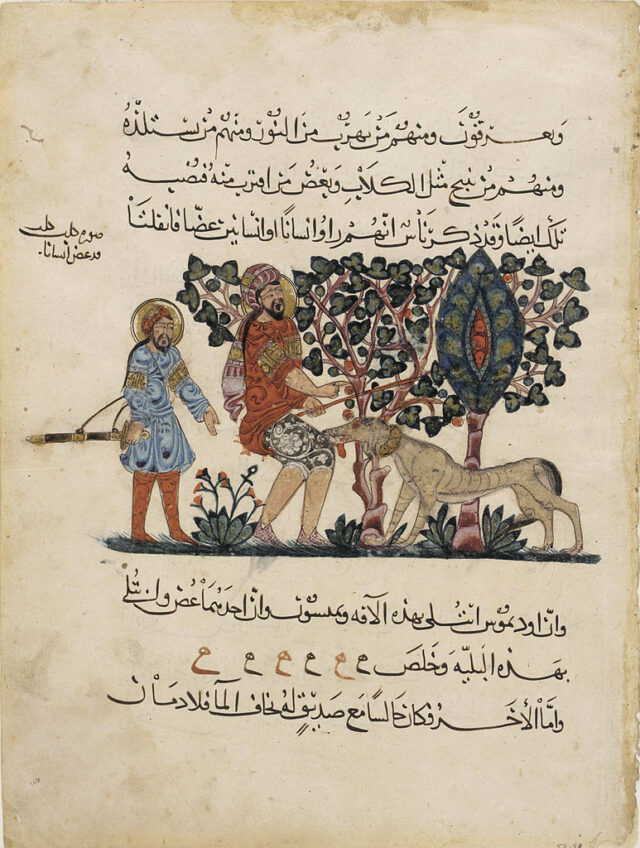
Few diseases have inspired as much fear as rabies. For thousands of years, people watched in horror as healthy animals suddenly became aggressive, unpredictable, and deadly. Humans who contracted the disease often suffered terrifying symptoms, including agitation, hallucinations, muscle spasms, and the famous fear of water known as hydrophobia. Long before scientists understood viruses or developed vaccines, these symptoms seemed mysterious and even supernatural. It is no surprise that rabies found its way into the visual imagination of many cultures.
Although artists rarely made rabies the direct subject of major paintings, the disease influenced art in important ways. Fear of rabid animals appeared in illustrations, prints, religious imagery, medical drawings, and popular visual culture. The symptoms of rabies also shaped artistic depictions of madness, possession, violence, and the loss of self-control. Through these themes, the disease became part of a broader artistic language used to express anxiety and danger.
The story of rabies in art is not simply about medicine. It is also about how societies understand fear. Artists have long acted as observers of public concerns, transforming invisible threats into visible images. In periods when rabies outbreaks were common, visual representations helped communities process uncertainty and danger.
From ancient civilizations to modern horror films, rabies has left traces throughout artistic culture. Its influence can be seen in images of threatening dogs, frenzied behavior, supernatural transformation, and even contemporary depictions of zombies and infection. Examining these connections reveals how a deadly disease helped shape artistic imagination across centuries.
Understanding Rabies in Historical Context
Rabies is a viral disease that affects the central nervous system of mammals, including humans. It is usually transmitted through the bite of an infected animal. Once symptoms appear, the disease is almost always fatal. Today, vaccination and modern medical treatment have greatly reduced human deaths in many countries, but for most of history rabies was one of the most dreaded diseases known to humanity.
Historical references to rabies stretch back thousands of years. Ancient Mesopotamian texts contain laws addressing dog bites, suggesting that people recognized the danger posed by infected animals. Greek and Roman writers also described symptoms associated with rabies. Physicians and scholars observed unusual animal behavior and attempted to explain the disease within the limits of contemporary knowledge. While they lacked an understanding of viruses, they clearly recognized the frightening consequences of infection.
The symptoms of rabies contributed greatly to its fearful reputation. Victims could experience confusion, agitation, hallucinations, difficulty swallowing, and violent spasms. Hydrophobia, the inability to drink water despite intense thirst, became one of the disease’s most famous signs. To observers unfamiliar with medical explanations, these symptoms could appear supernatural. A person who had once behaved normally might suddenly seem transformed into someone entirely different.
Because rabies almost always led to death after symptoms developed, communities often viewed it with a mixture of terror and fascination. The disease occupied a unique place between medicine, folklore, and religion. These cultural responses would eventually influence the visual arts, providing artists with powerful symbols of danger, transformation, and the fragility of human control.
Rabies, Dogs, and Symbolism in Art
Dogs have occupied a special place in art for centuries. In many cultures, they symbolize loyalty, protection, companionship, and devotion. Renaissance portraits often included dogs as visual signs of faithfulness. Religious paintings sometimes used dogs to represent virtues such as loyalty and vigilance. Their positive symbolism made them one of the most beloved animals in artistic tradition.
Rabies complicated this image. A loyal companion could suddenly become a source of danger. The contrast between trusted friendship and terrifying aggression created a powerful emotional tension. Artists and illustrators occasionally drew upon this tension when depicting threatening animals. The image of a snarling dog became an effective visual shorthand for fear, violence, and disorder.
Medieval and early modern art frequently included scenes involving hunting dogs, village animals, and encounters between humans and beasts. While not all such images related directly to rabies, they reflected a world in which animal attacks were genuine concerns. In regions where rabies outbreaks occurred, viewers would have understood the potential dangers associated with aggressive dogs and wolves. Artistic depictions of these animals often carried deeper emotional resonance because of these real-life fears.
By the eighteenth and nineteenth centuries, printed illustrations increasingly documented incidents involving suspected rabid animals. Newspapers, pamphlets, and public notices sometimes featured dramatic imagery designed to attract attention and encourage caution. These works were not always high art, but they reveal how visual culture responded to public anxiety. The rabid dog became both a medical threat and a cultural symbol, representing the unpredictable dangers hidden within everyday life.
Madness, Possession, and Artistic Interpretation
One of the most intriguing connections between rabies and art lies in the historical relationship between disease and madness. Before modern medicine explained neurological disorders, unusual behavior was often interpreted through religious or supernatural frameworks. People who experienced hallucinations, violent outbursts, or altered mental states could be viewed as possessed, cursed, or spiritually afflicted.
Rabies frequently produced symptoms that seemed to support such interpretations. Agitation, confusion, aggression, and vocal disturbances could appear frighteningly similar to descriptions of possession found in religious texts and folklore. As a result, the disease contributed indirectly to broader cultural ideas about the loss of rational control. These ideas became important subjects for artists across many centuries.
Medieval manuscripts sometimes portrayed demonic possession through exaggerated facial expressions, distorted body movements, and chaotic scenes. While these images were not intended as medical illustrations of rabies, they reflected visual traditions shaped by observations of unusual human behavior. Artists developed ways of depicting frenzy, terror, and psychological disturbance that resonated with audiences familiar with such experiences.
Religious art also explored themes of suffering and spiritual struggle. Scenes involving exorcisms, miracles, and divine healing often depicted individuals experiencing intense physical and emotional distress. Viewers living in societies affected by diseases like rabies may have connected these images to real-world experiences. Art provided a framework through which people could interpret frightening illnesses that remained poorly understood.
The broader artistic theme of madness flourished during the Renaissance and beyond. Artists became increasingly interested in depicting emotional extremes and psychological complexity. Paintings, prints, and drawings explored human vulnerability, irrationality, and instability. Although rabies was rarely named as a specific subject, the disease contributed to cultural understandings of mental disturbance that informed these artistic explorations.
Writers and artists alike were fascinated by transformation. Rabies seemed to blur the line between human and animal behavior, challenging assumptions about identity and self-control. This blurring of boundaries would become a recurring theme in art and literature. Whether expressed through images of possession, madness, or monstrous change, the underlying fear remained remarkably consistent: the fear of losing oneself.
Rabies in Nineteenth-Century Art and Illustration
The nineteenth century brought dramatic changes in both medicine and visual culture. Scientific advances encouraged new approaches to disease, while improvements in printing technology made images more widely available than ever before. As cities expanded and newspapers reached larger audiences, rabies became a frequent topic of public discussion.
Urbanization contributed to concerns about stray dogs and public health. Reports of rabies outbreaks appeared regularly in newspapers across Europe and North America. Illustrated publications often accompanied these reports with dramatic images. Artists depicted dog attacks, frightened crowds, and medical interventions, transforming news events into compelling visual narratives.
Medical illustration also advanced significantly during this period. Physicians sought accurate visual representations of diseases and symptoms. Medical journals included engravings that documented the physical effects of rabies. These images served educational purposes, helping doctors and students better understand the condition. Unlike earlier symbolic representations, nineteenth-century medical illustrations emphasized observation and scientific accuracy.
Public health campaigns increasingly relied on visual communication. Posters, pamphlets, and educational materials encouraged people to avoid suspicious animals and seek treatment after bites. Art became a practical tool in the fight against disease. Images helped convey information quickly, especially to audiences with varying levels of literacy. In this sense, artistic production contributed directly to public safety.
A major turning point came in 1885 when Louis Pasteur successfully administered a rabies vaccine to a young patient named Joseph Meister. The achievement attracted international attention and transformed public perceptions of the disease. Artists and illustrators celebrated scientific progress through portraits, commemorative prints, and educational imagery. The narrative shifted from helpless fear to cautious optimism.
Despite these advances, rabies continued to inspire dramatic visual representations. Newspapers often favored sensational imagery because it attracted readers. Illustrators balanced scientific information with emotional impact, producing works that reflected both public concern and fascination. These images provide valuable insight into how nineteenth-century societies understood disease and danger.
The century also marked a broader shift in artistic attitudes toward science. Artists increasingly engaged with themes of medical discovery, technological progress, and social reform. Rabies occupied a unique place within this cultural landscape because it represented both an ancient fear and a modern scientific challenge. The visual culture surrounding the disease captured this tension remarkably well.
Rabies in Modern Art, Literature, and Popular Culture
Although modern medicine has transformed our understanding of rabies, the disease continues to influence artistic and cultural imagination. Contemporary audiences may know more about viruses and infection, but many of the emotional responses associated with rabies remain familiar. Fear of contagion, loss of control, and sudden transformation continues to inspire artists and storytellers.
One of the most significant modern connections appears in horror fiction. Many characteristics associated with rabies resemble traits found in fictional monsters and infected characters. Aggression, altered behavior, biting attacks, and rapid transmission have become common elements in horror narratives. Scholars frequently note similarities between rabies and certain depictions of zombies, even when creators do not explicitly reference the disease.
Cinema has played a particularly important role in extending these themes. Horror films often explore fears surrounding infection and social collapse. Characters may transform into dangerous threats after exposure to a mysterious illness. These stories reflect deep cultural anxieties about disease and identity. While modern audiences recognize such narratives as fiction, their emotional power draws upon fears that have existed for centuries.
Contemporary artists have also explored broader themes related to disease, vulnerability, and public health. Some works examine historical epidemics, while others investigate the relationship between humans and animals. Rabies remains relevant because it occupies a unique space between nature and culture. The disease highlights the complex interactions between people, wildlife, domestic animals, and medical systems.
Popular culture continues to use rabies as a metaphor for chaos and loss of control. News reports, novels, films, and visual art occasionally invoke the disease when describing dangerous behavior or social panic. These references demonstrate the lasting power of rabies as a cultural symbol. Even in an age of scientific understanding, the disease retains much of its emotional impact.
Why Rabies Continues to Fascinate Artists
Rabies fascinates artists because it touches on some of humanity’s deepest fears. The disease raises unsettling questions about identity, vulnerability, and transformation. A healthy individual can appear completely changed by infection, creating a powerful image of instability and uncertainty.
The disease also challenges the boundary between human and animal worlds. Throughout history, artists have been drawn to moments when familiar categories break down. Rabies blurs distinctions between civilization and wildness, reason and instinct, safety and danger. These tensions provide rich material for artistic exploration.
Another reason for rabies’ enduring appeal is its symbolic flexibility. It can represent fear, violence, contagion, mortality, or social anxiety. Artists and writers often seek symbols capable of carrying multiple meanings, and rabies fulfills this role remarkably well. Its historical associations continue to resonate with modern audiences.
Perhaps most importantly, rabies reminds us that disease is never merely biological. Illness also shapes culture, imagination, and collective memory. Art allows societies to process experiences that might otherwise feel overwhelming. Through images and stories, people transform fear into understanding.
Conclusion
Rabies has occupied a unique place in human history. For centuries, it was among the most feared diseases on Earth, inspiring terror because of its horrific symptoms and almost certain fatality. Long before scientists identified the virus responsible, communities struggled to understand its effects through religion, folklore, and observation.
Artists responded to these fears in a variety of ways. Rabies influenced depictions of dangerous animals, madness, possession, suffering, and transformation. It appeared in medical illustrations, newspaper engravings, public health campaigns, and eventually modern horror culture. Even when the disease was not depicted directly, its cultural impact shaped artistic themes and visual traditions.
The history of rabies in art demonstrates how closely medicine and culture are connected. Diseases affect not only bodies but also beliefs, emotions, and creative expression. By examining artistic responses to rabies, we gain insight into how societies have confronted fear and uncertainty across generations.
Today, scientific advances have greatly reduced the threat of rabies in many parts of the world. Yet the disease remains a powerful symbol within cultural imagination. Its story reminds us that art often serves as a mirror of collective fears, helping people understand and endure the challenges of their time.
Key Takeaways
- Rabies has been feared for thousands of years because its symptoms are dramatic and almost always fatal once they appear.
- Artistic representations of dangerous animals often reflected public anxieties surrounding rabies.
- Historical societies sometimes interpreted rabies symptoms as signs of madness or possession.
- Nineteenth-century medical illustration and public health campaigns changed how rabies was visually represented.
- Modern horror stories and infection narratives still echo themes historically associated with rabies.
FAQs
1. Why was rabies so feared in the past?
Because it was almost always fatal after symptoms developed and produced frightening neurological effects that seemed mysterious or supernatural.
2. Did famous artists create many paintings specifically about rabies?
Not many major paintings focus directly on rabies, but the disease influenced broader artistic themes involving dangerous animals, madness, and transformation.
3. How did people explain rabies before modern science?
Many cultures interpreted symptoms through folklore, religion, supernatural beliefs, or early medical theories that lacked knowledge of viruses.
4. Why are dogs important in rabies-related art?
Dogs were the most familiar carriers of the disease in many societies, creating a dramatic contrast between loyalty and danger.
5. Does rabies influence modern horror culture?
Yes. Many horror narratives involving infection, aggression, biting, and loss of control contain themes that resemble historical descriptions of rabies.