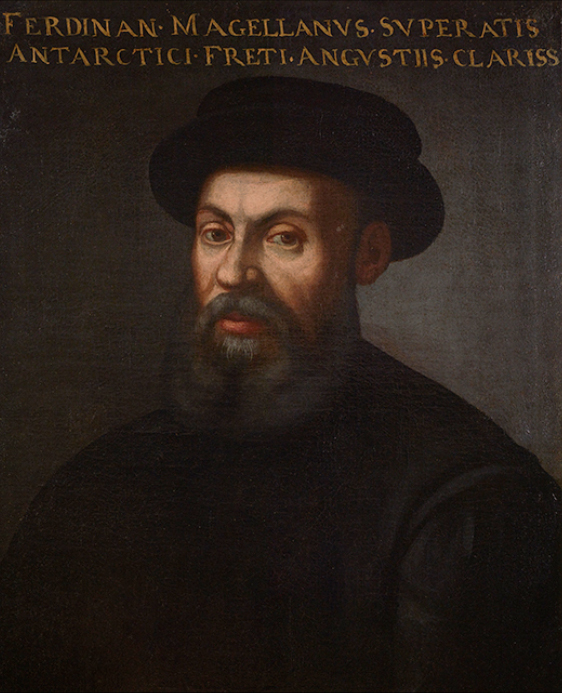
When people think of the voyage of Ferdinand Magellan, they usually think about maps, oceans, and the first circumnavigation of the globe. Yet the expedition also became one of Europe’s earliest large-scale encounters with artistic traditions far beyond the familiar world of Renaissance Europe. The fleet encountered tattooed warriors, gold jewelry of astonishing refinement, elaborate featherwork, carved boats, ritual dances, decorated weapons, and musical traditions unlike anything the sailors had ever seen. The voyage revealed that advanced visual cultures existed across the Pacific and the Americas long before sustained European contact. It also forced Europeans to slowly reconsider the assumption that artistic sophistication belonged mainly to Europe and the Mediterranean world.
The expedition began in 1519 under the Spanish crown, even though Magellan himself was Portuguese. Five ships left Seville carrying sailors, priests, interpreters, weapons, trade goods, banners, religious objects, and the visual culture of early 16th-century Europe. The voyage would eventually pass through South America, cross the Pacific Ocean, and reach Southeast Asia before only one surviving ship returned to Spain in 1522. Much of what is known about the artistic encounters of the expedition survives through the writings of Antonio Pigafetta, whose observations preserve valuable descriptions of cultures that Europeans barely understood at the time.
Europe’s Narrow Artistic Horizon Before the Voyage
In the early 1500s, Europe already possessed great artistic achievements. The Renaissance was flourishing in Italy, Spain, and parts of Northern Europe. Painters explored realism and perspective while sculptors revived classical ideals from ancient Greece and Rome. Churches and royal courts filled with paintings, tapestries, and carved decoration. Europeans often viewed themselves as heirs to the greatest artistic civilization in the world.
Yet European knowledge of distant cultures remained extremely limited. Most information about Africa, Asia, and the Pacific arrived through fragmented trade networks or exaggerated travel tales. Medieval stories about strange peoples and monstrous races still circulated widely. Maps often blended real geography with fantasy. Artistic traditions outside Europe were frequently misunderstood or dismissed before Europeans had even encountered them directly.
This made voyages of exploration visually shocking experiences for sailors and chroniclers. The expedition’s members judged societies partly through appearance. Clothing, ornamentation, weapons, jewelry, and ceremonial behavior became clues about wealth, religion, power, and social structure. Even small objects could reshape European ideas about distant civilizations.
The Visual Culture That Sailed From Spain
The expedition itself carried a highly symbolic visual identity. Ships in the Age of Exploration were not merely transportation. They were floating expressions of empire, religion, and royal authority. The fleet carried painted banners, Christian crosses, decorated armor, heraldic symbols, and religious imagery. Ceremonial display mattered enormously in diplomatic encounters.
Seville, the voyage’s departure point, was already becoming one of Europe’s great trading cities. Spanish churches contained gilded altarpieces, painted saints, carved wood sculptures, and imported luxury goods. Catholic imagery surrounded daily life. This shaped how the expedition interpreted the cultures it encountered abroad.
Religious art traveled with the fleet. Priests carried crucifixes, icons, liturgical garments, and ceremonial objects intended for missionary work. Europeans believed visual symbols could project authority and spiritual power. In many encounters, the sailors attempted to impress local rulers through spectacle, processions, gifts, and religious ceremonies.
The voyage therefore became a meeting between visual worlds. European Renaissance aesthetics collided with artistic traditions shaped by entirely different climates, religions, materials, and histories.
South America and the Discovery of Different Artistic Traditions
As the fleet moved along the coast of South America, the sailors encountered peoples whose appearance immediately fascinated them. Body painting, tattoos, feather ornaments, shells, jewelry, and ceremonial decoration played major roles in many local cultures. Europeans often reacted with both curiosity and confusion.
To Renaissance Europeans, clothing usually reflected social hierarchy and moral order. Yet many indigenous societies used the body itself as a canvas. Pigments, scarification, tattoos, and feather arrangements could signal status, warfare, spirituality, or tribal identity. Europeans frequently interpreted such practices through the lens of “strangeness,” but they also recognized the skill involved.
Featherwork especially impressed many explorers. Bright tropical birds provided colors far more vivid than many European textiles. Feathers appeared in headdresses, cloaks, ceremonial objects, and weapons. In Europe, exotic feathers quickly became luxury items associated with distant lands and royal collections.
Music and performance also formed part of these first artistic encounters. Sailors described dances, rhythmic ceremonies, and gatherings involving singing and instruments. Such performances were not simply entertainment. They often served diplomatic or religious functions. The Europeans slowly realized that artistic expression shaped social life in these societies as deeply as it did in Europe.
Patagonia and the Birth of Artistic Myths
One of the most famous episodes of the voyage involved encounters in Patagonia. The sailors reported meeting unusually tall indigenous people, giving rise to stories of Patagonian “giants.” These accounts spread rapidly across Europe and influenced art, illustration, and cartography for centuries.
European engravings soon exaggerated these figures dramatically. Artists who had never seen Patagonia produced images of towering humans standing beside tiny Europeans. Such illustrations blended real observation with imagination. Travel literature during this period often moved freely between documentation and fantasy.
This reveals something important about early exploration art. European artists were trying to visualize worlds they barely understood. Because firsthand images were rare, engravers relied heavily on travelers’ descriptions. Artistic interpretations could therefore distort reality while still shaping public belief.
The expedition also observed practical artistic adaptations to harsh environments. Animal-hide garments, survival tools, and decorated hunting equipment demonstrated how visual culture developed in response to climate and geography. Even societies Europeans considered “primitive” possessed sophisticated design traditions suited to local conditions.
The Pacific Crossing and the Art of Isolation
The crossing of the Pacific became one of the greatest ordeals in maritime history. The fleet spent months at sea with little food and almost no fresh supplies. Sailors suffered starvation and disease. Many died before land finally appeared.
This brutal crossing sharpened the crew’s reactions when they eventually reached inhabited islands again. After months of endless ocean, the appearance of richly decorated canoes, unfamiliar clothing, and vibrant communities must have felt overwhelming. The contrast between the visual emptiness of the open sea and the complexity of island cultures intensified the impact of these encounters.
When the expedition reached Guam, the sailors encountered highly skilled maritime societies. The design of Pacific canoes amazed Europeans. These vessels were fast, balanced, and expertly engineered for long-distance travel. Europeans realized that Pacific islanders possessed advanced navigational and construction knowledge developed independently over centuries.
Decorative elements on boats also attracted attention. Carved details, painted surfaces, woven components, and ceremonial ornamentation showed that practical objects could also serve artistic purposes. In many island societies, craftsmanship and beauty were closely linked rather than separated into different categories.
The Philippines and Southeast Asian Artistic Sophistication
The voyage’s arrival in the Philippines revealed some of the most visually impressive cultures encountered during the expedition. Europeans discovered societies connected to broad Asian trade networks involving China, India, the Malay world, and beyond. This created artistic traditions far more refined and international than many Europeans expected.
Goldwork especially astonished the sailors. Pigafetta described finely crafted jewelry, ornaments, chains, earrings, and ceremonial objects. Gold was used not only as wealth but as visual display. The craftsmanship demonstrated advanced metalworking skills that rivaled many European decorative traditions.
Textiles also impressed the expedition. Southeast Asian weaving traditions produced complex patterns, rich colors, and luxury fabrics traded across the region. Clothing often reflected rank and political authority. Elaborate garments transformed rulers into visual symbols of power during ceremonies and diplomatic gatherings.
Decorated weapons became another major point of fascination. Swords, daggers, shields, and spears often featured carving, metal inlays, or ornamental details. Europeans quickly realized that warfare and aesthetics were deeply connected in many of these cultures. Weapons functioned both as tools and as artistic statements.
Tattoos and the Human Body as Art
Among the most striking discoveries for Europeans were tattoo traditions in the Pacific and Southeast Asia. Many island societies used tattoos as markers of identity, courage, adulthood, or achievement. Europeans had encountered forms of tattooing before, but rarely on such a scale or with such cultural importance.
The sailors observed intricate designs covering large portions of the body. Tattoos often indicated social rank or military reputation. In some societies, the body itself became a living historical record. Designs communicated information about lineage, accomplishments, or community ties.
Europeans responded with fascination and discomfort. Renaissance Christian culture generally associated permanent body marking with outsiders or criminals. Yet the expedition could not deny the visual sophistication of these designs. The balance, repetition, and symbolism of tattoo patterns revealed highly developed artistic systems.
Over time, these encounters helped introduce broader awareness of tattooing into European consciousness. Centuries later, tattoo traditions from Pacific cultures would influence sailors, travelers, and eventually global popular culture.
Ritual, Music, and Courtly Spectacle
The expedition also encountered artistic traditions expressed through performance rather than permanent objects. Ceremonies involving music, dance, feasting, and ritual exchange played crucial roles in diplomacy and political life.
European chroniclers frequently described musical instruments they did not recognize. Percussion, flutes, stringed instruments, and rhythmic chanting appeared during gatherings and ceremonies. Music often accompanied political negotiations or religious rituals.
Courtly display in Southeast Asia particularly impressed the Europeans. Local rulers used costume, jewelry, architecture, attendants, and ceremonial performance to project authority. This was not unlike European royal courts, though the visual language differed dramatically. The sailors gradually realized they were dealing with organized states possessing sophisticated cultural traditions.
Feasting itself became a form of visual theater. Decorative serving objects, arranged foods, textiles, and ceremonial seating all reinforced social hierarchy. Such artistic presentation communicated political meaning just as effectively as European royal pageantry.
Religious Symbols and Cultural Conflict
The voyage also revealed how art and religion could become tools of cultural conflict. The Europeans carried Christian imagery everywhere they traveled. Crosses, icons, banners, and ceremonies accompanied diplomatic efforts and missionary activity.
In some places, local rulers accepted Christian symbols for political or strategic reasons. Yet Europeans often misunderstood the complexities of local religious traditions. They assumed the symbolic power of Christian imagery would automatically command respect.
This misunderstanding contributed to tensions in the Philippines. Magellan became involved in local rivalries and attempted to project Spanish authority through military and religious symbolism. However, symbolic display could not replace political understanding.
The Battle of Mactan in 1521 ended with Magellan’s death at the hands of forces led by Lapulapu. The event demonstrated the limits of European assumptions about superiority. Artistic and ceremonial displays alone could not guarantee control over unfamiliar societies.
The Return to Europe and the Artistic Impact
When the surviving ship finally returned to Spain in 1522, it carried more than spices and trade goods. The voyage brought back stories, sketches, descriptions, objects, and new visual ideas. Europe’s artistic imagination expanded dramatically.
Exotic items entered royal collections and curiosity cabinets. Textiles, ornaments, rare materials, and unfamiliar artifacts fascinated collectors. Such collections became early forms of museums, displaying the growing global reach of European exploration.
Printed travel narratives spread these discoveries even further. Illustrators created engravings of foreign peoples, animals, costumes, ships, and ceremonies. Many images remained inaccurate or exaggerated, but they still transformed European visual culture.
Artists and mapmakers began depicting the world differently. Geography itself became more realistic. The Pacific entered European consciousness not as a mythical void but as a region filled with cultures, trade routes, and artistic traditions. Exploration slowly reshaped Renaissance ideas about humanity and civilization.
The Voyage’s Lasting Importance for Art History
Magellan’s voyage marked one of the first major moments in the globalization of artistic awareness. Europeans could no longer easily imagine themselves isolated from the rest of the world’s cultures. The expedition revealed that sophisticated artistic traditions existed across vast regions previously unknown to them.
Trade routes that expanded after the voyage accelerated artistic exchange. Asian textiles, decorative motifs, carving traditions, and luxury goods gradually influenced European tastes. New materials and visual ideas entered global circulation.
The voyage also revealed the limits of European understanding. Many chroniclers misunderstood what they observed. Some descriptions distorted local traditions through fear, religious bias, or fantasy. Yet despite these flaws, the expedition preserved valuable evidence about cultures undergoing enormous change after European contact.
Today, the voyage can be understood not only as a geographic milestone but as an artistic encounter between civilizations. It exposed Europeans to body art, maritime design, ceremonial spectacle, goldwork, textiles, tattoos, and visual traditions that challenged old assumptions about culture and sophistication.
The expedition helped begin a more connected artistic world. That process would bring exchange, inspiration, misunderstanding, conflict, and transformation on a global scale for centuries to come.