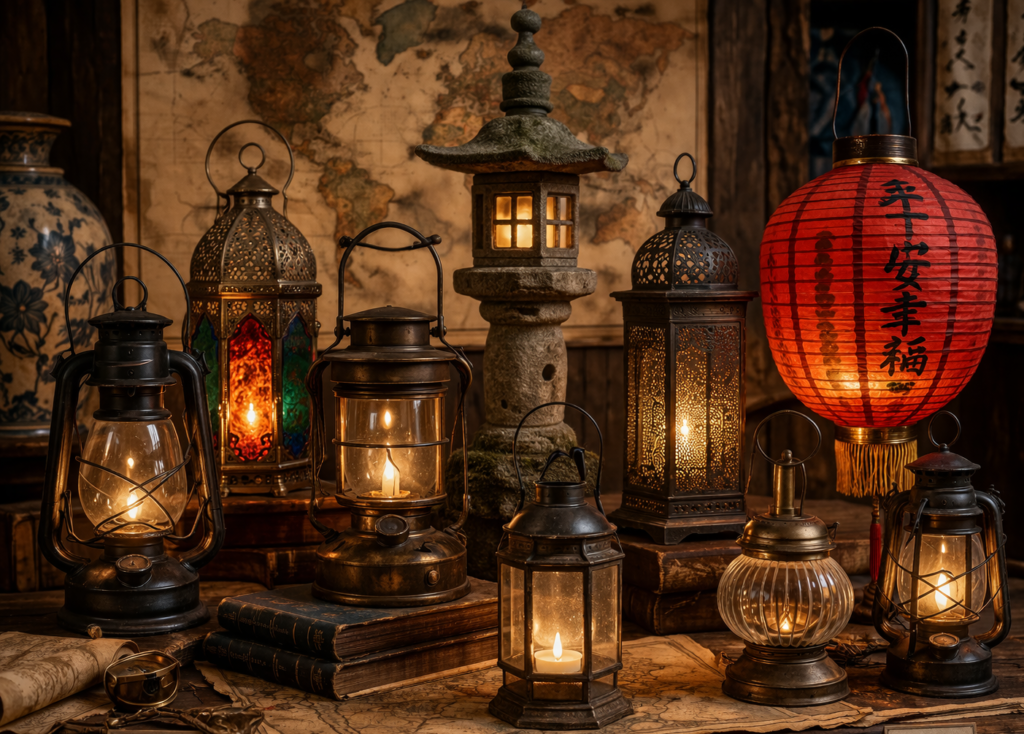
There is something quietly powerful about the glow of an old lantern. It is not just light—it is history held in metal and glass, shaped by hands long gone. Before electricity, lanterns guided travelers, lit sacred spaces, and marked moments of celebration. Their designs reveal the values, skills, and beliefs of the cultures that made them. To understand old lanterns is to step into a world where craftsmanship met necessity, and beauty was never far from function.
Origins and Early History of Lanterns
Ancient Beginnings in China and the Middle East
The earliest known lanterns appeared in China during the Han Dynasty, which lasted from 206 BC to AD 220. Written records from this period describe lanterns made from silk stretched over bamboo frames, often painted with symbols of prosperity and protection. By approximately 180 BC, lanterns were already used in imperial court ceremonies, especially during nighttime festivals. These early designs were both practical and decorative, showing that beauty and function were closely tied from the start.
In the Middle East, lantern-like devices evolved from oil lamps as early as 1000 BC. Archaeological discoveries in regions such as Mesopotamia and ancient Persia reveal enclosed lighting tools made from clay and metal. These devices protected flames from wind and allowed for safer use indoors and outdoors. By the 1st century AD, advancements in Roman glassmaking introduced clearer glass coverings, which significantly improved the brightness and stability of lantern light.
The Silk Road, established around 130 BC, helped spread lantern technology across vast regions. Trade routes carried not only goods but also ideas and techniques. Chinese lantern designs influenced neighboring regions, while metalworking practices from western Asia improved durability in eastern lanterns. This exchange led to stronger, more refined designs that could serve both everyday and ceremonial purposes.
Early lanterns used a variety of materials and fuels, including:
- Bamboo and wood for structural frames
- Bronze, iron, and early steel for strength
- Silk, paper, horn, and glass for light diffusion
- Oils from plants, fish, and animals as fuel sources
Lanterns in Medieval Europe
By AD 500, lanterns had become common throughout Europe, especially in religious and urban settings. Monasteries were among the earliest adopters, using lanterns to illuminate corridors, scriptoria, and chapels. These lanterns were typically made from iron or bronze and fitted with thin panels of horn or early glass. By the 12th century, improvements in glass production made lanterns more effective and reliable.
As towns and cities grew, the need for portable lighting increased. By the late 1300s, records from London show that citizens were required to carry lanterns after dark for safety. This rule encouraged the production of sturdier designs that could withstand wind and rough handling. Lanterns became a common sight in streets, markets, and public gatherings.
Maritime use also drove innovation. By the 15th century, ships relied heavily on lanterns for navigation and communication. These lanterns were built with reinforced metal frames and thicker glass panels to survive harsh sea conditions. Their design focused on maintaining a steady flame, even in strong winds.
Religious traditions continued to shape lantern use during this period. Lanterns were carried in processions and used during important observances such as Easter. Their light symbolized guidance and faith, reinforcing their importance beyond simple utility.
Craftsmanship and Design Elements
Materials and Construction Techniques
Old lanterns reflect a high level of craftsmanship, built by skilled hands using time-tested methods. Blacksmiths shaped iron frames by heating metal in forges and hammering it into precise forms. These pieces were joined using rivets or early welding techniques, creating strong and lasting structures. By the 17th century, brass and copper became more popular due to their resistance to corrosion and their attractive finish.
Glassmaking also played a crucial role in lantern design. By the 1500s, European glassmakers were producing flatter and clearer panes, allowing more light to pass through. Techniques such as etching and staining added decorative elements without weakening the glass. In regions like Italy, colored glass became especially popular in more decorative lanterns.
Lantern construction often included thoughtful features for maintenance. Hinged doors allowed easy access to replace candles or refill oil. Vented tops released heat and prevented smoke buildup, which helped keep the flame steady. These practical details show that lantern makers understood both the needs of users and the behavior of fire.
Regional differences were clear in construction styles. Rural lanterns tended to be simpler and more durable, built for daily use in tough conditions. Urban lanterns, especially in wealthier areas, often included decorative details that reflected status and taste. This balance between function and beauty is one of the defining traits of old lantern design.
Decorative Styles Across Cultures
Lantern design developed unique characteristics across different cultures. In Japan, stone and metal lanterns known as tōrō became widely used by the 8th century AD. These lanterns were often placed in temple grounds and gardens, designed to blend with natural surroundings. Their shapes followed strict proportions, creating a sense of calm and balance.
In Islamic regions, especially during the Mamluk period from 1250 to 1517 AD, lanterns became highly decorative. Craftsmen created intricate geometric patterns using pierced metal and colored glass. These designs produced beautiful patterns of light and shadow, turning lanterns into works of art as well as sources of illumination.
In England during the Victorian era, from 1837 to 1901, lanterns took on a more ornate appearance. Advances in manufacturing allowed for greater detail, including scrollwork, etched glass, and decorative finials. Gas lighting also influenced lantern design, leading to larger and more elaborate street lanterns in cities.
Across all these cultures, lanterns served as more than tools. They became expressions of identity, belief, and artistic skill. Each design tells a story about the people who made and used it, offering a glimpse into daily life across different times and places.
Lanterns in Cultural Traditions and Festivals
The Chinese Lantern Festival
The Chinese Lantern Festival has been celebrated for over two thousand years, with origins traced to the Han Dynasty around the 2nd century BC. It is traditionally held on the fifteenth day of the first lunar month, marking the end of the Lunar New Year celebrations. Historical records from the Eastern Han period (AD 25–220) describe the widespread use of lanterns during this festival, especially under Emperor Ming, who promoted Buddhist practices that included lighting lanterns in temples.
By the Tang Dynasty (AD 618–907), the festival had grown into a large public event. Cities displayed elaborate lanterns along streets and palace grounds, and it became common for citizens of all classes to participate. Lanterns were often painted with scenes from folklore, animals, or symbols of good fortune. Some were even designed as moving figures, using simple mechanical systems powered by heat or air currents.
The color red became dominant in lantern design due to its association with prosperity and protection. Families would hang lanterns outside their homes to invite good fortune for the coming year. Riddles written on lanterns also became a popular tradition by the Song Dynasty (AD 960–1279), adding an element of intellectual play to the celebration.
The festival continues today, but its historical roots remain clear. It represents a blend of spiritual belief, artistic expression, and communal celebration, all centered around the symbolic power of light.
Japanese and Southeast Asian Traditions
In Japan, lanterns have long been tied to religious and seasonal practices. Stone and bronze lanterns appeared in Buddhist temple complexes as early as the Nara period (AD 710–794). These lanterns, known as tōrō, were used to illuminate sacred spaces and guide worshippers. Over time, their use expanded into gardens, where they became an essential element of landscape design.
One of the most moving traditions is toro nagashi, a ceremony in which paper lanterns are floated down rivers. This practice is associated with Obon, a Buddhist festival held in mid-August to honor the spirits of ancestors. The floating lanterns symbolize guiding those spirits back to the afterlife. The soft glow of lanterns drifting on water creates a quiet and reflective atmosphere.
In Thailand, the Yi Peng festival, held in the northern region, features large numbers of floating lanterns released into the sky. This tradition is linked to the Lanna Kingdom period, which dates back to the 13th century. The lanterns are made from rice paper and bamboo, and their release is believed to carry away misfortune and bring good luck.
These traditions show how lanterns are not only practical objects but also deeply symbolic. Whether floating on water or rising into the sky, they represent connection—between people, nature, and the spiritual world.
Western Uses and Symbolic Lighting
In Western cultures, lanterns played a strong role in both daily life and ceremonial use. During the colonial period in North America, especially in the 17th and 18th centuries, lanterns were essential for nighttime travel. Streets in cities like Boston and Philadelphia began to use fixed lanterns for public lighting by the early 1700s.
Lanterns were also important in maritime settings. Ships used signal lanterns to communicate at sea, especially during the 18th and early 19th centuries. Different colors and positions conveyed specific messages, helping crews coordinate movements in darkness or poor weather.
Religious traditions in Europe and America also made use of lanterns. They were carried in processions during events such as Christmas vigils and Easter ceremonies. In these settings, the lantern symbolized guidance, faith, and the presence of light in darkness.
Even as gas lighting and electricity began to replace traditional lanterns in the 19th century, their symbolic role remained. Lanterns continued to appear in rituals and celebrations, preserving their cultural importance long after their practical necessity began to fade.
Collecting and Preserving Antique Lanterns
Identifying Authentic Antique Lanterns
Authentic antique lanterns carry clear signs of age and craftsmanship that are difficult to replicate. One of the most noticeable features is patina, a natural layer that forms on metal surfaces over time. This aging process gives brass and copper a darker, richer tone, while iron may show signs of oxidation. These changes occur gradually and are hard to fake convincingly.
Tool marks are another important indicator. Handmade lanterns often show slight irregularities where metal was cut, shaped, or joined. These marks reflect the work of individual craftsmen rather than machine production. Glass panels in older lanterns may also contain small bubbles or uneven thickness, especially in pieces made before the widespread use of industrial glassmaking in the 19th century.
Construction methods can reveal a great deal about a lantern’s age. Early lanterns used rivets and hand-forged joints, while later reproductions often rely on modern welding or uniform screws. Hinges, latches, and handles should also be examined closely, as their design and wear patterns can indicate authenticity.
Collectors often compare multiple features rather than relying on a single detail. A genuine antique lantern typically shows consistent aging across all its parts, rather than isolated signs of wear.
Popular Types Among Collectors
Certain types of lanterns are especially valued by collectors due to their historical significance and distinctive design. Railroad lanterns, widely used in the United States during the 19th and early 20th centuries, are among the most recognizable. Companies such as the Adams & Westlake Company began producing these lanterns in the 1850s, and many examples still survive today.
Ship lanterns are another popular category. Designed to withstand harsh sea conditions, these lanterns often feature heavy brass construction and thick glass. Examples from the 18th and 19th centuries are particularly sought after, especially those with documented maritime use.
Street lanterns, especially those from the gas-lighting era of the 1800s, also attract attention. These larger pieces often feature ornate metalwork and were originally mounted on posts or building exteriors. Their design reflects the architectural styles of their time, making them both functional objects and decorative artifacts.
Collectors often focus on specific categories, such as:
- Railroad lanterns from the 1850s to early 1900s
- Maritime lanterns from the 1700s and 1800s
- European street lanterns from the Victorian period
- Asian ceremonial lanterns from earlier centuries
Care, Restoration, and Display
Proper care is essential to preserve the value and integrity of antique lanterns. Cleaning should always be done gently, using soft cloths and mild solutions. Harsh chemicals can damage metal surfaces and remove the natural patina that collectors value. Glass panels should be handled carefully to avoid scratches or cracks.
Restoration requires a cautious approach. While it may be tempting to replace worn parts or polish metal to a bright finish, over-restoration can reduce a lantern’s historical authenticity. Many collectors prefer to preserve original materials, even if they show signs of wear. Any repairs should be reversible whenever possible.
Storage conditions also play a role in preservation. Lanterns should be kept in dry environments to prevent rust and corrosion. Exposure to extreme temperature changes can damage both metal and glass components. Displaying lanterns indoors, away from direct sunlight, helps maintain their condition over time.
When used as decorative pieces, antique lanterns can add character to modern interiors. Placing them on shelves, mantels, or entryways allows their craftsmanship to be appreciated up close. Even without a flame, their presence carries the quiet weight of history.
Key Takeaways
- Lanterns date back to at least 206 BC, with early examples in ancient China and the Middle East
- Trade routes like the Silk Road helped spread lantern designs and techniques across continents
- Craftsmanship evolved through hand-forged metals, improved glassmaking, and regional artistic styles
- Lanterns played important roles in festivals, religion, and daily life across many cultures
- Antique lanterns remain valued today for their history, design, and collectible appeal
FAQs
- What is the oldest known use of lanterns?
Lanterns were used in China during the Han Dynasty, beginning around 206 BC. - What materials were early lanterns made from?
Common materials included bamboo, metal, silk, paper, horn, and glass. - Why are lanterns important in festivals?
They symbolize light, guidance, and hope, often tied to religious or seasonal traditions. - How can you tell if a lantern is antique?
Look for patina, handmade tool marks, and older construction methods like rivets. - Are antique lanterns still usable today?
Some can be used carefully, but many are best preserved as decorative or collectible items.