Luigi Aloys-François-Joseph Loir was born on December 22, 1845, in Goritz, part of the Austrian Empire at the time. Although Austrian by birth, he was of French descent, with his parents serving the exiled French royal family. His father, Tancrède Loir, worked as a valet, and his mother, Thérèse Leban, served in a domestic capacity. This connection to the French nobility in exile profoundly shaped his early life.
In 1847, when Luigi was just two years old, the Loir family moved to the Duchy of Parma. They continued their service to the exiled court of the Bourbons, and young Luigi was raised in an environment marked by refinement, tradition, and quiet instability. Parma, though small, had a rich cultural heritage that exposed him to art and architecture from an early age. The backdrop of changing cities and fading aristocracy would leave a lasting impression on his aesthetic outlook.
Birthplace, Parentage, and Early Environment
Even in childhood, Loir showed an extraordinary sensitivity to his surroundings, sketching scenes from daily life with unusual precision. His family’s modest status did not afford him wealth, but he had cultural exposure and discipline. Observing grand buildings, carriages, and the daily rhythm of courtly life gave him a sense of elegance mixed with melancholy. This blend would become a hallmark of his later cityscapes.
By his teenage years, it was clear that Luigi Loir was destined for an artistic path. He had begun to sketch not only the people around him but also the streets, skies, and structures of Parma. These early works displayed a fascination with weather, light, and movement — all themes that would define his mature work. His early environment, both cosmopolitan and constrained, planted the seeds of a unique artistic vision.
Formal Art Education and Training
In 1853, at the age of eight, Luigi Loir enrolled at the Academy of Fine Arts in Parma. There, he received a traditional academic education grounded in drawing, proportion, and historical painting. The school followed a strict curriculum influenced by Renaissance ideals, favoring realism, discipline, and draftsmanship. Loir’s training in Parma gave him the technical foundation that later allowed him to innovate with confidence.
He studied at the academy for several years, gradually transitioning from figure and portrait studies to more complex compositions. While many of his classmates focused on religious or historical scenes, Loir’s early interests lay elsewhere. He gravitated toward landscapes and scenes of daily life, especially those that captured mood or movement. The influence of the Italian countryside lingered in his visual memory, even as his ambitions pushed him toward France.
Académie des Beaux-Arts and Early Mentors
Around 1863, Loir moved to Paris to reunite with his family and further his studies. In Paris, he did not enroll at the prestigious École des Beaux-Arts but took a more independent route. He admired artists like Jean-Baptiste-Camille Corot and Eugène Boudin, whose focus on atmospheric landscapes aligned with his own sensibilities. Though he lacked a famous academic mentor, his eye for nuance developed rapidly.
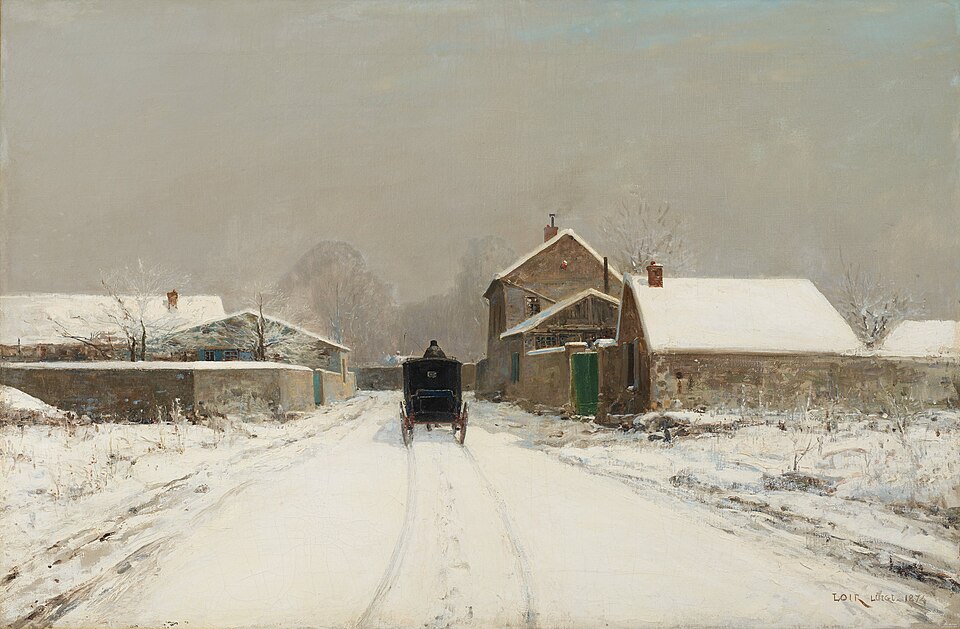
Loir’s first significant artistic break came in 1865 when he exhibited a painting at the Paris Salon titled “Paysage à Villiers-sur-Seine.” This debut marked his official entry into the French art world. The work showed not only his technical ability but also his early interest in natural light and composition. From here, his reputation steadily grew, helped by his academic training and distinctive urban focus.
Artistic Breakthrough and Style Evolution
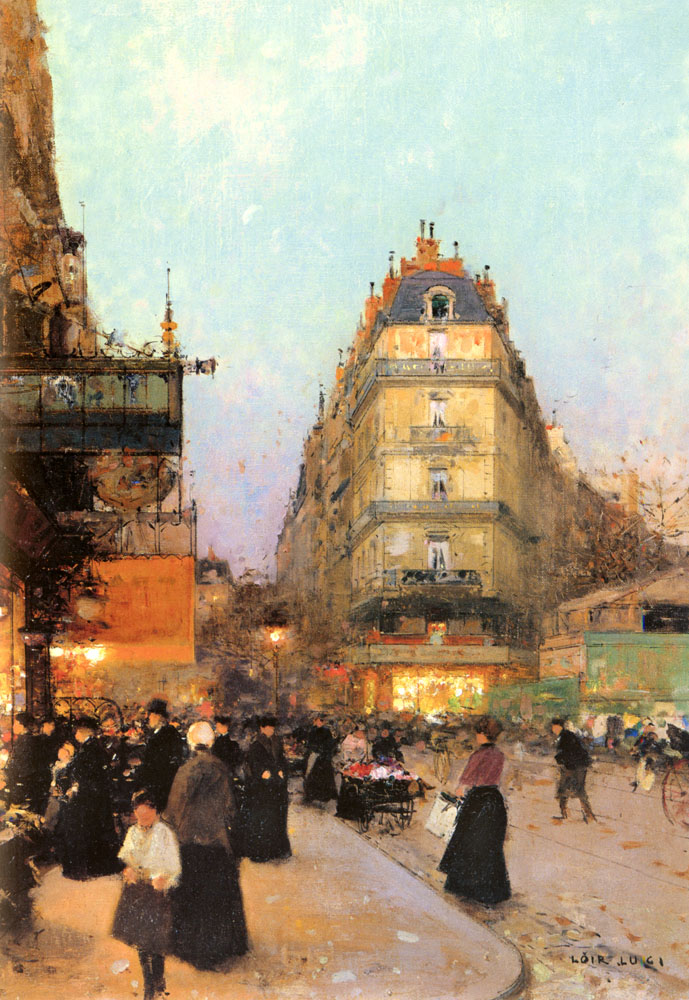
By the early 1870s, Luigi Loir had found his voice as a painter of modern urban life. He focused on Paris — a city undergoing radical transformation under Baron Haussmann — and captured it not in grand scenes but in everyday, fleeting moments. His work became synonymous with moody skies, wet streets, and glowing streetlamps. Loir brought poetry to the prosaic, making city life a worthy subject for fine art.
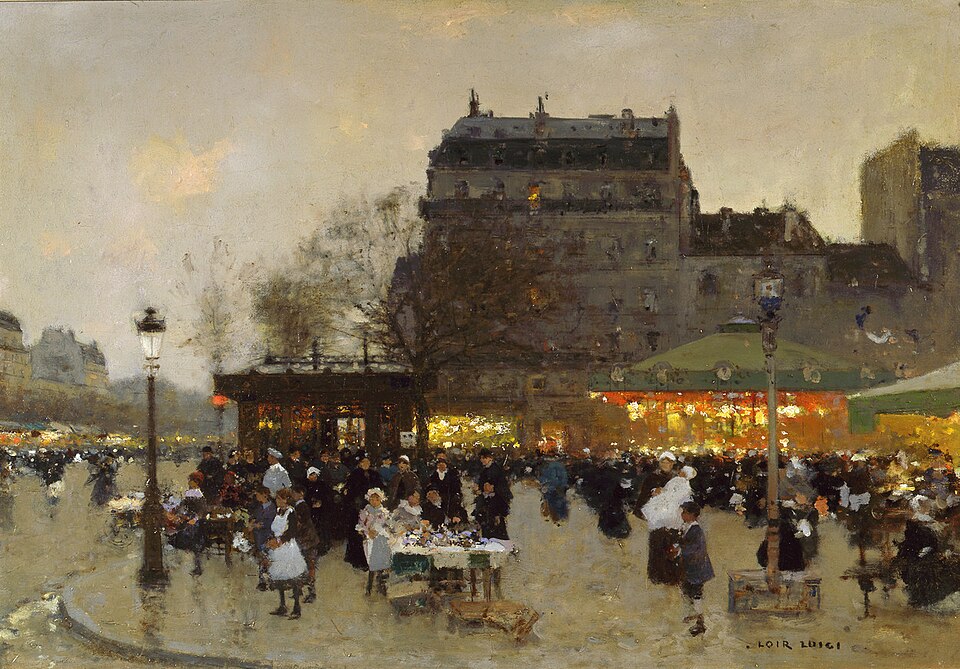
His approach to realism was different from that of earlier painters. Rather than idealizing or moralizing, he observed. The reflection of gaslight on cobblestones, the gray of the Parisian winter, the bustle of pedestrians — these were his subjects. His compositions often gave equal importance to architecture and atmosphere. He sought not drama but elegance in the ordinary, a sentiment that resonated with Belle Époque audiences.
Depicting the Modern City – Loir’s Unique Eye
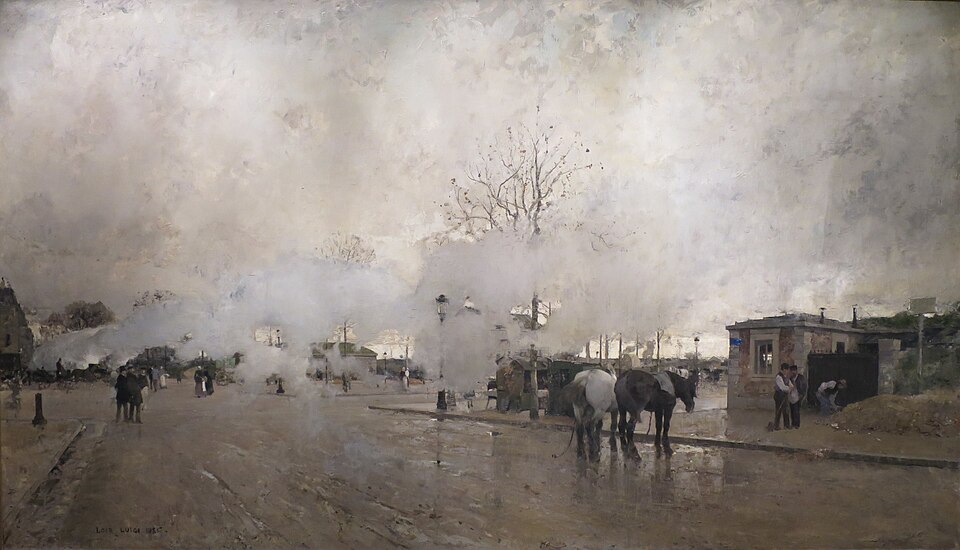
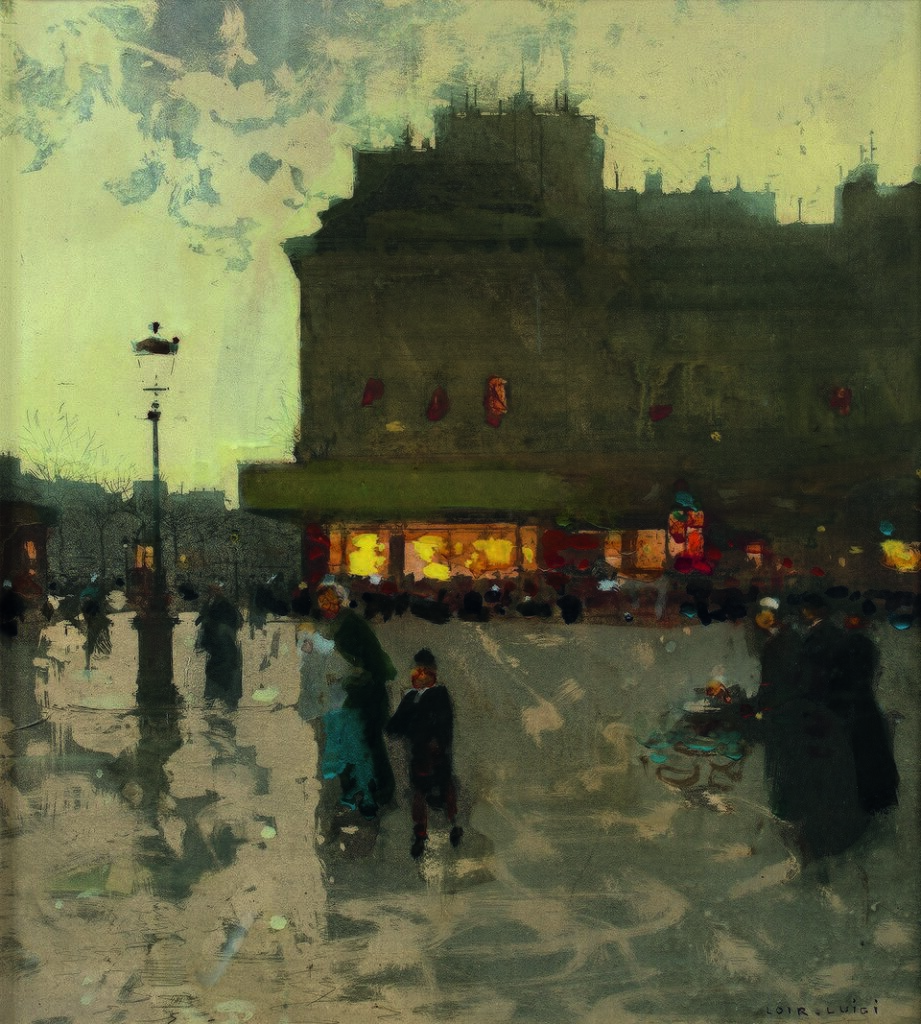
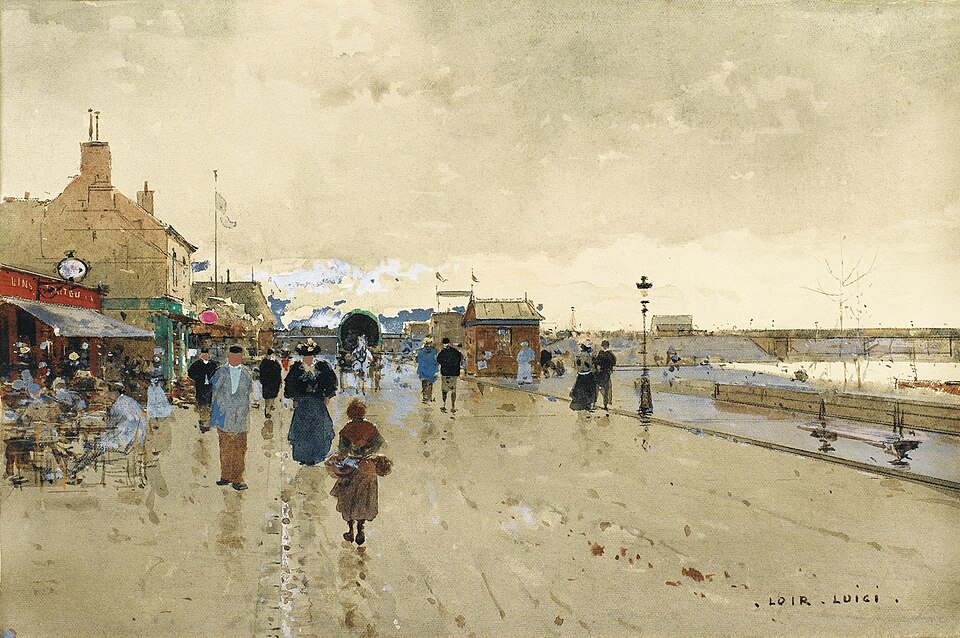
Loir was particularly known for mastering the depiction of weather effects: rainy afternoons, foggy mornings, and sunset glows. His palette, often muted, leaned toward grays, blues, and ochres, giving his work a distinctive emotional tone. Trams, horse-drawn carriages, street vendors, and pedestrians were often seen in his scenes — always captured with care and dignity. Rather than exaggerate the hustle of modern life, he dignified it.
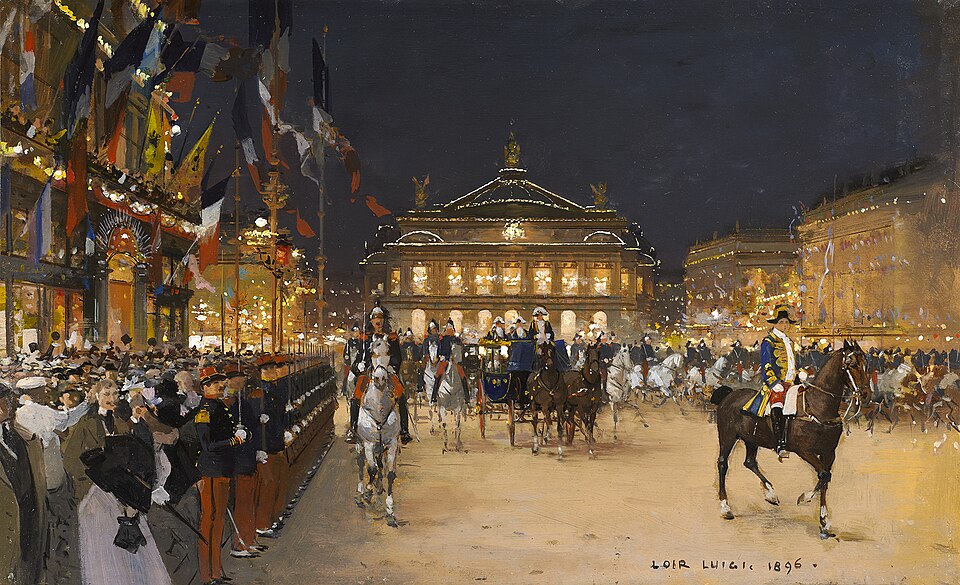
His technique combined precise architectural draftsmanship with loose, impressionistic brushwork in skies and backgrounds. Though he was not formally part of the Impressionist circle, his interest in light and movement placed him in dialogue with them. He had more in common with artists like Jean Béraud or Gustave Caillebotte — urban chroniclers who embraced the city without romanticizing or condemning it. His art was a tribute to the lived-in city, not an escape from it.
Major Works and Signature Themes
Some of Loir’s most beloved paintings include “Le Boulevard Haussmann,” “La Place du Théâtre Français,” and “La Gare Saint-Lazare.” These works display his fascination with the daily rhythms of Paris: crowded sidewalks, horse-drawn omnibuses, and ever-changing skies. Each painting offers a sense of motion halted just long enough to be admired. They act as time capsules of an era when modern life was both thrilling and unsettling.
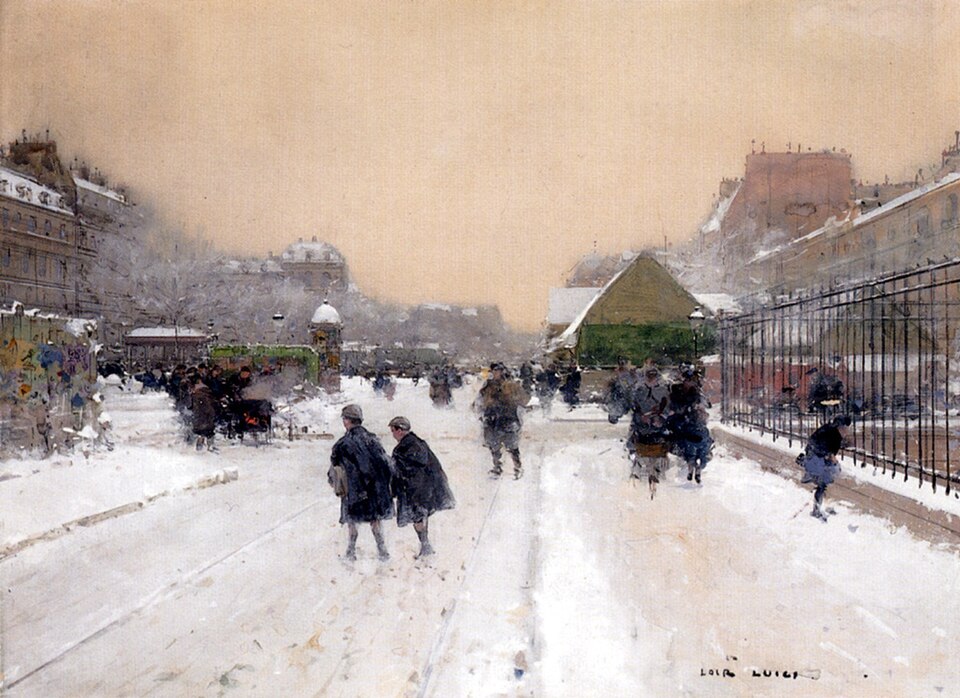
In addition to city streets, he often painted railways, bridges, and construction sites — all symbols of the new industrial order. Yet he imbued them with grace and balance, never chaos. In works like “La Rue de Rivoli,” he captures the blend of historic grandeur and modern function. His Paris is not static but always in transition, a city of stories told through shifting weather and light.
Paris Streets, Railways, and Atmospheric Effects
Loir’s commitment to realism extended to his methods. He often sketched outdoors, carrying a notebook to jot down compositions and lighting effects. Once back in his studio, he refined those sketches into oil paintings. His sense of atmospheric perspective was remarkable; he could evoke the weight of damp air or the shimmer of twilight with subtle color transitions. Critics praised his “intelligent poetry” and “truthful elegance.”
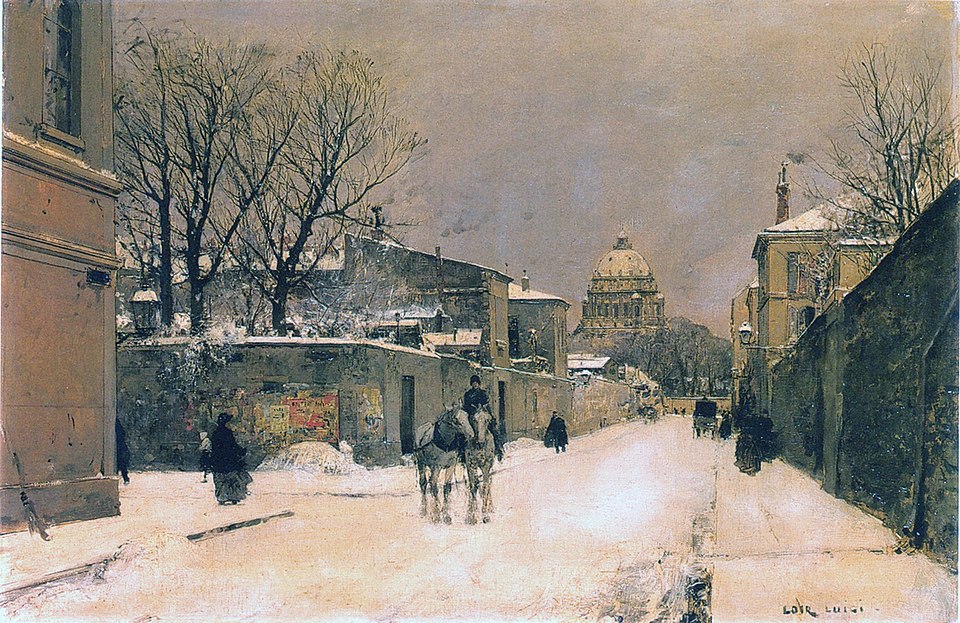
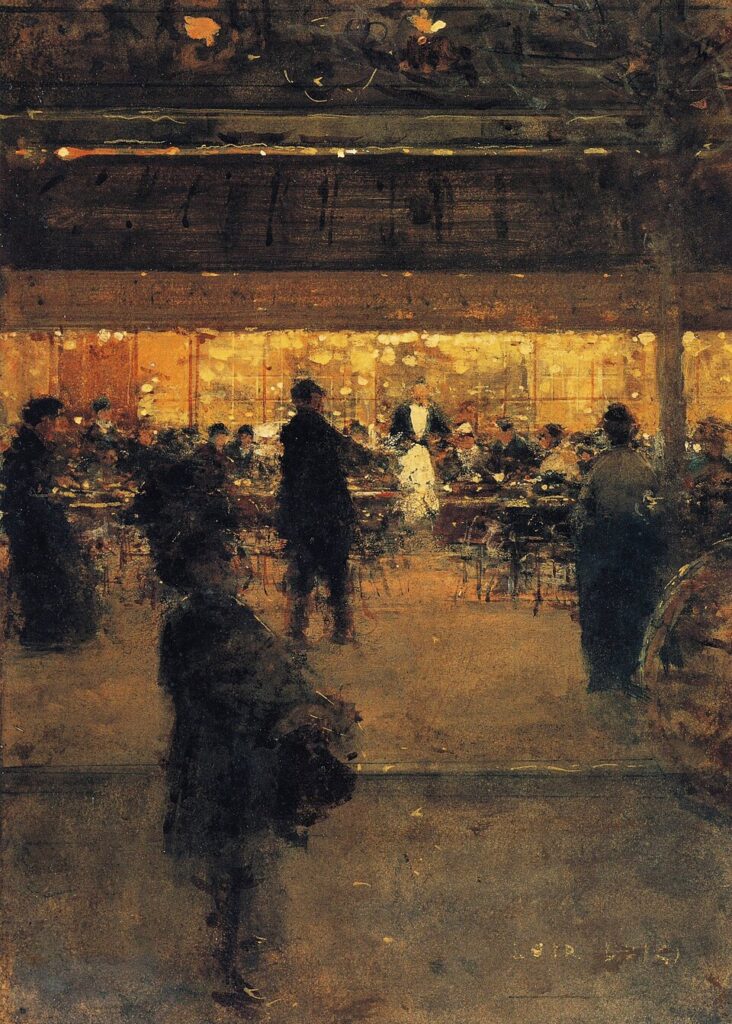
Unlike many artists of his time, Loir did not focus on individuals but on the collective experience of the city. He rarely painted portraits, choosing instead to capture the human figure as part of a broader scene. His paintings are filled with nameless citizens going about their daily routines. Through this lens, he elevated the mundane to the meaningful, giving ordinary city life the dignity of fine art.
Commercial Success and Commissions
Luigi Loir’s skills extended beyond canvas paintings to commercial illustration and design. He was a prolific poster artist during the Belle Époque, producing advertisements for wine, chocolate, theaters, and travel companies. His lithographs were highly sought-after, blending artistry with branding in a way that few others achieved. This commercial work helped spread his name beyond gallery walls and into the public consciousness.
He collaborated with major printing houses and publishers, such as Maison de la Publicité and Bouasse-Lebel, producing posters, menu designs, and even illustrated covers. His posters for Compagnie Générale Transatlantique and other transportation firms are still celebrated today. Loir demonstrated that commercial art could maintain aesthetic integrity without sacrificing mass appeal.
Collaborations with Publishers and Public Projects
In 1870, he enlisted with the National Guard during the Siege of Paris, further grounding his connection to the city. After the war, he resumed painting and illustration with even greater focus. He participated in numerous Paris Salons throughout the 1870s and 1880s, earning medals and positive reviews. In 1898, he was made a Chevalier of the Legion of Honor, one of France’s highest recognitions for artists.
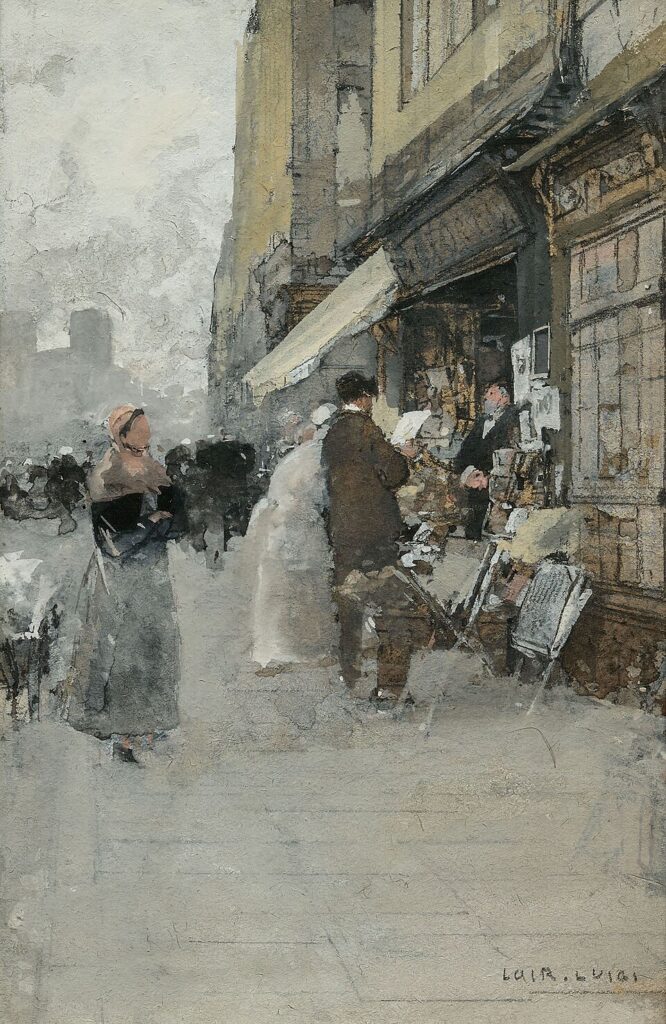
Through his commissions and public projects, Loir not only recorded Paris but shaped how the public saw it. His visual language of misty streets and glowing windows became embedded in the collective memory of the Belle Époque. His commercial and fine art work were in perfect harmony, and both contributed to his enduring popularity. For Loir, success was not about novelty but about consistency and craft.
Personal Life and Relationships
Luigi Loir was known for his quiet, reserved personality. While he had close professional connections in the art world, he was not a flamboyant socialite. He never married, and few personal relationships are recorded in detail, suggesting a life focused intensely on his work. His closest companions seem to have been fellow artists, printers, and clients who admired his professionalism and style.
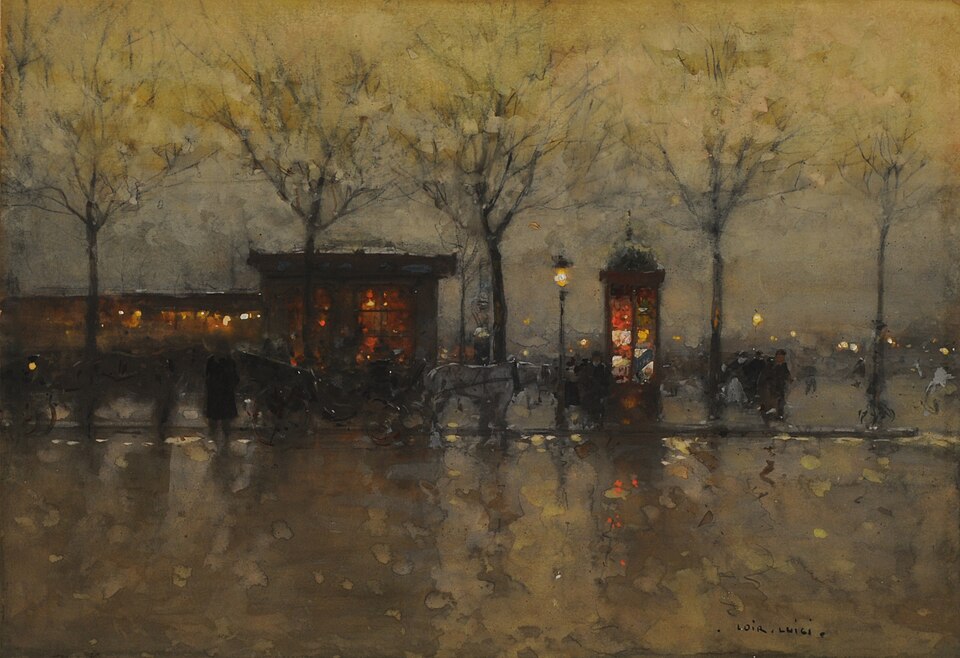
He maintained a lifelong connection to the city of Paris, rarely traveling abroad. Though originally born in Goritz and raised in Parma, he became thoroughly Parisian in identity. He lived in the Montparnasse area for much of his adult life, surrounded by the artistic energy of the Left Bank. He walked the streets he painted, observing carefully but often anonymously.
Love, Solitude, and the Artist’s World
Loir’s solitude did not isolate him; rather, it allowed him to study people and places with detachment and empathy. He was a member of the Société des Peintres-Lithographes and the Société des Aquarellistes Français, contributing to their exhibitions regularly. These memberships brought him into contact with fellow artists like Léon Lhermitte and Pierre-Georges Jeanniot. However, his voice remained uniquely his own.
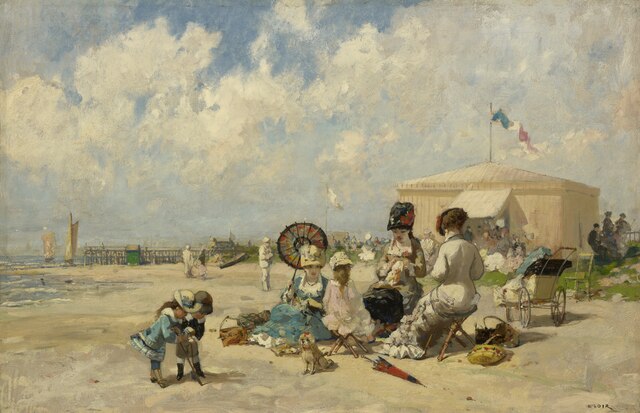
Despite limited biographical detail about his inner life, his works convey a subtle emotional intelligence. His quiet demeanor matched the atmosphere of his paintings — observant, thoughtful, and understated. He avoided personal spectacle and let his art speak for him. In a time of radical changes in art and society, Loir stayed true to his measured and elegant vision.
Legacy and Influence in Art History
Luigi Loir died in Paris on February 9, 1916, at the age of 70. His passing was noted in the French press, with obituaries recognizing him as a chronicler of modern urban life. He left behind a rich body of work that continues to resonate with collectors and historians. Today, his paintings are held in major collections, including the Musée d’Orsay and Petit Palais.
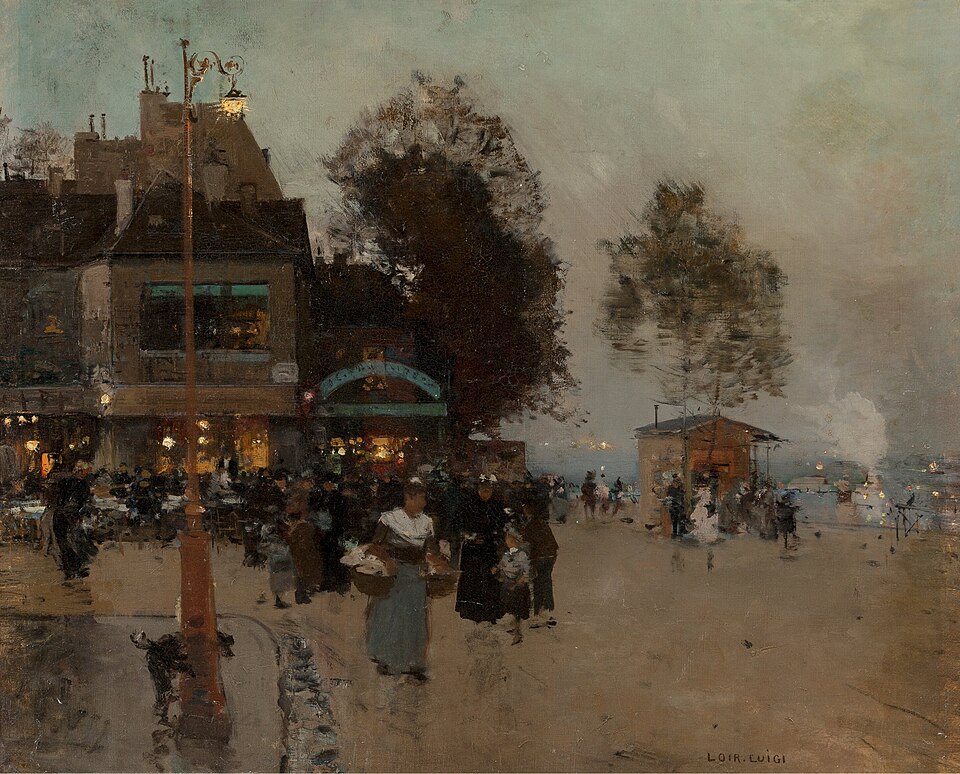
His influence is evident in the continuing appeal of urban realism and cityscape painting. Though never a revolutionary, Loir’s steady focus on ordinary beauty helped broaden the definition of fine art subjects. His blend of architectural precision and atmospheric mood inspired later artists interested in the psychological tone of place. In a city obsessed with novelty, he proved that patience and observation could still triumph.
Posthumous Recognition and Modern Appraisals
In the art market, Loir’s works remain in demand, with paintings regularly auctioned at major houses across Europe and the United States. They appeal not only for their craftsmanship but for their nostalgic evocation of a vanished Paris. His lithographs and posters have also gained appreciation as early examples of graphic design artistry. Exhibitions in recent decades have helped bring his name back into critical conversations.
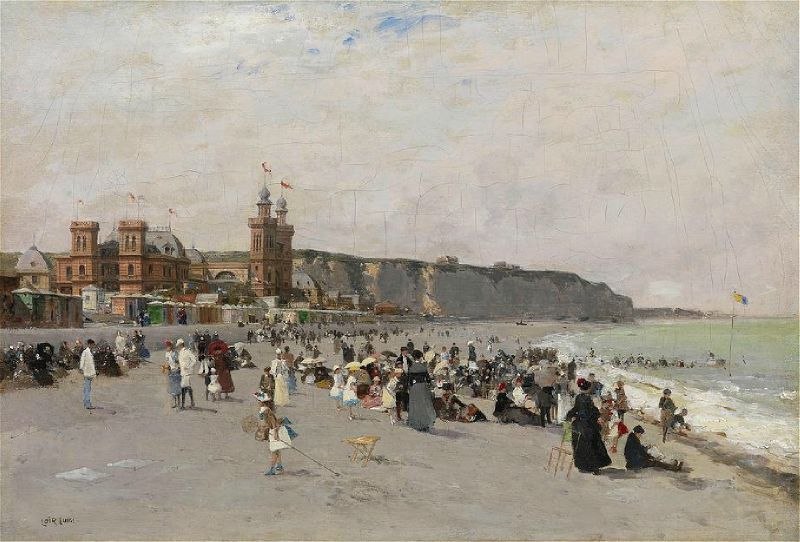
While some see Loir as a documentarian of the Belle Époque, others value him as a master of mood and movement. He occupied a middle ground between Impressionism and Academic Realism, blending the best of both. His ability to give soul to stone and light to fog remains unmatched. Through his work, Luigi Loir ensured that the heart of Paris, in all its weathered charm, would never be forgotten.
Key Takeaways
- Luigi Loir was born in 1845 and became a leading painter of Belle Époque Paris.
- He trained in Parma and later moved to Paris, where his career flourished.
- Loir’s style emphasized urban realism, atmosphere, and architectural detail.
- He found success both in fine art and commercial illustration.
- His legacy lives on through museum collections and continued market demand.
Frequently Asked Questions
- When and where was Luigi Loir born?
He was born on December 22, 1845, in Goritz, part of the Austrian Empire. - What subjects did Loir paint most often?
He focused on Parisian street scenes, weather effects, and urban life. - Was Luigi Loir part of the Impressionist movement?
No, but his work shares similarities, especially in its use of light and atmosphere. - Did he receive formal artistic recognition?
Yes, including a Legion of Honor award in 1898. - Where can I see his work today?
His paintings are held in collections like the Musée d’Orsay and appear at major auctions.