Adriaen Brouwer was born in the small Flemish town of Oudenaarde in 1605 or 1606, during a time of both religious conflict and artistic flourishing in the Spanish Netherlands. Very little documentation survives about his early life, but most scholars agree he was born into a modest artisan family. His father, also named Adriaen, is believed to have worked as a tapestry designer, a trade that likely exposed young Brouwer to visual artistry from a young age. There is no record of Brouwer receiving a formal academic education, but his early artistic promise became evident soon after his adolescence.
By the early 1620s, Brouwer had moved to Antwerp, a leading hub for painters and craftsmen under Spanish rule. Though not formally documented, scholars speculate he may have studied under Jan Cossiers, a respected history painter with Caravaggesque leanings. Antwerp’s vibrant guild system and strong artistic infrastructure would have exposed Brouwer to a wide range of styles and techniques. It is also possible he encountered works by Hendrick van Balen, though evidence is thinner. This early exposure helped shape Brouwer’s instinct for realism, expression, and the human figure.
Birthplace and Artistic Foundations
During this formative period, Brouwer’s developing style began to show influences from the northern Dutch school, especially after his move to the Dutch Republic in the mid-1620s. Genre painting, which focused on everyday scenes and common people, was flourishing in Haarlem, a city Brouwer would soon call home. In that environment, Brouwer began crafting his unique approach to tavern scenes, drawing from both Dutch realism and Flemish naturalism. His artistic instincts already favored raw emotion and unrefined settings.
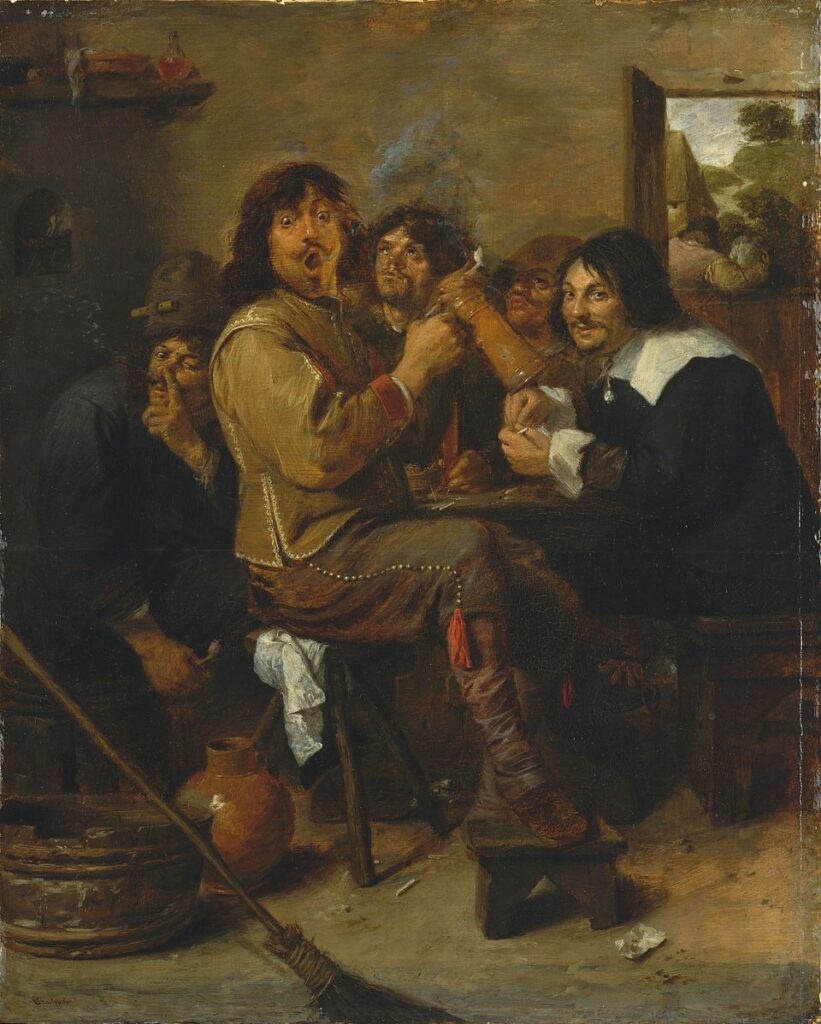
Brouwer’s training and early exposure to genre painting laid the groundwork for a career that would challenge the boundaries between high and low art. Where others painted saints and monarchs, Brouwer depicted peasants, drunks, gamblers, and brawlers. Yet his ability to infuse such subjects with emotion, depth, and sometimes irony set him apart even early on. These years in Flanders, though sparsely documented, were crucial in preparing him for his full emergence as an artist.
Move to the Northern Netherlands and Artistic Emergence
By the late 1620s, Brouwer had relocated to Haarlem, a vibrant artistic center in the Dutch Republic. At the time, Haarlem was home to leading painters like Frans Hals and his brother Dirck Hals, both known for their vivid portrayals of daily life. Brouwer quickly immersed himself in this community, absorbing techniques and influences while developing his distinct style. In Haarlem, he began painting the small, emotionally rich tavern scenes for which he would become renowned.
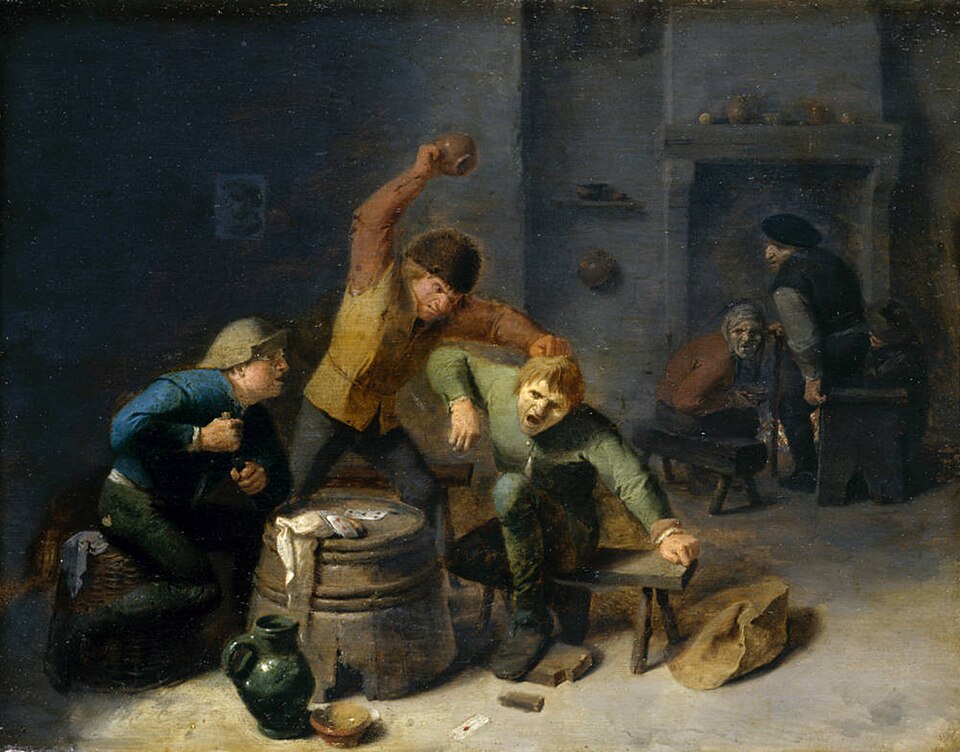
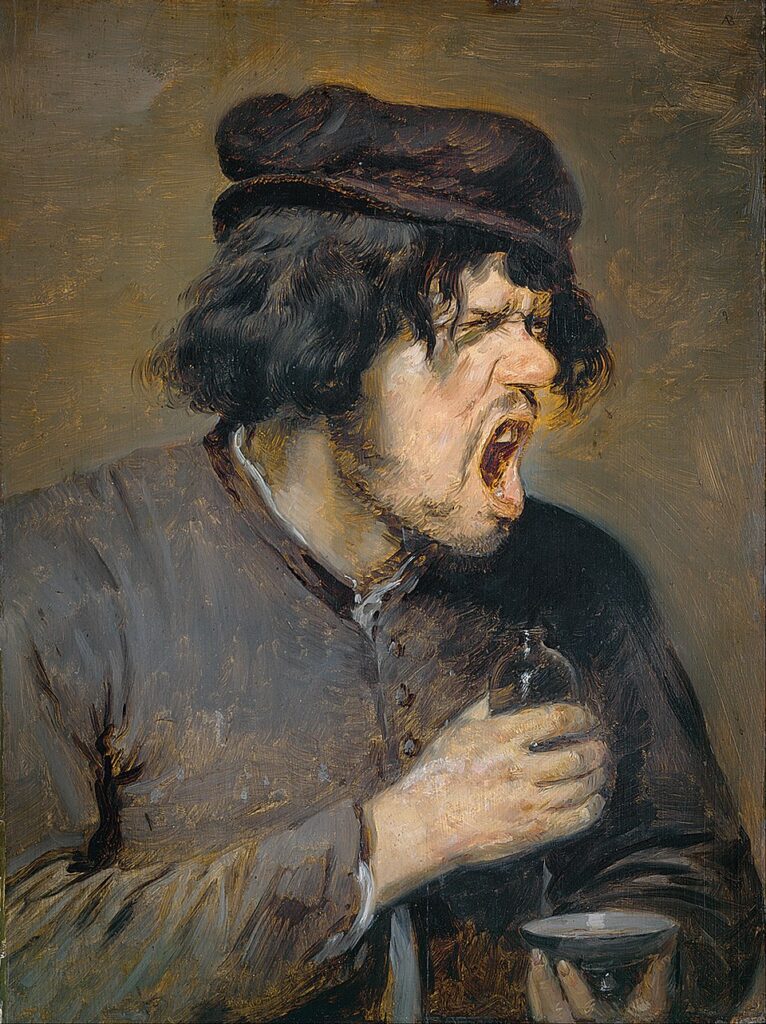
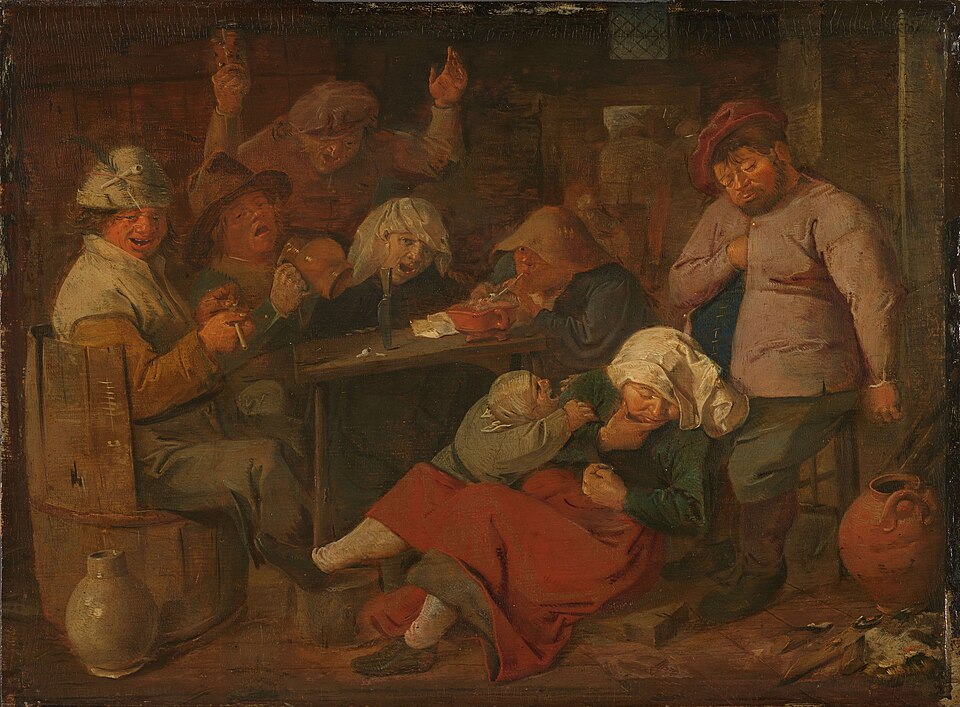
His artistic vocabulary matured quickly, favoring loose brushwork, expressive faces, and dimly lit interiors. Paintings like The Bitter Draught and The Smokers exemplify this early period, capturing not only action but also emotional tone. Although his subjects were humble—men squabbling over dice or laughing over ale—his execution was skillful and psychologically astute. Even early on, he managed to portray mood and atmosphere with remarkable subtlety.
Haarlem and Brouwer’s Early Career
Brouwer’s talent attracted the attention of Peter Paul Rubens, who acquired over a dozen of his paintings during the 1630s. This patronage from one of Europe’s most respected masters helped boost Brouwer’s reputation despite his outsider status in Dutch society. He also began to influence younger painters in the region, such as Adriaen van Ostade, who adopted his themes and loosened brushwork. Though Brouwer never achieved wealth, he earned recognition among his peers.
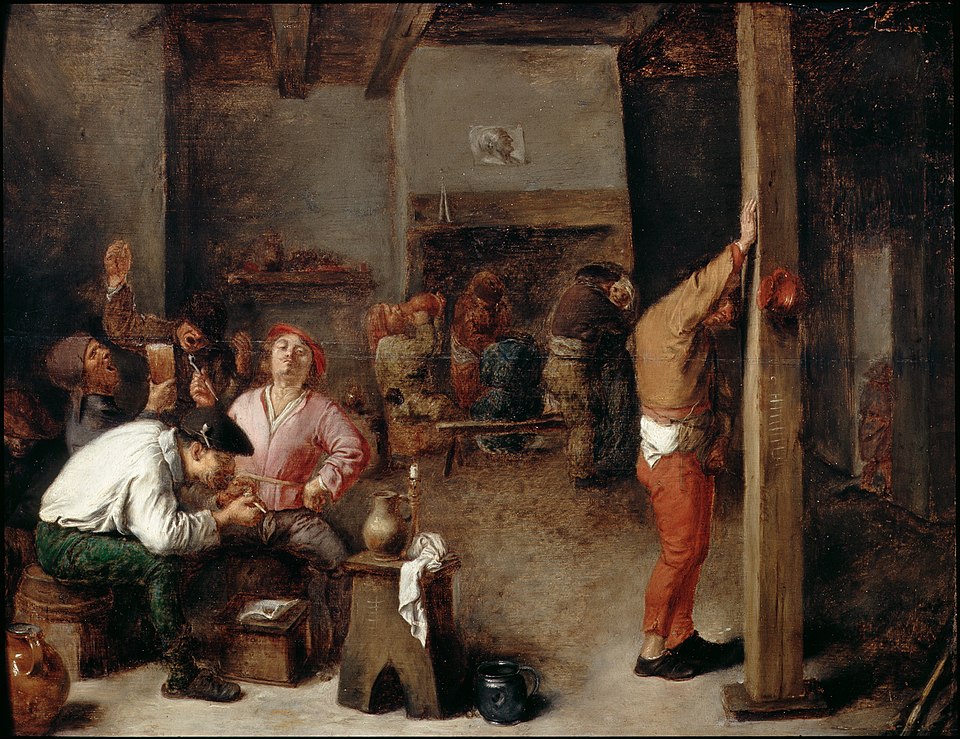
His time in the Dutch Republic was short but pivotal. By mixing Dutch tonal painting with Flemish dramatic flair, Brouwer created a hybrid style that resonated across borders. As his fame grew, he set his sights once again on Antwerp, where he would return around 1631 or 1632. This next chapter would see Brouwer mature into one of the most psychologically insightful painters of his age.
Return to Antwerp and Mature Period
By 1631, Adriaen Brouwer had resettled in Antwerp, the cultural and economic capital of Flanders. He joined the Guild of Saint Luke, the professional organization of painters, signaling his reentry into the elite artistic circles of the city. Antwerp had changed since his youth, but it remained a stronghold of artistic innovation and Catholic patronage. Brouwer’s paintings from this time reveal a deeper sensitivity and increased psychological complexity.
Unlike the cheerful drinkers and smokers of his Haarlem years, Brouwer’s Antwerp work often portrayed suffering, vice, and grotesque expression. The Peasants’ Fight and The Sick Peasant reflect a turn toward the darker aspects of human experience. Yet these paintings also demonstrate greater compositional sophistication and subtlety in lighting. He reduced the scale of the figures, but increased the emotional intensity, setting his work apart from both his Dutch and Flemish contemporaries.
Life Among the Antwerp Guild and Peers
Brouwer was known for his bohemian lifestyle, which included long nights in the very taverns he painted. He was part of a rowdy community of artists and intellectuals that blurred the line between observation and participation. His drinking companion and probable pupil Joos van Craesbeeck would later adopt and expand Brouwer’s themes. The two may have shared studio space, and their stylistic overlap suggests a close bond.
His art found admirers among major names. Anthony van Dyck considered Brouwer important enough to include him in his Iconography series—a collection of engraved portraits of notable individuals. This was a rare honor for a genre painter, most of whom were seen as craftsmen rather than artists. That Van Dyck and Rubens supported his work speaks volumes about Brouwer’s skill and originality. In his short life, he gained respect even from those who painted kings and saints.
Themes and Techniques in Brouwer’s Art
Adriaen Brouwer carved his niche in genre painting, a field often dismissed in his time as trivial. Yet he elevated it through his acute observation of human behavior and his command of technique. His paintings focused almost entirely on ordinary people—barbers, drunks, gamblers, and peasants caught in moments of raw emotion. These characters were not idealized; they were coarse, flawed, and undeniably human.
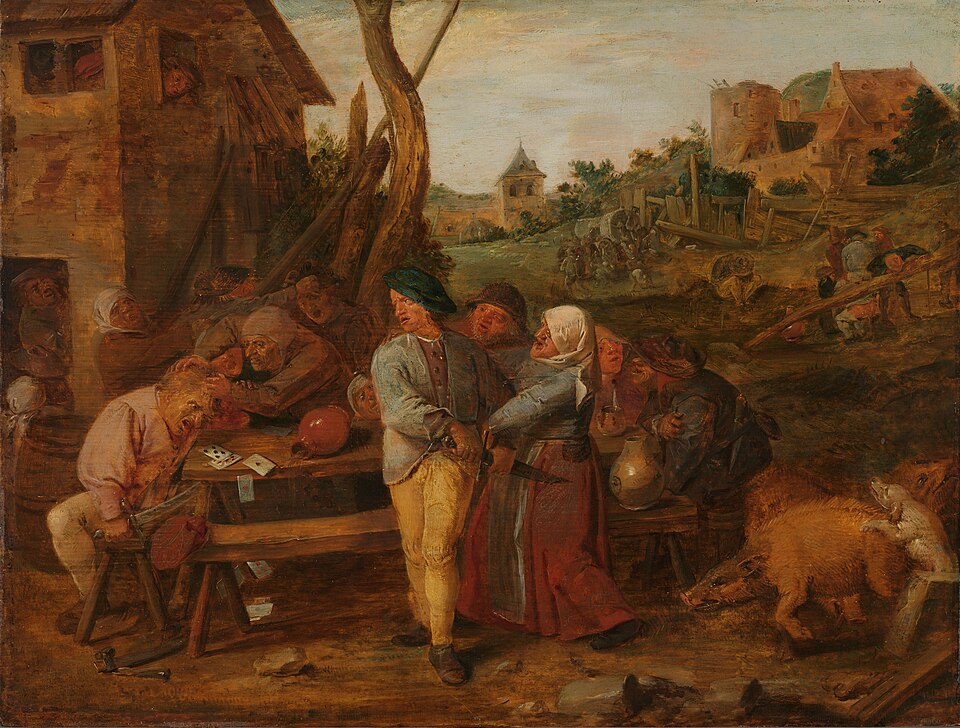
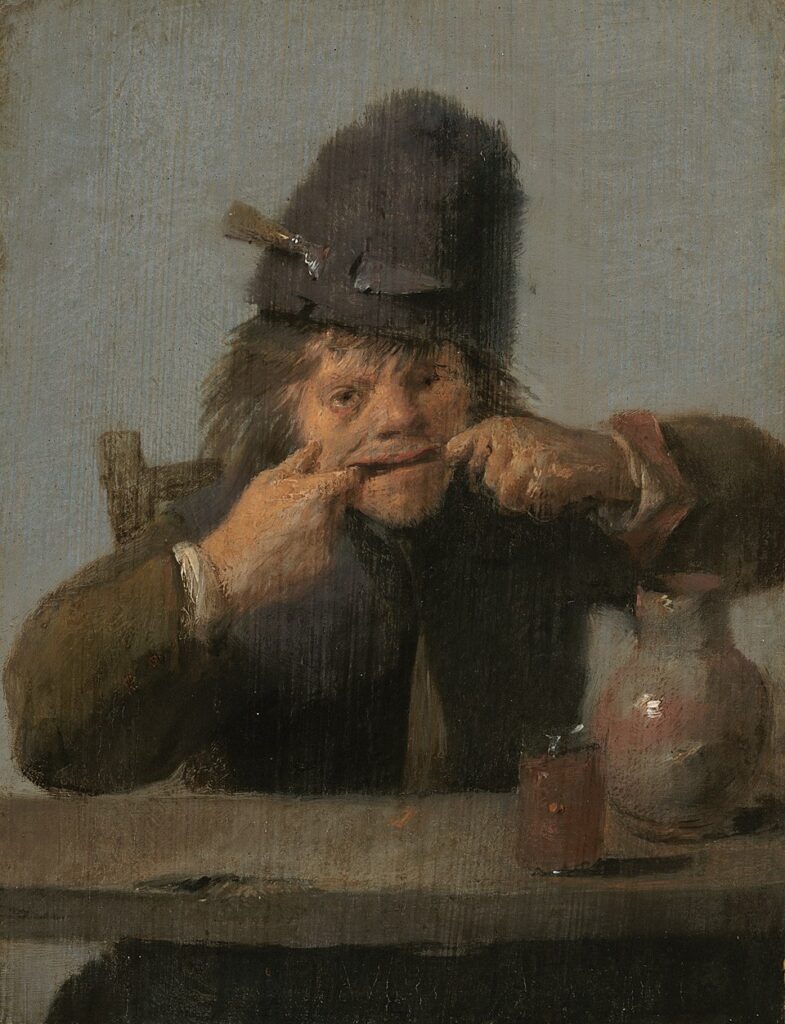
Central to Brouwer’s appeal was his gift for facial expression. In Youth Making a Face and Man in Pain, he captured fleeting moments of joy, anger, suffering, and disgust with startling precision. His brushwork was loose and rapid, yet precise enough to convey deep psychological meaning. He employed warm, earthy tones, typically working in oil on small wooden panels, making his works feel intimate rather than grandiose.
Genre, Expression, and Brushwork
Brouwer’s use of chiaroscuro created drama without theatricality. He let shadows shape his compositions, drawing the viewer’s eye to glimmers of emotion or conflict. His interiors were usually dark and cramped, illuminated by small windows or candlelight that emphasized the isolation of his subjects. This technique not only served mood but also reinforced his themes of vice and human folly.
Though not overtly moralistic, many of Brouwer’s works carried implicit warnings. A man vomiting into a corner or slumped in stupor was not just humorous—it was cautionary. He presented sin and pleasure not as theological abstractions but as physical realities. In this way, he aligned with older vanitas traditions while forging a path toward modern psychological realism. His works remain some of the most honest portraits of human nature in 17th-century art.
Collaborations, Influence, and Reputation Among Peers
Though Brouwer had a short life, his influence reached far beyond his years. He had no formal workshop, but his stylistic imprint appears in the works of many later Flemish and Dutch genre painters. Artists such as David Teniers the Younger and Adriaen van Ostade clearly borrowed from Brouwer’s compositions, lighting, and subject matter. His friend and follower Joos van Craesbeeck helped carry forward his legacy directly.
His friendship with Peter Paul Rubens was particularly significant. Rubens collected at least 17 paintings by Brouwer, an extraordinary gesture given Rubens’s preference for grand historical and mythological works. That a humble genre painter earned such admiration speaks to Brouwer’s originality and mastery. These paintings were found in Rubens’s home after his death in 1640, attesting to his appreciation for Brouwer’s insights into the human soul.
Admiration from Rubens and Van Dyck
Anthony van Dyck also honored Brouwer by engraving his portrait for the Iconography series. Only two other genre painters, Frans Snyders and Jan Brueghel the Elder, received similar treatment, showing how highly Brouwer was regarded. Van Dyck’s engraving presents him not as a comic tavern artist but as a man of intellect and gravity. This respect from his contemporaries ensured that his work would not be forgotten.
His informal collaborations—shared themes, mutual subjects, and stylistic affinities—helped establish a visual language that defined 17th-century Flemish genre painting. Though he never reached the commercial heights of Rubens or Van Dyck, Brouwer succeeded in elevating ordinary scenes to the level of fine art. He left behind a powerful legacy: the notion that human expression, even at its most vulgar, is worthy of serious artistic consideration.
Final Years and Mysterious Death
By 1636, Brouwer’s health had begun to decline. He continued to work in Antwerp, but increasingly struggled with illness. Despite his declining condition, he still produced works of astonishing emotional depth, such as The Bitter Draught and The Duel. These paintings suggest an artist acutely aware of human mortality. His final years, though shrouded in some mystery, were productive in terms of artistic achievement.
In January 1638, Brouwer died at the young age of 32 or 33, likely of tuberculosis or another illness. While earlier accounts speculated he may have died in prison, this has been disproven by modern research. He was buried in the Carmelite church in Antwerp, a sign of some esteem, though he died in relative poverty. His funeral was paid for by fellow artists, indicating he was respected and mourned.
Illness, Death, and Burial
The loss of Brouwer at such a young age stunned many of his peers. His psychological insight and genre mastery were just beginning to mature, and his best years likely lay ahead. That Rubens and Van Dyck continued to praise him even after death helped solidify his posthumous fame. Collections of his work began to circulate in both Flanders and the Dutch Republic, and copies of his most popular scenes appeared frequently.
Within a generation, Brouwer’s style had become canonical in Flemish genre painting. Even as his life faded into legend, his images endured. The demand for his works remained steady throughout the 17th and 18th centuries. Though never fashionable in the academic sense, Brouwer retained a quiet but lasting hold on the European imagination.
Legacy in Flemish Art and Modern Scholarship
Adriaen Brouwer’s legacy is more profound than his modest output might suggest. He painted perhaps only 50–60 surviving works, yet each one offers a window into the emotional life of the 17th-century common man. His ability to portray the entire spectrum of human emotion—from laughter to agony—places him alongside the great psychological painters of history. In many ways, Brouwer anticipated the realism and human depth seen later in Rembrandt and Goya.
His works now reside in major collections across Europe, including the Louvre, Rijksmuseum, Mauritshuis, and Alte Pinakothek. In recent decades, art historians such as Justus Müller Hofstede have re-evaluated Brouwer’s importance. No longer seen as merely a painter of taverns, he is now recognized as a master of human character and expressive technique. Scholarly exhibitions in the 20th and 21st centuries have restored him to the center of Flemish art history.
Rediscovery and Museum Collections
Modern viewers continue to be captivated by Brouwer’s honesty and intimacy. His figures are not idealized; they are flawed, weary, and painfully real. This realism speaks not only to his time but to universal human experience. In a world often obsessed with grandeur and spectacle, Brouwer’s small paintings whisper truths that still resonate.
In sum, Adriaen Brouwer remains one of the most underrated yet influential artists of the 1600s. His command of brush, light, and mood gave dignity to ordinary life. Through his art, laughter and sorrow, sin and reflection are all given form—and remembered.
Key Takeaways
- Adriaen Brouwer was born in Oudenaarde in 1605/1606 and trained in Antwerp.
- He developed his signature style in Haarlem, influenced by Dutch genre painters.
- His mature work, done in Antwerp, explored vice, suffering, and human folly.
- Admirers included Rubens and Van Dyck, who helped cement his legacy.
- Though he died young in 1638, his influence on Flemish painting was lasting.
FAQs
- Where was Adriaen Brouwer born?
He was born in Oudenaarde, Flanders, around 1605 or 1606. - What kind of art did Brouwer create?
He specialized in genre scenes—tavern life, peasants, and expressive human moments. - Who were Brouwer’s major influences?
Frans Hals, Jan Cossiers, and early Flemish genre painters shaped his early style. - Why is Brouwer considered important today?
His psychological realism and expressive technique set a precedent for later painters. - Where can I see Brouwer’s paintings today?
His works are in the Louvre, Rijksmuseum, Mauritshuis, and other major collections.