Jerusalem is a city unlike any other. Its very name evokes centuries of yearning, conflict, holiness, and creative inspiration. From a distance, its golden stones and clustered rooftops form a skyline layered with sacred meanings; up close, every inch of its streets tells stories carved in limestone and layered in pigment. Yet to truly understand Jerusalem’s art history is to approach it not as a linear narrative but as a palimpsest—a manuscript rewritten again and again, where traces of previous texts remain faintly visible beneath each new inscription. For millennia, artists, architects, and craftsmen have responded to Jerusalem’s spiritual and political weight, leaving behind works that simultaneously venerate, idealize, reinterpret, and sometimes erase.
This article traces the art history of Jerusalem with an emphasis on Jewish, classical, Christian, and Israeli contributions—cultures that have left a profound visual legacy in the city. While Arab and Islamic art undeniably shaped parts of Jerusalem’s aesthetic heritage, this deep dive will focus on other layers of the city’s visual past, particularly from the Jewish, Roman, Byzantine, Crusader, and modern Israeli periods. The result is a historical and cultural journey that highlights the diversity of artistic expression rooted in this singular city, through the lens of its non-Arab traditions.
Jerusalem’s earliest visual culture emerges from the pages of the Hebrew Bible, where the Temple in Jerusalem is described with an almost obsessive attention to materials, proportions, and symbolic details. Though few physical artifacts survive from the First Temple period, the descriptions alone inspired centuries of Jewish art, from synagogue mosaics to medieval manuscripts and modern interpretations of sacred space. The visual culture of ancient Israel did not develop in isolation. By the time of the Second Temple, Jerusalem stood at a crossroads of Mediterranean and Near Eastern civilizations. Hellenistic and Roman techniques filtered into Jewish building practices and decorative arts, culminating in Herod the Great’s monumental renovations of the Temple Mount—an architectural feat admired by Roman historians and Jewish chroniclers alike.
As Christianity took root and was eventually adopted by the Roman Empire, Jerusalem was reborn as a Christian city. Emperors and pilgrims transformed the city’s landscape, constructing basilicas and shrines that sought to mark every holy site. Mosaic floors, wall paintings, and reliquaries proliferated, culminating in works like the Church of the Holy Sepulchre. When Crusaders arrived centuries later, they brought with them a distinct visual language of Latin Christendom. They carved out a brief but intense chapter in Jerusalem’s artistic story—erecting fortifications and churches, importing Western iconography, and leaving behind illuminated manuscripts that fused European and Levantine styles.
Throughout the long centuries of Jewish exile, Jerusalem remained a symbol of spiritual longing. Artists in faraway lands turned their imagination toward the Holy City, depicting it in illustrated Bibles, synagogue art, and liturgical poetry. With the rise of Zionism and the return of Jews to the land of Israel, Jerusalem once again became a physical and creative center. Early 20th-century Jewish artists, particularly those associated with the Bezalel School, sought to create a distinctly Hebrew visual idiom that fused European techniques with Jewish symbolism and the landscape of the Land of Israel.
After the establishment of the State of Israel in 1948, and especially following the reunification of Jerusalem in 1967, the city emerged as a vibrant—if complex—hub of artistic activity. Contemporary artists in Jerusalem grapple with themes of memory, place, sacredness, and identity. Museums such as the Israel Museum and the Tower of David curate this evolving legacy, while countless exhibitions and installations reflect on Jerusalem’s layered past.
To study the art history of Jerusalem is to witness the convergence of aesthetics and belief, empire and exile, revival and ruin. Each era added new brushstrokes, new carvings, new visions—rarely erasing what came before, but transforming it. The chapters that follow will explore these epochs in depth, revealing how Jerusalem’s art history is inseparable from its spiritual and political destiny. It is a visual record not only of what was, but of what has been hoped for, fought over, mourned, and sanctified.
Biblical Foundations and Early Jewish Art
The origins of Jerusalem’s art history are rooted in a paradox: a culture deeply invested in material beauty, yet simultaneously wary of visual representation. The Hebrew Bible—so central to Jewish life—lays out complex and often ambivalent attitudes toward image-making. On one hand, the second commandment explicitly forbids the creation of graven images; on the other, the very same scriptures describe in lavish detail the construction of the Tabernacle and the First Temple, replete with gold-covered cherubim, embroidered curtains, and intricate ritual objects. This tension shaped the nature of early Jewish art in Jerusalem, fostering a tradition that emphasized sacred space, ornamental detail, and symbolic abstraction rather than figural representation.
The earliest phase of Jerusalem’s visual culture is associated with the First Temple, or Solomon’s Temple, constructed in the 10th century BCE. Although the building itself was destroyed by the Babylonians in 586 BCE and no trace of its structure remains above ground, biblical texts like 1 Kings and 2 Chronicles provide vivid descriptions. These passages detail cedar-lined walls, gold overlay, carved palm trees and pomegranates, and the Ark of the Covenant housed beneath golden-winged cherubim. This vision of sacred aesthetics—rich in color, texture, and symbolism—set a foundational model for later Jewish architectural and decorative arts, both within and beyond Jerusalem.
Archaeological evidence from the broader region offers some insight into what First Temple-period Jerusalemite art might have looked like. Decorative ivories, ceramic motifs, and seals from contemporaneous Judean sites like Lachish and Ramat Rachel reveal a fusion of Phoenician, Egyptian, and Assyrian styles—a convergence likely mirrored in Jerusalem’s elite buildings. These influences suggest that despite theological prohibitions, ancient Judah participated in the cosmopolitan visual culture of the ancient Near East. Objects such as the famous “Lachish Reliefs,” although crafted by the Assyrians to depict their conquest of Judah, incidentally offer glimpses into the attire, architecture, and material culture of 8th-century BCE Jerusalem.
With the return from Babylonian exile in the 6th century BCE and the construction of the Second Temple, Jerusalem entered a new phase of religious and artistic development. Though less ornate than Solomon’s Temple, the rebuilt sanctuary eventually became the focal point of Jewish ritual life for centuries. Herod the Great’s ambitious expansion of the Second Temple in the 1st century BCE transformed Jerusalem into a marvel of Roman-era architecture. Employing Hellenistic and Roman building techniques, Herod doubled the size of the Temple Mount, constructed massive retaining walls (parts of which still survive as the Western Wall), and built monumental gateways, colonnades, and courts. His work reflected both loyalty to Roman imperial aesthetics and a strategic assertion of Jewish religious grandeur.
Herodian Jerusalem likely displayed an aesthetic fusion—marble colonnades, Corinthian capitals, and vast public spaces framed by mosaics and frescoes. While Jewish art continued to steer clear of overt figural imagery in sacred contexts, it embraced ornamentation through geometry, vegetal motifs, and symbolic elements such as the menorah, shofar, and pomegranate. Such motifs appeared on coinage, ossuaries, and synagogue decorations, underscoring a vibrant visual culture grounded in religious identity.
Some of the most evocative artistic traces from this period are found not in Jerusalem proper, but in outlying sites like the synagogue at Dura-Europos (in modern Syria) and the catacombs of Jewish communities in Rome. These places offer a sense of how Jewish artists might have visualized biblical stories or symbolic content, sometimes even incorporating human figures in defiance of traditional taboos. While Jerusalem’s own synagogues and public art from the era were destroyed or overbuilt in subsequent centuries, such artifacts offer indirect echoes of what may have once adorned the holy city.
The Jewish resistance to figural art is often overstated in modern interpretations. In practice, it seems to have been a fluid boundary—shaped by context, geography, and theological nuance. Jerusalem’s artists, artisans, and architects negotiated this boundary by emphasizing symbolic language and sacred abstraction. The result was a body of visual expression that felt deeply spiritual without falling into idolatry, echoing the biblical ethos of a God beyond image, yet present in beauty.
In sum, early Jewish art in Jerusalem was not an art of portraits or idols, but of sacred presence. It articulated holiness through material richness, spatial grandeur, and symbolic design. The city’s identity as the spiritual epicenter of Judaism meant that its artistic choices—however restrained by religious law—carried extraordinary weight. Even centuries after the First and Second Temples were reduced to ruins, their visual memory endured, embedded in scripture, echoed in diaspora synagogues, and revived in modern artistic imagination. This enduring influence is a testament to how early Jerusalem, even with its limited surviving artifacts, became a wellspring for Jewish visual culture across time and space.
Art and Architecture of the Second Temple Period
The Second Temple period, spanning roughly from 516 BCE to 70 CE, marked a transformative chapter in the artistic and architectural development of Jerusalem. This era bridged worlds—linking post-exilic Jewish religious revival with imperial currents from Persia, Greece, and eventually Rome. During these centuries, Jerusalem was not only rebuilt physically but also reimagined as a center of Jewish identity and piety. While the constraints of Jewish religious law continued to shape the nature of its visual culture, the city became a vibrant site for experimentation in sacred architecture, monumental building, and symbolic ornamentation.
Following the return from Babylonian exile, the Jewish community in Jerusalem began the arduous task of reconstructing the destroyed First Temple. The resulting Second Temple, initially modest in scale and simplicity, was a symbol of national restoration. Though it lacked the opulence of Solomon’s Temple as described in biblical texts, it became the central axis of Jewish worship and pilgrimage. The Book of Ezra records the emotional laying of its foundations, while the prophet Haggai encouraged the community to see its spiritual worth even if its outward splendor was diminished.
By the 1st century BCE, under the reign of Herod the Great—a Roman client king with grand ambitions—the Second Temple underwent a massive transformation. Herod’s expansion project was not merely a renovation; it was a radical architectural statement meant to align Jewish religious life with the grandeur of the Roman imperial world. The Temple Mount platform was doubled in size, enclosed by massive retaining walls (parts of which still form the Western Wall), and adorned with colonnades, gates, and courtyards. According to the Jewish historian Flavius Josephus, Herod’s Temple was “covered on all sides with massive plates of gold,” so dazzling that it blinded onlookers in the morning sun.
The architecture combined native Judean forms with Hellenistic and Roman elements. Corinthian columns, engaged pilasters, and sculpted friezes adorned the outer courts, while the inner sanctum—accessible only to the priestly class—maintained strict ritual purity. Although the sanctuary itself likely remained austere in accordance with Jewish aniconism, the surrounding structures featured artistic embellishments that balanced religious restrictions with architectural splendor. The interplay of white marble, gold accents, and finely worked stone offered a vision of sacred power that rivaled the great temples of the Roman world.
One of the most fascinating aspects of this period is the selective adaptation of artistic motifs. While Jewish law forbade graven images, artisans employed a rich visual language drawn from nature and geometry. The menorah, palm branches, pomegranates, and other temple symbols appeared in stucco reliefs, stone carvings, and coinage. These images reinforced religious identity while avoiding direct representation of divine or human forms. The Judean coins minted during this era, for example, bear stylized amphorae, lulavs (palm fronds), and inscriptions in Paleo-Hebrew, serving both as political declarations and as artifacts of aesthetic expression.
Urban development in Herodian Jerusalem extended beyond the Temple. Herod’s palace complex, the Antonia Fortress, and the theater near the Hinnom Valley showcased the integration of Roman civic architecture into the city’s fabric. The opulent residential mansions of the priestly elite—discovered in the Jewish Quarter excavations—contain mosaic floors, frescoed walls, and imported luxury goods. These finds indicate a cosmopolitan elite who balanced adherence to Jewish law with participation in the broader Greco-Roman world.
A particularly remarkable discovery is the “Burnt House,” believed to be the residence of a wealthy priestly family in the Upper City. Preserved under layers of ash from the Roman destruction in 70 CE, the house includes stone tables, ritual baths (mikva’ot), and fragments of frescoes in Roman style. Similarly, the so-called Herodian Quarter reveals homes with painted walls in red, black, and ochre—a palette echoing the fresco traditions of Pompeii. These visual expressions, though secular in subject, show that Jerusalem’s artists and patrons were not isolated but deeply engaged in the cultural dialogues of their time.
Yet for all its artistic richness, the art of the Second Temple period was ultimately in service to a sacred narrative. The Temple itself was not merely a building but the locus of divine presence—the place where heaven and earth met, where rituals could atone for sin and unify the nation. Every architectural decision, every decorative motif, carried theological weight. The restraint from figural representation was not a lack but a statement of transcendence: God could not be captured in an image, only approached through symbol and space.
The destruction of the Second Temple by the Romans in 70 CE marked a cataclysmic rupture in Jewish life and art. Yet its memory endured, shaping centuries of artistic longing. From medieval synagogue mosaics to modern Israeli painters, the vision of Herod’s Temple—gleaming with gold and towering above Jerusalem—remained a touchstone. The art and architecture of the Second Temple period thus represent not only a historical moment but a spiritual archetype, echoing through Jewish cultural imagination long after the physical stones had fallen.
Roman and Hellenistic Influences
By the time Jerusalem entered the Second Temple period, the city was not only a religious capital but also a crossroads in the Hellenistic world. After the conquests of Alexander the Great in the late 4th century BCE, Judea came under the cultural and political influence of Greek civilization—a phenomenon that intensified under successive rulers from the Ptolemaic and Seleucid dynasties. Later, with the Roman conquest of the Eastern Mediterranean in the 1st century BCE, Jerusalem became part of a vast imperial web. These transitions did not dilute Jewish religious identity, but they introduced powerful aesthetic, architectural, and urban innovations that would redefine the city’s visual culture.
The Hellenistic period, especially under Seleucid rule, was marked by a surge in urbanization, architectural standardization, and classical design elements. Greek ideals of symmetry, proportion, and civic grandeur began to shape the architecture of many Near Eastern cities. Although Jerusalem did not fully become a Hellenistic polis—largely due to its central religious function and resistance to assimilation—the imprint of Hellenistic visual culture is visible in both archaeological remains and the broader stylistic vocabulary of the era.
One of the most visible expressions of this influence is in the construction and layout of public buildings. Though few Hellenistic structures survive in Jerusalem proper due to subsequent Roman and later building phases, excavations have revealed the use of ashlar masonry, column bases, and fragments of entablatures that conform to Greek and later Roman architectural norms. The use of the Ionic and Doric orders, along with the integration of peristyles and decorative moldings, illustrates the degree to which classical vocabulary had been absorbed.
This period also saw the increasing use of imported materials and decorative motifs. Excavations in the City of David and the Western Hill have uncovered imported pottery, amphorae stamped with Greek letters, and locally-made items that imitate Hellenistic forms. Coins minted under the Hasmonean rulers—Jewish priest-kings who took power following the Maccabean Revolt—combine Hebrew inscriptions with Hellenistic iconography, such as cornucopias and anchors. These hybrid forms speak to a conscious engagement with the visual language of surrounding cultures, even while maintaining a distinct Jewish identity.
The most dramatic integration of Roman aesthetics came during the reign of Herod the Great. Herod, appointed King of Judea by the Roman Senate and a close ally of Augustus, viewed architecture as a political and ideological tool. He transformed Jerusalem into a Roman-style metropolis without erasing its Jewish sanctity. His building projects fused imperial grandeur with local tradition—an approach seen most notably in the renovation of the Temple Mount, but also in civic structures such as the Antonia Fortress, the theater, and possibly a hippodrome. The use of large-scale ashlar stones with finely chiseled margins, known as Herodian masonry, became a hallmark of the period and remains visible today in the Western Wall.
Roman influence extended into domestic architecture as well. Excavations of priestly homes in the Upper City—such as those in the Herodian Quarter—have revealed peristyle courtyards, stone furniture, and frescoed walls painted in the Second Pompeian Style, characterized by architectural illusions and bold colors. These techniques originated in Italy and made their way across the empire, suggesting that Jerusalem’s elite were culturally conversant with the latest trends from Rome and Alexandria. Yet these homes also contain ritual baths (mikva’ot), stone vessels (which were considered ritually pure), and Sabbath lamp niches—signs of a deliberate and deeply felt Jewish religious life.
What emerges from this confluence of styles is a picture of a Jerusalem that was not isolated or monolithic, but adaptive. The adoption of Roman urban design, art, and technology did not signal a loss of cultural identity. Rather, Jewish leaders and patrons in Jerusalem selectively appropriated elements that enhanced their city’s beauty, functionality, and prestige, while maintaining clear boundaries around sacred spaces and religious law. This blend of adaptation and resistance is perhaps best illustrated in the architecture of the Temple Mount itself, where Roman engineering served the design of a uniquely Jewish sanctuary.
Another telling example is the Tomb of the Sanhedrin, a burial complex in northern Jerusalem traditionally associated with members of the Jewish court. The tomb features a classical pediment, columns, and decorative reliefs—all hallmarks of Roman funerary architecture. However, its inscriptions and burial customs remain distinctly Jewish. These hybrid forms testify to a cultural dialogue rather than a monologue: Roman influence was not imposed so much as interpreted and repurposed.
In sum, the Roman and Hellenistic influences on Jerusalem’s art and architecture were neither superficial nor wholly assimilative. They were integrated thoughtfully, often with great technical skill, into a framework that respected Jewish religious boundaries and priorities. The visual culture of this period reflects a society negotiating its place in a wider imperial world—absorbing the aesthetics of its neighbors while asserting its own spiritual center. Far from diminishing Jerusalem’s uniqueness, these influences enriched its artistic vocabulary and prepared the ground for future expressions of Jewish creativity in both religious and civic spheres.
Byzantine Christian Jerusalem
The transformation of Jerusalem under Byzantine rule marked one of the most significant shifts in the city’s visual and cultural identity. With the conversion of the Roman Emperor Constantine to Christianity in the early 4th century CE, Jerusalem—long revered but marginal under pagan Rome—was elevated to the status of a Christian capital. This new status ignited an unprecedented wave of construction, pilgrimage, and artistic production that fundamentally reimagined the city’s appearance. Jerusalem was no longer simply the site of the Jewish Temple ruins or a Roman provincial town; it became the earthly reflection of the heavenly Jerusalem described in Christian scripture—a place where architecture and art served to sanctify space and materialize theology.
The catalyst for this transformation was the imperial patronage of Constantine and his mother Helena, whose pilgrimage to the Holy Land in the early 320s CE inspired a program of sacred topography. According to Christian tradition, Helena identified key sites associated with the life, death, and resurrection of Jesus Christ. Chief among these was the site of Golgotha, where Christ was crucified, and the nearby tomb from which he was said to have risen. Over these locations, Constantine commissioned what would become the most important building in Christian Jerusalem: the Church of the Holy Sepulchre.
Completed in 335 CE, the Church of the Holy Sepulchre was not a single structure but a complex that included a basilica (the Martyrium), an open courtyard, and the rotunda (the Anastasis) built over the tomb. This architectural arrangement, with its careful processional flow and symbolic layering, was a radical innovation. For the first time, Christian sacred architecture in Jerusalem was not merely functional—it was narrative. Pilgrims entering the space were guided through the story of Christ’s Passion, from judgment to crucifixion to resurrection. The church thus acted as a spatial gospel, with its walls, arches, and columns enacting the sacred drama.
Art within the church complex, though now mostly lost due to centuries of damage and rebuilding, would have included mosaic decoration, marble revetment, and liturgical furnishings adorned with Christian symbols: the cross, the chi-rho, the alpha and omega. These motifs, while relatively austere in the early period, carried immense theological meaning. They signaled the triumph of the new faith, the sanctification of suffering, and the emergence of a universal church centered—symbolically and geographically—on Jerusalem.
The Holy Sepulchre was only the beginning. Under Constantine and his successors, Jerusalem became a canvas for Christian architecture. The Church of the Ascension on the Mount of Olives, the Church of the Nativity in nearby Bethlehem, the Church of Saint Sion, and the Eleona (at the traditional site of Jesus’ teachings) were all erected in the 4th century. These structures followed the basilica model familiar from Roman civic architecture: long nave, side aisles, clerestory windows, and an apse at the east end. However, their purpose was now sacred, their orientation symbolic, and their decoration didactic.
Mosaics played a crucial role in Byzantine religious art. Though only fragments survive from early Jerusalem churches, later Byzantine mosaics elsewhere in the empire suggest a tradition rich in gold tesserae, abstract patterning, and figural scenes from scripture. These visual programs were not merely decorative; they were theological tools designed to instruct, inspire, and transport the viewer. While Jewish art of earlier centuries emphasized abstraction and avoidance of human forms, Byzantine Christian art embraced the image as a mediator of divine truth.
Jerusalem also became a destination for Christian pilgrimage, and this movement gave rise to a parallel industry of devotional art. Pilgrims acquired oil lamps, ampullae (small flasks), crosses, and medallions bearing stylized images of the Holy Sepulchre, Christ’s tomb, or the Mount of Olives. These objects, mass-produced yet spiritually charged, spread the image of Jerusalem throughout the Christian world. Even from afar, believers could hold a piece of the Holy City—both literally and metaphorically—in their hands.
Urbanistically, the Byzantine era reshaped Jerusalem’s layout. Streets were rerouted to accommodate religious buildings; the Cardo, the main north–south road, was developed with colonnades and marketplaces. New gates were added, aqueducts repaired, and the city’s walls expanded. All of this was oriented around the Christian sacred geography. Yet, interestingly, Jewish memory of the Temple was not erased entirely. The Temple Mount itself, still lying in ruins after its destruction in 70 CE, was left untouched by Christians. Some viewed it as a site of divine judgment; others as a prophetic absence awaiting fulfillment. It would remain a place of ruin—and latent symbolism—through the Byzantine centuries.
Despite Jerusalem’s prominence in the Christian imagination, local art from this period is surprisingly understated. Unlike Constantinople or Ravenna, Jerusalem did not develop a large school of mosaicists or icon painters. Its role was primarily as a site—not a center—of art. What it offered was space: the geography of Christ’s life, death, and resurrection rendered into walkable, visible, tactile form. Pilgrims did not come to see great paintings; they came to stand in the footsteps of the divine.
The Byzantine era in Jerusalem ended abruptly with the Persian conquest in 614 CE, followed by the Arab conquest in 638 CE. Many churches were damaged or destroyed, and the city entered a new phase of its political and cultural history. Yet the artistic and architectural legacy of the Christian empire endured. The Church of the Holy Sepulchre, though repeatedly damaged, remained a pilgrimage destination. The Christian layout of the city would influence future urban planning. And the idea of Jerusalem as a sacred geography—mapped through art and architecture—would echo through medieval maps, Crusader dreams, and Renaissance visions.
In the history of Jerusalem’s art, the Byzantine era stands out as a moment of both spiritual crystallization and visual storytelling. It gave the city a new identity—not as the lost city of a destroyed Temple, but as the living site of divine incarnation. In doing so, it redefined Jerusalem not only for its own time, but for the entire Christian world that followed.
The Crusader Kingdom and Latin Christian Art
When the First Crusade reached Jerusalem in July 1099, it culminated not only in military conquest but in an attempt to rewrite the city’s spiritual and artistic landscape. The Crusader capture of Jerusalem marked a dramatic pivot in the city’s art history: Western European Christians, imbued with Romanesque and early Gothic aesthetics, overlaid their own visual language onto the sacred geography already shaped by Byzantine, Jewish, and Roman traditions. The Latin Kingdom of Jerusalem, which lasted from 1099 to 1187, left behind a distinct body of architecture and art—a medieval transplant of Latin Christendom into the Levantine world.
The Crusaders, most of whom hailed from regions like France, Flanders, and Normandy, saw themselves as not merely occupying Jerusalem but restoring it. They believed they were reclaiming a holy city that had been desecrated by centuries of non-Christian control. This ideology translated into a frenzy of construction and redefinition, especially of key Christian sites. The foremost among these was the Church of the Holy Sepulchre, which the Crusaders found partially in ruins and Byzantine in character. Rather than restore it to its previous form, they undertook a comprehensive reconstruction that reflected Latin liturgical needs and Western architectural norms.
The rebuilt Church of the Holy Sepulchre, consecrated in 1149, became the centerpiece of Crusader Jerusalem. They added Romanesque features such as barrel vaults, rounded arches, massive piers, and carved capitals. The rotunda over the tomb was preserved, but the surrounding structures were remodeled into a complex with multiple chapels, ambulatories, and entryways—all designed to facilitate pilgrimage and processions. The building’s sculptural program featured foliate capitals, biblical scenes, and motifs familiar from French and Norman churches, though executed by local artisans. This blend of imported style and regional technique created a hybrid form of Crusader Romanesque.
Elsewhere in the city, the Crusaders repurposed existing structures for their own religious and administrative use. The Al-Aqsa Mosque, renamed the “Palace of Solomon,” became the headquarters of the Knights Templar. The Dome of the Rock was converted into a Christian shrine and reinterpreted as the Templum Domini—“Temple of the Lord”—reflecting the Crusaders’ attempt to claim continuity with the biblical past. While little original Crusader decoration survives within these buildings, manuscripts and Western accounts describe their re-sanctification with Christian altars, crosses, and icons.
Architecturally, the Crusader impact extended beyond Jerusalem into surrounding regions of the Latin Kingdom. Fortified monasteries, pilgrimage hostels, and military castles (such as the famed Krak des Chevaliers in present-day Syria) shared design principles with those in Jerusalem. The Latin city was organized to facilitate Christian worship and pilgrimage: new churches were built over traditional sites such as the Pool of Bethesda, the Mount of Olives, and Gethsemane. The result was a city transformed into a medieval Christian reliquary, each stone a testament to the presence of Christ and the triumph of the Crusading ideal.
Crusader art in Jerusalem was not confined to architecture. Illuminated manuscripts, metalwork, and relic containers flourished under the patronage of Latin clergy and knightly orders. The scriptorium of the Holy Sepulchre produced liturgical books that combined Romanesque illustration with local stylistic touches, including Eastern color palettes and floral motifs. One notable example is the Melisende Psalter, created in the 1130s for Queen Melisende of Jerusalem. Its richly illuminated pages exhibit a synthesis of Byzantine iconography and Western ornamentation, reflecting the cosmopolitan character of the Crusader court.
The Latin clergy and royalty also commissioned reliquaries and ecclesiastical vessels crafted in precious metals, often adorned with enamel, gemstones, and filigree. These objects were used in elaborate liturgies and were intended to underscore the sanctity and magnificence of Latin Christian rule. Some were made locally; others were imported from Europe, suggesting a dynamic trade in sacred art that connected Jerusalem to the broader Christian world. While few have survived in situ, inventories and pilgrim descriptions paint a picture of lavish ecclesiastical treasures housed in Crusader churches.
Despite its vigorous activity, Crusader art in Jerusalem was marked by a tension between aspiration and impermanence. The Latin Kingdom was always fragile—geopolitically precarious and dependent on support from Europe. The fall of Jerusalem to Saladin in 1187 ended nearly ninety years of Latin rule, and with it, the dominance of Crusader aesthetics in the city. While many of their structures remained in use (some later reclaimed by Christian communities), others were altered or replaced during the subsequent Islamic periods.
Yet the artistic legacy of the Crusaders endured in powerful ways. Pilgrims from the West continued to carry back descriptions, sketches, and souvenirs of the Holy City that influenced European religious art. Crusader iconography, particularly the vision of Jerusalem as both earthly city and divine fortress, took root in Gothic cathedral programs, medieval maps (like the mappa mundi), and chivalric literature. Even as the physical evidence of Crusader Jerusalem faded, its symbolic image as a city of faith, sacrifice, and martial sanctity remained vivid in the Christian imagination.
In summary, the Crusader era in Jerusalem represents a brief but bold attempt to re-inscribe the city in the image of Latin Christianity. Through architecture, manuscript illumination, and liturgical artistry, the Crusaders sought to turn Jerusalem into a European city of God—an effort at once visionary, intrusive, and ephemeral. The result was an artistic corpus that bridged continents, clashed traditions, and left behind a visual echo of medieval Christendom’s most audacious dream.
Armenian Artistic Heritage in Jerusalem
Tucked within the walls of Jerusalem’s Old City lies a distinct and enduring cultural enclave: the Armenian Quarter. Though small in population, the Armenian community of Jerusalem has made an outsized contribution to the city’s artistic and spiritual heritage. Unlike the imperial grandeur of Byzantium or the military splendor of the Crusaders, Armenian art in Jerusalem reflects a quieter, more continuous legacy—one grounded in ecclesiastical tradition, manuscript illumination, ceramic craftsmanship, and architectural preservation. Crucially, it represents a non-Arab Christian presence that has left an indelible mark on the city’s cultural fabric.
The roots of the Armenian presence in Jerusalem date back to at least the 4th century CE, when Armenia became the first nation to adopt Christianity as a state religion. Pilgrimage quickly followed conversion. Armenian monks and ascetics traveled to the Holy Land, and Armenian pilgrims began to settle in the city, establishing monasteries and religious institutions. The community grew significantly in the following centuries, particularly during the Byzantine and Crusader eras, often receiving land and privileges from ruling authorities in recognition of its devout contributions and diplomatic neutrality.
At the heart of the Armenian Quarter stands the Cathedral of St. James, one of Jerusalem’s most atmospheric and artistically rich churches. Built primarily between the 12th and 14th centuries, it incorporates earlier foundations and has been continuously used and maintained by the Armenian Patriarchate. The church’s interior offers a feast for the senses: richly embroidered altar cloths, silver oil lamps suspended from a shadowed dome, and walls covered with tilework and icons. The sanctuary’s design combines traditional Armenian ecclesiastical architecture—modest domes, horseshoe arches, and cruciform layouts—with elements influenced by Byzantine and Crusader styles.
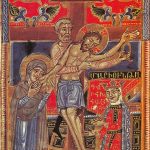
One of the most distinctive aspects of Armenian sacred art is its illuminated manuscripts. The Armenian Patriarchate in Jerusalem houses an extraordinary collection of these works, many of which were produced locally by monastic scribes and artists from the 13th to 18th centuries. These manuscripts—gospels, lectionaries, hymnals—feature vibrant colors, elaborate floral borders, and delicate miniatures depicting biblical scenes. The style is unmistakably Armenian: expressive figures with almond-shaped eyes, ornate initials in red and gold, and stylized representations of architecture and landscape. These books were not simply tools for liturgy—they were acts of devotion, vessels of identity, and preservers of memory in a changing city.
Armenian manuscript production in Jerusalem was centered at the St. Toros Manuscript Library, one of the oldest active scriptoria in the world. Named after the scribe Toros Roslin, the 13th-century Armenian illuminator often associated with the Cilician school, the library contains over 4,000 manuscripts. Many were painstakingly copied and illustrated within the convent walls, serving as both liturgical objects and pedagogical tools for future clergy. These manuscripts are often dated and signed, giving us rare insight into the names and lives of individual Armenian artists—unusual in the broader context of medieval art.
In addition to manuscript painting, Armenians in Jerusalem developed a flourishing tradition of ceramic tilework in the late Ottoman period, especially from the 17th century onward. These glazed tiles—typically in shades of turquoise, cobalt blue, green, and white—adorn churches, chapels, and even public fountains throughout the Armenian Quarter. The technique is believed to have been influenced by Persian and Turkish ceramic arts, yet adapted into a unique Armenian idiom. Designs include floral arabesques, biblical scenes, and inscriptions in Armenian script. The tiles’ durability and brilliant coloration have made them a defining feature of Armenian sacred spaces in the city.
Perhaps the most famous modern expression of this tradition is the Armenian ceramics of the Karakashian and Balian families, who revived and reimagined the art form in the early 20th century. Fleeing the Armenian Genocide, these craftsmen settled in Jerusalem and established studios that combined historical motifs with new visual narratives. Their work—plates, tiles, plaques—graces churches and homes across the city, from the walls of the Armenian Convent to the façade of the Rockefeller Museum. These ceramics often depict Christian iconography, scenes from Armenian folklore, and stylized views of Jerusalem itself, bridging diasporic memory with local identity.
Armenian artisans have also played a key role in the conservation and restoration of Jerusalem’s holy sites. Their technical expertise in mosaic repair, stone carving, and metalwork has been employed in sensitive areas of the Church of the Holy Sepulchre and other Christian monuments. The community’s longstanding neutrality and diplomatic status often made them acceptable mediators in disputes between rival Christian sects, giving them an unusual degree of access and influence within the city’s sacred topography.
Despite political turbulence, demographic decline, and the challenges of maintaining a distinct identity in a city of overlapping claims, the Armenian community of Jerusalem has remained remarkably resilient. Its art—modest in scale but rich in symbolism and devotion—offers a counterpoint to the monumental ambitions of larger powers. Through manuscripts, architecture, ceramics, and quiet perseverance, Armenian Jerusalem expresses a vision of continuity: a Christian tradition rooted in the East, yet open to the world, preserving the sacred through acts of beauty.
Jewish Art in the Diaspora and the Hope of Return
With the destruction of the Second Temple in 70 CE and the failed Bar Kokhba Revolt in 135 CE, Jerusalem was effectively depopulated of Jews by Roman decree, and the city was refounded as the pagan colony of Aelia Capitolina. This rupture did not merely displace a population—it transformed Jewish culture from one centered around a singular holy city into a diasporic civilization. Yet Jerusalem never ceased to live at the heart of Jewish consciousness. Through centuries of exile, persecution, and cultural flowering in far-flung lands, the memory and image of Jerusalem continued to shape Jewish art—not as a backdrop for present life, but as a symbol of past glory and future redemption.
Diasporic Jewish art developed within the boundaries of various host cultures, and its forms often reflected the surrounding aesthetics—Roman, Persian, Islamic, or Christian. However, beneath these surface adaptations lay a persistent visual vocabulary rooted in Jerusalem’s sacred history. The most powerful of these motifs was the Temple itself, or more precisely, the idea of the Temple: its golden menorah, its twin pillars (Boaz and Jachin), its Ark of the Covenant, and the eternal fire of the altar. These symbols appeared across centuries in media as diverse as synagogue mosaics, manuscript illuminations, textiles, and ritual objects, carrying with them the hope of return and restoration.
One of the earliest and most evocative examples comes from the synagogue at Dura-Europos (modern Syria), dated to the mid-3rd century CE. This extraordinary site features wall paintings depicting biblical scenes, including the Temple vessels, Aaron and the High Priests, and the Ark in procession—images that merge narrative, symbolism, and eschatological longing. Although geographically and politically distant from Jerusalem, the Dura paintings reflect an emotional and spiritual proximity: Jerusalem remained the axis of sacred imagination, even if the city was physically out of reach.
In Late Antiquity, this same phenomenon is visible in synagogue mosaics across the Galilee and the Golan, in places like Beit Alpha, Hamat Tiberias, and Sepphoris. These vibrant floor mosaics, dating from the 5th to 6th centuries, incorporate zodiac wheels, biblical scenes, and—most centrally—depictions of the Temple’s menorah flanked by the lulav and etrog. The presence of the Ark and sacrificial altar, rendered with classical artistic techniques, served as visual anchors of identity, emphasizing Jerusalem’s spiritual centrality. Scholars continue to debate how literal or symbolic these images were, but what is clear is their deep affective resonance.
Medieval Jewish manuscripts from Europe and the Middle East extended this tradition into the realm of the portable and the personal. Illuminated Haggadot—used during the Passover Seder—frequently included idealized renderings of Jerusalem, imagined as a walled city with gleaming towers and a central Temple. One of the most famous, the Barcelona Haggadah (c. 14th century), shows the Exodus narrative unfolding in medieval garb and architecture, yet ends with a yearning for the city: “Next year in Jerusalem.” These visual representations, though born in the Gothic halls of Spain or the Rhineland, fused diasporic life with messianic aspiration.
This longing was also enshrined in Jewish ritual objects. Torah arks, curtain covers (parochet), and spice boxes were often engraved or embroidered with images of the Temple vessels or schematic renderings of Jerusalem. Silver etrog containers from 18th-century Poland, Moroccan marriage contracts (ketubbot), and Persian Torah crowns all display an artistic language in which Jerusalem functions not as a real geography, but as a metaphysical promise. The city, though lost, was continually recreated in miniature—on paper, in metal, and in memory.
Jerusalem also held a prominent place in Jewish liturgical poetry (piyyut) and illuminated prayer books. The elegies of Tisha B’Av, mourning the destruction of the Temple, were often adorned with visual motifs of broken walls, weeping figures, and the ruined sanctuary. Sephardic and Italian prayer books frequently included architectural borders or title pages adorned with the word “Jerusalem” framed by imaginary arches, columns, and crowned lions. These were not attempts at historical reconstruction, but emotional architecture—built to hold longing, memory, and covenant.
Interestingly, while many of these artworks invoked the Temple, very few attempted to portray it accurately. Instead, what was depicted was Jerusalem as vision—a celestial city that was always just beyond the horizon, always about to return. The absence of Jerusalem was itself a powerful artistic presence. Jewish art in the diaspora often revolved around what was no longer there: no physical Temple, no pilgrim festivals, no priestly rituals. Yet through image, form, and symbol, artists kept that absence alive, turning it into a space of creative tension and sacred hope.
With the rise of early modern print culture and the movement of Jewish communities across continents, images of Jerusalem became more standardized. Engraved maps of the city, often fantastical, appeared in printed Bibles and commentaries. Some were adaptations of Christian typologies, showing Jerusalem as the center of a tripartite world; others tried to integrate archaeological knowledge with midrashic tradition. Regardless of their accuracy, these prints made Jerusalem visually accessible to Jews who might never travel to the land of Israel. They functioned not only as educational tools, but as devotional images—objects to contemplate, study, and revere.
Through it all, Jewish artists and artisans maintained a remarkable balance: absorbing the styles and motifs of their surrounding cultures, while continuously reasserting the primacy of Jerusalem in their work. Whether in Byzantine mosaics, Islamic metalwork, or Gothic manuscript forms, the city remained a fixed compass point. It was the lost home, the ultimate destination, and the centerpiece of messianic vision.
The art of the Jewish diaspora was therefore not simply a record of what had been left behind; it was a form of active spiritual resistance. In the absence of a homeland, Jewish communities turned art into a substitute geography—portable, symbolic, eternal. Through scrolls and silverwork, song and stone, they built a Jerusalem that no exile could erase.
Early Zionist Visions of Jerusalem in Art
As the 19th century gave way to the 20th, the Jewish relationship to Jerusalem underwent a profound transformation—from distant longing to potential return. The rise of Zionism, both as a political movement and as a cultural renaissance, ushered in new artistic expressions of the Holy City. No longer seen solely through the lens of messianic redemption or liturgical memory, Jerusalem now became a real place—tangible, imperfect, and central to the modern Jewish national project. Artists, architects, and designers engaged with the city not only as a spiritual symbol but also as a subject of national identity, visual reinterpretation, and cultural reawakening.
One of the foundational institutions in this artistic reimagining was the Bezalel School of Arts and Crafts, established in Jerusalem in 1906 by Boris Schatz, a Lithuanian-born sculptor trained in Paris and Sofia. Inspired by the Arts and Crafts movement in Europe and driven by a Zionist ideal of cultural renewal, Schatz envisioned Bezalel as more than an art school—it would be a forge for a new Hebrew aesthetic, one that blended Jewish heritage, biblical symbolism, and Orientalist motifs into a uniquely modern expression.
Artists affiliated with Bezalel—such as Ephraim Moses Lilien, Zeev Raban, and Abel Pann—developed a visual lexicon in which Jerusalem played a central role. Their works, often produced as lithographs, book illustrations, posters, and ceramics, presented the city through a blend of Art Nouveau stylization, biblical romanticism, and Eastern ornamentation. Lilien, known as the “first Zionist artist,” infused his depictions of Jerusalem with idealized figures of Jewish pioneers and prophets, set against backdrops of desert hills, olive groves, and a city bathed in golden light. His imagery, which adorned editions of Theodor Herzl’s Altneuland and Haggadot, helped anchor the Zionist imagination in a revived Jerusalem.
Zeev Raban, perhaps the most prolific and stylistically distinctive of the Bezalel artists, brought a richly decorative approach to Jerusalem’s iconography. Drawing on Persian miniatures, Jugendstil, and ancient Assyrian motifs, Raban’s works depicted the city with domes, cypress trees, and stylized Hebrew script. His illustrations for biblical texts and tourist posters often portrayed Jerusalem as a meeting point of myth and history—a city where Samson, King David, and Herzl might coexist in a single visual frame. His architectural panels and commercial designs adorned synagogues, hotels, and institutions, embedding Jerusalem into the very fabric of emerging Jewish public life.
In these early Zionist artworks, Jerusalem was not portrayed as a medieval ruin or an abstract hope, but as a vibrant, revitalizable reality. Artists used it to symbolize rebirth, continuity, and sovereignty. The city became both subject and symbol: a literal place with cobblestone streets and crumbling walls, and a metaphor for the national and spiritual regeneration of the Jewish people.
While Bezalel artists focused on decorative and symbolic representation, other early Zionist painters, such as Reuven Rubin, Nahum Gutman, and Ludwig Blum, approached Jerusalem with a more observational and painterly style. Rubin’s early landscapes from the 1920s and 1930s depict the city as serene and spiritual, bathed in soft light and surrounded by fig trees and gentle hills. Gutman, more associated with Tel Aviv, nonetheless captured Jerusalem in sketches and watercolors that highlighted the city’s textures and contrasts—old walls and new immigrants, sacred spaces and crowded markets.
Ludwig Blum, sometimes called “the painter of Jerusalem,” devoted much of his career to documenting the city’s transformation during the British Mandate and early statehood. His oil paintings show panoramic views from the Mount of Olives, sunsets over the Judean Hills, and detailed interiors of synagogues and churches. Blum’s work reflects a shift from symbolic idealization to documentary celebration, capturing both the majesty and the mundanity of a Jerusalem in flux.
This shift also appeared in photography and early Zionist architecture. The photographers of the American Colony and other foreign consulates produced staged and candid images of Jerusalem’s streets, religious communities, and archaeological sites—images that would later be reappropriated by Zionist publications to illustrate Jewish “return” and continuity. Meanwhile, architects in the 1920s and ’30s sought to design public buildings that reflected both modern needs and Jerusalem’s historic character. This tension between innovation and heritage became a defining feature of early Israeli visual culture.
Perhaps the most telling aspect of early Zionist art is how it repositioned Jerusalem from a place of absence to a space of potential. This was no longer a city seen from afar, through the veil of mourning and metaphor, but a place that artists could walk, sketch, and shape. Even as they romanticized its ancient stones and biblical resonances, these artists also grappled with its divisions, its contradictions, and its raw materiality.
In this way, early Zionist art served as both mirror and map—reflecting a vision of Jewish rebirth, and guiding its realization through image. Jerusalem, once lost and longed for, was now drawn, painted, carved, and built anew. It was not yet the capital of a modern state, but it had already become the capital of the artistic imagination.
The Bezalel School and the Formation of Israeli Visual Identity
If Jerusalem was the spiritual heart of the Jewish people, then the Bezalel School of Arts and Crafts—founded in 1906—became the cultural heart of a nascent Israeli visual language. Established by Boris Schatz during the Second Aliyah, Bezalel was not simply an art academy. It was a laboratory for national renewal. In its workshops and studios, Jewish artists sought to define what Jewish art might mean in a modern land, a modern language, and a modern city. Rooted in the history of Jerusalem, yet animated by new currents of European modernism and Zionist ideology, the Bezalel School forged a visual identity that would leave an enduring imprint on Israeli art for generations.
The school’s name itself was significant: Bezalel ben Uri was the biblical artisan chosen by Moses to design the Tabernacle (Exodus 31), the sacred structure in which God would dwell among the Israelites. For Schatz and his collaborators, this was more than a namesake—it was a mission. Bezalel symbolized the fusion of craftsmanship and spirituality, of national purpose and artistic excellence. The new Bezalel School would be a revival of this ancient role, reawakening the Jewish aesthetic soul after centuries of diaspora.
From its beginning, the school brought together a diverse faculty of European-trained artists who blended styles as readily as they blended cultures. The most influential among them included Ephraim Moses Lilien, the school’s first teacher of graphics, whose Art Nouveau-inspired line work helped codify early Zionist iconography; Zeev Raban, whose ornamental designs merged biblical narrative with Persian miniatures and Jugendstil aesthetics; and Meir Gur-Arie, who infused Jewish folklore with decorative intensity and stylized form.
These artists developed a visual language that was both rooted and syncretic. Biblical figures were rendered as heroic pioneers. Ancient Jewish symbols—menorahs, shofars, lions of Judah—were reborn with swirling lines, floral ornamentation, and Orientalist flourishes. Hebrew letters became both text and texture. Architectural elements from Islamic, Assyrian, and Byzantine sources were freely adapted into borders, textiles, posters, and book covers. In short, Bezalel created a style that was at once national, devotional, and decorative.
A key goal of the Bezalel School was to produce not only fine art but also applied art—to build an artisan economy that could sustain Jewish livelihoods in the Yishuv (pre-state Jewish community in Palestine). Students were trained in metalwork, ceramics, woodcarving, embroidery, weaving, and leather binding, alongside painting and drawing. The workshops produced ceremonial Judaica (Torah arks, spice boxes, menorahs), decorative tiles, book illustrations, and tourist items, all stamped with the Bezalel mark. These were sold throughout the Jewish world, helping to finance the school and disseminate its vision.
One of the school’s most distinctive contributions was its approach to graphic design and visual propaganda. Posters advertising Jewish National Fund campaigns, aliyah, and Hebrew cultural events were often designed by Bezalel artists. These works featured idealized figures of muscular farmers and devout scholars, set against sun-drenched landscapes and stylized views of Jerusalem. The Temple Mount, the Western Wall, and the Tower of David appeared frequently—rendered not as symbols of mourning, but as emblems of national rebirth.
Though celebrated in its time, the Bezalel style was not without critics. As the 1920s and ’30s unfolded, new artistic voices began to challenge its ornamental romanticism. Young modernists, influenced by the Bauhaus, Cubism, and Expressionism, sought a more abstract and socially engaged art. They criticized Bezalel for its nostalgic imagery and its reliance on a hybrid East-West Orientalism. Some viewed the style as too decorative, too beholden to biblical fantasy at the expense of realism or political urgency. These tensions would eventually lead to the school’s closure in 1929 due to financial and ideological pressures.
Yet the spirit of Bezalel would not vanish. In 1935, the school was reestablished as the New Bezalel School, this time with a more modernist orientation. It continued to operate in Jerusalem, expanding its disciplines to include industrial design, photography, and architecture. The institution grew into what is now the Bezalel Academy of Arts and Design, Israel’s leading art school. While the visual language has evolved dramatically, the original ethos—of fusing art with nationhood, craft with identity—remains embedded in its DNA.
Moreover, the original Bezalel artists left a powerful legacy that still defines how Jerusalem is seen, both in Israel and abroad. Their posters, tiles, and illustrations shaped the early visual vocabulary of Zionism. Their decorative works still adorn synagogues, hotels, and public buildings across Jerusalem. And their pedagogical vision—of art as a sacred national calling—set the tone for generations of Israeli artists grappling with the complexities of place, memory, and belonging.
The Bezalel School’s contribution to the formation of Israeli visual identity is thus inseparable from the story of Jerusalem itself. Just as the city is a convergence of past and present, sacred and profane, East and West, so too was the Bezalel aesthetic an attempt to synthesize history into form. In shaping how Jerusalem was pictured, ornamented, and imagined, the school helped to ensure that the city’s ancient stones would not only be preserved—but reinterpreted through a modern Hebrew lens.
Israeli Art in Jerusalem: Post-1948 Developments
The establishment of the State of Israel in 1948 marked not only a seismic shift in geopolitical history but also a profound transformation in the cultural and artistic life of Jerusalem. Once a city imagined in longing and liturgy, Jerusalem was now part of a modern, contested, and rapidly evolving nation-state. Israeli art in Jerusalem after 1948 reflects this duality: reverence for ancient pasts alongside urgent engagement with modern realities. Over the next several decades, artists grappled with themes of identity, memory, sacred space, national narrative, and the contradictions of statehood—each using Jerusalem as both a canvas and a symbol.
In the immediate aftermath of independence, Jerusalem was a divided city. The 1949 Armistice Lines split it between Israeli-controlled West Jerusalem and Jordanian-controlled East Jerusalem. This partition, though often treated as a political matter, deeply affected the city’s artistic consciousness. For Israeli artists based in the west, the Old City—home to the Western Wall and ancient Christian sites—remained out of reach. This physical separation intensified Jerusalem’s symbolic presence in painting, sculpture, and print: artists often depicted its silhouette, its hills, its imagined sacred core, as distant and yearning.
During the 1950s and 1960s, Israeli art broadly followed the stylistic evolution of modernist abstraction, and Jerusalem artists participated in these developments with a local inflection. Painters like Avigdor Arikha and Mordecai Ardon, both based in Jerusalem for parts of their careers, explored the city’s metaphysical dimension through abstract forms and mystical symbolism. Ardon, a Bauhaus-trained émigré, famously used Kabbalistic imagery, Hebrew letters, and Jerusalem’s landscape as scaffolding for works that suggested cosmic time, spiritual struggle, and national renewal. His painting The Gates of Jerusalem (1967), a monumental stained-glass window at the Hebrew University’s National Library, epitomizes this synthesis—melding abstraction with liturgy, geometry with longing.
Sculpture also took root in Jerusalem’s public spaces during this period. Israeli artists such as David Palombo and Yechiel Shemi began to place metal and stone works in parks, campuses, and memorial sites. Palombo’s Menorah Gate at Yad Vashem, with its weathered, almost ancient appearance, draws on biblical forms to evoke endurance and martyrdom. These early sculptural works helped anchor modern Israeli identity within the stone-and-sky aesthetics of Jerusalem’s topography.
The 1967 Six-Day War, and the subsequent reunification of Jerusalem, marked a turning point in the city’s cultural imagination. With access to the Old City restored, Israeli artists began to engage more directly with the material and spiritual density of Jerusalem’s ancient quarters. The Western Wall, now accessible after 19 years, became a potent symbol in both national rhetoric and visual art. Photographers like David Rubinger captured iconic moments—such as Israeli paratroopers standing in awe at the Wall—that became embedded in public memory and reproduced across media.
Yet the post-1967 era also gave rise to a more complex, sometimes critical, exploration of Jerusalem’s identity. The city’s contradictions—between sacred and secular, ancient and modern, Jewish and non-Jewish—came to the fore in the works of artists like Larry Abramson, Micha Ullman, and Tsibi Geva. Abramson, a Jerusalem native, often addressed the city’s historical layers through paintings that juxtaposed abstraction with archaeological motifs or that referenced erasure and reconstruction. Micha Ullman, known for his meditative earthworks and minimalist installations, explored absence, memory, and buried histories—using soil, sand, and voids as materials. In a city defined as much by what has been lost as by what remains, Ullman’s work resonates deeply.
The rise of contemporary art institutions in Jerusalem further shaped the city’s post-1948 artistic landscape. The Israel Museum, established in 1965, became the country’s premier cultural institution, housing not only archaeological treasures and Judaica but also a growing collection of modern and contemporary art. Its Billy Rose Sculpture Garden, designed by Isamu Noguchi, blends minimalist sculpture with the desert horizon, offering a contemplative counterpoint to the city’s urban density.
Other institutions, like the Jerusalem Print Workshop, founded in 1974, and the Museum on the Seam, which opened in 1999 in a former military outpost along the Green Line, promoted experimental and politically engaged art. These spaces, often located in liminal or symbolically charged areas of the city, encouraged artists to confront questions of identity, memory, and conflict head-on. Exhibitions dealt with themes ranging from Holocaust remembrance and religious pluralism to the Israeli-Palestinian conflict and the fragility of borders.
The visual arts community in Jerusalem also became more diverse. Alongside Jewish Israeli artists, international artists, immigrants, and religious minorities began to exhibit in the city’s galleries and alternative spaces. While Arab art is beyond the scope of this narrative, it’s important to note that many Israeli artists working in Jerusalem engaged with Arab visual culture—whether in architectural motifs, political dialogue, or urban landscape—as part of the city’s lived complexity.
Throughout the latter 20th century and into the early 21st, Jerusalem remained a magnet for artists concerned with both continuity and rupture. The sacred city, layered with civilizations and sanctities, offered not only inspiration but friction—a place where the sublime and the contested lived side by side. Israeli artists responded in myriad ways: through meditative abstraction, political provocation, architectural intervention, and poetic minimalism.
In sum, the art of post-1948 Jerusalem reflects a city in motion. It is a mirror of the national psyche—at times triumphant, at times fractured, always reflective. As Israeli art matured and diversified, so too did its portrayals of Jerusalem, evolving from icons of redemption to arenas of complexity. The golden city of dreams became a site of layered realities, where every brushstroke, every installation, carried with it the weight of memory, myth, and modern life.
Sacred Space as Artistic Inspiration
Jerusalem is, above all else, a city of sacred spaces. From the Western Wall and the Temple Mount to the Mount of Olives and the Church of the Holy Sepulchre, it is a city where geography and holiness are inseparable. This sacrality—physical, mythic, symbolic—has made Jerusalem a subject not merely for depiction but for contemplation. Artists across centuries and traditions have not only portrayed Jerusalem’s sacred sites, but have grappled with the concept of sacred space itself: What makes a place holy? How does holiness manifest in stone, in shadow, in silence?
In Jewish tradition, the sanctity of Jerusalem derives from its role as the site of the First and Second Temples—the dwelling place of the Divine Presence (Shekhinah). Long after the physical Temple was destroyed, its absence continued to define the holiness of the space. The Western Wall, as the last remaining section of the Second Temple complex, became a focal point for prayer and pilgrimage, and eventually for artistic engagement. Painters like Ludwig Blum and Ze’ev Raban rendered the Wall not only as architecture, but as emotional landscape—a canvas of devotion, longing, and resilience.
Later artists, particularly in the post-1948 period, approached the Western Wall with greater complexity. Mordecai Ardon’s stained glass windows, like those at the Hebrew University, reimagined the Wall as a cosmic gate, a boundary between time and eternity. Larry Abramson deconstructed the Western Wall in a more skeptical mode, painting it as both monument and myth. These works suggest that Jerusalem’s sacred spaces are not static symbols—they are layered with memory, ideology, and unresolved tension.
Beyond the Wall, the Mount of Olives, a site of Jewish burial and Christian eschatology, has often appeared in visual art as a place where time folds in on itself. From its slopes, artists have depicted panoramic views of the Old City—a visual shorthand for the sacred whole. This tradition stretches from 19th-century Orientalist watercolors to contemporary photography. For Israeli artists in particular, the Mount has been a vantage point for reflection: a liminal space between life and death, between the terrestrial and the prophetic.
The sacredness of Jerusalem also inheres in its absence of neutrality. Every stone, street, and shadow carries significance. Artists drawn to this environment often engage not just with religious themes but with the physical architecture of holiness—arched gateways, domes, thresholds, inscriptions. The city becomes a text to be read, a code to be deciphered. Visual artists, like poets and theologians, participate in the ongoing exegesis of space.
This is particularly true in the medium of installation and conceptual art, which has thrived in Jerusalem since the late 20th century. In these works, sacred space is often evoked rather than shown. The artist Micha Ullman, for example, used earth, glass, and iron to create meditative environments that evoke absence, burial, and memory—resonant with the spiritual archaeology of Jerusalem. His To the Memory of the Books in Berlin shares DNA with his work in Jerusalem: both contemplate sacred loss, sacred silence.
Another way artists have engaged with Jerusalem’s sacredness is through ritual and repetition. The daily rhythms of prayer, pilgrimage, and mourning embedded in the city have inspired artworks that mirror or reinterpret these practices. Performance artists have walked the Stations of the Cross, filmed meditations at the Wall, or choreographed dances along Jerusalem’s ancient steps. These actions often blur the line between art and devotion, turning the city itself into a performative sacred space.
Even contemporary architecture in Jerusalem grapples with the weight of sanctity. Public buildings, synagogues, and memorials are often designed not only for function but for spiritual resonance. The Shrine of the Book, which houses the Dead Sea Scrolls, is shaped like the lids of the scroll jars in which they were found—at once archaeological and symbolic. Its gleaming white dome rises from a dark basalt pool, evoking the cosmic drama of light and darkness, revelation and concealment. In this building, as in so many aspects of Jerusalem’s art, space becomes metaphor.
This artistic engagement with sacred space is not limited to traditional religious artists. Even those with secular or critical perspectives are drawn into dialogue with the city’s holiness. For some, sacred space is a site of trauma; for others, it is a site of yearning. But for nearly all who work in Jerusalem, the sacred is unavoidable. It is in the stones, in the silence, in the very quality of light.
The challenge—and the opportunity—faced by artists in Jerusalem is to translate this intangible atmosphere into visual form. To depict the holy without rendering it trite; to respect the sacred without capitulating to cliché. In this effort, sacred space becomes not just a subject, but a medium. Artists work with space the way others work with pigment: layering meaning, revealing texture, letting absence speak.
In the end, the art of sacred space in Jerusalem is not only about representation; it is about resonance. It is about how place imprints itself on perception, how history echoes in architecture, how devotion survives destruction. Whether through brushstroke or blueprint, sculpture or silence, Jerusalem’s artists continue to explore the ways in which the holy endures—not only in temples and texts, but in the fragile, powerful realm of art.
Contemporary Art and the Politics of Place
In Jerusalem, the act of making art is never just aesthetic—it is political, theological, and deeply personal. Few cities carry such symbolic weight, and few urban spaces are so charged with competing narratives. In this crucible, contemporary Israeli artists working in Jerusalem face a unique and often fraught challenge: how to navigate, critique, or reinterpret a place that is already so inscribed with meaning. The result is an art scene that is intensely reflexive, ethically engaged, and often provocatively destabilizing.
Contemporary Jerusalem-based artists confront a set of paradoxes. The city is ancient, yet constantly under reconstruction. It is claimed as eternal, yet riddled with contested borders. It is sacred to many, yet often alienating to those who live within it. For artists, these tensions offer both burden and opportunity. Jerusalem is never a neutral backdrop; it demands to be addressed.
This confrontation is especially visible in the work of artists who treat the city itself as subject matter. Larry Abramson, one of Israel’s most important contemporary painters, has long interrogated the ways Jerusalem is represented, remembered, and mythologized. His “Tsiyur Yerushalayim” (Jerusalem Painting) series juxtaposes modernist abstraction with archival images and architectural fragments, questioning the visual codes through which national identity is constructed. For Abramson, Jerusalem is not only a holy city—it is a contested sign, a screen onto which ideologies are projected.
Other artists approach Jerusalem through site-specific work. Sigalit Landau, whose installations often focus on borders, salt, and bodies, has used the geography of the city and its surroundings to explore themes of vulnerability and transformation. While much of her most famous work is centered around the Dead Sea, her artistic language—ritualistic, physical, political—finds powerful resonance in Jerusalem’s divided and sacred topography.
The city’s borderlines, especially the Green Line and the barrier between East and West Jerusalem, serve as recurring themes in contemporary art. Projects exhibited at institutions like Museum on the Seam, a contemporary art space located along the former ceasefire line, explicitly engage questions of coexistence, occupation, memory, and trauma. Founded in 1999, the museum has hosted exhibitions with titles like HeartQuake, Beyond Memory, and Living Under the Volcano—each using contemporary visual language to probe the city’s emotional and ethical terrain.
Photography, video, and performance art have also flourished in Jerusalem’s contemporary scene. Artists such as Adi Nes, known for his staged, biblical reinterpretations featuring modern Israeli figures, often evoke Jerusalem as a symbolic space of national drama. In his work, Jerusalem is not the background—it is the moral and mythological stage. Similarly, performance artists have enacted rituals, meditations, and provocations in the city’s most symbolically loaded spaces, often blurring the lines between protest, prayer, and art.
Jerusalem’s status as a city of layered visibility—what is seen, what is hidden, what is remembered—has attracted conceptual artists as well. Installations using surveillance footage, cartographic overlays, and archival materials critique the ways in which power operates through space. Some artists reconstruct lost neighborhoods through projection mapping; others use digital tools to document erasure. These projects remind viewers that Jerusalem is not only a site of devotion but also of exclusion, control, and contested memory.
One of the most profound themes in contemporary art about Jerusalem is absence—of people, of places, of histories. In a city where so much is present, the absences often speak loudest. Jewish neighborhoods built over former Arab villages, demolished homes, inaccessible religious sites: these voids become the raw material for art. The city’s fragmented memory is not only a subject—it becomes a structure, a medium, a strategy.
Artists working in this space often refuse closure. Their works do not resolve Jerusalem into a single story or image. Instead, they hold tension, layer contradiction, and embrace ambiguity. This makes for difficult, sometimes uncomfortable viewing—but it is precisely this difficulty that gives contemporary Jerusalem art its urgency. These are not decorative works; they are interventions, critiques, laments, and provocations.
At the same time, not all contemporary Jerusalem art is political in an overt sense. Some artists return to spiritual questions, but in new forms. Abstract painters explore mysticism through color and light. Multimedia artists evoke prayer through motion sensors and interactive soundscapes. The legacy of sacred space persists—not as dogma, but as inspiration. Jerusalem remains a city of the spirit, even for artists who do not practice religion in traditional ways.
The rise of alternative art spaces in Jerusalem—galleries in converted Ottoman homes, exhibitions in abandoned buildings, pop-ups in public squares—has allowed new voices to emerge. These include not only Jewish-Israeli artists, but also immigrants, women, and artists from religious or peripheral communities who are reshaping the artistic conversation. Jerusalem’s heterogeneity, so often a source of tension, also produces artistic diversity.
Even as Tel Aviv is often considered Israel’s cultural capital, Jerusalem retains a unique role: it is the city of existential questions. To make art in Jerusalem is to engage with history in every brushstroke, to question every narrative, to walk through centuries with your eyes open. It is to ask what it means to live in a city that is both real and imagined, holy and broken, old and urgent.
In this way, contemporary art in Jerusalem does not merely reflect the politics of place—it embodies them. The artists working here are not simply observers; they are cartographers of meaning, drawing new lines across the palimpsest of the city. Through their work, they keep Jerusalem open—not to easy answers, but to vision, to challenge, and to the enduring possibility of art.
Conservation, Curation, and the Global Lens
As Jerusalem continues to evolve, with its tangled layers of history and meaning, the city’s art does not only live in creation—it also endures through preservation and interpretation. Conservation and curation are not passive acts in this context; they are vital and politically charged, involving choices about what to safeguard, what to display, and how to narrate the city’s cultural memory. In Jerusalem, where nearly every artifact is sacred to someone and contested by someone else, the museum becomes more than an institution—it becomes an interpreter of identity.
At the heart of this curatorial project is the Israel Museum, founded in 1965 and located in West Jerusalem, overlooking the Valley of the Cross. It remains the nation’s premier cultural institution and a central player in the presentation of Jerusalem’s multifaceted art history. Its collection spans archaeology, Jewish ritual objects, classical and modern art, and ethnography, all presented through a carefully choreographed architectural language designed by Alfred Mansfeld and Dora Gad. The museum’s most iconic wing, the Shrine of the Book, houses the Dead Sea Scrolls and other ancient manuscripts, set beneath a white domed structure symbolic of revelation and permanence.
The Israel Museum does more than display objects; it positions them within an evolving national story. Its Jewish Art and Life Wing offers exhibitions on synagogue architecture and ritual art across the diaspora, culminating in reconstructions of historic synagogues from Suriname, Cochin, and Italy. These settings recreate diasporic sacred space—but always with a centripetal pull toward Jerusalem, which is often presented as the gravitational center of Jewish identity. This museological narrative subtly reinforces the Zionist ideal of return and restoration.
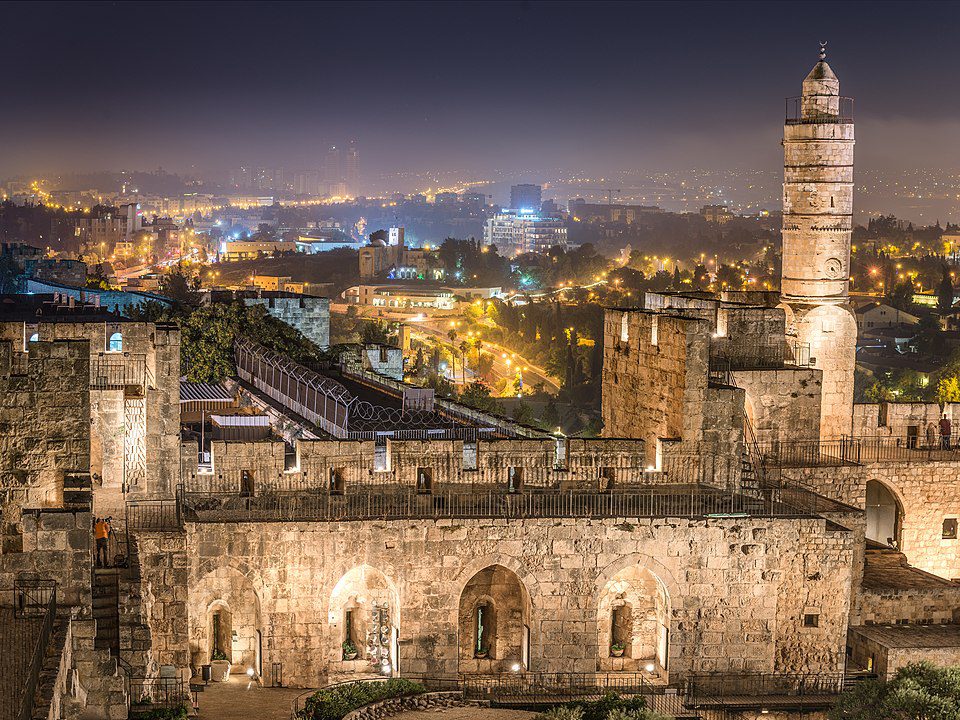
Yet Jerusalem’s art history cannot be reduced to a single narrative, and the city’s other institutions and curators work to complicate and expand that frame. The Tower of David Museum, housed in an ancient citadel near the Jaffa Gate, tells the story of Jerusalem through time, using archaeological remains, digital projections, and rotating exhibitions. Its approach is more layered than linear, acknowledging the city’s multifarious rulers, faiths, and architectures. In recent years, the museum has made a concerted effort to include contemporary art installations that dialogue with the site’s ancient stones, bridging past and present in visually compelling ways.
Other cultural institutions, like the Yad Vashem Art Museum, the Jerusalem Artists’ House, and the Bible Lands Museum, contribute to the city’s curatorial ecosystem. Each frames Jerusalem through a different lens—memory, artistic experimentation, or historical encounter. Yad Vashem’s art exhibits focus on Holocaust-era creation, while the Bible Lands Museum explores the ancient Near East through artifacts connected to biblical civilizations. The Jerusalem Artists’ House, located in a 19th-century Ottoman building, serves as a platform for contemporary voices, many of whom grapple directly or indirectly with Jerusalem’s identity.
Conservation in Jerusalem poses particular challenges. The city’s fragile climate, political volatility, and sacred status mean that preservation is never just technical—it is moral and ideological. The Israel Antiquities Authority plays a leading role in restoring mosaics, excavating ancient synagogues and churches, and protecting architectural heritage, often under intense scrutiny from religious authorities, foreign governments, and local communities. Decisions about whether to excavate, conserve, or leave untouched are inherently political in a city where the past is always contested ground.
International collaboration has become essential in this space. Foreign conservators and funding bodies—from Italy, Germany, the U.S., and the Vatican—regularly partner with Israeli institutions to restore murals, manuscripts, and monuments. One notable example is the multi-decade effort to restore the Church of the Holy Sepulchre, involving Greek Orthodox, Armenian, and Roman Catholic representatives in delicate negotiation. These projects are as much about diplomacy as they are about conservation, and they often become symbolic gestures of coexistence—or conflict.
Jerusalem’s place in the global imagination also ensures that its art is never only local. Exhibitions about the city, its sacred objects, and its visual cultures have been mounted in Paris, New York, London, and Berlin. The “Jerusalem” on display abroad is often romanticized, sanitized, or simplified—but it remains powerful. Traveling exhibitions of Bezalel art, Dead Sea Scrolls, or archaeological finds from the City of David are not merely cultural exchanges; they are acts of soft power, shaping how the world sees Jerusalem and by extension, Israel.
Digital curation now adds another layer to this global lens. The digitization of manuscripts, maps, and artworks by institutions like the National Library of Israel and the Jerusalem Digital Archive allows worldwide access to Jerusalem’s visual history. Online exhibitions offer new modes of engagement, while social media platforms turn the city’s aesthetic life into a daily, decentralized performance—accessible to anyone with a screen. In this democratized landscape, artists and audiences no longer require the blessing of a museum or the mediation of a curator to participate in Jerusalem’s ongoing visual dialogue.
Yet in all of this—museum, archive, screen—the questions persist: Whose Jerusalem is being shown? What is being highlighted, and what is being omitted? How does conservation become canonization, and how does curation become narrative control?
These are not merely academic questions. They go to the heart of what it means to tell Jerusalem’s story through art. Whether in preserving a medieval manuscript, restoring a crumbling synagogue, or choosing what to display on a gallery wall, the act of stewardship in Jerusalem is always a form of authorship. It shapes not only what survives, but how we see—and how we remember.
In this final view, the art of Jerusalem is not only what is made, but what is kept. It is what is curated, canonized, questioned, and cared for. In a city defined by memory, where time collapses into stone and symbol, the future of art may depend as much on preservation as on creation. Through conservation and curation, Jerusalem’s visual legacy endures—not frozen in the past, but continuously reframed for new generations, new eyes, and a world still drawn to its light.