Some artists spent their careers searching for the perfect subject. Others found it sitting across the breakfast table. From the Renaissance to the twentieth century, many painters repeatedly turned to their wives as models. These portraits were rarely just records of appearance. They became experiments in color, psychology, composition, and the changing dynamics of marriage itself. Looking at these paintings reveals not only how artists worked, but how familiarity can become one of the richest sources of creative inspiration.
1. Familiarity Reveals What Strangers Never See
Artists often painted their wives dozens—or even hundreds—of times. Pierre Bonnard painted Marthe over several decades, while Rembrandt repeatedly portrayed Saskia during different stages of their relationship.
Because the subject wasn’t a paying client or a brief acquaintance, these paintings often captured subtle gestures, habitual expressions, and quiet moments that formal portraits rarely show. The emotional depth came from years of observation rather than a single sitting.
Before searching for a more interesting subject, ask whether someone you already know contains more visual complexity than you’ve noticed.
2. Everyday Life Can Become Extraordinary
Many artists painted their wives performing ordinary activities—reading, sewing, bathing, dressing, or simply sitting by a window. Bonnard transformed bathrooms and breakfast tables into luminous worlds of color, while Carl Larsson celebrated everyday family life with warmth and clarity.
The ordinary became memorable because the artists paid extraordinary attention to light, atmosphere, and mood instead of waiting for dramatic events.
Instead of waiting for special occasions, practice seeing ordinary moments as if they deserve careful attention.
3. The Relationship Changes the Portrait
A portrait painted by a spouse carries emotional history that no commissioned work can duplicate. Love, admiration, frustration, grief, and familiarity can all influence the final image.
Rembrandt’s portraits of Saskia radiate youthful affection, while later self-portraits made after her death suggest how deeply personal relationships shaped his emotional world. The portrait often says as much about the painter as the person being painted.
When creating something about people you know well, acknowledge that your perspective is part of the story rather than pretending to be completely objective.
4. Repetition Isn’t Boring—It’s Research
Claude Monet repeatedly painted his wife Camille during the early years of their marriage, exploring changing light, clothing, weather, and atmosphere. The same person became an opportunity to investigate endless visual problems.
Using a familiar model removes the distraction of constantly finding new subjects. The artist can focus entirely on composition, color, brushwork, or lighting because the face is already deeply understood.
Rather than constantly chasing novelty, revisit the same subject until you begin noticing details that escaped you the first time.
5. Beauty Was Often Secondary to Truth
Not every husband painted idealized images of his wife. Lucian Freud’s portraits of family members, including those closest to him, pursued psychological honesty over conventional beauty. Earlier artists also frequently recorded fatigue, aging, or quiet reflection instead of theatrical perfection.
Some of the most compelling portraits succeed precisely because they avoid turning the subject into an idealized symbol.
When you’re creating work about someone important to you, resist polishing away every imperfection if those imperfections tell a more honest story.
6. A Single Model Can Shape an Entire Career
Marthe Bonnard appears in hundreds of Pierre Bonnard’s paintings. Rather than limiting him, her continued presence became the thread connecting decades of artistic experimentation with color, interiors, reflections, and memory.
Instead of thinking of a model as merely someone who poses, Bonnard treated Marthe as an ongoing creative partnership—even though historians also note that their relationship was often complicated.
If one subject continues to challenge your imagination, don’t abandon it simply because you’ve worked with it before.
7. Clothing Speaks as Loudly as Faces
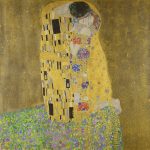
Artists frequently used their wives’ clothing to explore color relationships, social identity, and changing fashions. Gustav Klimt’s portraits of Emilie Flöge—his lifelong companion, though not his wife—demonstrate how garments could become central visual elements. Likewise, many painters used dresses, shawls, hats, and patterned fabrics to build entire compositions.
The clothing often becomes part of the psychological portrait, revealing personality, taste, or the cultural moment.
Pay as much attention to the objects and clothing surrounding your subject as you do to their face.
8. Time Becomes Visible
One advantage of painting the same person over many years is that time itself becomes part of the artwork. Faces mature, hairstyles change, fashions shift, and emotional relationships evolve.
Looking across a sequence of portraits can feel almost cinematic. You don’t simply see one person—you see an entire life unfolding through observation.
Instead of judging a single piece in isolation, occasionally create a series that allows growth and change to become part of the final work.
9. The Best Portraits Are Conversations
Painting a spouse wasn’t simply about observation. It often required patience, trust, negotiation, and mutual understanding. Sitting for repeated portraits demanded time from both people, making the creative process a shared experience rather than a solitary act.
Some relationships flourished through this collaboration, while others revealed tensions that subtly entered the artwork. Either way, the portrait became a record of interaction rather than mere appearance.
Treat creative projects involving people close to you as collaborations, and stay open to what the relationship itself teaches you during the process.
Conclusion
Artists who painted their wives remind us that remarkable subjects are often much closer than we imagine. Their greatest discoveries frequently came not from exotic locations or famous personalities, but from years of careful attention to someone they saw every day.
The lesson isn’t simply to paint the people you love. It’s to observe familiar things with enough patience that they become unfamiliar again. Often, the deepest creative insights are hidden inside the relationships you’ve already been living.