Wolves have long held a powerful place in the stories of the northern world. In the early tales of Scandinavia, Germany, and the British Isles, the wolf stands for endurance, sharp instinct, and the untamed side of nature. Legends portray wolves as watchful travelers of the dark woods and as symbols of forces that human beings must respect. Artists drew from these stories to give their work a sense of old memory and quiet danger. A wolf at the edge of a forest or standing on a rocky slope reminds the viewer that the natural world has its own order, one that does not bend easily to human wishes
Folk stories often describe wolves as both fearsome and noble. This dual nature fascinated artists, who could present the wolf as a warning or as a symbol of disciplined strength. Even when the wolf is shown in a tense or dramatic setting, there is a sense that the animal follows its own code, shaped by the demands of the land.
Medieval Depictions
In medieval manuscripts and carvings, wolves frequently appear in moral tales. Some stories cast the wolf in a negative light, warning readers to stay alert and avoid being misled by smooth words or false appearances. Illuminators often placed wolves in the margins of religious texts, where the animal’s sharp features and lean body added a note of seriousness to the page. These images were more symbolic than naturalistic, but they helped communicate lessons about vigilance and the risks of careless behavior.
Yet not all medieval depictions were harsh. In certain traditions, the wolf was seen as protective or wise. Some carvings show wolves accompanying figures in old stories, guiding them through dangerous paths or winter nights. Even when portrayed cautiously, the wolf remained a creature that commanded respect rather than mockery. Its presence in medieval art reflected a world that lived closer to wilderness than we do today.
Romantic Landscapes
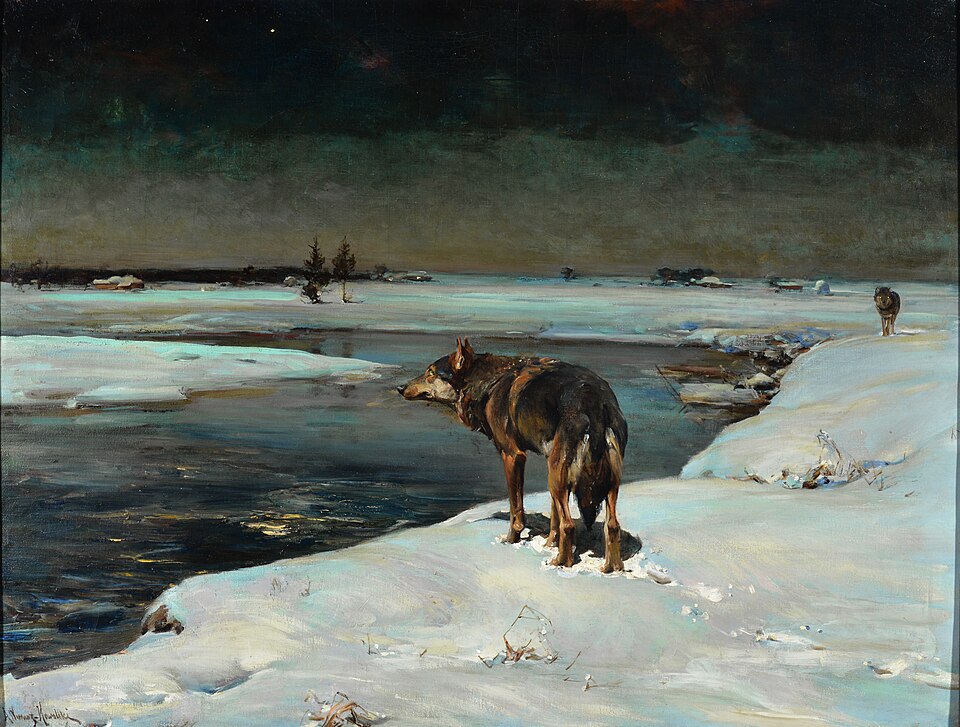
By the time of the Romantic era, artists turned to wolves as subjects that could heighten the feeling of a dramatic landscape. A lone wolf howling under a moonlit sky or moving through a snowy forest added tension and intensity to a scene. Painters used wolves to suggest mystery, isolation, or the quiet strength of the wild. These images did not rely on fear but on atmosphere. The wolf’s dark coat, sharp gaze, and slow, deliberate posture gave Romantic landscapes a sense of depth
For northern artists, winter scenes offered the greatest opportunity. A wolf crossing frozen ground or standing against the wind became a symbol of endurance. These paintings reminded viewers of the dignity found in nature’s harsher moments, where survival depends on instinct and discipline. The wolf fit perfectly into this vision of the natural world as a place of both hardship and quiet majesty.
Symbolist Works
Symbolist painters gave the wolf a more inward, reflective meaning. Instead of showing it in motion, they often placed the wolf in still, dreamlike environments. The animal became a sign of solitude or inner strength. A wolf looking out over a misty valley could suggest contemplation or a longing for distant places. Artists valued the wolf’s ability to stand alone without losing its sense of purpose. That independence made it a strong symbol of the inner life that Symbolist art sought to capture.
In some works, the wolf represents the boundary between the seen and unseen worlds. Its steady posture and alert expression invite the viewer to consider what lies beyond the reach of ordinary sight. Symbolist artists appreciated the way a single animal could carry such weight without elaborate detail or background.
Folk Crafts
Wolves appear across northern European folk crafts, often carved into wood or woven into textiles. Rural artists used the wolf’s sharp lines—ears, snout, tail—to create patterns that fit well with traditional designs. Small wooden figures, carved boxes, and embroidered household items often include wolves as symbols of strength, caution, or local identity. These crafts helped keep old stories alive even as daily life changed.
In some regions, festival costumes and masks incorporated wolf imagery to mark seasonal celebrations. These traditions honored the animal’s place in local history and reminded people of the balance between village life and the surrounding wilderness. Through simple materials and steady hands, craftsmen preserved the meaning of the wolf long after the original tales were first told.