A fashionable design can look brilliant on Monday and strangely tired by Friday. That is the danger of building creative work around whatever happens to be popular at the moment. Colors change. Typefaces surge and disappear. Materials move in and out of favor. A visual trick that once seemed fresh can become an instant timestamp.
The best designers notice these changes, but they do not surrender to them. They have a stronger set of tools: proportion, function, materials, craftsmanship, clarity, and judgment. Instead of asking what everyone else is doing, they ask what the object, room, building, graphic, or product actually needs. Trends become information rather than instructions.
That distinction helps explain why work by figures such as Dieter Rams and Charles and Ray Eames can still feel convincing decades after it was created. Their approaches were not identical, and timeless design does not belong to one particular visual style. What connects them is something more useful. They treated design as a disciplined response to real problems rather than a race to imitate the newest look.
Great Designers Solve Problems, Not Fashion Cycles
Start With the Need, Not the Look
Every design project eventually develops an appearance, but appearance does not have to be its starting point. Charles and Ray Eames provide a particularly clear example. Charles was born in St. Louis in 1907, while Ray was born in Sacramento in 1912. They met at Cranbrook Academy of Art in Michigan, married in 1941, and moved to Los Angeles that same year. Their partnership would eventually range across furniture, architecture, photography, exhibitions, films, textiles, toys, and education.
The Eames Office placed human need at the center of its design process. A project began by identifying the genuine need of the client and the constraints surrounding the problem. From there, Charles, Ray, and their staff developed possible solutions through models, photographs, mock-ups, testing, and repeated revision. Their Venice, California, office contained workshops, darkrooms, a library, an extensive slide archive, and the equipment needed to turn abstract ideas into things that could be tested. Design was not treated as decoration sprinkled over an idea at the end.
Constraints Can Produce Originality
Constraints were particularly important to the Eames approach. Charles identified considerations such as price, strength, balance, surface, and time among the restrictions a designer might need to recognize. That sounds limiting until one considers what constraints actually do. They eliminate countless weak possibilities. A chair must support a body. A lamp must provide useful light. A package must protect its contents. A designer who accepts such realities has a much sharper problem to solve.
That way of thinking offers a useful defense against trend chasing. Instead of starting with this year’s fashionable color or shape, start with questions that cannot be answered by fashion:
- What problem must the design solve?
- Who will actually use it?
- What practical constraints cannot be ignored?
- Which materials make sense for its purpose?
- Which elements are essential, and which can disappear?
The result does not have to look severe or minimalist. It can be colorful, playful, luxurious, traditional, futuristic, or eccentric. What matters is that its character grows from deliberate choices. Originality becomes the result of solving a particular problem well rather than decorating it with the visual vocabulary everybody else is using.
Timeless Design Is Built on Principles, Not Trends
Dieter Rams and the Case for Long-Lasting Design
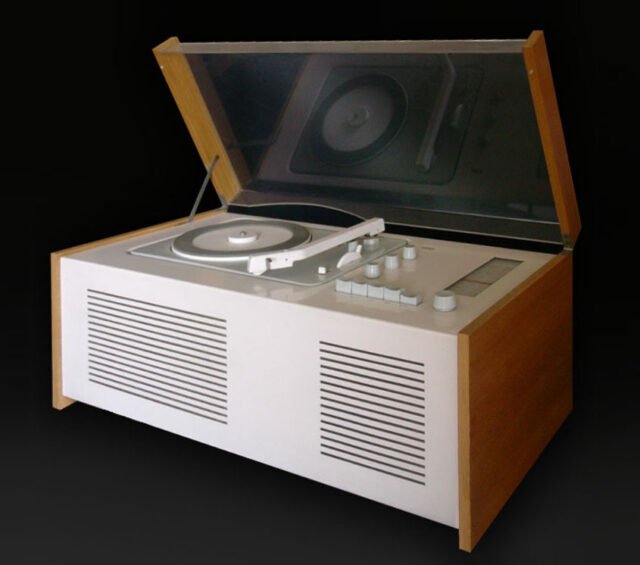
Few designers have stated the argument for longevity as plainly as Dieter Rams. Born in Wiesbaden, Germany, in 1932, Rams studied architecture and interior design at the Wiesbaden Werkkunstschule. After working for architect Otto Apel, he joined Braun in 1955 as an interior designer. In 1961, he became head of the company’s design department, a position he held until 1995. His career therefore offers something rare: decades of work developed within a sustained design philosophy.
Rams eventually formulated his famous ten principles for good design. They emphasized innovation, usefulness, aesthetic quality, comprehensibility, honesty, restraint, attention to detail, longevity, and simplicity. One principle directly addressed fashion: good design should be long-lasting rather than fashionable. The distinction is crucial. Fashion needs visible change to keep moving. Long-lasting design needs enough integrity to survive that change.
“Less, but Better” Is a Discipline, Not a Look
Rams’s famous idea of “less, but better” can easily be misunderstood as an order to make everything white, rectangular, and sparse. It is more demanding than that. The principle calls for concentration on what is essential and the removal of elements that burden a product without improving it. Rams also argued that good design should make a product understandable and that nothing should be arbitrary. Restraint, in this sense, is not emptiness. It is control.
His Heater-Ventilator (model H 3) from 1962 offers a concrete example. Designed by Dieter Rams and manufactured by Braun AG, the object has a plastic casing and measures 4 × 11 3/8 × 5 5/16 inches (10.2 × 28.9 × 13.5 cm). It belongs to the Museum of Modern Art in New York, Department of Architecture and Design. Its compact form does not rely on ornamental gestures to announce that it belongs to 1962. The object’s appearance is closely tied to what it is and what it does.
That example also reveals why timeless design should not be confused with a single aesthetic. Minimalism can become a trend just as easily as ornament can. Removing details without understanding why they were there is merely another formula. A lavish interior can possess extraordinary coherence, while a bare room can be awkward and thoughtless. The real question is whether each decision belongs. Good designers can explain why something exists, why it takes a particular form, and why removing or changing it would weaken the whole.
Principles provide a measuring stick when fashion becomes noisy. A designer can ask whether a choice improves usefulness, legibility, comfort, durability, proportion, or understanding. If the only argument is that the choice happens to be fashionable, its foundations are already shaky. Trends eventually leave town. The design has to stay behind.
Following Trends Can Make Good Design Age Faster
Every Trend Carries a Timestamp
Design history is full of visual timestamps. Certain colors, type treatments, surface finishes, interface effects, furniture silhouettes, and decorative patterns can place an object within a period almost immediately. That is not automatically a flaw. A nightclub, advertisement, fashion campaign, theatrical set, or temporary exhibition may deliberately want to capture the mood of a particular moment. Trouble begins when short-lived novelty is mistaken for permanent quality.
Trend dependence can also make supposedly original work look surprisingly uniform. Designers study similar publications, scroll through similar images, use similar software, and notice the same popular references. Soon the same rounded forms, palettes, materials, layouts, and visual effects begin appearing everywhere. What looked daring in isolation becomes predictable when repeated a thousand times. The trend has changed from inspiration into a template.
Originality Comes From Judgment, Not Isolation
Rejecting trend chasing does not require a designer to live in a creative bunker. Charles and Ray Eames were intensely curious people whose work crossed disciplines. Their office investigated architecture, furniture, photography, film, exhibitions, communication, education, mathematics, and emerging technology. In 1953, Charles was invited to develop a design course for first-year architecture students at the University of California, Berkeley. The course served 125 students, with lectures running from December 1953 through April 1954.
Their working process also relied heavily on iteration. The Eames Office repeatedly made models and full-scale mock-ups to see whether ideas survived contact with reality. Charles explained in a 1977 Smithsonian lecture that models allowed designers to test things that would otherwise be difficult, expensive, dangerous, or impossible to test at full scale. A model could expose an elegant idea as impractical before enormous resources were committed to it.
That is a useful lesson for designers surrounded by rapidly changing imagery. Inspiration should enter a workshop and face interrogation. Does the fashionable idea solve anything? Does it make the product clearer? Does it improve comfort? Is the material appropriate? Would the design still make sense if the trend disappeared tomorrow? Asking those questions turns influence into judgment.
A personal design language develops through that filtering process. It does not require pretending that nobody came before. Charles and Ray Eames absorbed lessons from architecture, art, manufacturing, photography, science, craft, and technology. Rams worked within a broader German industrial design culture that included Braun and connections with the Hochschule für Gestaltung in Ulm. Creative independence does not mean having no influences. It means influences do not make the final decision for you.
How Designers Build a Style That Outlasts Trends
Develop Principles Before Developing a Signature Look
Young designers are often tempted to develop a recognizable style as quickly as possible. That desire is understandable. A distinctive portfolio is memorable, and a visual signature can help establish an identity. But forcing a signature too early can produce a collection of mannerisms rather than a genuine design philosophy. The same curves, colors, typefaces, materials, or decorative tricks begin appearing whether the project needs them or not.
A stronger method is to establish principles first. A designer might value legibility, durability, comfort, repairability, honest materials, careful proportion, craftsmanship, visual warmth, or simplicity. Those values then have to survive different assignments. Over time, recurring choices begin to form a recognizable character naturally. Style becomes the footprint left by consistent judgment rather than a costume placed over every project.
Know the Trend, Then Decide Whether You Need It
Trends still deserve attention. They can reveal changes in manufacturing, technology, consumer habits, materials, or taste. Some trends spread because they solve genuine problems. Others are primarily aesthetic waves. A thoughtful designer studies both without assuming popularity proves merit. Awareness keeps a designer informed; independence keeps the work from becoming derivative.
Before adopting a design trend, a simple five-step test can help:
- Identify the practical reason for using it.
- Ask whether it improves function, comfort, or understanding.
- Remove it temporarily and compare the result.
- Consider whether the choice will still make sense in five or ten years.
- Keep it only when the design is genuinely stronger with it.
The fourth question is especially revealing. Nobody can know exactly what will look fashionable a decade from now. That is precisely the point. Instead of trying to predict the next fashion cycle, examine the parts of the design that do not depend on fashion: scale, proportion, usefulness, construction, clarity, material suitability, and attention to detail. Those qualities have a better chance of surviving the trip.
The strongest alternative to trend chasing is not stubbornness. It is judgment. Rams did not create enduring work by pretending the modern world did not exist, and Charles and Ray Eames were hardly afraid of experimentation. They engaged with technology, manufacturing, materials, and contemporary life while maintaining clear standards. Before beginning the next project, write down three principles it must satisfy before choosing its aesthetic direction. A trend may still earn a place—but it should have to earn it.
Key Takeaways
- Strong designers begin with a problem, a need, and real constraints rather than a fashionable appearance.
- Timeless design is not a particular visual style; it grows from coherent decisions that continue to make sense.
- Dieter Rams made longevity central to his philosophy and argued against allowing fashion to determine good design.
- Charles and Ray Eames used research, models, mock-ups, experimentation, and iteration to test ideas against reality.
- Designers can understand trends without obeying them; the crucial skill is developing an independent filter for deciding what deserves to remain.
FAQs
- Should good designers ignore trends completely? No. Trends can reveal useful changes in technology, materials, manufacturing, and taste. The important distinction is between studying a trend and automatically adopting it.
- What makes a design timeless? No formula guarantees timelessness. Clear function, sound proportions, suitable materials, thoughtful construction, comprehensibility, and careful detail can reduce dependence on temporary fashions.
- Is following a design trend always bad? No. A trend can offer a useful solution or suit a deliberately temporary project. Problems arise when popularity becomes the main reason for a design decision.
- How did Dieter Rams approach longevity? Rams included long-lasting design among his ten principles of good design. His philosophy favored usefulness, clarity, restraint, careful detail, and concentrating on essential elements rather than fashionable effects.
- How can a younger designer develop an original style? Begin with principles instead of surface effects. Study widely, work within real constraints, test ideas, learn from materials, and repeat what proves useful. A recognizable style can then emerge from consistent decisions rather than imitation.