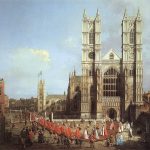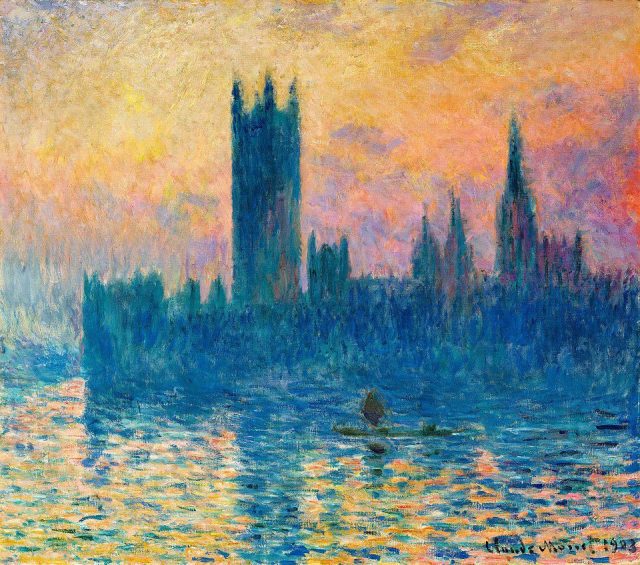
The Palace of Westminster, more commonly known as the Houses of Parliament, stands as the heart of British political life and a defining symbol of constitutional monarchy. Nestled on the north bank of the River Thames, its soaring Gothic towers and pointed arches are immediately recognizable to millions. But beyond its striking silhouette lies one of the most important, storied, and symbolic architectural projects in British history.
While it is often associated with the Victorian era due to its iconic Gothic Revival style, the Palace of Westminster has roots reaching back nearly 1,000 years. From a royal residence to the seat of Parliament, it has witnessed the evolution of Britain from medieval monarchy to modern constitutional democracy. The current building, mostly rebuilt in the 19th century following a devastating fire, is both a working institution and a monument to national identity.
Designed by Sir Charles Barry and richly decorated by Augustus Welby Pugin, the palace we see today was envisioned as more than just a government building. It was designed to speak—visually, symbolically, and structurally—of Britain’s stability, order, and history. It’s an architectural embodiment of parliamentary government, royal heritage, and national pride.
Today, the Palace houses the House of Commons and House of Lords, hosts major state ceremonies, and remains the architectural face of the British government. Its historic chambers, vast corridors, and iconic clock tower form a living, breathing symbol of the United Kingdom—one rooted in tradition, yet responsive to the needs of a modern nation.
Medieval Foundations: From Royal Palace to Parliament
Long before it became the home of British democracy, the Palace of Westminster was a royal residence. The site was first developed in the early 11th century by King Edward the Confessor, who built a palace next to the church he had founded—Westminster Abbey. This early royal complex quickly became the administrative and ceremonial center of the kingdom.
The Normans expanded and fortified the structure, but it was under King Henry III and King Edward I in the 13th century that Westminster began to transform into a seat of governance. The Magna Carta of 1215 had initiated the development of a parliamentary body, and over time, the monarch began summoning councils and parliaments to Westminster for advice and consent on taxes and laws.
The most significant surviving structure from this era is Westminster Hall, built by William II in 1097. It remains the oldest part of the complex and is still in use today. Measuring 73 by 20 meters, with a hammer-beam roof added in the 14th century, the hall is an architectural marvel of medieval timber construction. It was originally used for banquets, law courts, and coronation feasts, and later served as the venue for famous trials, including that of Charles I.
By the 14th century, separate chambers had been established for the Lords and Commons, though they remained within the royal complex. The palace continued to function as a part-time royal residence until King Henry VIII moved the monarchy to Whitehall Palace in the 16th century. From then on, Westminster became devoted entirely to Parliament.
Yet the palace remained architecturally fragmented, its structures often rebuilt or repurposed. Fires, floods, and political instability damaged or destroyed many medieval buildings. The need for a unified, purpose-built Parliament house was clear—but it would take a catastrophe to bring it about.
The Great Fire of 1834 and the Rebirth of the Palace
The transformative moment in the architectural history of Westminster came on October 16, 1834, when a fire—sparked by the careless burning of tally sticks in a stove—destroyed almost the entire medieval palace. Only Westminster Hall, the Crypt Chapel, and a few other fragments survived. The loss was deeply felt, but it opened the door for a complete reimagining of the seat of British governance.
A national competition was held in 1835 to design a new Parliament building. The winning proposal came from Sir Charles Barry, who chose the Gothic Revival style, then associated with British tradition, national identity, and Christian values. Barry’s choice was a deliberate counterpoint to the neoclassical buildings favored by revolutionary France and secular republics.
While Barry was the principal architect, it was Augustus Pugin, a devout Catholic and Gothic stylist, who infused the design with intricate detail. Pugin provided the decorative schemes, spires, stained glass, furnishings, and even the iconic clock face of what would later be called Big Ben. His mastery of medieval Gothic elements turned Barry’s vision into an immersive architectural experience.
Construction began in 1840 and continued for more than 30 years, plagued by cost overruns, political delays, and the deaths of both architects before its full completion. Yet what emerged was an architectural tour de force: over 1,100 rooms, 100 staircases, 4.8 kilometers of corridors, and an exterior of honey-colored Anston limestone overlooking the Thames.
The result was not merely a place for legislation—it was a monumental symbol of continuity, designed to root modern governance in a visual language of tradition, spirituality, and hierarchy. It was architecture as political expression, and it remains one of the greatest achievements of the 19th-century Gothic Revival.
Big Ben and the Elizabeth Tower: Time, Sound, and Symbolism
Perhaps no element of the Palace of Westminster is more iconic than the clock tower at its north end, known colloquially as Big Ben. Though widely believed to refer to the tower, “Big Ben” actually refers to the Great Bell, cast in 1858 and weighing over 13 tons. The tower itself was officially renamed the Elizabeth Tower in 2012, in honor of Queen Elizabeth II’s Diamond Jubilee.
The Elizabeth Tower rises 96 meters (315 feet) above ground and contains the most famous four-faced chiming clock in the world. Each dial is 7 meters in diameter, and the clock mechanism was designed by Edward John Dent and completed by his stepson, Frederick Dent, after his death.
The clock’s movement is regulated by a simple penny placed on the pendulum—a small but symbolic nod to British pragmatism and engineering precision. The chimes of Big Ben have become a national soundtrack, broadcast by the BBC and instantly recognizable around the world.
Architecturally, the tower blends seamlessly into Barry and Pugin’s Gothic design. Pugin himself designed the tower’s exterior down to the ornate ironwork and gilded accents. Inside, a narrow 334-step staircase leads to the belfry and observation deck, offering views of central London.
Big Ben is more than a timepiece—it’s a cultural and political symbol. It has marked New Year’s celebrations, royal events, and national mourning. It survived WWII bombings, stood silent during national tragedies, and continues to represent both British steadfastness and architectural ingenuity.
The House of Commons: Simplicity, Function, and Democratic Identity
Located in the north section of the Palace of Westminster, the House of Commons chamber is the heart of Britain’s democratic process. This is where Members of Parliament (MPs) debate legislation, challenge government ministers, and shape the country’s future. Architecturally, the chamber reflects both its functional role and the values of democratic order.
The original Commons chamber, built after the 1834 fire, was designed by Barry and Pugin in Gothic style, with high ceilings, traceried windows, and decorative paneling. However, that chamber was destroyed during the Blitz in May 1941, when a German bomb struck the north end of the building. Prime Minister Winston Churchill insisted that the chamber be rebuilt exactly as it was, with the same compact layout and green benches—deliberately rejecting grand or monumental designs in favor of tradition and utility.
Reconstruction began after the war and was completed in 1950, led by architect Sir Giles Gilbert Scott. The new chamber retained the essential features of its predecessor but was reinforced with modern materials. It is smaller than many foreign legislatures, with only about 400 seats for 650 MPs. This intentional design forces a closeness that fuels Britain’s famously intense political debates.
The layout is simple: two sets of benches face each other across a narrow aisle, symbolizing the adversarial nature of British politics. Government MPs sit on the right of the Speaker’s Chair, while the Opposition sits on the left. The Despatch Boxes, placed on the central table, are used by ministers and opposition leaders during speeches and debates.
Though not ostentatious, the chamber contains significant symbolic details:
- Green leather benches represent the traditional color of the Commons.
- The Mace, placed on the central table, represents royal authority and must be present for debates to be legitimate.
- Above the Speaker’s Chair are carvings and motifs of the Tudor rose, thistle, and shamrock, symbolizing England, Scotland, and Ireland.
The House of Commons may lack architectural grandeur, but its very simplicity underscores the egalitarian principles of elected government. It is the arena where the voice of the people, through their MPs, meets the historic weight of the crown and constitution.
The House of Lords: Tradition, Majesty, and Continuity
In stark contrast to the understated design of the Commons, the House of Lords chamber is a vision of regal splendor and historic gravitas. Located at the southern end of the Palace, the chamber represents the unelected upper house of Parliament and is steeped in ceremonial and architectural richness.
Originally designed by Barry and Pugin, the Lords chamber survived the 1941 bombing that destroyed the Commons. As a result, it retains authentic 19th-century Gothic Revival detailing. It is richly decorated with deep red leather benches, gilded woodwork, coffered ceilings, and grand oil paintings. The color scheme, contrasting with the green of the Commons, reflects royal authority and hierarchical structure.
At the far end of the chamber is the Throne, reserved for the monarch and used during the annual State Opening of Parliament. The throne is made of carved and gilded oak and backed by a massive Gothic canopy. The monarch delivers the Queen’s (or King’s) Speech from this seat, outlining the government’s legislative agenda.
Key architectural and symbolic features include:
- The Woolsack, a red seat in the center of the chamber where the Lord Speaker presides.
- The Bishops’ Benches, where senior Church of England clergy sit as part of the Lords Spiritual.
- Paintings of Tudor monarchs and scenes from British history, reinforcing continuity and national identity.
- Carvings of saints, kings, and coats of arms, integrated into every detail of the chamber.
The Lords chamber embodies the monarchical and hereditary foundations of British governance. Its atmosphere is ceremonial and reverent, a counterbalance to the more confrontational Commons. It is both a working legislative body and a living museum of Britain’s constitutional past.
Westminster Hall: The Castle’s Oldest Heart
While much of the Palace of Westminster dates to the 19th century, Westminster Hall predates the rest by over 700 years. Constructed in 1097 by William II (Rufus), it is one of the largest surviving medieval halls in Europe and the oldest part of the entire palace.
Originally built for royal banquets and ceremonies, the hall was transformed in the 14th century by King Richard II, who added the now-famous hammer-beam oak roof—a marvel of medieval carpentry and engineering. At over 20 meters high and 30 meters wide, the roof spans the entire hall without supporting columns, an astonishing feat for its time.
Over the centuries, Westminster Hall has hosted:
- Coronation banquets
- High-profile trials (including those of Thomas More, Guy Fawkes, and Charles I)
- State funeral services and lying-in-state ceremonies, including Queen Elizabeth II in 2022
Architecturally, the hall’s massive stone walls, gothic windows, and timber roof stand in contrast to the more ornate Gothic Revival of the newer palace. Its simplicity and scale convey a solemnity and permanence that anchors the entire complex.
The hall connects the St. Stephen’s Entrance, used for formal state arrivals, to the heart of the parliamentary estate. Its continued use for national mourning, major legal ceremonies, and royal receptions highlights its ongoing symbolic power.
Westminster Hall isn’t just old—it’s alive with meaning. It is a space where the ancient and modern, sacred and civic, converge under one awe-inspiring roof.
Central Lobby and St. Stephen’s Hall: The Symbolic Core
At the heart of the Palace of Westminster lies the Central Lobby, a space that serves as the architectural and symbolic crossroads of British democracy. It connects the House of Commons to the House of Lords and stands beneath a stunning octagonal tower, forming both a literal and figurative meeting point between different branches of governance.
Designed by Barry and Pugin, the Central Lobby features mosaic floors, gilded ceilings, and marble statues. Four large doorways lead to each corner of government: one to the Commons, one to the Lords, one to Westminster Hall, and one to the outer visitor entrance. The architectural message is clear—balance, dialogue, and unity between institutions.
Dominating the central space is a soaring lantern tower, over 75 feet high, decorated with stained glass windows representing the patron saints of the four nations of the UK:
- St. George for England
- St. Andrew for Scotland
- St. David for Wales
- St. Patrick for Ireland
This chamber is also a space of public petition. Citizens have the historic right to “lobby” their MP, and this space was originally intended for constituents to wait and speak with members of Parliament. That symbolic openness to the public is baked into the very name: the lobby.
Leading to the Central Lobby from Westminster Hall is St. Stephen’s Hall, named after the original House of Commons chamber, which once occupied the site of the medieval St. Stephen’s Chapel before it was destroyed in the 1834 fire. The hall is lined with large oil paintings depicting key moments in parliamentary history, such as the trial of Charles I and the granting of Magna Carta.
Symbolic Details in Central Lobby:
- Statues of historic Prime Ministers and key statesmen
- Tiled inscriptions of Biblical verses and national mottoes
- Ornate ceiling bosses featuring monarchs’ faces and heraldic symbols
- Stained glass panels with coats of arms of UK cities and dioceses
Together, Central Lobby and St. Stephen’s Hall form the spiritual and political axis of the Palace of Westminster—a place where history, architecture, and the nation’s civic life converge in ornate Gothic splendor.
Exterior Architecture and Riverfront Iconography
The exterior of the Palace of Westminster is as carefully considered as its grand interiors. Clad in limestone from Anston in Yorkshire, the building is a triumph of Perpendicular Gothic Revival architecture. Designed with towers, spires, buttresses, pointed arches, and tracery, it was intended to appear timeless—linking the Victorian age to the deep past.
The building’s riverfront façade, facing the Thames, stretches nearly 300 meters and presents one of the most famous silhouettes in the world. It includes:
- Victoria Tower (southwest): At 98 meters, it’s the tallest tower in the complex and once held the Royal Entrance and Parliamentary Archives. The Union Flag flies from its peak when Parliament is in session.
- Central Tower: A ventilation shaft disguised as a Gothic lantern, it rises 91 meters and is often overlooked but was an early example of functional architecture masquerading as ornament.
- Elizabeth Tower (Big Ben): On the north end, already discussed, anchoring the visual rhythm of the building.
Facing Parliament Square and the Abbey, the front elevation of the palace features formal gates and the Sovereign’s Entrance, where the monarch enters during the State Opening of Parliament. The building is adorned with hundreds of statues, heraldic beasts, coats of arms, and carved figures, each reinforcing Britain’s royal, religious, and parliamentary heritage.
Architectural sculptor John Thomas was responsible for many of the carvings, including images of saints, kings, and historical scenes. His stonework helped communicate the ideals of continuity, divine order, and national unity.
The palace isn’t just designed to house government—it’s designed to embody British identity. Every exterior panel, turret, and statue plays a part in this architectural storytelling.
Restoration, Preservation, and Modern Challenges
The Palace of Westminster has never stopped evolving. Despite its historic beauty, it faces serious structural and safety challenges in the 21st century. Centuries of use, the Thames’ damp air, outdated wiring, and crumbling stone have led to urgent calls for restoration.
In 2022, Parliament confirmed that the palace was in “critical condition” and that extensive restoration—originally planned for the 2020s—must be fully scoped, funded, and implemented. Issues include:
- Leaks in plumbing and steam heating systems
- Crumbling stonework and hazardous masonry
- Outdated electrical wiring, posing fire risks
- Poor disability access in a labyrinthine layout
To address this, a multi-decade Restoration and Renewal Project is being planned. The scope may include a temporary relocation of MPs and Lords, allowing engineers to fully restore the fabric of the building while protecting its treasures and functionality.
At the same time, modern amenities have already been discreetly introduced:
- Digital broadcasting studios
- Security infrastructure upgrades
- Climate control systems in key archives and rooms
- Enhanced visitor experience areas and interpretive signage
Maintaining the palace isn’t just about saving an old building—it’s about preserving the architectural embodiment of British government. Its restoration is a matter of national significance, where history, identity, and functionality all intersect.
Key Takeaways
- The Palace of Westminster was rebuilt in Gothic Revival style after a fire in 1834, symbolizing British identity and tradition.
- Big Ben, officially the Elizabeth Tower, is part of the complex and one of the world’s most famous clock towers.
- The House of Commons is deliberately modest, reflecting democratic ideals, while the House of Lords is regal and ceremonial.
- Westminster Hall is the palace’s oldest structure, dating to 1097, and remains a vital ceremonial space.
- The palace faces major restoration to preserve its beauty and function for future generations.
FAQs
- Is the Palace of Westminster the same as Big Ben?
No—Big Ben is the nickname for the bell in the Elizabeth Tower, which is part of the Palace of Westminster. - Who built the current Palace of Westminster?
Sir Charles Barry and Augustus Pugin led the 19th-century reconstruction after the 1834 fire. - Can the public visit the Palace of Westminster?
Yes—tours are available, including access to Westminster Hall, Central Lobby, and sometimes the chambers. - Why is the Commons chamber smaller than the Lords?
It encourages close debate and maintains a sense of urgency; only about 400 seats are available for 650 MPs. - What is Westminster Hall used for today?
State ceremonies, public speeches, lying-in-state, and other national events are still held there.