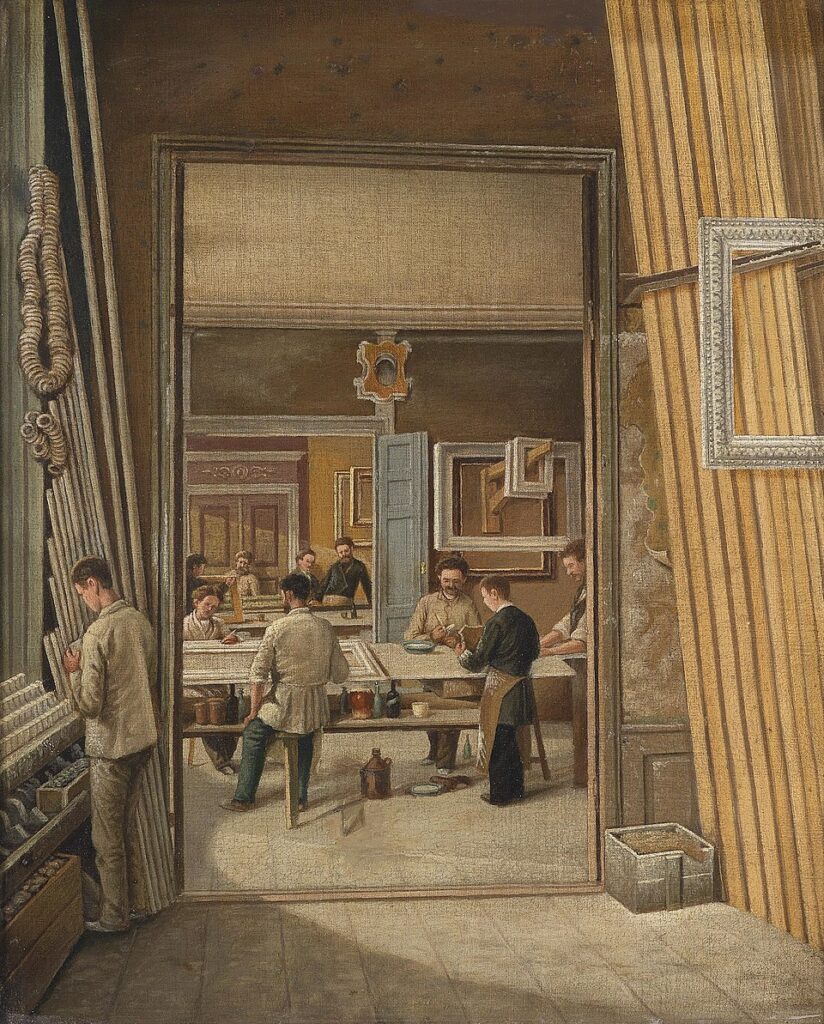
The history of frame making begins not with decoration, but with control of space and meaning. As early as 2600 BC, ancient Egyptian reliefs were bordered by carved stone edges that defined sacred imagery. These early frames were not movable objects but permanent architectural boundaries. Art presentation served religious authority rather than individual expression.
In Ancient Egypt, images of pharaohs and gods were framed to separate divine presence from ordinary life. Artisans worked under temple systems, often beginning apprenticeships in childhood. Education occurred through observation and repetition, not formal schooling. Career advancement depended on loyalty to priestly institutions rather than innovation.
From Sacred Boundaries to Decorative Objects
Between 2000 BC and 400 BC, Greek and Roman societies expanded framing concepts into architecture and painting. Greek sculptors framed reliefs within pediments and friezes, while Roman painters added painted borders to frescoes. Roman panel paintings by 100 AD sometimes included carved wooden surrounds. These early frames reinforced hierarchy, ownership, and civic identity.
In Roman households, framed portraits honored ancestors and reinforced lineage. Artisans often worked within family workshops, passing skills through generations. Marriage frequently occurred within artisan communities to preserve trade knowledge. By the fall of Rome in 476 AD, framing was already shaping how art was viewed and valued.
Medieval Frame Making and the Rise of Religious Art
From 500 AD to 1400 AD, frame making became inseparable from Christian worship. Painted panels were built directly into altarpieces and shrines. Frames were architectural, immovable, and symbolic. Art presentation emphasized humility, order, and theological clarity.
Monasteries dominated artistic production during the early Middle Ages. Boys entered monastic workshops as young as twelve, often taking vows by age twenty. Marriage was prohibited for monastic craftsmen, reinforcing lifelong devotion to sacred labor. Career success was measured by service to God rather than personal recognition.
Altarpieces, Iconography, and the Church’s Influence
By 1200 AD, urban guilds regulated frame making across Europe. Frames echoed Gothic architecture through pointed arches and vertical emphasis. Painters, carvers, and gilders collaborated closely on church commissions. Frames guided worshippers’ eyes toward central holy figures.
Frames reinforced doctrine by organizing sacred narratives visually. Gold leaf symbolized divine light and eternal truth. Patrons included bishops, abbots, and wealthy donors seeking spiritual legacy. Frame making shaped religious experience as much as painted imagery itself.
Renaissance Innovations and the Frame as an Art Form
The Renaissance between 1400 and 1600 AD radically changed frame making. Humanist philosophy encouraged balance, proportion, and classical revival. Frames became detachable objects, allowing art to move between locations. Art presentation shifted toward private ownership and display.
Specialized frame makers emerged as independent professionals. Apprenticeships typically lasted seven years, ending around age twenty-one. Workshops often passed through family lines, with sons trained from childhood. Marriage alliances strengthened business networks within artistic communities.
Humanism, Proportion, and the Professional Frame Maker
Classical motifs such as columns, laurel wreaths, and pediments dominated frame design. Wealthy patrons commissioned frames to reflect education and status. Painters and frame makers collaborated to create unified visual harmony. Frames became markers of taste rather than purely religious tools.
By 1550 AD, frames were collected, traded, and reused. Artists increasingly influenced frame design choices. Frame making became both craft and art. Presentation now shaped interpretation as much as subject matter.
Baroque and Rococo Frames as Status Symbols
Between 1600 and 1750 AD, frame making reached dramatic extremes. Baroque frames emphasized movement, depth, and theatricality. They were designed to dominate space and command attention. Art presentation became a display of power and wealth.
Royal courts across Europe employed master frame makers. Training occurred through court workshops and elite guilds. Artisans often married within professional circles to secure patronage. Career milestones included royal commissions and court appointments.
Power, Prestige, and Theatrical Presentation
Rococo frames after 1700 AD introduced lighter forms and playful ornament. Asymmetry and floral motifs reflected aristocratic leisure. Frames reinforced ownership and social hierarchy. Paintings without elaborate frames were considered unfinished.
Frames shaped how viewers experienced authority and refinement. Gold surfaces reflected candlelight, enhancing spectacle. Frame making became an extension of interior design. Art presentation mirrored political and social structures.
Industrialization and the Democratization of Frames
The Industrial Revolution after 1760 AD transformed frame making forever. Machines produced standardized moldings at lower cost. Frames became affordable to the growing middle class. Art presentation expanded beyond aristocratic spaces.
Traditional apprenticeships declined as factories replaced workshops. Frame makers shifted from artisans to manufacturers. Family-run studios struggled to compete with mass production. Marriage within the trade became less common as skills changed.
Mass Production and Changing Artistic Values
Standardization reduced individuality but increased access. Frames were sold through catalogs and shops rather than commissions. Artists often lost control over presentation. Art became a domestic commodity rather than elite privilege.
By 1850 AD, framed prints filled middle-class homes. Frames no longer signaled status alone. Presentation emphasized decoration and sentiment. The frame industry reflected broader economic change.
Modernism, Minimalism, and the Rejection of Ornament
Between 1900 and 1950 AD, modern artists rejected ornate frames. They viewed heavy decoration as distraction. Simple wooden or metal frames became preferred. Some artists eliminated frames entirely.
Art schools emphasized concept over ornament. Artists trained in academies after graduating in their early twenties. Marriage and partnerships often influenced studio practices. Presentation became part of artistic intent.
When the Frame Steps Back—or Disappears
Museums adopted neutral frames to standardize display. White walls and minimal borders dominated galleries. Frames became nearly invisible. Art presentation focused on form and idea.
This shift reduced the frame’s authority. Frame makers adapted or disappeared. Presentation philosophy replaced tradition. Frames became optional rather than essential.
Contemporary Frame Making and Its Role Today
Since 1980 AD, frame making has seen renewed appreciation. Handcrafted frames are valued for conservation and authenticity. Museums commission historically accurate reproductions. Art presentation balances tradition and innovation.
Modern frame makers train through workshops, trade schools, and apprenticeships. Careers blend craftsmanship and preservation science. Marriage and partnerships often support small studios. Sustainability influences material choices.
Craft Revival, Conservation, and Artistic Intent
Frames now serve narrative and ethical roles. Conservators consider historical context and artist intent. Collaboration defines contemporary practice. Presentation respects both artwork and viewer.
Frame making remains vital to interpretation. The frame still shapes meaning. Tradition informs modern choices. Art presentation continues to evolve.
Key Takeaways
- Frame making began as sacred boundary control.
- Religious institutions shaped medieval frames.
- Renaissance frames became collectible art.
- Industrialization democratized framing.
- Modern frames balance restraint and meaning.
FAQs
- Why were early frames religious?
- When did frames become movable?
- How did guilds affect frame making?
- Why did modern artists reject frames?
- Are frames still important today?