At first glance, Amish art might seem like an odd pairing. After all, this devout Christian community is known for its strict avoidance of worldly indulgence, including expressive or decorative frills. Yet, within the world of the Amish lies a profound and deeply rooted artistic tradition—one that reflects their faith, values, and way of life. Amish art is not about galleries or self-expression; it’s about devotion, discipline, and purpose. It’s art without ego, beauty without extravagance.
Amish communities are part of the Anabaptist tradition, which includes Mennonites and other Plain groups. Their lives are governed by a code known as the Ordnung, a set of unwritten rules that guide everything from clothing to communication. The goal is to live humbly, avoid pride, and stay separate from the influences of the outside world. It’s in this context that Amish art arises—not as rebellion or creativity for creativity’s sake, but as a quiet offering rooted in faith and necessity.
When we speak of Amish art, we aren’t talking about oil paintings or avant-garde sculpture. Instead, we see artistry in hand-stitched quilts, finely crafted furniture, decorative calligraphy known as Fraktur, and even faceless cloth dolls. These forms of expression might seem modest, even utilitarian, but they carry centuries of tradition and spiritual symbolism. They are born not of individual ambition but of community, humility, and purpose.
This article explores the many forms of Amish art and craftsmanship, from the geometry of quilt blocks to the seamless joinery of handmade cabinets. We’ll look at the theological roots of Amish aesthetics, the roles of men and women in these traditions, and the balancing act between commerce and conviction. Along the way, we’ll discover that the Amish have something important to say about beauty, even if they rarely speak it aloud. Their art speaks not of themselves—but of the God they serve.
Faith and Function: The Foundations of Amish Aesthetics
The heart of Amish life is faith, and that faith informs every detail of their visual world. Unlike modern art, which often emphasizes individual expression and emotion, Amish aesthetics are rooted in function, order, and moral clarity. Art isn’t created for personal acclaim—it’s made for the family, the church, and ultimately, for God.
The Ordnung, which varies slightly between communities, dictates strict limits on dress, technology, and even decoration. Bright colors, flashy designs, or excessive ornamentation are discouraged because they might lead to pride or draw undue attention. Still, within these guidelines, there is room for beauty—subtle, measured, and always purposeful. This is the Amish paradox: a culture that restricts outward show yet produces deeply affecting, enduring works of folk art.
Take color, for instance. In Amish quilts, colors aren’t banned entirely—but they are used thoughtfully. Deep blues, burgundies, and blacks dominate, accented occasionally with jewel tones like emerald or aubergine. There’s a quiet sophistication in these hues, a discipline that speaks of self-control and restraint. And yet, in their repetitive patterns and precise stitching, these quilts convey a meditative peace that rivals any modern art form.
The same goes for Amish architecture and home décor. Walls are bare or simply adorned with calendars, clocks, and sometimes a modest sampler. Windows are uncurtained to allow in natural light. Everything exists for a reason. In Amish culture, form always follows function, and beauty arises when function is fulfilled perfectly. A well-constructed barn, a smoothly rocking chair, or a basket that’s both sturdy and symmetrical—these are testaments not to the artist, but to the Creator who grants all skills.
Importantly, Amish art is communal. Quilting bees, barn raisings, and canning days all reflect shared labor and mutual support. There’s no lone genius in a garret here—only the humble craftsman, often anonymous, serving a purpose larger than himself. In a world obsessed with novelty and fame, the Amish remind us that beauty is most powerful when it’s unassuming, practical, and born of service.
Amish Quilting: Patterns with a Purpose
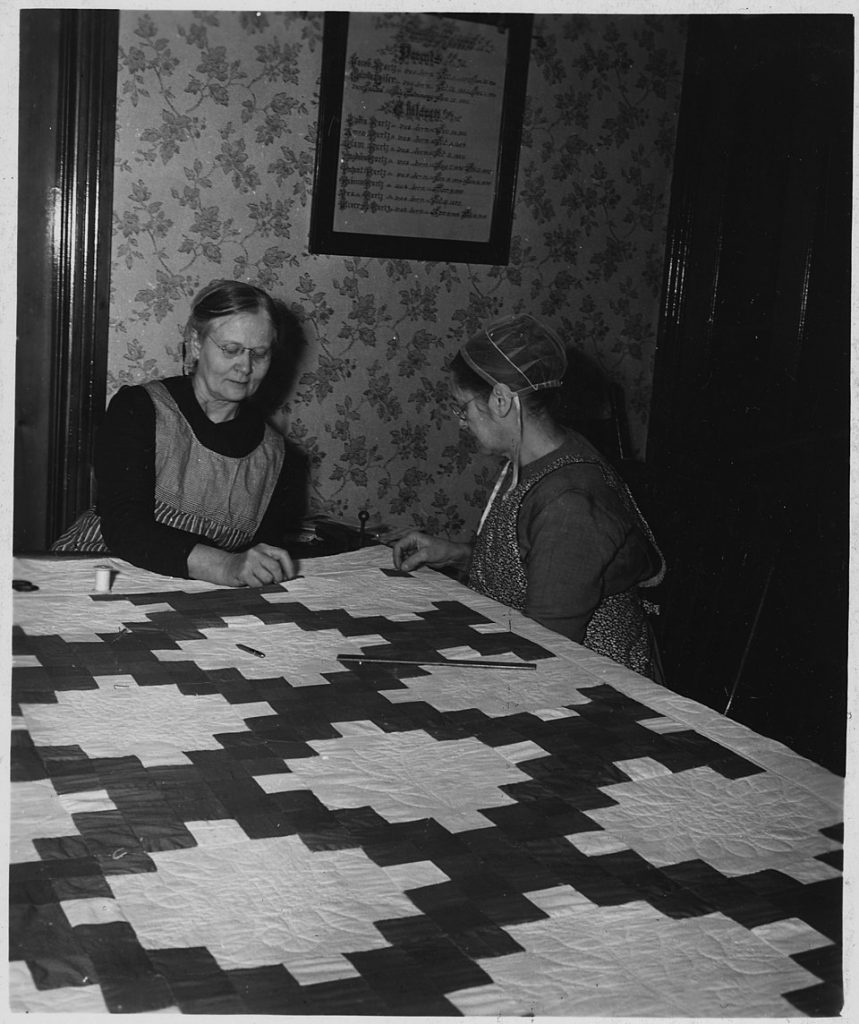
Among all Amish artistic traditions, quilting stands as the most recognizable and cherished. Amish quilts have become folk art icons—prized by collectors, featured in museums, and sold at premium prices. But at their core, they remain objects of utility, love, and heritage. Each stitch is a testimony to the values of patience, craftsmanship, and community.
Quilting began among the Amish in the 19th century, initially as a practical response to cold Pennsylvania winters. Blankets were made from leftover fabric scraps, transformed by hand into geometric patterns that offered both warmth and visual harmony. Early Amish quilts were simple—often whole cloth or with a single large medallion. Over time, patterns became more intricate, yet always symmetrical and composed of repeated shapes: diamonds, squares, stars, or bars.
Common patterns include “Sunshine and Shadow,” “Center Diamond,” and “Roman Bars.” These designs, while not overtly religious, reflect the Amish spiritual worldview: balance, repetition, order. Colors are carefully chosen to conform to community norms—brights are avoided, pastels are rare, and white is seldom used except for baby quilts or wall hangings. The limited palette isn’t a limitation; it’s an aesthetic language, rich in contrast and emotional depth.
Quilting is primarily women’s work, passed down from mothers to daughters. Girls learn to sew at a young age, often starting with small projects like potholders before graduating to full quilts. Group quilting bees serve both social and spiritual purposes, strengthening community bonds while fulfilling household needs. Some quilts are made as gifts—for weddings, births, or fundraisers. Others are sold, often anonymously, to support church schools or missions.
In recent decades, Amish quilts have drawn attention from art historians and collectors. What began as domestic labor is now appreciated as cultural heritage. Museums like the International Quilt Museum in Nebraska and the Philadelphia Museum of Art hold significant Amish quilt collections. But despite the recognition, most Amish women would never call themselves artists. For them, the quilt is not a canvas, but a calling—one that serves their family, their faith, and their way of life.
Woodworking and Furniture: Craftsmanship as Devotion
If quilting is the heartbeat of Amish women’s creative work, then woodworking is its masculine counterpart—silent, steady, and built to last. Amish furniture has become synonymous with durability and timeless style, known around the world for its meticulous craftsmanship and clean design. But like all Amish art, these pieces aren’t created for prestige. They’re made to serve—and in that service, they reflect the soul of the maker.
Amish woodworking has deep roots in tradition. Young boys often learn from their fathers or older relatives, working in barns and sheds that double as family workshops. Power tools are generally avoided in favor of hand tools or non-electric machinery powered by foot treadles, compressed air, or hydraulic systems. The result is a slower process—but one that allows for precision, focus, and connection to the material.
Each piece of Amish furniture is made from solid wood—no particle board, no shortcuts. Oak, cherry, maple, and walnut are among the most commonly used materials, all sourced with care and respect for creation. Joints are fitted by hand, often without nails, and finished with natural oils or low-sheen varnishes that enhance the wood’s grain without turning it glossy. The goal is simple elegance, not decorative flair.
There’s a philosophical and spiritual element to this craftsmanship. In the Amish worldview, working with your hands is a form of prayer—an offering of time and energy for the good of others. The carpenter doesn’t sign his name to the piece, nor seek acclaim. The value of the object lies not in novelty but in how well it performs its task. A chair must be sturdy. A table must be level. A cradle must be safe. If beauty arises in the process—and it often does—it’s simply a reflection of right order, not a pursuit in itself.
The global market has taken notice. Many “Amish-style” furniture sellers now operate in the U.S. and abroad, though not all are run by Plain people. True Amish workshops often sell through local outlets or trusted English (non-Amish) intermediaries who understand the community’s values. It’s a delicate balance: earning a living without encouraging pride or consumerism. Still, buyers drawn to the honesty and integrity of Amish furniture rarely walk away disappointed. In a disposable world, it’s a reminder that good work still matters—and that the hand of a humble craftsman can shape something lasting.
Fraktur and Calligraphy: The Rare Flourishes of Expression
While quilts and cabinets are built to be used, Fraktur exists to be looked at. This form of folk art—characterized by ornate calligraphy, floral designs, and stylized birds—offers a rare glimpse into the decorative impulse within Amish and related Anabaptist cultures. Though more common among Mennonites and German-speaking Protestant communities, Fraktur was once practiced by some Amish groups, particularly in the 18th and early 19th centuries.
Fraktur art gets its name from the “fractured” style of Gothic lettering used in these handmade documents. Typically created on paper using ink and watercolor, Fraktur was used for spiritual and family records—birth and baptismal certificates, wedding blessings, and scripture verses. Many pieces were created by itinerant schoolmasters or scribes who traveled between Pennsylvania Dutch communities, offering their services for a small fee.
The imagery in Fraktur is unmistakable. Colorful tulips, hearts, doves, vines, and suns often fill the margins around carefully lettered texts. These motifs aren’t just ornamental; they carry deep Christian symbolism. Tulips may represent faith and humility, while birds often symbolize the Holy Spirit or divine watchfulness. Some pieces include small verses or proverbs, written in High German or Pennsylvania Dutch, reminding viewers to fear God, love their neighbors, and live upright lives.
Over time, as Amish communities became more conservative and wary of artistic display, Fraktur largely disappeared from their daily life. The more liberal Mennonite and Brethren groups continued the practice longer, and many preserved works have been attributed to these denominations. Still, old Amish Fraktur examples remain as poignant artifacts—a blend of art and faith, humility and celebration.
Today, Fraktur is experiencing a revival among folk art collectors and heritage scholars. Museums like the Winterthur Museum in Delaware and the Mennonite Heritage Center in Pennsylvania maintain excellent collections. Some Amish or ex-Amish artists have even quietly revived the form, adapting it to modern materials while maintaining the traditional symbolism. It’s a subtle reminder that even in a culture that downplays self-expression, the creative spirit still finds ways to bloom.
Amish Toy-Making and Dolls: Innocence and Simplicity Preserved
Walk into an Amish home and you may see a shelf of simple cloth dolls or wooden pull-toys—objects that look like they stepped out of a 19th-century nursery. But these aren’t just old-fashioned curiosities. They’re reflections of Amish beliefs about childhood, humility, and the right way to raise a child in a world full of temptations and distractions.
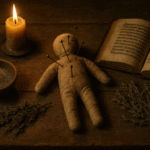
Perhaps the most iconic of Amish toys is the faceless doll. Made from fabric scraps and often hand-sewn by mothers or older sisters, these dolls are intentionally left without facial features. The reasons are both theological and cultural. First, the Second Commandment’s warning against graven images is taken seriously—some believe a face could encourage idolatry or vanity. Second, faceless dolls remind children that all people are equal in the eyes of God. No pretty faces, no fashion statements—just modest clothes and quiet play.
Wooden toys also feature prominently in Amish households. Simple trucks, horses, barns, and trains—often handmade by fathers or grandfathers—allow for imaginative play without the bells and whistles of modern toys. No batteries, no flashing lights, no screens. Just wood, wheels, and imagination. These toys often come with moving parts: rolling axles, hinged doors, or pull-strings—mechanical enough to engage, but not so complex as to distract.
Toy-making is not just about fun; it’s about values. Amish toys are tools for teaching patience, responsibility, and creativity. Children learn to care for their dolls, repair broken wheels, and play cooperatively with siblings. There are no superheroes or pop culture icons here. Everything is handmade, modest, and grounded in reality. In a culture that sees childhood as preparation for adult responsibility, toys are meant to train, not just entertain.
Interestingly, faceless dolls have become collector’s items in the outside world, often sold at Amish country markets or online. Some are mass-produced replicas, while others are genuine handmade pieces sold with the community’s blessing. This has raised questions about authenticity and commercialization, especially when decorative versions of these humble toys are sold for profit. Still, most Amish families view toy-making as a wholesome tradition—one more way to shape the next generation in faith and simplicity.
Decorative Arts vs. Vanity: Where the Line Is Drawn
In Amish life, the line between beauty and vanity is a fine one—and it’s not drawn arbitrarily. Every choice, from clothing to home design, is filtered through a moral lens. Is this serving God or self? Is it necessary, or is it showy? These questions aren’t just theoretical—they shape how art is created, displayed, and even thought about in Amish culture.
Decorative art is allowed, but only in forms that do not promote pride or excess. For example, quilts can feature vibrant colors and intricate stitching—but only within certain bounds. The patterns are geometric and non-figurative; you won’t find a quilt with a sunset or a portrait. Similarly, Amish homes may contain tasteful woodwork or handwoven baskets, but not paintings, statues, or mirrors. Even the design of buggies and barns reflects this restraint—functional, unadorned, and modest.
The Second Commandment plays a central role here: “Thou shalt not make unto thee any graven image.” Most Amish interpret this as a ban on religious imagery or portraits that might encourage idolatry. That’s why faceless dolls are the norm and why photography is often avoided. Not because beauty itself is bad, but because it can distract from inner virtues. Vanity, in the Amish sense, is anything that draws attention to the individual rather than pointing to God.
Still, there is room for debate. Some Amish communities—especially more progressive or “New Order” groups—allow a bit more leeway in artistic expression. Wall hangings with embroidered scripture verses, for instance, are fairly common. So are modestly decorated kitchen items, like painted bread boxes or carved utensils. These aren’t seen as indulgent but as ways to bring peace and beauty into the home in service of family life.
Of course, the outside world doesn’t always understand these nuances. What some might see as under-decorated or plain, the Amish see as principled. And what outsiders might call “art,” many Amish would simply call “good work.” It’s not that they dislike beauty—it’s that they refuse to let beauty become the point. In a culture where the self must decrease so that God may increase, even art bows in reverence.
The Role of Women in Amish Art Traditions
While both men and women contribute to Amish material culture, it’s the women who most often carry the creative flame in everyday life. From quilting and canning to basket weaving and embroidery, Amish women preserve, teach, and expand upon the aesthetic values of their community—often without realizing how central their role truly is.
Quilting is the most obvious example. Girls learn the basics early—first with simple stitches, then block patterns, and eventually full-size quilts. These aren’t just chores; they’re rites of passage. A hope chest filled with handmade linens is a sign of readiness for marriage, a display not of vanity but of preparation, stewardship, and quiet pride in one’s skills. And at quilting bees, older women share techniques and stories, binding generations together one stitch at a time.
Beyond quilting, Amish women are responsible for a range of household arts that blend beauty and function. Canning jars are labeled with care. Rugs are braided from old clothes. Curtains, when used, are sewn by hand and matched to the season. Baskets are woven for gathering eggs or carrying laundry. Even in the kitchen, presentation matters—pies are latticed, breads are shaped with precision, and table settings follow subtle rules of order and neatness. All of this may look simple to an outsider, but within the community, it represents a life lived with intention.
Teaching is another essential function. Amish girls often learn from mothers, aunts, and older siblings, not just how to make things, but why to make them a certain way. Why the lines must be straight. Why you don’t rush a job. Why it’s better to redo a seam than leave it imperfect. These are moral lessons, not just technical ones. They prepare young women for roles as mothers, homemakers, and tradition-keepers.
And while you won’t find an Amish woman selling her wares at an art fair or claiming the title of “artist,” her influence is everywhere. Her stitches hold the family together—quite literally. Her preserves stock the pantry. Her dolls teach the children. Her baskets fill with the fruits of labor. In a world where women are often celebrated for loud achievements, the Amish woman is honored for her quiet faithfulness, for her beauty that serves rather than shines.
Commerce, Tourism, and the Outside World
The Amish may be known for their separation from modern society, but they aren’t entirely cut off. Many Amish families earn a living through businesses that deal directly with the outside world—including the sale of their handmade crafts, quilts, and furniture. This intersection between tradition and commerce is delicate. It offers both opportunity and risk: a chance to support the community, but also a temptation toward pride and profit-driven motives.
Tourism plays a major role in this equation. In areas like Lancaster County, Pennsylvania, or Holmes County, Ohio, thousands of visitors come each year to experience “Amish country.” They’re drawn by the scenic farms, homemade foods, and yes—the promise of authentic, handmade Amish art. Shops and roadside stands sell quilts, dolls, baskets, jams, woodcraft, and other goods often labeled “Amish-made.” But this label can be misleading.
In many cases, the crafts are indeed made by Amish individuals or families, but the goods are marketed and sold by non-Amish intermediaries. This arrangement allows the Amish to maintain their values—no self-promotion, no flashy advertising—while still participating in a market economy. But the rise in demand has created tensions. Some question whether making quilts for tourists undermines the original purpose of the craft. Others worry that mass-production techniques, even if done by hand, dilute the cultural meaning of these items.
There’s also the issue of authenticity. How can a buyer know whether a quilt was really made by an Old Order Amish woman, or by a factory imitating her style? Some workshops have responded by creating certification programs or using word-of-mouth recommendations within the community. But generally, the Amish rely on trust, quality, and reputation—not branding or trademarks.
Despite these concerns, many Amish view the selling of crafts as a form of honorable work—so long as the intent remains pure. If a woman sells quilts to help support her family or contribute to a church fundraiser, that’s a far cry from selling art for fame or fashion. The difference lies in the heart. As one Amish man put it, “It’s not the money that corrupts—it’s the pride that comes with it.”
Commerce, when handled with care, has also opened doors. It has allowed many Amish families to stay on their land, maintain their independence, and educate their children in community-run schools. For a culture that values self-sufficiency and hard work, that’s a trade-off they’re willing to make—so long as it doesn’t cost them their identity.
Contemporary Influences and the Future of Amish Art
While Amish traditions are famously stable, they are not static. Every generation faces new questions, new pressures, and new possibilities. The same is true in the realm of art. While core values remain, subtle shifts in style, material, and purpose can be seen among younger Amish—especially those in more progressive communities or in close proximity to the English world.
One area of change is in the types of materials used. Some younger quilters are experimenting with fabric patterns that include subtle florals or lighter tones, even while maintaining traditional structures like the “Center Diamond” or “Bars” layout. Others are using machine stitching, not to speed up the process, but to accommodate aging hands or meet market demand. In woodworking, battery-powered tools are increasingly common—permitted by many bishops if they don’t plug into the grid.
There are also changes in attitude toward certain art forms. While photography is still frowned upon in most Old Order communities, some Amish—especially in the New Order or Beachy groups—have begun using it in limited ways. A family portrait taken for a directory, or a landscape photo used for a school fundraiser, might now be acceptable in certain contexts. Similarly, some younger members dabble in sketching, journaling, or even writing poetry, often in private or shared only within the community.
The internet, while officially banned, has indirectly influenced Amish art through exposure and tourism. When English collectors share images of Amish quilts online or write blog posts about their purchases, that feedback loop—though unintentional—has a way of shaping future trends. Some quilters may be encouraged to make more items for sale, or to revive older patterns that have become popular again.
Museums and scholars have also played a role in preserving and showcasing Amish art. Exhibits on folk art, quilt retrospectives, and studies of Fraktur documents have elevated these humble crafts to the status of national treasures. That attention has helped document a history that might otherwise have faded away. But it also raises questions: What happens when a culture that avoids self-glorification is celebrated by those who thrive on it?
Ultimately, the future of Amish art will be determined the same way its past was—by quiet decisions made around kitchen tables, in barns, and at quilting frames. While trends may come and go, the core values of humility, faith, and function will remain. In that, the Amish remind the rest of us that true beauty isn’t found in shouting to be seen—it’s found in doing good work, quietly and faithfully, with no expectation of applause.
Key Takeaways
- Amish art is rooted in faith, not self-expression. Every quilt, cabinet, or crafted item reflects values like humility, discipline, and devotion—not personal fame or creativity.
- Function defines Amish aesthetics. Beauty arises from order, utility, and harmony—not from ornamentation or worldly trends.
- Women are the keepers of Amish artistic tradition. Through quilting, canning, sewing, and homemaking, they preserve and pass down the community’s creative identity.
- Tourism and commerce walk a fine line. While handmade Amish goods are sold to outsiders, the community maintains careful boundaries to avoid pride and commercialism.
- The future of Amish art balances change and continuity. Younger generations adapt within bounds, but the heart of the tradition—simplicity, faith, and service—remains firm.
FAQs
- Do the Amish consider what they make “art”?
No. Most Amish view their crafts as practical work, not as artistic expression. The term “art” is rarely used in their culture. - Why do Amish dolls have no faces?
Faceless dolls discourage vanity and emphasize that all people are equal in the eyes of God, aligning with biblical principles. - Can outsiders purchase Amish-made art or crafts?
Yes, many Amish families sell quilts, furniture, and other items through local shops or intermediaries, though some are made only for personal or community use. - Are there Amish painters or sculptors?
Rarely. Visual arts that are seen as decorative or prideful—like painting or sculpture—are generally discouraged in most Amish groups. - How does Amish art differ from Mennonite art?
Mennonites tend to allow more freedom in artistic expression, including more color and figurative imagery, while the Amish adhere to stricter guidelines of simplicity.