The Tbilisi State Academy of Arts (TSAA) stands as one of Georgia’s most prestigious institutions, shaping generations of artists, designers, and architects. Founded in 1922, it has played a pivotal role in preserving and evolving the country’s artistic traditions while embracing modern influences. Located in the heart of Tbilisi, the academy has long been a beacon of creativity, fostering an environment where students are encouraged to experiment and refine their craft. Over the past century, it has become a powerhouse of talent, producing internationally acclaimed artists whose works have made a lasting impact.
Throughout its history, the academy has undergone significant transformations, adapting to the shifting cultural and political landscape of Georgia. From its early years under Soviet rule to its post-independence evolution, TSAA has consistently maintained its reputation as a center of excellence in the visual arts. The institution has been instrumental in both reflecting and shaping Georgian identity, influencing everything from painting and sculpture to contemporary digital media. As Georgia continues to grow as a cultural hub, the academy remains at the forefront, nurturing young talents who push the boundaries of artistic expression.
This article explores the rich history, notable alumni, academic programs, and cultural contributions of the Tbilisi State Academy of Arts. It highlights the academy’s role in Georgia’s artistic heritage, its evolution over the past century, and its continued influence on contemporary trends. By delving into the institution’s key milestones, we gain a deeper understanding of how it has shaped Georgian and international art movements. Whether you are an aspiring artist or an art enthusiast, the story of TSAA is one of resilience, transformation, and boundless creativity.
From its foundation to its present-day initiatives, TSAA has remained committed to excellence in artistic education. As we explore its journey, we will see how it has adapted to different artistic and political eras while continuing to inspire generations of creators. The academy’s legacy is deeply intertwined with Georgia’s cultural evolution, making it an institution of national and international significance. Understanding its history allows us to appreciate not only its influence on art but also its role in shaping broader artistic movements across Europe and beyond.
The Founding and Early Years of the Academy
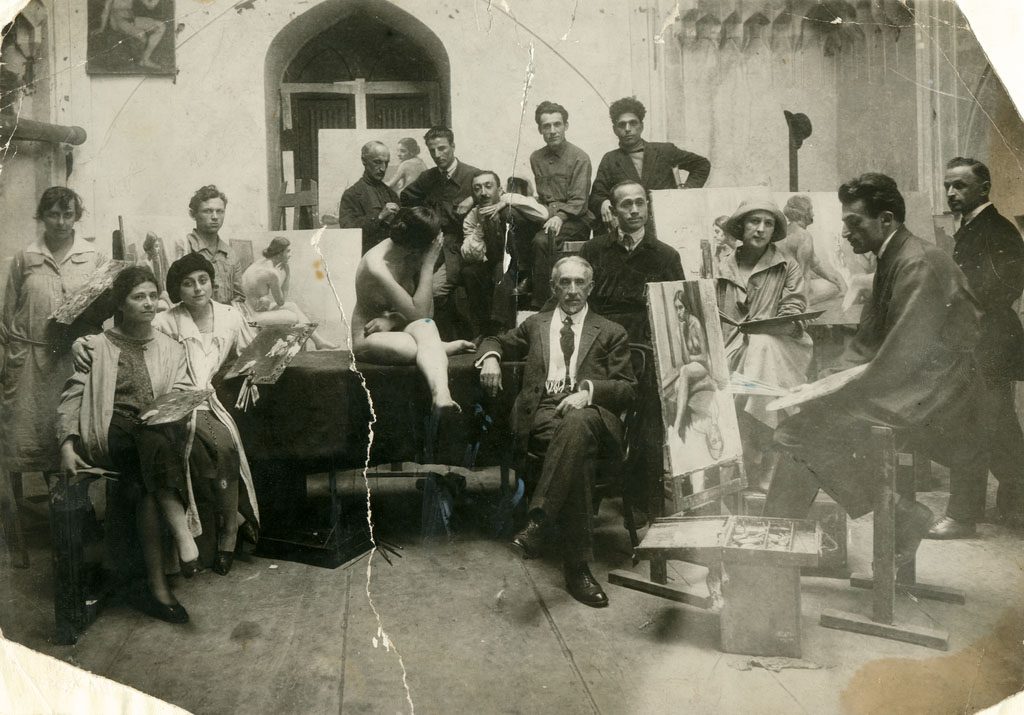
The Tbilisi State Academy of Arts was founded in 1922, during a time of significant cultural transformation in Georgia. The establishment of the academy was driven by a group of visionary artists and intellectuals who sought to create a center for artistic excellence in the country. Among its founding figures were noted painters and educators such as Gigo Gabashvili, Joseph Charlemagne, and Eugeny Lanceray, who played crucial roles in shaping its early direction. Their combined expertise helped lay the foundation for an institution that would blend classical European techniques with Georgian artistic traditions.
The academy was established with the goal of providing structured, high-quality art education that aligned with international standards. Before its founding, Georgian artists had to travel abroad to cities such as Moscow, Saint Petersburg, and Paris to receive formal training. The creation of TSAA provided local artists with access to professional instruction within their homeland, helping to cultivate a uniquely Georgian artistic identity. Early students benefited from rigorous academic training that emphasized both classical art forms and regional cultural heritage.
During its initial years, TSAA operated under challenging conditions, as Georgia faced political instability following the collapse of the Russian Empire and the emergence of Soviet rule. The academy quickly became an important institution within the newly established Georgian Soviet Socialist Republic, receiving state support but also operating under ideological constraints. Despite these challenges, it continued to attract talented students and faculty who were committed to artistic excellence. The academy’s first graduates emerged as key figures in the development of Georgian modernist and realist art.
By the 1930s, TSAA had firmly established itself as Georgia’s premier art institution, with a growing reputation beyond its borders. The school expanded its curriculum, incorporating new disciplines such as sculpture, graphic design, and decorative arts. Many of its early graduates went on to have successful careers, contributing to Georgia’s rich artistic heritage. The academy’s influence during this period set the stage for its future growth and its continued role in shaping Georgian and regional art movements.
Evolution and Growth Through the 20th Century
Throughout the 20th century, the Tbilisi State Academy of Arts underwent numerous transformations, reflecting the broader historical and political shifts that shaped Georgia. The Soviet era brought both opportunities and restrictions, as the state heavily influenced artistic expression and academic policies. During the 1940s and 1950s, socialist realism became the dominant style, and the academy adapted its curriculum to align with state-mandated artistic principles. However, many artists and professors found ways to incorporate traditional Georgian elements into their work, preserving the nation’s artistic identity despite political pressures.
The academy’s expansion continued in the post-war years, with new departments and disciplines introduced to meet the evolving demands of the art world. By the 1960s, TSAA had developed strong programs in industrial design, textile arts, and monumental painting, further broadening its artistic scope. This period also saw increased collaboration with art institutions from other Soviet republics, allowing Georgian artists to engage with a wider artistic network. Many of TSAA’s faculty members were invited to participate in major Soviet exhibitions, gaining international recognition for their work.
During the late Soviet period, from the 1970s to the 1980s, the academy became a hub for artistic experimentation and intellectual discourse. While strict ideological oversight remained, some artists began to push the boundaries of officially sanctioned styles, exploring abstract and avant-garde approaches. This era saw the rise of artists such as Zurab Tsereteli, whose monumental sculptures and public artworks gained widespread acclaim. At the same time, TSAA continued to uphold traditional artistic disciplines, ensuring that students received a well-rounded education in both classical and contemporary art forms.
By the time Georgia gained independence in 1991, the academy faced new challenges as it transitioned away from Soviet influence. The economic hardships of the 1990s affected funding and resources, but TSAA persevered, adapting its curriculum to meet the needs of a new generation of artists. The post-Soviet period allowed for greater artistic freedom, with students and faculty exploring a wide range of styles and themes. The academy’s resilience during this tumultuous period solidified its reputation as a leading institution dedicated to the advancement of Georgian art and culture.
Notable Alumni and Their Global Influence
The Tbilisi State Academy of Arts has produced numerous talented alumni who have significantly impacted Georgian and international art. Among the most celebrated graduates is Elene Akhvlediani, a painter known for her vibrant depictions of Tbilisi’s old streets and architecture. Her work blends post-impressionism with Georgian folk influences, making her one of the most distinguished artists of the early 20th century. Akhvlediani’s paintings were widely exhibited in Paris, where she gained recognition for her unique style. Her legacy continues to inspire contemporary Georgian artists who seek to capture the charm and spirit of their homeland.
Another prominent graduate is Lado Gudiashvili, whose art was deeply influenced by medieval Georgian frescoes and European modernism. His paintings often depict mystical, dreamlike scenes with rich colors and expressive figures. Gudiashvili worked extensively in both painting and monumental art, contributing to major public projects in Georgia. His career flourished during the Soviet period, yet he maintained a distinct artistic identity that set him apart from strict socialist realism. Today, his works are showcased in major museums and private collections around the world.
One of the most internationally recognized alumni of TSAA is Zurab Tsereteli, a sculptor and painter whose large-scale public artworks have been installed in cities worldwide. Born in 1934, Tsereteli gained prominence for his monumental sculptures, including the towering statue of Peter the Great in Moscow. His bold, expressive style has drawn both admiration and criticism, but his influence on contemporary public art is undeniable. In addition to his artistic career, he has served as the president of the Russian Academy of Arts, further cementing his reputation in the global art community.
The academy has also contributed to the fields of graphic design, textile arts, and architecture, producing many figures who have shaped modern Georgian aesthetics. Graduates have participated in major international exhibitions, bringing Georgian art to the forefront of global creative discourse. Many alumni continue to collaborate with institutions in Europe, Russia, and the United States, further extending the academy’s influence. Their contributions demonstrate the strength of TSAA’s artistic education and its ongoing impact on the world stage.
Academic Programs and Specializations
The Tbilisi State Academy of Arts offers a diverse range of academic programs, covering both traditional and contemporary disciplines. Its fine arts department remains one of the most prestigious, with a focus on painting, sculpture, and graphic arts. Students receive extensive training in classical techniques, including oil painting, fresco, and etching, ensuring that they master both historical and modern approaches. The academy places a strong emphasis on developing individual artistic styles while maintaining respect for Georgian cultural heritage.
In addition to fine arts, the academy has well-established programs in architecture and design, which have gained prominence over the decades. The architecture department integrates theoretical knowledge with practical experience, encouraging students to explore both historical preservation and modern urban planning. Similarly, the industrial and fashion design programs train students in functional and aesthetic aspects of design, preparing them for careers in various creative industries. Many graduates go on to work in international design firms or establish their own studios.
Another significant area of study at TSAA is restoration and conservation, a field that has grown increasingly important in preserving Georgia’s artistic and architectural heritage. Students in this program learn techniques for restoring paintings, manuscripts, and historic buildings, ensuring that valuable cultural artifacts are maintained for future generations. This specialization has led to collaborations with museums and heritage organizations, further strengthening the academy’s role in cultural preservation. Many restoration experts trained at TSAA have played key roles in revitalizing some of Georgia’s most important landmarks.
The academy continually adapts its curriculum to reflect changing artistic trends and technological advancements. In recent years, it has incorporated digital art, multimedia design, and animation into its course offerings. This modernization allows students to explore new creative avenues, equipping them with skills that are relevant in today’s digital-driven art world. By blending tradition with innovation, TSAA ensures that its graduates are well-prepared to navigate the evolving landscape of contemporary art and design.
The Academy’s Role in Georgia’s Cultural Identity
For nearly a century, the Tbilisi State Academy of Arts has played a central role in shaping Georgia’s cultural identity. The institution has nurtured generations of artists who have defined and redefined the visual representation of Georgian heritage. Through its commitment to education and artistic excellence, the academy has preserved traditional art forms while fostering new modes of creative expression. Many of Georgia’s most iconic paintings, sculptures, and architectural works can be traced back to TSAA-trained artists.
The academy’s impact extends beyond individual artists, as it has also contributed to national and international cultural initiatives. TSAA faculty and students have participated in major exhibitions, including the Venice Biennale and other international art festivals. These events provide a platform for Georgian artists to showcase their work to global audiences, reinforcing the country’s presence in the contemporary art world. Additionally, the academy has collaborated with museums, galleries, and academic institutions worldwide, strengthening cultural ties with other nations.
Public art projects have also been a major aspect of the academy’s influence on Georgian society. Many prominent sculptures, murals, and architectural designs in Tbilisi and other Georgian cities have been created by academy-trained artists. These works contribute to the country’s visual landscape, reflecting both historical narratives and modern artistic trends. The academy has been instrumental in ensuring that public spaces remain vibrant and culturally rich, enhancing the artistic experience of residents and visitors alike.
Through its commitment to artistic education, TSAA continues to shape Georgia’s cultural narrative, balancing tradition with innovation. As new generations of artists emerge, they bring fresh perspectives while honoring the artistic legacies of their predecessors. This dynamic evolution ensures that the academy remains a driving force in the development of Georgia’s national identity. Its contributions to the arts solidify its role as a guardian of cultural heritage and a beacon for future artistic movements.
Challenges and Adaptation in the 21st Century
As the world of art education evolves, the Tbilisi State Academy of Arts has faced numerous challenges and opportunities in the 21st century. One of the primary difficulties has been adapting to the digital age, as traditional art techniques must now coexist with modern technology. The academy has introduced courses in digital media, interactive design, and animation to meet the demands of a rapidly changing industry. These new programs ensure that students graduate with skills relevant to both classical and contemporary artistic fields.
Economic difficulties have also posed challenges for the academy, particularly in securing funding for modern facilities and resources. The transition from a Soviet-era institution to an independent Georgian academy required significant restructuring. Despite financial struggles, the academy has maintained its high standards of education through partnerships with international art schools and cultural organizations. These collaborations have helped provide students with access to scholarships, study-abroad programs, and global networking opportunities.
Another key issue has been balancing artistic freedom with national traditions, as Georgia experiences cultural shifts in the modern era. The academy encourages students to explore a wide range of artistic styles while remaining deeply connected to their heritage. Faculty members guide students in merging contemporary artistic trends with traditional techniques, allowing for a uniquely Georgian form of modern expression. This balance has helped maintain the academy’s reputation as a forward-thinking institution rooted in cultural authenticity.
Looking ahead, the academy aims to expand its influence by increasing international collaborations and embracing new artistic disciplines. Plans for more exchange programs, digital learning platforms, and experimental art initiatives are in development. As TSAA continues to grow, it remains committed to its original mission of fostering creativity, preserving heritage, and pushing artistic boundaries. Its ability to adapt while maintaining its core values ensures that it will remain a leading force in Georgian and international art education.
Key Takeaways
- The Tbilisi State Academy of Arts was founded in 1922 and has shaped Georgian artistic traditions.
- The academy has produced notable alumni, including Elene Akhvlediani, Lado Gudiashvili, and Zurab Tsereteli.
- TSAA offers programs in fine arts, architecture, restoration, and digital media.
- The academy plays a vital role in Georgia’s cultural identity through exhibitions and public art projects.
- It continues to adapt to modern challenges while preserving its artistic heritage.
Frequently Asked Questions
- When was the Tbilisi State Academy of Arts founded?
It was established in 1922 in Tbilisi, Georgia. - Who are some famous alumni of TSAA?
Notable alumni include Elene Akhvlediani, Lado Gudiashvili, and Zurab Tsereteli. - What programs does the academy offer?
TSAA offers programs in fine arts, design, architecture, restoration, and digital arts. - How has the academy influenced Georgian culture?
It has shaped Georgian artistic traditions through education, exhibitions, and public art projects. - What challenges does TSAA face today?
It faces economic constraints, digital transformation, and balancing tradition with modern trends.