The stag has been a symbol of nobility and alert strength for thousands of years. In ancient European traditions, it represented grace, speed, and a natural dignity that set it apart from other animals of the forest. Medieval artists carried those ideas forward, placing stags in illuminated manuscripts, hunting tapestries, and church carvings. The stag often appeared near saints or holy places, partly because of old legends in which the animal guided travelers away from danger. Its branching antlers reminded viewers of growth, renewal, and the quiet order found in the natural world. Even when artists worked from memory rather than direct observation, they recognized that the stag carried a moral weight that fit their stories.
As the Middle Ages progressed, stags became common in heraldic art. Noble families used the animal to signal upright character, steadiness, and a rightful place in society. A stag carved above a doorway or woven into a banner suggested calm authority. By the time Europe entered the modern era, the stag already held a long history as a creature tied to virtue and quiet power.
Northern European Traditions
In the northern countries, where forests stretched for miles and hunting shaped daily life, the stag held a special place in local identity. Painters from regions such as Germany, Scandinavia, and the British Isles often showed stags amid pine woods, mountain paths, or mist-covered fields. These scenes were not only depictions of the animal itself but reflections of a culture built around respect for nature’s order.
Artists of the 1700s and early 1800s treated the stag as a sign of the countryside’s richness. Even when included in hunting scenes, the stag is shown with dignity, never reduced to a mere object of sport. Its keen posture and silent watchfulness added both tension and beauty to the canvas. In many cases, the stag served as a reminder that the wilderness around the village or manor held its own noble life, untouched by the noise of towns.
Romantic Landscape Use
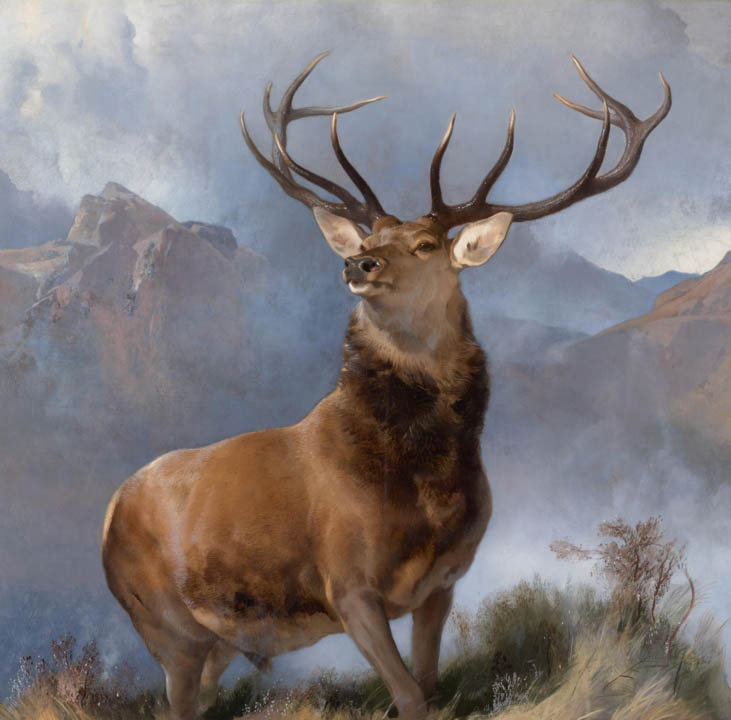
By the 19th century, Romantic painters embraced the stag as a perfect subject for their dramatic landscapes. The animal’s poised silhouette against storm clouds or morning mist helped convey the emotional depth the era valued. A single stag standing on a rocky rise could suggest solitude, patience, or the quiet guardianship of the land. Artists liked how the stag guided the viewer’s gaze across the scene, connecting the foreground to distant mountains or forests
Romantic art often emphasized the tension between man and wilderness, and the stag stood as a symbol of nature’s unbroken dignity. Even when shown in colder seasons or harsh light, the stag remains composed, carrying itself with a calm that viewers found both stirring and reassuring. The animal gave Romantic landscapes a sense of watchfulness, as if the natural world itself had a memory and a voice.
Symbolist Meanings
When Symbolist painters turned to the stag, they treated the animal less as a literal presence and more as a figure of inner reflection. Soft backgrounds, muted colors, and dreamlike settings helped shift the stag into a more poetic realm. In these works, the animal could stand for longing, purity of intention, or the pull between thought and instinct. Symbolists appreciated the stag’s natural grace, using it to hint at the deeper layers of human experience.
These images often invite contemplation rather than direct interpretation. A stag pausing at the edge of a forest or gazing over a quiet valley can suggest a life lived with patience and discipline. The Symbolists used the stag to express feelings that words struggle to capture, which is why the animal appears so often in their quieter, atmospheric work.
Sculpture and Decorative Arts
The stag also found a home in the decorative arts of the 19th century. Blacksmiths shaped antlers into hooks or bracket forms, woodcarvers built stags into mantelpieces and furniture, and metalworkers cast the animal in brass or bronze for small household objects. These pieces gave the home a sense of country tradition and calm strength, even in urban settings.
Many mountain regions, especially in the Alps and the German-speaking lands, produced elaborate carvings of stags for cabins, inns, and study rooms. Their presence echoed the long-standing respect for the animal in northern Europe. Even in simple forms—painted on a tin sign or carved into a wooden box—the stag carried its old meaning of vigilance and dignity.