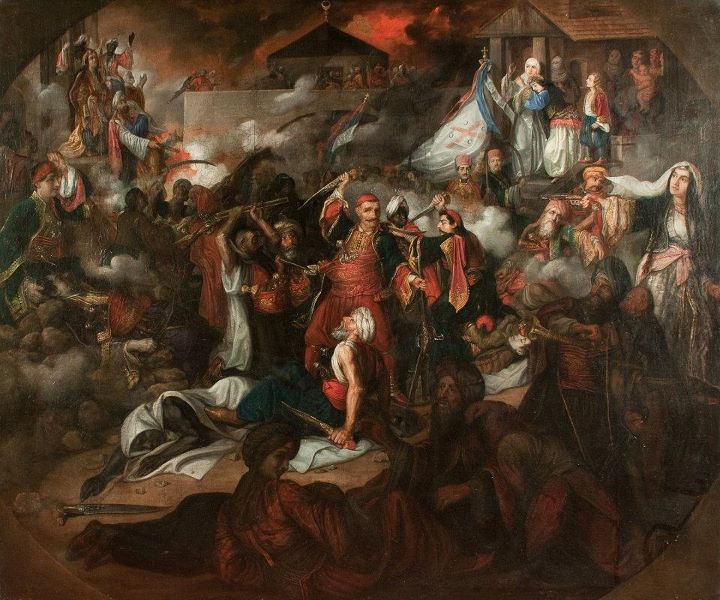
To understand the art history of Serbia is to step into a land shaped by the perpetual convergence of civilizations. Nestled in the heart of the Balkans, where the Pannonian Plain dissolves into mountainous highlands and ancient rivers carve through historic towns, Serbia has long been a cultural crossroads. Its territory has served as a bridge and battleground between empires—Roman, Byzantine, Ottoman, and Austro-Hungarian—each leaving an indelible imprint on the visual language and material culture of the region.
Geography is destiny, and Serbia’s position at the juncture of Central and Southeastern Europe has subjected it to both continuity and rupture. Artistic expression in Serbia has thus often developed under the tension of competing influences, whether religious, political, or stylistic. Yet this is not a tale of mere passive absorption. Serbian artists and craftsmen, even when working under foreign dominion, consistently adapted, refined, and at times resisted external styles to forge something distinctively their own.
The result is a visual tradition that is both rich and resilient. From the stylized sculptures of the Vinča culture, predating the pyramids of Egypt, to the radiant frescoes of medieval monasteries perched high in the hills, Serbian art tells a story of survival, devotion, and creative ingenuity. It is a story of icons and ideology, of war and restoration, of silence and revelation.
The trajectory of Serbian art cannot be separated from the broader forces that shaped the Balkans: Christianity and its schisms, imperial fragmentation, national revival, and the sweeping disruptions of the 20th century. At every turn, visual culture served as both mirror and maker of identity—revealing how a people viewed themselves, their faith, and their place in the world.
As this deep-dive unfolds, it will trace that history chronologically, pausing to examine key periods, figures, and movements. From ancient settlements to contemporary installations, from rural iconostases to avant-garde performances, Serbian art bears witness to a civilization that, while often tested, never ceased to create.
This is not only a journey through a national tradition, but through the evolution of European and Orthodox artistic currents themselves. For in Serbia, art has rarely stood still—it has shifted, endured, and reasserted itself, always colored by the country’s particular experience of time and place.
Prehistoric and Neolithic Art in the Serbian Region
Long before the first written word was inscribed or the first church painted, the land that would become Serbia was home to some of the most sophisticated prehistoric cultures in Europe. Their art was not only expressive but deeply embedded in daily life, religion, and a sense of cosmic order. These early societies, whose roots stretch back over 8,000 years, left behind remarkable visual legacies—objects and symbols that remain among the most enigmatic and striking in all of European prehistory.
Lepenski Vir: Order and Spirit on the Danube
One of the earliest known cultural and artistic centers in the region is Lepenski Vir, situated along the banks of the Danube in eastern Serbia. Occupied from around 7000 to 5500 BC, this Mesolithic settlement is often considered one of the first examples of organized urban life in Europe. But beyond its unique trapezoidal dwellings and evidence of early social structures, Lepenski Vir is notable for its monumental stone sculptures—some of the oldest examples of figural art on the continent.
These sculptures, often carved from river boulders, depict hybrid forms that merge human and fish-like features. Their faces are stylized, with deep, triangular eyes and abstract geometric patterns, suggesting ritualistic or symbolic meaning. Some archaeologists believe they represent river gods or ancestral spirits, possibly linked to the community’s subsistence on fishing and its spiritual relationship with the Danube.
What makes Lepenski Vir extraordinary is not only the presence of art, but its integration into the architectural and ceremonial landscape. The sculptures were often placed at the center of homes or near hearths, indicating a fusion of the sacred and the domestic—an early example of how art was inseparable from life, belief, and identity.
The Vinča Culture: Signs, Symbols, and the Mystery of Script
A few millennia later, the Neolithic Vinča culture flourished across the central Balkans, including much of modern Serbia. Lasting from about 5700 to 4500 BC, this culture produced one of the most intriguing artistic and symbolic corpuses in European prehistory.
Vinča settlements, such as Vinča-Belo Brdo near Belgrade, reveal an advanced society with organized urban planning, specialized crafts, and wide-ranging trade networks. But it is their figurines and inscribed tablets that most captivate modern observers.
Thousands of small ceramic anthropomorphic and zoomorphic figures have been unearthed, many of them abstract, with elaborate headgear, almond-shaped eyes, and no visible arms or genitalia. Some scholars interpret them as representations of deities or priestly figures, possibly part of a matrilineal or fertility-based cult. Others see them as protective household objects. Their stylization is unique—neither strictly naturalistic nor entirely symbolic—marking an aesthetic sensibility that is still not fully understood.
Even more puzzling are the Vinča symbols—marks inscribed on pottery, tablets, and figurines that some have claimed may represent one of the earliest forms of proto-writing. While mainstream archaeology hesitates to call it a script in the true sense, these symbols suggest a sophisticated system of visual communication. Whether they recorded ownership, ritual knowledge, or myth, they indicate that these Neolithic peoples were not only creating images but also experimenting with the abstraction of meaning.
Material and Technique
Both Lepenski Vir and Vinča art demonstrate a high degree of craftsmanship and technical skill. Artisans worked with local clays, stone, and organic pigments, and evidence suggests that kilns were capable of sustained high temperatures, allowing for refined ceramic forms. The tactile and durable nature of these media speaks to a culture that valued permanence and presence.
Yet these were not works made to be admired in a gallery—they were functional, spiritual, and embedded in the rhythms of daily life. In that sense, prehistoric Serbian art is best understood not as ornamentation, but as a system of visual meaning-making, anchored in worldview and community.
Cultural Legacy and Interpretation
Modern interest in these prehistoric cultures surged during the 20th century, especially after major excavations led by Serbian archaeologists like Dragoslav Srejović, who brought Lepenski Vir to global attention in the 1960s. Since then, Serbia’s museums, especially the National Museum in Belgrade, have preserved and displayed many of these findings, offering both national pride and scholarly curiosity.
Despite decades of study, many questions remain unanswered. What were these figures meant to convey? Were the symbols a proto-script, or something more akin to ritual iconography? What cosmologies animated these early people, and how might their visual culture have influenced the peoples who came after?
These ancient works endure as testaments to early human creativity, created thousands of years before Classical Greece or the Roman Empire. In Serbia, they serve as a foundation—not just chronologically but symbolically—for the layered artistic traditions that followed. In their abstraction, spirituality, and technical confidence, one already sees the seeds of a cultural identity rooted in both visual sophistication and metaphysical depth.
Roman and Early Christian Influence
As the Roman Empire expanded into the Balkans in the first century BC, the territory of present-day Serbia found itself incorporated into a vast imperial system that extended from Britannia to the Levant. Under Roman rule, the region saw the construction of cities, fortresses, roads, and monumental public works—many of which bore the hallmark visual language of Roman civilization: order, grandeur, and symbolism. Yet, as the Empire transitioned into its Christian phase, so too did the art of the region, giving rise to a complex fusion of classical aesthetics and spiritual symbolism.
Roman Serbia: Cities, Statues, and Imperial Legacies
Roman administration divided the Serbian lands among several provinces, including Moesia, Pannonia, and Dacia Ripensis. Major cities such as Sirmium (modern-day Sremska Mitrovica), Singidunum (Belgrade), and Viminacium (near Požarevac) flourished under imperial patronage.
These urban centers boasted temples, amphitheaters, baths, and villas, all adorned with decorative art. Mosaics, sculptural reliefs, and statuary were common, often modeled on classical Greek ideals but imbued with the Roman ethos of imperial dignity and civic virtue. One of the most significant finds from this period is the extensive mosaic floor at Sirmium, where geometric designs, mythological scenes, and floral motifs showcase a refined decorative tradition.
Another major site, Viminacium, was not only a military camp but also a civilian city of considerable cultural wealth. Excavations have revealed tomb frescoes, sarcophagi with carved reliefs, and coinage that bore imperial imagery—eagles, laurels, and the visages of emperors. The artifacts reflect both the wealth of Roman settlers and the extent to which the visual arts were used to communicate status, authority, and allegiance to the Empire.
The Christian Turn: New Icons for a New World
The spread of Christianity throughout the Roman Empire in the 3rd and 4th centuries had a profound impact on artistic production, and Serbia’s territory was no exception. With the Edict of Milan in 313 AD, which legalized Christianity, the visual language of Roman art began to shift—pagan deities and mythological scenes gave way to symbolic depictions of the new faith: fish, crosses, chi-rho monograms, and shepherds became central motifs.
Serbia played a unique role in this transformation. It was the birthplace of Constantine the Great, the first Roman emperor to embrace Christianity. Born in Naissus (modern-day Niš) around 272 AD, Constantine’s legacy would reverberate through both art and religion. The monumental Mediana palace complex, located near Niš, includes the remains of luxurious residences adorned with early Christian mosaics and architectural features reflecting both imperial and spiritual aspirations.
Art from this transitional period often walked a line between classical realism and emerging Christian abstraction. Human figures remained naturalistic, yet their context and meaning were shifting. In funerary art, for instance, Roman sarcophagi began to feature biblical scenes such as Jonah and the whale, the raising of Lazarus, and the Good Shepherd—all rendered with a softness and restraint that marked the beginning of a new aesthetic tradition.
Funerary Art and the Rise of the Martyr Cult
Christian communities in Roman Serbia left behind numerous underground cemeteries, catacombs, and tombs, many of which bear artistic traces of their beliefs. While much of the public art remained formally Roman during the early 4th century, these hidden spaces became laboratories for Christian iconography.
In places like Sirmium, which emerged as an important center of Christian administration and martyrdom, inscriptions and frescoes from tombs reflect both personal devotion and collective memory. Martyrs such as Saint Irenaeus of Sirmium were commemorated with imagery that combined Roman burial customs with Christian symbolism, anchoring the sacred within familiar forms.
These early Christian artworks lacked the narrative sophistication of later Byzantine icons, but they were vital in developing a distinctly religious visual lexicon, one that used art not for state propaganda, but for spiritual reflection and the assertion of faith in the afterlife.
Materials and Methods
The continuity of Roman techniques—mosaic tiling, fresco painting, and marble carving—ensured that early Christian art retained high levels of craftsmanship. The shift in subject matter did not immediately entail a loss of quality; rather, it brought new challenges. Artists had to render invisible realities—faith, salvation, eternity—through symbolic codes rather than heroic myths or imperial rituals. This led to the increased use of allegory, gesture, and iconic pose, setting the stage for Byzantine art’s theological focus.
Legacy and Preservation
Many of the Roman and early Christian artifacts from Serbia have survived only in fragments, the result of time, warfare, and changing regimes. Still, the work of archaeologists and historians has brought much to light. Sites such as Viminacium and Mediana are active archaeological parks, while artifacts from this era form a core part of the collections at the National Museum of Serbia and the Museum of Srem in Sremska Mitrovica.
Together, these remnants tell of a society in flux—where the grandeur of Rome met the introspective symbolism of early Christianity. They also mark the beginning of Serbia’s long-standing engagement with religious art, a tradition that would define the next thousand years of its visual culture.
Byzantine Legacy and Medieval Serbian Art (6th–14th Century)
As the Western Roman Empire collapsed and the Eastern Roman—or Byzantine—Empire rose in its place, the lands that now comprise Serbia came increasingly under the cultural and political influence of Constantinople. This transformation marked the beginning of a profound and enduring artistic tradition rooted in Eastern Orthodoxy, theological symbolism, and the sacred function of visual art. From the 6th to the 14th century, Serbian art was shaped not only by imperial models but by a distinctive, local spirit that fused devotion with an evolving national identity.
The Arrival of Christianity and the Church as Patron
Christianity, already spreading in the late Roman period, took on institutional and cultural dominance under the Byzantine Empire. The establishment of dioceses and the construction of churches brought with them a clear aesthetic directive: to glorify the divine through sacred space. This required a new visual language—one that moved beyond Roman naturalism toward hieratic composition, symbolic color, and spiritual abstraction.
The Serbian lands, incorporated into the larger Byzantine ecclesiastical and political sphere, became a canvas for this sacred art. Churches were designed as microcosms of heaven, with every surface—from dome to narthex—covered in iconographic programs that told the Christian story in images rather than words. These spaces were not galleries but liturgical environments, and the art within them functioned as both instruction and inspiration.
Fresco Painting: The Sacred Wall as Narrative
Perhaps the most distinctive and lasting contribution of medieval Serbian art was its tradition of fresco painting. Artists working in remote monasteries or royal endowments transformed cold stone walls into visual theologies. These paintings followed a hierarchical structure: Christ Pantocrator often dominated the central dome; saints, prophets, and apostles populated the nave; and complex narrative cycles adorned the side walls.
The frescoes were not merely decorative—they were theological and didactic. Every gesture, garment color, and facial expression conveyed layers of meaning. Emotion was restrained, reflecting the Orthodox emphasis on spiritual serenity rather than worldly drama. These images were created not to entertain but to elevate—to draw the viewer into contemplation and reverence.
Some of the finest examples of medieval Serbian fresco painting can be found in the monasteries of Studenica, Žiča, Sopoćani, Mileševa, and Gračanica. Built between the 12th and 14th centuries, these sites remain masterpieces of both architecture and visual narrative.
At Sopoćani Monastery, built in the 13th century near Novi Pazar, the frescoes display a remarkable combination of classical naturalism and spiritual idealism, particularly in the Dormition of the Virgin—a composition that reveals both the emotional depth and technical sophistication of Serbian painters.
The Icon Tradition and Theological Imagery
Parallel to frescoes was the tradition of icon painting, portable images of Christ, the Virgin Mary, and the saints, often used in both churches and private devotion. Serbian icon painters followed the Byzantine canon, maintaining strict symbolic conventions: elongated figures, golden backgrounds, and frontal, timeless poses.
However, regional characteristics began to emerge. Faces in Serbian icons often reveal more individuality and introspection than their Greek counterparts. Color palettes shifted subtly, and decorative motifs incorporated local textile and metalwork patterns.
Icons were not mere representations—they were believed to be windows to the divine. The artist was considered less a creator than a vessel, channeling spiritual truth through sacred tradition. As such, icon painters often remained anonymous, signing their work only rarely.
Architecture: The Serbian-Byzantine Synthesis
Church architecture in medieval Serbia mirrored this spiritual purpose. Modeled on Byzantine forms but adapted to local conditions and materials, Serbian churches often used cross-in-square plans, multiple domes, and richly ornamented stone façades. The Raška architectural school, named after the medieval Serbian state, fused Romanesque and Byzantine elements into a unique hybrid. In the later 13th and early 14th centuries, the Morava school introduced more ornate facades and a complex, vertical emphasis in design.
Studenica Monastery, founded by Stefan Nemanja around 1190, is often cited as the prototype of Serbian medieval architecture. Its white marble church and harmonious proportions reflect a blend of Romanesque solidity and Byzantine grace. Inside, the frescoes date to both the 13th and 16th centuries, showing the continuity of sacred art across dynastic and political changes.
Patronage and the Role of the Nemanjić Dynasty
Much of this artistic flowering was made possible by the Nemanjić dynasty, whose members not only ruled the Serbian medieval state but actively sponsored churches, monasteries, and manuscripts. Kings, queens, and princely clerics endowed monasteries as acts of piety, political legitimacy, and cultural ambition.
Saint Sava, the first Archbishop of the autocephalous Serbian Church and son of Stefan Nemanja, played a crucial role in institutionalizing this sacred artistic culture. He fostered ties with Mount Athos and other Byzantine centers, ensuring both theological orthodoxy and artistic excellence. Under his influence, Serbia emerged as a spiritual and artistic force in the Orthodox world.
Manuscript illumination also flourished in this period, particularly at Hilandar Monastery on Mount Athos. Though less visually grand than frescoes or icons, these richly decorated texts reveal the intellectual and spiritual culture underpinning Serbian religious art.
Enduring Influence
The artistic legacy of this medieval period is still visible not only in surviving architecture and iconography but in the very structure of Serbian religious and national identity. These monasteries became centers of learning, culture, and resilience—especially in the face of future invasions and occupations.
Art was not a luxury in medieval Serbia—it was a necessity of faith, a medium through which the divine was revealed and remembered. That tradition, deeply rooted in Orthodox Christianity and nurtured by centuries of dedication, remains one of the defining features of Serbia’s cultural heritage.
The Nemanjić Dynasty and the Golden Age of Serbian Art
From the late 12th century to the mid-14th century, the Nemanjić dynasty transformed Serbia from a fragmented principality into a centralized and powerful medieval kingdom—and eventually into an empire. But their legacy is not only political. Under their rule, Serbian art entered a golden age, distinguished by architectural grandeur, luminous fresco cycles, and a devotional culture that rivaled Byzantium itself. This was a period when faith, statehood, and artistic expression became inseparably linked, and the visual culture that emerged during this time still forms the foundation of Serbian identity.
Royal Patronage and the Sacred Mandate
The Nemanjić kings—most notably Stefan Nemanja, Stefan the First-Crowned, King Milutin, and Stefan Dušan—understood the power of art as a political and spiritual instrument. By founding monasteries, commissioning icons and frescoes, and supporting ecclesiastical institutions, they not only demonstrated piety but legitimized their reigns.
Each monastery was more than a religious center; it was a political monument and cultural hub. Built as endowments by rulers and aristocrats, these sacred complexes often included scriptoria, hospitals, agricultural estates, and schools. Their walls served as both theological texts and dynastic records—depicting Christ, the saints, and, importantly, the kings themselves, often shown offering model churches to divine figures in a symbolic gesture of humility and authority.
This tight interweaving of monarchy and monastery ensured that art became the visual face of national and spiritual aspiration.
The Architectural Flowering
Architecturally, this era saw the maturation of the Raška school, which blended Romanesque solidity with Byzantine elegance. Churches from this period often used locally sourced white stone, featured domed cruciform plans, and emphasized verticality and harmony.
Key examples include:
- Studenica Monastery (founded ca. 1190): Built by Stefan Nemanja, its Church of the Virgin is clad in white marble and features a synthesis of Western and Eastern architectural motifs.
- Dečani Monastery (built ca. 1327–1335): Commissioned by King Stefan Dečanski, Dečani represents the peak of medieval Serbian architecture. Constructed by a master builder from the Adriatic coast, it reflects Gothic influence while remaining fundamentally Orthodox in function and iconography.
- Gračanica Monastery (built 1321): A hallmark of the Late Byzantine style, with five domes and intricate brickwork, Gračanica’s design is both refined and symbolically rich.
These buildings were more than places of worship—they were statements of cultural confidence, positioned to rival the great churches of Thessaloniki and Constantinople.
The Fresco Renaissance
If architecture gave form to the spiritual ideals of the Nemanjić period, fresco painting gave them voice. The walls of churches were covered in complex iconographic programs, often spanning multiple registers and theological themes. These cycles were meticulously planned and executed with remarkable technical skill and artistic intuition.
The frescoes of the period achieved a delicate balance between spiritual abstraction and human emotion. Figures are graceful, their faces marked by calm intensity and expressive eyes. Draperies fall in rhythmic folds, and color harmonies—rich reds, deep blues, golds, and earthy tones—create a profound sense of sacred space.
Notable fresco ensembles include:
- Mileševa Monastery (painted ca. 1235): Famous for its “White Angel,” a serene figure of the angel at Christ’s empty tomb, considered one of the masterpieces of medieval European painting.
- Sopoćani Monastery (painted ca. 1265): The Dormition of the Virgin fresco is often praised for its classical composition, spatial depth, and restrained emotion, recalling early Christian and Hellenistic models.
- Gračanica Monastery (painted ca. 1321–1324): Its frescoes reflect the maturity of the Palaiologan Renaissance, a period of renewed artistic innovation in Byzantium, but adapted here with uniquely Serbian elements.
These frescoes were not anonymous decorations. Though many painters remain unnamed, records occasionally mention master artists such as Michael Astrapas and Eutychios, who were active across the Balkans and worked on commissions for both Serbian and Byzantine patrons. Their work combines narrative clarity, theological sophistication, and visual lyricism.
Imperial Ambitions and the Serbian Orthodox Church
The coronation of Stefan Dušan as Emperor in 1346 marked the political zenith of the medieval Serbian state. With it came a further assertion of ecclesiastical and artistic autonomy. Dušan elevated the Serbian archbishopric to a patriarchate, further aligning the visual and spiritual landscape with imperial aspirations.
Art from this late Nemanjić period reflects growing confidence and complexity. The Monastery of the Holy Archangels near Prizren, Dušan’s imperial foundation, was conceived as a monumental synthesis of power and piety—though sadly destroyed in later centuries, its remains testify to its former grandeur.
At the same time, manuscript illumination, church embroidery, and metalwork flourished. Lavishly decorated Gospels, carved reliquaries, and embroidered vestments reveal a sophisticated material culture that extended well beyond frescoes and icons.
Legacy and Survival
The fall of the Serbian Empire after the death of Dušan in 1355 and the subsequent Ottoman incursions ended this golden age. Yet the artistic legacy of the Nemanjić dynasty was far from extinguished. Monasteries became centers of resistance and preservation, safeguarding the visual memory of medieval Serbia through centuries of upheaval.
Today, these sites are UNESCO World Heritage monuments, and their frescoes remain among the finest examples of medieval European art—testaments not only to technical brilliance but to a deeply held vision of the world as infused with divine order.
The golden age of Serbian medieval art was not an isolated phenomenon but a bold articulation of Orthodox Christian civilization at the height of its creative powers. Through stone and pigment, the Nemanjić dynasty left a spiritual and artistic legacy that continues to define Serbian culture.
Ottoman Rule and Artistic Resilience (15th–19th Century)
With the fall of the Serbian Despotate in 1459 and the incorporation of Serbian territories into the Ottoman Empire, the flourishing artistic tradition that had reached its zenith under the Nemanjić dynasty entered a period of significant disruption. The empire that had once produced monumental churches and radiant frescoes now faced political subjugation, economic decline, and religious suppression. Yet art did not disappear. It adapted, retreated, and found refuge in monasteries, villages, and folk traditions. What followed was not a cultural void but a centuries-long struggle to preserve and reinvent Serbian identity through visual means.
The Collapse of Patronage and the End of Monumentality
The Ottoman conquest brought an abrupt end to state-sponsored ecclesiastical art. The royal courts were dismantled, and the Serbian Orthodox Church, while allowed to function within the millet system, lost much of its former wealth and political influence. Large-scale church construction and lavish fresco programs ceased. Many churches and monasteries were looted, converted into mosques, or left in ruin.
The loss of centralized patronage meant that artistic production was largely confined to isolated monastic communities, which operated as guardians of tradition in a hostile environment. Monasteries such as Hilandar (on Mount Athos) and Studenica continued to function, though often in diminished circumstances, preserving not only theology and language but also iconographic standards and artistic memory.
Monastic Art in Exile: Continuity in Isolation
Despite the challenges, the Serbian monastic tradition remained active, especially in remote and mountainous areas where Ottoman oversight was weaker. Art in this period became more conservative and formulaic, clinging to canonical styles and subjects rather than innovation. Frescoes were painted in smaller churches, sometimes on a limited budget and with more provincial execution, but they retained their core theological intent.
The Manasija Monastery, founded in the early 15th century just before the final Ottoman conquest, stands as one of the last great achievements of the medieval style. Its defensive walls and surviving frescoes, including a striking Deisis and Last Judgment scene, reflect the tension between spiritual aspiration and worldly threat.
Later, in the 16th and 17th centuries, a minor revival occurred—often referred to as the Post-Byzantine or Cretan-influenced style—in which Serbian painters adopted stylistic elements from Mount Athos and Venetian territories. These icons, while more rigid than their medieval predecessors, served to maintain a visual continuity of the faith.
Icon Painting and the Rise of the Zograf
During the Ottoman period, icon painting became the dominant form of religious art in Serbia. Without access to monumental spaces, artists—often monks or lay craftsmen known as zografi—focused on portable panels. These icons were used in churches, homes, and processions, serving as symbols of resilience and cultural continuity.
The iconostasis, the screen separating the altar from the nave in Orthodox churches, became the focal point of decoration. By the 18th century, these structures evolved into elaborate wooden carvings filled with rows of icons, integrating sculpture and painting in a distinctly Balkan mode. These iconostases, though often painted by anonymous or semi-professional artists, testify to a deeply rooted artistic piety and an ability to adapt sacred forms to modest means.
Folk Art and the Decorative Tradition
Outside the monasteries, Serbian visual culture survived in the realm of folk art. Craftsmen continued to work in textiles, woodcarving, metalwork, and ceramics, preserving motifs that reached back to pre-Ottoman times. Embroidery, in particular, became a significant artistic outlet for women, with patterns often incorporating religious symbols, heraldic elements, or ancestral forms.
Peasant iconography, ritual objects, and wooden cross carvings flourished in this vernacular sphere. The aesthetic was not always refined, but it was deeply symbolic and personal, passed from generation to generation through oral and practical tradition rather than formal instruction.
Even within Ottoman cities like Belgrade and Novi Pazar, local Serbian artisans maintained workshops that produced liturgical items, painted icons, and decorated manuscripts. While these works rarely achieved the grandeur of earlier periods, they ensured that the visual language of Orthodoxy and Serbian identity remained active.
Interaction with Ottoman Art and Architecture
Although Islamic artistic norms forbade figural imagery in sacred contexts, Ottoman art and architecture nonetheless left a mark on Serbian visual culture. In urban centers, Ottoman architectural styles dominated: mosques, hammams, and caravanserais reshaped the skyline. The use of geometric decoration, arabesques, and calligraphy introduced new aesthetic forms.
While this influence was most visible in architecture, it also appeared subtly in ornamentation and layout, especially in areas with mixed populations or shared labor markets. Serbian carpenters and stonemasons often worked on Ottoman commissions, and vice versa, leading to cross-cultural exchanges at the level of craft.
That said, Orthodox art remained distinct, avoiding Islamic abstraction in favor of its own inherited figural and narrative traditions. In this way, aesthetic boundaries paralleled religious ones, reinforcing communal identity even under foreign rule.
Revival Through the Church and Diaspora
The 18th century saw a gradual revitalization of artistic production, especially in Vojvodina, the northern region under Habsburg rather than Ottoman control. There, Serbian communities had greater freedom to build churches and schools, leading to a Baroque-influenced revival—a topic explored in more depth in the next section.
In Ottoman-held Serbia proper, however, the church remained the sole structured patron of the arts. Monasteries such as Ravanica, Kalenić, and Pustinja continued to commission frescoes and icons, often blending traditional Orthodox themes with a more decorative and localized style.
Despite centuries of suppression, Serbian religious art never fully disappeared. It survived underground, behind icon screens, and in village altars, passed from master to apprentice, from mother to daughter, encoded in gesture and form.
The Serbian Baroque and Enlightenment Era
By the late 17th and early 18th centuries, the political and cultural map of the Balkans had begun to change. The Habsburg Empire’s expansion into northern Serbian territories, particularly Vojvodina, created new conditions for Serbian communities living under Catholic rule. Freed from the tight constraints of Ottoman governance, these Serbs encountered the artistic and intellectual currents of Central Europe—Baroque grandeur, Rococo elegance, and Enlightenment rationalism—which had a profound impact on their visual culture. What followed was not a wholesale adoption of Western forms, but a dynamic fusion: the sacred traditions of Orthodoxy clothed in the stylistic vocabulary of the Baroque.
Vojvodina: A Cultural Sanctuary
Vojvodina became a crucial center of Serbian cultural revival. Towns like Sremski Karlovci, Novi Sad, and Zemun saw the construction of schools, printing houses, and seminaries, as well as the rise of a new class of educated clergy and urban elites. These institutions became hubs for a renewed interest in history, language, and visual heritage—and served as patrons for a new generation of artists.
The Serbian Orthodox Church, although operating within a Catholic monarchy, enjoyed considerable autonomy, especially under the Metropolitanate of Karlovci. This allowed for the commissioning of large iconostases, church murals, and religious paintings, often executed in Baroque or Rococo idioms, yet still infused with traditional Orthodox content.
Iconostases and the Baroque Language of Splendor
One of the most distinctive expressions of this period was the iconostasis, which evolved into a massive, theatrical structure filling the entire sanctuary wall with woodcarving, gilded ornament, and tiers of painted icons.
These iconostases departed from the flat, symbolic style of earlier centuries. Figures now appeared more three-dimensional, their robes draped with dramatic folds, their faces lit with naturalistic chiaroscuro, and their gestures expressive. The influence of Austrian and Hungarian Baroque painters is evident, especially in the dynamic compositions and warm color palettes.
Among the most prominent artists of this movement were:
- Teodor Kračun (1730–1781): A Serbian painter based in Novi Sad, Kračun mastered the Baroque style and produced richly dramatic icons and altarpieces. His work on the iconostasis of the Cathedral Church in Sremski Karlovci is widely considered a pinnacle of Serbian Baroque painting.
- Stefan Gavrilović and Georgije Bakalović: These painters helped bridge the gap between traditional Orthodox subjects and Enlightenment-influenced aesthetics, incorporating landscape backgrounds, spatial depth, and more emotive expressions.
While these works were still governed by ecclesiastical themes, they signaled a new openness to emotional realism and visual complexity, reflecting the broader cultural shift occurring in Europe.
Manuscript Illumination and Print Culture
The 18th century also saw a revival in literary and printed arts. Serbian printing presses in Vienna and Budapest produced religious texts, historical chronicles, and schoolbooks, often illustrated with engraved frontispieces and vignettes. While less visually grand than painted works, these prints introduced Western allegorical imagery—eagles, angels, personifications of virtues—into Serbian visual vocabulary.
Engravers like Zaharije Orfelin, a polymath active in the late 18th century, produced some of the earliest examples of secular Serbian iconography. His illustrated biography of Peter the Great and other works blended Enlightenment ideals with historical romanticism, showing how Serbian identity was beginning to be shaped by both modern reason and national memory.
Secular Portraiture and Civic Identity
For the first time since the medieval period, secular portraiture began to appear in Serbian art. Wealthy merchants, church leaders, and even military officers commissioned portraits that echoed the bourgeois realism of the Viennese school. These works emphasized individual character and social status, signaling the rise of a Serbian middle class and the gradual detachment of art from strictly religious use.
This move toward portraiture also reflected the growing awareness of historical continuity. Portraits of kings, archbishops, and scholars began to populate both private homes and public institutions, asserting the enduring presence of the Serbian people in a multiethnic empire.
Architectural Developments
Church architecture in Vojvodina during this era often combined Baroque façades with traditional Orthodox interiors. Bell towers, pilasters, and curvilinear gables became common, reflecting Habsburg ecclesiastical styles. At the same time, interiors remained rooted in the Orthodox liturgical tradition, maintaining icon screens, candle stands, and processional elements.
In urban centers, public buildings—schools, libraries, and town halls—were constructed in the neoclassical or late Baroque idiom, integrating Serbia more visibly into the Central European architectural landscape.
Enlightenment and the Seeds of Romanticism
By the early 19th century, Enlightenment thought had taken root among Serbian intellectuals, particularly those educated in Habsburg institutions. The focus turned toward national history, folk culture, and the revival of the Serbian language, all of which would feed into the Romantic nationalism of the later century.
Artists and writers began to depict historic battles, saints, and epic heroes, not merely as religious or decorative subjects, but as symbols of cultural continuity and political aspiration. This merging of Enlightenment rationalism with emotional nationalism set the stage for the next great phase of Serbian art, which would accompany the political revolutions of the 19th century.
National Romanticism and the Birth of Modern Serbian Art (19th Century)
In the 19th century, Serbian art underwent a profound transformation. No longer confined to religious themes or restricted by imperial patronage, it began to speak the language of national identity, liberation, and historical memory. As Serbia fought for autonomy and eventually independence from Ottoman and Habsburg rule, its artists joined a broader European trend of Romantic nationalism, celebrating the past, depicting the struggles of the present, and imagining a future free nation.
This period marks the birth of modern Serbian art—secular, public, and increasingly professionalized, with painters assuming roles as visual historians, cultural champions, and shapers of national myth.
The Historical Canvas: Picturing the Nation
At the heart of 19th-century Serbian painting was the historical genre, through which artists resurrected the great figures and events of medieval Serbia. These were not quiet academic exercises, but emotional, theatrical reconstructions meant to inspire patriotism and unity.
Among the leading figures of this movement was Paja Jovanović (1859–1957), whose monumental canvases depicted episodes such as “The Migration of the Serbs”, “The Coronation of Emperor Dušan”, and various scenes from the Kosovo cycle. Educated at the Academy of Fine Arts in Vienna, Jovanović combined technical excellence with narrative clarity, creating works that were easily legible, emotionally stirring, and ideal for public display.
His contemporary, Đura Jakšić (1832–1878), was both a painter and a poet—a fiery Romantic spirit whose works conveyed passion, defiance, and a sense of tragic destiny. His painting “The Wounded Montenegrin” captures both physical suffering and spiritual resistance, emblematic of the age’s fascination with heroism and sacrifice.
These artists were not only chroniclers of myth and history—they were architects of a national visual language, presenting a heroic image of Serbia’s past to justify and inspire its political goals.
The Serbian Uprisings and the Art of Revolution
The First and Second Serbian Uprisings (1804–1815) against Ottoman rule provided a wealth of subject matter for Romantic painters. Scenes of battles, martyrdom, and leadership—especially depictions of Karađorđe Petrović and Prince Miloš Obrenović—became staples of public and private collections. These works were often commissioned by the state, churches, or patriotic societies, affirming the didactic role of art in fostering civic consciousness.
Painters like Stevan Todorović contributed portraits of revolutionary leaders, embedding them in the national pantheon. Even when not strictly historical, their works evoked the atmosphere of resistance, dignity, and rebirth.
Secularization and the Emergence of Public Art
With the decline of exclusive ecclesiastical patronage, Serbian art entered public life. Art academies, museums, and exhibitions began to emerge, particularly in Belgrade and Novi Sad. Artists sought formal education in Vienna, Munich, and Paris, returning home with refined techniques and new ideas, yet often choosing Serbian themes for their subject matter.
Portraiture, landscape painting, and genre scenes became increasingly common, reflecting the rise of a bourgeois class eager to define its place in modern society. Portraits of merchants, intellectuals, and statesmen filled salons and city halls, blending Western stylistic realism with Serbian social character.
One notable trend was the blending of portraiture with political symbolism. Subjects were often depicted in national costume or alongside historical relics, turning the personal into a statement of collective identity.
Religious Art Revisited
Though secularism gained ground, religious art did not disappear. Instead, it underwent a stylistic modernization. Icon painters adopted more realistic proportions, deeper modeling, and Western perspective, while churches began to incorporate academic murals and neoclassical architecture, especially under the influence of the Russian-trained Metropolitan Mihailo Jovanović.
This fusion of Orthodox content and Western form was seen in the decoration of newly built churches in Belgrade and smaller towns, where local painters contributed altarpieces and iconostasis work in a hybrid style: reverent but modern.
Women in the Arts and Shifting Social Norms
The 19th century also saw the first appearance of female Serbian artists, such as Katarina Ivanović (1811–1882), who was educated in Pest and Munich. She painted portraits and genre scenes that, while conservative in subject, signaled a broadening of artistic participation and the first steps toward gender inclusion in cultural life.
Though rare, her presence helped lay the groundwork for the expanded role of women in Serbian visual culture in the coming century.
Art as Nation-Building
More than any previous era, 19th-century Serbian art was explicitly tied to the idea of nation-building. It served as a bridge between a lost medieval golden age and an idealized modern state, turning saints into citizens, kings into symbols, and myth into public memory.
Museums, such as the National Museum in Belgrade (founded in 1844), began to collect and curate these visual narratives, reinforcing the sense of a shared cultural inheritance. The role of the artist was elevated: not simply a craftsman, but a chronicler of the spirit, a visual voice in the larger symphony of national awakening.
Interwar Modernism and the Avant-Garde (1918–1941)
The aftermath of World War I brought political unification and cultural redefinition to the South Slavic lands. For Serbia, which had emerged victorious but deeply scarred, this new era was both an opportunity and a challenge. As the Kingdom of Serbs, Croats, and Slovenes formed in 1918 (renamed Yugoslavia in 1929), artists found themselves at the center of a national project that demanded both continuity and reinvention.
It was in this space—between memory and modernity—that Serbian modernism took root. Inspired by developments in Vienna, Munich, Paris, and Berlin, Serbian artists in the interwar period began to reject academic realism and national romanticism in favor of expressionism, constructivism, cubism, and surrealism. The result was a vibrant, if often contested, cultural scene that introduced a new visual language for a new state.
Breaking from the Past: The Modernist Ethos
For many young artists returning from study abroad, the old heroic narratives and religious iconography no longer sufficed. They sought instead to capture the psychological intensity, fragmentation, and urban dynamism of postwar Europe.
This shift was visible in the emergence of several key artistic tendencies:
- Expressionism: Reflecting emotional urgency and postwar trauma, expressionism emphasized inner experience through distorted forms and dramatic color.
- Cubism and Constructivism: Inspired by the analytical geometry of Picasso and Braque, and the spatial logic of Russian avant-garde, these styles offered a new way to represent structure and abstraction.
- Surrealism: Infused with Freudian psychology and dream imagery, surrealism gained traction among intellectual circles eager to explore the subconscious.
The Belgrade School and Independent Artists
Belgrade emerged as a hub of modernist innovation. The Association of Fine Artists (ULUS), founded in 1919, brought together painters, sculptors, and critics committed to rethinking the purpose of art in modern society.
One of the key figures in this movement was Petar Dobrović (1890–1942), a painter of Jewish-Serbian descent whose portraits and urban scenes balanced bold color with formal discipline. His painting reflected a shift from symbolic representation to personal, immediate expression, emblematic of the postwar search for authenticity.
Another major contributor was Nadežda Petrović, though she died in 1915—her influence lingered. A pioneer of Serbian modernism before the war, her expressive brushwork and intense color palettes served as a bridge between prewar symbolism and postwar experimentation.
Artistic Groups and Manifestos
Several avant-garde groups emerged in the 1920s and ’30s, each with its own agenda:
- Zadarska grupa (The Zadar Group): Based in Dalmatia but with significant Serbian members, this group explored abstract and conceptual approaches, often aligning with European avant-garde movements.
- The Belgrade Surrealists: Influenced by French surrealism, this loose network of poets and artists, including Vane Bor and Marko Ristić, pushed the boundaries of both visual and literary form. They experimented with collage, automatic drawing, and psychological themes, often publishing in radical journals like Nadrealizam danas i ovde.
These groups did not operate in isolation but formed part of a broader cultural debate about what it meant to be Yugoslav, Serbian, and modern. While some artists leaned toward European universalism, others sought to merge international styles with local themes—rural life, folklore, and the Balkan landscape—thus creating a hybrid modernism.
Architecture and Design: A Modern Urban Vision
Visual modernism extended beyond painting into architecture and design. The interwar years saw a boom in functionalism and international style, particularly in Belgrade and Novi Sad.
Architects like Dragiša Brašovan designed sleek, geometric buildings that combined Bauhaus principles with local materials and needs. The Aeroclub Building and the Hotel Metropol stand as examples of this elegant modernist idiom—clean, efficient, and forward-looking.
Art schools such as the Academy of Fine Arts in Belgrade, established in 1937, began to emphasize applied arts, industrial design, and mural painting, marking a broader shift toward integration of the arts in public life.
Photography, Posters, and the Graphic Avant-Garde
The interwar period also marked the emergence of visual mass culture. Photography, advertising, and political posters became important mediums for artists to experiment with typography, montage, and new technologies.
Photographers like Rista Marjanović, who documented both the Balkan Wars and World War I, moved from battlefield documentation to urban portraiture and social commentary, helping to define the new role of the artist as observer of modern life.
Graphic designers adapted constructivist principles to book covers, theater posters, and magazines, contributing to a new visual literacy in urban Yugoslavia.
Cultural Institutions and Public Engagement
During the interwar period, the Yugoslav state sponsored numerous cultural initiatives to promote unity and identity. Museums expanded their collections, exhibitions traveled between major cities, and public monuments were commissioned to commemorate war heroes and national figures.
Sculpture took on a more prominent role in this civic agenda. Artists like Toma Rosandić and Ivan Meštrović created powerful bronze and marble works that blended classical monumentality with modern stylization, populating parks and squares with images of struggle, sacrifice, and unity.
A Fragile Modernism
Despite its creativity, interwar Serbian modernism existed in a fragile cultural space. Political instability, rising authoritarianism, and ideological divisions increasingly hampered artistic freedom by the late 1930s.
With the onset of World War II and the subsequent Axis invasion of Yugoslavia in 1941, much of this vibrant cultural life was abruptly halted. Yet the legacy of interwar modernism endured—its techniques, themes, and debates would re-emerge in postwar art, particularly in the context of Yugoslav socialist realism and, later, the New Art Practice of the 1970s.
Art Under Yugoslavia: From Socialist Realism to New Tendencies
The end of World War II and the establishment of the Socialist Federal Republic of Yugoslavia under Josip Broz Tito in 1945 marked the beginning of a radically new era in Serbian art. The postwar years brought reconstruction, ideological reorientation, and cultural centralization—but also, over time, a unique artistic liberalism rarely seen elsewhere in the Eastern Bloc. In this period, Serbian art shifted from the didactic constraints of socialist realism to the internationalism of modernism, conceptualism, and performance art, producing a dynamic and often paradoxical visual culture.
The Early Years: Socialist Realism and Ideological Control
In the immediate aftermath of the war, the new Yugoslav regime imposed socialist realism as the official style. Art was to serve the revolution—glorifying workers, peasants, and the partisan struggle, and promoting the ideals of unity, progress, and class consciousness.
Paintings, sculptures, and murals depicted heroic figures, industrial development, and communal life. Artists like Đorđe Andrejević Kun and Lazar Vujaklija produced monumental works that adhered to the aesthetic guidelines of the Communist Party: clear narratives, realistic forms, and celebratory tone.
In this phase, the artist was not a solitary genius but a builder of socialist society, and art was measured by its ideological usefulness. However, this strict control would not last.
Tito’s Break with Stalin and the Birth of Artistic Autonomy
In 1948, Tito’s dramatic split with Stalin and the Cominform not only redefined Yugoslavia’s political trajectory—it also loosened the cultural straitjacket. Unlike other Eastern Bloc countries, Yugoslavia gradually abandoned strict socialist realism and embraced a more pluralistic, open artistic policy.
By the early 1950s, Serbian artists were once again exploring abstraction, surrealism, and expressionism. This development was both top-down and organic. The state, eager to distinguish itself from Soviet orthodoxy, permitted greater artistic freedom, and artists, emboldened by contact with Western trends, began to push boundaries.
Exhibitions in Belgrade and Zagreb began to feature works that refused ideological clarity, favoring instead experimentation, ambiguity, and personal vision.
Modernism Institutionalized: Museums and Biennials
The 1950s and ’60s saw a surge in institutional support for modernist and avant-garde art. The Museum of Contemporary Art in Belgrade, opened in 1965, became a central platform for nonconformist and innovative art. Its collections reflected both Yugoslav modernism and key international movements, signaling the state’s willingness to support a dialogue with global art currents.
The October Salon, established in 1960, became an important annual exhibition showcasing new trends and individual experimentation, while international biennials and symposia further exposed Serbian artists to global networks.
This period saw the rise of non-figurative art, geometric abstraction, op art, and informel painting, reflecting both the formal training of Yugoslav artists abroad and their increasing participation in European and American exhibitions.
Conceptual Art and the New Art Practice
By the late 1960s and early 1970s, Serbian and Yugoslav art entered its most radical and innovative phase with the emergence of the New Art Practice. Influenced by conceptualism, performance, and post-minimalism, artists rejected the traditional mediums of painting and sculpture in favor of video, photography, installation, and body art.
At the forefront of this movement was Marina Abramović, born in Belgrade in 1946. Trained at the Academy of Fine Arts, Abramović became internationally known for her performance pieces exploring pain, endurance, vulnerability, and identity. Her 1974 performance Rhythm 0, in which she invited the audience to use 72 objects on her passive body—including a loaded gun—became a defining moment in global performance art.
Other important figures included:
- Raša Todosijević, whose conceptual and performance-based works interrogated language, ideology, and the role of the artist.
- Gergelj Urkom, a key member of the Group 143, which combined philosophy, visual minimalism, and media critique.
- Neša Paripović, known for his 1977 video work N.P. 1977, which subtly critiqued bureaucratic surveillance and the state’s control of public life.
These artists often operated within semi-official institutions, using artistic ambiguity and formal innovation to navigate censorship while still making potent cultural critiques.
Public Monuments and the Aesthetics of Memory
While avant-garde artists thrived in urban centers and intellectual circles, the Yugoslav state continued to commission monumental public art to commemorate the anti-fascist struggle. These works—especially those created in the 1960s and 1970s—often rejected socialist realism in favor of brutalist abstraction and sculptural modernism.
Sculptors like Bogdan Bogdanović, Dušan Džamonja, and Vojin Bakić created enormous, futuristic memorials known as spomenici. Their concrete and steel forms rose from battlefields and partisan sites across Serbia and the wider Yugoslav region, often devoid of literal representation, instead symbolizing resistance, transcendence, and unity.
The Spomenik at Kadinjača, for example, uses brutalist geometry to evoke the collective sacrifice of a partisan battalion, while the monument at Tjentište by Džamonja resembles a cracked, explosive bloom—art as an act of historical inscription.
These monuments, many now abandoned or reappraised, remain among the most visually striking legacies of Yugoslav modernism.
Art Education and Critical Theory
Art academies in Belgrade, Novi Sad, and elsewhere became increasingly important as centers of critical discourse. Students were introduced not only to traditional techniques but also to semiotics, Marxist aesthetics, psychoanalysis, and structuralism.
Journals like Bit International and Moment created platforms for cross-disciplinary dialogue, allowing Serbian artists and intellectuals to engage with global theory while reflecting on their own political and cultural context.
A Balancing Act: Innovation Within Limits
Despite the relative openness of Yugoslavia compared to its Eastern neighbors, artistic freedom was never absolute. Certain political taboos remained—particularly criticism of Tito’s cult of personality, the Yugoslav security services, or ethnic tensions. Artists who crossed these lines risked being censored, surveilled, or marginalized.
Yet within these constraints, many artists managed to operate creatively and provocatively, building a body of work that was simultaneously autonomous and responsive, local and international.
Post-Yugoslav Transition and Contemporary Serbian Art
The collapse of Yugoslavia in the early 1990s unleashed not only political and military upheaval but also an aesthetic rupture. For Serbian artists, the end of the socialist state was both an existential shock and a creative challenge. The wars of the 1990s, the isolation under sanctions, and the collapse of state support for the arts forced a fundamental reorientation: from collective ideological narratives to introspective, critical, and often painfully personal explorations of trauma, history, and identity.
Out of this turmoil emerged a diverse and evolving contemporary scene—one that has grappled with memory, nationalism, gender, urban decay, and globalization, using a wide range of media including performance, video, installation, digital art, and social practice.
Art in the Shadow of Conflict
The 1990s were marked by civil war, ethnic violence, and the NATO bombing of Serbia in 1999. These events left deep psychological and material scars, which quickly found expression in visual art.
Artists such as Zoran Naskovski, Milica Tomić, and Žolt Kovač responded with works that confronted violence, displacement, and the manipulation of history. Tomić’s early performance piece I Am Milica Tomić (1999), in which she recited the names of national and ethnic identities associated with her surname, while a blood-like stain gradually spread across her white shirt, became a chilling metaphor for identity as both weapon and wound.
Photographers like Ivan Petrović documented the decay of urban space, ruined institutions, and neglected lives, producing stark records of a society in limbo. The camera became a witness—not just to events, but to silence, uncertainty, and the emotional residue of war.
Much of the 1990s Serbian art was not supported by the state, but rather emerged from independent spaces, informal collectives, and international residencies. It was a time of artistic precarity and defiance, where meaning was forged through necessity.
The Return of the Political: Identity, Memory, and Accountability
By the early 2000s, following the fall of Slobodan Milošević, Serbian artists began a deeper reckoning with national myths, historical revisionism, and political accountability. This post-conflict generation did not merely document—they interrogated.
The artist group Škart, formed in the 1990s and active through the 2000s, created participatory projects that used poetry, embroidery, and social engagement to address collective memory and forgotten voices.
Others turned to archives, testimony, and historical reenactment. Dragan Živadinov and Dušan Ristić, for example, blended theater and installation in works that reconstructed suppressed histories and critiqued media narratives. The question was no longer only what had happened—but how it had been framed, distorted, or erased.
This era saw the rise of “critical art” as a loosely defined but ethically charged approach, grounded in self-reflection and responsibility. Exhibitions often carried strong curatorial frameworks and statements, emphasizing art’s role in democratization and social healing.
New Media and the Digital Turn
The 2000s also brought technological change. Serbian artists embraced video, interactive installation, internet-based art, and later, augmented reality and AI-based projects. These new tools allowed for both personal storytelling and structural critique.
Aleksandra Domanović, although often based abroad, created works that investigated the relationship between technology, gender, and former Yugoslav territories. Her video installations and sculptures reference not only media theory but the visual legacy of a disintegrated state.
Vladimir Nikolić used video to explore time, repetition, and perception, often deploying minimalist aesthetics to raise questions about agency and spectatorship.
The use of surveillance footage, online archives, and data visualization also became common, reflecting a shift toward forensic and research-based practices.
The Role of Institutions and International Networks
After years of isolation, Serbian artists gradually re-entered the global art circuit, participating in the Venice Biennale, Manifesta, documenta, and numerous European exhibitions. International NGOs, cultural institutes, and the EU played a role in funding and promoting Serbian contemporary art, though this external support often came with thematic expectations: artists were encouraged to address war, nationalism, gender, and memory—topics that some embraced and others resisted.
Domestically, institutions such as the Museum of Contemporary Art in Belgrade (MoCAB) and the Cultural Centre of Belgrade regained influence, though often hampered by political interference, underfunding, or controversy. Independent spaces—Remont, Oktobarh Gallery, U10 Art Space—played a vital role in showcasing experimental, emerging, and politically unaligned artists.
Curators and critics, such as Jelena Vesić, Miško Šuvaković, and Bojana Pejić, helped develop a critical framework around Serbian and post-Yugoslav art, ensuring that contemporary practice remained intellectually engaged.
Gender, Feminism, and the Body
The post-Yugoslav art scene also marked a surge in feminist and queer practices. Artists like Tanja Ostojić challenged traditional gender roles and state control over the female body. Her performance Looking for a Husband with EU Passport (2000–2005), which involved soliciting marriage proposals online, parodied both the commodification of women and the bureaucratic absurdities of visa politics.
Others explored domestic violence, reproductive rights, and LGBTQ+ visibility, often working in politically sensitive conditions. Performance art, video diaries, and body-based installation became key tools in asserting subjectivity and agency.
Urbanism, Ecology, and Resistance
As Belgrade underwent rapid, controversial development—epitomized by the Belgrade Waterfront project—artists increasingly responded to urban transformation, gentrification, and ecological degradation.
Projects such as “Ministry of Space” and “Ne da(vi)mo Beograd” used art, design, and protest to critique the commodification of public space, while others engaged in environmental themes through sculpture, land art, and social practice.
The visual vocabulary of resistance—murals, zines, infographics, protest banners—expanded beyond galleries into the realm of civil action.
A Fragmented but Resilient Landscape
Contemporary Serbian art today is plural, networked, and deeply conscious of its historical context. Artists work both within and beyond national borders, often navigating between global art markets, local struggles, and personal histories.
Generational tensions persist: some artists continue to focus on postwar trauma and accountability, while younger practitioners are more interested in climate, technology, identity politics, or speculative futures.
Despite ongoing political instability, economic difficulty, and institutional fragility, Serbian artists remain active, inventive, and globally connected—not as ambassadors of a fixed national image, but as participants in a shared global conversation shaped by memory, ethics, and imagination.
Preservation, Museums, and the Role of Art in National Identity Today
Art in Serbia today sits at the intersection of history and possibility. As the country navigates its post-socialist, post-Yugoslav identity, art plays a crucial role in shaping cultural memory, defining national narratives, and preserving an often-fragmented visual legacy. Across museum halls, church archives, and contemporary studios, a persistent question remains: how to honor the past without being trapped in it, and how to foster new art without erasing the old?
National Museums and Cultural Stewardship
At the heart of Serbia’s art preservation is the National Museum in Belgrade, founded in 1844 and reopened in 2018 after a prolonged renovation. Its vast collection spans prehistoric artifacts, Roman and Byzantine relics, medieval icons, Renaissance masters, Baroque religious works, and modern and contemporary pieces.
The museum plays a dual role: as guardian of national heritage, and as an institution engaging with contemporary discourses. Alongside its permanent exhibitions, it hosts rotating shows that place historical works in conversation with modern themes—memory, identity, exile, and innovation.
Other major institutions include:
- Museum of Contemporary Art (MoCAB): A central venue for postwar and modernist works, especially from Yugoslavia. Its architectural design and ambitious programming reflect Serbia’s attempt to position itself within a global modernist legacy.
- Ethnographic Museum and Historical Museum of Serbia: While not art museums in the narrow sense, they preserve folk art, decorative traditions, and historical artifacts that reveal the visual culture of daily life, particularly in rural and diasporic communities.
Smaller galleries, regional museums, and religious archives—such as those in Novi Sad, Niš, and monasteries like Hilandar—also play a vital role in conserving both canonical works and vernacular traditions.
Religious Art and Sacred Heritage
Serbia’s medieval monasteries remain living heritage sites, home to some of the most significant fresco cycles and architectural monuments in Europe. Many are protected by UNESCO, including Studenica, Gračanica, and Sopoćani.
The Serbian Orthodox Church, alongside secular conservation bodies, manages the maintenance and documentation of these sites. However, preservation efforts are challenged by factors such as environmental decay, lack of funding, and political instability—especially in regions like Kosovo, where heritage can become entangled in disputes over sovereignty and identity.
Institutions like the Republic Institute for the Protection of Cultural Monuments lead restoration projects, often in cooperation with foreign donors and international heritage organizations. These efforts aim not just to protect objects, but to safeguard cultural memory across generations.
The Role of Education and Art Schools
Art education remains a central pillar in sustaining Serbian visual culture. The Faculty of Fine Arts in Belgrade, Academy of Arts in Novi Sad, and other institutions across the country continue to train artists, art historians, conservators, and curators.
While often underfunded, these schools produce graduates who are technically skilled, theoretically informed, and globally aware. Curricula blend traditional media (painting, sculpture, iconography) with contemporary practices (video, installation, new media), preparing students to engage both with local heritage and international trends.
Art education also functions as a cultural bridge between past and present. Courses on Byzantine art, Yugoslav modernism, and contemporary theory coexist in a system that reflects the country’s layered identity.
Art and National Identity Today
Art remains a powerful tool for expressing, contesting, and reshaping national identity. Government-supported initiatives, like cultural diplomacy programs and the promotion of Serbian artists at biennials and fairs, aim to present Serbia as a country of rich heritage and active creativity.
At the same time, artists and curators often resist simplified or state-sanctioned narratives. They interrogate the past, critique the present, and offer alternative visions of Serbian identity—plural, evolving, and connected to broader human concerns.
Commemorative practices also reveal how art contributes to national self-understanding. Public monuments to medieval kings, 20th-century intellectuals, or wartime victims continue to be debated, revised, or removed, revealing the contested terrain on which memory and aesthetics meet.
Challenges and Future Directions
The preservation and advancement of Serbian art face several challenges:
- Funding instability: Economic constraints limit acquisition, conservation, and international outreach.
- Political influence: At times, cultural institutions must navigate interference or ideological pressure.
- Digital transition: While some museums and archives have embraced digitization, many remain inaccessible to global audiences or poorly documented.
- Cultural polarization: Debates over tradition vs. modernity, East vs. West, and secular vs. sacred continue to shape public discourse.
Yet there are signs of resilience and reinvention. Artists, educators, and curators continue to bridge generational divides, incorporate new technologies, and collaborate across borders. Initiatives to decentralize the art scene—from Belgrade to regional towns—are helping to diversify artistic voices and build a more inclusive cultural landscape.
Continuity in Change
From Neolithic figurines to New Media installations, from church frescoes to protest art, Serbian visual culture reflects a civilization marked by endurance, adaptation, and vision. In every era, art has served as a mirror and a memory, a tool of resistance and revival.
Today, as Serbia looks ahead—navigating EU integration, regional reconciliation, and cultural globalization—its art remains one of its most potent and enduring assets. Whether in stone, pigment, code, or light, the Serbian artistic tradition continues not only to survive but to speak, provoke, and imagine.