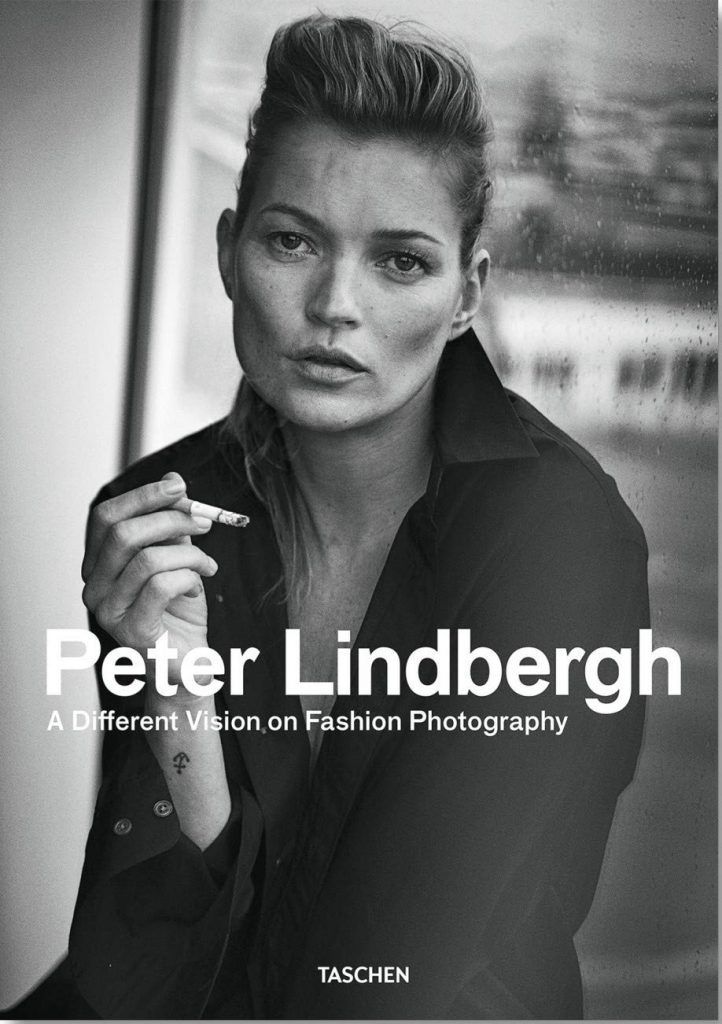
Peter Lindbergh: A Different Vision on Fashion Photography, edited by Thierry-Maxime Loriot and published by Taschen in 2016, is a monumental tribute to one of fashion photography’s most radical and poetic voices. Known for his stark black-and-white portraits, rejection of digital retouching, and profound commitment to authenticity, Lindbergh redefined how the fashion world saw beauty—shifting the gaze away from artifice and toward humanity.
This 500+ page monograph, created in collaboration with the Kunsthal Rotterdam exhibition of the same name, is as much an artistic manifesto as it is a retrospective. It presents hundreds of images—many previously unpublished—alongside essays, interviews, behind-the-scenes material, and handwritten notes. What emerges is not just a visual archive, but a deeply personal portrait of an artist who elevated emotion over perfection.
Lindbergh’s work shaped the visual language of fashion for decades, but this book reveals the depth of his vision: one committed to truth, dignity, and the quiet power of the real.
Main Themes
A primary theme of the book is beauty as character, not ideal. Lindbergh famously rejected the hyper-retouched, glamorized aesthetic of fashion magazines. Instead, he portrayed his subjects—often supermodels and actresses—without heavy makeup, sometimes weathered by time or emotion, always vulnerable and strong.
Another key theme is narrative over style. Lindbergh didn’t just shoot clothes—he created cinematic scenes and portraits that conveyed story, context, and mood. His photographs feel like stills from a lost film, with tension, longing, and unresolved questions woven into the frame.
A third recurring theme is collaboration and trust. Many of his most powerful portraits—of Naomi Campbell, Kate Moss, Charlotte Rampling, or Helena Bonham Carter—emerged from sustained creative relationships. The book highlights how Lindbergh’s empathy and curiosity fostered an environment where his subjects could drop the mask.
Artistic Context
Lindbergh’s work is often associated with the rise of the supermodel era in the 1990s, particularly his iconic 1990 British Vogue cover shot featuring a group of then-emerging stars in simple white shirts. But his roots stretch further, influenced by German Expressionism, silent cinema, and the photojournalism of the mid-20th century.
His decision to consistently shoot in black and white, even in an industry obsessed with glossy color, was a deliberate act of resistance. He aligned more with humanist photography (think Richard Avedon’s portraits or the documentary ethos of Dorothea Lange) than with the airbrushed world of haute couture.
In this book, Lindbergh is framed not just as a fashion photographer, but as a maverick visual storyteller whose impact reached across genres—film, art, editorial, and beyond.
Style and Structure
The book is organized thematically rather than chronologically. Sections such as Supermodels and Legends, Cinema, Dance, Icons, and Personal Work allow readers to see how Lindbergh’s sensibilities played out across different subjects and contexts. Each section is interspersed with essays, interviews, and reflections by collaborators including Jean-Paul Gaultier, Cindy Crawford, and Mads Mikkelsen.
Visually, it is a Taschen-style production—lavish, oversized, beautifully printed, and carefully paced. Full-bleed spreads, contact sheets, handwritten notes, and working prints give the reader a tactile sense of Lindbergh’s process.
The writing is thoughtful but not overly academic. Thierry-Maxime Loriot brings curatorial insight, while other contributors offer intimate memories and artistic perspectives that deepen the understanding of Lindbergh’s approach.
Key Insights and Analysis
One of the most profound insights is Lindbergh’s belief that photography should liberate, not conform. He argued that fashion should reflect life, not hide it. His images often show women in motion, in contemplation, or in confrontation with the viewer—always as people first, models second.
Another important idea is his emphasis on imperfection as beauty. In an era obsessed with flawlessness, Lindbergh pushed back, capturing age, wrinkles, fatigue, and soul as signs of truth—not things to erase.
A third takeaway is that fashion photography can be art when rooted in honesty. Lindbergh’s photographs transcend commercial function—they invite empathy, reflection, and emotional resonance.
Notable Quotes and Ideas
- Lindbergh (paraphrased): It should be the responsibility of photographers today to free women, and finally everyone, from the terror of youth and perfection.
- A recurring idea: Clothes are just part of the story—the real subject is always the person inside them.
- Loriot notes that Lindbergh’s lens did not impose—it revealed.
These concepts frame Lindbergh not just as a stylist, but as a portraitist of the human condition.
Who Should Read It?
This book is essential for fashion photographers, portraitists, visual storytellers, art directors, and photography educators. It’s also invaluable for students studying fashion, gender representation, or visual culture, as Lindbergh’s work challenges conventional norms.
Collectors, museum professionals, and anyone with a passion for photography books will find it a landmark volume—both visually and philosophically rich.
Even for those outside the fashion world, it offers a deeply human experience that reminds us of photography’s power to honor authenticity.
Final Thoughts & Rating
Peter Lindbergh: A Different Vision on Fashion Photography is more than a book—it’s a manifesto for emotional honesty in visual culture. Through image and essay, it honors a photographer who insisted that truth is more compelling than fantasy, and that vulnerability is the ultimate glamour.
The volume is both a retrospective and a revelation—an invitation to slow down, look closer, and see the beauty in what is real.
Rating: 5.0 out of 5
(A stunning, soulful tribute to one of photography’s great humanists—essential for anyone seeking meaning, not just style, in fashion imagery.)