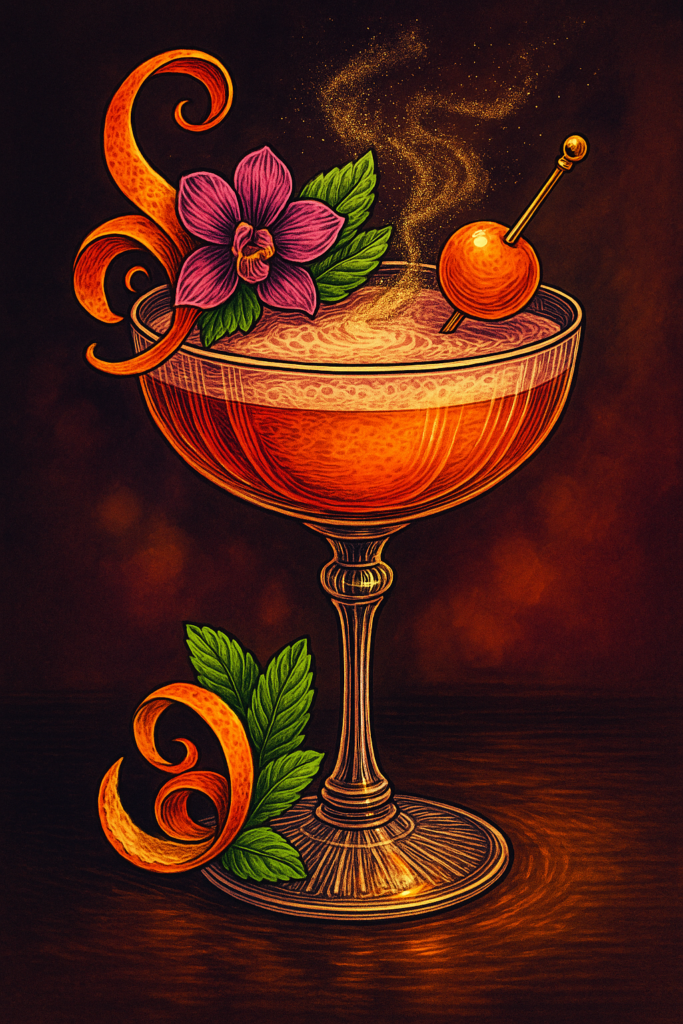
Take a look at your next cocktail. Not just the ingredients—but the entire picture. The color glowing through the glass, the curve of the stem, the delicate curl of citrus peel draped over the rim. That moment before the first sip, when everything is perfectly placed, is no accident. It’s design. It’s composition. It might even be art.
In recent years, cocktails have moved far beyond their status as simple beverages. Today’s most memorable drinks are crafted with the precision of a still-life painting and the flair of a stage performance. Top-tier mixologists pay attention not just to flavor profiles, but to how a cocktail looks from across the room—and how it will photograph under a moody light or with a flash for Instagram.
But this is no passing trend. The art of cocktail presentation has deep roots in history. From the elegant bars of the Gilded Age to the smoky speakeasies of Prohibition, and into the theatrical excess of postwar tiki culture, the visual appeal of cocktails has always mattered. What’s changed is the level of attention—and the tools available to bartenders today.
This article explores how cocktails evolved into a form of visual art. We’ll trace the history of drink aesthetics, uncover the principles of cocktail composition, examine how glassware and garnish became artistic elements, and look at how social media changed everything. We’ll also ask: can something that’s designed to be consumed be considered a true work of art?
Whether you’re a bartender, a designer, or just someone who loves a good drink with a good story, you’ll find that the modern cocktail is more than a blend of spirits. It’s a canvas. A performance. A moment of beauty you can taste.
The Historical Roots of Cocktail Aesthetics
Cocktails didn’t start as art. But from the beginning, they weren’t just about function, either. The earliest cocktails were about sophistication, display, and sometimes, deception. And from the moment bartenders started layering ingredients or flaming drinks, a visual language began to take shape.
The 19th Century and the Birth of Spectacle
The earliest known definition of a “cocktail” appeared in an 1806 edition of The Balance and Columbian Repository, describing it as “a stimulating liquor, composed of spirits of any kind, sugar, water, and bitters.” Simple enough. But even then, presentation mattered.
By the mid-1800s, cocktail culture had become theatrical. No one embodied this more than Jerry Thomas—often called the father of American mixology. A bartender, showman, and author of How to Mix Drinks (1862), Thomas made cocktails an event. His most famous creation, the Blue Blazer, involved setting whiskey on fire and pouring it between two silver mugs in arcs of flame. It was more than a drink—it was a performance.
Thomas’s flair hinted at a larger truth: people drink with their eyes first.
Prohibition and the Art of Disguise
During the Prohibition era (1920–1933), cocktail aesthetics took a turn. With good liquor in short supply and bootleg spirits often harsh or poorly made, bartenders had to get creative. Citrus juices, sugar syrups, and brightly colored liqueurs helped mask inferior booze. But they also added visual flair—vivid hues, garnishes, frothy textures.
The “fancy drink” became a form of camouflage. But even then, it wasn’t just about taste. The visual drama—of a coupe filled with vibrant orange juice, or a glass topped with foamy egg white—made the illicit feel elegant. And in hidden speakeasies, where ambiance was everything, a well-dressed cocktail added to the aura of sophistication and secrecy.
Mid-Century Glamour and Tiki Excess
Post-World War II America saw an explosion of optimism, leisure, and indulgence—and nowhere was that more evident than in its drinks. The mid-century years brought us tiki bars, highballs, and cocktails that were as much about escapism as intoxication.
Tiki drinks, in particular, were built for drama. Served in carved mugs with paper umbrellas, flaming lime shells, and sculptural fruit arrangements, they were theatrical by design. And while the cultural roots of tiki are complicated (and often problematic), the aesthetic impact is undeniable: a generation of bartenders learned to treat every drink as a spectacle.
Even the most refined hotel bars began embracing glamour in glassware and garnish. Think of the 1950s martini with its gleaming olive, or the frothy, pastel-hued Grasshopper. The drink wasn’t just a way to relax—it was part of the look, the lifestyle, the photograph in waiting.
Composition and Color Theory in the Glass
A cocktail, like a painting, lives and dies by its composition. Its balance isn’t just about alcohol and acidity—it’s about how it looks when placed in front of someone for the first time. And in that sense, mixology borrows a surprising amount from visual art.
Cocktails as Still-Life Compositions
When you see a perfectly layered Negroni or a jewel-toned Daiquiri in a coupe, you’re looking at more than a drink—you’re looking at a still life. Bartenders carefully consider the proportions, the background (often the glass or surface), the light, and the shape of each component. Shadows and reflections matter. So do height, texture, and symmetry.
Much like a food stylist plating a dessert, a mixologist builds visual appeal by arranging each element with purpose. Whether minimalist or maximalist, the drink is a curated visual object.
The Psychology of Color
Color isn’t just decorative—it’s suggestive. A bright yellow cocktail suggests citrus and sunshine. A deep red drink feels bold, perhaps sweet or spicy. A cool green implies freshness, maybe herbal or vegetal. These associations are instinctive, and bartenders use them to shape expectations.
Color also tells you something about the mood. A blue drink in a dim bar can feel dreamy and otherworldly. A golden cocktail on a sunlit patio evokes warmth and nostalgia. These moods are no accident—they’re part of the design.
Layering and Transparency
One of the most visually arresting techniques in cocktail design is layering. Using density differences between ingredients (like liqueurs, syrups, or spirits), bartenders can stack liquids in a single glass—creating bands of color, much like strata in a geological diagram. The effect is both scientific and poetic.
Transparency plays a key role, too. Clear ice allows light to pass through a drink, making colors sparkle. A cloudy drink, by contrast, can feel comforting or rustic. Even the opacity of a shaken egg white or frothy top can create textural contrast in a photo or under a bar light.
Garnish as Contrast
Even before we talk about elaborate garnishes, it’s worth noting the visual importance of contrast. A mint sprig against a red drink. A lemon twist floating in jet-black charcoal syrup. These flourishes aren’t just for aroma—they anchor the drink’s visual identity and draw the eye exactly where the bartender wants it.
Glassware as a Canvas
Just as a painter doesn’t use the same frame for every painting, a bartender doesn’t serve every drink in the same glass. And that’s not just tradition—it’s design. The glass is the canvas on which the cocktail comes to life.
The Evolution of Drinkware
In the early 20th century, glassware was simple—functional tumblers, occasional footed goblets. But as cocktails evolved, so did their vessels. The 1920s and ’30s brought the coupe and the martini glass—icons of elegance. The 1950s expanded the range: tiki mugs, Collins glasses, and cut-crystal old-fashioneds entered the scene, each suited to a different visual style.
Today, there’s a resurgence of interest in vintage glassware and custom designs. Bars may source rare antique glasses, collaborate with glassblowers, or use branded pieces to create a signature silhouette for their cocktails.
Form Shapes Function—and Flavor
Glassware affects more than aesthetics. The shape of a glass can intensify aroma (as with a Nick & Nora), keep carbonation crisp (like a flute), or disperse heat slowly (a rocks glass with a large ice cube). But those functional details also affect how the drink looks, how it photographs, and how it feels in the hand.
A coupe presents a drink like a stage. A highball elongates the color. A stemmed glass elevates the visual drama by lifting the drink closer to eye level.
Symbols and Associations
Glass shapes carry cultural weight. A martini glass conjures up James Bond, luxury, and mid-century style. A tiki mug speaks of beachside fantasy, often with a wink. A simple tumbler can suggest ruggedness, honesty, or tradition. Bartenders choose glassware not only for function, but for what it communicates.
In this sense, glassware is semiotic—it speaks. And a smart bartender uses that language to their advantage.
Custom Glassware and the Visual Brand
Top-tier cocktail bars increasingly use custom-designed glassware to stand out. These might be etched, frosted, or shaped in unusual ways. Some even commission local artisans to create limited-edition vessels. The goal is the same: make the drink unforgettable. Make it instantly recognizable in a photograph. Make it art.
Garnishes, Edible Art, and Sculptural Elements
At first glance, a garnish might seem like a minor detail. But in the world of cocktails, that small sprig of mint or perfectly coiled twist of lemon can be the finishing brushstroke—the flourish that elevates a good drink into a visual experience.
The History of the Garnish
Garnishing isn’t new. Jerry Thomas’s 1862 Bartender’s Guide includes instructions for garnishes like lemon peels and sugar rims. Early cocktails often included functional accents—citrus peels for their oils, mint for aroma, cherries or olives for visual balance. These weren’t just ornaments; they helped round out the sensory profile of a drink.
By the mid-20th century, garnishes became more decorative and elaborate. Think of the bright red maraschino cherry, the orange wheel on a Mai Tai, or the umbrella in a Pina Colada. Garnishes started to reflect the mood and theme of the drink—whether it was tropical escapism or uptown elegance.
Modern Garnishes: Art You Can Eat (or Smell)
Today, garnishes are where many bartenders flex their most creative muscles. A single cocktail might be topped with:
- Edible flowers like violets or pansies
- Dehydrated fruit wheels (e.g., blood orange, lemon, apple)
- Smoke-infused herbs (like torched rosemary or thyme)
- Branded ice cubes with embossed logos
- Sculpted citrus peels shaped like roses or animals
Dry ice adds fog. Flavored foams add height. Cotton candy or spun sugar might melt theatrically when the drink is poured. These aren’t just for shock value—they’re part of a carefully constructed visual narrative.
The Role of Texture and Height
Height, asymmetry, and movement all play roles in garnish design. A sprig of thyme sticking upward adds vertical energy. A twist of peel adds curl and motion. Foam or froth creates an upper “layer” for contrast against the glass’s clean surface.
In fact, garnish design now often follows sculptural logic—considering negative space, tension, and balance just as much as taste. In this light, the garnish becomes an architectural element of the drink.
Visual Puns and Conceptual Garnishing
In some circles, garnish has gone postmodern. Some cocktails play with symbolism: a drink named “The Hunter” might come with a small paper rifle or a sprig of pine. A tropical drink might be served in a hollowed-out pineapple, complete with edible “sand” made from crushed cookies.
It’s visual storytelling—and when done well, it doesn’t just surprise or delight. It adds meaning. The garnish is no longer a flourish; it’s part of the concept.
Signature Cocktails as Brand Identity & Visual Icon
In today’s crowded bar scene, a signature drink isn’t just a specialty—it’s a statement. It tells you what the bar is about, what kind of night you’re in for, and what you’re going to remember. And more often than not, it tells you visually.
What Makes a Cocktail “Signature”?
A signature cocktail is more than a house special—it’s a visual identity in a glass. Often, these drinks are designed to be instantly recognizable and associated with a particular bar, event, or brand. They might feature:
- Custom glassware or vessels (like skull-shaped mugs, flutes with etched logos)
- A specific garnish style used consistently across drinks
- A dramatic or thematic color palette (e.g., all dark and moody, or pastels and glitter)
- Proprietary syrups or branded ice with logos
In these cases, it’s not just about flavor—it’s about memory and recognition. The drink becomes a visual logo.
Visual Storytelling Through Design
Many of the world’s top bars—such as The Aviary in Chicago, or Artesian in London—design their signature drinks as theatrical experiences. These drinks might arrive under glass domes filled with smoke, or in lab-style beakers with pour-over infusions. Every visual detail is curated to reflect the bar’s philosophy.
For example, The Aviary’s “Science of the Cocktail” approach treats drinks like art installations—down to the color, motion, and even temperature contrasts that play out in real time.
Instagram as the New Billboard
Once, signature cocktails spread by word of mouth. Now, they travel through hashtags and photos. A visually distinctive drink that looks great in photos acts as a form of marketing, bringing in curious customers who “saw it online.”
In this sense, visual appeal isn’t just an artistic decision—it’s strategic. A beautiful drink earns its keep by attracting more patrons.
Replication and Iconography
Some drinks become so iconic in their visual design that other bars try to copy them—or at least borrow the visual language. A good example is the widespread use of clear spherical ice, once considered rare and artisan. Or smoked cocktails served under a bell jar, which began as a novelty and are now ubiquitous.
Visual ideas spread fast. That’s the power of an image. A truly iconic cocktail communicates who you are, even before the first sip.
The Instagram Effect: Visual Virality in Mixology
Ten years ago, the goal of a great cocktail was balance and complexity. Today, it’s that—and a perfect photo. The rise of Instagram, TikTok, and visual-first platforms has turned cocktails into visual content. And that shift has changed everything.
The Rise of the “Drinkstagram”
Search for hashtags like #craftcocktail or #drinkstagram and you’ll find a flood of beautifully lit beverages. Glowing purple negronis. Foamy pink gin fizzes with floral crowns. Geometric ice cubes and glassware shaped like fishbowls or chemistry sets.
Bars now craft drinks with photo-worthiness in mind. That means strong color contrast, interesting lighting (glow-in-the-dark ingredients, LED coaster lights), and height or movement (smoke, bubbles, foam).
What works well on social media? Drama, novelty, or lush minimalism. Think of it like set design—only for a five-second video loop.
How It’s Changing Bar Menus
The demand for Instagrammable drinks has reshaped cocktail menus around the world. Bartenders are encouraged to create “statement pieces” that will stop a scrolling thumb. That doesn’t mean flavor is ignored—but visual novelty often drives first impressions.
It’s not unusual to see entire sections of a cocktail list labeled “Most Instagrammed” or “For the ‘Gram,” featuring photogenic drinks with glitter, fog, or color-shifting effects.
Even cocktail competitions now weigh visual impact heavily in judging. It’s not just taste that wins trophies anymore—it’s how well it photographs.
The Gimmick Dilemma
Not all bartenders are thrilled about this shift. Some argue that visual excess can mask weak flavor or lazy technique. The risk: drinks that look great but taste forgettable.
This has led to a backlash in some corners of the cocktail world, where simplicity and classical elegance are being reasserted. Clear martinis, neat pours, no garnish at all—these minimalist drinks push back against the glitter trend.
Still, even the most traditionalist bartenders recognize: people drink with their eyes. And in an age of constant image-sharing, that first impression matters more than ever.
Performance, Not Just Product
In the end, Instagram has turned cocktail creation into something closer to live art or design. Bartenders are performers now—curating light, texture, and motion as much as they do flavor.
In that context, a cocktail isn’t just something to consume. It’s something to stage, share, and remember. It’s become a fleeting piece of art—caught in a photo before it disappears forever.
Cross-Pollination: Cocktails and the Fine Arts
It’s no surprise that cocktails show up in art. They’ve always been cultural markers—symbols of class, rebellion, celebration, or style. But today, the line between cocktails and fine art is thinner than ever.
Cocktails in Classic Art and Pop Culture
Drinks have long appeared in painting and photography. Manet’s Bar at the Folies-Bergère shows a lone barmaid beside a bottle of orange liqueur. Edward Hopper’s shadowy diners sip cocktails under lamplight. Andy Warhol painted martinis and soda bottles as icons of American consumerism.
In film, cocktails help define characters: James Bond with his martini, The Dude with his White Russian, Carrie Bradshaw’s Cosmopolitan. These drinks become visual shorthand—artifacts of identity.
Art That Drinks—and Drinks That Are Art
Some modern artists have incorporated cocktails into installations, performance art, or interactive experiences. Conceptual artist Rirkrit Tiravanija has served food and drinks as part of gallery exhibitions. Bars like Tokyo’s Gen Yamamoto or Barcelona’s Paradiso stage drinks as part of multisensory performances.
There are also cocktails inspired by art movements: Cubist-style layered drinks, Dadaist absurdist presentations, Bauhaus minimalism in glass form. Some bars host rotating art exhibits, pairing drinks with visual works in coordinated themes.
Collaborative Events and Pop-Ups
In cities like New York, London, and Berlin, galleries and bars collaborate on “art + cocktail” pop-ups. A Basquiat-themed bar might serve graffiti-inspired drinks; a Frida Kahlo night might involve floral garnishes and Mexican spirits.
These events blur the lines between disciplines. The cocktail becomes a medium—just like oil paint or clay—used to interpret, express, and provoke.
The Cocktail as Ephemeral Artwork
One key trait of art is transience. Like a sand mandala or a performance piece, a cocktail exists for a moment—and then it’s gone. That ephemeral nature doesn’t diminish its artistic value. If anything, it enhances it.
You don’t keep a great cocktail. You experience it. And like a great artwork, it leaves an impression long after it disappears.
Designing the Experience: Lighting, Menus, and Mise en Scène
A cocktail doesn’t live in a vacuum. It exists in context—served at a bar, on a tray, under a light, amid music and conversation. That context isn’t just ambiance. It’s part of the visual experience, and it matters just as much as what’s in the glass.
Lighting as Visual Enhancer
Lighting plays a huge role in how a cocktail is perceived. Soft, warm lighting can give a drink a romantic glow, while cool, directional light sharpens contrasts and enhances color. A drink with layered liqueurs or suspended herbs looks dramatically different under a spotlight than in natural sunlight.
Some bars now install lighting specifically designed to enhance cocktail photography. LED-lit bar counters, ring lights, or even color-tuned table lamps help guests capture the perfect image. But even without tech, good lighting is part of the bartender’s palette—it highlights, defines, and transforms.
Menus as Graphic Design
Menus aren’t just practical—they’re an artistic medium. Typography, layout, paper texture, and even the language used all contribute to the customer’s impression before they even order.
Some bars treat menus like limited-edition zines or artist portfolios. Others use storytelling formats—organizing drinks by mood, season, or historical theme. A well-designed menu not only guides the eye; it frames the entire drinking experience.
The look of the menu sets the tone. Minimalist, playful, ornate, or industrial—whatever its design, it becomes part of the visual identity of the drink itself.
Mise en Scène: The Total Image
In theater, mise en scène refers to the complete staging of a scene—all the visual elements arranged before the viewer. Cocktails, especially in high-concept bars, now receive this same treatment.
Consider the bar counter: is it sleek and modern, or rustic and candlelit? What tray is the drink served on? Is there a coaster? A branded napkin? Is the bartender dressed in vintage attire or futuristic garb?
Each of these elements contributes to the total visual package. They help transform a drink from a product into an experience—an artwork not just of flavor, but of sight, space, and mood.
Immersive Cocktail Experiences
Some cocktail bars go even further, designing fully immersive environments. Hidden entrances, choreographed service, theme nights, or sensory-enhanced tasting menus—these experiences elevate the cocktail to something closer to installation art.
Here, the cocktail is one component of a larger vision. But without the drink, the experience wouldn’t be complete. It’s the anchor—the centerpiece of a multisensory composition.
Critique or Craft? Are Cocktails a True Visual Art?
So, can a cocktail be considered art? Or is it just clever design wrapped around alcohol? The debate touches on deeper questions about creativity, intention, and the role of the senses in experiencing beauty.
The Argument for Art
At their best, cocktails meet many definitions of art. They’re created with intention. They involve skill, style, and interpretation. They evoke emotional responses. They’re sometimes provocative, sometimes beautiful. And increasingly, they’re displayed in settings that encourage appreciation, documentation, even critique.
Cocktails engage multiple senses—sight, smell, touch, and taste. They exist within cultural contexts, referencing history, place, and symbolism. They’re ephemeral but memorable. All of these are traits of art forms like performance, dance, or even sculpture.
The Case for Craft
Others argue that cocktails, while impressive, are fundamentally functional. They’re beverages—consumed for pleasure, often for intoxication. That makes them craft: skilled, beautiful, but ultimately practical.
There’s also the issue of repetition. Many cocktails are made dozens of times a night. They’re products, not one-of-a-kind pieces. And because they disappear in minutes, they lack the permanence that some associate with fine art.
But this argument overlooks other impermanent arts: sand painting, flower arranging, dance. The fact that something fades doesn’t mean it isn’t artful.
The Middle Ground: Applied Art
Perhaps the best way to view cocktails is as applied art—like fashion, architecture, or culinary plating. These forms combine function and beauty, utility and vision. They’re designed to be used, worn, or consumed—but with care, intention, and aesthetic value.
In this view, cocktails don’t need to be compared to painting or sculpture. They’re their own genre—equal parts cuisine, design, and experience.
Art for a Moment
Ultimately, the most compelling thing about cocktail art is its fleeting nature. It lives in a moment: the pour, the light, the first sip, the spark of conversation it starts. Then it’s gone.
That transience might be its greatest artistic trait. It reminds us that beauty doesn’t have to last forever to leave a lasting impression.
Key Takeaways
- Cocktails are crafted for the eyes as much as the palate, using color, glassware, and garnish to create striking visual compositions.
- Presentation has always mattered, from Jerry Thomas’s flaming Blue Blazer to today’s smoky, neon-lit spectacles.
- Modern mixology embraces performance and photography, with drinks designed to be shared online as well as savored in person.
- Cocktails intersect with art and design, drawing inspiration from visual culture, theater, sculpture, and even architecture.
- Whether or not you call it art, cocktail design is deliberate, immersive, and impactful—a fleeting moment of beauty in liquid form.
FAQs
1. What makes a cocktail visually appealing?
It’s a combination of color, clarity, garnish, glassware, and context—plus how well the elements are arranged for balance and contrast.
2. Who pioneered artistic cocktail presentation?
Jerry Thomas in the 19th century set the stage with theatrical drinks like the Blue Blazer, but tiki culture and modern mixologists pushed visual boundaries further.
3. Why does glass shape matter for cocktails?
Glassware influences aroma, temperature, and carbonation—but it also frames the drink visually, enhancing or diminishing its aesthetic appeal.
4. Are Instagrammable drinks just gimmicks?
Some are, but many use visual design to enhance the overall experience. The best ones marry flavor with form for a truly memorable result.
5. Can cocktails really be considered art?
Yes—many argue that cocktails are a form of applied art, blending design, performance, and sensory experience into a temporary but impactful creation.