Few cities embody the paradox of destruction and rebirth, isolation and interconnectedness, as profoundly as Kyiv — or Kiev, as it was historically known. Straddling the Dnipro River, this city has been a nexus of cultures, ideologies, and artistic traditions for more than a millennium. Its history is less a straight line and more a tapestry: tangled, brilliant, bloodied, and resilient. To understand the art history of Kyiv (Kiev), one must first grasp the city’s role as a perpetual crossroads — a place where East met West, Christianity met paganism, and local pride met imperial domination.
The city’s origins are swathed in legend as much as fact. The Primary Chronicle, an early medieval text, attributes the founding of Kyiv to three brothers and a sister — Kyi, Shchek, Khoryv, and Lybid — in the 5th or 6th century. This mythic narrative is itself an artistic creation, representing Kyiv as an indigenous, sacred beginning point for what would later become the vast Kievan Rus’ state. By the 9th century, Kyiv was already an important hub along the trade route “from the Varangians to the Greeks,” a thoroughfare that linked the Baltic and Byzantine worlds. Goods, ideas, religions, and artistic motifs flowed through the city’s markets and churches, leaving indelible marks.
Art in early Kyiv was initially utilitarian and religious. The influence of Byzantium, especially after the Christianization of Kievan Rus’ in 988 under Prince Volodymyr the Great, was immediate and transformative. Churches were adorned with elaborate mosaics and frescoes, closely imitating the glittering beauty of Constantinople’s Hagia Sophia. Kyiv’s own Saint Sophia Cathedral, founded in the 11th century, became a statement of imperial ambition and divine favor — an art object in itself, layered with political meaning.
But Kyiv’s story is not one of a simple transmission of foreign ideas. It has always been a site of syncretism, where imported styles were adapted, localized, and transformed. Byzantine iconography mingled with Slavic folk motifs. Pagan earth deities were sublimated into Christian saints. Even during periods of foreign domination — from Mongol conquest to Polish-Lithuanian rule, from Tsarist Russia to Soviet occupation — the city’s artists absorbed, resisted, and repurposed outside influences.
The very spelling of the city’s name carries political and cultural weight. Kiev” is the transliteration that entered English through Russian influence, while “Kyiv” is derived directly from the Ukrainian language, reflecting a reclaiming of national identity that gained urgency following independence in 1991 and especially after the events of the 2014 Euromaidan Revolution. This linguistic shift mirrors deeper currents in the city’s art history: a centuries-long struggle between domination and autonomy, between imposed canons and authentic self-expression.
Kyiv’s role as a cultural crucible intensified during periods of upheaval. Each invasion, each revolution, each reconfiguration of power reshaped the city’s artistic landscape. After the Mongol devastation in the 13th century, Kyiv entered a long period of relative obscurity, its great churches crumbling and artistic production languishing. Yet it was not erased. Seeds of cultural memory lay dormant, ready to bloom again when conditions allowed.
During the Lithuanian-Polish period (14th–17th centuries), Kyiv reconnected with European intellectual currents, experiencing a Renaissance of sorts that blended Western techniques with Eastern spiritual themes. The Baroque period saw the skyline of Kyiv (then often referred to by its Polish-influenced spelling) transform into a symphony of gilded domes and ornate façades. Under Russian imperial rule, the city became both a provincial outpost and a site of burgeoning national consciousness, with art schools nurturing a uniquely Ukrainian voice within broader European traditions.
The Soviet era posed a unique challenge: artists in Kyiv (Kiev) had to navigate the demands of Socialist Realism while seeking personal and national expression. Some toed the line; others resisted underground, crafting a dissident art movement that would only be fully recognized decades later.
Today, Kyiv stands on the frontlines — literally and figuratively. The city’s artists respond to war, revolution, and existential threats not with silence, but with a ferocious creativity that asserts the value of culture as survival. Murals memorialize the fallen. Performances challenge authoritarianism. Galleries curate not just aesthetic experiences but acts of collective memory.
To trace the art history of Kyiv (Kiev) is to chart the evolution of resilience itself. It is a journey through gold-leafed domes, bullet-riddled walls, censored canvases, and defiant graffiti. Each layer tells a story, and each story insists: we were here, we are here, we will remain.
The Kievan Rus’ Era (9th–13th Centuries): Byzantium’s Northern Child
The birth of Kievan Rus’ in the 9th century marked not only the formation of a new political entity but the ignition of a cultural revolution that would define Kyiv (Kiev) for centuries. Art, in all its forms, became a critical medium through which this early state asserted its place in a wider medieval world. If Kyiv was a crossroads, it was Byzantium — the shining empire of the Christian East — that cast the longest artistic shadow across it.
In 988, Grand Prince Volodymyr the Great made a decision that would ripple through history: he chose Eastern Orthodox Christianity as the state religion. According to the Primary Chronicle, Volodymyr sent emissaries to study the religions of the world and was particularly dazzled by the splendor of the Byzantine Church in Constantinople. “We knew not whether we were in heaven or on earth,” his envoys allegedly reported. With conversion came a flood of religious, architectural, and artistic imports.
Kyiv’s early Christian architecture mirrored Byzantine models not only in structure but also in spirit. Stone replaced wood for important buildings. Domes rose above the flat horizon, symbols of a heaven brought down to earth. Chief among these monuments was Saint Sophia Cathedral, begun in 1037 under Prince Yaroslav the Wise. Saint Sophia was not merely a church; it was a statement of power, wisdom, and divine right. Its golden mosaics, frescoes, and soaring structure spoke to Kyiv’s aspiration to rival Constantinople as a center of Christian civilization.
Artisans, often trained in Byzantium or in schools established by Byzantine masters, brought with them a new visual language. Mosaics shimmered in darkened sanctuaries, rendering sacred narratives in tiny fragments of glass and gold. Frescoes covered the walls with vibrant colors, telling the story of salvation in images accessible even to the illiterate. The Virgin Orans — a mosaic in Saint Sophia Cathedral showing the Virgin Mary with arms uplifted in prayer — became one of the most enduring symbols of Kyiv (and remains a national icon of Ukraine to this day).
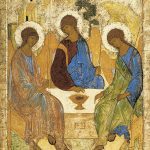
Icons, too, flourished. While Byzantine influence set the stylistic template — elongated figures, solemn faces, symbolic gestures — local variations soon appeared. Ukrainian icons from this period reveal a particular softness in color palette and a gentle, humanized depiction of holy figures. While the imperial icons of Byzantium often emphasized divine majesty, Kyiv’s icons suggested a closeness between the human and the sacred, a dialogue rather than a hierarchy.
Beyond churches, other art forms blossomed. Manuscript illumination became a major art form, with monastic scriptoria producing gorgeously decorated gospels and chronicles. Ornamentation often combined intricate interlacing patterns — perhaps a lingering memory of earlier pagan decorative traditions — with the gold and jewel tones of Byzantine taste. Even everyday objects like jewelry and ceramics bore the stamp of an emerging hybrid aesthetic: complex, luxurious, and unmistakably Kyivan.
The fusion of Slavic and Byzantine influences was not passive. Kyiv’s artists were interpreters, not mere imitators. They adapted the grandeur of Byzantium to local sensibilities, creating an art that was lighter, more lyrical, more earthbound. The harsh northern winters and fertile steppe landscapes seeped into their compositions, replacing Mediterranean exuberance with a quieter, more introspective spirituality.
This first golden age of Kyivan art came with its own fragility. Political instability, internal strife, and external threats loomed ever larger. The art of Kyiv during the late Kievan Rus’ period — roughly the 12th century — reflects a subtle anxiety. Churches became more fortified, murals more didactic, perhaps a response to the growing pressures from nomadic tribes and internal division.
The Mongol invasion of 1240 brought this epoch to a brutal close. Batu Khan’s armies sacked Kyiv, laying waste to its churches, killing its population, and shattering its position as a cultural capital. Much of the artistic heritage was lost: mosaics torn down, icons smashed, manuscripts burned. What survived — often hidden, preserved by monastic communities or buried under rubble — became sacred relics of a lost world.
And yet, even in destruction, the Kievan Rus’ artistic legacy endured. It survived in memory, in fragmentary artifacts, and most importantly, in the DNA of Eastern Slavic culture. Later generations, whether in Muscovy, Lithuania, or Ukraine itself, would look back to the art of Kievan Rus’ as a source of legitimacy, inspiration, and identity.
Today, visitors to Kyiv (Kyiv) can still stand beneath the ancient domes of Saint Sophia, gaze up at the Virgin Orans, and feel the weight of a thousand years of hope, faith, and artistry. In the glittering tesserae and the fading pigments, the dreams of a medieval metropolis still whisper — not just of heaven and empire, but of a uniquely Kyivan soul.
Mongol Invasion and the Artistic Silence (1240 and Aftermath)
The story of Kyiv (Kiev) in the 13th century is one of catastrophe — a sudden, brutal rupture that silenced a brilliant cultural flowering. The Mongol invasion of 1240 did not simply conquer a city; it obliterated a civilization’s center of gravity, plunging Kyiv into centuries of eclipse. To speak of Kyiv’s art in this era is, paradoxically, to speak of absence — of things destroyed, traditions broken, and a painful search for continuity amid the ruins.
The Mongol Empire, under the leadership of Genghis Khan’s descendants, had already swept through Central Asia and parts of Eastern Europe by the time Batu Khan turned his sights on the Slavic principalities. Kyiv, once a thriving metropolis of perhaps 50,000 people — immense by medieval standards — faced the siege with dwindling resources and a fractured political structure. When the Mongol forces arrived at the city’s walls in late 1240, they brought with them not just overwhelming numbers but also a ferocious military machine unmatched in the medieval world.
Contemporary chronicles paint a harrowing picture. After withstanding a short siege, the walls of Kyiv were breached. The Mongols unleashed systematic slaughter, sparing few. Churches, monasteries, palaces — the lifeblood of Kyivan cultural life — were burned, looted, or razed to the ground. Saint Sophia Cathedral miraculously survived, though it was gravely damaged; most other churches did not. Thousands of manuscripts, icons, and artworks vanished, either destroyed in the flames or carried away as plunder.
This moment marked a profound caesura in Kyiv’s artistic history. For the first time since its rise as a major city, artistic production all but ceased. Surviving documents from the 13th and 14th centuries make almost no mention of significant artistic endeavors. The city itself shrank to a shadow of its former self, its population reduced by an estimated 90%. Where once mosaics glistened under candlelight and frescoes adorned every major religious building, now the smoke-stained ruins testified to a cultural trauma of immense proportions.
The Mongol domination, formalized under the so-called “Tatar Yoke,” also altered the cultural geography of the region. Power shifted northwards to Vladimir, Suzdal, and eventually Moscow. These emerging centers absorbed many Kyivan artistic traditions, transplanting and adapting them. Indeed, the later Russian Orthodox iconography and ecclesiastical architecture that flourished in Muscovy owed much to the styles first nurtured in Kievan Rus’. Yet in Kyiv itself, artistic life remained stunted for generations.
Nevertheless, art did not disappear entirely. In isolated monasteries and hidden communities, monks and artisans clung to fragments of the old world. Some workshops continued to produce humble icons and manuscripts, often of more rustic quality than their pre-invasion predecessors. These works served not just as religious objects but as vessels of memory — stubborn affirmations that beauty and faith could outlast terror.
A particularly poignant example of survival is seen in the limited manuscript illuminations from the period, where the luxurious gold and lapis of earlier Kyivan work gives way to simpler, more somber palettes. The figures are cruder, the margins emptier — yet the spiritual intensity remains. These remnants, rare as they are, provide crucial links between the brilliant art of pre-1240 Kyiv and the later cultural revivals.
Architecturally, the ruins themselves became a kind of negative art — landscapes of absence that defined the memory of a lost golden age. The skeletal remains of collapsed churches, the half-buried outlines of city walls, the broken mosaics churned into the earth: all spoke silently of what had been, shaping the collective consciousness of Ukrainians, Russians, and Belarusians alike for centuries.
It is important to recognize that the Mongol invasion did not simply impose cultural emptiness; it also introduced new dynamics. Over time, the Mongols permitted a degree of local autonomy, and trade routes reconnected Kyiv to Central Asia and beyond. While the city would not regain its preeminence for centuries, the seeds of future artistic renewal — incorporating not only Byzantine but also eastern, steppe-influenced motifs — were being sown under the surface.
Yet in the immediate aftermath, what Kyiv (Kiev) faced was cultural devastation almost total in its scope. If the art of the Kievan Rus’ era was a symphony of light, order, and divine aspiration, the art — or lack thereof — of the Mongol aftermath was a meditation on silence, darkness, and loss.
It would not be until the gradual rise of the Grand Duchy of Lithuania in the 14th century, and Kyiv’s integration into this new polity, that the city would begin to tentatively emerge from the long shadow of 1240. The memory of its lost grandeur, however, never faded. Instead, it haunted the imagination of artists and chroniclers alike, a sacred ghost beckoning them toward recovery.
In this sense, the Mongol invasion did not destroy Kyiv’s artistic legacy — it transfigured it. Absence became part of the city’s creative identity, a void that future generations would strive to fill with new visions of beauty, resilience, and faith.
The Lithuanian-Polish Period: A Renaissance Rebirth
By the late 14th century, the silence that had enveloped Kyiv (Kiev) since the Mongol invasion began to break. The city, still scarred and diminished, entered a new political configuration: first under the Grand Duchy of Lithuania, and later under the Polish-Lithuanian Commonwealth. These shifts brought not only new rulers but a fresh infusion of cultural and artistic energy. In this era, Kyiv reconnected with the broader currents of the European Renaissance — adapting them to its own Orthodox, Slavic soul.
When Grand Duke Algirdas of Lithuania incorporated Kyiv into his realm in the mid-14th century, he brought relatively benign rule compared to previous overlords. The Lithuanians, still largely pagan at first, allowed Kyiv’s Orthodox traditions to persist. Over time, as Lithuania Christianized and later aligned with Catholic Poland, tensions grew, but the initial result was a cultural openness rare for medieval Europe.
Lithuania’s rule stabilized Kyiv politically and economically, allowing for a gradual reawakening of artistic life. Churches began to be repaired and rebuilt. Manuscript production resumed. A new generation of icon painters emerged, drawing inspiration not only from Byzantine prototypes but increasingly from Western European art. The influence of Gothic architecture filtered in, visible in the pointed arches and vaulted ceilings that began to appear alongside more traditional domes.
One of the key features of Kyiv’s artistic renaissance during the Lithuanian-Polish period was syncretism. Gothic realism softened the hieratic stiffness of Byzantine iconography. Local artists experimented with greater naturalism — in facial expressions, bodily proportions, and settings — while still maintaining the spiritual intensity central to Orthodox art. Saints acquired more individualized faces; narrative cycles became more complex and dramatic.
This period also saw the flowering of mural painting. While much of the original work has been lost or overpainted in later centuries, documentary sources suggest that Kyiv’s churches were filled with vivid cycles of frescoes depicting not only Biblical scenes but also the lives of local saints and historical figures. The art of this time reflected a growing awareness of Kyiv’s unique heritage — a memory of former glory now reframed within a changing Europe.
In the 15th and 16th centuries, the Kyiv Pechersk Lavra (Caves Monastery) and other religious institutions became crucial patrons of art and education. Lavra artists continued to develop manuscript illumination, blending delicate, ornate decoration with theological gravitas. The monasteries also nurtured a revival of woodcarving, seen in intricately decorated iconostases (altar screens) that divided the nave from the sanctuary in Orthodox churches.
The cultural influence of Catholic Poland during the later Polish-Lithuanian Commonwealth period (from the Union of Lublin in 1569) intensified. Jesuit missions brought Baroque styles into Kyiv’s artistic vocabulary, leading to fascinating hybrid forms. It was not uncommon to find an Orthodox church built in the traditional cross-in-square plan but embellished with elaborate, Western-inspired stucco work and frescoes teeming with swirling angels and lush foliage.
The political pressures accompanying this cultural exchange were complex. On the one hand, exposure to Renaissance humanism and Baroque theatricality enriched Kyiv’s artistic scene immeasurably. On the other, the encroachment of Catholic cultural dominance prompted an intensification of Ukrainian Orthodox identity. Art became a site of negotiation — a way of asserting religious and national distinctiveness even while adopting elements from foreign styles.
An emblematic figure of this period is Petro Mohyla, Metropolitan of Kyiv from 1633 to 1647. Mohyla spearheaded reforms aimed at strengthening Orthodox traditions against Catholic influence while embracing educational and artistic excellence. Under his leadership, the Kyiv Mohyla Academy was founded — one of Eastern Europe’s first major institutions of higher learning — and numerous churches were restored or rebuilt with a distinctly “Kyivan Baroque” flavor, a synthesis of Byzantine, Renaissance, and local elements.
Perhaps nowhere is the spirit of this period better embodied than in the transformation of Saint Sophia Cathedral. Restoration efforts during the Mohyla era sought to preserve its ancient mosaics while modernizing its structure with Renaissance and Baroque flourishes. The result was a palimpsest of styles, a tangible reflection of Kyiv’s layered cultural identity.
Sculpture, largely absent from earlier Eastern Slavic traditions due to Orthodox prohibitions against three-dimensional sacred images, made modest inroads during this era as well. While large free-standing statues remained rare, architectural sculpture — cherubs, garlands, coats of arms — became common features of churches and civic buildings.
Meanwhile, secular art, though less documented, likely flourished among Kyiv’s mercantile and noble classes. Decorative arts such as embroidery, metalwork, and ceramics incorporated both local traditions and imported motifs. Kyiv’s artisans participated in a broader European economy of luxury goods, producing items that reflected the cosmopolitan tastes of a borderland society.
By the dawn of the 17th century, Kyiv (Kiev) had once again become a major cultural center — not in the way it had been during the Kievan Rus’ era, but as a new, hybrid entity. It stood at the threshold between Orthodox and Catholic Europe, between the medieval and the modern, between memory and innovation. The art of this period carried forward the deep roots of Kyiv’s past while reaching toward a future in which Ukrainian identity would be forged through continual dialogue with — and resistance to — external forces.
Orthodox Icons and the Art of Spiritual Resilience
In Kyiv (Kiev), as in much of Eastern Europe, art has always been more than mere decoration — it has been an act of faith, survival, and defiance. Nowhere is this truer than in the tradition of Orthodox icon painting. Over centuries of foreign rule, war, and internal strife, the icons of Kyiv embodied a spiritual resilience that sustained the city’s identity even when political independence seemed impossible.
The icon in Eastern Orthodoxy is not simply an artistic image; it is a window into the divine, a tangible meeting point between heaven and earth. Unlike Western religious art, which often seeks to depict physical reality in naturalistic ways, the Orthodox icon operates within a spiritualized visual grammar. Faces are elongated and abstracted; backgrounds shimmer with symbolic gold; perspectives flatten rather than recede. Every line, color, and gesture is purposeful, designed to lift the mind beyond the material world.
The tradition of icon painting in Kyiv dates back to the Christianization of Kievan Rus’ in 988. Initially modeled closely on Byzantine prototypes, Kyivan iconography soon began to evolve its own distinct character. Early icons from Kyiv (where they survive or are reconstructed from description) display a gentler emotional tone than their Byzantine counterparts. The figures, while retaining their hieratic solemnity, often show a human tenderness that hints at the local Slavic spirituality.
Throughout the centuries — through Mongol invasions, Lithuanian rule, Polish domination, and Russian imperial absorption — Kyiv’s icons functioned as anchors of cultural memory. When physical monuments crumbled and political autonomy was lost, the icons remained. Painted, prayed before, hidden during persecution and lovingly restored in times of peace, they kept alive the essential image of the Kyivan soul.
A key feature of Kyiv’s iconography is its adaptability without loss of essence. As Western Renaissance and Baroque aesthetics penetrated Eastern Europe, many Orthodox communities struggled with how to respond. Some outright rejected Western influences as corruptions; others, including many artists in Kyiv, found ways to integrate selected Western techniques — such as more naturalistic drapery, dynamic postures, and emotional expressions — while maintaining the theological core of Orthodox tradition.
An excellent example of this balance can be found in the 16th- and 17th-century icons produced under the patronage of the Kyiv Pechersk Lavra (Caves Monastery) and other major religious institutions. These icons often exhibit a luminous, vibrant palette, with brilliant reds, deep blues, and shimmering gold leaf — colors intended not just to please the eye but to symbolize divine energies. Faces become slightly rounder, expressions more individualized, reflecting both the broader European humanist influence and the deepening local sense of personhood within the sacred.
Moreover, the very making of an icon in Kyiv remained a sacred act, bound by ritual and theological rules. Icon painters (iconographers) were often monks or deeply religious laypeople who fasted, prayed, and purified themselves before beginning their work. The act of painting was itself a form of prayer, each brushstroke a meditation on divine mysteries.
The 17th-century iconostasis — a massive screen of icons that separates the nave from the sanctuary in Orthodox churches — became a canvas for a uniquely Kyivan artistic expression. Lavishly gilded and filled with tier upon tier of holy figures, these structures became architectural art pieces in their own right. Some, such as the monumental iconostasis of Kyiv’s Dormition Cathedral before its destruction during World War II, rivaled the great altarpieces of Catholic Europe in their complexity and splendor.
In addition to grand public icons, Kyiv fostered a rich tradition of small, portable icons for private devotion. These were carried by soldiers, sewn into travelers’ clothing, or kept in family shrines, serving as personal emblems of faith in times of uncertainty. Even the most modest home could hold a piece of divine beauty, a reminder that holiness was not the exclusive domain of cathedrals.
The late 18th and early 19th centuries, during the tightening grip of the Russian Empire, posed new challenges. Imperial authorities often sought to impose more standardized, often more Westernized, forms of church art across their domains. In response, many Ukrainian artists subtly encoded national symbols, folk motifs, and local saints into their icons, preserving a distinct Kyivan flavor within the constraints of official policy.
One fascinating example is the quiet resurgence of Marian iconography particular to Kyiv. Icons such as the “Virgin of Kyiv” or “Theotokos Orans” emphasized not only universal Christian themes but also local identity. Mary was not merely a cosmic queen but a protector of Kyiv itself — her outstretched arms guarding the city against foreign conquest and internal betrayal.
Even today, Kyiv’s icon tradition endures, both in its ancient masterpieces and in a vibrant community of contemporary iconographers. Modern Ukrainian artists reinterpret traditional forms with new materials and techniques, reflecting on the traumas and hopes of a nation still fighting for its soul. Icons are painted to commemorate the fallen of Euromaidan, the defenders of the Donbas, the victims of political repression. In them, the old language of lines and colors continues to speak — urgently, powerfully — across the centuries.
In Kyiv (Kiev), the icon is more than art. It is history, theology, memory, resistance, and hope — a silent yet eloquent witness to a city’s undying spirit.
The Baroque Splendor: Kyiv in the 17th and 18th Centuries
If the centuries following the Mongol invasion were marked by rebuilding and resilience, the 17th and 18th centuries saw Kyiv (Kiev) burst once again into artistic magnificence. This era, often called the Kyivan Baroque period, transformed the city into a glittering beacon of Orthodox spirituality and Ukrainian identity. The Baroque style, imported from Western Europe, was reimagined in Kyiv not as mere imitation but as a richly localized expression — sumptuous, theatrical, and deeply rooted in religious devotion.
The broader European Baroque movement, flourishing in Italy, France, and Spain during the 17th century, celebrated grandeur, drama, and emotional intensity. Its influence spread eastward through Poland and Lithuania, carried by Jesuit missions and Catholic elites. In Kyiv, however, the Baroque idiom was not a simple transplant. It merged with Byzantine traditions, Slavic folklore, and Orthodox liturgical needs to create a unique variant sometimes called “Cossack Baroque” or “Kyivan Baroque.”
The architectural transformation of Kyiv during this time is perhaps the most visible testament to this stylistic fusion. Key religious structures were rebuilt, expanded, or newly erected in a lavish, expressive style characterized by multi-domed silhouettes, elaborate stucco decoration, and vivid color schemes. Unlike the heavy, monumental Baroque of Western Europe, Kyivan Baroque emphasized verticality and grace, with lighter proportions and an almost lyrical rhythm to its forms.
The Kyiv Pechersk Lavra — the sprawling monastic complex that had been a center of religious life since the 11th century — underwent significant Baroque renovations. The Dormition Cathedral, although originally constructed in the medieval period, was lavishly embellished with Baroque elements: ornate frescoes, gilded iconostases, and richly carved portals. Sadly, the original was destroyed in World War II, but careful reconstruction has restored its Baroque grandeur.
Perhaps the most iconic example of Kyivan Baroque is St. Andrew’s Church, perched dramatically on a hill overlooking the Dnipro River. Designed by the Italian architect Bartolomeo Rastrelli, who also created the Winter Palace in St. Petersburg, St. Andrew’s fuses Western Baroque flamboyance with the soaring spirituality of the Orthodox tradition. Its turquoise façade, crowned by golden domes, seems to hover between earth and heaven — a physical embodiment of the city’s eternal aspiration toward the divine.
Inside these churches, the decorative explosion continued. Frescoes covered every surface with swirling clouds, angels in motion, scenes of martyrdom and triumph. Gilded woodwork framed vast iconostases, tier after tier of holy figures shimmering under candlelight. In Kyiv, even the humble choir lofts and side chapels were adorned with painstaking detail. Art was not merely for the clergy or the elite — it enveloped every worshipper in a sensory experience of the sacred.
One of the key patrons of this transformation was the Hetmanate, the autonomous Cossack state that emerged in Ukraine under Polish-Lithuanian and later Russian suzerainty. Cossack leaders such as Ivan Mazepa — a name still revered and controversial today — lavished wealth on Kyiv’s churches and monasteries, commissioning artworks that both honored God and asserted Ukrainian dignity. Mazepa himself famously funded the rebuilding of the Saint Sophia Cathedral’s bell tower in an ornate Baroque style, asserting continuity with Kyiv’s ancient past while embracing contemporary aesthetics.
Painting, too, flourished under the influence of Baroque dynamism. Icons of the period often show heightened emotional expressiveness: saints gazing heavenward with tearful intensity, the Virgin Mary portrayed with a human tenderness previously uncommon. Dramatic chiaroscuro (the interplay of light and dark) entered iconography, adding new layers of psychological depth to sacred narratives.
Secular art, while less dominant than religious art, also blossomed. Portraiture gained popularity among the Cossack nobility, blending Western techniques of realism and shading with traditional Eastern symbolic elements. These portraits often depicted figures in ceremonial garb, surrounded by heraldic emblems, emphasizing their political and spiritual authority.
The Kyivan Baroque period also marked the expansion of print culture. The Kyiv Pechersk Lavra operated one of Eastern Europe’s most important printing presses, producing religious texts, polemics, and illustrated books. These publications not only reinforced Orthodox doctrine against Catholic and Protestant influences but also standardized and disseminated a distinct Ukrainian literary and artistic language.
Moreover, Kyiv’s Baroque splendor was a powerful act of memory and resistance. At a time when Poland, Muscovy, and later the Russian Empire sought to claim and reshape Ukrainian identity, the city’s monumental churches and radiant art proclaimed: Kyiv was a civilization in its own right — ancient, resilient, and gloriously alive.
However, the era was not without its contradictions. By the late 18th century, following the gradual absorption of Ukraine into the expanding Russian Empire, the independent flourishing of Kyivan art began to wane. Imperial authorities introduced stricter controls over church construction and art, favoring a more standardized, Neoclassical style that muted the exuberance of the Baroque. Still, the luminous memory of this period remained — and continues to inspire today.
In modern Kyiv, amid the devastation of war and political upheaval, the surviving jewels of Kyivan Baroque stand as both monuments and metaphors. They tell a story of a people who, even when buffeted by foreign domination, dared to transform pain into beauty, tradition into innovation, earth into heaven.
Imperial Russian Rule: Academy, Realism, and Nationalism
By the end of the 18th century, Kyiv (Kiev) had been firmly absorbed into the Russian Empire. The annexation marked a profound shift not only in political control but in the very currents of the city’s cultural and artistic life. The vibrancy of the Kyivan Baroque gave way to new artistic norms dictated by imperial tastes, academic training, and a slow but gathering sense of national consciousness. Kyiv entered a complicated new era: one of official conformity and underground stirrings of Ukrainian identity through art.
The Russian imperial authorities, particularly under Catherine the Great, viewed Kyiv both as a strategic asset and a symbolic prize. As the reputed “Mother of Russian Cities,” Kyiv was reimagined within the narrative of Russian statehood — a historical jewel whose cultural distinctiveness was to be subsumed under the grandeur of the Empire. This reframing had direct consequences for the city’s art and architecture.
One immediate impact was the introduction of Neoclassicism. Inspired by the Enlightenment ideals of order, reason, and symmetry, Neoclassical architecture replaced the soaring, organic exuberance of the Baroque with measured proportions and Greco-Roman motifs. The most notable example is the Contract House (1817), a stark contrast to Kyiv’s gilded domes, where merchants once negotiated the city’s trade deals in a setting of restrained elegance.
Simultaneously, the imperial government fostered a system of official art education modeled on the standards of the Russian Academy of Arts in St. Petersburg. Young artists from Kyiv increasingly traveled north for formal instruction, absorbing academic techniques of realistic portraiture, historical painting, and landscape rendering. Upon returning, they brought with them a refined technical skill — but also the ideological baggage of imperial culture.
Yet the very tools taught by the Academy would, paradoxically, become weapons for a new cultural resistance. Ukrainian artists trained in Russian methods began to apply them to local subjects, subtly asserting national identity through the choice of theme rather than style.
Realism became the dominant mode by the mid-19th century. Artists sought to depict life truthfully, rejecting the idealization and heroic fantasy of earlier Romantic trends. In Kyiv, this meant turning their attention to the everyday lives of peasants, Cossacks, and craftsmen. Scenes of village fairs, harvests, weddings, and rural hardships filled canvases — images that, while politically neutral on the surface, quietly celebrated the uniqueness of Ukrainian life against the homogenizing pressures of the empire.
A leading figure of this movement was Taras Shevchenko (1814–1861), whose name is almost synonymous with the awakening of Ukrainian national consciousness. While best known as a poet and writer, Shevchenko was also a trained artist, having studied at the Imperial Academy of Arts in St. Petersburg. His drawings, etchings, and paintings portrayed the beauty of Ukrainian landscapes and the dignity of ordinary people with tender precision.
Shevchenko’s art, like his poetry, carried a radical charge. By documenting a living Ukrainian world — not a relic of history, but a vibrant, breathing culture — he challenged the imperial narrative that saw Ukraine as a mere province of “Little Russia.” His images were quiet acts of rebellion, asserting a visual record of a people who refused to vanish.
Parallel to the rise of Realism was the slow institutionalization of art in Kyiv itself. In 1839, the Kyiv Drawing School opened its doors, offering structured education for young artists without requiring them to travel to distant capitals. Art societies began to emerge, fostering exhibitions and salons where local works could be shown. These venues became crucial spaces for the subtle cultivation of a Ukrainian artistic voice.
Architecture during this period also reflected the tensions of empire and identity. Neoclassical government buildings multiplied, but local architects and patrons often insisted on integrating Ukrainian Baroque motifs or traditional folk elements into their designs. The 19th-century restoration of Saint Sophia Cathedral, for example, preserved its historic mosaics and frescoes even as surrounding structures adapted to newer styles — a careful negotiation between past and present.
Literary and theatrical arts intertwined with the visual arts in this period, creating a broader cultural revival sometimes called the “Ukrainian National Awakening.” Painters illustrated Ukrainian folklore; stage designers crafted sets that depicted native villages with loving detail. Even embroidery patterns and folk costumes were studied and replicated as part of a growing movement to preserve — and quietly assert — Ukrainian distinctiveness.
By the later decades of the 19th century, Kyiv (Kiev) had developed a complex artistic identity: officially loyal to imperial norms, but deeply invested in remembering and reimagining its own past. Artists walked a delicate line, using the tools and techniques of empire to tell stories that empire wished to silence. Through brushstrokes, architecture, and costume, they built a visual counter-narrative — one that would lay the groundwork for the explosive modernisms and revolutionary art of the early 20th century.
Kyiv in this period was not yet a city in open revolt, but it was a city of quiet ferment, of artists and thinkers preparing the soil for future transformation. In every portrait of a Ukrainian peasant woman, every depiction of a Cossack in defiant pose, every sunlit view of the steppe, there echoed a silent but insistent claim:
We are here. We remember. We create.
Modernism and the Avant-Garde: Kyiv’s Early 20th Century Explosion
As the 20th century dawned, Kyiv (Kiev) was poised on the edge of an extraordinary artistic upheaval. After centuries of alternating domination and revival, the city suddenly found itself at the epicenter of one of the most radical periods in world art history. Modernism, with its restless desire to break with tradition, swept through Kyiv, unleashing a torrent of creativity that would place Ukrainian artists at the forefront of the European avant-garde.
At the heart of this cultural eruption was a generation of young artists and intellectuals determined to rethink everything — form, color, purpose, identity. They emerged at a moment when political structures were tottering: the twilight years of the Russian Empire, the chaos of the First World War, the brief flowering of Ukrainian independence, and the rise of Soviet power all collided to create an atmosphere of possibility and peril.
The Kyiv Art School, founded in 1900, became a crucible for new ideas. It trained artists in European academic traditions but also exposed them to Impressionism, Symbolism, and the early stirrings of Cubism and Futurism. Under the influence of teachers like Mykola Pymonenko and graduates such as Oleksandr Murashko, Kyiv’s art scene blossomed. Murashko, in particular, was a key figure — blending Ukrainian folk motifs with post-Impressionist brushwork and organizing some of the city’s first major modern art exhibitions.
However, it was not merely Western European trends that electrified Kyiv’s artists. Many looked inward, to the vibrant colors, abstract patterns, and symbolic language of Ukrainian folk art. The embroidery, woodcuts, and ceramics of the countryside offered a rich reservoir of inspiration. Kyiv’s avant-garde would not simply mimic Paris or Berlin; it would forge a uniquely Ukrainian modernism.
This ambition exploded in the activities of the Kulturliga, a Jewish cultural organization founded in Kyiv in 1918. In the brief window of Ukraine’s independence following the Russian Revolution, the Kulturliga promoted Yiddish-language art, literature, and theater — and championed modernist aesthetics. Artists such as El Lissitzky, who later became a major figure in Russian Constructivism, cut his teeth here, experimenting with graphic design, abstraction, and radical typography.
Parallel to these movements was the emergence of Ukrainian Futurism. Writers like Mykhail Semenko declared war on tradition, calling for a new art that matched the speed, violence, and dislocation of modern life. Visual artists absorbed this energy, creating bold, fragmented images that celebrated technology, urbanization, and dynamism — often with a distinctively local twist.
One cannot speak of Kyiv’s early 20th-century art without mentioning Kazimir Malevich, arguably one of the most influential artists of the modern age. Although often associated with Moscow and the Russian avant-garde, Malevich was born in Kyiv and drew deeply from Ukrainian culture. His invention of Suprematism — an art of pure geometric abstraction — can be traced back not only to the radical ideas of the European avant-garde but also to the folk icons and embroidered patterns of his childhood world.
The Kyiv State Art Institute, founded in 1917 (today’s National Academy of Visual Arts and Architecture), became a hub for avant-garde experimentation during the 1920s. Teachers such as Mykhailo Boychuk developed what became known as “Boychukism” — a bold attempt to synthesize Byzantine, medieval Ukrainian, and modernist influences into a new monumental style. Boychuk and his followers painted vast frescoes for public spaces, blending sacred tradition with revolutionary fervor.
This period of artistic freedom, however, was tragically short-lived. As Soviet control tightened in the late 1920s and 1930s, avant-garde art came under attack. Socialist Realism was declared the only acceptable style. Many of Kyiv’s most daring artists were silenced — some, like Boychuk, were executed during Stalin’s purges. Their works were destroyed, suppressed, or forgotten for decades.
And yet, the brief explosion of modernism and the avant-garde in Kyiv left an indelible mark. Even when forced underground, the spirit of experimentation survived. Kyiv’s early 20th-century artists had demonstrated that Ukrainian culture could be both ancient and ultramodern, deeply rooted and radically innovative.
Today, the rediscovery and rehabilitation of Kyiv’s avant-garde pioneers continue. Exhibitions, scholarly studies, and public monuments reclaim their place in history, honoring a generation that dared to imagine art beyond borders, beyond politics, beyond even reality itself.
In the flashing geometries of Malevich’s Suprematist compositions, in the fragmentary poetry of Semenko, in the lost murals of Boychuk’s school, there beats the heart of a Kyiv that — for a few brief, incandescent years — stood at the very edge of the future.
Soviet Kyiv: Socialist Realism and Underground Resistance
If the early 20th century in Kyiv (Kiev) was a time of revolutionary artistic experimentation, the decades that followed under Soviet rule were a study in control, conformity — and quiet, often dangerous, resistance. The Stalinist era, in particular, demanded that art serve the needs of the state, crushing the avant-garde flowering of the 1920s. Yet even under the heavy hand of Socialist Realism, the creative spirit of Kyiv’s artists endured, sometimes bending, sometimes breaking, but never entirely extinguished.
After the consolidation of Soviet power in Ukraine by the early 1920s, art was swiftly politicized. The Bolsheviks understood the power of images in shaping consciousness. Art had to be “national in form, socialist in content.” In theory, Ukrainian traditions could be celebrated — but only to the extent that they glorified proletarian ideals and the Communist Party.
By the 1930s, Socialist Realism became the state-mandated style. Artists were expected to produce works that were optimistic, didactic, and accessible. Paintings of heroic workers, smiling peasants, factory scenes, and party leaders filled the galleries. Idealization replaced innovation. Official art depicted a fantasy world where hunger, repression, and terror were nowhere to be seen — a cruel irony during the years of the Holodomor (the artificial famine that killed millions in Ukraine in 1932–1933).
In Kyiv, artists were organized into unions and tightly monitored. The Kyiv State Art Institute reoriented its curriculum toward producing “correct” art. Subjects like abstraction, experimental technique, and psychological complexity were effectively banned. Murals, sculptures, and public monuments were commissioned to promote Soviet narratives, often erasing or distorting Ukraine’s independent history.
The cost of nonconformity was severe. Artists associated with earlier avant-garde movements — such as Mykhailo Boychuk and his circle — were arrested during Stalin’s purges and executed. Their works were systematically destroyed. An entire chapter of Kyiv’s modernist legacy was almost obliterated.
Yet repression bred new forms of resistance. Some artists chose internal exile: they remained technically within the bounds of Socialist Realism but infused their work with subtle signs of dissent. Landscape painting became a quiet refuge. Scenes of rural Ukraine — fields, forests, lonely rivers — carried a hidden longing for a lost homeland, a natural beauty untainted by ideology.
Others retreated into private, clandestine creativity. In hidden studios and informal circles, a nonconformist underground began to emerge. These artists rejected official art not through overt political statements, which could lead to arrest, but through stylistic defiance: abstraction, surrealism, conceptualism.
By the 1960s, during the relative cultural thaw under Khrushchev, this underground art scene began to grow more daring. Kyiv became a center of the Ukrainian Sixtiers (“Shistdesiatnyky”) movement — a loosely connected generation of writers, poets, and visual artists who sought to revive national culture and resist Soviet Russification.
Painters like Alla Horska, Opanas Zalyvakha, and Viktor Zaretsky created works that, while often coded and symbolic, celebrated Ukrainian themes and challenged the gray uniformity of Soviet officialdom. Horska, for instance, was a muralist whose public works adhered to formal Soviet expectations — but who secretly supported political dissidents and incorporated subversive national motifs into her art. She was found dead under suspicious circumstances in 1970, a martyr to artistic and political resistance.
Kyiv’s underground artists often organized “apartment exhibitions” — private showings of forbidden art in homes, behind closed doors. These gatherings were acts of profound courage, places where abstraction, expressionism, and national symbolism could survive and evolve, away from the censor’s gaze.
Meanwhile, official art itself underwent subtle transformations. Even within the bounds of Socialist Realism, some Kyiv artists pushed for greater psychological depth and technical innovation. Portraits began to show real human complexity. Landscapes grew more expressive. Public sculpture, while grandiose, occasionally incorporated traditional Ukrainian motifs under the surface of state propaganda.
By the late 1980s, as the Soviet Union began to fracture, the barriers to free artistic expression crumbled. The underground and the official scenes began to merge. Artists who had spent decades working in obscurity or compromise stepped into public view, revealing a hidden Kyiv that had preserved a legacy of creativity, memory, and national spirit through decades of repression.
The art of Soviet Kyiv is thus a story of paradoxes: official conformity masking private rebellion; monumental propaganda coexisting with whispered dissent; destruction sowing the seeds of renewal. It reminds us that even under totalitarian regimes, art remains a weapon — a quiet, stubborn, sometimes invisible force that outlives the empires that seek to control it.
Today, as Kyiv once again asserts its voice on the world stage, the lessons of the Soviet period remain vivid. The art that survived — and the art that was reborn — stands as a testament to a city’s indomitable soul, expressed in brushstroke, line, and color against the darkest odds.
Independence and the 1990s: Chaos, Freedom, and New Expressions
When Ukraine declared independence from the Soviet Union in 1991, Kyiv (Kiev) was thrust into a new world — a world of hope, chaos, economic hardship, and exhilarating artistic freedom. For the first time in centuries, artists in Kyiv could create without navigating the demands of foreign empires, tsarist decrees, or Soviet commissars. But this newfound liberty came with no roadmap: the 1990s were a decade of improvisation, survival, and radical experimentation.
The early years of independence were economically devastating for many Ukrainians. The collapse of Soviet structures led to hyperinflation, widespread poverty, and institutional collapse. Funding for the arts, which had previously come through the centralized Soviet system, evaporated almost overnight. State galleries struggled to keep their doors open; artists often worked without secure incomes, studios, or even basic materials.
Yet in this vacuum, a raw and vital energy emerged. Artists no longer had to conform to official styles or hide their experiments in private. Anything was possible — and much of what was created in Kyiv during this period reflected the wild uncertainty of the times.
The 1990s saw a turn toward conceptualism, performance art, installation, and multimedia works. Traditional painting and sculpture continued, but often in dialogue with global trends toward the dematerialization of the art object. Artists questioned everything: What was Ukrainian identity now? How could art respond to political and economic dislocation? Could beauty still matter in a landscape of crumbling infrastructure and shifting allegiances?
One of the leading forces of this new era was the Paris Commune (Parcommune) art squat in central Kyiv. Housed in an abandoned Soviet factory building, it became an informal hub for radical creativity. Artists like Oleg Kulik, Alexander Roytburd, and Arsen Savadov — names that would later dominate Ukraine’s contemporary art scene — gathered here to live, work, argue, and experiment. The atmosphere was anarchic, collaborative, and defiantly countercultural.
Much of the work produced during this period was infused with dark humor and a sense of grotesque absurdity. Kulik, for instance, became famous for his performance art in which he impersonated a dog, exploring themes of dehumanization, authority, and instinct. Savadov’s staged photographs blended surrealism with commentary on post-Soviet decay, using extravagant costumes and dilapidated urban settings.
Ukrainian identity was a central theme. After decades of Soviet suppression, artists struggled with how to reclaim and reimagine what it meant to be Ukrainian. Folk motifs reappeared, but often ironically — embroidered shirts (vyshyvanka) were worn alongside punk fashion; traditional songs were remixed with electronic noise. Artists both celebrated and deconstructed the myths of nationhood.
One important figure to emerge during this time was Oksana Mas, who began her career in the 1990s creating installations that fused religious imagery, folk art, and conceptual abstraction. Mas’s later works would become internationally recognized, but her early pieces already reflected the central tension of post-Soviet Kyiv art: reverence for heritage combined with a fierce drive toward the future.
Commercial galleries began to appear in Kyiv for the first time, albeit slowly. Spaces like the Soros Center for Contemporary Art (funded by George Soros’s Open Society Foundations) provided critical support for experimental art when few local institutions could. The Center organized exhibitions, funded grants, and created connections between Kyiv’s emerging artists and the wider world.
Nevertheless, the 1990s were not simply a story of liberation. Many artists faced existential dilemmas: how to survive materially, how to avoid co-optation by new political elites, how to maintain artistic integrity in a rapidly commercializing world. Corruption, censorship, and political violence still loomed, now in new forms.
Moreover, the fragmentation of the art scene mirrored broader societal divisions. While some artists embraced Western modernism and globalization, others turned inward, seeking authenticity in Ukrainian traditions and Orthodox spirituality. Still others adopted a sardonic, postmodern stance, mocking all grand narratives.
Amidst this turbulence, Kyiv’s visual landscape also changed. Murals, graffiti, and public art installations proliferated, sometimes sanctioned, often spontaneous. The city’s battered walls, bridges, and abandoned factories became canvases for a generation unwilling to wait for gallery approval.
By the end of the 1990s, a new Kyiv art world had taken shape: diverse, unruly, ambitious. International exhibitions began to feature Ukrainian artists. Kyiv itself hosted the first international biennales and began to reconnect with the European and global cultural circuits from which it had been isolated for so long.
The art of Kyiv in the 1990s was not polished, and it was rarely comfortable. It was art born of transition — a grappling with the ruins of empire, the possibilities of freedom, and the terrifying, exhilarating blank slate of independence.
Today, much of what defines contemporary Ukrainian art — its energy, its hybridity, its deep political engagement — traces its roots to this chaotic, fertile decade. In the abandoned factories, in the crumbling stairwells of squat collectives, in the impossible dreams of penniless young artists, a new Kyiv was born.
Kyiv’s Contemporary Art Scene: Biennales, Street Art, and the Global Stage
Entering the 21st century, Kyiv (Kiev) emerged from its post-Soviet turbulence into a new phase of cultural dynamism. The city, long a silent witness to empire and upheaval, transformed itself into a vital player on the international contemporary art stage. Art in Kyiv today is a conversation — loud, passionate, and often painful — between past and future, local identity and global trends, resilience and radical reinvention.
One of the defining moments in this transformation came with the founding of the First Kyiv International Biennale of Contemporary Art — ARSENALE 2012. Housed in the sprawling Mystetskyi Arsenal, a converted 18th-century military warehouse near the Kyiv-Pechersk Lavra, the Biennale signaled to the world that Kyiv was serious about being part of the global conversation on contemporary art. Artists from dozens of countries, including Ukraine’s own rising stars, filled the Arsenal’s cavernous halls with installations, video works, sculpture, and experimental projects. It was a bold statement: Kyiv was no longer a provincial outpost; it was a city where new ideas could be launched and debated.
The Mystetskyi Arsenal itself became a cultural powerhouse, hosting not only the Biennale but regular exhibitions, festivals, and educational programs. It stands today as a symbol of Kyiv’s ambition — a place where the city’s layered history meets its cosmopolitan present.
Yet the most exciting developments in Kyiv’s contemporary art scene have often happened outside formal institutions. Street art, murals, and public interventions have turned the city itself into a living gallery. Following the 2014 Euromaidan Revolution, a wave of politically charged street art swept Kyiv’s walls. Artists responded almost immediately to the uprising and its aftermath, creating powerful, sometimes ephemeral images of resistance, mourning, and hope.
One of the most iconic murals from this period is the “Revival” mural by Ukrainian artist Alexander Britsev, depicting a phoenix rising from the flames — a potent symbol of Ukraine’s rebirth from the ashes of conflict. Throughout Kyiv’s neighborhoods, from the historic Podil district to the outskirts of Troieshchyna, massive murals bloom on the sides of Soviet-era apartment blocks, transforming grim concrete into canvases of defiant beauty.
International collaborations have further fueled Kyiv’s street art explosion. Projects like Art United Us and Mural Social Club have brought world-renowned street artists — from Australia’s Fintan Magee to Spain’s Aryz — to work alongside local talents, embedding global conversations into Kyiv’s very architecture.
Parallel to this flourishing of public art has been the rise of a sophisticated gallery scene. Spaces like PinchukArtCentre, funded by billionaire Victor Pinchuk, have drawn major international exhibitions and supported emerging Ukrainian artists. PinchukArtCentre’s Future Generation Art Prize, launched in 2009, offers a global platform for young artists under 35, awarding a significant monetary prize and showcasing finalists in Kyiv and Venice.
Other notable independent galleries — such as IZONE Creative Community, Ya Gallery, and Closer — nurture a vibrant ecosystem of exhibitions, performances, music events, and artist residencies. These venues have become crucial spaces for dialogue and experimentation, reflecting the diversity and restlessness of Kyiv’s creative scene.
Themes explored in Kyiv’s contemporary art are often deeply political and existential. The wars in Donbas, the annexation of Crimea, questions of identity, memory, displacement, and trauma saturate artistic production. Ukrainian artists grapple openly with the legacy of Soviet colonialism, the challenges of Westernization, the fragility of democracy, and the existential anxieties of life on the geopolitical fault line.
Photography and video art have become especially powerful mediums. Artists like Yevgenia Belorusets, whose photojournalistic work blurs the line between art and reportage, capture the everyday consequences of war and social upheaval. Others, like Nikita Kadan, create installations and sculptures that interrogate historical violence and collective memory.
At the same time, Kyiv’s art scene pulses with irreverence and wit. Performances, conceptual experiments, and ironic takes on pop culture abound. A new generation, having grown up in an independent Ukraine, is unafraid to critique both nationalism and globalization, often with biting humor and restless energy.
One particularly Kyivian phenomenon is the intertwining of art and activism. During protests, artists paint shields, design posters, erect temporary monuments. Galleries become meeting points for political organizing. Art is not merely reflective; it is participatory, an act of citizenship.
In recent years, Kyiv’s art scene has also had to contend with new challenges: the COVID-19 pandemic disrupted exhibitions and travel; the ongoing Russian invasion has placed many artists in direct danger or exile. Yet even under bombardment, the city’s creative spirit persists. Underground exhibitions, online performances, and guerrilla murals continue to sprout. Artists document the war not just for history, but for the living present.
Today, Kyiv stands as one of the most compelling, if often overlooked, centers of contemporary art in Europe. It is a city where memory and futurism collide, where a mural can be a prayer, a protest, and a work of beauty all at once.
In the words of curator Olesya Ostrovska-Liuta:
“Kyiv’s art doesn’t just survive; it insists.”
War, Revolution, and Art: From Euromaidan to Today
Kyiv (Kiev) has always been a city of thresholds — between East and West, past and future, tradition and transformation. But in the 21st century, that liminal identity has taken on fierce new urgency. Art in Kyiv since the 2013–2014 Euromaidan Revolution has been shaped, sharpened, and sometimes scorched by the realities of war, revolution, and existential national struggle. Creativity here is no longer merely aesthetic; it has become a means of survival, a weapon of memory, and a catalyst for hope.
The Euromaidan protests, which began in November 2013 as a response to President Viktor Yanukovych’s refusal to sign an association agreement with the European Union, rapidly grew into a broad uprising against corruption, authoritarianism, and the post-Soviet political order. Independence Square (Maidan Nezalezhnosti) became a sea of tents, barricades, burning tires, and handmade shields. Amid this fierce landscape, art bloomed.
Protesters painted murals on barricades, designed banners, crafted memorials to the fallen. Artists organized impromptu exhibitions in tents and public squares. The famous “Angels of the Maidan” — handmade angels crafted from paper, cloth, and metal — became ubiquitous symbols of resilience and mourning. The revolution itself became a massive, participatory artwork: chaotic, improvised, beautiful, and heartbreaking.
After the violent suppression of the protests in February 2014 and the deaths of more than a hundred demonstrators — the “Heavenly Hundred” — the role of art deepened. Kyiv’s artists became the city’s unofficial historians and conscience. Murals, performances, photography projects, and public memorials documented the trauma, sanctified the memory of the martyrs, and asserted the continuing struggle for dignity and sovereignty.
One of the most moving artistic responses was the transformation of Maidan into a vast, living installation. Crosses, photographs, candles, and personal mementos created a landscape of collective mourning that blurred the line between art, ritual, and political statement.
But the story did not end with Euromaidan. Russia’s annexation of Crimea and the outbreak of war in the Donbas region plunged Ukraine into ongoing conflict — a war that continues to reverberate across every aspect of Kyiv’s cultural life.
Artists responded with works that bore direct witness to violence, displacement, and loss. The IZONE Creative Community and other collectives hosted exhibitions of photojournalism from the front lines. Painters like Vlada Ralko produced brutal, semi-abstract works depicting fractured bodies and landscapes of devastation. Street artists turned shattered buildings into memorials, inscribing names, slogans, and symbols of defiance onto Kyiv’s wounded surfaces.
One of the most powerful public art projects of this era was the “Wall of Memory” near the Mykhailivsky Cathedral — an enormous collage of photographs and icons honoring those killed in the war. As visitors walk along it, they engage in a solemn ritual of remembrance, merging the religious tradition of Kyiv’s sacred spaces with the contemporary urgency of memorial art.
Simultaneously, Kyiv’s artists grappled with questions of identity on a deeper level. If the Soviet era had tried to erase Ukrainian distinctiveness, and the early independence years struggled to define it, the post-2014 period made Ukrainian identity a matter of existential urgency. Art became a tool for rebuilding a shared national consciousness rooted in history but not imprisoned by it.
Many contemporary Kyiv artists embraced traditional Ukrainian symbols — the vyshyvanka, the trident, Cossack imagery — but reimagined them in startling, radical ways. Others deconstructed these symbols entirely, wary of easy nationalism, insisting that true independence demanded not only political freedom but freedom of thought and creativity.
As the full-scale Russian invasion of 2022 unfolded, Kyiv’s artists once again adapted. Despite air raid sirens, blackouts, and physical danger, they produced extraordinary work:
- Muralists documented the war in real-time, painting images of resistance and survival directly onto walls damaged by shelling.
- Performance artists staged public acts of mourning and protest.
- Photographers risked their lives to capture the realities of the frontline and the endurance of everyday life under siege.
Museums and galleries became both sanctuaries and battlefronts. The Mystetskyi Arsenal launched emergency programs to preserve vulnerable artworks. The PinchukArtCentre shifted its programming to foreground wartime realities and Ukrainian voices. International partnerships sprang up to evacuate, digitize, and exhibit Ukrainian art around the world, ensuring that the culture Russia sought to destroy would instead be amplified globally.
And amidst the horror, new creativity blossomed. Musicians composed symphonies in bomb shelters. Poets wrote verses by candlelight. Painters used the ruins of homes and the scars of missiles as canvases for visions of rebirth.
Today, Kyiv’s art is not simply “about” war; it is war, and hope, and the stubborn, luminous assertion of life. It carries the weight of loss but also the fierce belief in a future not yet written — one that Ukrainians themselves, with brush and voice and memory, will shape.
Art in Kyiv (Kiev) has always been a mirror of its people’s struggles, dreams, and defiance. In the 21st century, that mirror has cracked — but through the fractures, a new, indomitable light shines.
Kyiv Art in the Current War Era (2022–2025): Survival, Memory, and Global Resonance
On February 24, 2022, the world changed forever for Ukrainians — and Kyiv (Kiev) once again became a frontline city. As missiles rained down, as tanks advanced toward its outskirts, and as civilians took up arms, Kyiv’s artists faced a choice many had never imagined: to flee, to fight, to survive — and, perhaps most defiantly, to create.
From the first days of Russia’s full-scale invasion, it was clear that art would not be a luxury in wartime Ukraine; it would be essential. Creativity became an act of resistance, memory, healing, and global communication. Today, Kyiv’s art scene operates in a condition of radical resilience, producing works that are already reshaping global understandings of war, survival, and the meaning of cultural identity.
Art Under Fire
In 2022 and early 2023, many of Kyiv’s museums and galleries were forced to close or operate in limited capacities. Yet within weeks, art began appearing in unexpected places:
- Shelters and metro stations turned into spaces for impromptu concerts, exhibitions, and poetry readings.
- Artists painted murals on sandbagged buildings, anti-tank barricades, and shattered storefronts.
- Temporary art collectives sprang up, responding to the shifting battlefield of urban life.
Performance art exploded across Kyiv’s public spaces. One striking example occurred in March 2022, when dancers staged a silent “Dance of Memory” in Maidan Square, each movement honoring civilians killed during the siege of nearby towns like Bucha and Irpin.
Photography also surged. Artists like Anastasia Taylor-Lind and Sasha Maslov created haunting portraits of resistance fighters, refugees, and ruined homes — visual testaments not only to devastation, but also to humanity’s refusal to be erased.
Meanwhile, many artists remained at work in bomb shelters, underground studios, and even on the move. Their new works blend urgency and endurance: sketches made during blackouts, sculptures crafted from shrapnel, videos capturing fleeting moments of normalcy amid sirens.
Emergency Preservation and the Battle for Memory
As Russian forces advanced, Kyiv’s cultural institutions faced another threat: the potential annihilation of Ukraine’s historical memory.
Emergency efforts launched immediately to protect priceless art and artifacts:
- Staff at the National Museum of the History of Ukraine and the Bohdan and Varvara Khanenko Museum scrambled to hide collections, wrapping paintings and sculptures in layers of fireproofing and moving them to undisclosed locations.
- Art historians and volunteers formed “rescue brigades” to digitize archives and document cultural losses in real-time.
Organizations like PEN Ukraine, Mystetskyi Arsenal, and the Ukrainian Institute launched urgent global campaigns, raising funds and awareness to save Ukraine’s artistic legacy from destruction — not just physical destruction, but erasure.
As Kyiv withstood sieges and blackouts, these efforts expanded beyond preservation: exhibitions curated under wartime conditions now framed contemporary Ukrainian art as a form of survival.
New Themes in Wartime Kyiv Art
The themes emerging in Kyiv’s current art scene are profound and evolving:
- Witnessing and Documentation: Artists chronicle the everyday experiences of war — loss, separation, resilience — not as outsiders but as participants.
- Memory and Martyrdom: Portraits and murals of fallen soldiers, volunteers, and civilians honor personal sacrifice and collective memory.
- Survival and Hope: Despite the brutality, themes of rebirth, endurance, and the sacredness of life remain vivid.
- Global Connection: Artists use digital platforms to broadcast their work worldwide, collapsing the distance between Kyiv’s bomb shelters and New York’s galleries or Berlin’s art fairs.
One important collective, “The Wartime Art Archive”, emerged in Kyiv in late 2022, gathering and preserving works made during the invasion — ranging from sketches on scraps of paper to fully realized paintings and video installations.
Another major initiative, “Artists at War”, creates traveling exhibitions that feature Kyiv artists side-by-side with those displaced across Europe, drawing attention not just to suffering but to cultural survival.
Kyiv’s Artists on the Global Stage
For the first time in modern history, contemporary Ukrainian art commands major international attention — not as a niche curiosity, but as a vital voice.
Kyiv-based artists now feature prominently at events like the Venice Biennale, Documenta in Germany, and Art Basel. Exhibitions such as
“This Is Ukraine: Defending Freedom”
have drawn crowds and media coverage across Europe and North America.
Importantly, these exhibitions are not framed as humanitarian pity projects — they present Kyiv’s artists as equals, innovators, and necessary commentators on our times.
Figures like Zhanna Kadyrova (whose series “Palianytsia” transforms stone into bread-like sculptures referencing Ukrainian resilience) and Nikita Kadan (whose installations reflect on violence, loss, and historical memory) have become global representatives of Ukraine’s defiant creative spirit.
Art as Weapon, Art as Healing
Kyiv’s artists today navigate an extraordinary tension: their work must bear witness to atrocity, but also protect the fragile spaces where future joy, love, and community might bloom.
Art therapy initiatives have blossomed. Workshops for displaced children, for veterans, for survivors of torture and occupation are held wherever possible. Murals spring up not just to decorate, but to heal shattered public spaces.
And even amid darkness, humor and surrealism persist — essential tools for coping with trauma and affirming life.
In Kyiv today, art is an act of war and peace simultaneously: a rebellion against annihilation, a dream of future flourishing, a stubborn, vital insistence that Ukraine’s culture — and Kyiv’s soul — cannot be conquered.
Conclusion: The Eternal Canvas of Kyiv (Kiev)
Across more than a millennium, Kyiv — or Kiev, as it has been known through many tongues and powers — has been a city where art is not just created, but endured.
From the shimmering gold mosaics of Saint Sophia Cathedral to the raw, improvised murals born of wartime survival, Kyiv’s art has always been a mirror of its history: luminous yet scarred, sacred yet defiant, deeply rooted yet restlessly transformative. Each epoch left behind not only monuments and masterpieces, but a spirit — the sense that beauty in Kyiv is always an act of resilience.
Under Kievan Rus’, the city crowned itself with Byzantine-inspired glory, forging icons and cathedrals that rivaled Constantinople itself.
Under Mongol devastation, art did not disappear — it went underground, preserving memory in fragile manuscripts and whispered traditions.
Under the Lithuanian and Polish periods, Kyiv’s artists absorbed European styles without losing the pulse of the steppes and rivers that shaped them.
Under imperial Russia, they mastered academic forms even as they quietly painted the truth of their own nation.
Under Soviet rule, they camouflaged resistance in landscapes and abstraction, keeping the ember of independence alive.
With Ukraine’s rebirth in 1991, Kyiv’s art burst into a chaotic, urgent renaissance, fueled by the freedom — and instability — of sudden independence. In the 21st century, amid revolution and invasion, it became something even more vital: a language of survival, a call to the world, and a shield against erasure.
Today, as Kyiv’s artists create under the sirens of war, their works continue the ancient mission of their city: to bear witness, to remember, to imagine new futures even amid ruins. They paint, sculpt, photograph, and perform not despite the darkness but through it — transforming broken stone and charred walls into living testimony.
Kyiv’s art is not linear. It does not march through history in simple steps. It loops and returns, rises and falls, fractures and heals. It is a palimpsest, a living document written over and over by every generation that refused to vanish.
In every brushstroke on a battered wall, every improvised sculpture in a subway shelter, every restored icon hidden from bombs, Kyiv whispers — and sometimes shouts — the same eternal truth:
“We are still here. We remember who we are. We imagine who we will become.”
In its art, Kyiv holds its future — not as prophecy, but as promise.