Behind the grandeur of the Vatican Museums — with their frescoed ceilings, winding corridors, and sacred relics — lies a far larger and more mysterious world: the hidden rooms. These are spaces the average pilgrim or tourist will never enter, and yet they may house the most meaningful, rare, and controversial items in the entire Vatican collection. While the public sees only a polished narrative of Christian art history, much more exists in quiet isolation — unseen but carefully protected.
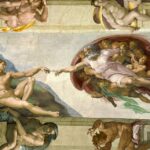
The Vatican’s cultural treasures have accumulated over centuries, starting in earnest with Pope Julius II around 1506 AD, who founded the Vatican Museums as a formal collection. From then on, popes became patrons not only of the faith but also of art, commissioning some of the greatest works in Western civilization. Many of these works remain on full display — such as Michelangelo’s ceiling in the Sistine Chapel — but thousands more are tucked away in reserved archives, sealed rooms, and climate-controlled vaults. The reason isn’t always secrecy; often, it’s preservation, reverence, or caution.
Much of what remains hidden is considered too fragile, too politically sensitive, or simply too abundant to exhibit. With over 70,000 items in its inventory, the Vatican faces logistical and theological choices about what to share. The rooms not on the tour map offer more than hidden gems — they offer insight into the Church’s spiritual guardianship, its artistic judgment, and its long memory.
These spaces are not myths or legends. They are very real, their contents documented by scholars and, in some cases, Vatican staff who guard access. In exploring them, we gain a clearer picture of the Vatican’s mission — not just to inspire with beauty, but to preserve the sacred with wisdom and restraint.
The Vastness of the Vatican’s Art Holdings
The Vatican’s collection is one of the largest in the world, both in size and in scope. According to the Vatican Museums’ own figures, the institution holds over 70,000 works of art, though only about 20,000 are currently on display to the public. This means more than 70% of its holdings are not visible to the millions of annual visitors who walk its marble floors and gaze up at its frescoes.
Much of the collection is stored in specialized facilities that are inaccessible without high-level clearance. These include the “Depositi Vaticani” (Vatican Depositories), large vault-like rooms where sculptures, paintings, manuscripts, and liturgical items are kept under carefully monitored environmental controls. Some of these works are in rotation for restoration, while others are held for reasons of prudence or preservation. The logistics of housing such a vast amount of art have required the Vatican to adopt modern inventory systems and conservation techniques.
The collections are generally categorized by era and medium. There are Roman antiquities dating back to the 1st century BC, medieval religious icons from the 9th century AD, high Renaissance masterpieces, and even art from missionary expeditions during the 17th and 18th centuries. Each category has its own storage and conservation needs. The Vatican Pinacoteca, for example, holds paintings that are occasionally rotated into public view, while more delicate items — such as textiles or ancient manuscripts — are kept in darkness to prevent decay.
Vatican Collection by the Numbers:
- Total known artworks: Over 70,000
- On display to the public: Approximately 20,000
- Primary storage facilities: Depositi Vaticani, Sala dei Papiri
- Earliest artworks: Roman sculptures from 1st century BC
- Largest category: Christian religious art from AD 1200–1800
The Vatican does not hide these numbers — they are publicly acknowledged — but what is not shared is the precise location or condition of many items. For example, early Christian frescoes unearthed in the catacombs beneath Rome are under Vatican protection but not part of public exhibitions. In truth, the “hidden rooms” are more like hidden wings, guarded chambers, and quiet corridors of spiritual history.
Private Papal Chambers and Their Artistic Secrets
The Vatican Palaces, especially the Apostolic Palace, contain rooms that were once private quarters, offices, and chapels for the popes. These areas were richly decorated by the finest artists of their time but remain inaccessible to the public due to their religious significance and fragility. Chief among these spaces are the Borgia Apartments and the Nicoline Chapel, which together house some of the most spiritually profound — and physically isolated — artworks in the world.
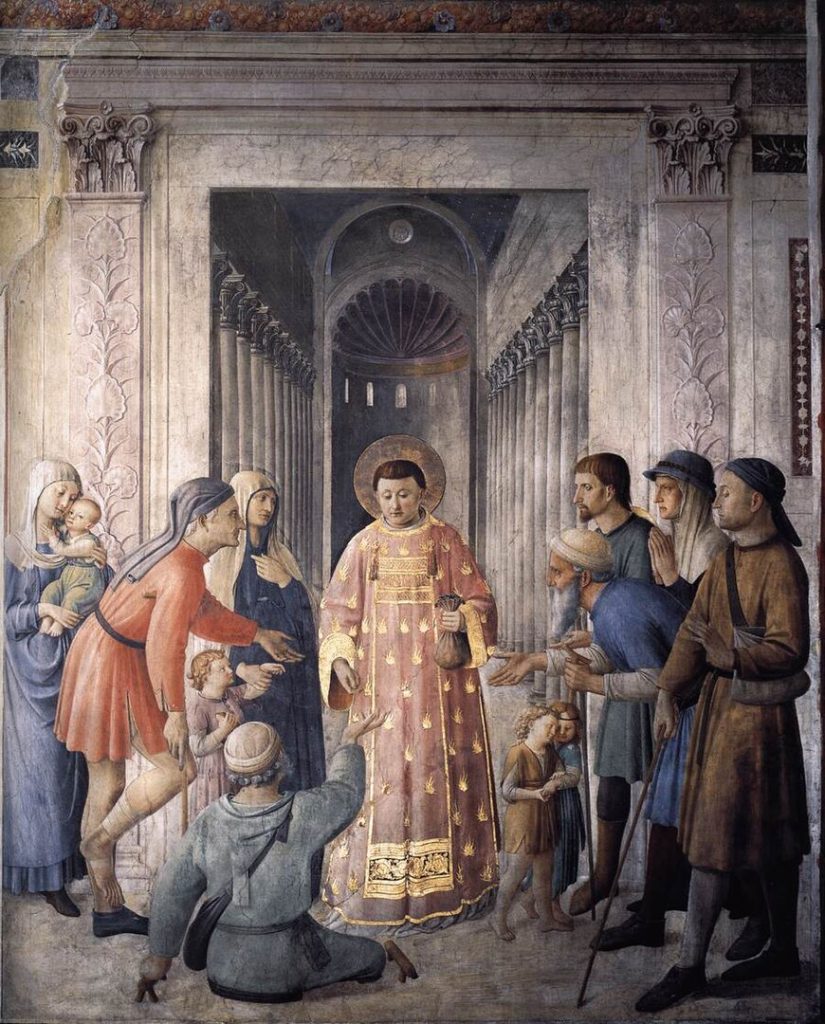
Pope Nicholas V (papacy: 1447–1455 AD) commissioned Fra Angelico to fresco the Cappella Niccolina, a private chapel that exemplifies early Renaissance devotional art. The chapel features scenes from the lives of St. Stephen and St. Lawrence, rendered in deep blues and golds. Because the chapel was designed for private papal use, it has never been part of the standard museum tour. Its limited access today helps protect the delicate pigments from light exposure.
Another example is the Sala dei Paramenti, a room once used to store ceremonial vestments for major liturgical events. Today, it holds elaborate examples of 15th and 16th-century ecclesiastical textiles, embroidered with gold thread and precious stones. Due to their extreme sensitivity to light and humidity, these garments are rarely shown publicly, though they were once displayed during Easter and Christmas masses centuries ago.
The Borgia Apartments, commissioned by Pope Alexander VI in the late 15th century AD, were decorated by Pinturicchio in a series of frescoes that combine biblical themes with Renaissance humanism. Although these rooms are technically part of the Vatican Museums, only limited portions are open to visitors, and several chambers remain locked. Their contents include symbolic art that may have been deemed too obscure or controversial for casual viewing.
Perhaps most telling is the use of these chambers for private devotion and theological work rather than public spectacle. They are adorned not just with beauty, but with intention — serving as places where prayer, governance, and the visual arts intersected in service of the Church’s mission.
The Restoration Labs: Where Art Is Resurrected
Few know that the Vatican operates some of the most advanced art restoration laboratories in the world. Hidden deep within the Museums’ infrastructure, these labs are where damaged, decayed, or aged works are examined, conserved, and — when appropriate — brought back to public life. However, many pieces never make it beyond this point due to fragility or incompleteness.
The Vatican’s first formal restoration laboratory was established in 1922 AD, under the direction of Bartolomeo Nogara, who served as director of the Vatican Museums from 1920 to 1954 AD. Since then, the labs have expanded into specialized departments handling textiles, paintings, sculpture, paper, and even ancient ceramics. Their work is not only technical but theological — treating religious objects with a reverence that balances scientific skill and sacred meaning.
One of the most celebrated restoration efforts was the cleaning of the Sistine Chapel ceiling from 1980 to 1994 AD. That project revealed vibrant colors long obscured by centuries of soot and smoke, but it also led to debates about over-restoration and artistic intent. Less publicized, however, are the hundreds of minor works — many from the early Christian period or missionary contexts — that never leave the labs due to their vulnerability.
These labs are equipped with infrared reflectography, X-ray fluorescence scanners, and microscopic imaging tools. Such technology allows restorers to see beneath surface layers to understand the original composition, corrections, or even previous restoration attempts. Often, these scans reveal insights into the working methods of great artists like Raphael, Perugino, or Giotto.
The labs also serve a preservation function. Rather than restoring everything for display, conservators frequently stabilize items to ensure they survive for future study. In this way, the restoration labs become part of the hidden rooms — sanctuaries of both science and spirit, preserving treasures for a Church that thinks in centuries, not seasons.
Masterpieces Too Controversial for Display
Some works in the Vatican’s possession are hidden not because they are damaged or obscure, but because they have historically stirred controversy. These include paintings with graphic violence, depictions of nudity, mythological themes, or theological interpretations that no longer align with Church doctrine. Such pieces are not destroyed or discarded — they are preserved in storage, sometimes awaiting a future era when they may be more suitable for public reflection.
One well-known example is Caravaggio’s The Death of the Virgin, painted in 1606 AD. Originally rejected by the Carmelite order in Rome due to its realistic and unflattering portrayal of the Virgin Mary, the painting disappeared into private hands before resurfacing in the Louvre. However, similar Caravaggio works remain within the Vatican, stored away due to their unsettling blend of sacred themes and human imperfection.
The Vatican also holds mythological art that once adorned private papal quarters during the Renaissance. These include classical-style nudes and allegorical figures, painted by artists such as Giulio Romano or Parmigianino. Although these works reflect the humanist tendencies of their time, they are seldom shown today due to their sensual tone, which contrasts with the current focus on spiritual purity and reverence.
Art Hidden for Theological or Moral Reasons:
- Graphic depictions of martyrdom or hell
- Realistic or sensual portrayals of religious figures
- Allegorical pagan imagery during Renaissance commissions
- Theologically outdated representations of divine judgment
- Works suppressed during the Counter-Reformation
During the Counter-Reformation (1545–1648 AD), Church authorities reviewed and sometimes censored artworks that did not align with reformed Catholic teaching. This led to the removal of some paintings from chapels and the covering of nude figures in others — a process sometimes referred to as the “Fig Leaf Campaign.” Today, these works remain in Vatican custody, not as relics of embarrassment but as lessons in the evolving relationship between art and doctrine.
Rather than erasing its past, the Vatican has opted to keep such works protected. They are viewed as historical documents of faith, power, and the challenge of capturing divine truths in human form.
Lost and Forgotten: Artworks in the Vaults
Not all hidden art in the Vatican is controversial or delicate — some works have simply fallen out of favor or fashion. Changing artistic tastes, shifts in theological emphasis, and limited gallery space have consigned many once-celebrated pieces to deep storage. These are not failed or discarded works, but instead are often from artists or schools that were once revered and are now rarely discussed in mainstream art history.
The 18th century, for instance, saw a surge in papal patronage of Baroque and Rococo art, with commissions going to artists like Pompeo Batoni and Stefano Pozzi. These works, often grand in scale and highly ornate, do not fit the current curatorial narrative of clarity and doctrinal focus. Consequently, many of them were retired from walls and chapels in favor of earlier, more theologically direct styles, such as Gothic or Renaissance.
Likewise, the Vatican possesses numerous altar pieces, fresco panels, and liturgical artifacts from provincial churches that were closed, deconsecrated, or repurposed in the 19th and early 20th centuries. Many of these items were preserved in Vatican storerooms to prevent their sale or destruction. Although richly symbolic and beautiful, these pieces are often considered redundant in a collection already overflowing with similar themes and iconography.
Even some Renaissance-era works have been hidden due to redundancy or aesthetic choices. For example, multiple depictions of the Madonna and Child by second-tier artists — though precious and spiritually rich — have been rotated out in favor of more famous versions by Raphael or Perugino. These “forgotten” works still carry the devotional intent of their creators but remain unseen due to institutional decisions.
In a sense, these forgotten items form the emotional bedrock of the Vatican’s custodianship. They reflect not just the grandeur of papal patronage, but also the everyday piety of lesser-known artists and the deep roots of Christian artistic tradition across centuries.
Pagan Art Hidden Within a Christian Empire
From its earliest days, the Church has had to grapple with the artistic heritage of pagan Rome. The Vatican, built atop the former heart of the Roman Empire, houses not just Christian art but an extensive collection of pre-Christian statuary, reliefs, and frescoes. While some of this art is proudly displayed in sections like the Pio-Clementino Museum, a great deal of it remains stored away — not destroyed, but set aside.
The early Church Fathers, including Tertullian and Augustine, warned against the idolatrous power of pagan images. Yet beginning in the 15th century AD, popes like Nicholas V and Julius II began collecting classical works to showcase the continuity between Roman civilization and Christian rule. These collections were seen as reinforcing papal authority — successors not only to Peter, but to Caesar.
By the time of Pope Leo X (1513–1521 AD), Greco-Roman mythology had become fashionable in both art and literature within the Vatican. Rooms were decorated with scenes from Homer and Ovid, and artists like Raphael were commissioned to blend pagan themes with Christian allegory. Some of these works, however, crossed lines of decorum — incorporating nude gods, ambiguous symbolism, or overt sensuality.
As time passed, certain pieces were quietly removed from public view. Today, Roman sarcophagi with depictions of Bacchus or Venus are kept in restricted rooms, as are mosaics portraying mythological scenes once found in the Roman catacombs. These are not hidden out of shame, but out of a desire to maintain theological focus in public exhibitions.
This silent stewardship of pagan art represents a careful balance: acknowledging the greatness of the past without compromising the spiritual clarity of the present. In the hidden rooms of the Vatican, ancient Rome and eternal Rome meet — stone to stone, empire to kingdom.
Treasures from Christian Missionary Expeditions
The Vatican’s global reach extended far beyond Europe thanks to centuries of missionary work across Asia, Africa, and the Americas. With that expansion came gifts, cultural exchanges, and artistic tributes — many of which were collected by popes and stored in rooms that today are rarely, if ever, shown to the public. These items are a testament not only to the Church’s missionary zeal, but to its cultural encounters across the known world.
In the 17th and 18th centuries AD, Jesuit and Franciscan missionaries brought back richly symbolic objects from China, Japan, Ethiopia, and the New World. These included crucifixes made of jade, rosaries crafted from native wood, liturgical robes embroidered with Asian calligraphy, and chalices inlaid with tribal designs. Often, they were presented as diplomatic gifts or tokens of conversion.
One such collection, known as the Museo Missionario Etnologico (Missionary Ethnological Museum), was first established in 1926 AD under Pope Pius XI. It included over 100,000 items, many of which were transferred to storage following renovations and curatorial restructuring in the late 20th century. Though parts of the collection have been absorbed into the Vatican’s Anima Mundi Museum, the majority remains out of public sight.
Some of these items were considered too delicate, unusual, or potentially misinterpreted by modern audiences. For example, African liturgical drums or feathered ceremonial cloaks from South America — while sacred in their context — do not align with contemporary assumptions about “Catholic” art. Rather than risk misunderstanding or politicization, the Vatican has opted for quiet stewardship.
These missionary artifacts are not trophies. They represent souls reached, languages learned, and faith extended across continents. Hidden though they are, they testify to the universality of the Church — not by erasing difference, but by redeeming it.
The Apostolic Archive: Illuminated and Untouchable
While not strictly a museum, the Vatican Apostolic Archive (formerly known as the “Secret Archive”) is one of the most intriguing and misunderstood repositories in the world. It contains more than 50 miles of shelving, housing papal correspondence, state documents, and illuminated manuscripts that span over a millennium. Some of these manuscripts are as visually magnificent as the paintings in the Vatican galleries — but they are rarely, if ever, put on display.
Among the archive’s treasures are illustrated codices from the Carolingian period, hand-copied Bibles from the 13th century AD, and ornate papal bulls from the Renaissance. These documents often feature intricate miniatures, gold leaf decorations, and border illuminations that rival any panel painting in detail and craftsmanship. Yet their fragility and historical significance require total climate control and minimal handling.
Access to the Apostolic Archive is highly restricted. Scholars must apply for permission, and even then, only vetted documents may be viewed under supervision. In 2019, Pope Francis changed its name from the “Archivum Secretum” to the “Archivum Apostolicum” to clarify that “secret” referred to private, not hidden or sinister. Still, only a small portion of its contents have ever been digitized or cataloged for public view.
Many letters from artists like Michelangelo and Bernini are believed to be preserved within the archive, detailing commissions, theological disputes, and artistic concerns. Similarly, records of ecclesiastical trials, including those involving heresy or doctrinal deviance, contain illustrations or diagrams of religious concepts long abandoned.
The archive is not a warehouse of secrets, but a vault of memory — and some of that memory is painted, gilded, and illuminated in stunning color. These works remain untouchable not because they are feared, but because they are priceless.
Why the Vatican Keeps Art Hidden
To the casual observer, the Vatican’s decision to keep so much of its collection unseen may seem mysterious or controlling. In reality, this approach is born of practical, theological, and spiritual considerations. The Church does not view its art merely as decoration or academic material; it sees it as part of a sacred trust — a legacy to be guarded, not exploited.
First and foremost, many works are kept from public view to preserve their physical integrity. Light, humidity, and temperature fluctuations can irreversibly damage centuries-old paintings or textiles. Even well-meaning crowds pose risks to delicate objects. Vatican conservators often choose preservation over display, valuing longevity over spectacle.
Secondly, some works are held back due to their theological or moral implications. Not every image — however brilliant — is suitable for edification or reflection. The Church has the right and the responsibility to present its message with clarity and reverence. Art that distracts, distorts, or confuses the faithful is not automatically censored, but may be respectfully reserved.
Third, the Church understands that not all historical truths need to be shouted. The Vatican’s storerooms contain records of human imperfection: failed commissions, outdated dogmas, or artworks that reflect cultural assumptions no longer valid. Rather than erase these, the Vatican preserves them quietly — not to rewrite the past, but to learn from it without turning it into a public performance.
Finally, some things are hidden because they are holy. Just as the tabernacle is veiled, and sacred relics are kept in guarded chapels, so too some art is reserved for prayer, not tourism. The hidden rooms of the Vatican are not vaults of conspiracy, but chambers of stewardship — where the timeless, the fragile, and the sacred are protected from the rush of passing fashion.
Key Takeaways
- The Vatican holds over 70,000 works of art, with most hidden from public view.
- Private papal rooms and storage vaults contain masterpieces rarely seen.
- Fragile, controversial, or theologically complex works are often excluded from exhibits.
- Pagan and missionary-era art are preserved but not publicly emphasized.
- The Church preserves its art heritage with an eye to faith, tradition, and reverence.
FAQs
- What is the most famous hidden artwork in the Vatican?
Caravaggio’s Death of the Virgin is one of the most famous controversial works once hidden and now held outside the Vatican; other lesser-known works by Caravaggio remain stored privately in the Vatican’s archives. - Can the public ever see the Vatican’s hidden rooms?
No, most hidden rooms are not open to the public due to security, preservation, and spiritual reasons. Some scholars may receive limited access with special permission. - Why does the Vatican keep pagan or erotic art?
These works are preserved as part of historical patrimony and academic study but are not typically shown to avoid theological confusion or scandal. - Does the Vatican still censor art today?
The Vatican exercises discretion, not censorship. It curates its displays to align with spiritual teaching and moral clarity. - How much of the Vatican’s collection is religious art?
The vast majority — particularly works from AD 300 to 1800 — reflect Christian themes, saints, scripture, and liturgical objects.