The American Civil War produced mountains of photographs, letters, and official reports, yet some of the most vivid records of the conflict came from men carrying sketchbooks instead of rifles. Among the most daring of these artists was Frank Vizetelly, a British illustrator who rode with armies, stood near active battlefields, and transformed moments of panic, exhaustion, and violence into images seen across the Atlantic. Long before motion-picture cameras or portable journalism equipment existed, Vizetelly brought the war to readers through hurried pencil strokes made amid cannon smoke and cavalry movement. His drawings gave people in London, Paris, Richmond, and New York a sense of immediacy few written reports could match.
Vizetelly was not a studio artist imagining battles from afar. He worked close to danger. He watched soldiers retreat through mud roads, saw artillery positions under fire, and followed military columns through devastated countryside. His sketches captured scenes that photographers often could not. During the 1860s, cameras required long exposure times and bulky equipment, making true combat photography nearly impossible. Artists like Vizetelly filled that gap by documenting movement, confusion, and emotion in real time.
His career also reveals the complicated politics surrounding wartime journalism. Union officials initially welcomed him, but attitudes changed after his illustrations showed uncomfortable truths about battlefield disorder. As the war continued, Vizetelly spent increasing time with Confederate forces, creating some of the most recognizable visual records of the Southern armies. His position as a foreign observer allowed him to move between worlds while still maintaining the perspective of an outsider.
Today, Frank Vizetelly’s Civil War sketches remain valuable historical documents. Historians study them for military details, uniforms, camp life, transportation, and battlefield atmosphere. Art historians examine their composition and realism. Collectors prize surviving newspaper engravings and original drawings. More than 160 years after the first shots at Fort Sumter on April 12, 1861, Vizetelly’s images still carry the smoke and urgency of the war itself.
Frank Vizetelly’s Path to the American Civil War
A Family Rooted in Illustrated Journalism
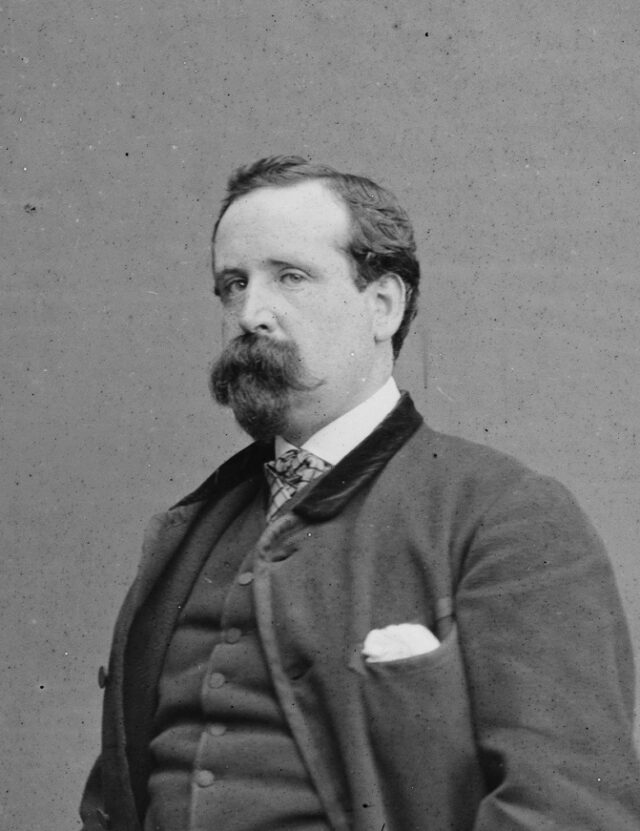
Frank Vizetelly was born in London in 1830 into a family deeply connected to publishing and illustration. His brothers Henry Vizetelly and James Thomas Vizetelly also entered journalism and the arts. The family emerged during a period when illustrated newspapers were becoming one of the most powerful forms of communication in Europe. Rising literacy rates, faster printing technology, and improved transportation systems helped newspapers expand rapidly during the middle decades of the nineteenth century.
The Illustrated London News, founded in 1842, changed journalism forever by combining reporting with detailed engravings. Readers no longer depended only on written descriptions. They could now see wars, disasters, political ceremonies, and foreign landscapes rendered visually. The publication became enormously successful and helped establish the profession of the special artist, a correspondent trained to sketch events directly from life. Frank Vizetelly entered this growing world at exactly the right moment.
Little survives regarding his earliest formal training, but records and surviving work indicate that he developed strong draftsmanship early in life. His style combined speed with accuracy, qualities essential for battlefield reporting. Unlike painters who could spend months refining a composition, wartime illustrators had to work quickly under pressure. A successful field artist needed sharp observation skills, physical stamina, and enough courage to remain close to dangerous situations.
By the 1850s, Vizetelly had already begun building a reputation as a capable foreign correspondent and illustrator. Europe during this period was full of political unrest and military conflict. These wars became training grounds for ambitious journalists seeking adventure and professional advancement. Vizetelly learned how to travel with armies, navigate military bureaucracy, and produce sketches under difficult conditions. Those experiences prepared him for the far larger conflict that erupted in America in 1861.
Early War Reporting in Europe
Before arriving in the United States, Vizetelly covered several European military campaigns. He reported on conflicts connected to Italian unification, including operations involving Giuseppe Garibaldi. These campaigns exposed him to irregular warfare, rapid troop movement, and nationalist uprisings. They also taught him how dramatically public opinion could be shaped by illustrated reporting.
European readers during the 1850s were fascinated by military affairs. Newspapers competed fiercely for battlefield imagery because readers wanted scenes that felt immediate and authentic. Engravings based on field sketches became essential tools for shaping perceptions of wars happening hundreds of miles away. Vizetelly’s experience during these years sharpened his understanding of visual storytelling. He learned that a single image of exhausted soldiers or shattered terrain could influence readers more strongly than columns of text.
His early work also introduced him to the technical process behind illustrated journalism. Artists generally produced rough sketches on location using pencil, ink, or watercolor. Those sketches were then shipped to engravers who transferred the images onto wood blocks for printing. This process demanded clarity and strong composition. Weak or confusing drawings could not survive translation into engraving form.
The Crimean War of 1853–1856 had already demonstrated the growing importance of war correspondents. British audiences followed the conflict intensely through newspaper reports and illustrations. By the time civil war erupted in America, European publishers recognized that the conflict could become one of the defining news stories of the century. Frank Vizetelly was among the artists selected to bring that war visually to international readers.
Arrival in America in 1861
The attack on Fort Sumter in Charleston Harbor on April 12, 1861 transformed a political crisis into open war. European interest surged almost immediately. Britain especially watched events carefully because of economic ties to Southern cotton and broader concerns about the balance of power in North America. The Illustrated London News sent correspondents and artists to cover the conflict from the ground.
Frank Vizetelly arrived in the United States during the opening phase of the war. Like many foreign observers, he initially traveled through Northern territory and received access to Union operations. Early in the conflict, military authorities were still learning how to manage journalists. Correspondents often moved with relatively little restriction compared to later wartime standards.
Washington in 1861 was crowded with soldiers, politicians, diplomats, newspaper men, and curious spectators. The atmosphere mixed excitement with uncertainty. Many people believed the war would end quickly. Vizetelly recognized something larger was unfolding. His early sketches captured military camps, troop reviews, transportation networks, and the growing mobilization around the capital.
One of the most important moments of his early Civil War career came during the First Battle of Bull Run on July 21, 1861. The battle shattered illusions of a short conflict. It also placed Vizetelly at the center of controversy because of what he chose to depict. His images of the chaotic Union retreat angered powerful officials who believed such scenes damaged morale and national prestige. That reaction would alter the course of his wartime reporting.
Sketching the Chaos of the Civil War Front
Drawing Battles Before Modern Photography
Modern audiences often assume photography dominated Civil War reporting, but battlefield sketches remained essential throughout the conflict. Cameras of the 1860s were too slow and cumbersome to capture combat effectively. Photographers such as Mathew Brady, Alexander Gardner, and Timothy O’Sullivan produced important images, but most were taken before or after battles rather than during active fighting.
Artists like Frank Vizetelly filled this gap by recording movement and emotion impossible for contemporary photography to capture. He could sketch cavalry charges, panicked retreats, artillery fire, and crowded field hospitals while events unfolded around him. His work preserved the human energy of battle in ways static photographs could not.
Field artists faced severe challenges. They traveled long distances on horseback or by rail, worked in extreme weather, and often lacked reliable shelter. Supplies could be difficult to obtain. Sketchbooks might become soaked by rain or damaged during rapid troop movements. Despite these hardships, illustrators were expected to produce detailed material quickly enough for publication deadlines.
The transformation from sketch to printed engraving involved multiple stages. After completing rough field drawings, correspondents sent them by courier or ship to publishers in London or New York. Engravers then translated the images into printable form. This process occasionally altered small details, yet the core composition and atmosphere usually remained faithful to the original work. The final engravings reached enormous audiences hungry for visual information about the war.
Bull Run and the Union Retreat
The First Battle of Bull Run, known in the South as First Manassas, became a defining event for Frank Vizetelly’s career. Fought near Manassas Junction in Virginia on July 21, 1861, the battle ended in a Confederate victory and a disorderly Union retreat toward Washington. Civilians who had traveled from the capital expecting a dramatic but brief spectacle suddenly found themselves caught amid frightened soldiers and collapsing formations.
Vizetelly witnessed scenes of confusion that contradicted optimistic Northern expectations. His sketches showed fleeing troops, abandoned equipment, crowded roads, and exhausted men attempting to escape the battlefield. One of his best-known images, “Retreat from the Battle of Bull Run,” appeared in the Illustrated London News on August 17, 1861. The engraving conveyed movement and disorder with remarkable force.
Union officials reacted angrily. Secretary of War Edwin Stanton reportedly disliked the unflattering portrayal of Union troops. Authorities increasingly recognized that wartime images could influence morale and international opinion. Foreign correspondents who showed military failures risked losing access. Vizetelly’s relationship with Union officials deteriorated after the publication of these scenes.
The controversy pushed him toward greater association with Confederate forces. Southern officials proved more willing to grant access to a foreign illustrator whose work could help present their cause abroad. This shift would shape the remainder of his Civil War reporting and make him one of the most important visual chroniclers of the Confederacy.
Following Confederate Armies
As the war progressed, Vizetelly spent increasing amounts of time traveling with Confederate armies. He followed troops through Virginia, Tennessee, and other active regions of the conflict. His drawings documented cavalry patrols, camp life, artillery positions, and military marches through ravaged landscapes.
These sketches hold special historical value because relatively few visual records of Confederate military life survive compared to Union material. Southern industry struggled throughout the war, and Confederate illustrated publications lacked the resources available to Northern newspapers. Vizetelly’s work therefore became one of the clearest visual windows into the Confederate experience.
He often focused on ordinary soldiers rather than heroic grand scenes. His drawings showed tired infantrymen resting beside muddy roads, officers consulting maps near campfires, and civilians coping with wartime disruption. This realism distinguished him from artists who preferred dramatic theatrical compositions. Vizetelly’s images felt immediate because they reflected direct observation.
Several campaigns likely exposed him to substantial danger. Civil War battlefields were chaotic places filled with smoke, noise, and rapidly changing positions. Correspondents could easily become trapped between lines or mistaken for spies. Foreign journalists faced additional suspicion because both sides worried about intelligence leaks. Yet Vizetelly continued operating near active combat zones throughout much of the conflict.
- Key campaigns and scenes associated with Vizetelly’s reporting:
- First Battle of Bull Run, July 21, 1861
- Confederate operations in Virginia during 1862
- Cavalry activity connected to J.E.B. Stuart
- Military camps and troop movements near Richmond
- Confederate field operations during later phases of the war
The Style and Power of Vizetelly’s Wartime Art
Realism Over Romanticism
Many nineteenth-century battle paintings emphasized glory and triumph, but Frank Vizetelly’s field sketches often emphasized exhaustion, confusion, and physical hardship. His soldiers looked dirty, tired, and strained. Roads turned into mud. Wagons broke down. Horses collapsed from overwork. Smoke obscured visibility. These details gave his work unusual credibility.
This realism reflected the actual conditions of Civil War campaigning. Armies marched enormous distances under brutal weather conditions. Disease spread rapidly through overcrowded camps. Supply shortages affected both soldiers and civilians. Vizetelly’s illustrations communicated these realities more honestly than polished studio scenes designed mainly for patriotic display.
His line work also contributed to the feeling of immediacy. Rather than carefully idealized forms, many figures appeared rough and energetic. Faces sometimes emerged only partially from heavy shading or rapid strokes. This technique created movement and urgency, making viewers feel close to unfolding events.
The landscapes in his work often carried emotional weight as well. Broken fences, scarred fields, shattered trees, and damaged buildings conveyed the destruction war inflicted on ordinary communities. Unlike artists who isolated combat from civilian life, Vizetelly frequently showed how armies transformed the countryside around them.
Motion, Tension, and Human Drama
One reason Vizetelly’s illustrations remain compelling is his ability to depict movement. Cavalry scenes surge forward with energy. Infantry retreats seem crowded and unstable. Artillery crews strain beside cannon while smoke drifts across the page. These compositions created visual drama without relying on exaggerated fantasy.
He also understood the emotional power of small details. A wounded soldier leaning against a fence could communicate the cost of battle more effectively than a sweeping panoramic scene. Men sleeping beside muddy roads suggested physical exhaustion after long marches. Civilians watching troop columns pass hinted at uncertainty about the future.
His wartime scenes often lacked neat organization. Instead of orderly ranks and clean formations, viewers encounter tangled wagons, frightened horses, scattered debris, and uneven terrain. This apparent disorder reflected actual battlefield conditions. Combat during the Civil War frequently dissolved into confusion that commanders struggled to control.
Vizetelly’s work also carried cinematic qualities long before cinema existed. He positioned viewers close to the action, often at ground level among soldiers and equipment. This perspective increased emotional engagement. Readers of illustrated newspapers could imagine themselves standing within the scene rather than observing from a safe distance.
From Field Sketch to Newspaper Engraving
The journey from battlefield sketch to printed image involved remarkable logistical coordination. Vizetelly usually began with rapid pencil studies completed on location. These rough drawings captured composition, troop placement, terrain, and essential details while events unfolded quickly around him.
After reaching safer conditions, he often refined the sketches with ink or watercolor notes. These materials then traveled across long distances by courier, rail, or ship. Delays caused by weather, damaged transportation lines, or military activity could interrupt the process. Nevertheless, illustrated newspapers competed fiercely to publish fresh battlefield imagery.
Once the sketches reached publishers, professional engravers transferred the compositions onto carved wood blocks. Teams of craftsmen frequently worked simultaneously on different sections of large images to speed production. The completed blocks were inked and printed alongside written reports. Thousands of readers might see the resulting illustration within weeks of the original event.
One verified work associated with Vizetelly is “Retreat from the Battle of Bull Run,” published in the Illustrated London News on August 17, 1861. The image was based on his direct battlefield observations during the July 21 battle. Surviving copies exist in major archives, including collections connected to the Library of Congress. The work remains one of the strongest visual records of the Union retreat after Bull Run.
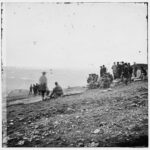
Another verified Civil War image connected to Vizetelly is “Sickles and Staff on Reconnaissance” from 1861, drawn by Alfred Waud. The sketch includes Frank Vizetelly within the composition and survives in the Library of Congress collection. Such images provide valuable evidence of the close-knit world of Civil War correspondents and battlefield artists.
Frank Vizetelly’s Legacy in Civil War History
A Foreign Observer of America’s Defining Conflict
Frank Vizetelly occupied an unusual position during the Civil War. He was neither Union nor Confederate, yet he spent years documenting one of the bloodiest struggles in American history. This outsider perspective shaped both his reporting and the public reaction to his work.
British readers followed the war intensely because the conflict affected international trade, diplomacy, and political stability. Cotton shortages caused economic strain in parts of Britain, especially in textile regions dependent on Southern exports. Newspapers therefore devoted enormous attention to American events. Vizetelly’s illustrations helped readers visualize a distant war with extraordinary clarity.
His increasing association with Confederate forces generated controversy then and afterward. Some observers believed his work reflected sympathy toward the South. Others argued he simply followed whichever armies granted access. Like many correspondents, he needed cooperation from military authorities to continue working near the front. Access often depended on maintaining workable relationships with officers and officials.
Whatever his personal views may have been, his illustrations remain valuable because they document realities rather than abstract political slogans. He recorded transportation systems, uniforms, camp structures, weapons, and landscapes with careful attention. Historians today still use his work to study details that written accounts sometimes ignored.
Influence on War Correspondence
Vizetelly belonged to a generation that helped define modern war reporting. Before the nineteenth century, many battle images were created long after conflicts ended, often by artists who never witnessed combat themselves. The rise of illustrated journalism changed that tradition dramatically.
Field artists like Vizetelly introduced a new expectation that correspondents should observe events directly. Readers increasingly demanded immediacy and authenticity. This pressure helped shape later forms of war journalism, including embedded reporting during twentieth-century conflicts.
His work also demonstrated the power of visual media during wartime. Governments recognized that battlefield imagery could strengthen morale or undermine confidence. Military authorities therefore became more cautious about journalist access as the war continued. The tension between truthful reporting and wartime censorship remains familiar even in modern conflicts.
The emotional realism of his sketches influenced later generations of combat artists. Rather than glorifying battle mechanically, he emphasized fatigue, uncertainty, and destruction. This approach anticipated later wartime illustrators and photographers who sought to show conflict honestly rather than romantically.
Why His Sketches Still Matter Today
Frank Vizetelly’s Civil War drawings survive because they preserve moments that would otherwise be lost. Photographs from the era remain immensely important, but they rarely captured active combat. His sketches fill that visual gap by showing movement, confusion, and atmosphere from within unfolding events.
Military historians study his work for practical information. Uniform details, wagon construction, artillery placement, and camp arrangements all appear in his illustrations. Because he often worked from direct observation, many scenes contain valuable factual material about daily military life during the 1860s.
Art historians appreciate the energy and immediacy of his style. His compositions avoided stiff theatricality and instead conveyed instability and motion. Even modern viewers can sense the urgency in his rapid lines and crowded scenes. The images feel alive because they emerged from firsthand experience.
Frank Vizetelly’s later life ended in mystery and tragedy. In 1883, while accompanying British military operations during the Mahdist War in Sudan, he disappeared after the destruction of Hicks Pasha’s expedition near El Obeid. Reports eventually concluded that he had been killed during the campaign. His death closed the career of a man who spent decades documenting warfare from dangerously close range.
- Reasons historians continue valuing Vizetelly’s sketches:
- Direct observation from active war zones
- Detailed visual records of Confederate forces
- Accurate depictions of battlefield terrain
- Emotional realism uncommon in nineteenth-century war art
- Insight into early illustrated journalism techniques
Frank Vizetelly never became as widely known as some Civil War photographers, yet his contribution to historical memory remains enormous. He stood close enough to battles to witness fear, confusion, courage, and exhaustion firsthand. His drawings transformed distant military reports into human scenes readers could understand emotionally as well as intellectually. More than a century and a half later, the energy of those wartime sketches still survives on the printed page.
Key Takeaways
- Frank Vizetelly was a British war artist born in London in 1830 who became one of the most important visual chroniclers of the American Civil War.
- His sketches provided battlefield imagery during an era when photography could rarely capture active combat.
- The publication of his Bull Run retreat scenes damaged his relationship with Union authorities and pushed him closer to Confederate coverage.
- His illustrations emphasized realism, exhaustion, and battlefield confusion rather than romantic heroism.
- Historians continue using his work to study Civil War military life, journalism, and visual culture.
FAQs
- Who was Frank Vizetelly?
Frank Vizetelly was a British illustrator and war correspondent known for his Civil War battlefield sketches published in the Illustrated London News. - Why were his Civil War sketches important?
They captured active combat and battlefield movement at a time when photography could not effectively record such scenes. - What is Frank Vizetelly’s best-known Civil War image?
“Retreat from the Battle of Bull Run,” published on August 17, 1861, remains one of his most recognized works. - Did Frank Vizetelly work with Confederate forces?
Yes. After tensions with Union officials, he spent significant time reporting from the Confederate side during later stages of the war. - How did Frank Vizetelly die?
He disappeared and was presumed killed in Sudan during the Mahdist War in 1883 while covering the Hicks Pasha expedition.