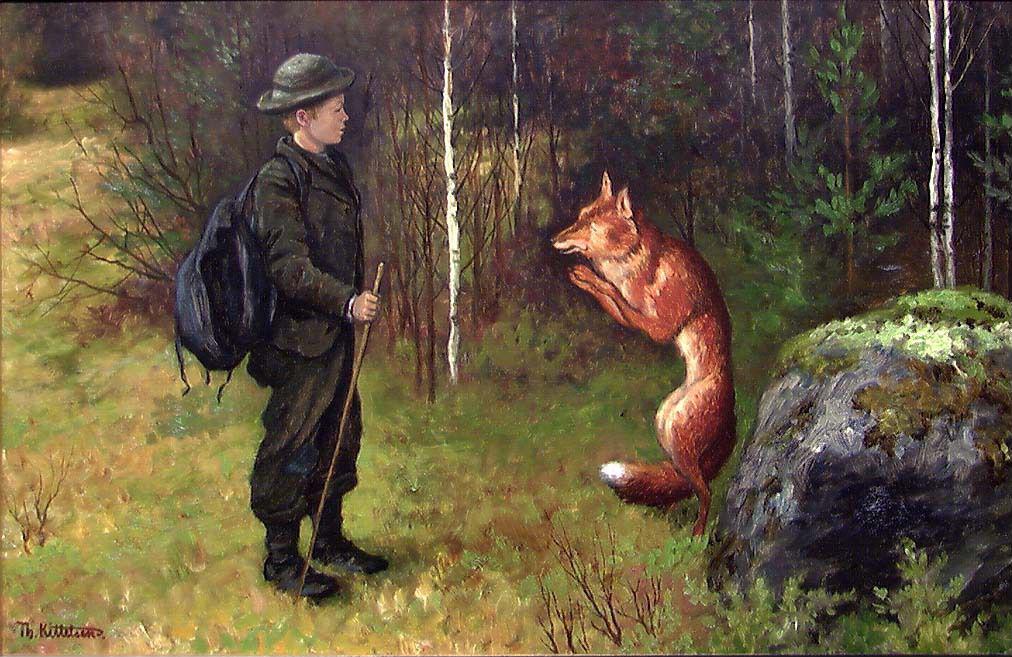
Foxes have occupied a lively place in world storytelling for thousands of years, and artists have always been quick to capture the creature’s blend of wit, alertness, and quiet mystery. In many cultures, the fox stands at the border between the natural and the supernatural, moving with a cleverness that suggests more than simple animal instinct. Painters, carvers, and printmakers found the fox’s poised silhouette and sharp features ideal for scenes that hint at hidden meaning. Viewers recognized the fox at once as a creature of intelligence and caution, a fitting symbol for stories that teach lessons about human behavior.
Across both East Asia and Europe, the fox appears in tales that praise its quick mind but warn against deception. This dual nature made it particularly interesting for artists, who used the fox to represent both charm and danger. The fox’s reddish coat and bright eyes gave visual warmth to a composition, while its reputation added depth to the scene.
East Asian Images
In East Asian art, especially in China and Japan, the fox often carries supernatural qualities. Japanese folklore speaks of the kitsune, a fox spirit known for intelligence, transformation, and occasionally mischief. Artists depicted these spirits in woodblock prints, folding screens, and small netsuke carvings, where the fox’s graceful curves and expressive face suited the lively character of the stories. Sometimes the fox appears disguised as a human figure, a theme that painters used to explore questions of perception, truth, and the unseen world.
Chinese stories sometimes portray the fox as a spirit creature that can bring fortune or misfortune depending on its intentions. Artists gave these foxes long tails, elegant poses, and a quiet dignity, reflecting a belief that the natural world contained powers beyond everyday understanding. The fox in East Asian art is rarely just an animal; it is a reminder that wisdom often comes dressed in unexpected forms.
European Rustic Scenes
European art, especially from the Middle Ages through the 1800s, treats the fox in a more earthly way. Here the animal appears in rural landscapes, hunting scenes, and tales of village life. Artists liked the fox’s bright coat against the greens and browns of the countryside, and they used its darting movement to add action to their compositions. In illuminated manuscripts, the fox sometimes appears in moral stories, reminding readers not to be fooled by flattering words or clever tricks
Genre painters of the 1700s and 1800s included foxes in scenes of hunts or woodland activity, giving a sense of drama and speed. The fox is usually shown as wary, swift, and aware of its surroundings. Its presence added tension and movement to the calm order of rural settings, making it a natural fit for painters who enjoyed capturing lively country life.
Symbolist and Romantic Uses
In the Romantic era, the fox took on a more atmospheric role. Artists placed foxes in quiet winter forests, moonlit glades, or lonely hillsides, where their solitary figures echoed the mood of the landscape. The fox became a symbol of independence and sharp awareness in a world filled with mist, snow, and shifting light. Romantic painters liked how the fox could suggest both secrecy and survival, fitting the era’s interest in nature as a place of deep feeling.
Symbolist painters later used the fox for inner meaning, treating it as a creature of intuition or quiet cunning. Instead of showing the fox in action, they often placed it in dreamlike scenes where its gaze or posture hinted at hidden thoughts. These works encouraged the viewer to consider the fox not simply as an animal, but as a presence that reflects the complexities of the human spirit.
Decorative Motifs
The fox appears widely in decorative objects from both East Asia and Europe. In Japan, small netsuke carvings often show foxes with fluid, curling lines that emphasize grace and movement. In Europe, the fox appears on pottery, folk embroidery, carved boxes, and prints sold at village fairs. The fox’s pointed ears and distinctive tail make it easy to stylize, which helped craftsmen use it in patterns, borders, and repeating designs.
The creature’s mix of charm and intelligence made it appealing for household items meant to suggest alertness or clever wit. Whether carved into wood, painted on ceramics, or printed on paper, the fox brought a touch of life and character into the home. That familiar silhouette still carries its old meaning: be watchful, stay sharp, and move through the world with a quick mind and steady instinct.