Buenos Aires is often described as the most European city in South America, and nowhere is this more visible than in its art. From the grand façades of its Beaux-Arts buildings to the eclectic street murals that color its neighborhoods, the city reflects a layered narrative where art is a living archive. It’s a place where styles imported from abroad were not merely adopted but adapted—filtered through local experience to create something distinctly Argentine.
Founded in the 16th century on the western shore of the Río de la Plata, Buenos Aires has long been a point of convergence. It is a port city in more than just geography; it has historically served as a gateway for cultural exchange, intellectual currents, and artistic trends. While early expressions of art in Buenos Aires were closely tied to religious devotion and colonial governance, the city’s creative profile evolved with its growing autonomy, demographic transformations, and expanding global connections.
By the 19th century, as Argentina sought to define itself as a modern nation, Buenos Aires took center stage. Its artists and architects turned increasingly toward Europe, particularly France and Italy, for aesthetic inspiration. Yet even amid this admiration for imported styles, a tension emerged between imitation and innovation—one that would define the city’s artistic identity well into the modern era.
The 20th century marked a turning point. Buenos Aires became a hotbed for avant-garde movements, homegrown modernism, and intellectual salons. Artists such as Emilio Pettoruti and Xul Solar began pushing the limits of form and symbolism. Abstract art, conceptual art, and eventually street art each found a foothold in different corners of the city. Political events and social upheavals influenced not only what artists created but how and where they showed their work. At times, the city’s art scene thrived in openness; at others, it withdrew into private homes and underground gatherings.
Today, Buenos Aires remains a dynamic art capital. Its prestigious museums stand alongside independent galleries and studios tucked away in historic neighborhoods. Public art thrives in the open air—from the colorful houses of La Boca to contemporary murals in Palermo. The city hosts biennials and international art fairs, drawing attention from collectors, curators, and scholars around the world.
Yet even amid this global visibility, Buenos Aires’ art scene remains deeply local—rooted in its neighborhoods, its historical memory, and the character of its people. The story of its art is not merely one of aesthetic development, but of a city in dialogue with itself: layered, complex, and always in motion.
Colonial Foundations and Sacred Art (16th–18th Centuries)
When Buenos Aires was founded by Spanish colonists in 1580 (following a failed earlier settlement in 1536), art was not an autonomous pursuit—it was a tool of power, faith, and civil order. As in much of Spanish America, the earliest artistic expressions in the city were deeply entwined with the goals of colonization and Christianization. Churches and religious institutions were the primary patrons of the visual arts, and their commissions reflected both European traditions and the realities of a developing colonial society.
The Jesuits, Franciscans, and other religious orders played a central role in the visual culture of early Buenos Aires. They imported sacred art from Europe—especially from Spain and Italy—including paintings, liturgical objects, and devotional statuary. These imports served not only religious functions but also reinforced the authority of the Church and the Spanish Crown. At the same time, local artisans—many of whom were Indigenous or of mixed ancestry—began to participate in the production of religious art. These works often blended European iconographic standards with local materials and subtle stylistic deviations, resulting in a quietly distinct visual language.
Architecturally, the city’s colonial churches became cultural centers and visual landmarks. The Iglesia de San Ignacio, part of the Jesuit block, is one of the oldest surviving structures in Buenos Aires. Built in stages beginning in the late 17th century, it exemplifies colonial Baroque design, with its solid masonry, stuccoed walls, and ornamental altarpieces. These interiors were typically adorned with polychrome wooden sculptures and oil paintings depicting biblical scenes, saints, and the Virgin Mary—central figures in the Catholic spiritual narrative.
Despite its peripheral status compared to wealthier colonial centers like Lima or Mexico City, Buenos Aires maintained a steady artistic output, thanks in part to its growing importance as a port in the Viceroyalty of the Río de la Plata. The arrival of European goods and artists through trade gradually expanded the city’s visual vocabulary. Paintings from the Cuzco and Quito schools—renowned artistic centers in the Andes—were transported to Buenos Aires, and local artists began to emulate these styles, adapting them to regional tastes.
One notable dynamic of the colonial period was the emergence of guilds and workshops that combined European training models with local apprenticeships. These spaces were not just centers of craft; they were key institutions in shaping the city’s early artistic character. Religious brotherhoods and confraternities also played a part in commissioning art, often tied to specific saints or feast days, reinforcing a liturgical calendar that structured the social life of the colony.
What distinguishes this early era of Buenos Aires’ art is its quiet functionality. Art was not made to provoke or to innovate but to serve—to instruct the faithful, to reinforce authority, and to offer a sense of order in a frontier society. Yet even in this rigid context, local identities began to assert themselves. The choice of colors, the facial features of saints, and the use of native woods or pigments introduced subtle departures from imported norms. These hints of individuality would, over time, evolve into more self-conscious expressions of regional identity.
By the end of the 18th century, Buenos Aires had become a more complex and diverse urban center. Its art, while still dominated by religious themes, began to reflect a broader social fabric and a nascent public culture. As the winds of independence approached, so too did shifts in patronage, subject matter, and ambition.
Nation-Building and Neoclassicism (1810–1880)
The early 19th century was a period of profound transformation in Buenos Aires. As Argentina moved toward independence from Spain—formally declared in 1816—the city’s artistic identity began to shift as well. No longer confined to the religious and colonial frameworks that had dominated the previous centuries, artists, architects, and patrons turned their attention to the themes of nationhood, civic pride, and cultural refinement. The visual arts were enlisted in the broader project of building a national identity.
Neoclassicism emerged as the preferred style of this new era. Inspired by the ideals of ancient Greece and Rome, neoclassical art and architecture conveyed order, rationality, and dignity—qualities that suited the aspirations of a newly independent republic. In Buenos Aires, these ideals materialized most clearly in architecture. Public buildings, city halls, and private mansions began to adopt classical features: columns, pediments, balanced proportions, and symmetrical facades. The Cabildo, which had served as the colonial town council, underwent modifications that reflected changing tastes, while newer constructions such as the Teatro Colón (first version) signaled a desire to present Buenos Aires as a modern capital on par with its European counterparts.
This classical aesthetic was not purely decorative. It was ideologically charged, evoking the republican values of the Enlightenment and the revolutions that inspired Argentine independence. At the same time, it aligned Buenos Aires with European trends, especially those emerging from France, which had a growing cultural influence throughout the Southern Cone. The city’s elites often traveled abroad, collected European art, and imported foreign artists and architects to bring sophistication to the urban landscape.
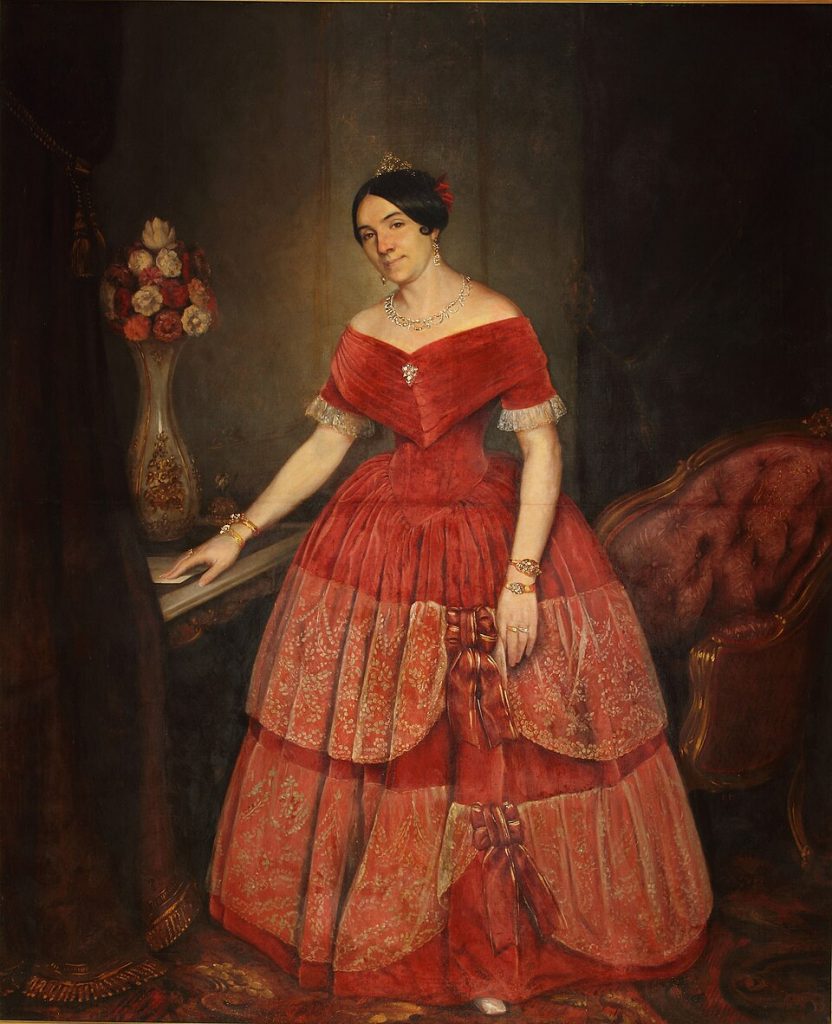
In painting, the post-independence period marked the rise of portraiture and historical scenes. These genres served both commemorative and pedagogical purposes—immortalizing political leaders, military heroes, and key events from the revolutionary struggle. Carlos Morel, considered Argentina’s first truly local painter, was a pivotal figure during this period. Trained in Buenos Aires and later in Rio de Janeiro, Morel created both portraits and genre scenes that captured aspects of Argentine life. His work stood at the crossroads of documentary realism and romantic idealization.
While Morel’s art depicted the growing urban elite, rural and frontier life became another subject of interest. Painters began to explore the imagery of the gaucho, the Argentine cowboy, as a symbol of national character. These romanticized depictions of the pampas, horses, and masculine independence were not just nostalgic—they helped construct a mythology of Argentina’s rural past at a time when the country was rapidly urbanizing and centralizing power in Buenos Aires.
Sculpture, too, began to play a more public role. Busts and statues of national figures—such as Manuel Belgrano, José de San Martín, and Mariano Moreno—appeared in parks and plazas. These monuments were part of a broader civic strategy: to inscribe national memory into the very fabric of the city. In this way, Buenos Aires itself became a curated space of patriotic education.
Museums and collections started to emerge during this time, although the institutional infrastructure for the arts was still in its infancy. Private collectors and intellectual societies took the lead in gathering art and antiquities. The city’s growing newspaper and publishing industries also played a role in circulating images, illustrations, and critical discourse, slowly expanding public awareness of art beyond ecclesiastical contexts.
Yet for all its aspirations, this was also a period of contradictions. While neoclassicism symbolized civic virtue and republicanism, Buenos Aires was also marked by political instability, internal conflicts, and uneven development. The tension between cosmopolitan ideals and local realities became a recurring theme in the city’s cultural life. The groundwork was being laid for a more vibrant and complex artistic future, but it was not yet fully realized.
By the late 19th century, Buenos Aires had begun to acquire the economic and demographic weight of a true capital. Immigration was transforming its population, wealth was accumulating among its elites, and the arts were poised to take a decisive leap into the modern age.
Europeanization and the Belle Époque (1880–1930)
Between 1880 and 1930, Buenos Aires underwent a transformation that was as architectural and aesthetic as it was social and political. This era—often referred to as the Belle Époque—marked the high point of Argentina’s economic prosperity, driven by exports of agricultural goods and a flood of European immigration. The city, flush with wealth and ambition, sought to model itself on Paris, embracing European art, architecture, and urban planning with a zeal that was both aspirational and strategic.
Art and culture became key tools in this modernization project. The Argentine elite, many of whom had been educated in Europe or maintained strong cultural ties to France and Italy, viewed art as a marker of civilization. In this view, cultivating a European-style art scene would place Buenos Aires on the global cultural map. What followed was a period of unprecedented artistic expansion: monumental public works, lavish private mansions, and the establishment of formal art institutions.
The architectural landscape of Buenos Aires was perhaps the most visible manifestation of this cultural shift. Entire neighborhoods—Recoleta, Retiro, and parts of Palermo—were redeveloped in a French Beaux-Arts style, featuring grand boulevards, ornate facades, and manicured parks. Architects such as Norbert Maillart, Julio Dormal, and Virginio Colombo played leading roles in designing public buildings, theaters, and palaces. The construction of the Teatro Colón (1908), with its Italian Renaissance-inspired exterior and state-of-the-art acoustics, symbolized Buenos Aires’ desire to become a global cultural capital.
Inside these spaces, the visual arts flourished. Academic painting was the dominant mode, guided by principles of technical precision, historical subject matter, and classical composition. Artists like Eduardo Sívori, Reinaldo Giudici, and Ernesto de la Cárcova achieved prominence through portraits, allegorical scenes, and works that depicted both urban refinement and the hardships of rural labor. De la Cárcova’s “Sin Pan y Sin Trabajo” (1894) remains one of the most iconic paintings of the period—somber, socially conscious, yet executed within academic conventions.
Art academies and salons became central to artistic life. The Sociedad Estímulo de Bellas Artes, founded in 1876, was a crucial institution that nurtured the country’s first generation of professional artists. Annual exhibitions and competitions provided visibility and legitimacy. Meanwhile, private collectors—many of whom were influential figures in politics and business—built substantial art collections, often favoring European works but increasingly acquiring pieces by Argentine artists.
Museums also took root. The Museo Nacional de Bellas Artes, established in 1896 and relocated to its current Recoleta building in 1933, began to assemble a robust collection of both European masters and national art. This was not simply about curation—it was an act of cultural positioning. The museum, and others like it, served as both educational institutions and symbols of national prestige.
While academic traditions dominated, the seeds of artistic change were already being planted. Toward the end of the Belle Époque, some artists began experimenting with new techniques and subjects, influenced by modernist trends in Europe. Impressionism, Symbolism, and Post-Impressionism made their way into local studios. These influences were initially subtle, often incorporated into otherwise conventional works, but they hinted at a desire among younger artists to break from rigid formalism.
The city itself became both canvas and muse. Painters captured its wide avenues, modern trams, and eclectic skyline, while also documenting the lives of immigrants, workers, and the changing social fabric. The contrast between opulence and hardship became an implicit theme in much of the art from this era—a tension that would soon surface more explicitly in the modernist movements of the 1920s and beyond.
By 1930, Buenos Aires had firmly established itself as a cultural beacon in Latin America. Its institutions were in place, its infrastructure modernized, and its art scene increasingly confident. The city had, in many ways, achieved the European ideal it sought. But the next phase would be shaped less by imitation and more by invention, as artists turned inward to define a visual language of their own.
Modernism and Avant-Garde Movements (1920s–1940s)
The 1920s through the 1940s were years of artistic rupture in Buenos Aires. After decades of academic dominance and European emulation, a younger generation of artists sought new ways of seeing and expressing the world around them. Their work embraced modernism—not simply as a style, but as a break with tradition. The city, increasingly cosmopolitan and socially dynamic, provided fertile ground for these experiments.
One of the earliest signs of this shift came from Martín Malharro, who introduced Impressionism to Argentina after studying in Paris. Though his major contributions came slightly earlier, his impact resonated well into the 1920s, encouraging artists to break free from rigid academic technique and explore atmosphere, light, and individual perception. Malharro’s influence opened the door to other European-inspired modernist currents, including Cubism, Futurism, and Symbolism, which arrived via imported books, traveling exhibitions, and Argentine artists returning from abroad.
During this time, two literary-artistic groups emerged as defining forces in the Buenos Aires cultural scene: the Florida group and the Boedo group. Though both were rooted in modernist ideas, their priorities and social circles were distinct. The Florida group—named after the elegant downtown street—was largely made up of artists and writers from middle- and upper-class backgrounds. They gathered at cafés and literary salons, embracing cosmopolitan aesthetics and abstract experimentation. Key figures included Emilio Pettoruti, Xul Solar, and the young Jorge Luis Borges, whose writings paralleled the visual innovations around him.
Emilio Pettoruti’s 1924 exhibition at the Galería Witcomb was a pivotal moment. His Cubist-inspired portraits and still lifes shocked Buenos Aires audiences accustomed to realism. One work, El Músico, with its fragmented forms and prismatic color palette, embodied a new kind of Argentine modernism: urban, intellectual, and unafraid of abstraction. Though critics initially recoiled, younger artists saw Pettoruti as a trailblazer.
Xul Solar, another towering figure, created work that defied easy classification. A painter, writer, and inventor of languages, his art combined mystical symbolism with architectural geometry and vibrant color. Influenced by esotericism, astrology, and theosophy, Xul’s paintings—such as Pan Tree or Jefe—suggested a metaphysical map of existence. He envisioned not only a new art, but a new way of thinking.
In contrast, the Boedo group was anchored in the working-class neighborhood of the same name. Its artists and writers focused on social themes: labor, inequality, and everyday urban life. While they too embraced modernism, their work was more representational and often carried a moral or political charge. Artists like Abraham Vigo and José Arato contributed illustrations to left-leaning publications such as Claridad, portraying the struggles of factory workers and immigrants. Though sometimes overshadowed by the more flamboyant Florida group, Boedo artists played a crucial role in shaping a socially grounded visual narrative of Buenos Aires.
This period also saw the rise of institutional support for modern art. The city’s salons began to open up to more experimental works, and modernist art made its way into both public and private collections. Influential intellectuals such as Ricardo Rojas and Victoria Ocampo helped legitimize avant-garde movements through essays, lectures, and publishing houses like Sur.
The visual experimentation of the 1930s coincided with broader social and political tensions. The global Depression, domestic instability, and rising ideological divisions influenced many artists to reflect on the conditions of their time, either through direct commentary or by turning inward to explore themes of identity, memory, and perception. The influence of European modernism remained strong, but it was increasingly reinterpreted through an Argentine lens.
By the 1940s, modernism had become more than a passing trend—it had reshaped the landscape of Argentine art. The boundaries between literature, visual art, and philosophy became more porous, creating a fertile intellectual environment that prepared the ground for the next wave: abstraction, conceptualism, and geometric innovation.
The Art of Peronism and National Identity (1940s–1955)
The arrival of Juan Domingo Perón to political prominence in the mid-1940s introduced a new dynamic into Argentine cultural life—one in which art and politics became deeply entwined. As the Peronist movement redefined the relationship between the state and the people, it also sought to reorient national identity around themes of social justice, industrial progress, and the dignity of labor. Art, like other aspects of public life, was drawn into this vision.
Peronism was not a monolithic ideology, and its approach to culture reflected that complexity. On one hand, the state encouraged popular culture and sought to democratize access to the arts; on the other, it exerted increasing control over cultural production and messaging. For artists in Buenos Aires, this created both opportunities and constraints, depending on their subject matter, social connections, and willingness to align with—or resist—the new order.
In terms of visual culture, the most enduring image of the period was Eva Perón. Though she died in 1952, Eva’s presence saturated Argentine public life throughout her husband’s presidency. She was frequently portrayed in paintings, posters, and sculpture—not merely as a political figure, but as a national icon. Artists rendered her in both idealized and naturalistic styles: smiling among workers, dressed in regal attire, or framed with symbols of motherhood and sacrifice. The state actively promoted this imagery, using it in everything from school murals to mass publications. Her funeral in 1952 generated a wave of commemorative art, from official portraiture to spontaneous tributes that lined city streets.
This emphasis on visual symbolism extended to broader themes of labor, patriotism, and industrial strength. Public murals and state-sponsored exhibitions frequently celebrated the working man, the factory, the soldier, and the rural peasant. Painters such as Antonio Berni, though not formally part of the Peronist apparatus, created socially engaged works that resonated with the era’s themes. Berni’s Juanito Laguna series, which would begin slightly later, reflected the plight of the urban poor with striking empathy—rooted in realism, yet charged with imaginative detail.
Art institutions were also reshaped. The Peronist government invested in cultural infrastructure, expanding access to museums and sponsoring national salons. Yet these moves were not purely altruistic; they also functioned as mechanisms of influence. Cultural policy favored artists who aligned with national themes and avoided overt political dissent. Those who resisted—either through subject matter or by declining official patronage—found themselves increasingly marginalized.
Still, Peronism’s cultural approach was not uniformly repressive. Many artists, writers, and filmmakers welcomed the broader reach of state support and saw it as a chance to connect with wider audiences. There was a genuine effort to elevate the arts beyond elite circles, and Buenos Aires’ neighborhoods saw a surge of local festivals, public concerts, and art programs. In this sense, the Peronist era democratized culture, even as it narrowed the range of acceptable expression.
Sculpture and monumental art flourished under state sponsorship. Public statues and memorials—particularly those dedicated to national heroes and Perón himself—appeared throughout Buenos Aires. The aesthetic was generally conservative, favoring realistic and heroic forms that conveyed stability and grandeur. Yet within these constraints, some sculptors found ways to innovate subtly, refining techniques or playing with scale and setting.
Architecture also participated in the national project. While the grand academic styles of the Belle Époque lingered, a new wave of modernist architects began introducing functionalist principles into public housing, schools, and hospitals. These projects reflected the regime’s focus on development and modernization, presenting the city as an engine of progress.
By the time of Perón’s ousting in 1955, the art world in Buenos Aires had been significantly shaped by a decade of state influence. Some artists had thrived under this system; others had worked around it or quietly pushed against its boundaries. What remained consistent, however, was the centrality of art in the public sphere. Whether in celebration or critique, the city’s visual culture remained a vital barometer of national identity and urban life.
Abstract Art, Concrete Art, and Madí (1940s–1960s)
While political imagery and figurative painting dominated much of Argentina’s public art in the mid-20th century, another revolution was quietly unfolding in the studios, workshops, and salons of Buenos Aires. By the late 1940s and into the 1960s, the city became a fertile ground for abstract art movements that emphasized structure, form, and visual innovation over narrative or symbolism. These movements—Arte Concreto-Invención, Madí, and others—redefined modern art in Argentina and placed Buenos Aires on the international avant-garde map.
At the heart of this shift was a desire to move beyond subjectivity and representation. Artists no longer sought to depict the world but to construct autonomous visual experiences using geometry, color, and material. This wasn’t abstraction for its own sake—it was grounded in ideas about progress, science, and a universal visual language.
The Arte Concreto-Invención group emerged in 1945, deeply influenced by European Constructivism, De Stijl, and Bauhaus principles. Founded by Tomás Maldonado, Raúl Lozza, Lidy Prati, and others, the group rejected illusionistic space, symbolic content, and personal expression. Instead, they created works based on precise mathematical relationships, often using hard-edged geometric forms and flat color fields. In their 1946 manifesto, they declared: “Art must not reflect, reproduce, or represent—it must invent.”
Their paintings, typically untitled or labeled with numbers, sought to be objects in their own right, not windows into another world. This approach mirrored broader philosophical currents in postwar Latin America: a belief in rational order, the value of design, and the promise of technology. Maldonado, in particular, would go on to have a major impact on design education and theory, eventually directing the HfG Ulm in Germany, a successor to the Bauhaus.
Alongside Arte Concreto-Invención, the Madí movement offered a more playful and unconventional take on abstraction. Founded by Gyula Kosice, Carmelo Arden Quin, and others, Madí emerged in 1946 with a manifesto and a series of provocative exhibitions. Its name, reportedly invented without meaning, signaled a deliberate break from tradition. Madí artists explored irregularly shaped canvases, articulated sculptures, and kinetic art. They aimed to surprise and delight as much as to theorize.
Gyula Kosice was especially influential for his experimentation with nontraditional materials such as Plexiglas, neon, and even water. His hydrokinetic sculptures—which combined movement, transparency, and fluid dynamics—were among the first of their kind. Kosice also conceptualized Ciudad Hidroespacial, a visionary floating city that merged art, architecture, and utopian thinking.
What united these movements was a shared commitment to innovation and autonomy. Unlike earlier generations that looked to Europe primarily for aesthetic inspiration, these artists saw themselves as equals in an international dialogue. They corresponded with artists and theorists abroad, published manifestos, and organized exhibitions that challenged both the local art establishment and the conventions of the time.
However, their work was not always warmly received. Buenos Aires’ mainstream cultural institutions were slow to embrace non-figurative art, and many critics viewed abstraction as esoteric or foreign. The country’s political environment—particularly in the 1950s and early 1960s—was also turbulent, with shifts in leadership that affected cultural policy and public funding. As a result, many abstract artists worked independently, forming collectives and exhibiting in alternative venues.
Despite these challenges, the influence of Concrete Art and Madí grew steadily. Their aesthetic language began to appear in graphic design, architecture, and industrial design. Younger artists, inspired by their example, pursued increasingly bold experiments in materials and spatial perception.
By the early 1960s, abstraction in Buenos Aires had evolved beyond painting and sculpture. Artists like Luis Tomasello, Eduardo Mac Entyre, and Miguel Ángel Vidal developed Generative Art, a submovement based on repetition, pattern, and visual effects. These kinetic and optical works explored how perception itself could be manipulated through art—another step in the city’s ongoing dialogue between form and meaning.
In hindsight, the period from the mid-1940s to the 1960s was a golden age of Argentine abstraction. It was a time when Buenos Aires artists, rejecting both nationalist clichés and narrative painting, carved out a distinct and ambitious place in the story of global modernism.
Art Under Dictatorship: Silence, Resistance, and Conceptualism (1976–1983)
The years of Argentina’s last military dictatorship (1976–1983) were marked by censorship, fear, and repression. Known as the Proceso de Reorganización Nacional, the regime targeted perceived subversives through surveillance, imprisonment, forced disappearance, and torture. In this climate of oppression, many artists in Buenos Aires faced stark choices: silence, exile, adaptation—or resistance through new, often covert, modes of expression.
Art during this period could not afford to be naïve. The language of abstraction that had flourished in the previous decades was no longer sufficient to address the moral weight of national trauma. In its place emerged a more politically charged, conceptual approach—art that engaged with absence, memory, and the mechanisms of power without necessarily naming them directly. This was not the era of overt protest banners, but of subtle, layered gestures that spoke to what could no longer be said out loud.
One of the most important early examples of politically engaged conceptual art in Argentina was Tucumán Arde (Tucumán is Burning), a collaborative project initiated in 1968 by a group of artists, sociologists, and journalists from Buenos Aires and Rosario. Though it predated the dictatorship by nearly a decade, Tucumán Arde set the tone for what was to come. It exposed government misinformation about poverty and hunger in the northern province of Tucumán, using installations, posters, and media manipulation to stage a counter-information campaign. The work questioned not only political authority but also the role of art institutions, blurring the lines between activism and aesthetics.
By the late 1970s, however, the risks of such direct engagement had grown. Many artists went into exile—voluntarily or by necessity. Those who remained in Buenos Aires turned to coded forms of resistance, where the message lay in materials, process, and absence rather than in explicit imagery. León Ferrari, a pivotal figure of this period, had already gained international attention for his provocative religious and political works. Under the dictatorship, his art became increasingly allegorical. He juxtaposed Catholic iconography with newspaper clippings about state violence, forcing viewers to confront complicity and silence.
Others used installation and performance to articulate the invisible. Graciela Sacco, for example, would later build on the idea of ephemerality with works that used light, shadow, and fragile materials. Artists like Luis Benedit and Víctor Grippo explored themes of transformation, decay, and time—frequently using natural substances (seeds, bread, wires) as metaphors for individual vulnerability and collective tension.
In this environment, the concept of “disappearance”—so central to the dictatorship’s campaign of terror—found eerie visual echoes in art. Portraits were left blank, faces were erased, and spaces were filled with voids. A notable example was the work of Juan Carlos Romero, whose print-based pieces used repetition and minimal language to suggest both surveillance and erasure.
Meanwhile, the Madres de Plaza de Mayo, though not visual artists in the conventional sense, enacted a form of political performance that resonated deeply with the art community. Their silent marches in front of the Casa Rosada, wearing white headscarves embroidered with the names of their missing children, became a living symbol of resistance. Several artists later referenced or collaborated with the Mothers, recognizing the potent aesthetic and emotional force of their public presence.
Even the galleries and museums of Buenos Aires were affected. Exhibitions were canceled, artworks seized, and entire collections censored or neglected. Artists turned to informal networks—apartment salons, artist-run spaces, and mail art—to share their work. This decentralized model allowed for a kind of quiet resilience, where art could continue without inviting state scrutiny.
Not all art produced during the dictatorship was political, nor was all resistance direct. Some artists used abstraction, photography, or personal narrative to explore inner landscapes that paralleled the social reality. The key unifying factor was the acknowledgment—often silent—that something was fundamentally wrong, and that traditional forms of art-making could not remain untouched.
When democracy returned in 1983, the legacy of these years remained etched into the consciousness of the city’s artistic community. The trauma, the silences, and the creative evasions shaped a new visual vocabulary—one that would continue to evolve in the decades to follow.
Democracy and the Return to the Body (1983–1990s)
The return of democracy to Argentina in 1983, following nearly a decade of military dictatorship, ushered in not just political freedom but a cultural reawakening. In Buenos Aires, artists responded to this new era with urgency, emotion, and an eagerness to reconnect with audiences and explore themes that had been taboo or suppressed. Among the most significant shifts in the art of this period was a renewed focus on the body—wounded, remembered, politicized, and expressive.
The fall of the dictatorship did not erase the past. Instead, it opened space for its reckoning. In the years immediately following the return to democratic rule, memory became a central concern for artists across disciplines. They were not merely recounting facts or honoring victims; they were grappling with how to represent absence, loss, and trauma in ways that were both personal and collective.
One of the most prominent figures of this period was Guillermo Kuitca, whose work bridged abstraction and figuration while exploring themes of exile, displacement, and identity. Kuitca’s map paintings, which transformed geographic charts into emotional landscapes, became internationally recognized symbols of fragmentation and belonging. His use of theater plans, topographical grids, and distorted cartography spoke to the dislocation many Argentines felt in the aftermath of repression.
Meanwhile, León Ferrari continued to work with the legacy of violence and religious complicity, often provoking heated responses. His collages and installations, which juxtaposed sacred imagery with newspaper reports on atrocities, challenged institutions to confront their roles in Argentina’s recent history. Ferrari’s work in the 1980s and 1990s was bolder than ever—at times controversial, always uncompromising.
Artists also turned inward. The human body—long a subject in art—returned with heightened intensity. Marcia Schvartz created vivid, confrontational portraits and scenes that captured both the physical and psychological toll of political upheaval. Her paintings often featured distorted figures, raw expressions, and symbolic objects that alluded to death, gender, and memory.
Performance art, which had operated in fragmented form during the dictatorship, now flourished. Artists like Liliana Maresca blurred the boundaries between life, body, and sculpture. Her series of self-portraits, including the iconic Imagen Pública – Altas Esferas (1993), merged vulnerability and defiance. In it, Maresca posed nude with objects that marked her intellectual and artistic identity—a reclamation of self and a direct challenge to social expectations.
This period also saw the emergence of more openly feminist and queer perspectives in Buenos Aires’ art scene. Artists addressed themes of sexuality, domestic violence, gender roles, and marginalization with increasing clarity and force. Marcela Mouján, Mónica Millán, and Diana Dowek, among others, brought a gender-conscious lens to traditional genres and redefined what political art could look like in the wake of authoritarian rule.
The galleries and institutions that had once avoided political engagement now became platforms for reflection and debate. The Centro Cultural Recoleta and the newly revitalized Museo de Arte Moderno de Buenos Aires (MAMBA) hosted exhibitions that confronted the past, challenged conventions, and brought contemporary Argentine art into an international dialogue.
Photography also experienced a renaissance. Artists such as Adriana Lestido documented the lives of women and families with a stark, empathetic eye. Her black-and-white series on motherhood, incarceration, and adolescence highlighted the quiet resilience of ordinary people, expanding the definition of the political to include the domestic and the intimate.
Beneath all of this was a shared understanding that art could play a role in the national healing process. Not through propaganda or closure, but by opening space for ambiguity, confrontation, and dialogue. Buenos Aires artists embraced this role with a mixture of urgency and experimentation, often eschewing traditional formats in favor of installations, video, and mixed media.
By the end of the 1990s, the city’s art scene had transformed. What began as a reckoning with trauma evolved into a broader interrogation of identity, place, and belonging in an increasingly global world. The city’s artists had not only reconnected with their public but had redefined what it meant to make art in a democratic Argentina.
The 2001 Crisis and Art from the Margins
In December 2001, Argentina plunged into one of the most severe economic and social crises in its history. Banks froze accounts, the peso collapsed, five presidents came and went in a matter of weeks, and mass protests erupted across Buenos Aires. For many Argentines, it was a moment of both despair and awakening. And in the realm of art, it marked a dramatic pivot—from gallery walls and institutional spaces to the streets, community centers, and abandoned buildings.
In the face of widespread unemployment and political disillusionment, artists reimagined their role. Art was no longer primarily a matter of aesthetics or theory—it became a tool for survival, protest, solidarity, and redefinition. Across Buenos Aires, artists embraced ephemeral forms, collective practices, and urgent themes. The result was an explosion of creativity that rejected commercialism and hierarchy in favor of participation and immediacy.
A defining feature of this moment was the rise of art collectives. Groups like Grupo Etcétera, GAC (Grupo de Arte Callejero), and Iconoclasistas fused art, activism, and graphic design in public space. Their work addressed everything from police violence to IMF austerity, often using posters, signs, performance, and street interventions. Instead of retreating from the political chaos, these collectives leaned into it—engaging directly with demonstrations, neighborhood assemblies, and public occupations.
Grupo de Arte Callejero, for instance, used the language of road signs and wayfinding to parody institutional messaging. Their interventions, often anonymous and installed guerrilla-style, transformed everyday public signage into biting social critique. A traffic sign might direct viewers not to a street but to the site of a state atrocity or an economic injustice. In doing so, they transformed the visual language of the city into a medium of resistance.
Another response to the crisis was the occupation of abandoned spaces. Factories and public buildings left idle by the economic collapse were turned into cultural centers. One of the most famous examples was the IMPA (Industrias Metalúrgicas y Plásticas Argentina) factory, which became a hub for theater, art, and community workshops. These reclaimed spaces symbolized both survival and reinvention—a rejection of top-down solutions in favor of grassroots autonomy.
In the visual arts, this period favored mixed media, street art, and installation over painting or sculpture. Murals began to appear not just in bohemian districts like La Boca and San Telmo, but in working-class neighborhoods and informal settlements. The Movimiento de Muralistas, building on earlier traditions, used walls as public canvases for scenes of protest, solidarity, and daily life. These works often combined vivid color with stark social realism—depicting women, children, unemployed workers, and community rituals.
Photography and video also took on new urgency. Subcoop, a photography collective, documented the crisis from the inside—covering street protests, soup kitchens, and neighborhood assemblies with empathy and precision. Their images did not aim for objectivity; they embraced the perspective of participants, not observers.
For many artists, the 2001 crisis was also a reckoning with institutions. Museums and galleries were seen, at least temporarily, as disconnected from the struggles on the ground. In response, alternative exhibition formats flourished: pop-up shows in squatted buildings, performances in public parks, and art fairs organized without sponsors. This decentralization challenged the art world’s assumptions about what constituted legitimate or “important” art.
While much of this work was rooted in immediate concerns, it also tapped into deeper traditions. The influence of conceptual art from the dictatorship years, the graphic clarity of 1960s and 70s protest art, and the collaborative ethos of earlier community movements all resurfaced. But now, they were filtered through the lens of postmodernity and precarity. The result was a hybrid aesthetic—part DIY, part digital, entirely embedded in real-world urgency.
By the mid-2000s, as the country began to stabilize economically, some of these practices evolved. Certain artists and collectives entered museums and international biennials; others chose to remain outside formal institutions. Yet the core insight of the 2001 generation remained: art could be made anywhere, by anyone, and for reasons beyond prestige or profit.
The legacy of this period lives on in the DNA of contemporary art in Buenos Aires. Even today, in times of renewed hardship or political tension, the strategies developed in the early 2000s—direct engagement, collaboration, irreverence—continue to inform how artists respond to their city and their moment.
Contemporary Art and Global Recognition (2000s–Present)
In the decades following the 2001 crisis, Buenos Aires evolved into one of the most dynamic and internationally recognized art capitals in the Southern Hemisphere. While local politics, economic instability, and social challenges have continued to shape daily life, the city’s art scene has shown remarkable resilience. More than that—it has flourished, with Argentine artists gaining global attention, institutions expanding their reach, and new generations pushing the boundaries of what art can be.
This era is marked by pluralism. No single movement or medium dominates. Instead, artists in Buenos Aires work across photography, sculpture, video, performance, installation, and digital platforms. Themes range from identity, memory, and the environment to gender, science, and globalization. There is both introspection and ambition—an awareness of Argentine history combined with a keen sense of global discourse.
One of the breakout figures of this period is Adrián Villar Rojas, whose monumental, otherworldly installations have been exhibited in venues ranging from the Venice Biennale to the Serpentine Gallery. Rojas’s work combines sculpture, architecture, and ecology, often evoking a post-human landscape where remnants of culture and nature intertwine. His The Theater of Disappearance series, shown at the Metropolitan Museum of Art in New York and at the Kunsthaus Bregenz, exemplifies the scale and conceptual depth of contemporary Argentine art on the world stage.
Another key figure is Nicola Costantino, whose provocative work often centers on the body, gender, and consumption. Her performances and installations explore taboos with meticulous craftsmanship and theatrical intensity. One of her most discussed works was Rapsodia Inconclusa (2013), a video installation for the Venice Biennale in which she portrayed Eva Perón—not in an idealized way, but as a complex, contradictory figure. It stirred debate at home and abroad, reflecting how Argentine history continues to animate artistic expression.
Beyond these internationally visible artists, a diverse and thriving local ecosystem supports experimentation and dialogue. Artist-run spaces and independent galleries, such as UV Estudios, Isla Flotante, and Ruth Benzacar Galería de Arte, provide platforms for emerging talent. These venues often operate with modest resources but high curatorial ambition, creating an environment where risk-taking is not only accepted but expected.
The city’s major institutions have also expanded their roles. The Museo de Arte Latinoamericano de Buenos Aires (MALBA) has become a cornerstone of the contemporary scene, housing iconic works by Frida Kahlo, Tarsila do Amaral, and Berni, while also showcasing new work by living artists through its acquisitions and exhibitions. Fundación PROA in La Boca, with its sleek design and international programming, brings major global artists into conversation with local concerns.
Art fairs and biennials have further cemented Buenos Aires’ global standing. arteBA, one of Latin America’s premier contemporary art fairs, attracts collectors, curators, and institutions from across the world. Meanwhile, events like the Bienal de Arte Joven foster emerging voices and interdisciplinary experimentation, giving young creators access to mentorship and exposure.
Digital art and new media have also surged. Artists engage with virtual reality, generative algorithms, and online platforms to create works that respond to both technological shifts and societal questions. Initiatives like +Code Festival and Escuela de Arte Multimedial Da Vinci support this evolving field, helping to bridge the gap between traditional practices and digital innovation.
Public space remains central. Buenos Aires continues to support vibrant street art scenes, especially in neighborhoods like Villa Crespo, Colegiales, and Palermo Soho. Murals range from large-scale, photorealistic portraits to abstract, geometric interventions. Legal and semi-legal walls coexist with commissioned projects, and artists like Mart Aire, Fio Silva, and Jaz have gained international followings for their distinctive styles rooted in urban identity.
At the same time, artists have continued to engage with difficult themes: the memory of dictatorship, the fate of the disappeared, ongoing inequality, and gender-based violence. Movements like Ni Una Menos, which began in Argentina and quickly spread across Latin America, have inspired powerful visual responses, including protest banners, performance actions, and gallery installations. Feminist collectives and trans artists now occupy visible, respected spaces in the art world, reflecting a shift in both content and leadership.
What unites all of this is an artistic culture that is confident, self-aware, and globally connected—but never detached from local realities. Buenos Aires artists today move fluidly between residencies in Berlin or São Paulo and interventions in their own neighborhoods. They see no contradiction in showing work at a major biennale and organizing a community printmaking workshop the next week.
This global-local tension, rather than being a conflict, has become a strength. It allows Buenos Aires to produce art that is relevant on the world stage without losing the grit, humor, and historical depth that define the city. If earlier generations looked outward for validation or models, contemporary artists look in all directions—past, present, global, local—crafting a culture that is unmistakably Argentine, and unmistakably contemporary.
Spaces of Art: Museums, Galleries, and Urban Canvas
Buenos Aires is more than a backdrop for art—it is an active participant. The city’s urban fabric is saturated with history, visual storytelling, and evolving conversations that unfold across walls, halls, and informal corners. Unlike cities where art is largely contained within institutions, Buenos Aires offers a unique interplay between the formal and the vernacular, between white-cube galleries and painted alleyways.
At the institutional level, several major museums anchor the city’s cultural prestige. The Museo Nacional de Bellas Artes (MNBA), located in Recoleta, houses one of the most significant collections in Latin America, with works ranging from European masters like Rembrandt and Goya to Argentine icons such as Pueyrredón, Berni, and Pettoruti. While traditionally seen as more classical in orientation, the MNBA has adapted in recent decades, hosting rotating exhibitions that bridge modern and contemporary concerns.
In contrast, the Museo de Arte Latinoamericano de Buenos Aires (MALBA)—founded in 2001 by collector Eduardo Costantini—was created specifically to champion Latin American modern and contemporary art. Its sleek architecture, consistent programming, and engagement with current debates have made it a cultural reference point not just for Buenos Aires but for the entire continent. MALBA balances permanent works by Frida Kahlo, Diego Rivera, and Tarsila do Amaral with shows featuring contemporary creators, screenings, lectures, and research initiatives.
Meanwhile, Fundación PROA, located in La Boca, plays a critical role in international exchange. With exhibitions featuring the likes of Louise Bourgeois, Anish Kapoor, and Ai Weiwei, PROA offers a cosmopolitan perspective while often tying global themes to local resonance. Its minimalist building overlooks the Riachuelo River, not far from the colorful facades of Caminito—a symbolic juxtaposition of high contemporary art and the street-level heritage of immigrant Buenos Aires.
These institutions, however, are only part of the picture. Much of the vitality in the Buenos Aires art scene stems from its independent galleries, artist-run spaces, and cultural centers. Ruth Benzacar Galería, one of the oldest and most respected commercial galleries, has launched generations of leading artists while continuing to support emerging talent. Others, like Isla Flotante, Hache, UV Estudios, and Pastor represent the experimental vanguard—often showcasing installation, video, performance, or conceptual projects that blur genre boundaries.
Outside the gallery system, community spaces play an equally crucial role. Cultural centers like CC Recoleta, Centro Cultural Matienzo, and Casa Brandon combine exhibitions with performances, workshops, and festivals. These hybrid spaces attract diverse audiences, fostering a culture of openness and interdisciplinary exploration. Casa Brandon, in particular, has been pivotal for LGBTQ+ artists, offering a platform for voices long excluded from institutional narratives.
And then there is the street. In Buenos Aires, the city itself functions as a sprawling gallery. Murals are not mere decoration but a vital form of public discourse. Neighborhoods like Villa Urquiza, Chacarita, Barracas, and Palermo showcase works that range from abstract interventions to realist portraits of political figures, musicians, or anonymous neighbors. These artworks are often created in collaboration with local residents, NGOs, or even schools, turning public art into a community process.
Artists such as Jaz, Ever, Fio Silva, Mart, and El Marian have gained international recognition, yet remain deeply embedded in the street culture of Buenos Aires. Their murals don’t just adorn—they narrate, provoke, and commemorate. They speak to historical memory, social struggle, and everyday joy. In the post-2001 landscape, many of these murals also served as visual responses to crisis, filling the void left by institutional silence.
Graffiti, stencil art, and paste-ups further animate the urban environment. Whether it’s a one-color stencil of the Mothers of the Plaza de Mayo, a poetic phrase pasted on a lamp post, or a wheat-pasted political cartoon, these gestures turn walking through Buenos Aires into a continuous, immersive exhibition.
Crucially, these forms of art are not relegated to the margins. Increasingly, museums and curators acknowledge the influence and legitimacy of street art, inviting muralists into institutional spaces or commissioning public interventions as part of larger exhibitions. This fluidity between street and gallery, between informal and formal, is one of the city’s defining features.
In Buenos Aires, art is not confined to a district or demographic. It is embedded in the subway tiles of Linea H, the architecture of repurposed factories, the interventions on derelict buildings, and the programming of spaces that operate without state support. The city’s geography—diverse, layered, alive—becomes both a canvas and a collaborator.
Conclusion: Identity, Innovation, and the Pulse of a City
The art history of Buenos Aires is not a linear progression but a richly layered story—one of inheritance and rupture, imitation and reinvention, silence and expression. From its colonial origins to its 21st-century global relevance, the city has constantly redefined the meaning of artistic identity in response to its shifting political, social, and cultural contexts.
What sets Buenos Aires apart is not just the volume or quality of its artistic production, but the depth of its engagement with the lived realities of the city. Artists here do not float above history; they are embedded in it. Their work responds to crisis, to ideology, to memory and marginality. And just as importantly, it responds to place—to the neighborhoods, rhythms, textures, and contradictions of Buenos Aires itself.
The city’s art has passed through many chapters. In the colonial era, it was the servant of empire and religion. In the 19th century, it helped craft a national image grounded in republican ideals and European forms. The 20th century saw it splinter into avant-garde abstraction, politicized realism, and conceptual resistance—each answering to the pressures of the moment, from modernization to dictatorship. And in the 21st century, it has emerged as a site of multiplicity: global in its reach, yet fiercely local in its tone.
Crucially, Buenos Aires is a city that embraces contradiction. Its Belle Époque palaces stand beside graffiti-covered walls. Its grand museums coexist with informal collectives operating on shoestring budgets. Its artists have drawn as freely from Xul Solar’s mystical modernism as from the stenciled slogans of street protest. This tension between polish and provocation, center and periphery, has kept the city’s art scene vital and unpredictable.
Innovation has always been part of the story. Whether it was the geometric radicalism of Madí, the protest conceptualism of Tucumán Arde, or the collaborative muralism born in the wake of economic collapse, Buenos Aires artists have repeatedly expanded the definition of what art is—and where it happens. They have pushed against the limits of medium and message, often leading Latin American trends rather than following them.
But even as Buenos Aires becomes more internationally integrated—through biennials, residencies, and global exhibitions—it has never lost sight of its own context. Local history remains a powerful wellspring: the legacy of the dictatorship, the imprint of Peronism, the economic booms and busts, the immigrant experience, and the cultural resilience of its working-class barrios. Art here is not an escape from history; it is a confrontation with it.
Perhaps that is the lasting character of Buenos Aires’ art: it is a citywide dialogue. Not just among artists and institutions, but between past and present, margin and center, image and idea. It is alive in the formal polish of a MALBA exhibition and the spray-painted demands on a Villa Crespo wall. It pulses through street performances, experimental films, book fairs, printmaking workshops, and neighborhood murals.
As Buenos Aires continues to evolve, so too will its art. But if history is any guide, the future will not be a clean break or a perfect synthesis—it will be layered, imperfect, fiercely expressive, and deeply human.
That, after all, is the art of Buenos Aires.