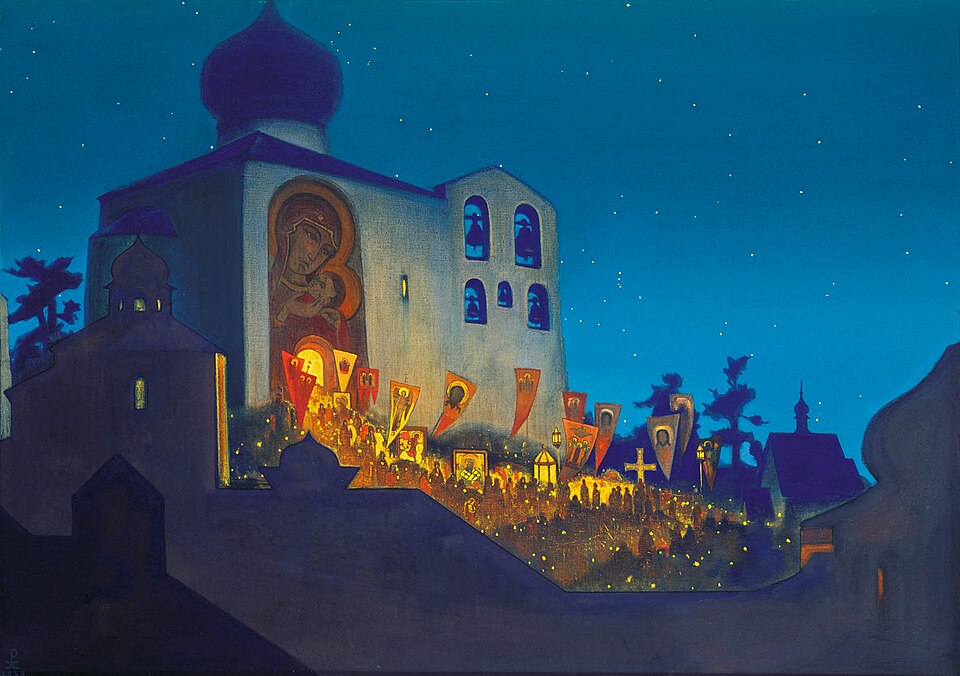
Nicholas Roerich was born on October 9, 1874, in Saint Petersburg, Russia, into a comfortable upper‑middle‑class family where art and culture were part of daily life. His father, Konstantin Roerich, was a respected lawyer and notary, and his home often hosted prominent writers, artists, and scientists who inspired the young Roerich’s curiosity for the world. From early childhood, he was drawn to drawing and natural history, collecting prehistoric artifacts, coins, and plant specimens while still a boy. In 1893, honoring his father’s wish that he study law, Roerich enrolled simultaneously at St. Petersburg University’s law faculty and at the Imperial Academy of Arts to pursue his passion for painting, an arrangement that shaped his dual interests in legal studies and artistic expression.
Formative Years in Saint Petersburg
At the Imperial Academy of Arts and in university lecture halls, Roerich absorbed a rich blend of classical artistic training and scholarly depth. The vibrant cultural scene of Saint Petersburg in the 1890s introduced him to vital artistic currents and thinkers who influenced his formative years. He met influential figures in Russian art and music, broadening his appreciation for creative expression in various disciplines. These formative experiences laid the groundwork for Roerich’s lifelong synthesis of scholarly insight and artistic innovation.
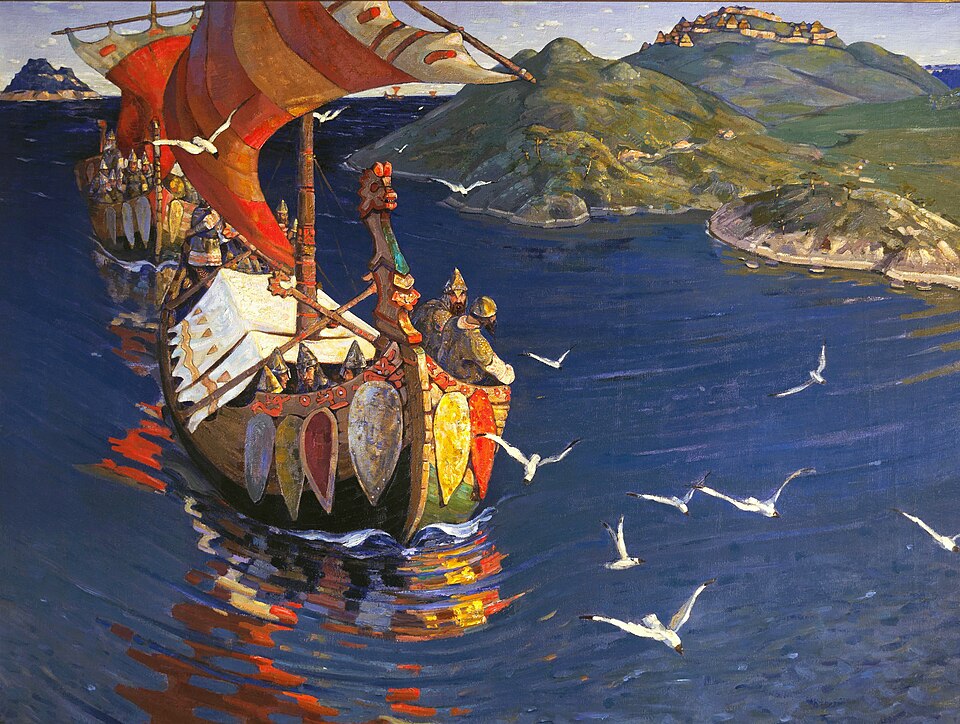
As a young adult, Roerich began associating with key figures in Russian cultural circles, including critics and composers who supported the burgeoning Russian avant‑garde. These encounters enriched his worldview and steered him toward exploring themes that blended history, spirituality, and myth. By his early twenties, Roerich was already contributing to exhibitions and artistic discussions in Russia’s major cultural centers. His education in both law and art uniquely prepared him for a life that bridged practical engagement with intellectual and creative pursuits.
Roerich’s early life was marked by a dynamic interplay between formal training and personal exploration, setting the stage for his later achievements in painting, philosophy, and cultural advocacy. His deep connection to Russian history and archeology, kindled in Saint Petersburg and strengthened through his academic years, would later inform his evocative landscapes and symbolic artistic vision.
A Painter of Epic Visions
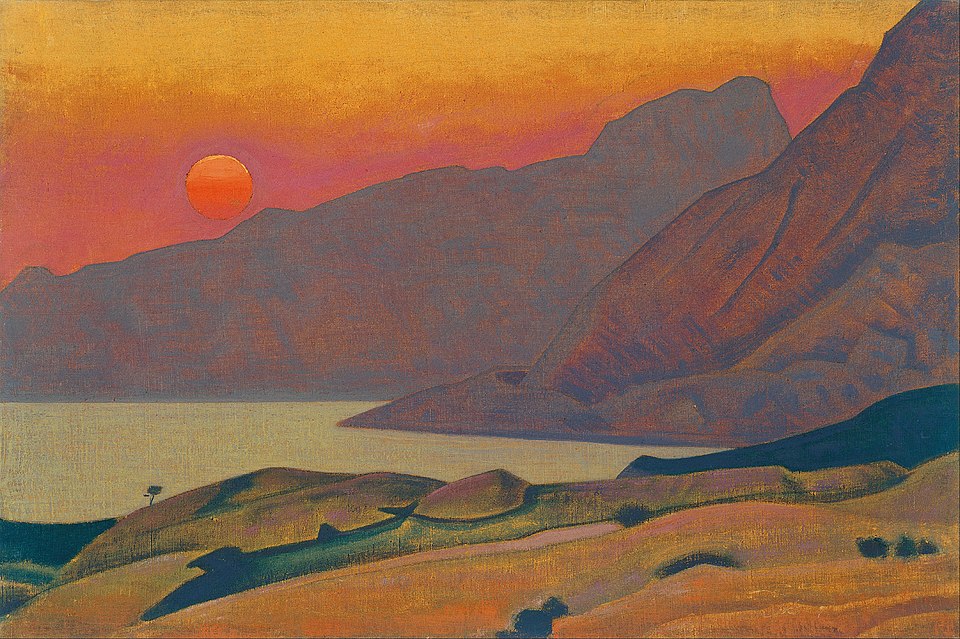
Nicholas Roerich’s art emerged at the crossroads of Symbolism, national romanticism, and deep mythic resonance. His early works captured the epic sweep of Russian folklore, ancient rites, and legendary figures, establishing him as a painter whose canvases carried historical weight and emotional depth. Roerich’s paintings from this period often featured vivid, bold colors and dramatic compositions that conveyed a sense of the sacred and timeless within the natural world. His artistic path was shaped by his rich personal encounters with cultural renewal movements in Russia before the upheavals of the 20th century.
The Symbolist and National Romantic Period
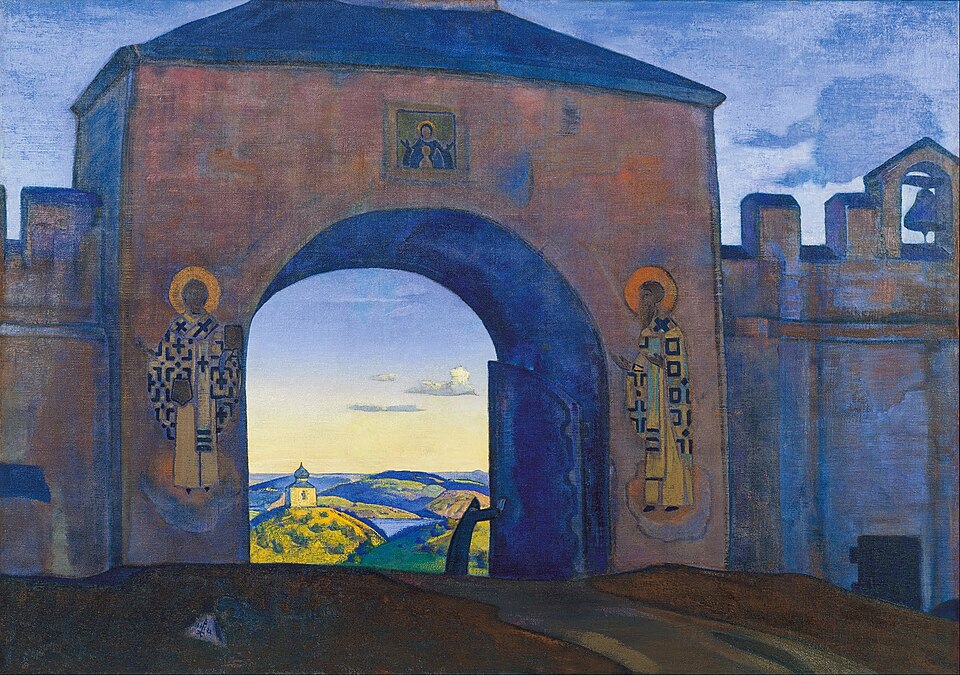
Around the turn of the century, Roerich’s artistic vocabulary expanded as he engaged with the Symbolist movement and nationalist currents in Russian culture. His works like Idols (1901) and The Forefathers (1911) revealed his affinity for deep spiritual themes and ancient traditions. Not merely decorative, these paintings expressed Roerich’s belief in the transcendental power of art to evoke humanity’s shared myths and sacred stories. He drew on legend, ritual, and archetype to create awe‑inspiring images that resonated with both Russian audiences and international art circles.
Roerich’s collaboration with Sergei Diaghilev, most famously on the 1913 premiere of The Rite of Spring with music by Igor Stravinsky, showcased his range beyond easel painting into theatrical design. His sets and costumes brought to life prehistoric themes with bold visual impact that pushed the boundaries of contemporary stage aesthetics. These contributions underscored his belief in art’s capacity to awaken deep emotional and cultural sensibilities in audiences.
Throughout this period, Roerich’s art remained rooted in a dreamlike exploration of time, memory, and myth, pushing viewers toward a heightened sense of cultural heritage and existential reflection. In scenes of rituals and historic figures, his work mirrored a longing for unity between past and present, nature and spirit. His vision was not merely nostalgic but sought to inspire reverence for the mysteries that define human experience.
Roerich’s early artistic maturity set the stage for the bold explorations that would follow, as he increasingly turned his attention toward the broader landscapes and spiritual horizons of Central Asia. His work continually echoed a profound respect for humanity’s creative legacy and an enduring belief in the power of visual art to transcend boundaries.
The Himalayan Quest
Nicholas Roerich’s fascination with the East and its spiritual traditions culminated in his legendary expedition across Central Asia beginning in the mid‑1920s. These journeys were not merely geographical but deeply spiritual and artistic odysseys that transformed his work and his worldview. From 1923 to 1928, Roerich and his family traveled through India, Tibet, Mongolia, and China, traversing rugged mountain passes and remote territories in pursuit of both artistic inspiration and philosophical insight.
Central Asian Expedition (1925–1928)
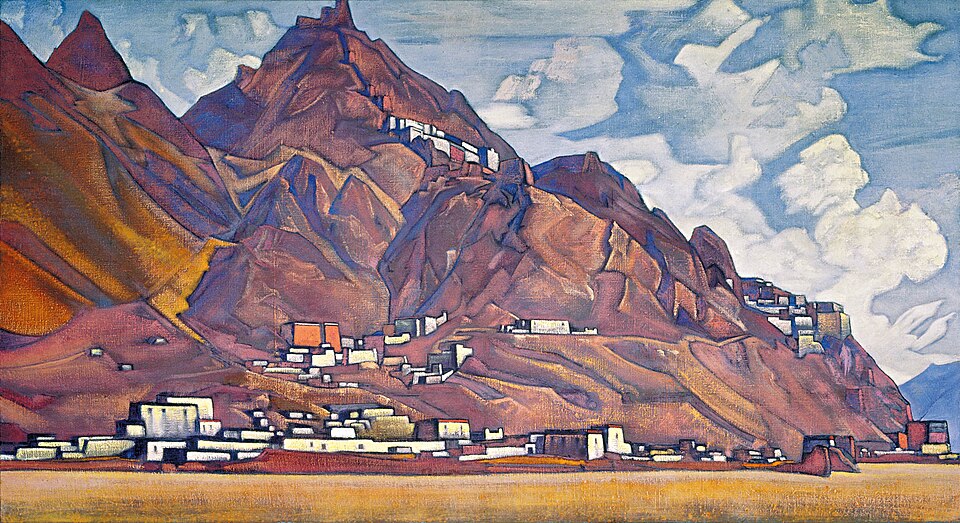
In December 1923, Roerich and his wife Helena Roerich relocated to Bombay, India, laying the groundwork for the Central Asian expedition that would define much of his later career. With a small team, Roerich traveled through thirty‑five mountain passes in the Himalayas and beyond, documenting terrain, cultures, and ancient traditions that few Westerners had seen firsthand. The expedition covered thousands of miles and yielded vibrant landscapes that captured the luminescent peaks, vast deserts, and sacred valleys of the region.
The journey was arduous and intense, requiring resilience against extreme altitudes and harsh conditions, but Roerich’s passion for the mountains fueled his efforts. His sketches and oil paintings from this era display radiant colors and dramatic compositions, reflecting both the physical majesty of the terrain and its spiritual resonance. In tandem with his artistic work, Roerich kept detailed written journals that chronicled every aspect of the cultures and geography he encountered.
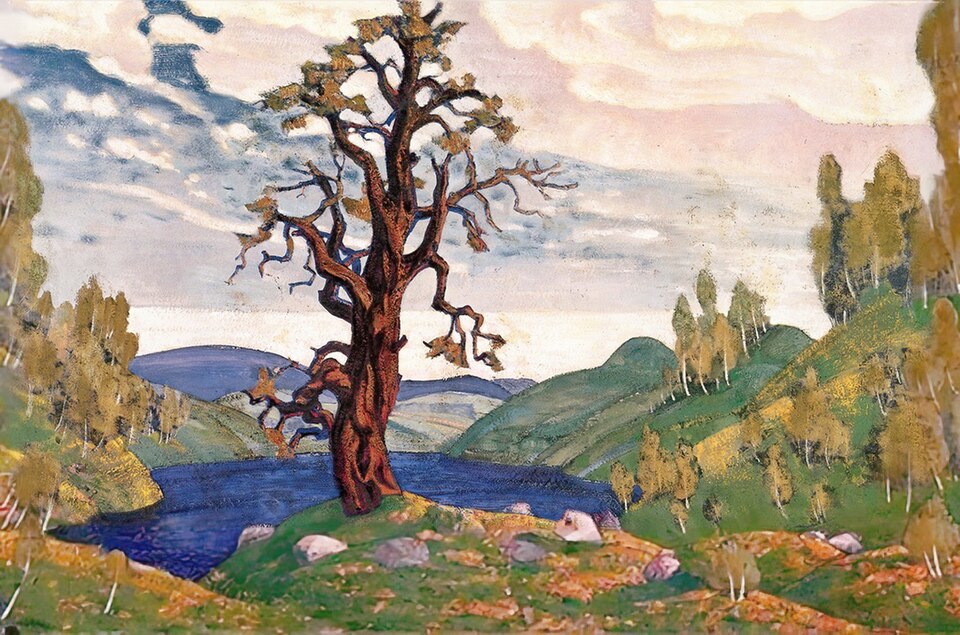
This Himalayan period also deepened Roerich’s engagement with Eastern spiritual traditions, which became a prominent influence on his philosophical outlook. The landscapes he painted were not just topographical studies but visual meditations on humanity’s relationship with the sacred and with nature itself. His Himalayan paintings remain among his most celebrated and evocative works.
By 1928, Roerich and his family had established a permanent home in Naggar, in the Kullu Valley of Himachal Pradesh, India, where he would live and work until his death. Here, surrounded by the same mountains that had drawn him for decades, Roerich continued to paint, write, and develop cultural initiatives deeply rooted in his vision of harmony between East and West.
The Roerich Pact and Peace Through Culture
Nicholas Roerich believed passionately that art and culture should be preserved as essential elements of human civilization, even amid conflict. This conviction led him to advocate internationally for the protection of cultural heritage, culminating in a landmark agreement known as the Roerich Pact. The pact articulated a vision in which every nation recognized the need to safeguard museums, monuments, educational and scientific institutions during both peace and war. Roerich’s commitment to this cause stemmed from his deep respect for history and human creativity.
Advocating for Cultural Heritage Protection
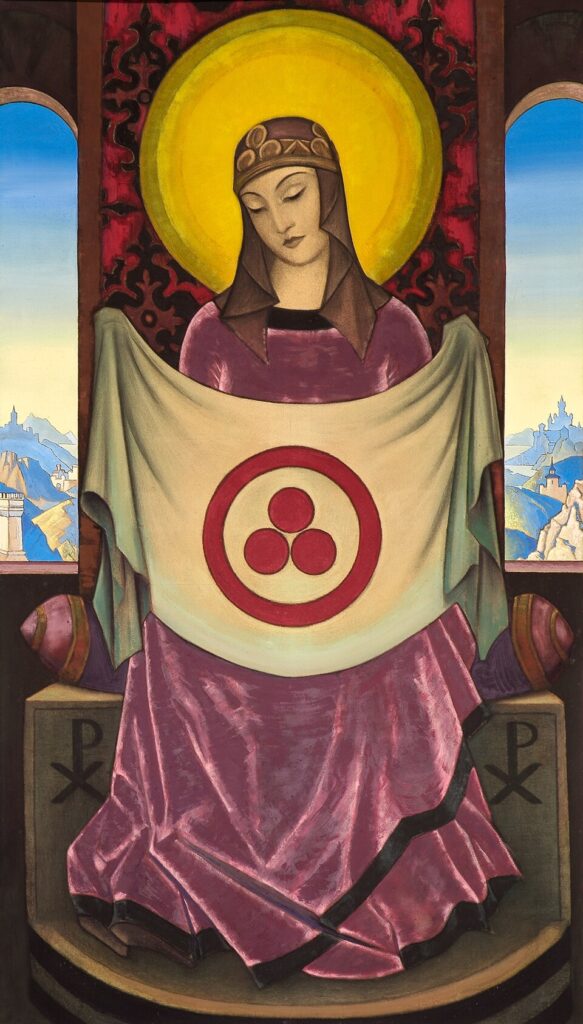
On April 15, 1935, the Roerich Pact was signed in the White House in Washington, D.C., with the support of President Franklin D. Roosevelt and representatives from twenty‑one American republics. The treaty, also symbolized by the Banner of Peace, called for international cooperation to protect artistic and scientific institutions and historic monuments. Roerich envisioned this pact as an enduring testament to humanity’s shared responsibility to preserve its cultural legacy.
The pact was groundbreaking for its time, emphasizing that cultural treasures belong not just to one nation but to all of humanity. It set the stage for later international efforts in cultural preservation, affirming that art and history should be sheltered from destruction. Roerich’s passionate advocacy highlighted the intrinsic value of culture as a force for peace and mutual understanding.
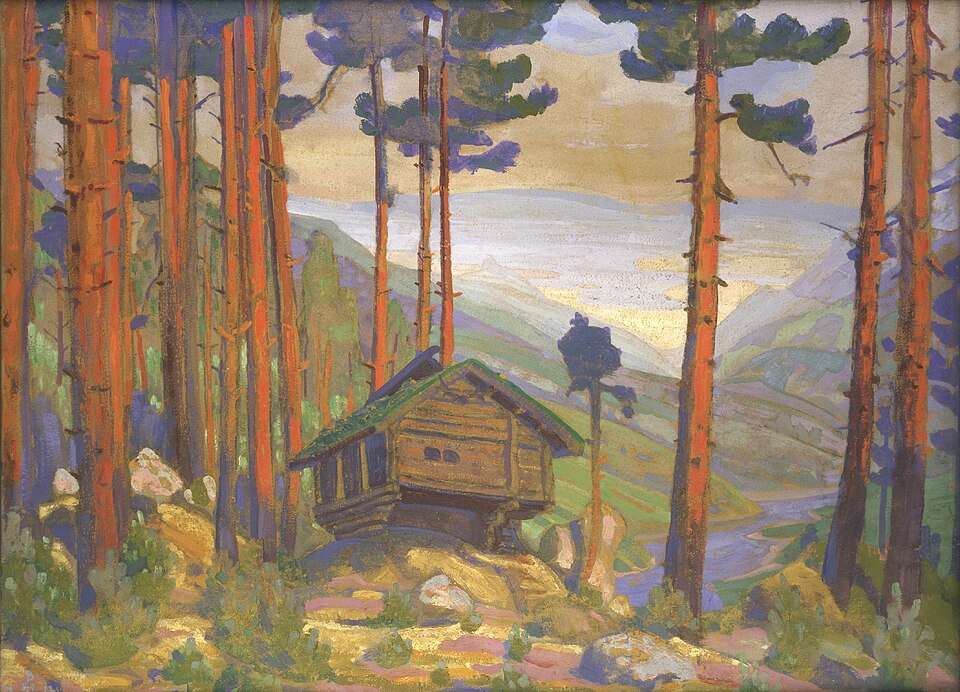
While focused on the Americas initially, the principles of the Roerich Pact resonated globally and underscored Roerich’s belief in cultural unity as a cornerstone of international stability. His work brought artists, scholars, and political leaders together in a rare and enduring alliance for the preservation of human heritage.
Roerich’s efforts in cultural protection reflected both his artistic sensibilities and his broader humanitarian ideals. To him, safeguarding culture was not a mere political act but a moral imperative grounded in respect for human creativity and historical continuity.
Mysticism, Agni Yoga, and Theosophy
The spiritual dimension of Nicholas Roerich’s life was inseparable from his artistic and intellectual pursuits. Alongside his wife Helena Roerich, he developed a philosophy known as Agni Yoga, synthesizing Eastern spiritual teachings with Western intellectual traditions. Agni Yoga was not a physical practice but a “living ethic,” aiming to guide individuals toward inner transformation and higher consciousness. It reflected Roerich’s belief in a universal spiritual heritage that transcended national and cultural boundaries.
Spiritual Teachings with Helena Roerich
Helena Roerich (née Shaposhnikova), born in 1879, was a talented pianist and prolific writer whose works included studies of Buddhism and translations of key Theosophical texts. Together, the Roerichs founded the Agni Yoga Society in London in March 1920, during their travels after leaving Russia in the aftermath of the 1917 Revolution. This society promoted ideas that emphasized spiritual development, ethical living, and the unity of all religions and cultures.
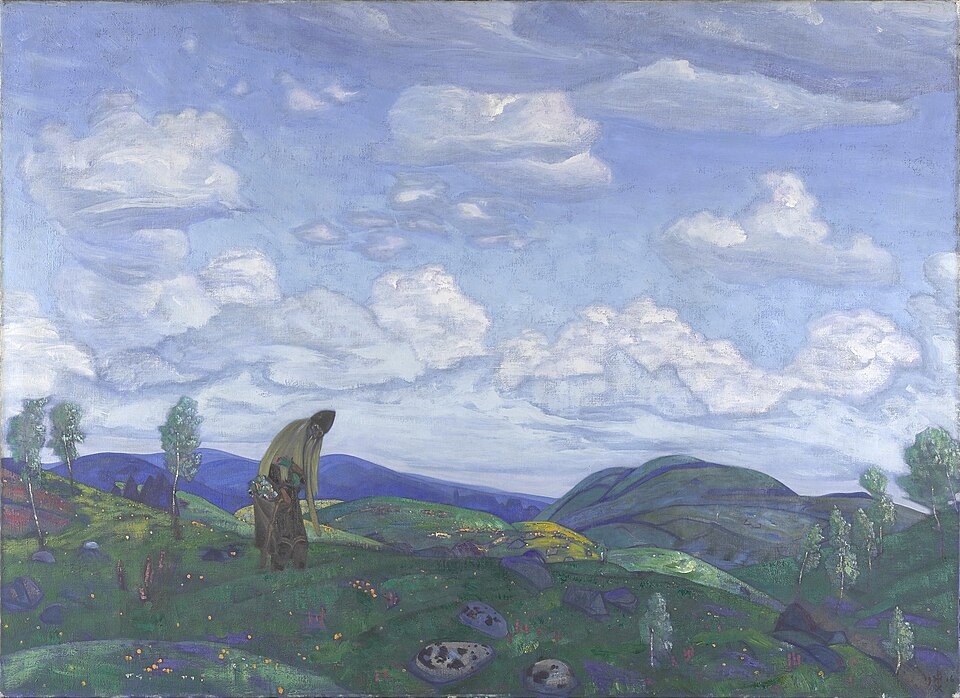
Agni Yoga teachings drew on ancient wisdom, blending concepts from Hinduism, Buddhism, and Western esoteric traditions into a cohesive philosophical framework. The goal was not merely intellectual understanding but the cultivation of a spiritually grounded way of life. Through lectures, writings, and artistic works, the Roerichs shared these teachings with a global audience.
The Roerichs’ spiritual philosophy informed not only their creative output but also their approach to cultural preservation and international cooperation. They believed that the spiritual renewal of humanity was tied to reverence for the past, respect for diverse traditions, and a shared pursuit of truth. Agni Yoga became a central tenet of Roerich’s legacy in the 20th century.
Artistic Legacy and Global Recognition
Nicholas Roerich’s artistic legacy continues to resonate around the world through museums, collections, and cultural institutions dedicated to his work. His paintings—spanning landscapes, historical scenes, and spiritual visions—reflect a lifetime of exploration and creative intensity. More than 7,000 works attribute to him, with hundreds housed in public and private collections, testifying to his enduring influence.
Museums, Institutions, and Continued Influence
The Nicholas Roerich Museum in New York City preserves and exhibits over 200 of his paintings, inviting visitors to experience his unique artistic vision in a dedicated space. Founded initially in the 1920s as part of the Master Institute of United Arts, the museum underscores Roerich’s role not only as a painter but also as an advocate for arts education. His style, characterized by luminous color and evocative compositions, remains a touchstone for students of spiritual and visionary art.
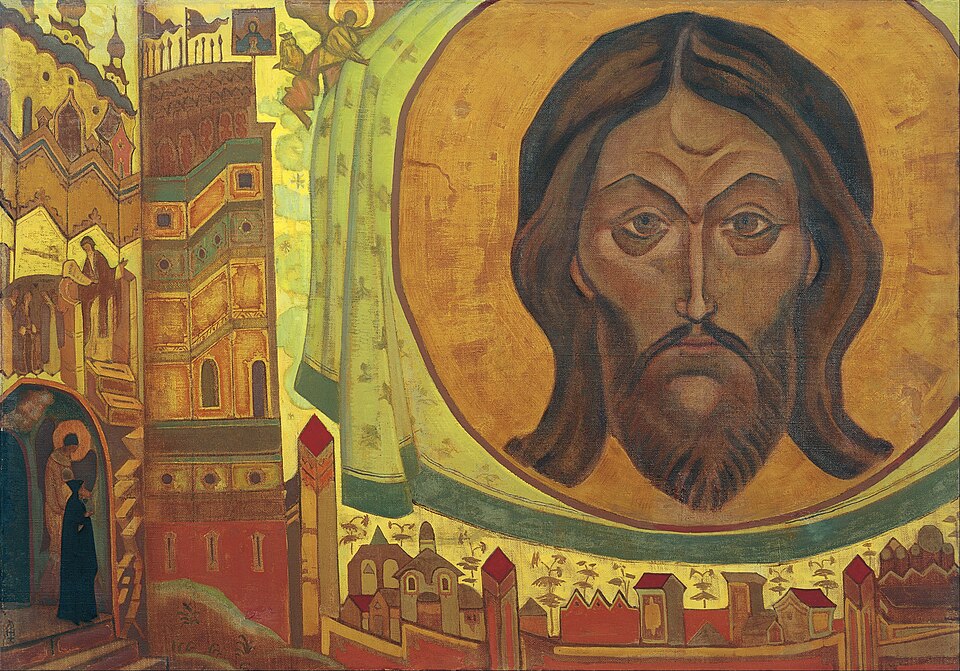
Roerich’s influence also extends to institutions in India and Russia, where his work is celebrated for its cultural depth and philosophical resonance. The Roerich Estate in Naggar, Himachal Pradesh, where he spent his final years, is a center for visitors and scholars interested in his life and thought. Across continents, Roerich’s art continues to inspire reverence for nature, history, and the unity of human creativity.
Throughout the 20th and into the 21st century, Roerich’s legacy has been reinterpreted through exhibitions, scholarship, and cultural dialogues that honor his contributions to art and human understanding. His belief in the power of culture and spirituality to elevate humanity endures in the work of artists and thinkers who draw on his vision of harmony and beauty.
Final Years and Philosophical Reflections
Nicholas Roerich spent his later years immersed in the Himalayan landscape he so deeply admired, continually producing art and nurturing cultural initiatives. After years of travel and creative output, he made Naggar, in the Kullu Valley of Himachal Pradesh, India, his permanent home around 1928. Here, surrounded by rugged peaks and serene valleys, Roerich found the environment that most reflected his inner aspirations and artistic ideals.
Death in the Kullu Valley and Enduring Messages
Roerich passed away on December 13, 1947, at the age of 73, and his body was cremated in accordance with local customs, his ashes laid to rest on a mountainside overlooking the landscape that had inspired so much of his work. His artistic and philosophical legacy continued through his writings, paintings, and the institutions he helped establish, influencing generations of artists and thinkers around the globe.
Roerich’s final years were marked by sustained creativity and reflection, as he explored the interconnectedness of culture, spirituality, and human destiny. His belief in unity through cultural preservation, spiritual exploration, and artistic expression remained central to his worldview until the end. Roerich’s life stands as a testament to the potential for art and cultural engagement to elevate human consciousness.
In the decades after his passing, Roerich’s teachings and works have continued to attract scholars and admirers dedicated to understanding his multifaceted contributions. His synthesis of Eastern and Western thought, along with his devotion to cultural protection, marks him as a figure whose influence transcends time and geography.
Key Takeaways
- Nicholas Roerich was born October 9, 1874, in Saint Petersburg and trained in both law and art.
- He became renowned for Symbolist and epic landscape paintings rooted in myth and history.
- His Central Asian expedition (1923–1928) shaped his philosophical and artistic vision.
- The Roerich Pact (1935) established an international framework for cultural preservation.
- Roerich died on December 13, 1947, in Naggar, India, leaving a lasting cultural legacy.
Frequently Asked Questions
- Who was Nicholas Roerich?
Nicholas Roerich was a Russian painter, philosopher, writer, and cultural advocate born in 1874. - What is the Roerich Pact?
The Roerich Pact, signed in 1935, was a treaty promoting protection of cultural heritage worldwide. - What is Agni Yoga?
Agni Yoga is a spiritual philosophy developed by Nicholas and Helena Roerich emphasizing ethical living and inner transformation. - Where did Roerich spend his final years?
Roerich lived his later life in Naggar, Kullu Valley, India, where he continued to paint and write. - What museums showcase Roerich’s work?
The Nicholas Roerich Museum in New York City prominently displays his paintings and archives.