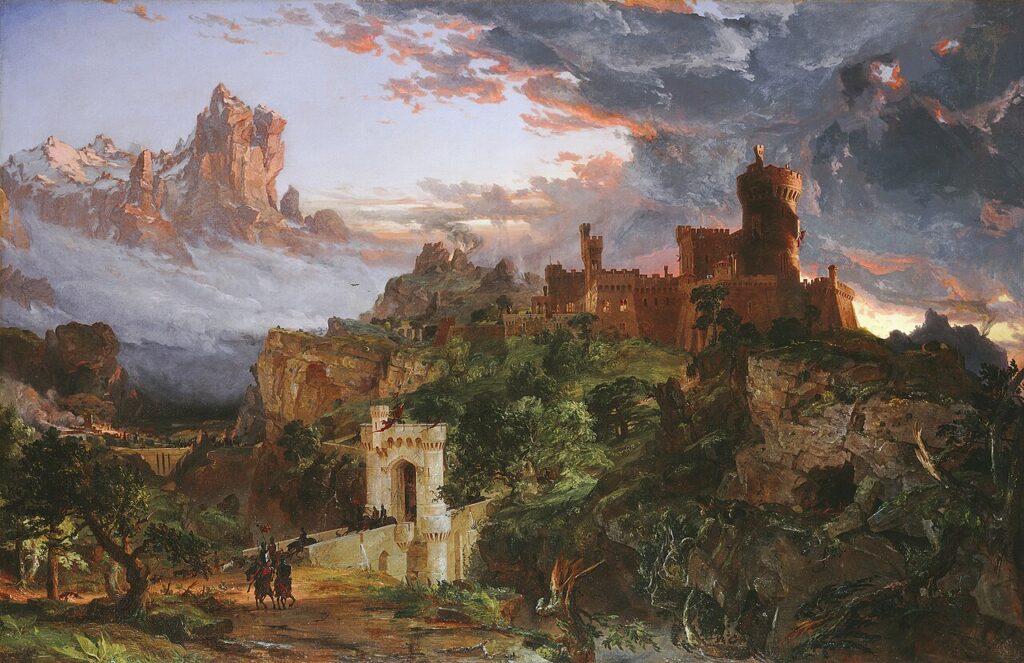
Jasper Francis Cropsey stands as one of the defining figures in American landscape painting, a man whose work captured the spirit of a young and growing nation. Born on February 18, 1823, on Staten Island, New York, he rose to prominence during a time when Americans were searching for cultural identity. His paintings, rich with color and detail, offered more than scenery; they provided a vision of America as a place of natural beauty and divine order. Even today, his work continues to draw admiration for its clarity, warmth, and sense of purpose.
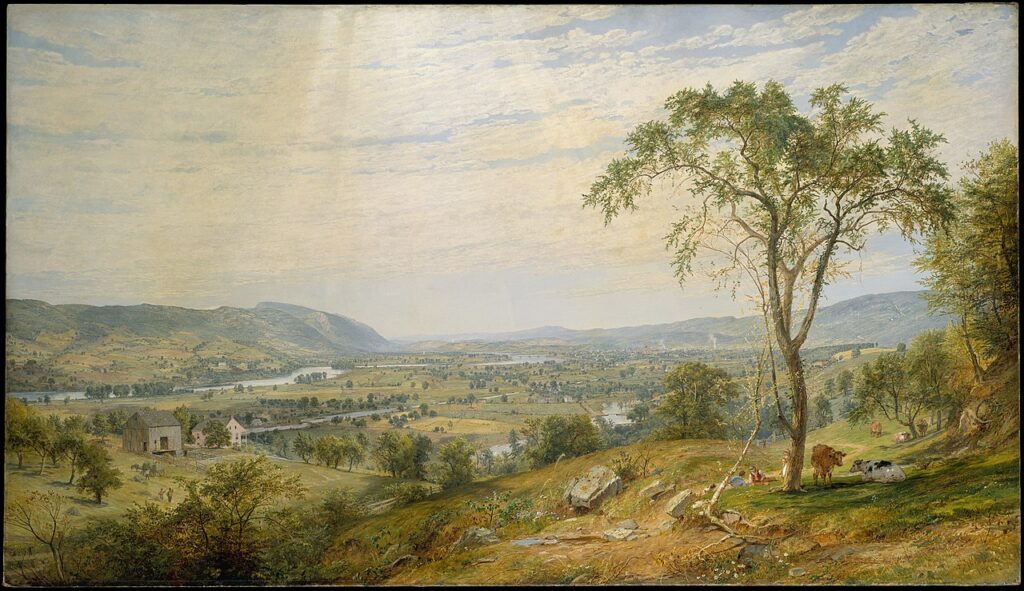
Cropsey became closely associated with the Hudson River School, a group of painters active in the mid-19th century who emphasized the beauty and moral significance of the American landscape. These artists believed that nature reflected God’s hand, and their paintings often carried a quiet spiritual message. Cropsey embraced this philosophy fully, creating works that felt both grounded in reality and elevated in meaning. His landscapes were not just views but statements about the value of the land itself.
A Painter Who Defined America’s Autumn Landscape
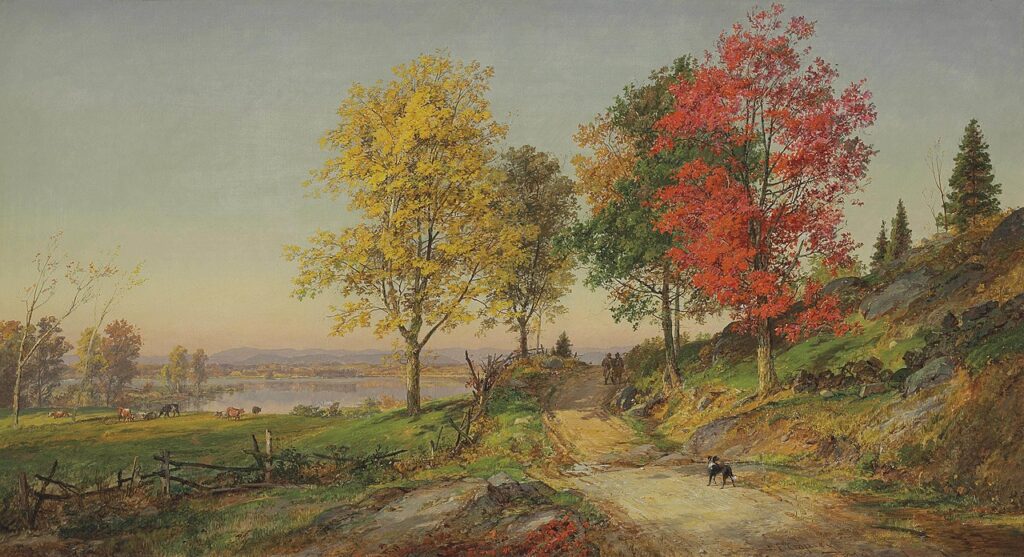
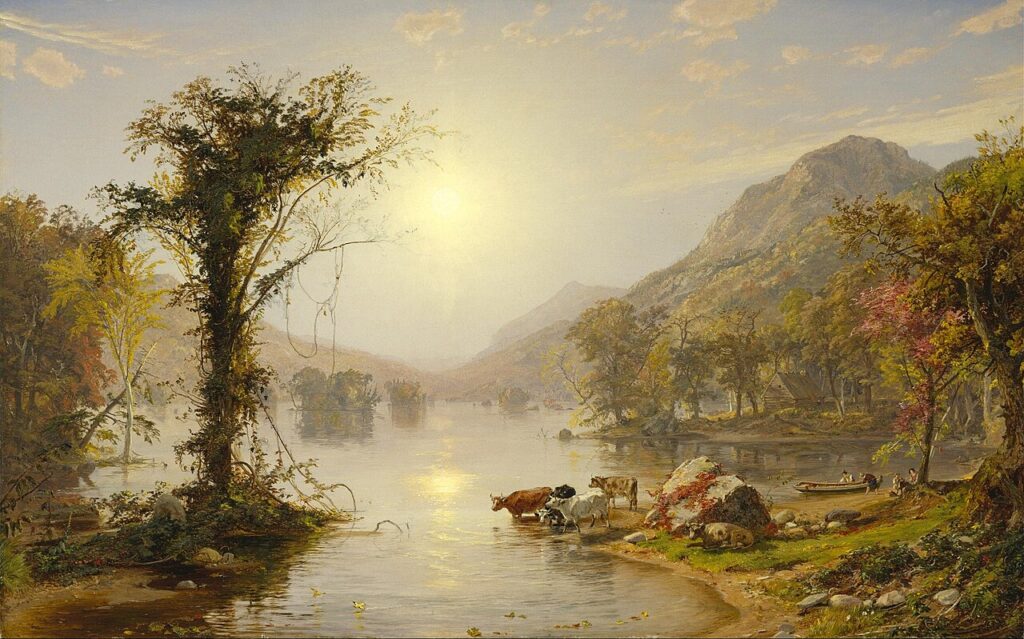
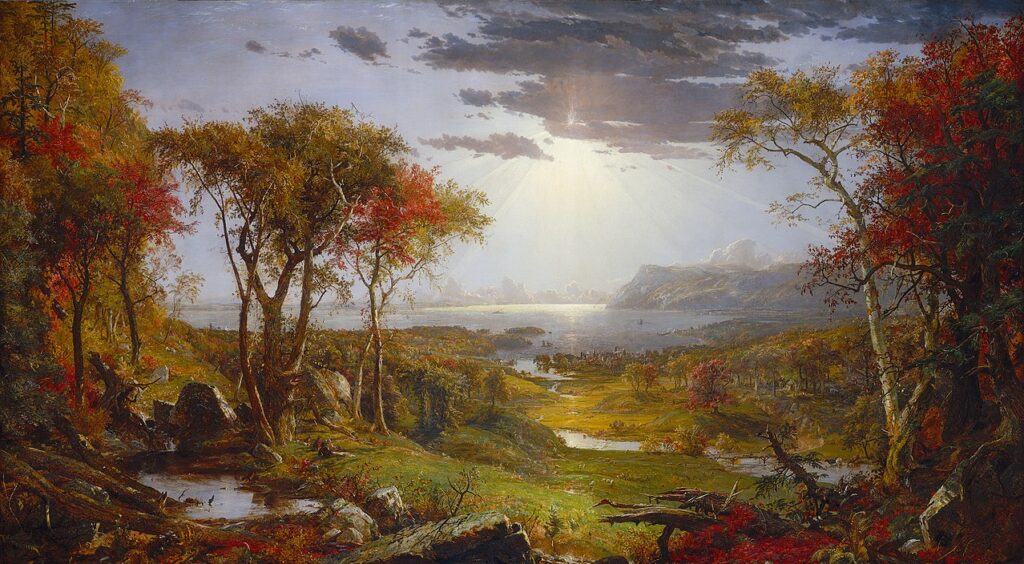
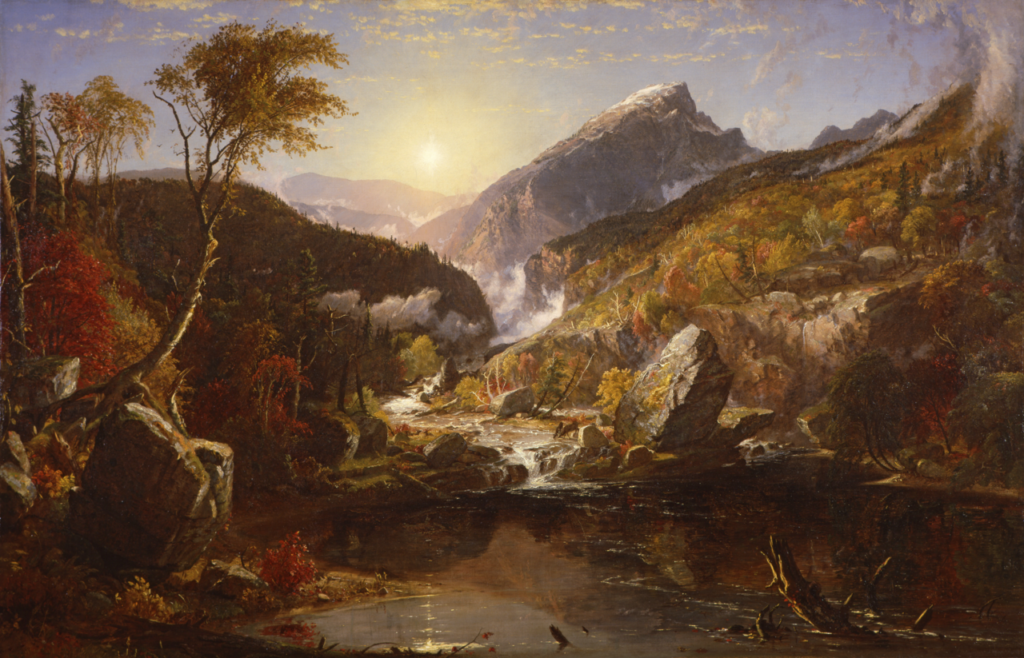
What made Cropsey especially distinctive was his focus on autumn, a season he believed revealed the true richness of the American environment. He argued, particularly during his travels in Europe, that American fall foliage was unmatched in its intensity. His paintings became a kind of visual proof, filled with glowing reds, oranges, and yellows that seemed almost lit from within. This bold use of color helped him stand out among his contemporaries.
In addition to painting, Cropsey trained and worked as an architect, which influenced the structure and balance of his compositions. His understanding of form gave his landscapes a sense of order that viewers could feel, even if they could not immediately explain it. This blend of artistic sensitivity and architectural precision defined his career. It also ensured that his work would remain recognizable and respected long after his lifetime.
Early Life and Background
Jasper Francis Cropsey was born into a modest family on Staten Island, New York, an area that would later influence many of his artistic choices. As a child, he was often in poor health, which limited his ability to engage in physical activities. This circumstance led him to spend more time indoors, where he began drawing as a way to pass the time. These early sketches laid the foundation for what would become a lifelong passion for art.
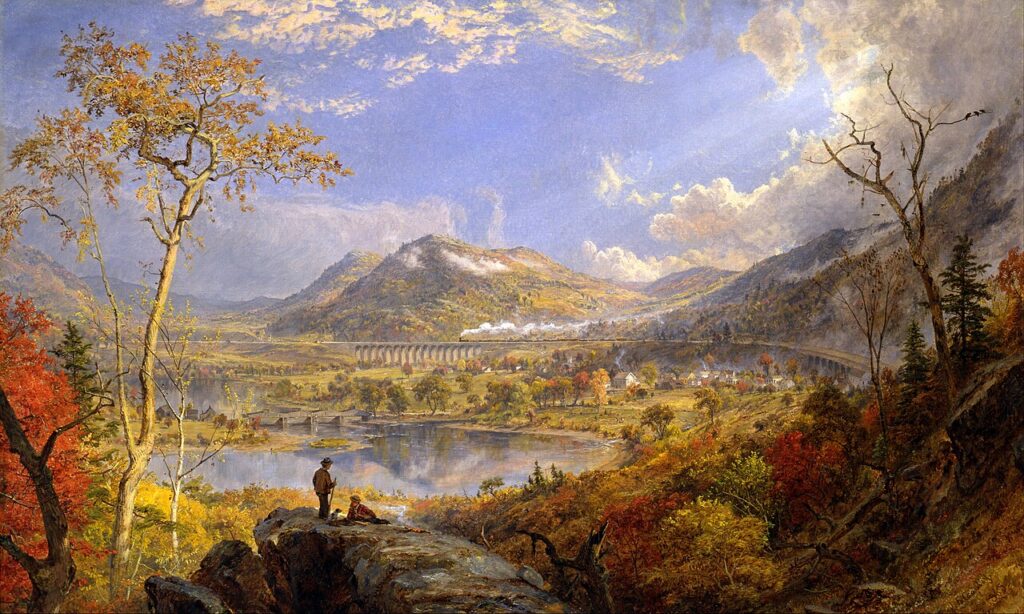
His surroundings played a quiet but important role in shaping his artistic eye. Staten Island in the early 19th century offered a mix of rural landscapes, open skies, and coastal views. Cropsey absorbed these scenes during his youth, storing visual impressions that would later appear in his paintings. Though not formally trained in art at a young age, he developed his skills through observation and practice. This self-directed learning approach was common among artists of his era.
From Staten Island Roots to Artistic Ambition
Despite his artistic interests, Cropsey initially pursued a more practical career path by studying architecture. He apprenticed under architect Joseph Trench in New York City, gaining valuable training in drafting and design. This experience taught him discipline and precision, skills that would later benefit his painting. Architecture provided him with a stable foundation while he continued to explore his creative side.
Over time, however, his passion for painting grew stronger than his interest in architecture. By the early 1840s, he began to exhibit his artwork publicly, signaling a shift in his professional focus. His early works were well received, encouraging him to take painting more seriously. This transition marked the beginning of his journey from a trained architect to a dedicated landscape artist.
Transition from Architecture to Painting
Cropsey’s move from architecture to painting was gradual but decisive, shaped by both opportunity and inspiration. His architectural training gave him a unique advantage, allowing him to approach landscapes with a structured eye. He understood perspective, proportion, and spatial relationships in a way that set his work apart. These qualities helped him gain recognition early in his painting career.
In 1844, Cropsey exhibited at the National Academy of Design in New York, a significant milestone for any young artist at the time. This exposure brought his work to a wider audience and established him within the artistic community. Around this period, he became influenced by established landscape painters such as Thomas Cole and Asher B. Durand. Their emphasis on nature as a meaningful subject resonated deeply with him.
Choosing Art Over Structure
By the mid-1840s, Cropsey made the decision to pursue painting full time, leaving architecture behind as his primary profession. This choice was not without risk, as the art market could be uncertain. However, his growing reputation and confidence in his abilities supported the transition. His early paintings often depicted the American countryside with careful attention to detail.
On May 26, 1847, Cropsey married Maria Cooley, who would remain an important presence in his life. Their marriage coincided with a period of artistic growth and exploration. Maria supported his career, and together they would later travel abroad. This partnership provided both personal stability and creative encouragement during a pivotal time in his life.
European Travels and Artistic Growth
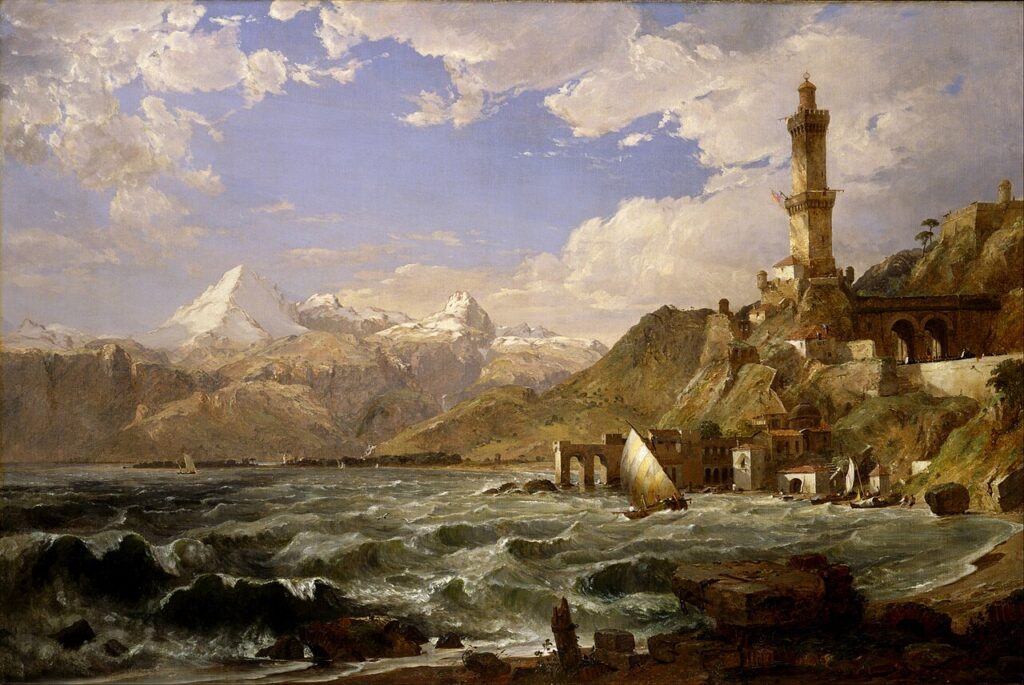
In 1847, shortly after his marriage, Cropsey embarked on his first trip to Europe, a journey that would last until 1849. Traveling through England, France, and Italy, he encountered the works of European masters firsthand. These experiences broadened his understanding of art and exposed him to different styles and techniques. He spent much of his time sketching landscapes and studying classical compositions.
Europe offered a contrast to the American wilderness he had grown accustomed to painting. The landscapes were shaped by centuries of human activity, with ruins, villages, and cultivated fields. Cropsey absorbed these differences while maintaining his belief in the unique beauty of American scenery. His sketches from this period reveal a growing confidence in his artistic voice.
Expanding Vision Across the Atlantic
Cropsey returned to the United States in 1849 with a refined approach to painting. His work began to show greater depth, improved composition, and a more nuanced use of color. These developments helped him gain further recognition among collectors and critics. His reputation continued to grow throughout the early 1850s.
In 1856, he traveled to England again, this time staying until 1863. During this second extended visit, he exhibited his work and engaged with the European art scene more directly. He also took the opportunity to promote American landscapes, often emphasizing their vivid seasonal changes. His time abroad strengthened his commitment to portraying the American environment as something special and worth celebrating.
Signature Style and Artistic Contributions
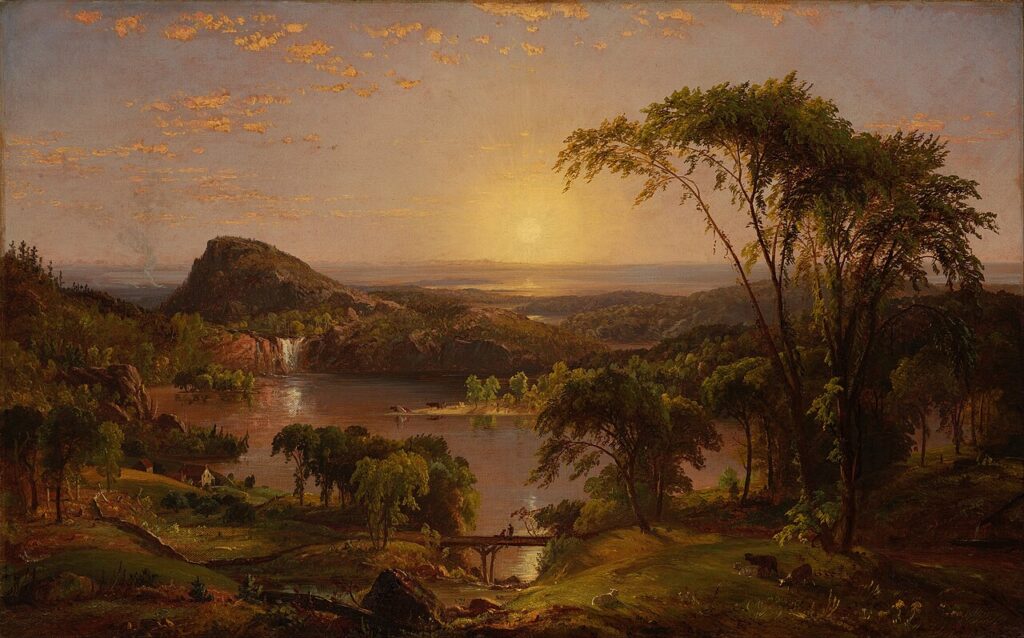
Jasper Francis Cropsey became best known for his vibrant autumn landscapes, which captured the changing colors of the American countryside with remarkable clarity. His paintings often featured glowing trees, reflective rivers, and expansive skies. These elements combined to create scenes that felt both realistic and elevated. His work stood out for its ability to balance detail with atmosphere.
Cropsey believed that American nature, particularly in the fall, surpassed that of Europe in beauty and intensity. He made this argument not only through words but through his art. His paintings served as visual evidence, showcasing the brilliance of American foliage. This perspective aligned with a broader sense of national pride during the mid-19th century.
Master of Autumn Light and Color
His technique involved careful layering of color to achieve depth and luminosity. He paid close attention to how light interacted with leaves, water, and sky. This attention to detail gave his paintings a lifelike quality that appealed to viewers. His architectural background also contributed to the strong compositional structure seen in his work.
Cropsey’s paintings were often compared to those of contemporaries like Frederic Edwin Church. While both artists shared an interest in landscape, Cropsey focused more narrowly on seasonal transformation. His dedication to autumn scenes made him a specialist in a field where many artists explored a broader range of subjects. This specialization helped define his legacy.
Later Years, Recognition, and Legacy
In his later years, Cropsey settled in Hastings-on-Hudson, New York, where he built a home known as Ever Rest in 1866. This residence became both a personal retreat and a source of inspiration for his work. He continued to paint, drawing on the surrounding landscape for subject matter. His commitment to his craft remained strong even as artistic trends began to change.
By the late 19th century, the popularity of the Hudson River School had declined. New artistic movements were emerging, and tastes were shifting away from detailed landscape painting. As a result, Cropsey’s work received less attention than it had earlier in his career. This decline affected both his reputation and his financial stability.
From Fame to Obscurity and Rediscovery
Cropsey died on June 22, 1900, at the age of 77, leaving behind a substantial body of work. For several decades after his death, his paintings were largely overlooked. However, in the mid-20th century, interest in American landscape art began to revive. Scholars and collectors rediscovered his contributions and recognized their historical value.
Today, Cropsey is once again regarded as an important figure in American art history. His home, Ever Rest, has been preserved as a historic site, offering insight into his life and work. His paintings are held in major museum collections, where they continue to be studied and admired. This renewed appreciation has secured his place in the broader narrative of American art.
Personal Life, Relationships, and Character
Jasper Francis Cropsey’s personal life was closely tied to his professional journey, with his marriage to Maria Cooley playing a central role. The couple married on May 26, 1847, and remained together throughout his life. Maria often accompanied him on his travels, including his trips to Europe. Their relationship provided stability and support during periods of artistic development.
The couple had two children, though historical records about their family life remain somewhat limited. Cropsey appeared to value family and home, as reflected in his decision to settle at Ever Rest. His home environment likely influenced his preference for peaceful, natural scenes. This connection between personal life and artistic subject matter is evident in many of his works.
The Man Behind the Canvas
Cropsey was known for his disciplined work habits and keen observational skills. He approached painting with a sense of purpose, carefully studying the natural world before translating it onto canvas. His architectural training reinforced this methodical approach. Colleagues and contemporaries respected his dedication and professionalism.
Some aspects of his personality, such as his deeper beliefs and inner motivations, remain less documented. Responsible historical speculation suggests that his focus on nature may have reflected a desire for order and meaning in a rapidly changing world. His work conveys a sense of calm and structure that aligns with this interpretation. While not all details of his character are fully known, his paintings offer valuable clues about the man behind them.
Key Takeaways
- Jasper Francis Cropsey was born on February 18, 1823, and became a leading American landscape painter.
- He was closely associated with the Hudson River School and its focus on nature’s spiritual value.
- His architectural training influenced the structure and precision of his paintings.
- He gained recognition for his vivid depictions of autumn landscapes.
- His work was rediscovered in the 20th century after a period of decline.
FAQs
- Who was Jasper Francis Cropsey?
He was a 19th-century American painter known for his detailed and colorful landscape paintings. - When was Jasper Francis Cropsey born and when did he die?
He was born on February 18, 1823, and died on June 22, 1900. - What style of art is he associated with?
He is associated with the Hudson River School of landscape painting. - What made his work unique?
His focus on autumn scenery and vibrant color set him apart from many contemporaries. - Did he have any other profession?
Yes, he was also trained and worked as an architect earlier in his career.