Gaetano Chierici was born on October 18, 1838, in Reggio Emilia, a city in the northern Italian region of Emilia-Romagna. He grew up in a household where art and culture were part of daily life, which had a lasting impact on his future as a painter. His family was steeped in artistic tradition—his uncle, Alfonso Chierici, was a noted painter associated with Romanticism, and this familial connection to the arts helped guide young Gaetano’s early interests. The cultural environment of Reggio Emilia in the mid-19th century, with its reverence for the arts and strong civic identity, provided fertile ground for his developing talent.
His upbringing coincided with a turbulent time in Italian history. The Italian unification movement was gaining steam, and national identity was becoming a serious concern for artists and intellectuals. This setting, while politically charged, created a renewed interest in art that reflected the everyday life of Italians—something Chierici would later embrace wholeheartedly. As a youth, he sketched daily life scenes around him, showing a keen observational eye that would later define his painting style. His early talent did not go unnoticed, and his family encouraged him to pursue formal training in the arts.
Reggio Emilia and the Chierici Legacy
Chierici’s familial support and exposure to the arts from an early age shaped his personal and artistic character. His uncle Alfonso Chierici’s Romantic style, though different in tone from Gaetano’s later realism, introduced him to serious studio work, historical themes, and emotional storytelling in paint. While Alfonso worked with dramatic biblical and mythological subjects, Gaetano would eventually turn his focus toward more grounded scenes of everyday life. The difference in approach underscored the generational shift in Italian art at the time—from grand narratives to intimate portrayals of virtue and domesticity.
Gaetano’s mother and father, while not artists themselves, were said to be cultured individuals who valued education and tradition. It was through their guidance that he received a classical education before fully turning to the arts. As the eldest of several siblings, Gaetano developed a strong sense of duty and responsibility early on, which would echo in the disciplined nature of his work. This balance of family influence, personal discipline, and civic environment laid the groundwork for his enduring career.
Education and Artistic Training
Gaetano Chierici’s artistic education began locally in Reggio Emilia under Prospero Minghetti, a professor known for training a generation of northern Italian painters. Under Minghetti’s instruction, Chierici learned fundamental skills in drawing, anatomy, and compositional structure, all grounded in academic tradition. Minghetti instilled in him a strong respect for clarity and order in art, which would remain hallmarks of Chierici’s mature style. Eager to build on this foundation, Chierici left Reggio for the more prestigious Academy of Fine Arts in Parma.
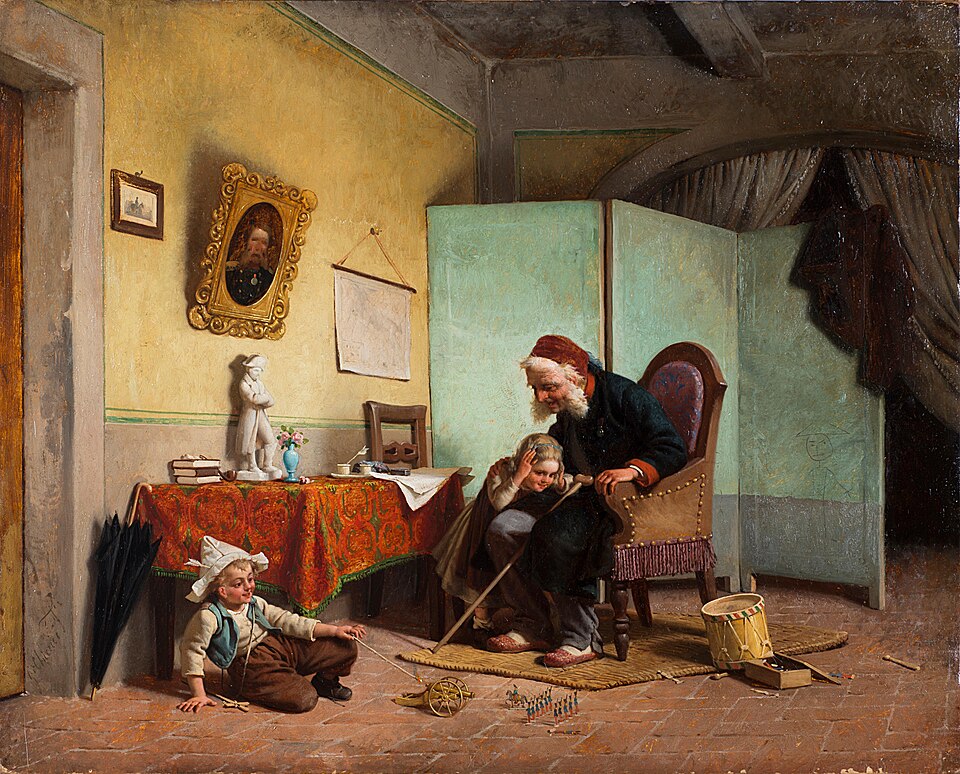
Parma’s academy in the mid-19th century was a center for traditional academic training, rooted in the study of classical forms and Renaissance masters. There, Chierici developed a deeper understanding of proportion, perspective, and chiaroscuro, further refining his technical abilities. While the academy emphasized religious and historical subjects, Chierici began to take interest in more human-centered themes. His skill in depicting expressions, gesture, and costume became particularly strong during this time, foreshadowing his future genre scenes.
From Parma to Florence: Formative Years
After his time in Parma, Chierici moved to Florence to study at the Accademia di Belle Arti di Firenze. Florence was not only the cradle of the Renaissance but also a dynamic 19th-century hub of artistic exchange. While continuing his academic training, he was exposed to works by painters like Stefano Ussi and Antonio Ciseri, who were experimenting with more emotional, human-focused subjects within a realist framework. Chierici absorbed these influences, though always within the disciplined style taught by the academies.
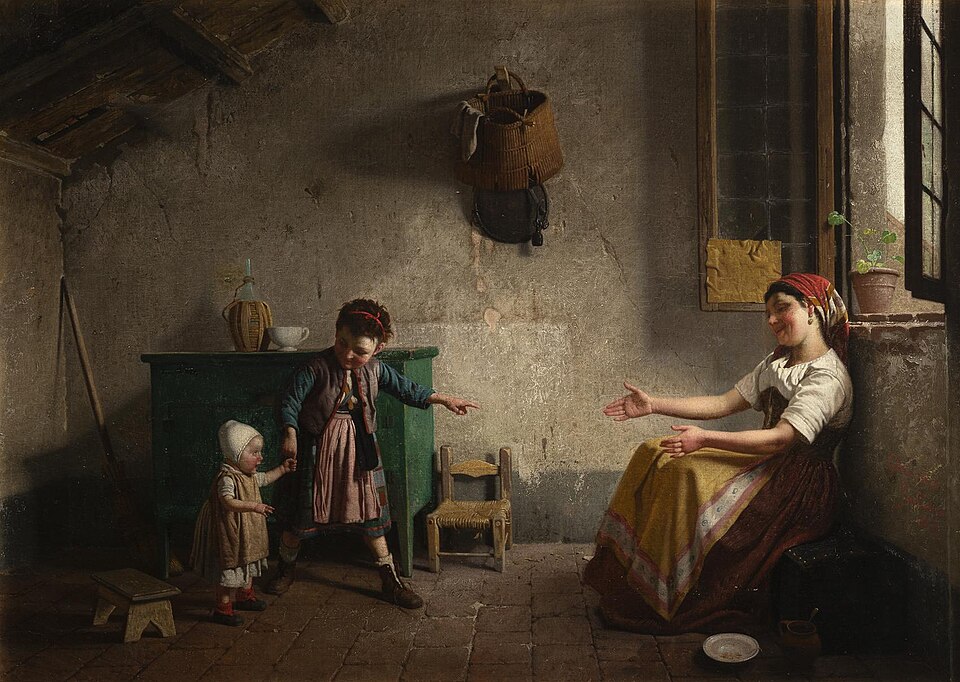
Florence also introduced him to broader intellectual and aesthetic debates of the time. Artists were questioning how to represent modern Italian life without resorting to either Romantic idealism or overly rigid classicism. Chierici began sketching genre scenes—everyday moments of childhood, family life, and rural work—with increasing frequency. By the late 1850s, he had completed his formal education and began exhibiting smaller works locally. Though not yet famous, Chierici had formed the essential tools of a career that would soon flourish.
Early Career and Emerging Style
Chierici’s early works were often religious or historical, echoing the subjects favored by his teachers. Paintings like La Morte di San Girolamo and Giulietta e Romeo reveal a careful attention to emotion, posture, and environment. Yet even in these dramatic scenes, viewers can see the beginnings of his interest in the domestic and the real. His brushwork grew more meticulous, and his narratives more intimate—he was turning away from grandiosity in favor of honest, everyday storytelling. By the 1860s, his subject matter narrowed in scope but widened in emotional and cultural depth.
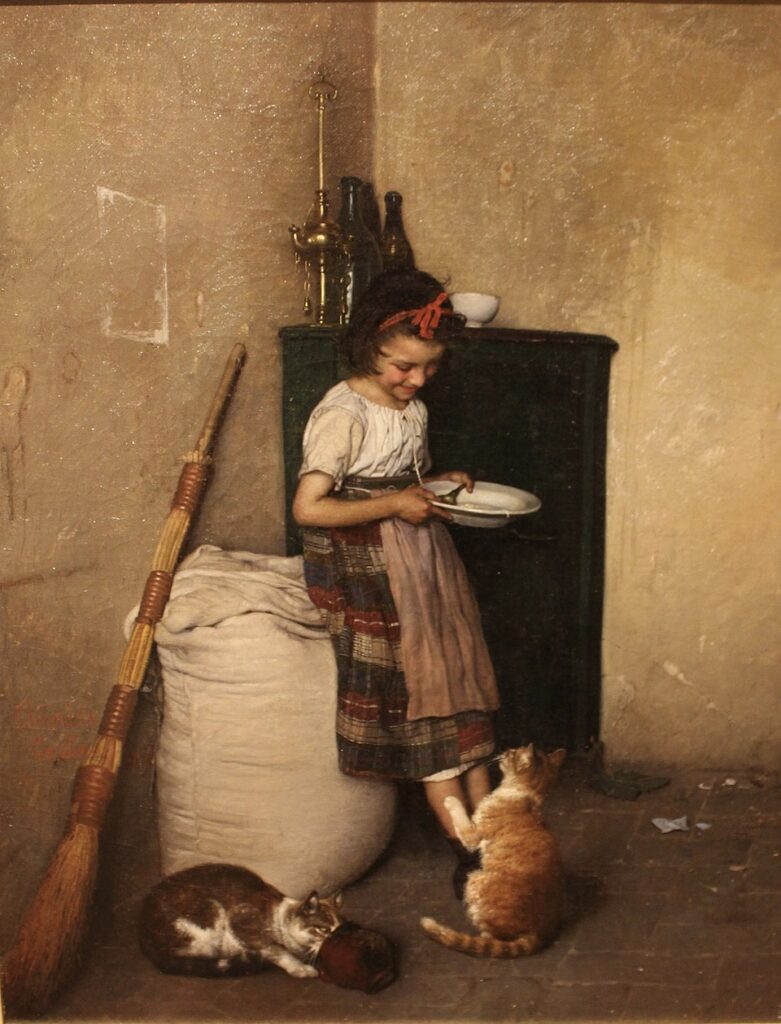
Chierici began focusing almost exclusively on genre scenes—narrative depictions of ordinary Italian life. These paintings were often set in humble interiors, with women, children, and elderly figures engaged in household work, schooling, or moral correction. Such themes were highly popular among the Italian middle class during the post-Unification period, as they reflected both national character and personal virtue. His attention to clothing, light, and interior space made his works relatable yet idealized in a conservative, moral tone. Collectors found this blend of reality and sentiment compelling.
Finding a Voice in Realism
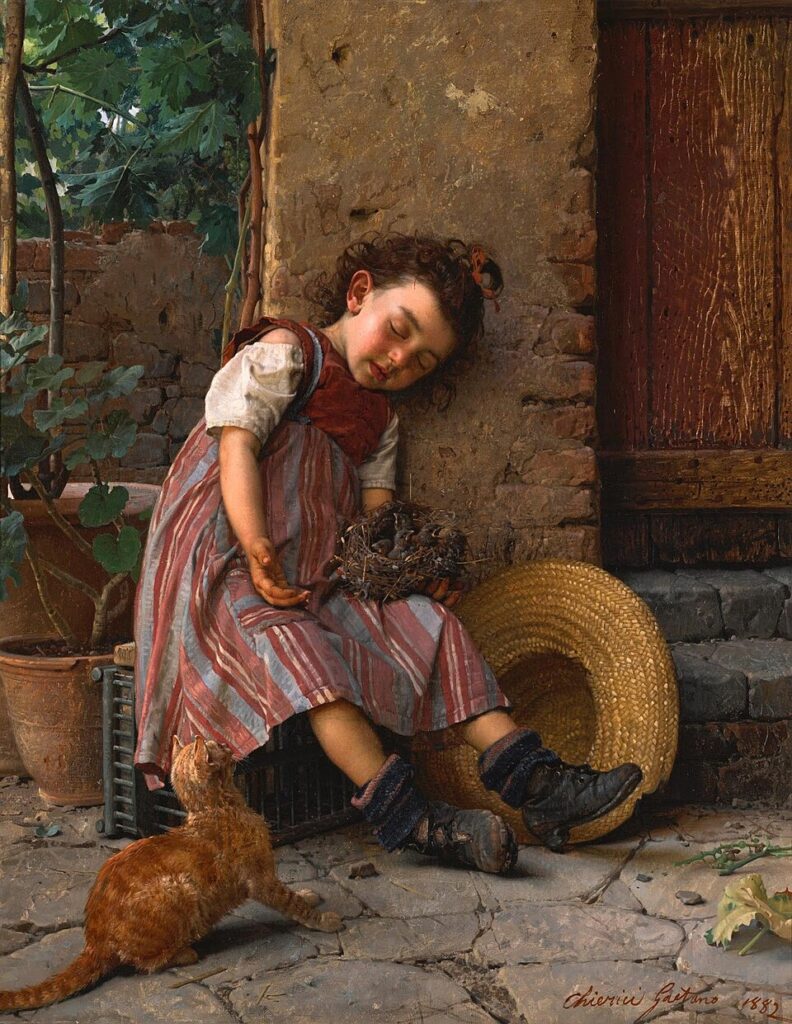
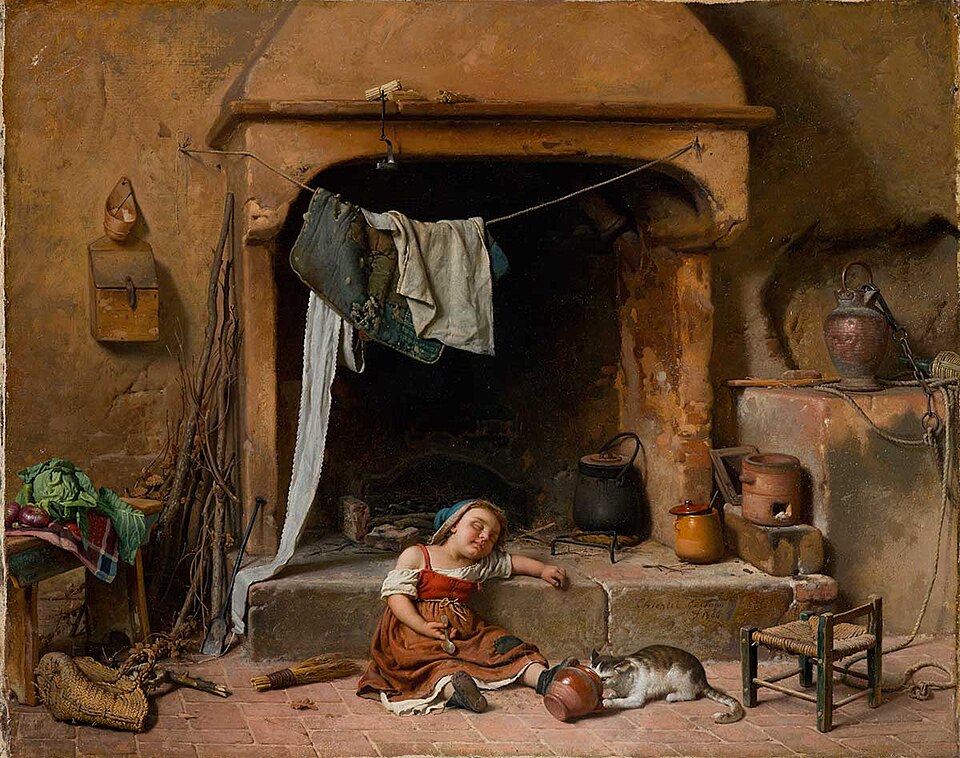
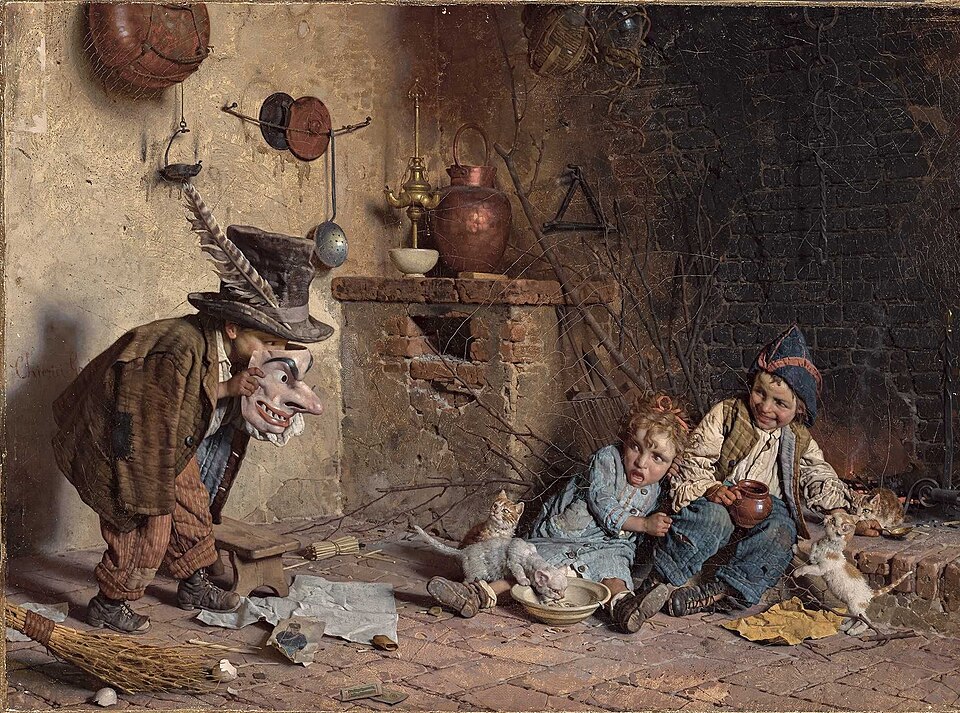
While many of his contemporaries pursued religious grandeur or political allegory, Chierici chose the quieter path of genre realism. He captured Italian life not through sweeping narratives but through single, meaningful moments. Paintings like Un buon rimprovero (A Good Scolding) and La lezione di lavoro (The Work Lesson) featured well-observed scenes of parents disciplining children or teaching them a trade. These works resonated with a society emphasizing duty, family, and moral order. His meticulous detail, from the shine of copper pots to the folds of worn aprons, added a documentary layer to his art.
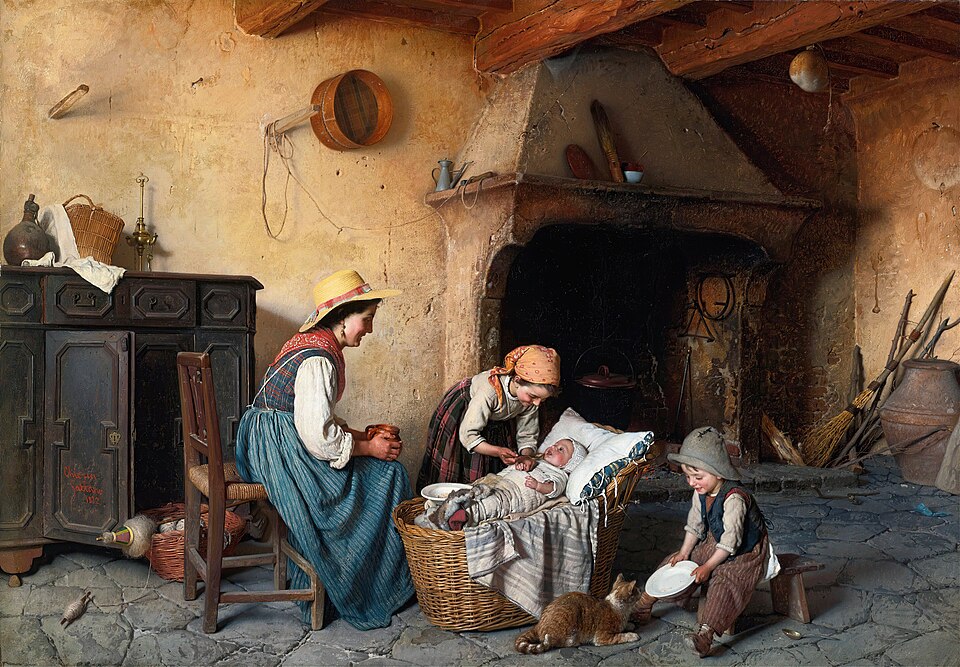
Chierici’s style by the 1870s had matured into a fully developed visual language. His palette remained earthy and warm, favoring ochres, umbers, and siennas that matched the rustic interiors he painted. The figures, while sentimental, avoided melodrama and were grounded in believable action and facial expression. He frequently painted children—often mischievous or tearful—framing them within narratives of virtue and correction. His rising popularity confirmed that Italian audiences valued this vision of national character expressed through the family hearth.
Mature Work and Public Recognition
The 1870s and 1880s marked the height of Chierici’s success, both commercially and critically. He exhibited regularly at national expositions in Milan, Florence, and Turin, and his works were purchased by collectors across Europe and North America. In 1875, he painted Il ritorno dal mercato (The Return from Market), a richly detailed domestic scene that solidified his reputation as a master of interior genre painting. The painting was praised for its storytelling, composition, and masterful lighting. Chierici’s status as a leading Italian realist was now secure.
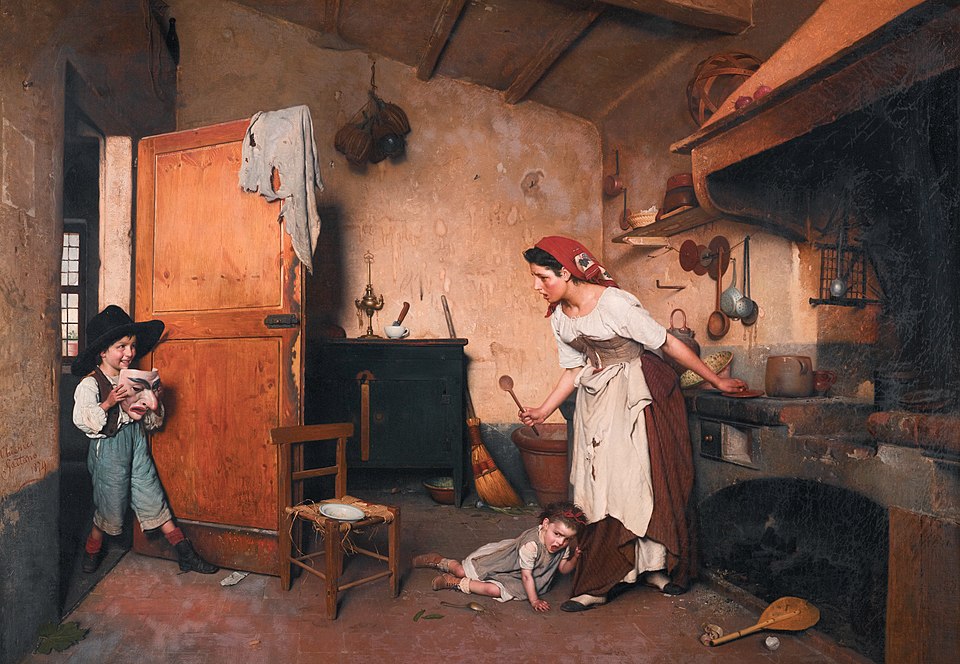
His works continued to focus on themes of virtue, discipline, and the quiet dignity of working-class life. He was especially admired for his ability to depict children with both affection and moral seriousness. Rather than idealizing childhood, he portrayed it as a stage for learning hard lessons and developing character. In paintings like Rimprovero materno (Maternal Scolding), he offered a window into a world where tradition and family duty shaped the future citizens of a still-young Italian nation. His works spoke to middle-class values of thrift, hard work, and obedience.
The Painter of Italian Domestic Life
Chierici’s signature style combined narrative richness with technical control. Every object in his interiors had purpose—a broom resting just so, a cat stealing a glance, a fire softly illuminating the room. These elements were not only decorative but served to deepen the mood and advance the story. His mastery of perspective and scale made his domestic scenes feel real, as though the viewer were standing just outside the frame. Unlike many academic painters of his time, Chierici never allowed technique to overwhelm meaning.
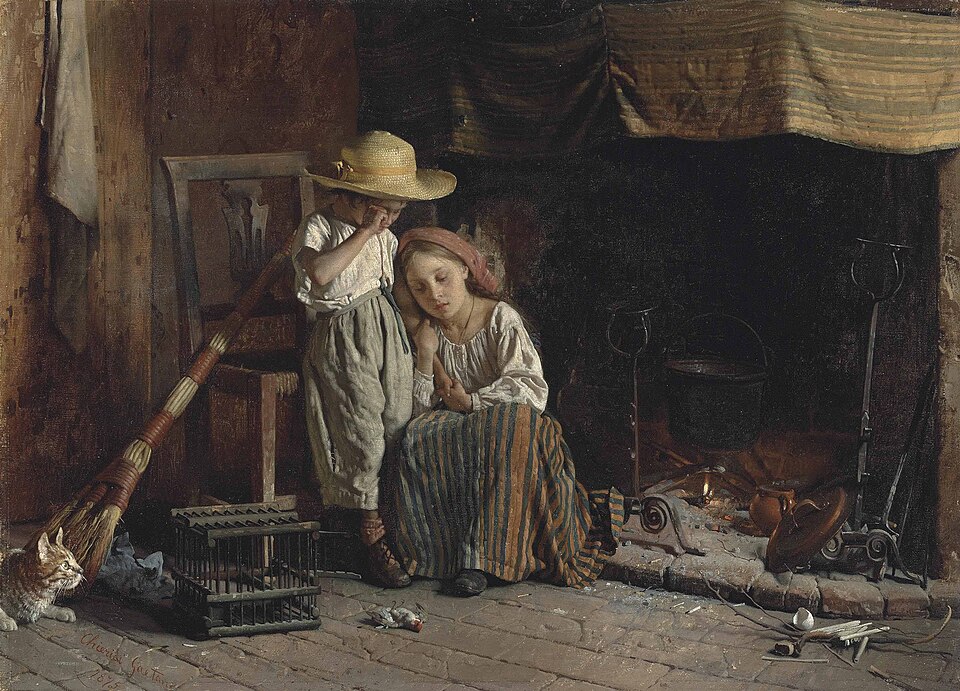
By the 1890s, he had become something of a household name among Italian collectors, and his paintings were sought after abroad. American and British collectors, fascinated with European domestic genre painting, acquired his works through galleries and auctions. His reputation, while never avant-garde, was solid and enduring. His themes of morality, virtue, and everyday labor found resonance across cultural lines, appealing to audiences who valued tradition and realism over modernist experimentation.
Role as a Cultural Figure and Civic Leader
As his artistic career continued to flourish, Chierici also took on responsibilities beyond the canvas. In 1900, he was elected Mayor of Reggio Emilia, a position he held until 1902. Though his term was brief, he was known for his measured and principled approach to civic leadership. His conservative values—emphasis on tradition, order, and cultural heritage—guided his administration. He promoted the arts and education as essential to civic virtue and national identity. His mayoralty reflected the same values present in his paintings: discipline, morality, and duty.
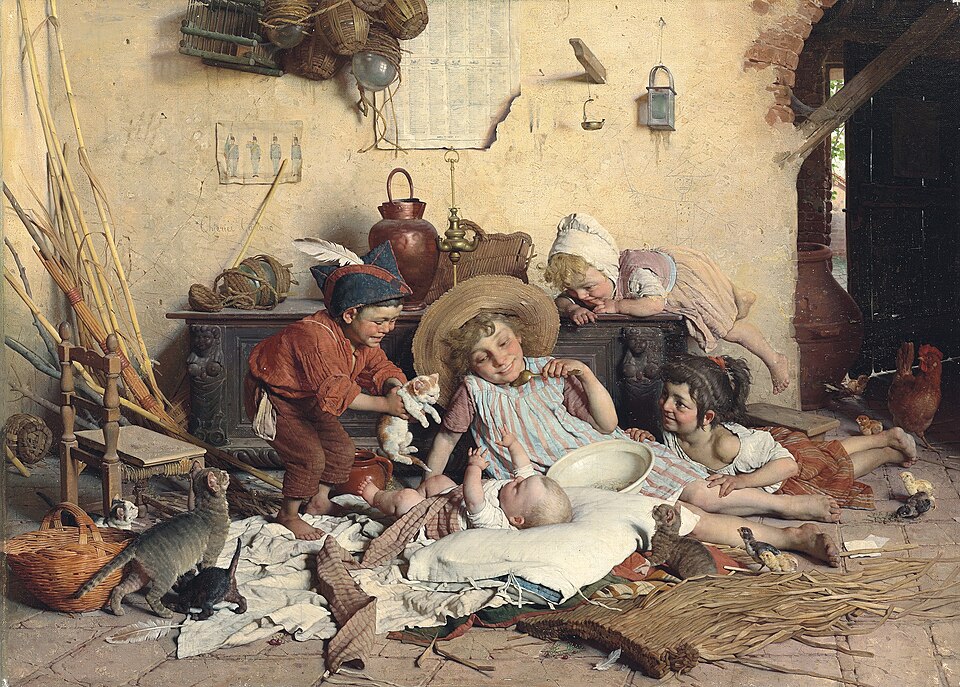
During this time, Chierici also became director of the Reggio Emilia Civic Museum, where he played a central role in preserving local history and promoting the visual arts. His efforts helped expand the museum’s collection and elevate its profile within Italy. He believed in the importance of regional culture within the broader framework of Italian unity. Under his leadership, the museum acquired important works, hosted educational events, and became a model for other civic institutions. His dual identity as artist and administrator revealed his commitment to cultural stewardship.
Mayor and Museum Director
Chierici’s civic engagement extended beyond titles; he saw art as essential to the moral education of the public. His curatorial choices at the museum emphasized works that communicated virtue, family, and historical continuity. He resisted trends that favored abstraction or political radicalism, believing that art should reflect enduring truths rather than fleeting ideologies. His views, while perhaps old-fashioned to some, earned him respect from peers who appreciated his consistency and integrity.
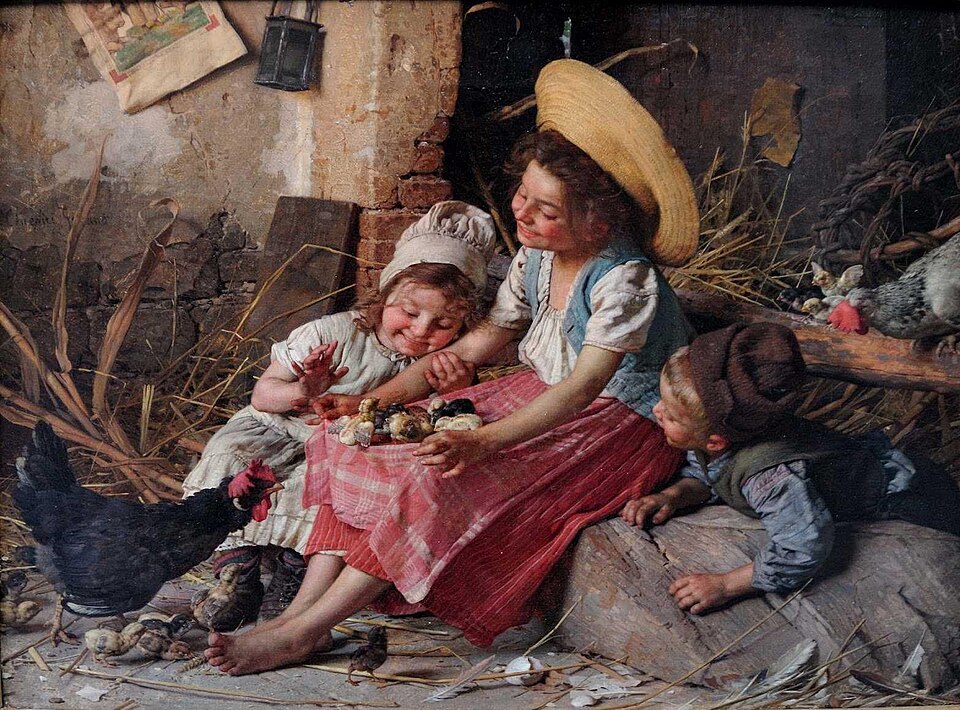
By the time he stepped down from public life in 1902, Chierici had left a deep imprint on his hometown. Streets, schools, and galleries in Reggio Emilia bear witness to his contributions both as an artist and as a civic figure. He returned to painting in his final years, producing a series of quiet, reflective works that continued his focus on domestic life. Gaetano Chierici died on March 2, 1920, leaving behind not just a body of paintings but a vision of Italy rooted in home, faith, and tradition.
Legacy and Artistic Impact
Gaetano Chierici’s contribution to Italian art lies not in revolution but in refinement. He perfected the genre scene in a way that elevated everyday domestic life to the level of high art. His devotion to technical accuracy and moral storytelling created works that resonated deeply with viewers, especially in post-Unification Italy. As artists increasingly turned to modernism, Chierici held firmly to the virtues of realism, providing a visual anchor to the cultural values of his time.
His influence extended to younger genre painters and illustrators of the early 20th century who admired his ability to capture mood and meaning within small, intimate settings. Though often overlooked by avant-garde movements, his legacy endured in homes, schools, and public institutions that favored art with a moral message. In many ways, his work paralleled the rise of the modern Italian middle class, whose tastes and concerns he captured with precision and warmth. His paintings became symbols of familial strength and national character.
The Enduring Appeal of Sentimental Realism
Interest in Chierici’s work waned somewhat in the early 20th century, as new art movements like Futurism and abstract expressionism took hold in Italy and beyond. Yet beginning in the 1990s, scholars and collectors began to re-evaluate his importance within the context of 19th-century Italian painting. Exhibitions at regional museums and retrospectives reintroduced his oeuvre to a new generation. Critics praised his command of light, texture, and composition, as well as his ability to tell stories with subtlety and restraint.
Today, his works are appreciated not just for their visual appeal but for what they reveal about Italian society during a critical period of nation-building. They offer insight into the values that shaped Italian homes—honor, discipline, faith, and familial duty. His refusal to chase fashion or ideology now reads as a virtue rather than a limitation. In a world that increasingly questions its roots, Chierici’s art reminds viewers of the enduring power of tradition and the beauty found in daily life.
Collecting Chierici: Museums and Market
Gaetano Chierici’s works are now housed in several major collections, particularly in Italy. His hometown of Reggio Emilia maintains a significant number of his pieces at the Palazzo dei Musei, including Un buon rimprovero and La lezione di lavoro. Milan’s Galleria d’Arte Moderna also features his work prominently, as do institutions in Florence and Rome. These paintings often occupy sections dedicated to 19th-century genre scenes, placed alongside works by contemporaries like Domenico Induno and Antonio Rotta.
In recent decades, his paintings have appeared regularly in auctions and private sales. Collectors in Italy, France, and the United States have shown strong interest in his genre scenes, especially those featuring children or domestic interiors. Works like Il ritorno dal mercato or La piccola sarta can command solid mid-tier prices, especially when they are in good condition and come with provenance. Auction houses such as Sotheby’s and Dorotheum have listed his works under their “European Paintings” or “19th Century Art” categories.
Chierici in Modern Collections
Chierici’s market appeal lies in the accessibility and warmth of his subject matter. His paintings tend to be smaller in size, which makes them attractive for private collectors and decorators seeking traditional European artwork. They also appeal to those interested in moral or religious themes, offering an alternative to the fragmented or abstract art that dominates many modern collections. As art tastes return to craftsmanship and meaning, his work has seen a quiet but consistent resurgence.
In addition to private sales, museum exhibitions and digital archives have brought renewed scholarly attention to Chierici. Online platforms such as Europeana and museum digital catalogs have made his work more accessible to students and art historians. His meticulous compositions and enduring moral themes continue to attract those looking to understand the heart of 19th-century Italian culture. In the world of Italian realism, Gaetano Chierici remains one of its most faithful and skillful chroniclers.
Key Takeaways
- Gaetano Chierici was born in 1838 in Reggio Emilia and died in 1920, leaving behind a legacy rooted in domestic realism.
- He trained at prestigious academies in Parma and Florence and refined a distinctive genre style focused on family and virtue.
- His mature work captured moral lessons through detailed, intimate scenes of Italian life, especially childhood and household themes.
- Beyond art, he served as Mayor of Reggio Emilia and director of its Civic Museum, promoting education and cultural tradition.
- His paintings are housed in major Italian museums and remain popular in the art market for their emotional clarity and moral appeal.
Frequently Asked Questions
- Where was Gaetano Chierici born and when did he die?
He was born on October 18, 1838, in Reggio Emilia and died on March 2, 1920, in the same city. - What style of painting is Chierici known for?
He is best known for his genre paintings, particularly domestic interior scenes that depict moral and family-centered narratives. - What are some of Chierici’s most famous works?
Notable works include Il ritorno dal mercato, Un buon rimprovero, and La lezione di lavoro. - Did Chierici have any roles outside painting?
Yes, he served as Mayor of Reggio Emilia from 1900 to 1902 and was director of the Civic Museum in the city. - Where can I see Chierici’s art today?
His works are displayed in museums in Reggio Emilia, Milan, Florence, and Rome, as well as in private collections internationally.