Frederick Arthur Bridgman was born on November 10, 1847, in Tuskegee, Alabama. His father, Dr. Bridgman, practiced medicine and provided a modest but stable life for the family. When Frederick was still a child, his father passed away, prompting the family to relocate to Brooklyn, New York. This move would significantly shape the young artist’s path, exposing him to a more dynamic cultural environment.
In Brooklyn, Bridgman began showing remarkable drawing skills and a strong interest in visual detail. By his teenage years, he secured a position as a draughtsman for the American Bank Note Company, where precision and technical skill were highly valued. This early employment honed his attention to detail and introduced him to the rigorous demands of professional art-making. He also enrolled at the Brooklyn Art Association, where he took his first formal art classes.
Childhood and Family Background
During this formative period, Bridgman encountered other aspiring artists and mentors who encouraged him to study abroad. The energy of post-Civil War New York offered exposure to European art trends, which were slowly gaining favor in American cultural circles. He was inspired by the idea of studying in Paris, the capital of the art world at the time. This dream began to shape his ambition and direct his career toward a higher artistic standard.
By the mid-1860s, he had resolved to leave America and pursue academic training overseas. Bridgman’s early experiences—ranging from his Southern upbringing to his exposure to industrial draftsmanship—created a foundation of discipline and visual precision. These qualities would become hallmarks of his mature work. In 1866, at just 19 years old, he boarded a ship for France and entered the next phase of his career.
Parisian Education and Artistic Transformation
When Frederick Arthur Bridgman arrived in Paris in 1866, he found himself in the heart of the 19th-century European art world. Paris at the time was bursting with intellectual vigor and artistic innovation, attracting students and masters from around the globe. Bridgman quickly enrolled at the École des Beaux-Arts, France’s premier art academy. There, he joined the studio of Jean-Léon Gérôme, one of the most influential painters of the era.
Gérôme was a leading figure in the Academic art tradition and was well-known for his meticulously detailed historical and Orientalist scenes. Under his instruction, Bridgman adopted a disciplined, realistic approach, mastering anatomy, perspective, and the careful application of paint. Gérôme’s influence was so strong that Bridgman’s early salon entries often mirrored his teacher’s thematic choices and technical style. But soon, Bridgman began to develop a voice of his own, blending academic rigor with a unique sensitivity to light and atmosphere.
Training Under Gérôme and the Académie des Beaux-Arts
As Bridgman’s confidence grew, so did his ambition to make a name for himself in Europe. In 1870, he exhibited a work at the prestigious Paris Salon, marking a significant milestone in his rising career. At the Salon, he was one of the few American artists to gain favorable attention from French critics, who admired his technical skill and increasingly exotic subject matter. This exposure helped build his reputation both in Europe and back home in the United States.
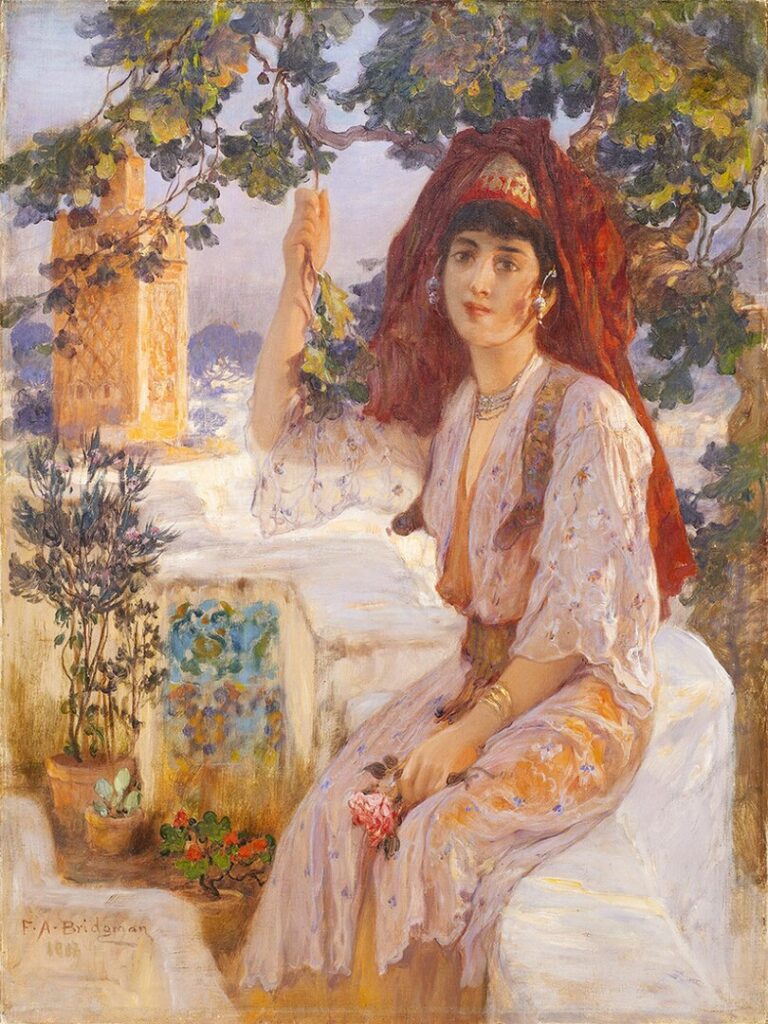
Bridgman’s time in Paris also allowed him to interact with other foreign artists who were part of the transatlantic exchange of ideas. These networks helped him understand the importance of blending European training with uniquely American sensibilities. By the early 1870s, he was becoming known not just as a student of Gérôme, but as a developing master in his own right. Paris had transformed Bridgman from an industrious draughtsman into a cosmopolitan artist with grand aspirations.
Journeys Through North Africa and the Middle East
In 1872, Bridgman joined his former mentor Jean-Léon Gérôme on a transformative journey to North Africa. This trip marked the beginning of Bridgman’s lifelong fascination with the Islamic world. While Gérôme returned to France after a short stay, Bridgman extended his travels throughout Algeria, immersing himself in the culture, people, and landscapes of the region. He remained for months, sketching daily life and collecting visual references for his studio work.
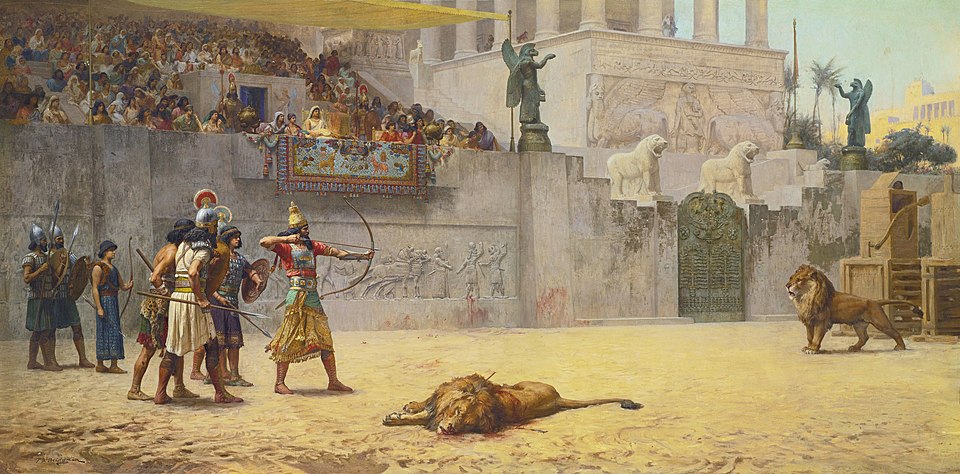
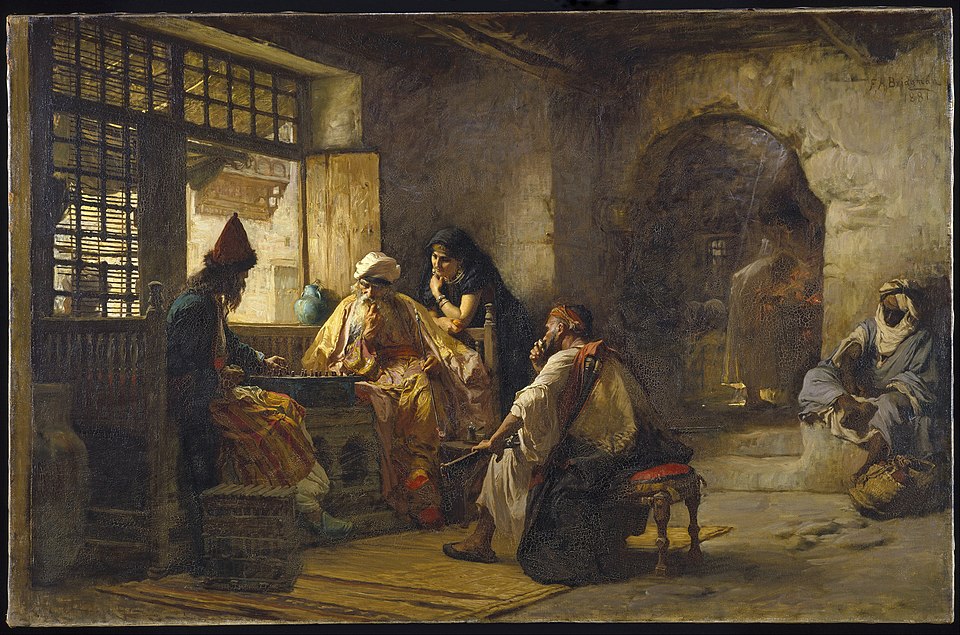
Bridgman was especially drawn to the vibrant colors, sunlight, and architectural detail of Algerian cities like Algiers and Biskra. His deep curiosity led him beyond tourist routes, and he developed friendships with local people, whose customs and traditions he recorded in watercolor and pencil. These studies provided the basis for his most famous paintings, which depicted North African markets, mosques, interiors, and desert life. Rather than rely on stereotypes, Bridgman attempted to convey a sense of daily rhythm and calm in his subjects.
Algeria, Egypt, and the Search for Exotic Imagery
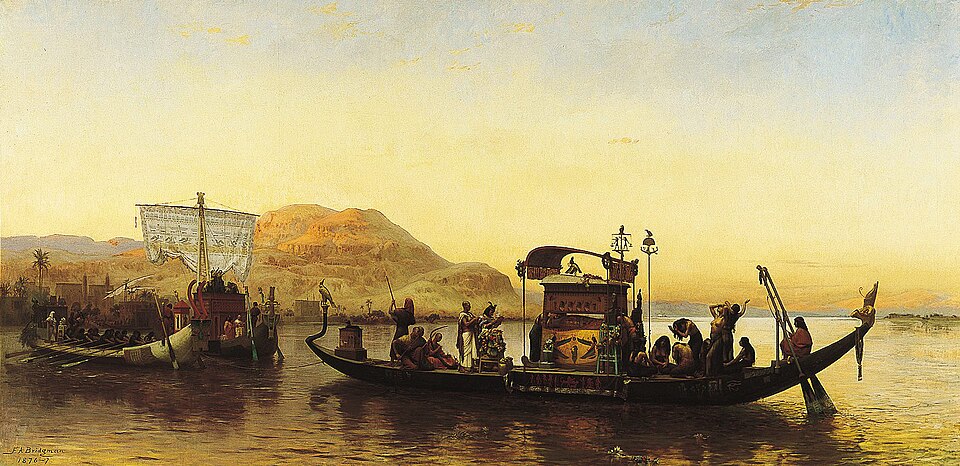
In later years, Bridgman expanded his travels to include Egypt, Turkey, and Syria. During his visit to Egypt, he became fascinated with ancient burial customs and desert life, which would later influence major works like Funeral of a Mummy on the Nile (1877). In Algiers, he even built a home-studio that reflected Islamic architectural motifs, blending personal comfort with artistic inspiration. It was a space where he could stage scenes using real props and costumes he had collected on his journeys.
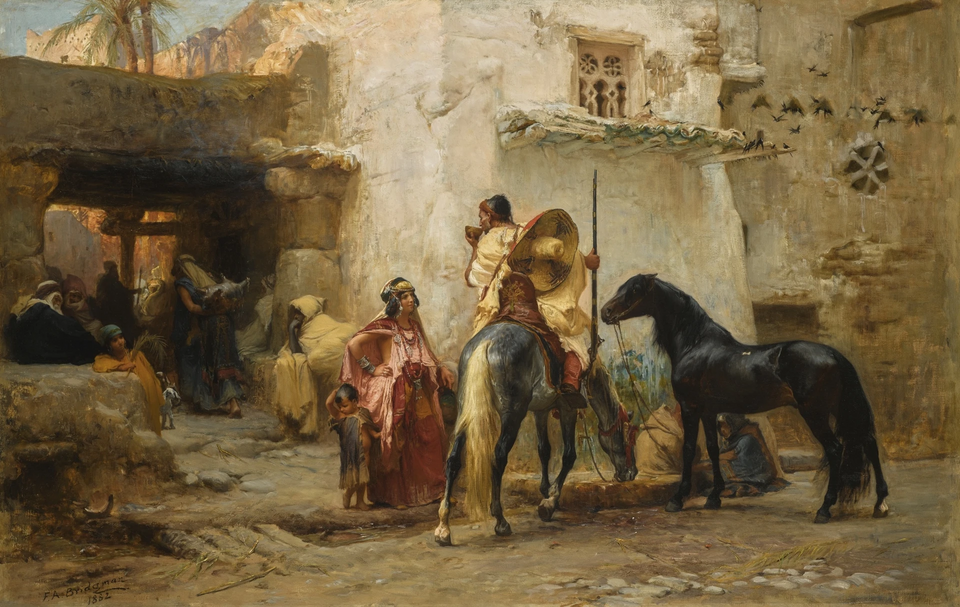
Bridgman’s method involved observing and documenting life with great care but presenting it in a highly polished, idealized manner. His images avoided depictions of violence or political unrest, focusing instead on a peaceful and ordered vision of the East. Unlike some of his European peers, Bridgman romanticized North African life without heavy eroticism or chaos. His art offered viewers an exotic yet dignified portrait of cultures they would never encounter themselves.
Major Works and Exhibitions
Bridgman’s first major success came with the unveiling of Funeral of a Mummy on the Nile at the Paris Salon of 1877. The painting, large in scale and archaeological in detail, was a vivid reconstruction of an imagined ancient Egyptian burial scene. Critics praised its dramatic lighting, rich costuming, and historical depth. It confirmed Bridgman’s status as a serious painter, not just a talented traveler.
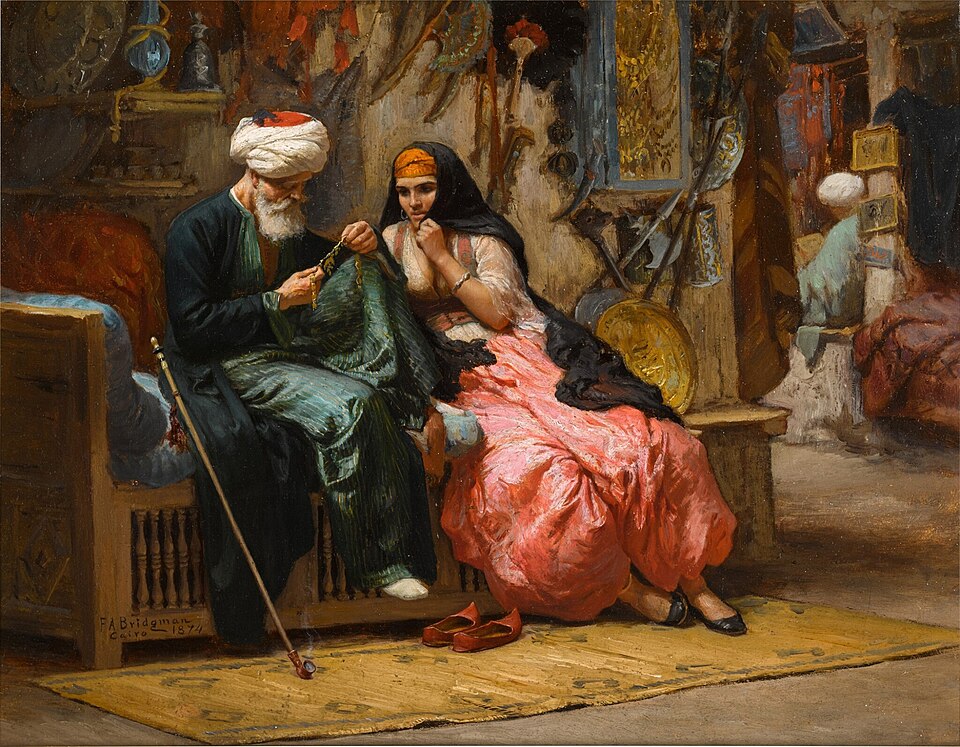
Following this success, Bridgman continued to exhibit at the Paris Salon, as well as the Royal Academy in London and major venues in the United States. He created numerous harem scenes, street processions, and interiors that depicted Algerian and Egyptian life. Paintings such as The Siesta, Interior of an Algerian House, and The Diversions of an Eastern Harem became particularly popular among wealthy American and European collectors. These works were known for their warm palette, intricate detail, and decorative appeal.
The Success of “Funeral of a Mummy” and Salon Exhibitions
Bridgman’s participation in the 1876 Philadelphia Centennial Exhibition further elevated his reputation in America. His ability to combine exotic subjects with masterful technique appealed to an upper-class audience eager for elegant decor and cultural prestige. His paintings were soon acquired by prominent collectors and institutions on both sides of the Atlantic. By the 1880s, he was one of the most commercially successful American painters living abroad.
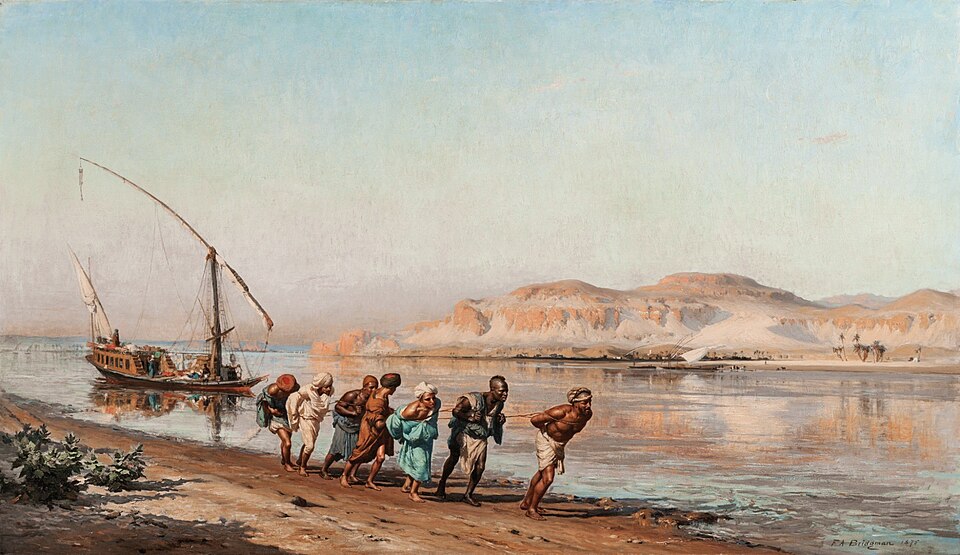
Despite his commercial success, Bridgman maintained high standards and a deep commitment to research. He often sketched from life and collected authentic costumes and objects for reference. These habits helped him create immersive, believable environments in his paintings. At a time when many artists relied on fantasy or secondhand imagery, Bridgman’s attention to visual accuracy set him apart.
Bridgman’s Place in American Orientalism
Frederick Arthur Bridgman occupies a prominent position within the school of American Orientalist painters. Alongside artists like Edwin Lord Weeks and Charles Sprague Pearce, Bridgman helped introduce American audiences to the so-called “mysteries” of the East. His works were not intended to be political or ethnographic documents but decorative windows into imagined worlds. For many collectors, his paintings served as tasteful expressions of curiosity and refinement.
His role as a cultural interpreter was shaped by both his American upbringing and his European training. Bridgman’s approach to Orientalism was more romantic than confrontational, focusing on beauty and tranquility. He rarely portrayed scenes of conflict or harsh realities, instead preferring to highlight the quiet elegance of Islamic interiors, marketplaces, and daily rituals. This made his art especially attractive to genteel households looking for sophistication without controversy.
A Bridge Between Cultures and Continents
While French Orientalists sometimes used their art to justify colonialism, Bridgman’s works remained relatively apolitical. His position as an American abroad gave him a different perspective—less burdened by imperial interests and more focused on artistic exploration. Nevertheless, his paintings reflected the 19th-century Western mindset that viewed Eastern cultures as exotic and picturesque. Though respectful in tone, his work still reinforced certain stereotypes.
As a result, Bridgman’s legacy sits at an interesting crossroads. He was both a documentarian and a dreamer, combining real-world observations with idealized visions. For American audiences unfamiliar with North Africa or the Middle East, his work acted as a cultural bridge. Today, scholars continue to debate how his art should be interpreted, balancing appreciation for its technical excellence with critical analysis of its underlying assumptions.
Later Years and Decline in Popularity
In the early 20th century, Bridgman continued painting but found that public taste was shifting. Impressionism and Modernism were gaining momentum, making his detailed academic style seem old-fashioned. Though he remained committed to his vision, art critics began to view Orientalism as outdated. By 1910, the demand for his type of work had significantly declined.
Bridgman never returned permanently to the United States, choosing instead to remain in France. He spent his final years in Rouen, a quiet city in northern France, where he continued to paint and reflect on his long career. While he occasionally showed new work, it was clear that his artistic peak had passed. On January 13, 1928, Bridgman died in Rouen at the age of 80.
Fading Fame and Death in Rouen
After his death, Bridgman’s name faded from public memory for several decades. His paintings, once cherished in grand homes, were gradually removed from display or placed in storage. As art history shifted its focus to avant-garde movements, traditional academic painters like Bridgman were neglected. However, the late 20th century brought renewed interest in Orientalist art, sparking a reevaluation of his work.
Today, Bridgman’s art can be found in collections at the Metropolitan Museum of Art, the Smithsonian American Art Museum, and other major institutions. Scholars have begun to acknowledge his contributions not just as a painter of exotic scenes, but as an important figure in American art history. While his style may no longer dominate the art world, his legacy is once again being appreciated. His long career remains a testament to discipline, curiosity, and craft.
Legacy and Influence in Today’s Art World
In the 1980s, major museums such as the Metropolitan Museum of Art staged exhibitions revisiting Orientalist painters, including Bridgman. These exhibitions reintroduced his work to a new generation of scholars and collectors. The historical value of his paintings—especially as visual records of 19th-century North Africa—was newly appreciated. His name began to reappear in academic journals, auction catalogs, and art history textbooks.
As discussions of Orientalism expanded in the 1990s and 2000s, influenced by critics like Edward Said, Bridgman’s work came under more scrutiny. While some condemned Orientalist art as a projection of Western fantasies, others argued for a more nuanced interpretation. Bridgman, in particular, was seen as more respectful and observant than many of his European counterparts. His firsthand sketches and detailed studies added credibility to his depictions.
Bridgman in Museums and Orientalism’s Reassessment
Collectors today continue to show interest in Bridgman’s paintings, especially as historical and aesthetic objects. Auction houses have reported rising prices for his major works, and institutions continue to acquire them for their permanent collections. His images are also reproduced in books, prints, and digital archives, reaching wider audiences than ever before. His unique balance of realism and romanticism appeals to both scholars and traditional art enthusiasts.
Ultimately, Frederick Arthur Bridgman stands as a symbol of a specific moment in art history—when East and West met on the canvas through the eyes of an American painter. His work offers insight into how Americans once viewed foreign cultures and how those views have evolved over time. Though no longer at the forefront of modern art, his paintings endure as beautiful, thought-provoking documents of an era. Bridgman’s life and legacy remind us of the enduring power of careful observation and visual storytelling.
Key Takeaways
- Frederick Arthur Bridgman was born in 1847 in Tuskegee, Alabama, and later trained in Paris.
- He studied under Jean-Léon Gérôme at the École des Beaux-Arts in 1866.
- His travels through Algeria and Egypt deeply influenced his Orientalist style.
- Bridgman gained fame with works like Funeral of a Mummy on the Nile.
- Though forgotten after his death in 1928, his legacy has since been revived.
Frequently Asked Questions
- What is Frederick Arthur Bridgman best known for?
He is best known for his Orientalist paintings depicting North African and Middle Eastern life. - Where did Bridgman study art?
Bridgman studied at the École des Beaux-Arts in Paris under Jean-Léon Gérôme. - Which cultures influenced Bridgman’s work the most?
Algerian, Egyptian, and Turkish cultures heavily influenced his subject matter and style. - Where can I see Bridgman’s art today?
His works are held in museums such as the Metropolitan Museum of Art and the Smithsonian. - How is Bridgman’s art viewed in modern times?
His work is admired for its detail but also analyzed critically in light of Orientalist themes.